Blog

  • Why Structural Rigidity Matters in Entryway Cabinets for Daily Use

    The Hidden Cost of a Weak Entryway Cabinet: Blocked Paths, Daily Drift

    You lay down a shoe rack or wedge a slim cabinet beside the bench, hoping the entry stays managed. But most entryway storage only works when it’s new and nearly empty. By the end of the first week, real life wins: shoes splay, backpacks slide, and heavier coats tug shelves out of line—a silent shift that turns routine drop zones into friction points. Entry becomes a stop-and-go lane: cabinet doors hang crooked, the shoe row spills past its edge, and what was meant to keep the flow moving now interrupts it. That brief appearance of order dissolves, especially when every return or rush out the door resets the mess instead of containing it.

    Where Flex Gives Way: The Inconvenience Shows Up Fast

    Cabinets pass muster on showroom floors or after a weekend install. The real breakdown comes under pressure: a muddy bag lands, boots pile up after rain, or your kid’s lunch is dropped on already-crowded shelves. Suddenly, flexible storage isn’t just bending—it’s misaligning, pushing rows outward, and jamming the path. Most cabinets don’t fail dramatically; they slowly lose the fight in everyday use. Shelves bow, doors drift, shoe lines bulge, forcing constant reshuffling just to get through the threshold. Every drop-off becomes a small struggle, every reset less effective than the last.

    Threshold Creep: The Start of the Slow Slide

    You notice it mid-task: a bag coaxed onto its shelf slides toward the front; a door that used to swing free now snags on a leaning rain boot. Shoes, once straight-lined, now pile at an angle—so returning one item requires compressing, shifting, reconsidering where anything goes. Instead of a quick grab-and-drop, you’re stuck untangling the drift at the margin, especially right when you’re late.

    Snapshots of Real Entryway Tension

    The Quick Drop Is Never Quick for Long. Come in with wet shoes and groceries. The bottom shelf flexes under new weight, bags tip sideways, and soon the shelf sags. By Thursday, the line of shoes blocks the swing of the cabinet door—and now every single retrieval means moving something else first.

    Bench Relief Turns Into a Catchall. The bench made for sitting becomes the fastest overflow: you go to untie laces and, with nowhere to put your bag, it lands on the bench—joined soon by jackets and mail. The wall cabinet, maxed out, can’t keep pace. Overflow slides to the nearest surface and then to the floor, erasing even the illusion of usable space.

    One Return Throws the Whole System Off. Narrow margins by the door mean one wobbly shelf or misaligned cabinet creates a domino effect. Return a backpack or jacket, and nearby shoes nudge out of place—or worse, tumble into the path. No single zone holds its boundary, and what should take seconds to return becomes a multi-step roadblock.

    The Real Price: Disrupted Routines, Chronic Reset

    This isn’t just a tidiness problem; it’s a slow routine wreck. Sinking shelves and persistent overflow make the simple act of leaving or returning home more awkward—clutter collects at the threshold, the path narrows, and every bottleneck adds seconds and frustration. Resetting the entryway every few days isn’t a solution—it’s a sign the setup is outmatched. Instead of one clean motion, you’re pausing, lifting, shuffling, and still rarely getting things back to “clear.”

    Movement Stalls, Access Fades

    Transition zones should smooth re-entry. But if storage flexes under normal use, items slide forward, clogging both access and exit. One shelf starts to bow and shoes push out, bags fill open gaps, and the pass-through tightens. Multiple people at the entry amplify the friction—there’s no room to move, so everyone waits, shifts, or detours. Rigidity, not just storage space, is the deciding factor in keeping zones functional day-to-day.

    How Rigid Cabinets Reset What’s Possible

    Rigid cabinets turn daily chaos into lasting order. Structural firmness does what surface tidiness can’t: it preserves flow under pressure. A cabinet with real internal support withstands loaded boots, collapsed umbrellas, and stacks of bags without warping or shifting. Doors align, close tightly, and never wrestle against sagging contents. Shoes remain in neat rows, bags rest flat, and resets take a brief sweep—not a complete reshuffle.

    • Shoes line up without spreading past their boundary
    • Bags sit where they’re put—no sliding, no tipping piles
    • Evening resets become quick touch-ups, not frustrating projects
    • Entry paths stay open for the next rush hour, not blocked by today’s overflow

    The upgrade becomes visible immediately: routines simplify, traffic flows again, and the edge clutter that used to rebuild overnight holds its line. What used to shift with every new arrival now absorbs pressure and stays put—even at peak use.

    When Design Materials Fail Entryway Conditions

    Decorative cabinets often use thin panels and light supports—plenty for static bedrooms, hopeless in a shared threshold. Entryway demands are heavier: repeated slams, shifting loads, wet gear, bags filled beyond expectation. Under this stress, thin shelves sag, doors torque, and grouping categories collapse into a single muddle. Cabinet weight and shelf strength matter more at the entry than almost anywhere else—real supports turn daily shoving and stacking from a source of mess into background noise absorbed by the structure itself.

    Early Warning: Is Your Cabinet Already Losing?

    Don’t wait for a visible collapse. The clues show up first in practical friction:

    • Shelves tilt or bow under backpacks or just a few jackets
    • Doors stick and misalign after routine dump-and-go sessions
    • Items shift or roll off with each new placement, never staying put
    • Resets drag out longer and work less each time—clutter resumes almost overnight

    Each sign means the cabinet is actively undermining your movement flow. Flex isn’t minor; it slows, blocks, and interrupts repeated entry and return.

    Field Tips for Durability—Not Just Decoration

    Whether diagnosing a current pain point or planning your first upgrade:

    • Do a Load Test: Pack shelves the way you actually use them. Watch for bowing or corner gaps in the first week, not just on day one.
    • Demand Reinforced Design: Seek out storage with crossbars or thicker, stiffer components—especially if you mix shoes, bags, and coats on one piece.
    • Define Each Zone’s Load Limit: Avoid stuffing wall units just because space looks available. Overflow bites back by creeping to any flat surface—wasting the setup’s entire effect.

    Final Difference: Lasting Order or Relentless Mess?

    Keep a flexible cabinet in a transition hub and congestion is guaranteed—it just shifts and grows with every use. Introduce rigid support and the change is immediate: drop zones hold, movement flows, reset work shrinks. Entryway rhythm survives heavy use, varied family routines, and storm-day gear dumps—no energy wasted on daily recovery.

    Reliable storage isn’t about appearance. In a between-space, it’s the difference between looking managed and actually staying clear when pressured again and again.

    http://www.betweenry.myshopify.com

  • How Smart Cable Management Transforms Your Workspace Efficiency

    The moment a desk looks organized is deceptive. A clear surface at 9am can slide into chaos by early afternoon—a phone charger creeping under your notebook, headphones looped around the arm of your chair, one cable always positioned in the worst possible spot just as you reach to jot down a note or adjust your monitor. Even with minimal gear, loose cords twist visible order into daily irritation: blocking notepad space, grabbing wheels, or dragging beneath your feet. This isn’t cosmetic. Every snag or pause pulls momentum off track and leaves your “organized” setup feeling slower, more awkward, and harder to reset after every shift in task.

    When cable management changes how a desk actually works—not just how it looks

    Cable control does more than tidy up the view—it directly shapes how smoothly you move, switch tasks, and recover workspace hour by hour. Desks that see regular switching between keyboard, notebook, and digital device make cable friction show up fast. If you have to sweep a charging cable aside before writing or snag a headphone line every time you shift your chair, the surface isn’t helping you. Under-desk cable trays, surface clips, and sleeves lift those lines out of the real traffic zones: above your knees, across elbow distance, or between your monitor riser and note-taking spot.

    There’s a downside. Push too many cords out of sight, and flexibility disappears. Need to swap out a device, change charging sides, or drop in a new adapter for a quick video call? An ultra-clean arrangement can make that simple change slow and fiddly. Clean lines on the surface sometimes mean a clumsy tangle of rules and reacharounds under the hood.

    Workstation realities: What happens when cables fight your workflow

    Consider a typical compact desk built for “efficiency”: laptop, tablet, phone, maybe a monitor riding on an arm. Even with little gear, by lunch you’re sidestepping a power brick with your foot and pausing to pull a headphone cable out from under your chair wheel. Slide the notebook next to the keyboard, and a charger blocks your elbow. These are not dramatic disruptions. But add up enough small stumbles—when a reset after a task swap takes longer, when every shift means another cable crosses your path—and even a clean desk becomes friction you notice.

    Contrast that with a desk after everything has its anchor: cable clips at the underside corner for chargers in active use, a cable tray catching the rest of the mess near the back edge, no lines crossing workspace or crawling onto your lap. Now the chair swings in and out cleanly. Flipping from the keyboard to the notebook takes one movement, not two. That phone cable no longer invades precious writing space or trails across the edge. Resets shrink to a flick or a quick replug instead of a full cable fishing session.

    Why pure tidiness can backfire: The flexibility gap

    If you regularly switch gear—external drives during a video call, new dongles for a test run, a monitor that shifts position by the week—fixed cable routing gets old, fast. When you need to reroute a cable threaded through multiple guides or bound beneath a tray, every adjustment interrupts your flow. That “clear” desk begins piling up deferred changes under the surface, and annoyance grows every time quick swaps transform into a mini project. Too much order creates new hidden drag where you used to have visible clutter.

    The shift: From perpetual rewiring to anchored flow

    Trial and error rewrites most desk setups. Transitioning from tangled accessibility to intentional routing didn’t mean locking everything down, but finding a balance. Anchoring a cable tray along the rear edge—behind the monitor’s zone—kept surge protectors, chargers, and adapters running flat, never low enough to trip a foot or block a drawer. Only a short lead made it above the surface—always deliberate, never sprawling.

    Over a week of normal work, that meant fewer detours: no more dragging the chair around old cables, no more rescuing a charger from the floor. Plugging in or swapping devices became ‘reach, click, done’. What changed wasn’t an absence of clutter on the desk, but the disappearance of three or four micro-annoyances repeated dozens of times a day. During busy cycles—full device swaps, shuffling between screens and notebooks—order held without constant fidgeting. The friction wasn’t just hidden; it was nearly removed from the routine.

    The real cable management tradeoffs: Trays, boxes, resets

    Under-desk cable trays are nearly invisible but powerful for stable, set-and-forget setups—best for anyone who hates kneeling under desks, loves open foot space, or regularly shifts seating without thinking. No line blocks a rolling chair or a long-legged stretch. But if your device lineup changes daily, fishing out new ends from the tray slows things down.

    Cable boxes—those compact bins sitting under or near your surface—let you swap cords in seconds. They’re the friend of freelancers or anyone in a shared workspace, where adapters and chargers rotate all week. The danger? These boxes eat clutter as quickly as they hide it. Add just one extra cable every morning, and by Friday, you’re digging through a new tangle crammed inside the box itself.

    Stability vs adaptiveness: When “fixes” start causing problems

    Clamp-on or adhesive routes guarantee stability. But each fixed cable multiplies the labor of any small change. Add a device, rotate the monitor to show a colleague, or swap a failed mouse mid-meeting—suddenly, the very system that stopped chaos now blocks your next move. The trick is landing at “organized enough to help, loose enough to flex”—and recognizing the warning signs that you’ve slid too far in either direction.

    Signals your cable setup is slowing you down

    Watch for these workstation flags:

    • Cables crawl back into your active reach zone by the afternoon—especially around the mouse, notebook, or phone stand.
    • Your chair always hesitates near the same cord or adapter, cutting off smooth in-and-out movements.
    • Quick resets—a device swap, notebook drop-in, or charger switch—come with a quiet sigh as you prep to untangle or reroute first.

    When “just work” moments slow down—when even small moves create hesitation or annoyance—your cable arrangement is no longer background. That’s your trigger for rethinking what stays, what gets anchored, and what needs faster change access.

    Building a better desk: Repeatable order, without over-fixing

    No cable management answer lasts forever. Real work shifts, hardware rotates, and habits form or break—so every hyper-stable setup risks becoming the newest friction. The goal isn’t flawless neatness, but predictable, reliable order that survives real routine: cables off the working surface, out of foot zones, always ready for a change but never dumping the problem straight back onto the desktop.

    The desk that works isn’t the one that never shows a stray cable—it’s the one that helps you move, jot notes, reset, and swap devices as needed, without the background dread of an inevitable snag. Clean looks don’t guarantee flow. What matters is that every reset, shift, and adjustment gets easier—not just neater—every week you use it.

    Explore the full WorkBasic collection

  • Streamlining Pet Travel: How Simplified Organizers Boost Efficiency on the Road

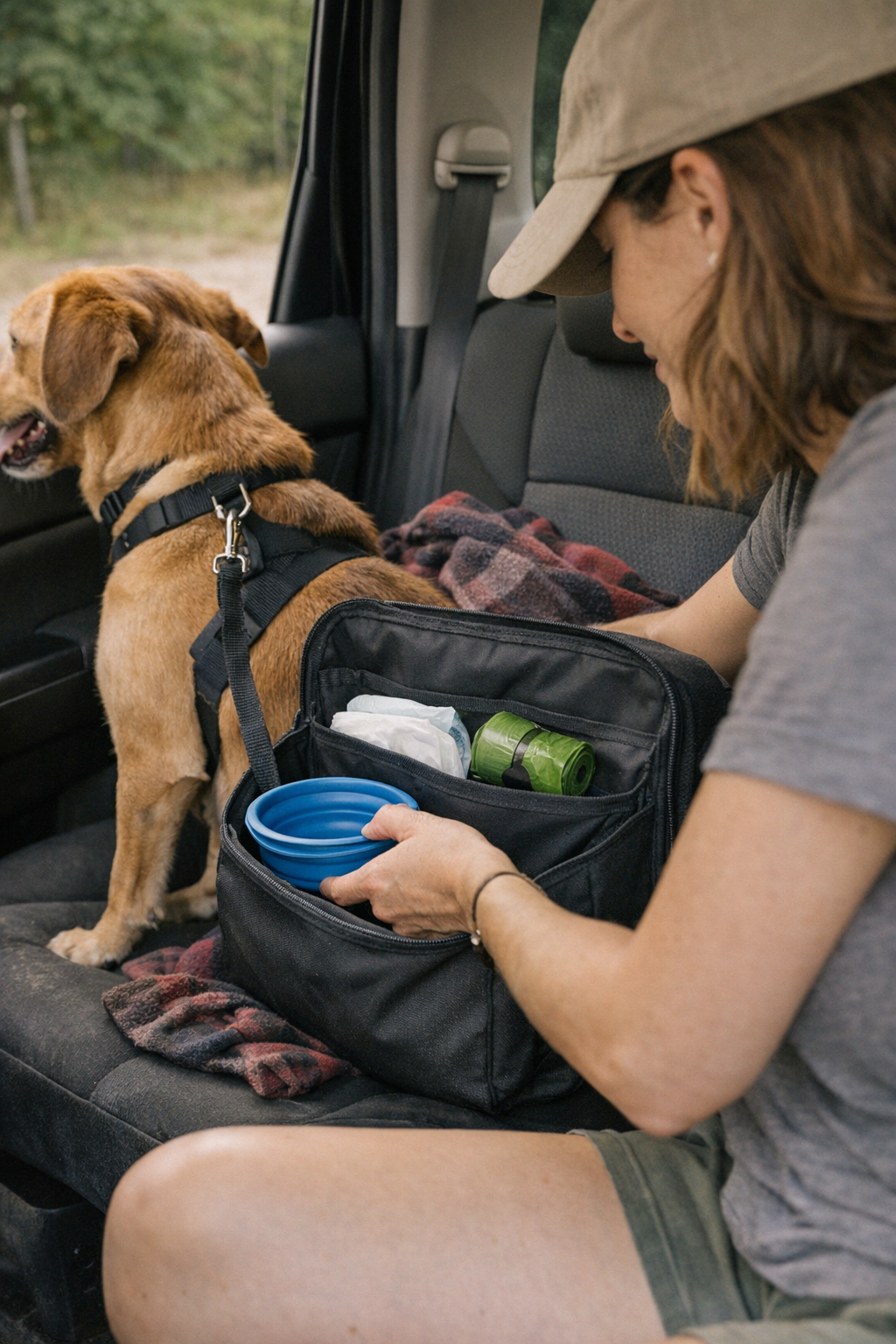
    A pet-travel organizer can look perfect right up until you actually use it. In the controlled, packed moment before leaving, every compartment seems ready and every item has its spot. But on the road—at the fourth parking lot or the next curbside detour—the setup that looked organized starts slipping apart at the seams: wipes buried, leash tangled, treats mixed in with owner essentials. That’s where real friction shows up, and it rarely matches that “ready” photo from a few hours earlier. PawGoTravel exists for this gap: the failure of organization that only reveals itself in repeated, real movement.

    When “Organized” Fails During Real Movement

    The first drive out, your confidence holds—everything looks settled, bowl nestled between wipes and leash clipped just so. Yet the first stop shows cracks. A leash that “has a spot” pulls from behind a stash of bags. Cleanup wipes, supposedly at hand, are wedged under a zip you can’t grab one-handed. As stops multiply, the tangle compounds: bowls shift further down, essentials overlap, and each reach feels less predictable than before.

    This isn’t an obvious systems failure. It’s a pattern of small interruptions: fumbling for the cleanup pouch with a dog trying to bolt, opening the “right” section only to find the wipes in another, pulling a zip only to see toys and treats spill out. By trip number three, your “packed” look is just surface. The organizer asks for extra reach, extra guesses, and just too much time for each simple grab.

    Recognizing Real-World Friction Points

    The break happens in routine stops—not in the plan, but in the repeat:

    • What looked compartmentalized mixes as contents migrate and layers shift with movement and quick grabs.
    • Separate pockets become mini barricades when main supplies end up buried or require both hands—especially as your pet tugs at the leash beside you.
    • Cleanup gear is present, but rarely where muscle memory expects—which means more delay, more mess, more accidental overreaching.
    • Comfort items—soft blankets or extra toys— squeeze out the space your go-to supplies need, forcing overlap and slower reaction every stop.

    The price is cumulative. Once you’re forced to set everything down just to dig out a wipe, or when every short stop starts stealing a few more seconds, your patience and rhythm start to fray.

    Seat-Side Zones: Where Access Matters Most

    The seat-side area is the breaking point for most setups. It’s not how organized things look, but whether you can reach what you need, in the exact moment you need it, without stalling holiday traffic or wrestling a harness with your knee. When “grab and go” means unpacking two layers for a water bowl, or sticking your wrist through a narrow opening while your pet pulls, your bag is holding you back. Small obstacles pile up fast: messier reloads, skipped reloads, and a simmering background chaos that undercuts a calm ride for both you and your pet.

    Repeated Return, Repeated Delay

    Picture returning after a quick walk. Leash is loosely wound, cleanup zipped away, supplies still technically where you left them. But after each trip, wipes drift under spare toys, the bowl hides deeper, and your grab-and-go system tilts toward slowdown. Each return drags—now it’s three stops in and nothing is where you expect. Every “quick stop” is longer, harder, and slightly more irritating than the last.

    Simplifying for Real-World Repeat Access

    The root cause isn’t missing essentials—it’s too many compartments, competing pockets, and stacked sections that never seem to unlock what you actually need first. Every extra closure, layer, or overlap multiplies the effort needed for a basic action.

    Correction comes from directness, not extra organization:

    • Remove or ignore compartments if their only purpose is to “tidy” what you use every stop.
    • Keep one always-visible, always-reachable side zone open just for the real priorities: leash, wipes, cleanup bags, bowl.
    • Structure the order by actual use—not category—so you never dig for what you reach for most.
    • Push rare-use items (spare toys, specialty gear) deep so their delay doesn’t interrupt rhythm at every turn.

    This isn’t about minimal looks. It’s about touch-path: the exact, repeatable reach—one trip, one movement, no digging, no repacking. A system that preserves speed and sanity every single time, not just on departure.

    Improvement Feels Subtle—Until It Doesn’t

    Refining your layout by need instead of category doesn’t invite compliments. But with every repeated stop, you notice the real benefit: less manual reset, fewer accidental empties, no more doubled-up handling just to restore order. By the end of a busy circuit, your bag isn’t spiraling into chaos—and those stops where the leash, bowl, and wipes appear in the right place start to multiply. The improvement isn’t a claim; it’s the disappearance of friction: no more micro-pauses, no doubled-back searching, no silent dread before another parking-lot leash-wrestle. When what you need is in the spot your hand expects, movement becomes automatic—and your trip actually keeps flowing.

    Signs Your Layout Isn’t Helping Repeated Motion

    • Needing both hands just to retrieve basics on an ordinary stop
    • Opening three sections before you find the right item, even though you “organized” before leaving
    • Watching access get slower as the trip gets longer, not faster
    • Pockets going unused because the time cost to put items back is simply too high
    • Feeling pushed to repack mid-afternoon or in the parking lot just to restore order
    • Recognizing that your tidy setup at home is dragging you down on the move

    If these habits are routine, your setup isn’t helping—it’s quietly creating friction, even if it looked perfect before you left.

    Move Beyond “Prepared”—Aim for Smooth, Repeat-Use Travel

    Real-world pet travel isn’t won by systems that only look neat at the start. It’s about seat-side setup, fast access, and gear that keeps up with messy, real movement—errand to park to curb, over and over. Only a structure refined by repeated use manages that: a flow where grabbing, using, and moving actually gets easier, not harder, as the day goes on. It’s a difference you stop noticing—until the friction returns.

    Ready for a setup that’s built for more than show? Explore practical, seat-side-tested pet travel gear at PawGoTravel.

  • Why Proper Sealing Makes All the Difference in Remodel Ventilation

    Every remodel starts with hope—fresh trim, crisp walls, that satisfying last coat. But it only takes one sanding session to realize: mess is the part no one warned you about. Fine dust creeps past drop cloths and drifts through air that’s supposed to be clear. What’s worse? The ventilation fans you set up to control it can sabotage you if they aren’t tuned to the chaos of an actual job site.

    Where Dust Really Escapes—And Why “Good Enough” Isn’t

    Most of us grab a fan with the right CFM and figure, that’s settled. But on real jobs—think cramped garages, patched-up window frames, rooms with three paint-splattered extension cords snaking underfoot—specs stop mattering the moment you hit power.

    By evening, you’re chasing halos of dust trailing along windowsills, finding powder tracing every groove and latch you already cleaned. This dust isn’t random; it’s finding the same cracks at the fan edges or through the loose corners of leftover plastic wrap. Suddenly, a “pretty good” setup guarantees you’re wiping the same sill, again and again, just to keep it presentable.

    The Missed Details That Cost You

    This is where the frustration creeps in. Old sash windows never seat tight. A box fan pressed into the frame leaves a 3 mm gap, and that barely-noticed opening lets a day’s worth of sanding sneak right back inside. The dust lines you see later? They’re the record of every seal you skipped or bit of tape you thought you didn’t need.

    Picture a cabinet repaint: by round two with the orbital sander, the hardware should gleam. But instead, powder traces the hinges, and odd angles catch stray dust you thought was cleared. The job drags—you keep cleaning, and that haze in the kitchen light never actually fades away. Precision work can’t compete with migrating dust.

    Why Fan Ratings Disappoint in Real Life

    Temporary setups always start with optimism. Two fans, plenty of plastic sheeting, maybe even a new air scrubber. But midweek, you find yourself swapping clogged drop cloths and scrubbing floors more than sanding or cutting. That’s because, in the real world, no two fans perform equally once windows, tape, and jobsite clutter get involved.

    • Plastic sheeting sags or peels back as work drags on—dust slips through the soft gaps.
    • Window frames, especially in older houses, fight every attempt at a seal. Tape alone isn’t enough.
    • Big CFM? Worthless if edges aren’t tight. That dusty haze finds every weakness, no matter what the box promises.

    It doesn’t happen all at once. Three or four rounds of sanding, cutting, or popping nail holes, and those small islands of dust begin pooling in every corner you missed—pulling you into a cleaning loop instead of finishing the room.

    Real Scenes: Hours Lost, Edges Blurred

    You finish a round of trim sanding, flick off the fan, and leave for lunch. When you’re back, the air’s cleared a bit, but the sills and trim sport a ghostly layer—visible only when sunlight cuts in. Grit crunches under your boots, and the residue turns every painted edge sticky. The room is supposed to be ready for paint, but more hours will disappear into recleaning. Odd-shaped windows or warped frames only make it worse: sealing becomes improvisation, never precision.

    Older spaces make you pay double. Bowed frames, swollen wood, antique hardware that keeps the fan from ever sitting flush—the cleanup simply never ends. By the last coat, fatigue sets in, precision slips, and the final result looks less sharp than you planned.

    Quick Fixes That Actually Stick

    You don’t need an upgrade—just discipline on the details. Crews that get ahead often double up on their plastic sheeting at the fan, layering tape until every edge hugs the frame. Every seam or gap wider than 5 mm gets a fresh strip of painter’s tape, no excuses.

    There’s a night-and-day difference on the cleanup: fewer smudges, fewer haze complaints, and actual breathing room in the air. Cleanup shrinks to what’s reasonable, and finished surfaces finally stay finished. It doesn’t just feel better; the quality of your detail—painted trim or polished flooring—holds up under bright light and close inspection.

    Test every setup: run a strip of tape in front of the fan and watch its movement. If the tape hangs limp or flutters away from the window, something’s leaking—stop, seal, and check again. Five extra minutes now means saving yourself hours later.

    Field FAQ: What Survives in Tough Jobs?

    Will a cheap box fan ever be enough?
    It might—if you obsess over sealing and check it every round. Don’t skip filtration if fumes are part of the job. Without attention, box fans leak fine dust or paint vapor right back in; by the third sanding, you’ll see the film where you don’t want it.

    How do you spot a lousy seal before it ruins your finish?
    After your first round, look for sharp dust lines at the far ends of the room, a slow buildup in corners, or a faint stickiness on what should be a clean surface. Even a passing hand over painted trim picks up grit—clear signal something escaped.

    Quickest improvement if you’re stuck?
    Don’t overthink it—seal every edge. Double up plastic, fix weak spots with fresh tape, and target any gap, no matter how small. If you keep finding dust, reassess not just the fan, but your entire fit. Sometimes swapping the direction, or re-pressurizing the setup with a different window, changes everything.

    The Payoff: Containment That Works—Not Just on Paper

    Perfect control? Rare. What really matters is a system that adapts—not one that just looks good for a walkthrough. Jobs go smoother, and detail work holds up, when you embrace tight sealing as routine—not luck.

    No tool or accessory beats minutes spent tightening up seals. If you notice haze, tacky residue, or still have to vacuum after every stage, trust what you see, not what the box claims. In real remodels, control is earned setup by setup—and the best crews know their sharpest competitive edge isn’t a fancier tool, but tighter, smarter staging before the first cut or sanding pass.

    http://gumboll.myshopify.com

  • Choosing Between Wire and Solid Shelving for Lasting Closet Organization

    The feeling of an organized closet is always temporary. You start with neat folded shirts, sorted bins, and a little pride in the new order. But by midweek, stacks are slumping, socks have gone wandering, and the space is slipping back to chaos. It’s not just habit—more often, it’s your shelving setup staging a quiet rebellion against your routines. The difference between “looking organized” and keeping things in check day after day lives in the details of how your shelves perform under real pressure.

    Wire vs. Solid Shelving: Where the Friction Actually Starts

    At the install, wire and solid shelving seem equally serviceable. Both hold clothes, display baskets, and offer that temporary sense of newness. But with regular use—the quick reach for your favorite tee, the scramble for a matching sock, or the daily shuffle of stacks—friction accumulates. Suddenly, shelf type shapes whether your closet stays orderly or slides toward clutter that spreads fast.

    Wire Shelving: Light and Open, Until Things Start to Slip

    Wire shelves promise airiness, so your closet never feels heavy. The gaps mean dust falls away, and you can see what’s stored. But the day-to-day frustrations grow familiar fast:

    • Stacks that won’t behave: Each time you pull from the middle or bottom, every shirt up top shifts—or topples. Folded piles tilt and sink between wires, so “straight lines” are gone by Wednesday.
    • Small items escape: Socks, underwear, and accessories slip through the mesh or wedge into awkward gaps at the back. By Friday, finding a matching pair means plucking pieces from corners you never meant to use.
    • Visible wire marks: Pull out a favorite sweater and find it patterned with subtle grid lines from resting across the shelf’s metal supports.

    Inevitably, resets pile up: grabbing one thing demands you re-stack half your wardrobe. Shelves that looked ready-made for organizing quickly require daily intervention just to avoid a slow drift back to “random bin” mode.

    Solid Shelving: Stable, Predictable—But Demanding in New Ways

    Swap in solid shelves and routines start to feel less fragile. Shirts stay stacked. Yank one from the middle, and the rest hold still. Socks don’t vanish. Category lines—T-shirts, sleepwear, scarves—stay crisp through the week.

    Yet, you trade one compromise for another:

    • Mess on display: Spills, shed lint, or even a dribble of hair product are unmissable. The flat surface acts as a stage, not a sieve.
    • Trapped air, trapped moisture: Tightly stacked clothes and closed-off shelves can lock in dampness—a surprise when you grab a towel that hasn’t quite dried, or notice a faint musty pocket at the back of a packed shelf.

    So the maintenance shifts: less re-stacking, more quick wipes and occasional shelf airing. It’s a different rhythm—fewer resets, but new habits to maintain that “ready” look.

    Real-World Closet: What Actually Changes During a Week

    What plays out over seven days with each shelf style? Consider a reach-in closet once the “organizing high” fades and routines take over.

    Day One: Everything in Its Place (for Now)

    Start with pristine stacks, perfectly sorted bins, and categories so clear you wonder why this ever felt difficult. Wire and solid shelves both win the “after photo.” For a while.

    Midweek: When Reality Clutters Back In

    On wire shelves, your best-folded piles can’t take the strain. By Thursday, stacks are angling off center and socks have migrated behind the bins. A quick search for one T-shirt means nudging everything else, and the “sections” you started with blur into each other.

    Solid shelves? Stacks stay aligned. But now a leaky lotion bottle has left a tell-tale spot, or last night’s dark scarf has dusted off lint everyone can see. Nothing’s shifted, but the cleaning list grows. And on both shelf types, a frantic morning can still create a quick “all scarves in one pile” situation.

    The real test is repetition: Wire shelves sap energy through constant re-alignment. Solid shelves save the stacks but shift your work to visible mess—trade-offs, not miracles.

    Resets and Retrieval: Where Time Gets Lost

    No closet escapes the need for resets—a five-minute evening sweep to fix the day’s chaos. But on wire, it’s more like ten: grabbing a sweater from underneath means everything above has to be tidied too, and bins that started separate start blending contents. Categories erode not by neglect, but by repeated use pushing against a flimsy foundation.

    Solid shelving keeps order stronger. Resetting usually means a single dust-wipe or replacing a bin gone astray—not fishing socks out of the wire grid or restacking toppled shirts. It’s still real work, but the chaos is more contained.

    Access Points: The Little Moments That Matter Most

    Where shelving truly matters is in those daily “why is this harder than it should be?” moments:

    • Grabbing from the bottom: On wire, the risk is a full-stack collapse. Solid shelves hold their shape so you can slide a shirt out without triggering an avalanche.
    • Finding both socks in the same place: On wire, small things disappear through gaps or slowly migrate out of easy reach. On solid shelves, pairs stay together—less hunting, less bending.
    • Bins behaving badly: Wire shelves let stuff fall into the cracks between bin and shelf edge, so categories blur fast. Solid shelves keep contents in place, though you’ll see every crumb and dust fleck after a week of rummaging—a cue for a quick clean, not a major overhaul.

    Simple Tweaks for Smoother Days

    Real-world closet maintenance isn’t about starting over. Washable shelf liners on solid surfaces buffer against drips and messes—toss them in the laundry and reset is done. For wire, rigid-bottom bins are heroes: socks, underwear, ties, and the lost-and-found stay corralled and can be lifted out, not fished for under the grid.

    One practical rule: Put your daily-use items at mid-level—within easy reach and less likely to be disturbed. No matter the shelf, the less you disrupt, the more categories stay stable, and the faster a five-minute reset actually feels like five minutes.

    The Bottom Line: Shelf Type Shapes Your Everyday Routine

    If “organized” requires a full closet reshuffle every other day, something’s broken. The right shelf setup isn’t about showroom looks—it’s about real-world access, clear categories that resist chaos, and resets that don’t balloon in effort.

    Wire shelves offer openness and airflow, but make you pay in constant fuss and blurred boundaries. Solid shelves deliver steadier stacks and more dependable categories, but the cleaning is real and the air doesn’t always flow to the back corners.

    No shelf solves everything—but noticing exactly where your closet slows you down lets you adapt. Sometimes it’s a matter of bins, liners, and shelf-level moves. Sometimes, it’s swapping shelf types entirely. What matters most: your daily routine runs smoother, categories stay intact, and resets get shorter—as a closet should enable, not undermine.

    For more ways to match your shelving to your daily storage habits, visit ClosetWorks.

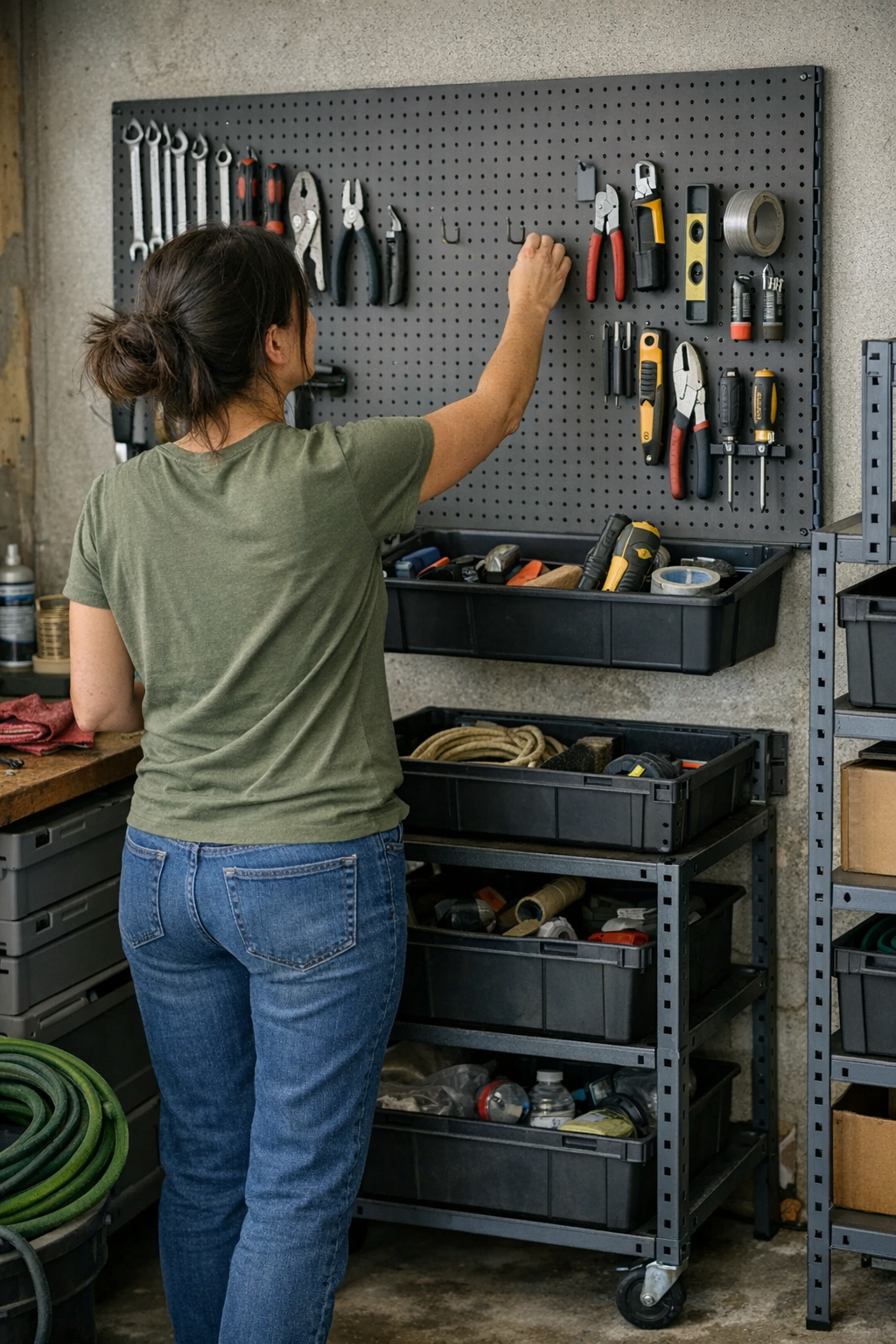
  • How Pegboard Layouts Reveal Missing Tools and Disrupt Workflow

    Where the Clean Pegboard Wall Works—And Where It Fails

    Finishing a fresh pegboard wall in your garage or workshop feels like crossing a threshold. Hooks snap in, hammers line up, and suddenly every tool has its moment in the sun. For one bright afternoon the setup is pristine: wide open sightlines, exactly spaced groupings, nothing buried or lost. It’s not just the satisfaction of order—it’s that flash of hope that maybe, finally, grabbing a tool won’t disrupt your flow. No more basket digging or drawer searches. Just walk up, pick up, get to work.

    But then real life moves in. Within days—a rushed repair here, a borrowed tool there—the wall’s perfect logic sags. Each gap shouts at you, clutter creeps in, and grabbing what you need quietly gets slower. The wall promises efficiency, but the moment your hands are full or routines fray, the openness starts to betray the setup.

    How Return Friction Creeps In

    Pegboards thrive on visibility: everything’s right there, until what’s missing jumps out just as sharply. It’s not an obvious flaw on day one, and it isn’t sabotage—it’s the reality of actual work. A wrench set aside to “put back later” during a midday rush, a neighbor wandering off with your all-purpose pliers, or a late project wrap-up where tools are tossed on the nearest surface instead of reset on their hooks. The instability multiplies with the pace of use.

    The next day, you grab for what’s gone, your eye landing on a blank hook. Instead of a smooth sequence, you pause, reverse, and retrace steps across the room—double-checking benches, glancing behind the rolling cart you had to shift just to open up space. Multiply that little stall by a week’s worth of tasks, and the wall’s clean design reveals itself as a brittle system: it only holds up when every reset is flawless, every time. That’s not routine—it’s wishful thinking.

    Openness Becomes a Signal for Disorder

    Pegboards sell the vision of everything on display, while closed cabinets gently hide your mistakes. At first, the exposure feels empowering—tools are uncrowded, arrangements seem obvious. But the cost is relentless: the second a screwdriver skips its return, the whole row looks crooked. One empty hook halts your eye every pass. Clustered tools—three on a spot meant for one—turn from “at least I put it back” into a silent mark of friction. The wall won’t shut up about it.

    Worse, in shared or busy garages, your missing wrench is now everyone’s problem. One person skips a reset, another starts a wild goose chase. You notice two trips across the room for the same item or end up circling back just to double-check that the open gap isn’t hiding a tool wedged behind a cabinet again. The wall is meant to save time, but each little return failure ripples, breaking momentum and dragging everyone into minor, repeating searches.

    The Mess of Routine in Motion

    Picture a typical rush: you’re up early to fix the garden gate. Drill in hand, you cross to the bench for new bits—and the tool stays on the bench, “just for a second,” while you field a call. By the time you return, the wall shows only its empty outline. You’re hunting behind the rolling chest (had to nudge that aside, again), squinting around the shelf edge, picturing whether you left the tool in another corner.

    Busy weeks layer extra chaos. Tools moving between wall hooks, drawers, temporary shelves—each detour adds up. One area turns into a dumping ground for overflow. The top of a rolling cart becomes a tool graveyard. That enticing wall, all lines and logic, now blocks fluid movement. Dead corners never fill in. Reset discipline dissolves: it “looks” organized, but really, you’re working around the setup more than through it. Instead of freeing up the floor and reducing cross-room traffic, the wall becomes another slowdown. What you see matches the ideal; what you feel is more stops, more redundant motion, more awkward maneuvering to reach a basic tool.

    Relief in Real Tweaks: Add a Bin, Change the Flow

    A truly functional pegboard isn’t the one with perfect rows and no clutter—it’s the setup that cushions the blows of actual, imperfect routines. The tweaks that matter most are often small but decisive. Shift your highest-use tools to the most reachable spots—think shoulder height, near the main work zone, never behind something you’ll keep dragging out of the way. Then, add a narrow shelf or shallow bin directly under the board. When you’re mid-project, and resets slip, that space catches overflow instead of letting it sprawl.

    This one move changes the texture of everyday use. You’re no longer forced into an all-or-nothing reset. Stray tools can land one step from their hook, buying you time without visual disaster. Floor space stays clear, and you stop tiptoeing through growing clutter islands. Shared garages see fewer finger-pointing debates, because the system now flexes for normal busy overlap. It’s not about giving up on order—it’s about making sure small lapses don’t snowball into major stalls.

    Pegboards vs. Cabinets: Real-World Trade-Offs

    Don’t fall for storage fantasy. Closed cabinets feel clean—until a bad drawer stacks up a year’s worth of mismatched gear, invisible until you’re forced to dump it all and start over. Pegboards make your system’s strengths and failures public: there’s nowhere for chaos to hide, but every glitch grabs your focus. If your setup helps tools get reset naturally—preferably as the last step of the work, not an extra ordeal—the wall stays clear and the routine stays quick. If not, openness just means more “Hey, what’s missing now?” moments.

    The pegboard is not the hero or the villain; it’s the test of whether your storage fits the pressures of your real routine. Does the wall encourage the right returns, or does it break down under a week of actual mess?

    Designing for Reset, Not Perfection

    A pegboard shouldn’t be a static display. Its worth comes from supporting the random, messy churn of repeated daily projects. That means:

    • Cluster your high-touch tools in your true action zone, not across the garage or blocked by a rolling shelf.
    • Add catch-all bins or ledges for tools in motion; let them serve as short-term landing pads, not permanent clutter pits.
    • Treat open gaps as feedback, not failure—move zones, rethink access, and adjust the wall when patterns keep breaking down.
    • Let go of showroom standards. Clarity and speed matter more than the illusion of an untouched wall.

    Your setup should survive sloppy resets and hectic weekends—not just look good after a half-day purge. The right adjustments reduce wasted steps and dead corners, letting you grab, return, and keep moving even when life refuses to slow down.

    Pegboard walls aren’t a magic fix. But when built with honest reset routines—where an imperfect return doesn’t logjam the flow—they become a lasting asset, not a recurring frustration. Aim for a wall that supports the chaos, not one that’s undone by it.

    Explore more practical storage setups and solutions at StackNest.

  • How Fixed Outdoor Storage Cuts Down Yard Work and Clutter

    You know the exact moment your outdoor storage makes life harder—you step outside to drop a trowel or toss a soccer ball back, and what should take seconds turns into kicking aside shoes, yanking open overstuffed bins, or clearing yesterday’s clutter just to reach your target spot. Small yards and side corners reveal their failings fast. One-minute resets balloon into drawn-out detours, blocked walkways, and a silent dare: how much more mess can this corner absorb before someone calls it quits? What looks neat on Sunday becomes a frustration loop by Tuesday—especially when the gear doesn’t end up where it’s supposed to, and the area stops working as a path and becomes another pileup zone.

    Why Most Outdoor Storage Fails in the Real World

    The real friction isn’t about bin size or shelf style—it’s about whether the setup lets you and everyone else make a single, obvious move in and out, every time. If your routine becomes a relay race of moving one thing to get to another, the cracks show fast. Each missed return—gloves here, boots over there, a stray coil of hose—adds invisible labor that stacks up with every use. The larger the family or the more frequent the chores, the more you notice the slowdown.

    What seems organized at first—a new rack, a few sturdy bins—evolves in a week. Benches double as clutter shelves. Bins fill and overflow, lids crack open just enough to tempt, but not enough to empty. A once-usable path now snakes around abandoned bikes or forgotten sports gear. That “quick yard reset” isn’t quick anymore. Instead, you’re untangling someone else’s stash just to do your own simple job. The setup isn’t neutral—it quietly dictates how often you’ll have to start over.

    How “One-Trip” Storage Shifts the Pattern

    You see the upgrade the first time you can put something back without moving three things out of your way. Suddenly, five-minute chores really are five minutes. When the most-used gear has a visible lane back home, not just “a spot somewhere,” pickups and drop-offs become natural. In houses with kids, roommates, or regular guests, only storage that holds up to chaotic, multi-person use stands a chance. Everyone’s habits get baked into the flow—or the setup collapses back into chaos anyway.

    The Real-life Collapse of Bins and Racks

    Loose bins and simple open racks almost always unravel. By midweek, that roomy deck box swallows everything—then overflows. A ball bag disappears under a pile of towels. Rakes and spades vanish behind camping chairs. Pretty soon, digging out what you need makes each trip longer—and each “return” dumps something else further out of line. The bins shift, the piles mix, and each retrieval makes the next return harder. Momentum builds—but in the wrong direction.

    Wall Systems with Built-In Paths: Breaking the Cycle

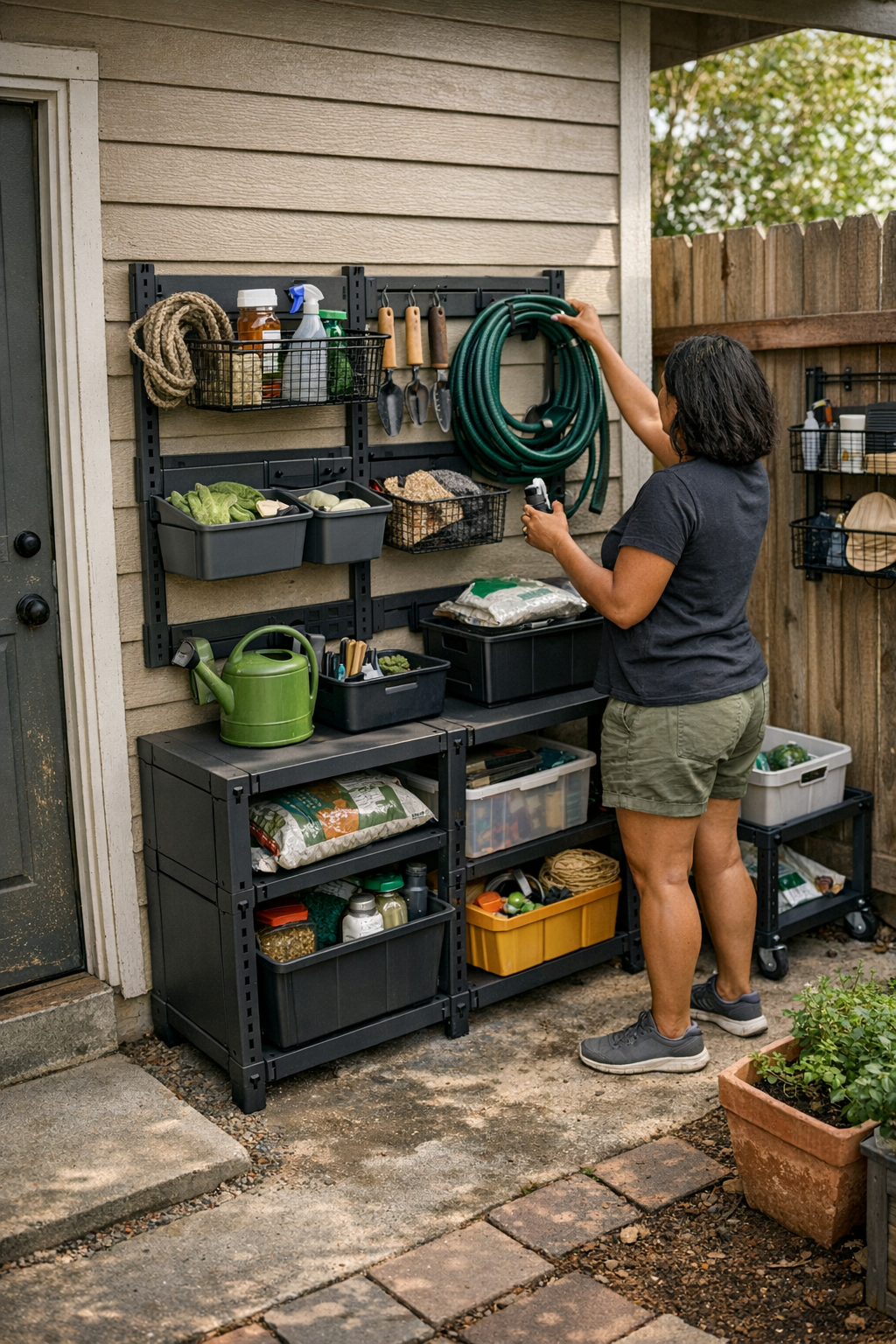
    Now picture a wall track with labeled hooks, baskets, and defined landing spots. The setup shows, not just tells, where a watering can or a muddied set of gloves belongs. A missing item stands out; a pileup gets corralled quickly. No guesswork, no endless shuffling. The outdoor area stays navigable even after a busy weekend—small laps, not big resets. Items find their spot, or at least don’t block the entire flow when everyone slacks off. Instead of the same bit of gear being the trip hazard daily, it lands in its pattern and the system absorbs the mess, rather than broadcasting it.

    Bottlenecks: What Clogs the Side Yard

    Walk any real side yard or narrow driveway in summer and you’ll map the pain points quickly. Hoses get half-wound and sprawl into the walkway. Folding chairs pile up just inside the fence—right where everyone needs to move. No system for how to return things means every user picks their own landing spot and chaos scales up. The difference between a shelf and a hook, floor vs. wall, changes the work: one setup sheds mess, the other traps it.

    The classic pattern: one person hangs bags, another leaves muddy boots by the gate, someone stashes tools in a crate. By Saturday, planning to hang hammocks or grill is a slow-motion obstacle course. Need a rake? It’s under chairs. Want the soccer ball? Both racks are now buried. Resets get drawn out—more shifting piles, more walking in circles, less actual use of the yard. Each “quick tidy” just rearranges the same problem spots.

    When a Simple Wall Track Clears the Choke Points

    Swap loose bins for a six-foot wall rack with hooks and deep baskets—suddenly, each everyday item (watering can, brush, gloves, grill tongs) gets a visible spot. After a cookout or a round of gardening, putting things away means one direct loop instead of three. Even when people leave piles—chairs near the track, stray shoes—the fix takes a minute, not an afternoon. The new system absorbs the drift. Walkways stay open, and everyone—even chronic slackers—tend to play along, because the alternative (mess pile) feels like more work than using the wall.

    Spotting Outdoor Storage Friction Fast

    • Loose floor bins block movement. They fill quickly and sprawl, interrupting natural paths. Even a “flexible” bin set traps you into reroutes when grabbing something buried below.
    • Wall space is underused or oddly placed. Hooks too high, baskets crammed tight, or sections not aligned with entry points—so the overflow always lands back on the floor.
    • Hidden dumping grounds swallow the overflow. A single corner, tower, or bench gets loaded with extra gear midweek. It looks manageable until you actually try to put something away—then it’s clear you’re up against the pile, not the system.
    • Resetting always needs two or three steps. To store gloves, you push the garden bin aside, realign chairs, and pop a stuck lid—all before getting to the real task.
    • Surface order, hidden friction. Even when racks look organized, if traffic routes get blocked or the path from yard to door clogs, the setup isn’t working—it just looks tidy from a distance.

    What Actually Holds Up: Storage That Survives Habit

    The best outdoor setups aren’t those that look perfect on install—they’re the ones that bend to real habits and still hold shape. Modular wall tracks with spaced-out return spots, hooks deep enough for awkward tools, and wide baskets with room to see what’s inside keep routines moving, even when two or three people are bouncing in and out at random. The right layout absorbs chaos instead of multiplying it. Messes stay contained. Routes stay open. The reset after a long week drops back to a true five-minute loop, not a half-hour overhaul.

    The benefits snowball: every clear return path means minutes saved each day, and full hours reclaimed over a season. Less tripping over bins. Fewer blind corners overflowing by Wednesday. A yard that feels ready for anything—because the system meets you at your practical worst, not just your organizational best. When outdoor storage cuts physical retracing and allows direct returns, the whole space breathes easier—even if people don’t change their patterns.

    Smarter Moves for Real Setups

    • Put high-traffic gear in the easiest spots—even if it breaks the “theme.” It’s better to grab and return in one step than to preserve textbook order no one actually uses.
    • Don’t block every wall just because you can. Leave visible open lanes near doors and walkways—this makes it faster to notice out-of-place items and stops gear from swirling into traffic zones.

    Any outdoor setup gets messy—but how messy, and how hard it is to reset, comes down to whether your storage absorbs or amplifies daily movement. Every trip saved and every shortcut restored means less of your weekend gets burned on rerouting piles or hunting for “lost” gear. The difference between theory and real use is clear the next time you need to find—or put away—anything before dinner.

    Find practical outdoor storage that fits real routine, not just square footage, at TidyYard.

  • Creating Car Systems That Withstand Daily Chaos and Keep You Moving

    That perfectly tidy dashboard is a temporary victory. Three days later, that phone cable you tucked away is twisted near the pedals and the organizer bin that looked stable now scatters its contents across every sharp turn. The real test isn’t day one—it’s the moment you rush in, arms full, weather whipping at the door, and discover that “order” means little if you still have to untangle, rescue, or re-stow something every single time. Anyone who actually uses their car for more than short trips knows this scenario: each re-entry exposes another small hassle—digging for a charger, moving a stubborn tote off a seat, finding the wipes wedged behind loose papers. What passes for a clean setup on Saturday morning can become a bundle of aches by Thursday, once real-world routines start pressing every design flaw and storage shortcut.

    How Small Annoyances Build Up in Everyday Car Use

    Most setups break down during actual daily use. That charging cable you loop neatly around the console? Give it three commutes, and it’s buried under the driver’s mat—now a hazard, not a helper. The catch-all bin for essentials tips on the first hard stop, landing your gum and sunglasses under the passenger seat. Even pet seat covers that worked for one rainy hike start inching forward and exposing seat seams after repeated trips, leaving you with mud prints to scrub out—again. It’s not chaos, just a constant low drag: slower entry, longer searches, extra cleaning, and reminders that the system “works” only in theory, not practice.

    The True Test: Surviving Overlapping Routines

    What’s supposed to help you leaves you working overtime when routines stack. Picture getting back to the car in a downpour, loaded with groceries and a backpack, and the phone mount is sagging, the charging cord is trapped by bags, and your cleaning wipes seem to have migrated beneath last week’s receipts. Every overlapping task unmasks a new vulnerability—bins that slide, covers that wrinkle, emergency kits hidden behind heaps of cargo. You start out with a “setup” and end up improvising at each stop, which means disorder returns even faster, just with a tidier façade.

    The Repeated Frictions You Can’t Ignore

    • Cables drop or tangle, turning each ignition into a retrieval ritual that resets every morning.
    • Loose items escape organizers, crowding under seats and sometimes wedging against pedal space—fixing one safety risk while creating another.
    • Door and seat-back pockets fill fast, hiding keys, snacks, or wipes in a jumble that’s impossible to grab mid-drive.
    • Meant-to-be-secure seat covers slip an inch and let in sand or wet grit you thought you’d blocked—one quarter-turn at a time.

    These are not big messes but slow-growing, daily headaches—the feeling that your car never actually settles, and every “fix” invites the next little breakdown.

    When the Right Setup Changes the Driving Routine

    You notice it not from grand transformations but from what stops bothering you. If you’re repeatedly hunting for a cable, picking bottles off the floor, or seeing stray dog hair even after using a seat cover, it’s a warning: the organization isn’t sticking. Real improvement comes from containment and secure placement—fixtures that stop items from sliding or drifting, and from segmenting storage so each tool, charger, or cleanup item can be grabbed blindly, without a pause.

    Structure That Absorbs Real-World Use

    • Mounting cable guides along the seat edge, so the charger cable lands in your hand and never snakes underfoot.
    • Replacing a lightweight tote with a weighted, anchored bin, ending the bottle-roll-and-chase for good.
    • Using seat protectors with grippy undersides that stay put—no surprise grime where covers inch away from the edges.
    • Choosing organizers with true dividers, giving every item a fixed “return spot,” so even a chaotic week leaves the essentials sorted.

    Each tweak isn’t for appearances—it removes a repeated hassle. The difference doesn’t show on a calm weekend. It’s measured in the stress you no longer feel when juggling wet gear, shuttling kids, or hustling groceries, and the system simply absorbs the mess without introducing new problems.

    Containment, Anchoring, and the End of Repeat Fixes

    The real safeguard isn’t a bigger bin or another tidy-up—it’s stopping item drift before it starts. Weighted organizers don’t skate across the trunk. Cable clips anchor the charging line to a reachable point, killing the daily footwell search. An anchored seat cover means less edge-wiping and faster turnarounds with every muddy or sandy return. Visual neatness is only a start; actual containment means you’re not repeating the same fixes after every stop or sharp turn. The setup feels like an ally, not another drain on your time.

    Scenes from Real Drivewell

    • Under rain, grabbing the phone charger in one reach—no cable hunt, no mess pulled back out into the footwell.
    • Unloading groceries, and the trunk bin holds steady—no bottles rolling under seats or afternoons lost to re-sorting cargo.
    • After the dog park, a two-second shake of the seat cover is all cleanup—nothing seeps through, nothing clings to the seats.
    • Returning after a busy morning, there’s no hesitation: charger, keys, wipes, everything in place, no re-shuffling just to drive away.

    Making the Invisible Routine Smoother

    A truly functional car setup erases the friction you kept fighting. No more fishing for cables, no more uprooting bags just to plug in, no more hunting for the cleaning spray when you need it fast. The best sign is not a photo-perfect cabin, but the absence of hassle: the interior behaves, clutter stays where you left it, access is instant even at your busiest. It’s not perfection—it’s practical trust, built from routines that finally work, day after day.

    Find practical tools for setups that hold up in real routines at DriveWellSupply.

  • How Under-Cabinet Lighting Transforms Kitchen Counter Visibility and Usability

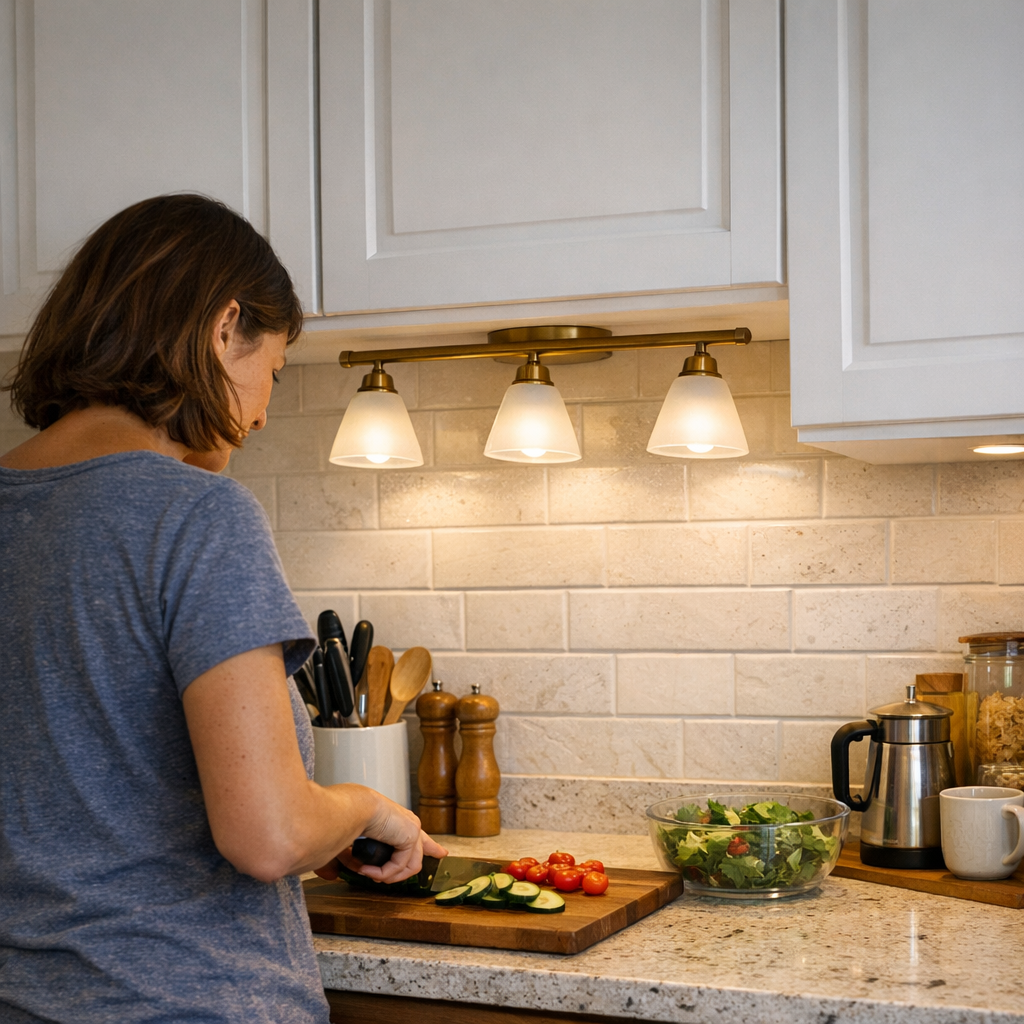
    Kitchens that look brightly lit from the doorway often break down under real use. The ceiling fixture switches on, the room floods with a pleasant glow—and then you grab a knife, lean over the counter, and stare into your own shadow. No matter how powerful that ceiling light is, it can’t reach under cabinets or along the backsplash where you prep, wipe, or search for lost tools. The result isn’t just a dim spot; it’s a stubborn, daily gap that works against you every time you move from “seeing the space” to actually using it. In the world of indoor lighting, nowhere does the difference between visual brightness and functional visibility become clearer—or more frustrating—than on the kitchen counter.

    Where Ceiling Lights Fall Short—And Why It’s Hard to Ignore

    It’s a familiar trap: ceiling lights pour an even blanket of light across the room, but the moment you step up to the counter, crucial zones turn unreliable. The backsplash sits in a permanent dusk. The tight line under upper cabinets never catches a direct beam. Every time you rely on these spaces, you find the same points of friction:

    • Knife work stalls: Your hand and tools throw double shadows, obscuring the exact point of the cut.
    • Cleaning gets patchy: Spills and crumbs cling to the back edge, invisible during a quick wipe-down.
    • Small items vanish: Spoons, scoops, and measuring cups slip into shadow, turning a two-second grab into a blind search.

    The consequence is small but constant: squinting, leaning, and shifting position to chase clarity that simply isn’t there. Kitchen work gets slower, less certain, and fractionally more annoying, every single day.

    The Problem Hides in Plain Sight

    “More light in the room” doesn’t mean “usable light at the counter.” Shadows at the far edge and under the cabinets never clear up, even with a stronger ceiling bulb or whiter paint. The angle is wrong; the cabinets themselves block the path, trapping darkness along the critical work zone.

    This creates an everyday trick: the kitchen appears ready and bright, but the very surfaces you use most often—back edge, right under shelves—stay stubbornly shadowed. If you prep at the wall, you push your work forward or put up with uncertainty. Missed spills and off-target cuts aren’t dramatic injuries—they’re quiet, recurring friction that dulls the entire kitchen experience.

    Seeing the Real-World Impact During Daily Use

    Take one evening routine: ceiling light on, onions out, you reach for the cutting board. The instant your body leans in, a thick shadow swallows the precise spot you need to see. You twist or shift, trying to catch an angle where the light fills the space, but the shadows simply rearrange, now duplicating or splitting under your hand. Even when nothing goes wrong, you’re working at half-clarity.

    Same problem during cleanup—a line of gloom at the back edge lets sticky streaks linger past multiple wipes. On busy mornings, the far corner swallows a measuring spoon, costing you time and a rinse. No one tells you why kitchen routines feel clumsier than they should. But it’s the invisible structure of the light—its reach, not its wattage—that keeps tripping you up.

    How Under-Cabinet Lighting Quietly Solves the Problem

    Under-cabinet fixtures target these blind spots with precision. Continuous, diffused LED strips or slim bar fixtures cast light right where ceiling setups fail: across every inch of the counter’s depth and into the backsplash’s farthest edge. The shift is practical and immediately obvious:

    • Every part of the counter—from wall to front—is evenly illuminated without break.
    • Double shadows shrink or vanish, restoring detail for chopping and reading recipes.
    • Nothing gets lost in darkness; spills, crumbs, and tools stand out instantly.
    • Movement becomes automatic—you stop hunting for light, and just get the job done.

    This isn’t about transforming your kitchen into a showroom. It’s about removing a subtle, built-in handicap that you stop noticing until it’s gone.

    Why Diffused Lighting Beats Spotty Puck Solutions

    Trying to patch the problem with puck lights or spot LEDs usually leaves you with worse contrast: some areas blindingly bright, others still in shade. The result—stripes of light and shadow—solves nothing for a long counter or wide prep zone. Only edge-to-edge, uninterrupted strips provide seamless working visibility.

    Replace pucks with a single diffused run under your cabinets, and the last stubborn dim spot disappears. You stop leaning or moving awkwardly just to see what your hands are doing—and finally, you clean and prep without working around the light itself.

    When Lighting Matches Routine—The Difference You Feel, Not Just See

    The goal isn’t just a dazzling kitchen. Reliable under-cabinet light locks in day-to-day ease that you can’t get from ceiling fixtures alone:

    • Prep tasks become automatic—no wasted attention on where the light lands.
    • Every surface cleans fully, not just the ones you can see at first glance.
    • No more searching by feel or shifting breakfast forward for lack of visibility.
    • Visual strain drops; the work zone feels finished and trustworthy all the way to the wall.

    That difference grows as the months pass. The proof isn’t just in a brighter kitchen, but in how you stop noticing shadows, awkward reaches, and small mistakes. Reliable coverage means one less invisible hassle—every day.

    Bringing Balanced, Task-Focused Light to the Kitchen Counter

    No ceiling fixture, however bright, can erase the deep shadow lines caused by cabinetry and awkward angles. Under-cabinet lighting closes that gap—delivering unbroken task light exactly where routines need it most. Diffused, edge-to-edge coverage shifts the kitchen from “bright but incomplete” to a workspace that simply works, no maneuvering or second-guessing required. Visibility becomes an unspoken part of the flow, supporting every meal, cleanup, and search—especially when the overhead light only gets you halfway there.

    Find practical under-cabinet solutions and more at LightHelper

  • Streamline Your Pet Travel Setup for Faster, Stress-Free Return Walks

    The real trouble starts when the “organized” pet-travel bag gets put through its paces. It only takes a handful of real-world stops—car to park, park to car, seat to leash, leash to bowl—to see if your setup keeps up, or just looks neat sitting still. The test isn’t in one tidy photo or the first leg of your walk. It’s the third or fourth routine stop, when every buried leash, hidden wipe, and tangled comfort blanket forces another slow, awkward reset. Suddenly, what seemed travel-ready is slowing you down in ways you can’t ignore. The difference is clear by the time you’re back at your car and realize you have to dig, reshuffle, and fumble for the basics all over again. PawGoTravel exists for this—when a pet setup meets repeated, seat-side real use, not just first-glance order.

    Why Pet-Travel Routines Break Down (Even When Your Setup Looks Ready)

    Anyone who’s shuttled a pet through a normal outing knows that well-packed gear is only half the story. The sequence is relentless: park, walk, re-enter, repeat—your hands fill up, your dog expects movement, and anything awkward about your bag gets exposed almost immediately. Setups that seem ready in a hallway or online don’t always survive actual use, especially after a few stop-and-go cycles.

    The core problem? Serial access friction you never knew was built in. Pet travel bags packed with pockets, zips, and pouches sound helpful—until you have to reach for the same bowl or leash for the fourth time in an afternoon. And it’s always right when you’re juggling a leash and a door handle, with a pet twisting at your side, that the wipes vanish to the wrong end of the bag. Instead of a smooth routine, you get a clumsy, interrupted rhythm—one that gets worse, not better, the more you use it.

    Real Scenes: Pet Travel Setup Interruptions You’ll Recognize

    “Just a minute—let me find it… again.”

    You’re leaving the park, leash in hand—or actually, not in hand, because now it’s wedged beneath the travel bowl and a crumpled treat pouch you pulled out earlier. Your pet is straining forward, you’re reaching blind into a half-zipped pocket, and each second spent hunting feels longer in the parking lot. This isn’t accidental; it’s the flow-breaking outcome of layered pockets and drifting gear, repeating visit after visit.

    When Cleanup Isn’t in Reach (or When It’s in the Way)

    Busy roadside stop: you’re trying to manage a dog and a cleanup while traffic rushes past. The wipes are somewhere in the bag, technically present, but blocked behind toys or crushed beneath a comfort blanket. Needing two hands, you use one—fumbling under pressure, then finally yanking out half the contents just for a quick wipe. Cleanup gear you can’t reach on the first try might as well be missing in moments like this.

    Your setup didn’t fail on packing; it failed on real timing, blocking access right when seconds matter and tempers run short.

    Comfort Items: Help Here, Hassle There

    A calming blanket makes sense—until you have to pull it out first for pet comfort, only to discover you buried the waste bags or the leash underneath. The more you try to solve one comfort problem, the more you slow down the rest of your process. The real tradeoff isn’t between “messy” and “organized,” but between comfort and reliable, repeat-use reach.

    The Cost of “It Looked Organized” Setup

    Chasing more compartments, zippers, and hidden pouches seems smart until you go hands-on: what starts as “fully prepared” becomes a source of repeat micro-errors. Each layer is another point where you forget which pocket hides what, or accidentally grip something only to knock over a bowl or dump treats into the footwell. One-handed frenzies become the rule, not the exception.

    It happens trip after trip: the pet gets antsy, you keep pausing and restarting, and the whole flow of the outing fractures into little delays. A travel bag that resists real movement doesn’t just slow you—it disrupts the whole backseat dynamic, right down to the pet that senses your tension every time the search starts again.

    What Actually Improves the Routine?

    Single-Move Access for Everyday Transitions

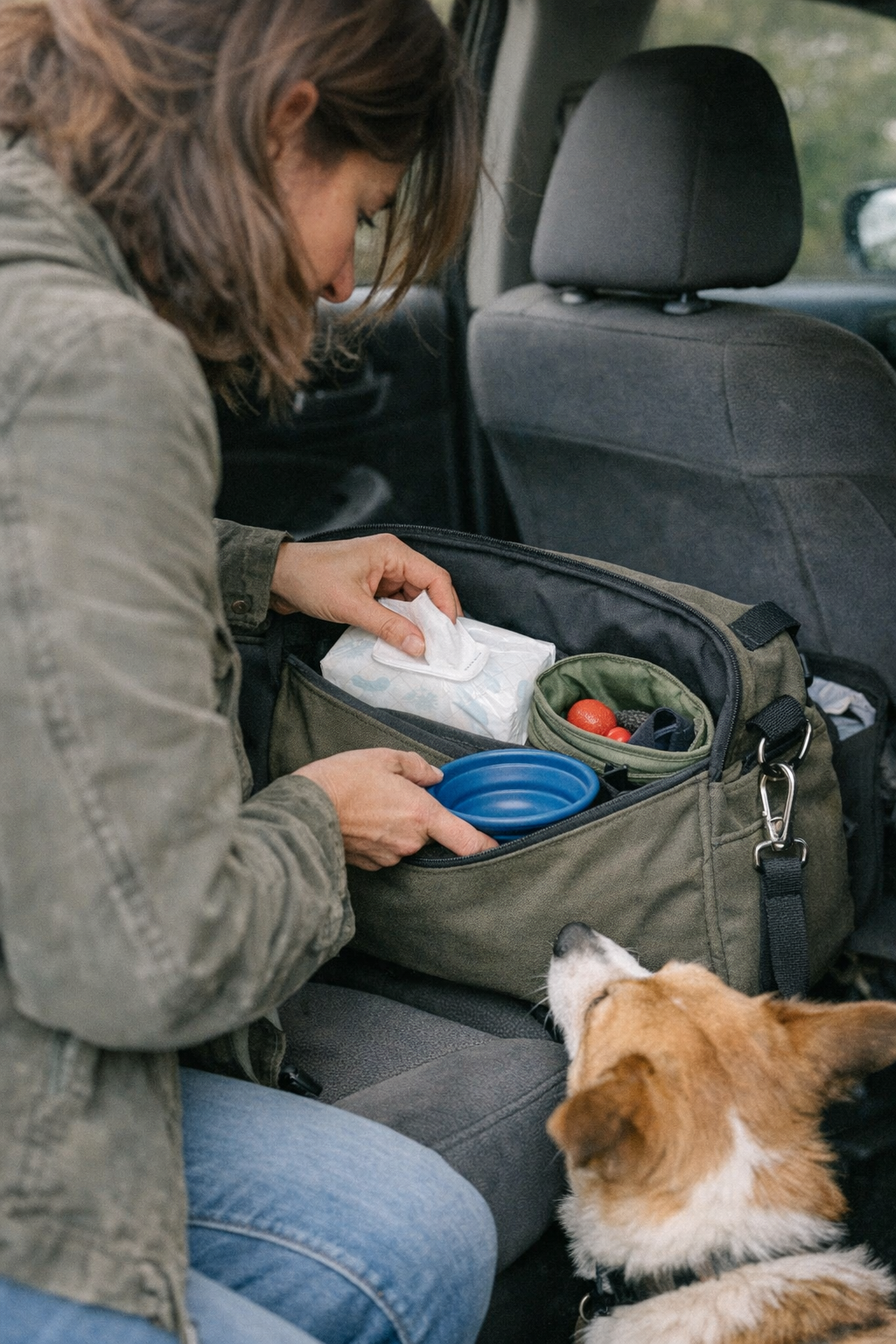
    Repeated friction drops away when your setup lets you grab what matters in one move. Seat-facing wide pockets, leash clips that always land inside the same opening, and wipes stashed flush with the top edge—these design shifts mean you aren’t pausing to dig, unstack, or re-zip at every stop. A bag or mat that puts the must-haves on your natural reach path means cleanup, resets, and leash grabs just happen—right as you need them, without breaking your stride.

    Suddenly, re-entry after a walk feels almost automatic and your pet stays calm, since you didn’t turn a basic movement into a small crisis. If the bowl never hides under the blanket and the leash never falls two zips deep, you’re free to actually move—not just reshuffle gear.

    Divided Side Pockets versus Pile-Ups

    Broad side-access pockets and seat-facing slots outperform deep vertical pouches every time you need speed. The essentials stand alone and don’t pile on one another, so you aren’t risking a cascade—one awkward lift, and the whole arrangement doesn’t collapse. In practice, the bag holds its form between stops, not just at “pack time.”

    What to Watch for When Evaluating Your Own Setup

    • The search cycle: Are you repeating the same hunt for a leash, bowl, or blanket every time you return to your car?
    • Blocked access: Do key items keep ending up behind or beneath something else, slowing every quick grab?
    • Reset required: Does getting organized again after each walk mean rearranging a stack of stuff you just used?
    • Organization that falls apart: Does your bag look neat before leaving, but unravel completely by the return trip, leading to a frustrated repack before every new outing?

    If these keep happening, it’s not you—it’s a setup that can’t keep pace with real movement, especially at the seat edge where you need it to work most.

    How Small Tweaks Deliver Big Changes

    Small, structural shifts change everything: a broad seat-side pocket means wipes and bowls never disappear out of reach. When the leash always clips where your hand lands, repeated digging drops out of the equation. The effect is immediately clear—no more one-handed scrambling, no repeated repacks, and no core items drifting out of position between stops. Every time you slide into the car, you find gear exactly where you expect, so you move, not manage.

    That’s the real win: routines smooth out, the pet stays settled, and the “reset” becomes a non-event, not a project.

    Repeated Routines Expose the Setups That Fail

    No design flaw is obvious in a still room. But after seven, eight, or twelve trips—city errands, dog parks, edge-of-town stops—anything that blocks direct, reliable access announces itself loud and clear. Pockets that sounded clever hide basics exactly when you need them. Deep pouches trap wipes. A comfort seat cover blocks the quick wipe, not just dirt. With each repetition, interruptions pile up, stressing both you and your pet.

    The true test? If the bag slows you after repeated use—if you hesitate, rattle through zips, or feel forced to reshuffle at every turn—the setup isn’t built for real travel rhythm, just static order.

    Does Your Pet-Travel Setup Work With Your Flow?

    The best setups work in motion, not on paper. If your routine is quick, seat-to-walk-to-car, the decisive moments are always reach, grab, move—never pause, dig, or reorganize. If your bag or carrier interrupts that rhythm at the same spot on every trip, it’s not a minor inconvenience—it’s a design problem that compounds over time.

    Look for the friction point you always meet. Is it buried wipes at cleanup, a leash under pet snacks, or owner gear spilling into pet space? Changing just that structure—usually a pocket layout or access opening—often resets your entire flow. When your setup truly matches your movement, every return to the car is part of the journey, not another reset waiting for you at the door.

    Find practical pet-travel gear and smarter repeat-use setups at PawGoTravel.