Blog

  • How Wall-Mounted Yard Systems Outperform Open Storage Solutions

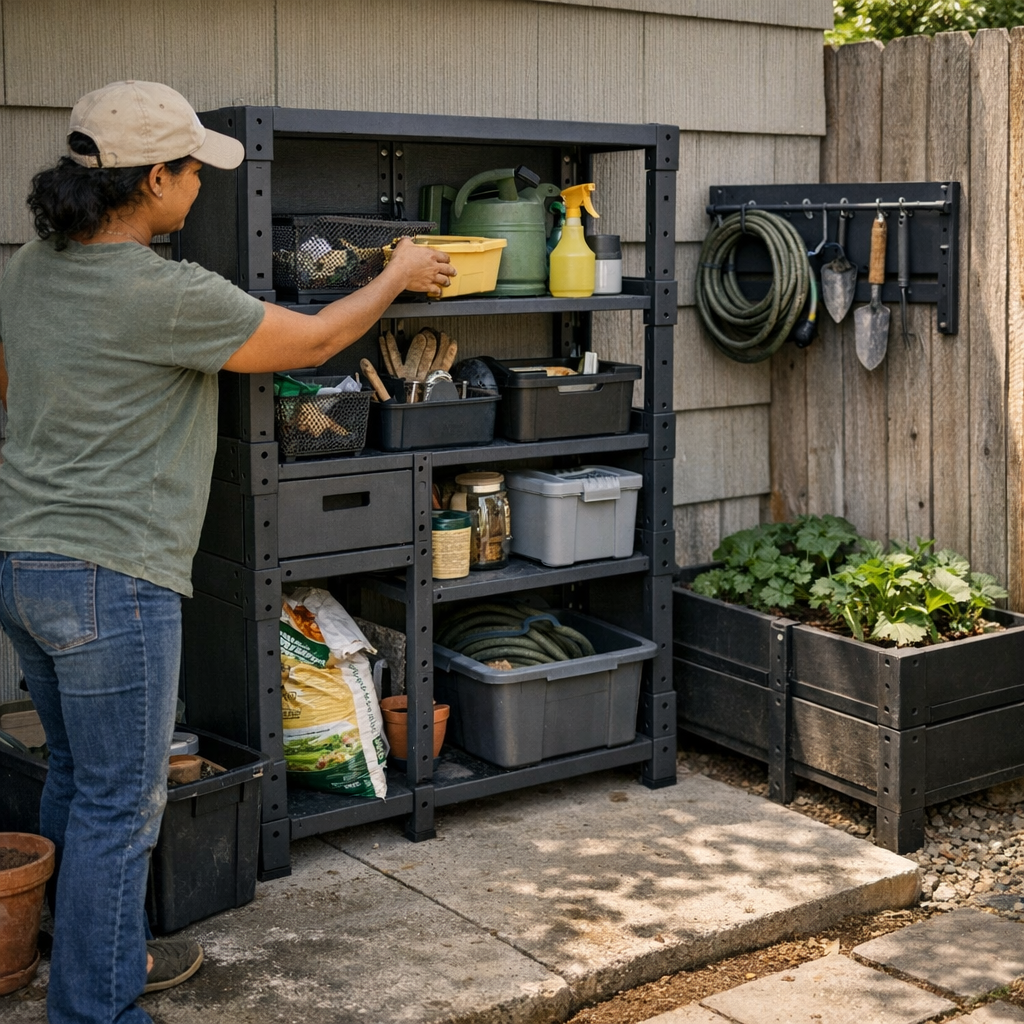
    The first day with a new outdoor storage setup always feels like you’ve finally won back your own backyard. The patio edge is clear, the bins along the fence are tidy, the chairs line up as if this time, the system will hold. But give it a week. Now the rake sits awkwardly between recycling totes because someone needed room for a bike, a soccer ball is wedged by the back step because that’s fastest for the kids, and someone—never the spouse who planned the zones—slides a garden trowel behind a bin that already overflows. The clean look dissolves. The footpath shrinks. Even grabbing a broom means shifting a chair first. Suddenly, the “organized” area gets in the way as much as the old pile ever did.

    When “Organized” Becomes a Daily Puzzle

    Yard storage that looks neat on day one meets its real test after a week of traffic. The difference between a space that just looks organized—and one that actually stays easy to use—shows up fast. It’s not a dramatic mess at first: a bike leans where you need the rake, buckets teeter in a stack, a bag of mulch slides into the path. Each return adds friction in quiet ways. Movement slows. Suddenly, there’s a silent game of slide-and-shove every time you want the hose or gloves; nothing comes free without first rearranging something else. In households where multiple people make returns at different times, priorities clash. Someone’s shortcut is always another person’s headache.

    The Unseen Creep of Overflow

    In a backyard that actually gets used, the wrong setup turns small mistakes into permanent problems. One person resets every night, but that “system” collapses when everyone else stashes gear where there’s just a sliver of space. Bins and freestanding racks silently max out, then spillover seeps into corners that were supposed to stay clear. The hooks fill unpredictably—overflow on the easy-to-reach ones, others collecting cobwebs because they’re too high or tucked away. Floor space turns into the emergency drop zone for garden shears, bike helmets, or anything that doesn’t fit the system in a rush.

    The friction is mostly invisible. A “temporary” chair slowly claims the entire walkway. Someone sets the hedge trimmers down, just for a moment, and somehow that becomes the tool’s new home. Every week, the so-called fix starts to unravel—not as a visible mess, but through time lost in slow detours and a lingering sense of annoyance. Not real chaos, but a slow-moving gridlock that never quite goes away.

    Where Flexible Storage Loses the Plot

    Flexible layouts—open shelves, big catch-all bins, low racks—promise to swallow anything. They do, at first. Then things get blurry. Bins overflow fast, stacked buckets start toppling, and the “flexibility” turns into a maze of grab-bags and mystery piles. You want the pruners and find them beneath pool noodles, behind an unused soccer net. What once felt like options now feels like hunting through someone else’s garage sale.

    Every corner becomes a magnet for items that will “go back later.” A plastic tray near the fence fills, a single glove claims the sunniest post, an old basketball just lives under the table. Even if you’re determined to reset the area, the space itself doesn’t help keep things sorted. Flexibility turns to friction: more stuff, less clarity, the endless cycle of moving piles just to open a path.

    Wall-Mounted Systems: Restriction That Actually Frees You

    At first, wall-mounted setups look strict—hooks are fixed, trays are shallow. There’s no room for improvisation. But as you actually use the space, the payoff is obvious. Every piece has a true home, and even if someone uses it differently, the wall system’s logic nudges everything (and everyone) back into line.

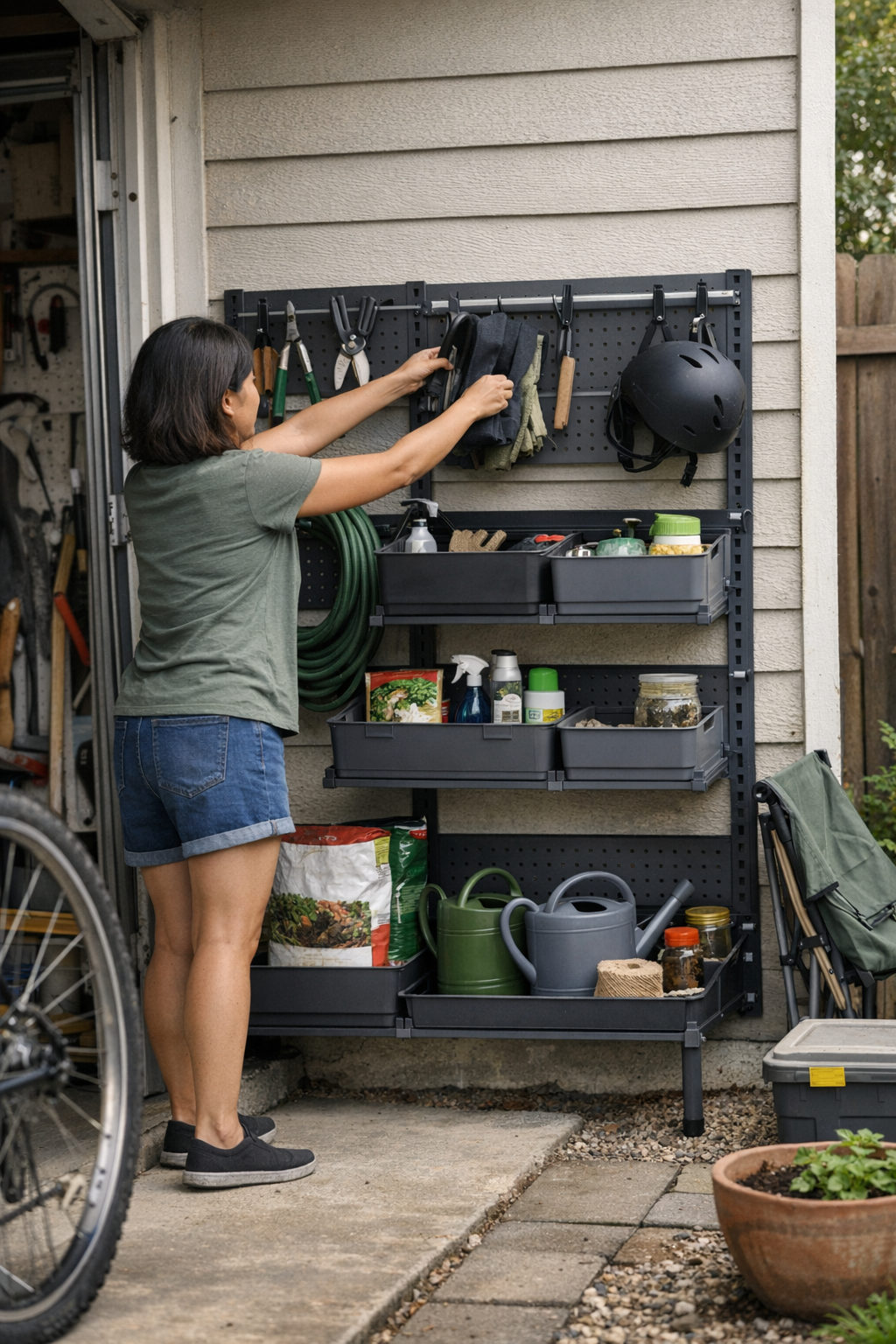
    Compare how a wall holds up after a full week of careless returns: the rake always lands back on its hook, hoses find their trays, helmets aren’t buried in the bin, and the path under the system stays open, never hijacked by “waiting to be put away” odds and ends. You still see less-than-perfect behavior—gear crooked on the hook, a bucket set one spot off—but the structure corrects chaos automatically, making resets rare and never overwhelming. This isn’t about achieving a photo-perfect reveal; it’s about a setup that quietly handles repeated, even careless, real-world use.

    The Real Test: The Garage Threshold

    Picture the garage edge on a normal Saturday: bikes squeezed next to a row of rakes, folding chairs stacked for one backyard meal, the whole setup well-intentioned but brittle. By week three, a bike blocks half the entrance. The pile of chairs, once neat, migrates so that grabbing a shovel means shifting everything around it. A helmet drops “just for now” and starts a chain reaction—soon there are two chairs to move before you can access the hose. What looked like a practical footprint now blocks movement and slows down every errand.

    Rescue attempts feel endless: sweep, straighten, promise to keep it clear. But within days, those open bins fill and pathways narrow again. Without structure guiding behavior, any setup ends up needing constant resets—until the routine feels harder than the original mess.

    Reset Without the Resentment

    You can only restore “day one” order so many times before frustration takes over. The trick isn’t working harder; it’s designing storage that helps lazy, distracted, or hurried returns land in the right spot—with no heroic effort.

    Break the wall in zones: Replace a row of freestanding bins with wall hooks for every full-size tool, and install shallow trays a foot off the ground—just enough room to slide boots, small items, or gloves underneath, with nothing hogging the footpath. The clearance stops piles from creeping underfoot. Even on off days, dropped gear stays above the walking surface, and the main lane stays open, not hidden beneath spills and overflow.

    Upgrade sticky corners: Find a zone where overflow piles up—behind the bin, beside the hose, beneath a bench. Don’t add another loose tote. Mount a hook or tray instead. Even one fixed anchor on the wall is enough to redirect daily drops and stop a dead corner from claiming your stuff.

    Organization That Lasts by Absorbing Real Life

    The only outdoor setup that survives a real month is one that handles shortcuts, half-hearted returns, and the daily shuffle. When design makes it obvious where everything goes—tall items high and tight against the wall, all the quick-grab stuff low and visible, the main path unobstructed—routine use barely disrupts the flow.

    This isn’t about a flawless reveal. It’s about knowing that, when you come in dirty after weeding or a kid comes flying off their bike with helmet in hand, the setup won’t punish a rushed or lazy return. The right storage absorbs day-to-day mess, nudges stray items back into place, and keeps any one mistake from snowballing into a turf war or endless reset grind. In a real backyard, nobody needs to become the routine enforcer. The space simply works, quietly holding its own through dozens of uses—no daily shuffle, no creeping bottleneck, no one corner turning into a permanent overflow lot.
    Find practical outdoor setup solutions at TidyYard.

  • How Smart Seat Setup Transforms Your Entire Flight Experience

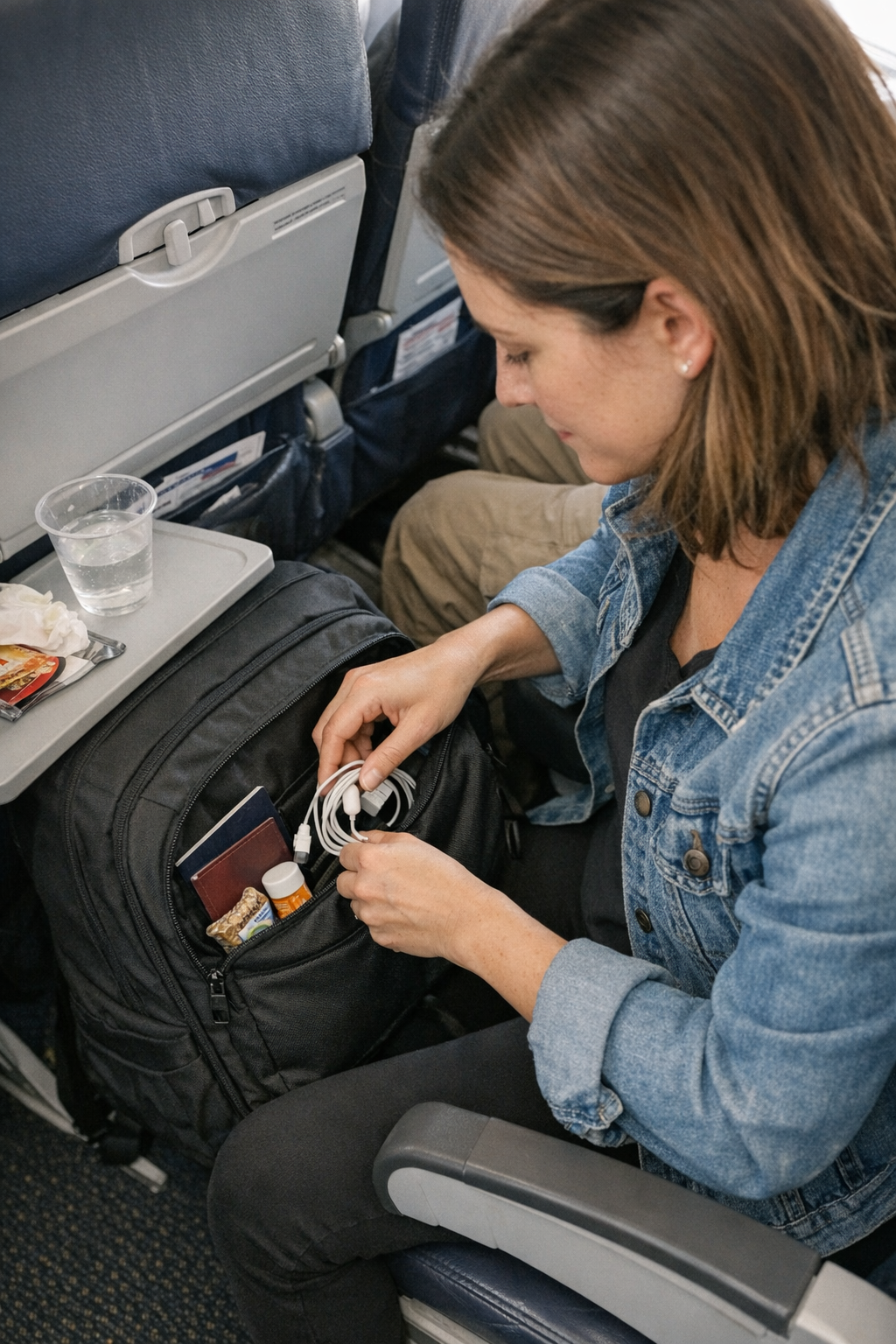
    Even a perfectly organized carry-on can turn into a repeated headache once you’re in your seat. That zipper you zipped with satisfaction at home? Suddenly, it’s out of reach under the tray table. A pouch system that looks neat before takeoff can slow you down at the exact moment you need to grab your passport, headphones, or pen. If you’ve ever shifted awkwardly, digging deep for a single charging cable or quietly cursing a boarding pass buried two layers down, you already know: an orderly pack isn’t the same as an accessible pack—and that gap becomes obvious at cruising altitude.

    Where Order Collides With Reality: The Hidden Weakness of a “Perfect” Pack

    A carry-on that begins with color-coded pouches, clean stacking, and every item in its “right” spot usually wins big in the packing photo. But that surface control disappears as soon as you wedge your bag under the seat, squeeze between armrests, and realize basic access isn’t so basic anymore. Suddenly, zippers aren’t lined up for one-handed reaches—your main compartment hovers just out of reach, and every request for something small means disrupting a once-neat stack.

    That feeling of visual order quickly vanishes the first time you unzip for your charger and end up shifting a sweater, two pouches, and a snack bag that slides off your lap. The packing method that made sense when open on your bed starts failing right when you can’t afford extra steps—like when you’re asked for your documents or need to untangle headphones with the seat belt fastened and a tray table blocking your arms.

    Repeat Cycles: The Real Travel Friction

    The drag isn’t a one-off. Each time you retrieve, return, or reshuffle—even just for normal inflight routines—the friction compounds. Fetching your pen, then your snack, then adjusting a charger means repeating the same slow dance. The logic behind your original arrangement gets eroded not by one bad moment, but by the number of small interruptions that stack up every hour on board. What felt effortless at the gate starts feeling sluggish, and the discomfort is cumulative.

    Moments Where Your Seat Setup Is Truly Tested

    Missed comfort isn’t dramatic—it’s incremental and stubborn. These are the situations that expose the weak spots in most “organized” setups:

    • Seat Entry Stumble: Blocky gear bumps the armrest or stalls in the aisle. Retrieving basics often means pulling your whole bag up from under the seat, usually while someone else waits or the aisle crowds up.
    • Tray Table Trap: Once the tray drops, your main compartment might as well be locked shut. Find yourself juggling a laptop, propping items on your lap, or trying (and failing) to grab a cable blind.
    • Layer-Stacked Standoff: Every pouch and tidy stack is an extra obstacle. Need something you used 15 minutes ago? Prepare to shuffle through your whole arrangement.
    • Document Check Delay: Boarding passes and IDs may look “secured” in deep inside pockets, but accessing them during routine checks creates a scramble when you’re supposed to move fast.

    A setup that seemed calculated for order at home starts to feel like a recurring bottleneck the minute you need to access anything on the fly.

    Visual Order Isn’t Travel Flow: The Subtle Cost of Over-Structuring

    Travel efficiency isn’t about photographs or packing lists—it’s about constant movement. That main compartment, showroom-ready at home, becomes a chokepoint the moment you try to grab an everyday essential. More pouches kill visual chaos but add layers of retrieval and repacking. Every time you need your medication, tech, or snack, the steps multiply, and the small irritations pile up, especially when space shrinks and your reach gets awkward.

    An organized cable roll and tight shirt stack look impressive in a hotel room; midflight, you’re rooting around for a stray pill bottle or hunting for the elusive cord you packed “just right”. Each small use scratches at the system’s weak spots—what looked controlled on the outside now generates repacking chores after every interruption.

    When Neatness Slows You Down

    You can spot a weak spot not at takeoff, but halfway through your routine. The same pouch gets opened for the third time in an hour. By the fourth or fifth retrieval, the price is obvious: more shuffling, longer pauses, and a setup that gives up speed for the illusion of order. The original “system” isn’t broken, but it’s working against you at every turn.

    Restructuring for Real Use: What Actually Helps in Transit

    The fix isn’t in tighter packing—it’s in placing high-frequency items where they work during repeated use. If chargers, snacks, and travel documents are buried in your primary stack instead of a direct-access outer pocket, you’re signing up for repeated interruptions. What looks “tidy” laid out on a bed just creates more steps under a tray table.

    The best carry-on setups for real-world travel prioritize immediate reach: one-motion retrieval for those things you’ll need midflight, through security, and right before landing. Repeating-use items—phone charger, passport, medication, pen—should be in outer pockets or seat-facing organizers, not trapped under a pile of less-used gear. That switch alone transforms retrieval-from-memory into muscle memory: grab it, use it, stow it in a single move—without fishing or balancing.

    The Real-World Impact: Less Disruption, More Focus

    Your travel rhythm shifts instantly when essentials live in easy-reach compartments. Instead of a two-handed dig for your notebook or a balancing act with your pouch on your knees, you slip a hand into a pocket and keep moving. Checking your ID or getting a snack becomes a blink, not a routine. And when landing approaches? Packing up is fast, with no guessing where you stashed your last-used items or scrambling to reseal pouches as everyone stands up around you.

    Travel stress isn’t measured in major mistakes—it’s in the friction of repeating small, preventable hassles. Kill the repeated shuffle, and every stage of your trip feels faster and more under control.

    Building a Seat Setup That Survives the Entire Flight

    The strongest systems focus on movement, not just looks. Ask: how often will I want this item while seated? If something is a high-frequency essential—like your charger, travel documents, comfort items—give it its own close-access pocket. Not a catch-all abyss, but a clearly assigned slot that’s reachable even when space gets pinched.

    • Designate a direct-access place for each high-use item. Outer and seat-facing pockets matter more than another tidy inner layer.
    • Minimize stacking and nesting that interfere with simple retrievals. If grabbing your water bottle means disturbing your headphones, rewrite the arrangement.
    • Focus on quick return—items that come out repeatedly should fit back into place in one motion, not require a reshuffle each time.

    You only recognize true carry-on flaws in motion. If a pocket or pouch keeps slowing you down, that’s the cue for a practical adjustment on your next trip.

    The Gap Between Looks and Function: What “Really Works” Means for Repeated Use

    The setups that fail are usually the ones that look finished from the outside but create new obstacles mid-journey. What matters isn’t an initial sense of order—but how few interruptions you actually face across your real flying routine. The right carry-on structure is proven not on your first retrieval, but after you’ve been in your seat for hours and all the small motions still feel smooth and recoverable.

    The difference you’ll feel comes down to simple corrections: move the item that keeps slipping to a better pocket, bring high-frequency essentials into the light, shave seconds from each step. The less time you spend fixing, fishing, and repacking, the more your carry-on helps—without ever drawing attention to itself.

    Get setup for smoother, easier flights with practical seat-side tools and fast-access organizers from CarryOnSupply.

  • Why Solid Joist Mounting Prevents Lighting Fixture Flex and Sagging

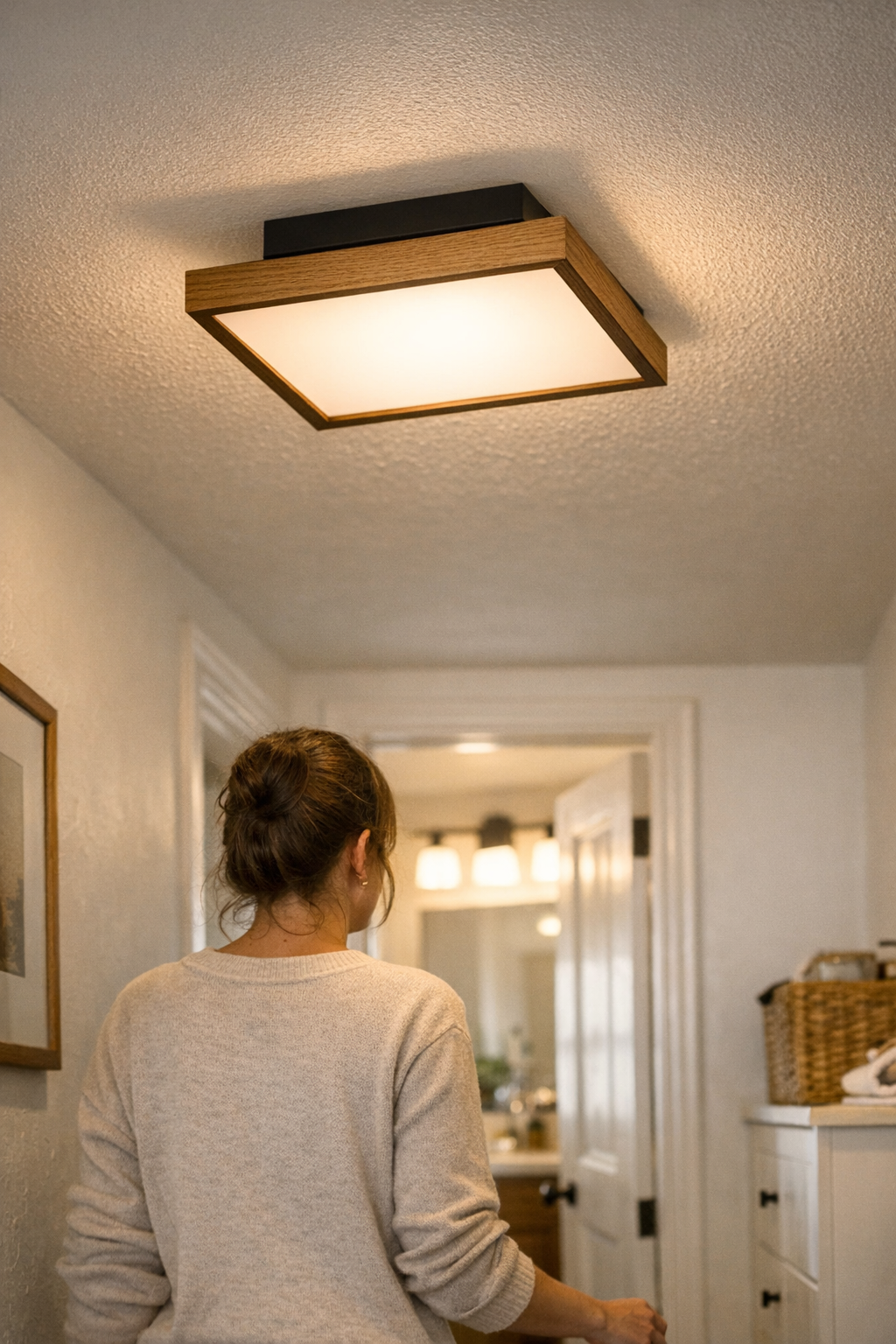
    Looks can fool you—especially with indoor lighting. That new ceiling fixture might sit flush and look seamless on day one, but real use quickly reveals its limits. In high-traffic zones like busy hallways, cramped stair turns, fogged-up bathroom mirrors, or workhorse laundry counters, you stop noticing how pretty the fixture is and start noticing every wobble, shifting shadow, glare patch, or dark edge. When the base flexes or drifts—barely visible at first—your morning routine turns into a hunt for the right angle or a silent battle against poor visibility. “Finished” lighting becomes the nagging chore you revisit every week.

    Where Flawless Looks Fade: The Real-World Consequences of Flex

    Showroom fixtures all pass the eye test, but daily life exposes differences fast. Flex enters the scene when a fixture’s bracket only bites into drywall or patched plaster—never quite reaching the certainty of a joist or stud. At first, you’re fooled: the ceiling looks clean, seams are tight, the room’s bright. But daily routines begin to strain weak points that escaped notice on install day.

    After a few weeks, walk those same routes—upstairs corridors, around bathroom mirrors, along laundry counters. Soon, shadows stretch where none used to be, the fixture sags a fraction, or a seam collects dust that never used to settle there. Maybe you hear a creak every time you dust, or reflections stay off-balance no matter how many times you nudge the bulb. None of these changes are dramatic—just a steady accumulation of small, irritating mismatches that remind you the job isn’t really done.

    When “Illuminated” Isn’t the Same as “Usable”

    Different rooms reveal the problem in their own way:

    • Hallways and Corridors: The bulb is on, but every slammed door sends tremors through the fixture. One wall starts to vanish into shadow; you don’t notice until your path shifts to avoid the dark edge.
    • Bathroom Mirrors: The fixture lines up over the center—at first. Over time, flex causes a shadow to creep over one side, or glare pools right where you need clarity. Shaving or makeup gets slower, less precise.
    • Stairway Turns: Light looks fine from a distance, but take the turn and realize the angle’s shifted again. The bright patch never matches the safest path, especially after heavy use or a round of cleaning.
    • Task Counters and Utility Areas: Under-cabinet light starts strong, but after weeks of routine bumps, part of the counter fades. You fumble to see cutlery or tiny hardware because a loose base sent light askew.

    These are not just small aesthetic annoyances—they are practical, ongoing visibility problems. Not quite bad enough for 911, but just frustrating enough to slow you, break your focus, or make routine tasks a pain.

    Small Flex, Big Friction: The Subtle Strain of Repeated Contact

    Anyone who’s dusted a creaky flush mount knows this ritual: at first, it barely budges—a whisper of movement during cleaning, a tilt after a bump in a narrow spot. Over weeks, the base arcs away, seams fray, and the weight starts prying at the fixings. Shadow lines deform, light spreads unevenly, eventually even the wiring junction feels the pressure.

    Field rule: If a fixture crunches under your fingers or shifts too easily, don’t just twist it back and forget it. Many homeowners keep fighting the same crooked fixture every season, never tracing irritation back to weak mounting under everyday wear.

    The Hidden Cost of Weak Mounting: Wiring, Alignment, and Your Routine

    Two lights from the same box might look identical on day one—same brightness, same finish, same LED promise. The difference isn’t visible until weeks later: one still sits snug and even, the other has begun its slow slide into misalignment. A joist-mounted fixture just stays put—shadows fall where planned, the space stays tidy, and clean-up is fast. Support from drywall or thin plaster means even small jolts—from a spring-cleaning, a slammed door, or a toddler’s reach—become cumulative drift.

    Frustration pops up during:

    • Foot Traffic: Corridors see every step rattle the mount, shifting light and forcing you to squint or adjust stride.
    • Maintenance: Bulb changes or a simple wipe-down disrupt alignment, turning quick chores into repeat fixes.
    • Routine Changes: Each new season or minor schedule twist reveals the weaknesses in lighting that should have stayed invisible.

    The Real Fix: Rethinking How Fixtures Meet the Ceiling or Wall

    Toggles, anchors, and patched holes might stall problems, but long-term, the fix is simple and rarely cosmetic: secure the fixture—or its backer bar—directly to a joist, stud, or solid blocking. It’s less about weight, more about how each daily jolt, shift, or cleaning attempt is silently transferred through the mount. Done right, this stops seams from growing, shadows from creeping, and—most important—keeps wire connections healthy for years instead of months.

    Scene: Fixing a Bowed Hallway Fixture

    Picture a narrow corridor, overhead plaster, a semi-flush light anchored only by wall plugs. Looks fine—at first. But after weeks of footsteps, the fixture bows, shadow lines drift, and hairline cracks gather dust overhead. Light stops reaching one side, and the walk feels strangely unbalanced every night.

    Remount it to the nearest joist—the bow ends. Shadows quit migrating. No more hunched dusting or wondering why the hallway feels “off.” You don’t notice what’s changed at first—what’s different is the daily nagging finally stops.

    One Reliable Upgrade for Living With Your Lighting—Not Just Looking at It

    Fixtures anchored to solid support earn their invisibility. Day after day, the light works, surfaces stay evenly bright, and you no longer choreograph your movement to avoid a glare, an awkward angle, or a shadowed patch you can’t reach. Whether you’re checking the stairs at night, cleaning the bathroom mirror, or prepping food along a counter, everything just functions. No flex. No repeats. No subtle drift that pulls attention away from the task at hand.

    The best lighting upgrade isn’t more fixtures or new bulbs—it’s fixing the part you can’t see: the attachment that holds the line against real, repeated use.

    Visit LightHelper for practical indoor-lighting solutions built for real use.

  • Why One Fixed Storage Spot Beats Flexible Solutions Every Time

    When storage setups drift, daily routines break down fast. Maybe you start with bins and hooks snug against the wall or shelves stacked with intention. Everything looks under control for the first few days. But by the end of the week, reality sets in: the sliding rail has shifted, baskets wander to new corners, modular bins start to multiply, and the tray that once just held your keys is slowly suffocating under layers of chargers, random mail, last week’s receipts, sunglasses, and more. Instead of cutting down on wasted motion, these storage “solutions” become constant sites of friction—a quick step to grab headphones turns into five seconds of rummaging. Suddenly, the space that looked efficient now stalls you at the worst possible moments.

    Why Flexible Storage Systems Break Down So Easily

    The first crack is barely noticeable—a bin tucked under a shelf, a catch-all basket that was meant for overflow but never leaves. The adjustable cord holder migrates just far enough to throw off muscle memory. Before you notice what’s changed, you start reaching twice for your phone charger or asking who last saw the spare mail key. Flexible systems promise adaptability, but when the actual storage units don’t hold their ground, every category inside them gets blurry. Chargers don’t stay put. Mail splits across surfaces. The “sorted” tray is back to chaos in a week. The more the storage arrangement shifts, the more you’re forced into micro-resets—repeating the same tidying and searches again and again.

    It’s not that flexibility is useless—it’s just that, in real life, storage that keeps moving eventually creates its own maze. The ripple is always the same: routines lose speed. An area that seemed to solve your mess becomes one more stop that interrupts your flow, especially in shared or high-traffic spaces.

    The Quiet Strength of a Fixed Storage Point

    Stable storage outperforms the clever stuff. The unmoving hook by the door or the shelf anchored in place doesn’t draw attention, but it keeps routines from unraveling. When a storage spot stays put and its purpose is obvious, the retrieval-and-return cycle becomes almost automatic—even as the days get busier, or the contents change with the seasons. You waste zero energy wondering where things migrated. The hand-off just works: sunglasses, keys, headphones, even two remotes all return to the same spot.

    This isn’t about demanding rigid order. It’s about minimizing doubt. The more you relocate your anchor points, the more invisible clutter and hesitation creep in. In a shared house, mobile storage multiplies confusion. One person’s “solved” zone is another person’s “where is it now?”

    Scenes from Daily Use: When Storage Frustrates More Than It Solves

    The Entryway Reset That Never Sticks

    You come in loaded with bags, mail, and keys—aiming for the same tray as last time. But it’s slid down the console or landed halfway onto the counter. Sunglasses are in the basket, keys are buried, and mail has already scattered into a side pile. By Friday, a ten-second grab turns into rifling through a mound that’s half yesterday’s change, half mystery items.

    Overflow Corners and Guesswork Zones

    The living room’s modular bins start out organized: books, toys, remotes. Then the overflow hits—sports gear, receipts, a phone that needs charging. One bin swallows the rest and, within days, you’re opening every lid searching for a single cable. Shelf space looks busy but not actually functional.

    Blocked Movement and Awkward Footprints

    The floor basket that seemed perfect at first expands into the path—now someone always stubs a shoe or steps around it. Rolling carts back up into dead zones, used more as an accidental barricade than accessible storage. A setup that once hugged the wall now sprawls awkwardly, boxing you in just to reach one item.

    Why Anchored Spots Make Return Flow Automatic

    Stable return flow depends on the spot never shifting, even as the mess builds up around it. Mount a hook precisely where you naturally reach—or secure a tray where your hand lands after walking in. The fix is immediate: your stuff lands there with zero added thought and resets don’t stretch into the next day. Because the location is constant, everyone stops guessing, and essentials always surface first.

    Over a normal week, the difference is visible:

    • No asking “Did I move it, or did someone else?” every morning
    • Overflow is spotted and managed quickly—never swallowing the anchor point completely
    • One recovery spot prevents you from hunting through half a dozen bins or baskets for a single missing charger

    Keeping Overflow from Contaminating Category Clarity

    Overflow happens—but with an anchored storage spot, the spill is contained. Extra mail or backup cables pile up nearby, not mixed in with daily-use items. The anchor never gets buried. The family’s main keys or chargers always resurface in moments, while secondary clutter signals itself at the edge. Resetting stops being a half-hour hunt and turns into a quick hand sweep.

    Where to Anchor for Long-Term Usefulness

    Focus on storage anchors at daily transition points. That means:

    • Directly inside your most-used door—so nothing detours out of sight
    • Beside the main outlet where every device gets charged
    • On the direct line between bedroom and bathroom for routines that happen half-asleep
    • At the spot next to your favorite chair—minimizing the urge to drop items “just for now” onto surfaces or the floor

    Forget about symmetry for its own sake. The right location is the one that stays frictionless through repeated use—even as habits and people change.

    When Consistency Matters Most

    Shared spaces—hallways, kitchen corners, open mudrooms—expose every flaw in mobile setups. Each different rearrangement fractures routines. An anchored point builds muscle memory for everyone. If you let storage points keep migrating, confusion multiplies: a “temporary move” becomes a week-long guessing game. The real reward for keeping storage fixed is simple—smoother resets, fewer lost items, less disruption, especially when pressure’s on.

    The Bottom Line: Stability Beats Flexibility When It’s Time for Action

    Adding more flexible storage feels like the easy fix when clutter spreads. But the system that lasts is the one with an immovable anchor for must-use items. When overflow happens, it surfaces around the edges—not inside the core routine. Instead of chasing the look of order, anchor your most-used zone and let it do the heavy lifting even as conditions change. The setups that actually keep up—on your busiest, most distracted days—are the ones that can’t drift.

    See practical storage systems for real use at Gridry.

  • Why Strict Closet Systems Fail When Energy Runs Low

    Everyone loves that first glimpse of a newly organized closet: rows of shirts lined up, bins sitting like sentinels, everything freshly folded and labeled. But three days later, the reality of daily life sinks in. You’re reaching for socks while half-asleep, nudging a stack of t-shirts to grab the only clean one at the bottom, or shoving a hoodie on top of a too-full shelf. The order that looked effortless Sunday evening starts to fray before the week’s even half over.

    Why “Picture-Perfect” Setups Break Down

    On day one, tightly assigned spots and hard-edged bins seem logical—the closet has zones, each item a home, nothing wandering. But it’s an unnatural pace to maintain. Routines don’t pause for the system: kids come crashing in for soccer gear, your partner moves stacks to find that one missing shoe, or you’re late and barely toss things back. A single sluggish morning or a couple of nights skipping the full reset, and the uniform rows dissolve into something almost—but not quite—organized.

    Real habits always win. Even with the best intentions, most days don’t run on closet discipline. Shirts meant for one pile land sideways on another. Folded stacks slide out of square each time you reach in. Overflow builds on empty shelf corners. Soon, it takes just a day or two for a “finished” closet to slip into a repeat cycle of half-kept categories and improvisational storage decisions. If you’ve ever found a winter scarf tangled with last summer’s shorts, you’ve felt this drift firsthand.

    The True Everyday Pain Points

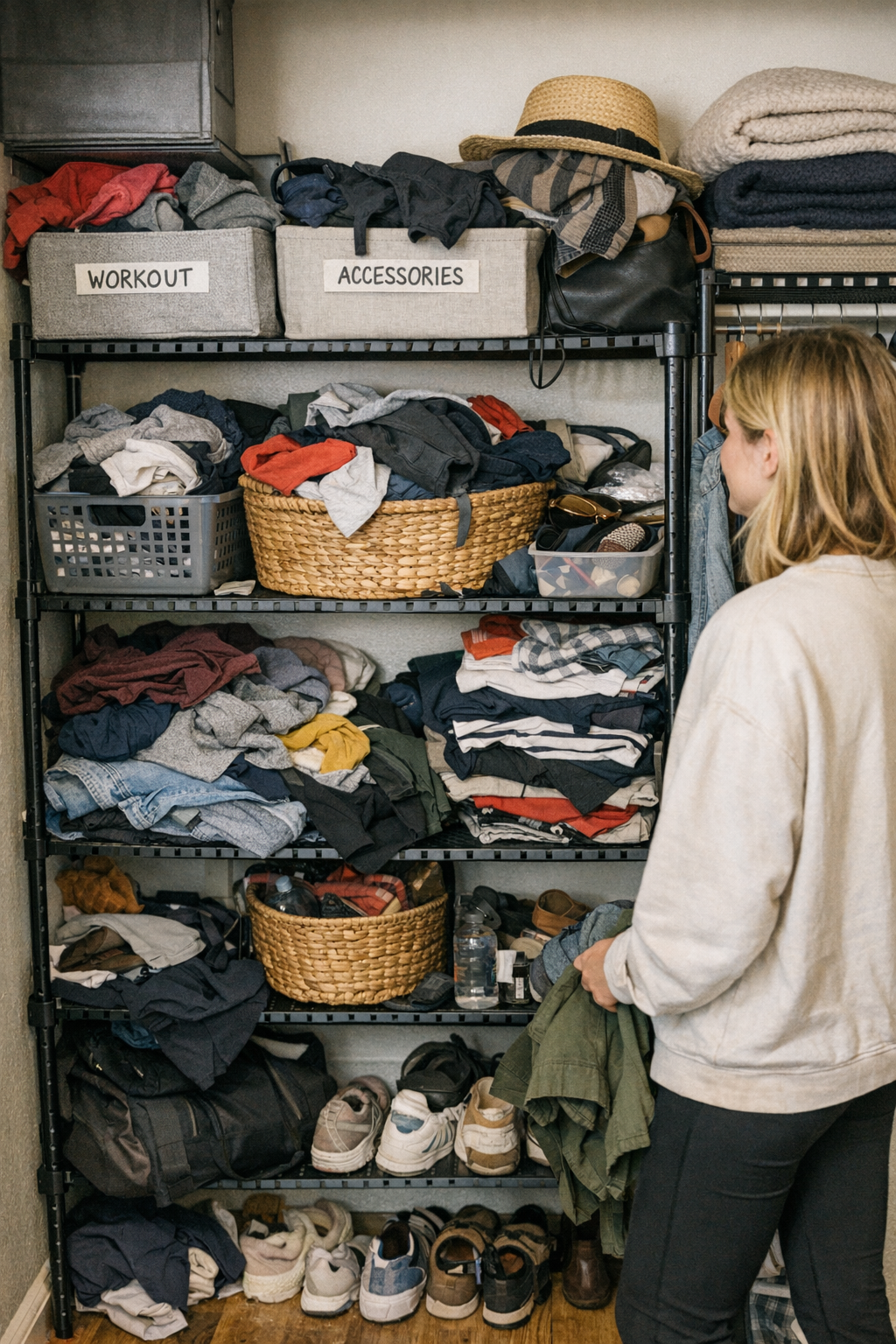
    It’s not just the big messes. It’s friction in the in-between moments. The stack of jeans that collapses when you fish out the bottom pair. The labeled bin for hats that now holds hats, gloves, and a jumble of mail. The shelf that was supposed to be “sportswear only” but becomes a catchall by midweek. Entryways tell a similar story, with shoes spilling into traffic lanes and mittens quietly annexing every available slot.

    Overflow and the Trap of Not-Quite Clutter

    Most of the time, it happens quietly. There’s still the illusion of order—nothing dramatic, just little trade-offs: slippers wedged behind a backpack, workout gear overtaking the “jackets only” hook, or folded stacks slowly giving way under the weight of one-more thing. The closet’s surface might look okay, but reach for something, and you’re met with resistance—items jammed tight, categories bleeding into each other, grabbing one thing always displaces two more.

    Resets: Where Systems Succeed or Fail

    The toughest test isn’t first setup—it’s whether you can quickly bounce back from everyday chaos. If restoring order means emptying half the shelf to fix one stack, or unloading a bin to get things back in their lane, resets start to slip. Low-energy days or busy evenings make strict boundaries impossible to enforce. Instead of a 60-second straighten-up, you’re looking at a half-hour re-sort nobody wants to tackle. Little messes layer up; “almost organized” quietly becomes barely managed.

    What Actually Happens Between Mondays and Fridays

    Imagine the morning rush: you’re already running late, rifling for the right shirt. In the process, half the stack slumps, and you cram it back however it’ll fit. The next day, you do the same, but now the section meant for folded shirts morphs into a jumble, scattered with a loose sock or a gym band. By Thursday, bins are mixed and shelves have surrendered any last sense of division. What looked like clear zones five days ago now feels like pure improvisation.

    Flexible Zones for Real-World Closets

    Rigid systems are no match for messy mornings. Storage setups that last build in the flexibility to absorb off days and imperfect returns. Swapping tight dividers for larger baskets or grouping all “everyday shirts” in one open zone makes post-chaos resets easier and much faster. Instead of fighting against the grain of your daily habits, the closet adjusts—accepting quick stashes and rough returns without the system unraveling.

    This isn’t giving up on structure; it’s getting smarter about where you need it. Keep categories for high-use items loose and accessible—easy to drop in, easy to pull out. You don’t need absolute order for order to work. The faster things can get back in place (even if “place” is a bit fuzzy), the less the chaos spreads. A closet that resets in a minute with a little sweep is one that stays usable all week—even when life gets messy.

    Dialing In on What Actually Works

    Match the setup to your real rhythms—not your “someday” self. Notice the spots where things always slip and adjust those rules first:

    • Store your frequent-rotation clothes at chest height, so you’re not always reaching behind or shifting stacks to grab what you wear daily.
    • In high-traffic spots, replace tightly labeled bins with open baskets. Wide categories (“all workout gear” or “kids’ outerwear”) survive everyday chaos much better than hyper-specific ones.
    • Leave “free space” every few shelves or cubbies—a built-in buffer for laundry days, midweek overflows, or that random oddball item that has nowhere else to land.

    Apply this logic in any zone under pressure: entryways, laundry rooms, even mudrooms. Open baskets beat narrow cubbies for catching hats, water bottles, and scattered chargers. The goal isn’t immaculate order—it’s resilience, so when routines stretch or break, your space flexes instead of falling apart.

    Spotting Trouble Before it Spreads

    Clutter rarely erupts all at once—it seeps in, item by item. The pile that grows unaddressed. The stack that teeters until nobody wants to touch it. The system that can’t be reset quickly becomes the system that gets ignored. The fix: set up so you can course-correct tiny missteps in seconds—one stray shirt, one mixed bin—before the mess grows muscles. No ten-minute restacks, no guilt spiral, just an easy path back to usable order.

    Choose Resilience Over Perfection

    The closets that actually make life easier aren’t the ones that look untouched in magazine photos. They’re the ones that help you recover after real, hectic days. When your storage setup lets you shrug off a bad week and restore order in sixty seconds—not sixty minutes—daily stress drops. A closet that bends with your habits is one you can actually keep using, not just admire once it’s freshly cleaned.

    Find practical closet storage solutions that match your real routines—and help your home work better every week—at ClosetWorks.

  • Ending Cat Grooming Early Reduces Stress and Simplifies Daily Care

    Grooming an indoor cat can seem simple—until you’re halfway through, fur on your hands, your cat tensing up, and the “quick session” is already dragging out the evening. You squeeze in brushing between other chores, pushing for that fully smooth coat, but every extra minute you insist on finishing costs you tomorrow: your cat bolts at the first brush rustle next time, the grooming blanket sits ignored, and the supposedly tidy corner quietly turns into a work zone no one wants to use. The room might look put together for a moment, but the setup is starting to fight back—more scattered fur around the baseboards, tools piling up instead of staying ready, and a routine that now feels like a drawn-out negotiation. The right grooming setup is supposed to cut friction, not bury it under a cleaner surface. StillWhisker’s world is about setups that hold up to repeat resets, not just one perfect-looking session.

    Why Shorter Grooming Sessions Change the Pattern

    Cutting sessions short the moment your cat shows tension isn’t just about being gentle—it’s how you keep daily resistance from spreading across the week. At first, skipping those last lingering tangles feels like you’re leaving the job unfinished. But over a few days, you notice it actually gets easier: there’s less wrestling to start, less hiding before you begin, and fewer tools left abandoned on the nearest counter. Grooming shifts from “squeeze it in and brace for trouble” to quick, manageable resets the cat barely bothers to protest. Your hands spend less time tracking fur under chairs, more time keeping the shared spaces livable.

    This isn’t about ignoring mats or letting things slide. It’s about dodging the trap where brushing always ends with a struggle, the area gets quietly avoided, and every future attempt starts as a standoff. The longer the resistance builds, the more likely it is your supplies end up shoved out of sight, home spaces get interrupted, and you wind up putting off basic upkeep just to avoid another round.

    Recognizing the Real Tension Points

    Every indoor-cat setup eventually reveals pressure points. Maybe there’s a chair corner reserved for grooming—blanket spread, brush stashed nearby. First week, the reset is easy. Over time, though, you spot wariness: your cat keeps an eye on the brush instead of the window, the blanket rarely stays in place, and fur works its way into every unreachable crack. The “grooming corner” is visually clean, yet supplies stop being easy to reach, and every session feels like a second round of prep and chase rather than maintenance. The weak spot isn’t the amount of fur—it’s the friction that grows if the setup never adapts.

    Tools that look stored can become hard to grab. Blankets that seemed convenient start sliding off, forcing an awkward grip mid-session. Cleaning up takes longer—not because there’s more mess, but because you’re repeating a cycle instead of relying on a flow that just works.

    “Finish Everything” vs. Flowing with the Cat’s Rhythm

    It’s tempting to push for a fully done session—a smooth coat, a swept area, zero loose fur. But insisting on that “one last brush” is what slows everything down, day after day. As soon as your cat arches, flicks a tail, or subtly stiffens, you’re at a crossroads: pause now and keep reset friction low, or stretch for those last few tufts and bake tomorrow’s resistance right in. The cost rarely shows up immediately. Instead, here’s how it plays out in repeated use:

    • The brush never leaves the room, because bringing it back out means another chase.
    • Your cat circles the grooming space, watches you move, then waits for you to give up before settling in.
    • Fur lines appear under furniture even after a “good” session, because cleanup always gets delayed.
    • The blanket, instead of being a tool, becomes another thing to fold and move, clogging up the next shared use.

    The more you try to polish the area in a single go, the more breakdowns you inherit for the next round. A great-looking reset means nothing if it takes double the effort to use again tomorrow.

    The Accumulating “Invisible Mess”

    A room can look spotless—blanket folded, fur binned, brush discreetly tucked away—and then slow everything down later. The invisible mess isn’t just physical: it’s the buildup of avoidance, longer pauses before starting, and tools that no longer feel easy to use or return. When resets always take “just a minute longer,” daily flow breaks down. You swipe a cloth on the armchair, but fur lingers beneath. Grooming turns into circuitous errands—find the brush, hunt for the blanket, corral the cat—and your sense of order gets chipped away by small, repeated delays. A setup that isn’t fluid in daily use is one you’ll eventually sidestep.

    Spotting the Signals: When to Pause

    Indoor cats signal resistance before the full stand-off. You’ll feel a shift—tail flick, head twist, muscle stiff under your hand, paws repositioning, a purr that cuts out. If you stop at that moment, even with clumps left, you’re saving yourself the next chase around furniture. That half-minute “unfinished” session is what keeps both your cat and your supplies ready for the next round.

    This isn’t indulgence. It’s what keeps grooming supplies accessible instead of buried, what lets the cat use the chair without hesitation, and what turns grooming from a project back into a manageable reset—one you can handle any night, not just when you’re fully prepared for hassle.

    Example: The Blanket Corner Routine in Real Use

    Picture a regular evening: blanket on the armchair, brush pulled from the nearby bin, cat just waking from a nap. Brushing starts easy, then halfway through there’s a subtle twitch or sharp inhale. Rather than bargaining for another minute, you let go—literally. The brush gets wiped, blanket shaken, and both stash easily without a second trip across the room. Cat leaves without a sprint; space goes back to normal. A week later, you realize cleanup no longer drags, and the cat doesn’t vanish at the sight of the brush. The routine holds up quietly—you spend less effort fixing messes that “good intentions” created last time.

    Reset Flow: Handling What’s Left Behind

    Leaving stray fur or skipping the “perfect finish” isn’t laziness—it’s the structure that helps your setup do its job day after day. That imperfection keeps each session lighter, shortens hunting for displaced tools, and means the area never turns into a flagged-off zone everyone would rather avoid. Fur missed today is less work than compounded avoidance all week.

    Tools returned without resentment get used more. You stop shoving supplies behind closed doors, and spent blankets don’t pile up, damp and forgotten. The grooming setup actually becomes a part of the room’s routine: visible, usable, solid.

    Cleanup and Shared Space: Managing Adjacency

    No grooming setup is self-contained—fur drifts, tools move, comfort items migrate from shared chairs into every corner. When resets are short and low-tension, cleanup rarely grows into a full project. You brush and tidy up in one move; the blanket returns with the cat, not trailing hair through the hall. Shared spaces stay in play, not divided into “cat zones” and “resets waiting to happen.” No urgent overhauls. The area is ready to be used again for something else—reading, napping, guests—without a mental note that there’s an invisible job still waiting.

    Real Friction, Real Improvement—Not Perfection

    No method erases every snarl or spilled fur clump. Bad weeks happen: the brush gets batted away; you spot undone fur in the favorite nap spot. The difference is, you’re not wading through a week’s worth of delayed resets, chasing after perfection that only lasts for hours. Smoother, shorter sessions soak up the hidden strain—what’s left is an area that gets easier to use, not just cleaner to look at. Eventually, visual calm lines up with a setup that actually requires less effort between chores, not more.

    Trusting the Setup: Small Adjustments, Lasting Gains

    No two homes run the same routine. But the shift that makes a grooming area work is always about repeat use—not one-off cleanliness. Brushing supplies left within reach and not resented, blankets you don’t dread washing, corners you both return to instead of tiptoe around—those are the signs that small adjustments are adding up. Listen early, pause before protest, reset with speed. When grooming fits into your actual week, the rest of the home starts to run smoother too.

    See more ways to make indoor-cat routines easier at StillWhisker

  • Why Slim Lighting Needs Smart Support for Lasting Work Surface Clarity

    Minimalist lighting setups often solve one problem by creating another. A slim desk lamp or flush-mounted LED strip may leave your work surface looking pristine—until the first week of real use reveals the cracks. Suddenly, the left side of your desk is hidden in a fog of half-shadow, monitor glare makes you shift your seat, and crisp cable runs start slipping loose with every new device you plug in. What appeared effortless at install becomes a subtle daily hassle, felt not in the photo but in every moment you chase lost pens or push lines of glare off your notes. The promise of “barely-there” quickly gets outpaced by the friction of actual routines—who cares if your setup fades visually if it leaves you stuck mid-task?

    Where Clean Install Meets Daily Interruption

    The first day after mounting a panel light or running cables tight against the wall, your space looks resolved—no clutter, open surface, no visible mess. But order that only holds still doesn’t stand up to repeated use. Reach for a marker at the edge of your work area, and your fingers land in the dim because the beam stops short. Adjust your laptop position, and now a cable is clipping the corner of your hand. Every plug-in or device swap nudges another wire out of line. None of it loud, but all of it repeated. The product disappears visually, but the inconvenience it creates keeps cropping up in the background—proof that hidden doesn’t mean handled.

    Desk Edges and Work Surfaces: The Reality Check

    Desk edges and task surfaces are where slim lighting reveals its weak spots. A perfectly flush under-shelf strip can spray enough light for most of the desk, yet leave the front few centimeters stubbornly dim. That’s the real-life storage zone—where tools drift, crumbs land, and your eyes get strained scanning printouts. Even a slick, cable-free look won’t offset a dead zone where you need to actually see. The result? Day after day, you find yourself constantly pulling things forward, shifting positions, or just ignoring that shadow stripe—a tiny flaw that scrapes at routine efficiency.

    Shared Zones: Tidy Install, Uneven Outcome

    On a shared study table or busy kitchen counter, a minimal fixture with neat cable paths can’t control what happens once the routine picks up speed. One person’s book stays well-lit; another’s recipe lives in a gray patch. Reflections off glossy surfaces throw hot spots back in your face. Cables that started tucked flush start trailing into arm’s reach after a few quick movements. The system that looked finished on day one becomes increasingly fussy to use, and everyone adapts with small workarounds—twisting, repositioning, taping down one more segment—but the basic mismatch is still there.

    The Cable Compromise: Invisible or Just Out of Sight?

    One of the biggest draws of low-profile lighting is the hope that wires will finally vanish. But nearly every “invisible” cable run starts falling apart the first time you move gear, recharge, or unplug. Adhesive clips pop free in the heat, velcro tabs sag, and a snug path from last week is now a new trip wire in today’s routine. Instead of noticing the light, you notice the mess—cables peeking around the desk edge or pulling power bars out with them. The detail that was supposed to stay backgrounded makes itself impossible to ignore.

    Support Hardware: Strong Start, Sliding Finish

    Most bracket mounts or cable clips feel bombproof during install, but the test doesn’t start until you start using them. Each lamp angle adjustment, each unplugged device, puts slight pressure where adhesive eventually gives up. Screw-in brackets or deeper anchors help, but a weak mount quickly turns stable light into wandering illumination—a desk that flickers not from tech issues, but because the light bar keeps sliding off-track. Before long, you spend more time pushing pieces back into place than getting work done under their beam.

    Adapting in Real Time: Micromoves, Major Relief

    One small shift can unlock a big difference. Sliding a bracket a centimeter forward finally lights the desk’s edge—a zone you kept losing pens in. Replacing a sagging adhesive strip with a rigid screw mount means your cables hold shape no matter how often you work or swap devices. When each visible beam actually covers the active work area and wires hold their run, the surface stays both clean and easy to use, even on days when everyone shares the space or uses it hard. Suddenly, there’s less pushing, searching, or compensating, and more just getting things done.

    Everyday Adjustment: Clarity Over Clean Lines

    The real verdict on any slim lighting setup comes from the hundred small moves you make after install. If you’re nudging the lamp again to chase away a shadow, adjusting your seat angle for the third time to dodge glare, or re-taming cords by lunchtime, the friction is not solved—it’s just better hidden. Minimal hardware has to hold up not just for the first Instagram photo but for the daily routine it’s there to support.

    Real-World Fixes: Make Minimalism Work Under Pressure

    • Reach the edge: Place your beam so it covers the entire work zone, not just the center. Adjust brackets or shift strips so the useful edge—the place you actually write or handle small parts—isn’t lost in shadow.
    • Secure where it counts: Anchor cables at the real points of use—right at the plug-in, not just along the back edge. Over time, physical fasteners (screws, mechanical clips) keep lines in place better than any adhesive.
    • Fight glare, not just clutter: Where shiny surfaces reflect the beam back, change the angle or add a diffuser. A desk lamp that’s ultra-thin but aimed wrong turns task lighting into eye strain.

    Beyond Looks: Minimal Still Has to Work

    The setups that succeed don’t just hide hardware—they remove the interruptions you would have put up with anyway. A “silent” light isn’t silent if you’re constantly compensating for what it misses. A line of cable that never sneaks out, a bracket that’s solid months later, a beam that reaches right where it’s needed—these upgrades shrink daily friction and disappear by truly supporting your routine. Minimalist doesn’t mean accepting less function for a sleeker look. If your surface looks clean but still feels awkward to use, you haven’t solved clutter—you’ve moved it from the eye to the fingertips.

    A little more attention to bracket placement, cable support, and light spread at day one can mean months without mid-task frustration. The best hardware lets you actually ignore it, and focus on the work, hobby, or gathering in front of you. That’s when setup stops being the problem—and the light starts letting the space work as intended.

    http://www.lightsupport.myshopify.com

  • Why Placing Heavy Items Low Transforms Workshop Shelving Stability

    The problem isn’t that your garage storage looks bad—it’s that it keeps letting you down when it matters most. That flawless shelf line, that “organized” corner, the wall rack showing off all the right bins: at 7am, you feel set up. By 7:10, reality bites. Grab the heavy cooler from up top and the entire shelf shimmies. Wheel out the rolling cart and every nearby box shifts just enough to block your way. What looked tidy yesterday now turns into a stealth obstacle course. In the garage, the shed, or any unforgiving utility zone, it’s not being organized that matters—it’s whether your setup actually works under real, everyday pressure.

    The Daily Sabotage: When Storage Fights Back

    That modular shelf you built out with perfectly spaced bins and neat open space? It only behaves for the photo. In the friction of daily use—swapping a tool, grabbing the salt mid-storm, wrestling out the awkward floor jack—it starts slipping. You finish one clean reset only to face a new pile inching closer to the door by the next morning. That rolling cabinet you used to slide out with one hand now sticks, blocked by bins that never get put back up top. The walking lane you count on shrinks, narrowed by the gravity of “just for now” overflows. Fitting things in was easy; keeping them clear and accessible isn’t.

    Top-Heavy Trouble: Where Setups Tip from Order to Chaos

    Here’s the trap: heavy stuff stacked high doesn’t just create a risk—it breaks the entire flow of your zone. You meant for those upper bins to hold just seasonal gear, but soon the big toolbox is up there too. Each time you reach, the unit rocks or you steady it with a hip. Move a mobile rack and—wait for it—the tilt makes you cringe a little, so you wheel it less and leave it half blocking everything. That once-logical arrangement hides a quiet instability. The more you reach, rearrange, and adjust, the wobblier it gets—and the more likely you are to dump overflow on the floor or stuff “temporarily” into whatever corner hasn’t been blocked yet.

    Where “Organized” Means Blocked Paths and Slowdowns

    Before the mess even registers, you’ve lost flow. Instead of quick access and smooth resets, you find yourself detouring carts just to get through, squeezing around that always-in-the-way bin, or bracing racks every time you touch something heavy. Wall space looks full but isn’t truly useful; the best walking path gets parceled out to boxes waiting for a real home. Good storage on paper often devolves into bad movement and slow, awkward routines. A setup meant to solve chaos quietly becomes another part of the clutter cycle—never really letting you move, restock, or reset without stopping to fix something first.

    The Shift that Fixes More Than You Expect

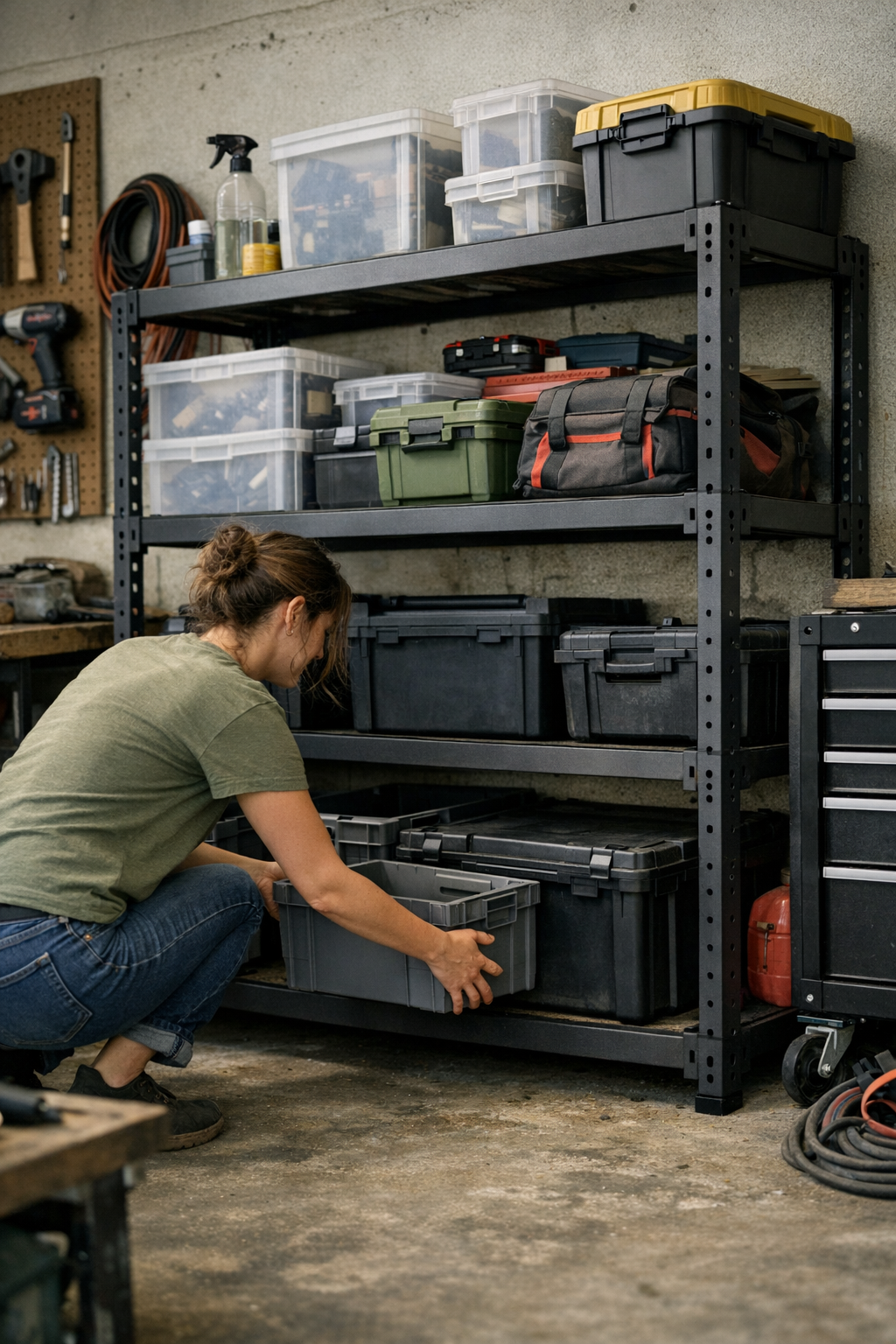
    There’s one reliable move: always anchor your heaviest loads low, no matter how inconvenient it seems at first. Resetting means more than making the frame happy—it completely changes your daily routine. Drop those stubborn bins of winter salt or auto parts down to the lowest shelf. The structure stiffens. The swaying, that instinct to brace things before pulling, simply disappears. Mobility returns; the cart stops snagging. You stop doing small acrobatics every time you try to get something out or put it back. Light gear up top, heavy gear in the base—suddenly, the system doesn’t nag you for attention. It just works, quietly, for the fiftieth time as well as the first.

    If your reflex is to grab a shelf for balance before removing something, it’s a red flag you’re living with top-heavy tension. Even shifting a few dense bins to the ground shelf breaks the feedback loop of wobble, blocked paths, and slow resets. Setups aren’t just about “where things go”—they’re about how you move.

    Real Use, Real Difference: See It in Movement

    Dragging weight down on paper doesn’t change your garage’s footprint. What it does is strip away all those unconscious little workarounds—pushing carts sideways to open a lane, stashing things in dead corners, taking two trips to avoid a teetering bin. With the heaviest supplies grounded, your flow kicks back in. Lighter stuff up high? No more shelf shivers or surprise avalanches. Even if bending for winter tires means a few squats, trading that for a clean access lane is a win.

    The value creeps up every time you walk in for a fresh round of sorting or find yourself reaching for that tool cabinet at speed. The routine—use, return, reset—runs smooth again. No last-minute shuffling to uncover a handle. No backing out bins just to reclaim the floor. The right anchor points let the storage fade into the background and the work take center stage, instead of the other way around.

    Spot Check: Forget “Pretty,” Aim for Stable

    If you’re reaching out to steady a shelf, stop. It doesn’t matter how sharp the setup looks. Stability is the test that counts. Put the heaviest, most stubborn objects at the lowest point. Judge the system by how it stands up to daily resets, not how it stands still for a photo. Aligned shelves stay put, quick returns stay quick, and your lanes keep open—even as seasons (and storage demands) change. No more re-stacking your best intentions every weekend.

    Stability Is the Single Upgrade That Outlasts Effort

    “Good enough” storage fades fast under real use. The difference between a barely-functioning setup and a truly reliable one is how steadily it protects your flow after dozens of uses, not just at setup. That’s why heavy-down, light-up isn’t a minor tweak—it’s the backbone for movement, access, and clean restarts. Make the swap one time, and watch as the rest of your area—previously a tangle of slowdowns—quietly, believably, stays available for work.

    You can browse modular options and zone-specific solutions at StackNest.

  • How Small Dog Habits Can Disrupt Your Kitchen Routine and What to Do

    Every dog owner knows the exact spot: that stretch of kitchen floor your dog turns into a roadblock as soon as mealtime ends. Cleanup isn’t just about clearing bowls—suddenly, you’re stepping around a lounging body, dodging a tail, snagging the towel at an awkward angle. The kitchen looks under control, but your pace slows. By the third day of rerouting, delayed chores pile up, and rest slides further into the night. The routine doesn’t blow up—it just quietly drags, one small detour at a time, carving friction into something that should be simple.

    When the Smallest Pause Turns Into a Drag on the Whole Night

    An ordinary dog routine flows until it unexpectedly doesn’t. The most overlooked squeeze is the “threshold pause”—your dog settling right where you cross after meals. The first night, you dance around them without a thought. By the end of the week, stepping around that body becomes automatic, but so does the irritation: arms full of dishes, you shuffle sideways, or you reach for cleanup supplies and realize your stride is twisted. Passing through becomes an obstacle course you never meant to build.

    This isn’t a dramatic standstill. It’s half-second stalls—hesitations as you adjust, sidestep, or reroute to avoid a dog who thinks they’re just being present. Each subtle block extends the distance between “done eating” and “actually finished for the night.” Days stack up. The reset window stretches. What looks like a calm kitchen hides a recurring snag you feel every time you try to get something done without bumping into fur.

    Why Dogs Anchor Themselves in the Worst Spot

    This isn’t about stubbornness. Dogs position themselves at the threshold because that’s the stage where you’re most active after meals. They’re tuned to your rhythm, waiting: will it be treat time, a hint toward a walk, or just a belly rub? For them, the kitchen doorway is a control tower. For you, it’s a tripwire. Every time your dog camps in that path, the logic is obvious in hindsight—the only route from dinner zone to cleanup or rest now funnels through a waiting, alert dog.

    This repetition is what quietly wears you down. Side-stepping isn’t a nuisance for one night. But when the same “move” repeats at every routine pinch-point, what used to flow now stutters. Your habits adapt: maybe you stop carrying two things at once, or you delay wiping the counter because your reach isn’t clean. The routine bends, but never gets truly better. You’re not just moving around a dog—you’re compensating for a weak setup, one awkward crossing at a time.

    The Hidden Tax: Adapting Doesn’t Translate to Smoothness

    Humans adjust quickly—bend, lean, detour, stretch around the block in the path. But those clever workarounds harden into new habits: always clutching dishes higher, always waiting for the moment when the dog finally shifts. The old “fix” becomes an invisible hassle. It’s rare that anyone admits a problem—bowls get left soaking, crumbs escape underfoot, cleanup lingers one step behind. Meanwhile, the threshold remains staked out by a dog who’s just waiting for your next move, right where every task intersects.

    The Smallest Setup Shift That Changes Everything

    You don’t need an overhaul. The real difference comes from a move small enough to test in a single evening. Try this:

    • Serve your dog dinner away from the busy doorway—shift the bowl one meter to the side, toward a quieter corner.
    • As cleanup begins, your dog finishes and settles somewhere with less “traffic,” not out of training, but because the new placement cues them differently.
    • No more forced pauses between the sink and the trash, no more clumsy balance acts with a towel or falling bowls. Cleanup flows. You actually walk straight lines again.

    This tweak, repeated across the week, rewires routine momentum. It isn’t discipline or retraining—it’s layout logic. The difference is instant and multiplies daily: less stepping around, fewer glances down for a tail or nose, a clear path between each part of cleanup. The bottleneck moves, and suddenly you’re not losing time to invisible dog traffic jams.

    “Looks Fine” vs “Works Well”: The Real Test of Kitchen Setup

    A visually neat kitchen is a universal goal—bowls lined up, floor wiped, clutter hidden. But underneath a calm surface, function stalls. The test is not whether the area looks tidy, but if it lets you cross from one job to another without negotiating obstacle after obstacle.

    Ask yourself: is your setup made for show, or made for motion? The bowl mat might look perfect on Instagram, but if your dog lands right in your path every night, the only thing smooth is the surface appearance. Consider:

    • A bowl placement that lures your dog into your cleaning lane every single meal.
    • A cozy mat in a walkway that moves from “thoughtful” to “trip hazard” as routines harden.
    • Cleanup gear visible but just far enough away that you hesitate, bend, or abandon a task halfway to avoid disturbing the dog.

    Any of these signs means you’re living with the gap between “organized” and “workable.” Surface calm can let real bottlenecks quietly persist for months.

    Everyday Pattern, Real Impact: Why the Wrong Setup Costs More Over Time

    Pretending “it’s just a second” doesn’t change the cost. If you recognize the same sidestep, the same stall at the door, the same hallway backup after feeding, you’re paying for a setup that works against you. Multiply those moves morning and night, across seasons, and the interruption shapes daily comfort for both human and dog. The longer it goes, the more your dog expects you to adapt, and the less momentum you keep for yourself.

    Pattern Recognition: When Odd Pauses Become Routine Obstacles

    Notice the difference between coincidence and pattern. When “my dog always ends up here” lines up with “I always get blocked now, not just once,” that’s a structure problem, not a personality quirk. If every leash grab, wipe fetch, or bedtime reset comes with a dog in the way, it’s time to rethink: your routine isn’t random, and neither are these micro-frustrations.

    Beyond Bowls: Setup Logic Affects Every Routine Transition

    This bowl blocking is only one form of the same home-dog bottleneck that repeats everywhere you share space:

    • Grabbing the leash and finding a crate wedged beside your usual reach, or towels stored two steps too far while the dog waits by the door.
    • Returning with muddy paws, but wipes or towels are placed on the wrong side of the landing—so cleanup delays and muddy tracks begin.
    • Toys sliding underfoot into hallways and bedding curling into walking lanes, causing extra resets before you can move through cleanly.
    • Rest corners that look cozy but require a full bedding reset each use, because the dog shoves everything into the main crossing lane.

    These don’t look dramatic, but they interrupt flow and fill each routine with small, repeating drag. The frustration isn’t a messy room—it’s a room that slows you down no matter how organized it looks.

    Setup Change Means Routine Change—Or It’s Not Working

    The most effective setups tolerate reality: fatigue, rushes, imperfect returns. A good arrangement isn’t fussy or “styled”—it’s just reliable under strain and supports both sides of the leash without constant reminders.

    The proof is always in the aftermath: Cleanup runs faster, you grab towels and wipes without rerouting, the dog settles out of the line of fire, and the shift from chores to downtime comes sooner. Less irritation, less juggling, more real rest at the end of the night.

    Good Routines Fix What Never Looked Dramatic, But Always Slowed You Down

    No fancy trick is needed—just a new spot for the bowl, a tweak to mat placement, wipes where your hand actually lands. If your routine feels easier by the third night, you’ve probably fixed what setup kept dragging you through. The best dog-life upgrades are invisible in photos, but obvious in use.

    Find practical, everyday setups for smoother routines at DogPile.

  • How a Simple Temporary Zone Transformed My Car’s Clutter Problem

    You clean your car, snap everything into place, and two days later it’s already back: the same charger snags under the seat, keys wedge into the console gap, and your sunglasses have vanished into a pile of receipts. Looking organized isn’t enough. The constant micro-mess—cables tangled with bags, sanitizer knocking loose, phone sliding into the passenger footwell—means each drive or errand run forces you to hunt, shift, or rescue basics just to get moving. The frustration isn’t surface-level mess; it’s the cycle where every trip rearranges your setup, erasing yesterday’s clean slate before you’ve even finished your coffee. Solutions that work for a parked car often unravel after your first stop. In the world of repeated return-to-car routines, the wrong setup adds friction fast—making your car feel less like a tool and more like a puzzle to solve with every re-entry. If this hits too close to home, you’re living in the real DriveWellSupply world.

    How Clutter Creeps Back into “Organized” Cars

    Clutter in cars isn’t a one-time fix—it’s a daily reshuffle that comes back, even after a deep clean. Each drive adds new loose objects; each extra passenger means another seat-edge pile or under-mat slip. You don’t notice it building up until you’re suddenly reaching under the seat for your ID or wrestling a grocery bag free from a knotted cord.

    Concrete cycle: on Monday, everything’s in its place. By Wednesday, keys are wedged beside the seatbelt latch, a charging cable loops under the bag you just tossed, and receipts have drifted under the edge of the floor mat. Door pockets hide napkins and wipes, but now you can’t grab what you actually need without digging. You can stack items in cup holders and console trays, but one hard brake or a quick bag shuffle and half your system is back at your feet. Function slips under the radar while clutter invades by habit.

    Why “Temporary Zones” Change Car Routines

    The shift isn’t about more containers—it’s about a reliable, repeatable spot for those high-touch essentials that always float around: chargers, access cards, sanitizer, sunglasses. When you add a specific open tray or bin within easy reach—right beside the driver’s seat, or between the seats—you stop the constant hunt by giving every routine item a short-term address.

    A true temporary zone absorbs the chaos before it starts. The charger and phone don’t drift into bag-trap territory and you’re not raiding cup holders for loose change or scrambling after a sanitizer bottle rolling under the pedals. The friction drops: no more untangling cables from snack wrappers or emptying a cup holder just to make room for coffee. Controls stay open, essentials don’t get buried, and the scramble before every drive fades.

    What Happens During Real Drives

    • Errand loops and stops: Instead of lap-loading your essentials or tossing items blindly onto a seat, a deep tray or slot right by the shifter keeps keys, sunglasses, and phone in place. Return trips mean grabbing from habit, not searching via touch.
    • Post-parking re-entry: You don’t have to brush aside wrappers or dig through the center console to reach your charger. It’s always in your temporary zone—same spot, every time, even after a friend rides along and shifts the rest of your system.
    • Shared vehicles: Designated drop-zones mean everyone knows where to unload their pocket horde—less finger-pointing, no “accidental” gear borrowing, and faster trade-offs when swapping seats.

    Even the tidiest car starts showing cracks once it’s back in use. Cargo organizers might hold their shape, but loose receipts and quirky pocket gear migrate to active zones after one or two drives. Without a dedicated catch-all tray, small objects clog the footwell, wrappers sneak under floor mats, and charging cables threaten to trip you up every time you slide into the seat.

    When “Organized” Still Feels Inconvenient

    • Cup holder crowding: Stack too many tools in your cup holders and you can’t use them for cups—or worse, water bottles start pinching cables, cables snag bags, and the whole thing jams up mid-trip.
    • Door pocket overload: Door bins meant for convenience become layered with wipes, wrappers, extra masks—so when you grab for sanitizer, you’re really pulling out a handful of everything else you didn’t mean to keep.
    • High mats, low payoff: Even expensive floor mats don’t stop the migration—snacks, coins, or travel wipes still burrow underneath and out of sight after sudden stops or seat shifts.

    The cabin’s tidy look doesn’t survive in motion. What seems orderly parked in your driveway collapses into mess as soon as your real driving routine resumes. The gap between a space that looks under control and one that actually works never goes away if you keep treating storage as a once-a-week job.

    Making Your Temporary Zone Work in Practice

    You don’t need new bins cluttering every inch. One low-profile tray—wedged against the console, slipped beside the seat, or tucked under the armrest—is enough to corral “floater” essentials. The goal isn’t more storage; it’s a friction filter for the 3–5 things you always hunt for, toss aside, or end up retrieving mid-drive.

    Live test: After two weeks with a shallow, flexible organizer beside the passenger seat—big enough for a phone, charger, and sanitizer—nearly all footwell clutter, including stray wrappers and receipts, stopped piling up. Reach for a charging cord or sunglasses, and it’s already there. Even running quick errands, the time spent clearing space or reorganizing before a trip dropped so sharply that post-trip cleanup became a non-issue—routine mess shrank to a minute at most, even after multiple errands or passenger swaps.

    One Cable, One Bin, No Fuss

    Routing just a single charging cable into the temporary bin, with enough slack to follow seat movement, can eliminate daily knots and tugged wires. You stop fighting the seat track every time you return. The overall look stays tidy, but now reach-and-retrieve isn’t a repeated battle—essentials sit ready, not hiding, and your setup finally stops sabotaging itself.

    Why Most Cars Need This, Not Just Tidy Ones

    Most cars, even once spotless, develop a “passenger drift” effect. Day by day, spare change, badge holders, toll slips, and charging accessories walk their way into cracks, door pockets, and under mats. You can clean every Sunday, but by Friday you’re back to fending off the same clutter invasion.

    The upgrade isn’t about perfection or showing off a showroom floor. It’s about building a routine guardrail: a tiny, reachable zone that quarantines the troublemakers—mentally and physically—before they invade the high-use lanes you actually need clear. Get the right temporary zone right once, and you’ll feel the difference at the stoplight, after work, and especially when you’re reloading kids, groceries, or next week’s dog travel setup. In the end, less routine friction isn’t about more gear or shinier surfaces—but about a layout that holds steady, no matter how many times you run the daily loop.

    DriveWellSupply