Blog

  • How Adjusting Grooming Posture Transforms Indoor Cat Care and Cleanup

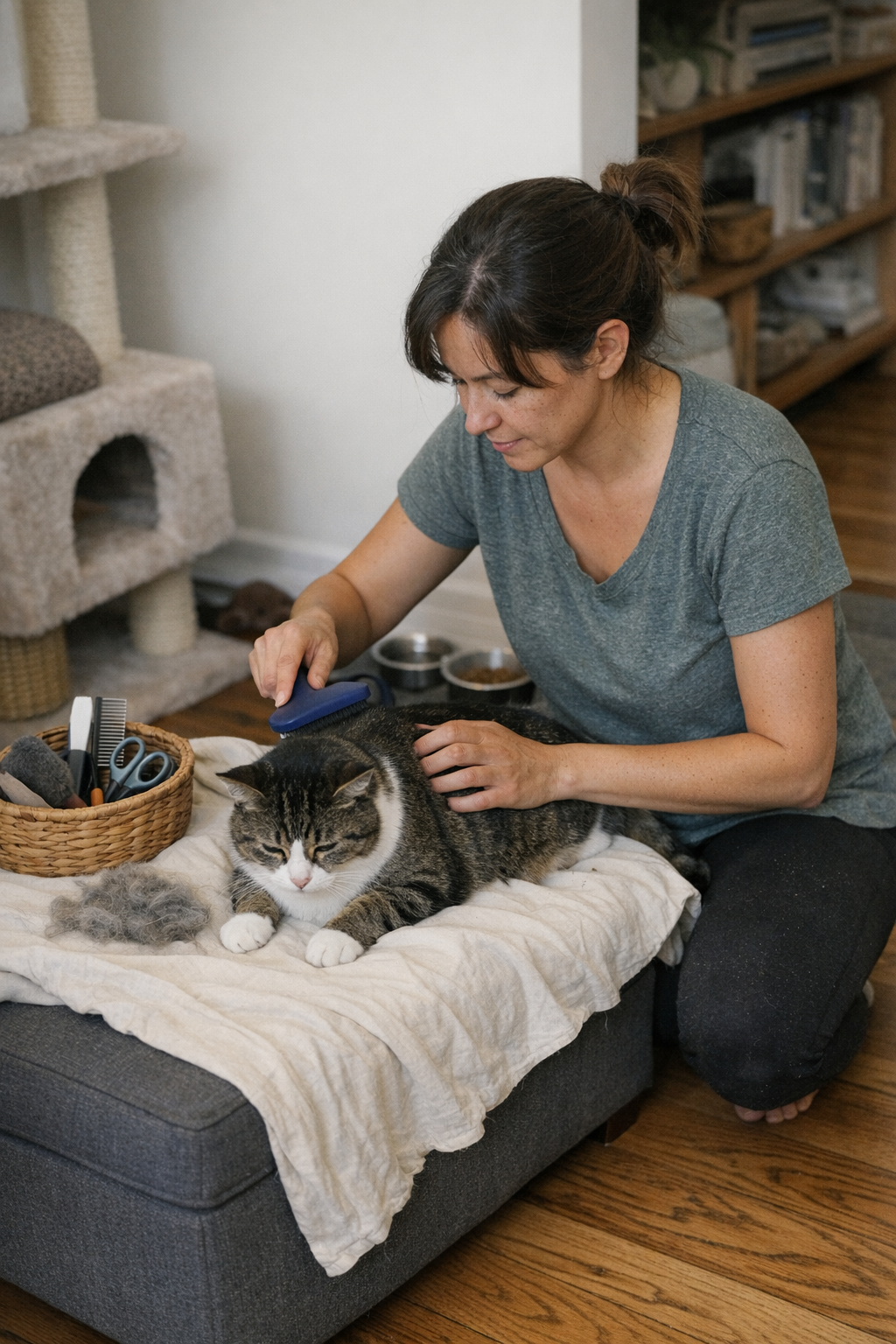
    Grooming an indoor cat isn’t just a one-off chore—it’s the start of a cycle that can quietly push your patience and disrupt the flow of your home. The first brush-throughs seem harmless enough: a towel thrown down, tools lined up, and a cat who doesn’t mind the extra attention. But by the third week, the routine reveals all the cracks. Kneeling in uncomfortable corners, fur slipping past flimsy towel edges, brushes migrating from feeding area to couch—your living space slowly gives way to scattered bits of the last session. Suddenly, that easy grooming setup starts interfering with quick feeding resets, clean water refills, and every other shared routine that matters in a small home. It’s not just a stray hair here or a misplaced comb there—the real cost shows up as extra work and a cat that keeps dodging the spot you’ve picked out.

    Grooming as a Repeated Home Routine—Not a One-Off Tidy-Up

    A true indoor-cat setup means grooming never ends with one session. Finish a brush-out, and flecks of undercoat drift to the edge of the rug; miss a spot, and tufts appear days later in the very rest corner your cat claims next. Tools meant to be “put away” can easily end up blocking a water bowl or cluttering up the entryway to your feeding zone. Instead of a few tidy minutes, small disruptions creep into places you never intended—where food gets delivered, where toys usually pile up, or where you just want to sit without a new layer of fur.

    The idea that one cleanup keeps things ordered is a trap. Even if the towel folds neatly and the brush slides back into a basket, the reality is this: indoor-cat grooming setups only work if they’re built for constant, repetitive use. Otherwise, every session multiplies friction—in more cleaning, slower routines, and a home that feels just a little less your own.

    When Setup Friction Builds: Real-Life Cat and Human Signals

    It sneaks up. You reach for a grooming brush, only to shove aside a box of wipes that has drifted from last time. One careless toss and both hit the kitchen floor. Or you finish brushing, confident you’ve contained the mess, only to find a film of fur bordering the play mat or clinging to the napping blanket, needing another round of cleanup that delays a simple feeding reset. The “quick cleanup” never stays quick—fur rides out to litter-adjacent corners, under seating, and even across the shared walkway.

    The strain isn’t dramatic, but it doesn’t let up. You start scouting for spots that won’t punish your knees, or you simply avoid grooming unless absolutely necessary. Cats, always tuned to your patterns, circle wide around your turf or only approach once everything has been packed away. That hesitance adds minutes to every session—not because grooming got harder, but because the setup failed under actual repeated use.

    Uncontained Mess: From One Spot to the Whole Room

    The difference between what seems “tidy enough” and what’s actually easy to live with becomes loud after a few cycles. Maybe you start on a towel in the living room center. Not long after, stray fur finds gaps at the towel’s edge, then clings to table legs, chair rails, or makes a home under the adjacent couch. Tools slip into odd spots—one brush under the water stand, a comb under the litter cabinet, nail clippers that somehow end up on the windowsill. The true cost? Every tool put away is a little further from next use, and the next reset feels longer—rest zones, food mats, and water bowls all picking up fuzz you never meant to share.

    That meant-to-be-quick grooming gradually crowds out regular routines. Wiping down mats takes two steps, blankets need an extra shake, and your own favorite spot starts to feel like a landing zone for everything you thought you’d cleared.

    How Grooming Setup Undercuts (or Supports) Daily Flow

    It’s easy to accept a little extra fur or the annoyance of reorganizing after a grooming session, until you see how those weak points ripple into the rest of your routine:

    • Refill friction: The feeding mat or water bowl sits clean—until fur and loose wipes, left wandering post-grooming, turn a fast refill into another cleanup job.
    • Slow reset zones: Wiping down what should be an easy-clean mat now means fighting embedded fur after every session. Cat blankets show new layers of hair, never fully clear even with extra effort.
    • Tools always off target: You need a specific brush; it’s buried behind a tangle of old grooming mitts, extension cords, or unopened mail in the all-purpose basket you hoped would keep things neat.

    Individually, each friction point seems small. But the buildup shapes every attempt to keep up. A spot that’s “clean” on the surface may be slow to reset—or worse, make your cat less willing to return. Every shortcut in the setup quickly makes something else in your routine harder or less predictable.

    Spotting (and Breaking) the Bad Setup Cycle

    The real break point arrives a few weeks in. The room looks almost like before, but routines feel heavier. Why? Because:

    • Uncomfortable bends and stretches linger after every brush-through
    • Resilient flecks of fur migrate to feeding stations, resting corners, and busy walkways
    • Grooming tools scatter—never where you left them, rarely within reach
    • The cat, once curious, now circles the periphery or flat-out ignores calls to the “official” grooming area

    If you’ve swept fur from beneath the couch minutes before guests arrive or gathered up a pile of mixed grooming and unrelated household items for the third time in one week, setup friction is dictating your pace—and attitude—toward your own space.

    When “Neat” Stops Working: Visual Order Versus Real Containment

    It’s straightforward to create a scene that looks organized—a folded towel, a lined-up tool bucket, a quick pass with the lint roller. But if the next cycle feels slower or you end up pushing fur and misplaced tools from place to place, the illusion fades. By week two or three, towel edges can’t contain drifting hair; brushes slide off “designated” spots; and the cat leaves the old grooming zone, choosing somewhere you didn’t prep, leaving you to chase down fur across half the living room. Resetting takes longer and even a room that looks under control keeps adding steps to daily life.

    What Actually Changes the Routine: Firm, Bounded Grooming Zones

    What makes the difference isn’t a better-looking grooming area—it’s a real structure that preempts repeat mess and failed resets before they take over. Leaving grooming to “wherever’s open” means the problem follows you. But shifting from a loose towel to a bounded, physical grooming zone changes things right away. Replace wandering layers with:

    • A firm, wipeable bench or ottoman that doubles as seating (and stays stable)
    • A washable pad tightly anchored at the edge, easily shaken out outdoors and re-laid in minutes
    • A corner blocked off to define the zone, keeping cat and mess from leaking into shared walkways or rest corners

    The visual doesn’t have to be perfect—what matters is how much lighter cleanup and resets become. No more fur drifting into food prep, no tools lost under the couch, and cleanup that ends where it started. Cats begin to recognize the new boundary, choosing to linger or settle rather than immediately hunt for an escape route. The cycle breaks—not because the area looks showier, but because the entire home routine starts to run faster, with less resistance in everyday movement.

    Human and Cat Comfort: Less Movement, More Trust

    A grooming setup that doesn’t demand you constantly shift positions, clear access paths, or kneel in drafty corners isn’t just a “nice-to-have”—it minimizes the interruptions that wear you down. With fewer abrupt moves, your cat watches more, resists less, and might even settle by habit. The risk of blocked doorways, cold floors, or off-limits rest mats disappears. Both of you adapt: less chasing of mess, more willingness from the cat, and less friction bleeding into the rest of your daily rhythm.

    Grooming and the Rest of the House: Why Containment Matters

    It’s easy to treat grooming as a self-contained task, but in reality, every loose edge lets the mess spread and slows down otherwise routine resets. Fur finds its way to bowls, blankets, walkways, and play mats—right when you need the area clear to prep meals or relax. The switch from a drifting setup to a clear, contained grooming zone brings sharper differences:

    • Containment is visible: Less fur shows up in feeding areas or shared spaces because everything is edged in, not loosely defined.
    • Tools return automatically: Each time, brushes and combs land in the same reachable spot—no forgotten cache in a different corner.
    • Routine, not randomness: The cat learns where grooming happens and where it doesn’t—help

  • How Plug-In Lighting Accessories Transform Rental Spaces with Practical Support

    Plug-in lighting promises instant freedom—no drilling, no landlord approval, cords out the box and into the wall. But watch what happens in your first week actually using it: cable slack creeps across floorboards, a lamp that looked precise on move-in day keeps drifting, and desk setups that seemed “clean” quickly collect tangled lines and off-angle glare. Plug-in is fast, but fast frays—routine use exposes every shortcut. What looked tidy on Monday becomes a snagged cable, a half-lit work zone, and a scramble for outlets by Friday. If daily friction keeps pulling the room apart, it’s not really flexible, just fragile.

    How a Plug-In Setup Drifts from Neat to Nuisance

    The first time you anchor a desk lamp or sconce with nothing but its cord, the setup feels resolved. Place it. Tuck the cable. Plug in—done. But within days, as you slide your chair, tap for the outlet behind the desk, or swap a charger, the system breaks down. The lamp shifts off-center with casual nudges. Cables slip free, rerouting themselves into sightlines or walk zones. A clamp support sags just enough to angle your light into glare instead of the page. Minor annoyances, but constant—and they multiply fast under real daily pressure.

    • You reach for the lamp and tug a cord hidden under paperwork, or catch it beneath a rolling chair.
    • Focused task lighting migrates—what was a crisp beam on day one now hits your screen, making you dodge reflection just to see the display.
    • The “finished” setup turns into a recurring cleanup: realigning, untangling, or re-securing cords with nearly every session at the desk.

    Common Trouble Spots: Lessons from Real Shared Spaces

    Plug-in lights seem made for flexible workstations—student bedrooms, rented offices, co-working corners. That’s where their weak points show up the fastest. Picture a shared desk: single plug-in lamp, two users, a web of laptop and phone chargers. Everything lines up the first morning. By week’s end:

    • Slack cord loops cross into the walk path, tripped over or wheeled over by accident.
    • Every lamp adjustment leaves the beam slightly wrong, the angle less useful, light spilling away from actual work zones.
    • Frequent movement not only exposes cords, but sometimes unplugs the lamp entirely—just brushing past the outlet is enough to lose light mid-task.

    The core problem isn’t even appearance; it’s interruption. Each adjustment means lost time untangling, resetting, or negotiating clutter. Lighting that’s meant to follow you instead falls apart when exposed to the push and pull of lived-in space—flexibility turns into perpetual distraction.

    Pain Points That Don’t Show Up on Move-In Day

    Plug-in under-cabinet bars or LED strips tempt with their minimal look—cord high and nearly invisible. But in routine kitchen use:

    • Cables slip toward visible prep space, making the counter busier and messier.
    • The lighting’s useful reach shrinks—half of what’s meant for the chopping area now highlights blender cords or unused shelf edge.
    • Every cleaning session, cables shift out of hiding, snaking across the backsplash, spoiling any hope of “out of sight, out of mind.”

    Small Support Choices, Big Ongoing Difference

    The breakthrough rarely comes from upgrading the lamp alone. The fix that matters is how you anchor, route, and discipline those cables and mounts. In one rental desk, adhesive cable troughs placed right along the desk edge locked down what moved most. Maybe a ten-minute tweak—cut, press, snap cable in. Suddenly:

    • Chairs slide as needed; nothing gets yanked loose or dragged into the path.
    • Cords stay put, flat against the desk, even when extra chargers join the mess.
    • The lamp finally holds its angle, the beam covering the keyboard each time instead of the wall or your lap.

    The result is practical—not just visual clarity, but reliable, repeatable action. No emergency fixes mid-meeting, no “where did that cord go?” moments at the end of a long day. Lighting supports your routine, not the other way around.

    Keeping Cords Under Control: Key Principles that Actually Work

    • Use the shortest cord route possible. Any slack is an invitation to drift or tangle. Keep runs direct and concise, from fixture to outlet.
    • Favor fixed, predictable paths. Run cords tight to furniture or along walls—never across walking space. Cord channels, adhesive guides, or shelf lips create natural lines that resist chaos.
    • Stabilize every movable piece. If a lamp or bar light gets touched more than once a week, give it a physical anchor—clip, bracket, or trough—to keep both cable and light direction where you actually need them.
    • Insist on clean removability. All anchoring should pull up cleanly—think adhesive channels, soft clips, removable guides—sparing you residue when it’s time to change rooms or routines.
    • Spot routine weak points early. Under-shelf lights and edge-run cords fail fastest where hands clean, reach, or rearrange. These are first-priority targets for targeted cable control—otherwise friction wins fast.

    Appearance vs. Actual Daily Usability: What Holds Up?

    Anyone can stage a picture-perfect plug-in install—cords hidden for hour one, light caught just right for a photo. But real daily use exposes which setups can actually survive shifting chairs, repeated movement, and device turnover. A “minimal” support isn’t about looks. It’s about a bracket, trough, or clip that takes repeated use and still keeps lighting and cables exactly where the routine demands—never drifting, never doubling maintenance. The setup that holds for weeks, not hours, is the one that was actually structured for friction, not just first impressions.

    Two Small Tips That Make Setup Stick Longer

    • Anchor both ends of every cable. Especially where cleaning, moving, or foot traffic is common—fix the cord both near the fixture and right before the plug. This chokes off slow creep and keeps everything working, even after a month of use.
    • Schedule small check-ins. Every few weeks, set aside two minutes to scan your setup. Spot new slack, support drift, or visible cables before they turn into a mid-meeting emergency or a daily frustration spiral.

    The Long-Term Value of Stable Support

    A plug-in light’s real flexibility is always limited by its support structure. Overlook the friction and your “hack” devolves into clutter and distraction that adds up every day. One well-placed adhesive trough, anchor clip, or bracket makes the difference—no-tools, no-permanent marks, but a lasting fix for cable creep and drifting light. The move is small; the relief is real. Flexible stays flexible only when the support acts like part of the routine, not an afterthought.

    Visit LightSupport for practical lighting solutions and indoor setup support.

  • Why Stability Outweighs Extra Tiers in Modular Shelving Units

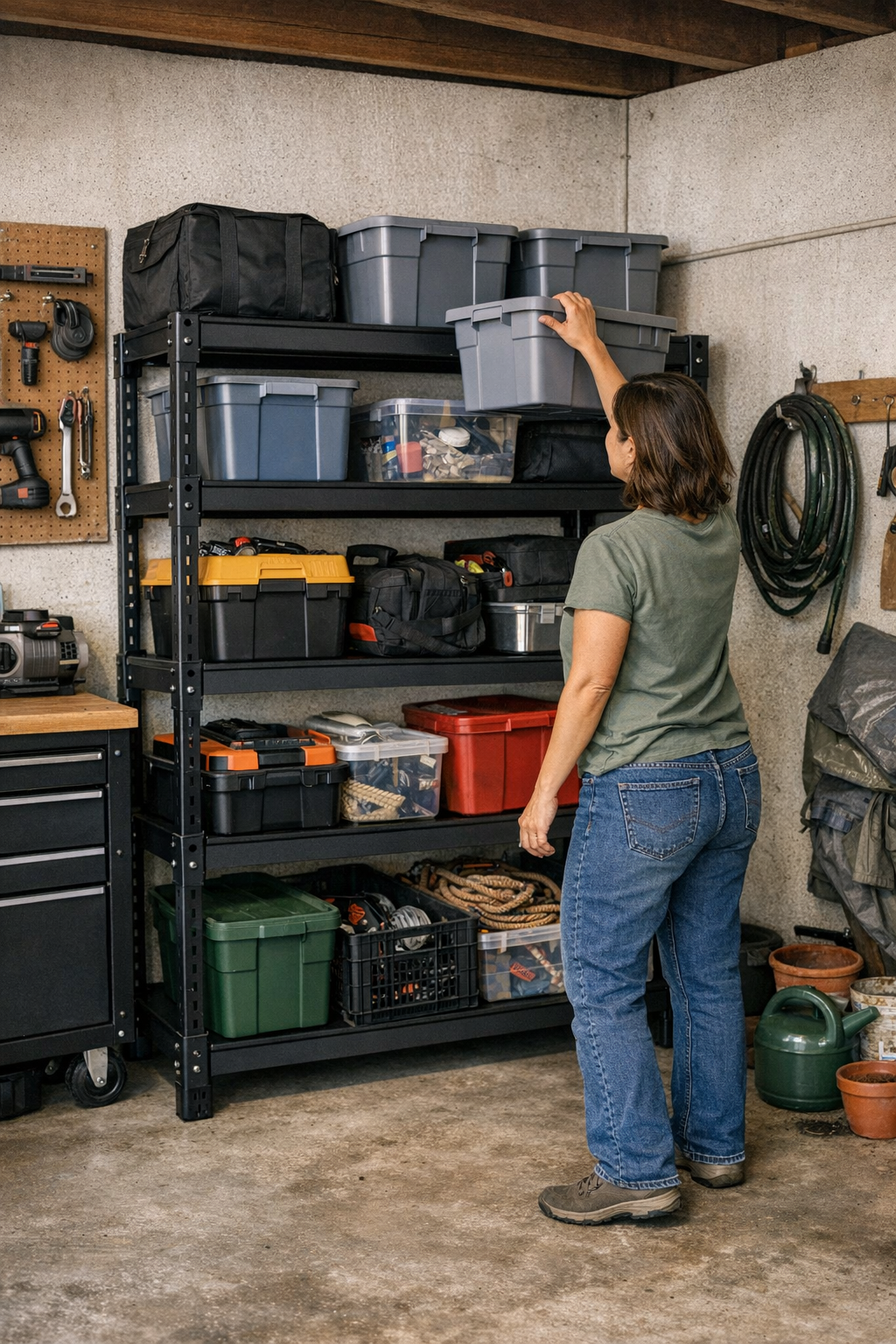
    The allure of modular floor-based shelving in a garage or workshop is immediate and unmistakable: everything finally lifted off the concrete, bins crisply stacked, and storage climbing vertically to reclaim lost space. On day one, a freshly assembled multi-tier unit promises to solve the chaos. But it doesn’t take long for these shelves to reveal their real impact—especially when every project, tool swap, or seasonal bin return tests their place in your daily flow. The “extra storage” starts to demand its own attention: sidestepping a blocked path to the corner, steadying a wobble with one hand while groping for a storage tote with the other, reshuffling bins just to reach a single item. What looked streamlined now quietly interrupts the rhythm of real work.

    Stacked High—And Suddenly in the Way

    Setting up a five-tier shelving unit feels optimistic—the empty floor, visible boxes, every inch seemingly put to work. But the real verdict arrives not at assembly, but in ongoing use. Grabbing tools mid-task, returning heavy bins after a long weekend, or just trying to squeeze a rolling cart through becomes a low-stakes obstacle course. The higher the shelf, the more it flexes under awkward loads or shifts if your floor is even slightly out of true. Small imbalances multiply: you start bracing each reach, nudging a shelf after a bin slips into place, feeling just enough motion to hesitate. Tidy placement morphs into an ongoing act of balance—in both sense and practice. And as frames begin to rock or shelves sag under uneven weight, you’re forced to slow down, sidestep, and hope the setup holds.

    When “Organized” Turns Into an Obstacle

    Fast-forward a few weeks. The bins on the bottom shelves now handle most of the action; they’re fastest to grab, easiest to return. The top tiers? Slowly abandoned to awkward, seasonal, or just-for-now overflow. Suddenly, those upper shelves aren’t practical—they’re a test of caution. You climb a stepstool, steady the edge, carefully juggle items around a sagging panel. That parked work cart you set next to the shelf? You now maneuver it every time you want into a corner. Movement narrows. Each return of a bin becomes a mini puzzle, shuffling from one spot to another, just to land everything securely. Instead of cutting through tasks, you’re managing the shelving—and new piles start appearing on the floor “until later.” The illusion of order drifts; the footprint keeps expanding as walkways and dead corners gather the spillover.

    How Instability Sneaks In—and Stays

    Instability rarely announces itself all at once. It seeps in: a wobble after a hurried reach, a flexing shelf when unloading something heavy, a spot on the upper right you avoid unless absolutely necessary. That formerly tight edge, now skipped because the entire frame shifts with the lightest touch. These aren’t isolated quirks; they’re warning signs that the system isn’t holding up to the real routine. If you find yourself adjusting movements, avoiding certain spots, or thinking twice before using top tiers, the shelving is actively subtracting from your space’s function—bit by bit, every day.

    The intended gains—clear floors, open wall space—get clawed back as overflow bins land on the ground again, traffic paths choke up, and you end up shifting things around just to access what you need. Sometimes it even spreads: nearby shelving gets cluttered as you return things on autopilot, or a once-clear wall starts stacking up with temporarily homeless items. Instead of taming mess, the shelving becomes a new source of sprawl.

    The Real Upgrade: Stability Over Sheer Height

    The real turning point comes when stability—not just capacity—takes priority. In one clutter-prone workshop, removing the top tier from a towering unit (and reinforcing the rest) didn’t just lower the profile; it changed the entire experience. Suddenly, every reach was direct and confident—no more balancing a bin by the tips of your fingers, no more slow placements to keep the frame still. Paths stayed open. You stopped parking the utility cart in odd spots to avoid blocked corners. Instead of endlessly resetting wobbly shelves, you could return tools and storage in one fluid motion. Overflow no longer piled up on the floor because returning items felt reliable and fast. The shelf footprint finally matched the work routine—not just the available wall height.

    A stable setup isn’t just about staying upright—it shapes every movement. With wobble and sway eliminated, resets became quick, bins settled on the first try, and that “organized” look finally translated into a workspace that stayed clear between projects. You used the shelving because it worked—not just because it was there.

    Smarter Modular Shelving—How to Make It Actually Work

    Track Real Movements—Not Just Storage Capacity

    Notice how often you brace a shelf, sidestep bins on the floor, or avoid upper tiers altogether. Every moment spent steadying, rehousing, or doubling back means the system is adding friction, not removing it. Over time, those little adjustments rob you of valuable space—and compound the original clutter issue.

    Cap Height, Reinforce the Frame

    Don’t default to maximizing vertical space just because you can. A well-reinforced four-tier unit outperforms any unsteady five-tier stack in a real, frequently used area. Reinforce the joints, anchor if possible, and stop adding levels when reach and stability dip below everyday comfort. That discipline pays off in every future project—returns are quicker, nothing sways, and storage stays where it belongs.

    Respect Walking Lines and Return Paths

    If shelving forces you to shuffle carts, squeeze through corners, or dodge “temporary” bins on the ground, pause and rethink the setup. Reclaim those walkways by shifting units a few inches or adjusting orientation—open, clear paths mean your storage layout supports your routine instead of boxing it in. Watch for those overlooked corners and wall edges that quietly gather overflow: they’re signals that current shelving isn’t fitting actual use.

    Full Shelves vs. Functional Space: Don’t Confuse the Two

    An overpacked, sky-high shelving system can turn into daily resistance if the frame can’t shrug off real, repeated use. The extra capacity starts out invisible, but it steals back time and energy, one slow reset at a time. Clogged movement, yet another reshuffle just to grab one tool, or that growing pile in front of the shelves—it’s all evidence that looking organized isn’t the same as working smoothly.

    A strong, slightly shorter shelving unit doesn’t just “fit” the wall—it opens up the room to function. With true stability, you regain floor paths, cut out repeated shifting, and reclaim both time and space. The rest of your gear finally has a clear, permanent home—and your workshop or garage actually keeps pace with what you do, not just how you want it to look.

    Find practical modular shelving and storage options that work for real spaces at StackNest.

  • Understanding Midday Dog Pacing to Improve Home Routine Flow

    The signal is small, but persistent: your dog’s paws cross the kitchen tile, cut through the hall, then repeat—again and again. No whining, no mess—just an unmistakable pattern that interrupts your routine and theirs. For many owners, this kind of midday pacing has a simple root: a single weak point in the setup that keeps blocking a normal dog-life flow. If you keep seeing your dog trace the same loop at the same time, it’s not random energy. It’s a routine failing to match up with real, everyday needs—a leash wedged under mail, a food bowl sidestepped by a recycling bin, or a towel out of reach at the exact wrong moment. Miss the fix, and both you and your dog pay for it in lost calm, repeated interruptions, and a constant reset that drags down the rest of the day.

    The Hidden Message in Midday Pacing

    Pacing at predictable hours isn’t mysterious or dramatic. Nearly always, it marks something simple but important missing in your dog’s routine flow. Midday loops are not noise. They’re a direct signal that a friction point has crept into the handoff between dog and home.

    Your dog doesn’t resort to outbursts—they hesitate by doors, circle thresholds, and hover without settling. Meanwhile, you’re halfway through an email or moving laundry, catching the moving shape, lap after lap. Each pass slips in under the radar but quietly breaks focus, slicing up what should be a routine stretch of the day. The surface looks organized, but the underlying pattern gets more jagged with each ignored circuit.

    Routine Gaps Hide in Plain Sight

    Daily home rhythms run on habit—walks, water, feeding, quick resets, then back to work. But midday exposes any setup gap with zero warning. It’s the moment you’re busiest: counters crowded, video calls live, laundry half-sorted. Your dog drifts to the margin until pacing is the only thing you notice.

    This isn’t an accident. Most midday pacing starts after a tiny routine slip: the last walk was late, the water bowl is edged behind a chair, or a leash is buried under outerwear. “Tidy” setups can hide these weak points—quick to look neat, slow to actually reach when needed. Bowls in the corner turn out blocked by stools, towels are across the room when paws are muddy. Each one zaps twenty seconds per day, but stacked together they unravel your dog’s flow.

    The Familiar Friction of Midday Loops

    Common scenarios:

    • Leash misplaced or buried: You lunge for a midday let-out, only to dig past bags and coats. Your dog circles, feeling the delay.
    • Cleanup supplies not ready: A towel’s in the laundry instead of by the door. Paw prints multiply while you scramble for wipes.
    • Food and water access blocked: Bowls slip behind stools, beds, or bins; your dog paces and hesitates, never quite settling back down.

    These hiccups aren’t disasters, but routine friction compounds quickly—turning small misses into a louder midday drag. If your dog’s pacing comes back again after toys, treats, or a hurried let-out, it’s the setup waving for attention.

    When “Organized” Still Doesn’t Work

    It’s tempting to believe that an organized space is a solved routine. But tidy surfaces aren’t proof of a frictionless setup. Problems tend to hide where you only notice them under pressure.

    Take the feeding station that looks perfect in the breakfast nook: mat lined up, bowls precise, nothing to trip over. But every midday rush, your dog starts that same restless path. Why? At peak activity, reaching the bowls means weaving around chairs, stepping over resting legs, or dodging laundry piles. Order on paper collapses if access is slow, blocked, or awkward in motion.

    This mismatch repeats all over: crates you can’t close without moving a vacuum, wipes stored deep behind a laundry basket, toy bins out of the dog’s line of travel. What looks set is exposed as unworkable with every repeated interrupt.

    Repeated Friction—Not Just a One-Off

    Most owners end up reshuffling: pushing bowls up front, moving bins, unblocking the walkway, tossing quick chews to stall the routine. But if the same snag keeps coming back, even right after tidying, it’s not occasional mess—it’s a warning from your setup. The routine demands keep nudging against a structure that drags you, and your dog, into a familiar loop of frustration.

    What Happens When Pacing Goes Unchecked

    Let pacing linger and it becomes built-in: meetings fracture, hallways clog, and true rest becomes a memory instead of a daily feature. Your dog won’t explode or destroy—they’ll just hover, neither fully in one space nor another, never settling. The dog’s calm fragments as the day stretches and small roadblocks never really move out of the way. Ignore it, and you’ll find afternoons become a series of small, confusing jolts that leave both of you more restless and less able to reset.

    Signals to Watch For

    • Daily pacing at the same hour and spot
    • Dog resumes pacing soon after a let-out or quick fix
    • Hovering near water or food but not using it
    • Blocking thresholds or hallways with nowhere to rest
    • Rest is interrupted and replaced by wandering

    These aren’t complaints—they’re structural gaps showing up as visible daylight friction between your routine and the home’s real life flow.

    How Small Shifts Change the Routine

    Most fixes don’t need an overhaul; a single adjustment in setup can reset the whole pattern.

    Shifting a major water bowl a few feet away from a traffic pinch-point, for example, can turn frantic laps into a single direct trip, then a return to rest. In real use, the moment access is clear, the dog’s pattern changes—not because the surface got tidier, but because routine resistance disappeared. Sometimes moving towels to a wall hook by the door, rotating the crate so the door isn’t blocked, or setting a toy basket within reach is all it takes to reroute the afternoon loop.

    The result is more than convenience. It’s the difference between frantically plugging holes and having a routine that stops demanding constant correction. The flow becomes readable: you catch when pacing really signals thirst, pre-walk energy, or boredom—and you can stop it before the friction builds.

    Real-World Observations from Daily Use

    • Access wins over order: even well-placed gear is useless if it’s tough to grab under time pressure.
    • Visibility matters: if the bowl or bin can’t be seen from the path, the dog keeps circling.
    • High-functioning setups sometimes fall apart only during busy transitions, not at rest.
    • If you keep moving the same item repeatedly, the underlying structure needs rethinking, not just a fresh tidy.

    You don’t need perfection. What you need is lower friction, faster returns to calm, and a space that works as hard as you do at settling the routine.

    Making the Pacing Loop Work For You

    Don’t battle the pacing—use it to diagnose the weak spot the routine keeps revealing. When the loop starts, ask: what’s missing? Is access blocked, or is a needed item out of practical reach? These are not minor style choices; they’re signals about how your home setup is shaping every afternoon’s flow, for better or worse.

    Try a single practical change before the loop becomes baked-in background. Sometimes moving the rest mat, shifting the wipe caddy, or putting a bowl in a high-traffic line makes the friction stop feeling inevitable—and gives both you and your dog a routine that’s easier to repeat, not endure.

    Explore practical daily-dog setups here.

  • Why Vent Gaps in Entryway Storage Prevent Mildew and Odors

    No entryway setup truly gets tested until wet gear collides with routine. The transition from outside to inside isn’t just about arriving—it’s the moment when rain-soaked jackets, dripping bags, and soggy shoes command the threshold. Every decision at that drop zone carries a cost: stash the gym bag out of sight, and you risk must; leave wet shoes sealed away, and tomorrow’s reset is already compromised. When the forecast turns unpredictable or entry points absorb high foot traffic, the wrong storage setup isn’t a minor hassle—it’s a fast-moving bottleneck that multiplies work and blocks flow in everyday life. Betweenry’s world of transition-space storage exists because matching finishes doesn’t solve the churn. Organization that looks resolved once, but breaks down after two wet days, isn’t holding up under real use.

    When Closed Cabinets Hide More Than Clutter

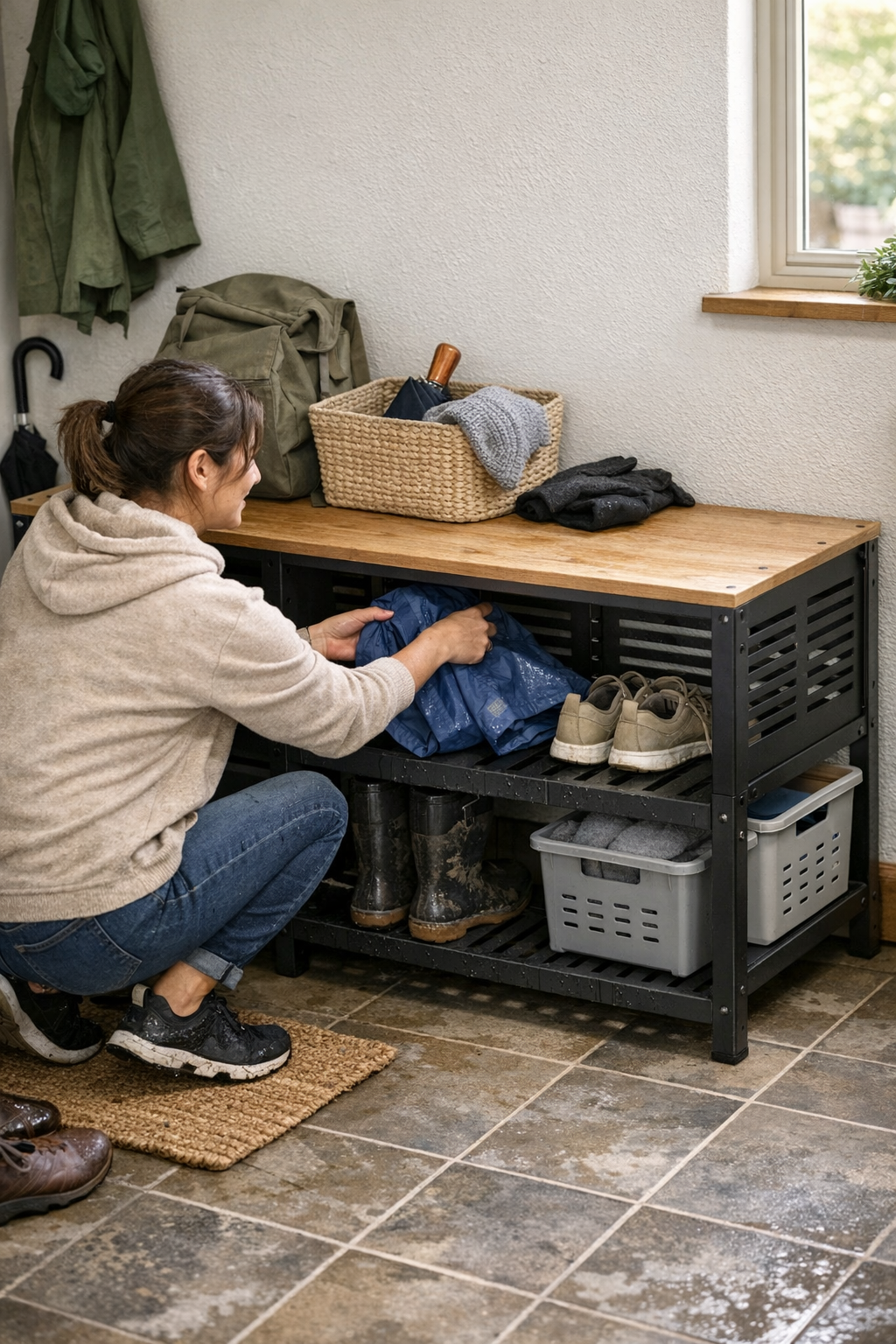
    At first, sealed benches and tightly lidded cabinets appear to solve chaos. They wipe away the mess—visually—leaving the entryway “finished.” But after a week of wet re-entries, the limits show. Moisture doesn’t quit at the door—it gets boxed in. Shoes closed from airflow stay damp through the next morning. Jackets zipped into hidden cabinets feed a cycle: the interior air hangs thick, damp patches linger, and soon, trapped humidity evolves into the telltale sour scent of mildew. Even neatly lined storage turns into a closed loop—every reset piles dampness onto itself.

    These setups unravel fast in actual traffic: shoes jammed in bins remain cold and wet, gym clothes tucked away are musty by the weekend, and “one quick store” quietly turns an entire threshold into another cleaning project. Instead of containing mess, these routines push the cost downstream—now you’re spending Saturdays unboxing, airing out, wiping slouching cabinet corners that never quite dry.

    Vented Storage: Airflow as a Daily Reset Button

    The everyday cure isn’t visibility—it’s ventilation. Vented storage (open shelves, louvered panels, raised benches) gives damp gear a route to dry, breaking the buildup before it takes hold. Every vent, slat, or open edge is a release valve for trapped moisture. After heavy rain, shoes on vented racks feel touch-drier by evening. But their sealed-off counterparts—shut behind doors—still come out clammy or sour, and the cycle repeats.

    On high-traffic days, this difference multiplies: three rounds of arrivals, layers of wet stuff, and yet the vented storage bounces back with ordinary air movement. No full “air-out” session needed, no reshuffling in the morning. It isn’t about making the threshold photogenic. It’s about keeping pace, so the reset is a quick sweep, not a burdensome overhaul.

    Real-World Friction: How Wet Gear Pushes Back

    Here’s what breaks down in actual entryway flow:

    • Shoes in a closed cabinet are still damp at sunrise; the row cracks wide, pushing onto the hallway path as new pairs join, and the controlled look unravels.
    • A backpack dropped “temporarily” on a bench lingers wet; soon, the bench edge accumulates hats, homework, rogue socks, and the whole seat disappears under overflow, muting any hope of sitting down.
    • Crossing the threshold with groceries becomes an obstacle course: sidestep puddles, dodge hoodie piles, catch a whiff of hidden mildew. Order holds, but movement slows, and each pass-through tightens the bottleneck.

    Small Changes That Shift the Threshold Routine

    Most improvements don’t require new furniture. Tweaks work: swap a solid bench for a slatted one, drill a few vent holes behind shoe storage, or elevate units to let air circulate underneath. One real-world fix—a two-inch gap beneath a bench—broke the repeat offense of damp shoes refusing to dry. Even propping cabinet doors open for an hour during rushes, though inelegant, cuts the humidity load and keeps cleanup smaller.

    The goal isn’t total dry perfection—after a storm, even the best-vented bench can’t magic away puddles—but to cut routine dampness. Prevent gear from stacking wetly on itself and the reset shrinks to a few minutes, not a lost half-day. Entryways that allow airflow resist turning daily arrivals into rolling maintenance projects.

    What Vented Storage Can—and Can’t—Do

    Keep expectations real: vented storage reduces—not erases—moisture headaches. It buys time, especially in back-to-back wet entries, but heavy coats or waterlogged boots will sometimes still need the mudroom or a drier’s blast. Still, for daily-use shoes, bags, and jackets, even small airflow upgrades lower the maintenance curve and shrink the risk. The point isn’t a staged photo finish—it’s a zone that resets naturally despite the churn, with less creeping clutter or hidden work under the surface.

    Why Looks-First Setups Can Fall Short

    The visual calm of a spotless cabinet breaks apart once daily reality starts pushing back. A storage area can look “done” on day one, but without breathing room for wet returns, those same shoes and bags start appearing in new, uncontrolled lines along the floor, and the bench turns into a shifting mound of “temporary” overflow. Movement through the zone becomes a sidestep dance. In contrast, vented setups end the cycle: resets are short, spillover retreats, and routine chaos stops taking over the edge of every surface.

    Adapt What You Have: Easy Upgrades for Real Gains

    Most entryways start with what’s already there. Upgrading doesn’t mean replacing everything—it means diagnosing weak flow and adding pressure relief:

    • Drill vent holes in the rear panels of shoe cabinets for airflow without exposing clutter.
    • Swap out a solid bench seat for a louvered one, or install a modular slatted top for better drying action.
    • Prop up furniture feet—an extra inch is sometimes all it takes for air to circulate and for water to escape.
    • Prioritize high-turnover surfaces: wherever wet shoes, backpacks, or coats land first, keep one side open or raised for faster drying by day’s end.

    These adaptations shrink the reset burden. The entryway returns to neutral without a domino of chores—even in string after string of rainy arrivals.

    The Payoff: A More Workable Transition Space

    The only test that counts: does your entry hold up after five days of repeated, wet use? Vented storage creates a baseline that quietly resets itself—moisture clears, movement stays open, and clutter is less likely to colonize corners overnight. The proof isn’t in a glossy photo, but in the pattern: less odor, less mildew, and fewer “deep clean” weekends spent scrubbing what should have dried out on its own.

    If your hallway collapses back into clutter after just a few wet entries, or the return path turns into shuffle-and-dodge with every bag drop, it’s not style you’re missing—it’s breathing room. An entryway that dries and resets fast can actually keep up with real life, instead of silently multiplying messes under the surface.

    http://www.betweenry.myshopify.com

  • How Smart Car Organization Eases Every Icy Morning Routine

    A car interior that looks organized can still slow you down—especially in winter, when every second and every reach starts to matter. Step out into the cold, gloves on, and what seemed tidy yesterday is suddenly awkward: your phone cable slips under the seat, the ice scraper is buried behind a cargo bin, and you’re shuffling bags just to find basic tools. Real car organization isn’t proven by first impressions, but by how often you have to fight your own setup when re-entering the car in freezing conditions. If you’re still fumbling at the worst moments, that “neat” layout is little help.

    Not All Neatness Survives the Freeze

    Plenty of interiors look streamlined when parked on a calm day—console organizers fit, cables vanish from sight, and trunk storage snaps closed. But a single cold front exposes what doesn’t actually work. Trying to grip anything with gloved hands quickly shows what’s been placed for looks instead of access: that charger is just an inch out of reach, the scraper is blocked by loose groceries, or a “hidden” tool means kneeling into slush to retrieve it. A frigid wind and a half-frozen lock don’t care about a tidy appearance—the missing convenience hits as soon as your routine becomes a physical struggle.

    The Hidden Hassle of Winter Re-Entry

    Returning to a car iced over from the last snow isn’t a rare scenario—it’s routine in bad weather, and that’s when setup weaknesses multiply. A charging wire might snag around a seat rail for the third time this week. Cargo bins that corral clutter now block the fastest route to the one bag you actually need. The urge to get moving fast turns every obstacle—scraper, bag, charger—into an annoyance you notice precisely because you have to dig for it. What passed as “organized” now feels awkward, every delay highlighted by breath fogging up your glasses and the cold working into your fingers.

    Repeated Friction: Where Function Meets Routine

    The smallest inefficiencies add up. Floor mats that promise perfect coverage sometimes edge up after a day of use, so your boots catch every time you enter. A dashboard phone mount that set up cleanly now forces an awkward reach, especially when gloves mute your grip. Hidden charger cables look clean in theory, but they slide down and tangle underneath seats after passengers pile in or a bag ride shifts everything by an inch. After a week of errands, “order” starts feeling like an obstacle course you know by heart.

    Organized Appearance vs. Everyday Flow

    It’s easy to fall for the illusion of a solved problem—a car that looks sorted after one cleanup, odds and ends stuffed away, and everything zipped tight. But within a few regular commutes, new routines exposes old friction: the seat pocket is blocked again, your phone is wedged behind a shopping tote, and the central tray that held everything neat now dumps items under your feet after braking. The cost is never just disorder; it’s slow entry, fogged glasses, and the dull sting of cold as you fix what’s failed, again.

    What Structure Actually Helps in the Cold

    The setups that hold up aren’t just tidy, they’re built around how you reach, grab, and reload the car—all while half-distracted or physically restricted. An anchored phone cable you can grab blind, a scraper that stays upright in an exact spot by the door, or a cargo separator that doesn’t block the main loading point—they all reduce the need to dig or double-handle gear. The real test isn’t a perfectly staged photo; it’s whether you can snag what you need the first time, especially with numb hands and a ticking clock.

    Real-World Fix: Anchored Access Points

    The practical turning point is often something small: a charging line that’s clipped near the seatback and doesn’t fall away, letting you plug in with one gloved swipe. A scraper stashed in a standing position in the easy-grab trunk corner means no more crawling for it. Shifting trunk organizers to keep clear the direct route for the most-used bag can cut thirty seconds of searching each rush-hour. These changes don’t just clear the visual mess—they prevent the scrabble, the kneeling in slush, the extra seconds lost to everyday cold-start chaos.

    When Cold Exposure Finds Your Weakest Link

    The test isn’t whether your interior looks photo-ready but whether it still just works after a week of real parking, rushing, and glove-on grab-and-go. On the coldest night, kneeling in grit to yank out a charger, or unloading a spilled bag because a “neat” bin shifted mid-commute, you learn fast: any setup that can’t take rough, repeated use just creates a new version of chaos. In the end, it’s not about style or spotless lines—it’s about whether your system helps you get back on the road faster, warmer, and with fewer interruptions.

    To make repeated winter re-entry actually smoother, don’t just hide the clutter—anchor the essentials where your routine needs them most, even if the result looks less magazine-perfect. Function breeds actual order, and small design tweaks cut real-world friction faster than any clean-up.

    See practical car-use upgrades at DriveWellSupply.

  • How Thoughtful Cable Management Enhances Your Daily Desk Workflow

    The real benefit of cable control isn’t aesthetic—it’s practical. Every time your charger slips behind the desk, or your mouse cord drags across your notepad, your workflow takes a hit. A clean-looking desk that forces you to crawl under for a connection, nudge clutter aside to find your phone cable, or untangle wires just to reset for a call doesn’t just lose you seconds; it breaks your focus and steers your daily work into subtle, repeated slowdowns. Cable problems don’t announce themselves as chaos. They show up as constant, tiny interruptions—when a desk organizer blocks a port, a drawer unit hides your USB hub, or a monitor arm is just in the way of a quick swap—and before long, your “organized” setup feels more stressful to reset than it ever did to use messy.

    Why Cable Control Matters Most During Real Work

    Desks that hide every wire look satisfying until you try to connect a device in motion. On a normal workday, friction shows up fast: you finish a call, reach for a charger, and find it has slipped behind the monitor riser. A few incidents per session add up quickly. The friction isn’t just about appearance—it’s in the way your hands detour around drawer units, fish for cables behind under-desk storage, or force you to shift everything just to power a device mid-task.

    Poor cable setups rarely look wrong—but the problem is repetition: moments where you pause, reach, reroute, or hunt, disrupting your real workflow. This gets even more visible with multiple devices, split work surfaces, or if you and others reset the desk frequently. What seems minor once is acute by the fifth interruption in a day.

    Organized By Sight, Awkward By Touch

    It’s common to route cables through boxes, around drawer units, or behind a monitor riser so the surface looks empty. That feels great—until you need to plug in a laptop on a deadline, or hand off a device to a coworker, and have to dismantle part of the structure just to reach the charger. “Clutter-free” layouts are useless if every necessary port is hidden, every phone cable is out of sight but also out of reach, and your next adjustment pulls a lamp cord from its anchored spot.

    Desk order by eyesight rarely lines up with desk order by feel. Every hidden or boxed cable adds a step when you switch devices, change tasks, or move between keyboard and notebook. As your routines pile up—plug, unplug, reset, repeat—the gap between a tidy setup and one you can trust gets wider and harder to ignore.

    Everyday Example: Routine Interrupted

    In the rush between spreadsheet edits and a quick call, you need a headset. The headset charger, neatly run under-desk and behind two clamp lamps, is suddenly a block—meaning you have to reach across, pull out a drawer unit, untangle two surface cords, and now your notepad slides under the keyboard. Ten seconds, every time, but the interruptions grow. These small resets can turn your clean setup into a workspace that’s slow to recover and perpetually off-balance—especially with more devices, shifting roles, or shared hands at the desk.

    What Actually Changed My Cable Routine

    Adding yet another box didn’t fix it. The break came from guiding my handful of essential cables—charger, mouse backup, headset—directly along the rear edge with a single anchored sleeve and a few low-profile clips. Now, my main charger sits right at the surface edge, always within an easy reach. Device swap? Clear the main space, and all core cables are still there, instead of dropping under a file organizer or tangling beneath storage.

    This upgrade was visible in use—not just in looks: resets at the end of the day got simpler, the same workspace stayed orderly through the week, and routine device changes stopped leading to cable hunts or awkward resets on the fly.

    Spot Checks: Is Your Cable Control Slowing You Down?

    Most desk friction becomes invisible with habit. Consider:

    • Do you or anyone else need to move organizers, lamp bases, or a monitor arm every day just to connect a device?
    • Does your “order” require a full reset—untangling, route repairs, or hidden-cable fishing—at the end or start of every session?
    • Are you forced to reach, stretch, or disturb your main work tools for a basic charging or connection move?

    If you hit “yes,” cable friction is eating away at your speed and stealing attention—far more than any visual clutter ever could.

    Hybrid Control: Anchored, But Accessible

    Don’t chase full concealment—few setups survive the test of busy, repeated action with every wire out of sight. Instead, hybrid cable management—anchored but always accessible—outperforms total hiding every time. Clips, cable trays, or sleeves along the usable desk edge keep your main cords close, stable, and always reachable, whether for sharing, swapping, or direct resets. If your setup is shared, color-coding or endpoint tags let others plug in without detouring through your cable maze or disconnecting everything else.

    Making Cable Fixes Stick (And Why It Matters)

    A cable fix doesn’t work unless it stays out of the way and in position through chaotic work cycles, midday resets, and actual use by different users. Anchoring essential cables at the points you actually use them—not just where they look good—keeps the reset easy, the desk stable, and the small friction out of every repeated move. That’s what makes one setup feel reliable while another becomes a daily struggle—even if both look neat in a photo.

    Quick FAQ: Cables and Everyday Workflow

    How do you know cables are slowing your workflow?
    If you keep pushing objects aside, detouring around a drawer, or pausing to retrieve a cable even once per work session, you’re losing time and momentum to cable drag—however neat your surface appears.

    Should you hide or show your cables?
    Hide the cables for devices you almost never move. For anything you plug in or charge regularly—chargers, USB hubs, headsets—a visible, managed path beats a fully hidden route. Don’t measure by neatness; measure by how quickly you can connect in the middle of a task.

    Easiest fix for shared-desk cable chaos?
    Anchor a cable sleeve or a set of clips along the main desk edge. Each person reaches what they need without upending someone else’s setup. Tagging endpoints keeps the system clear and stops clutter from returning after every reset.

    The Lasting Value: Fewer Interruptions, More Usable Desk

    Cable clutter rarely triggers a single bad workday—but let it drag out, and you’ll feel your desk’s reliability erode week by week. True cable control means every repeated action stays smooth, not just that the setup looks neat. When you can power, share, or reset at speed, your workflow keeps its rhythm, your desk trusts you back—and you finally stop chasing “organizing” as a daily chore. That’s a setup worth returning to—and a difference you feel every time you sit down to actually work.

    Explore the full WorkBasic collection

  • Avoiding Deep Discharge to Maintain Air Cleaning Tool Performance

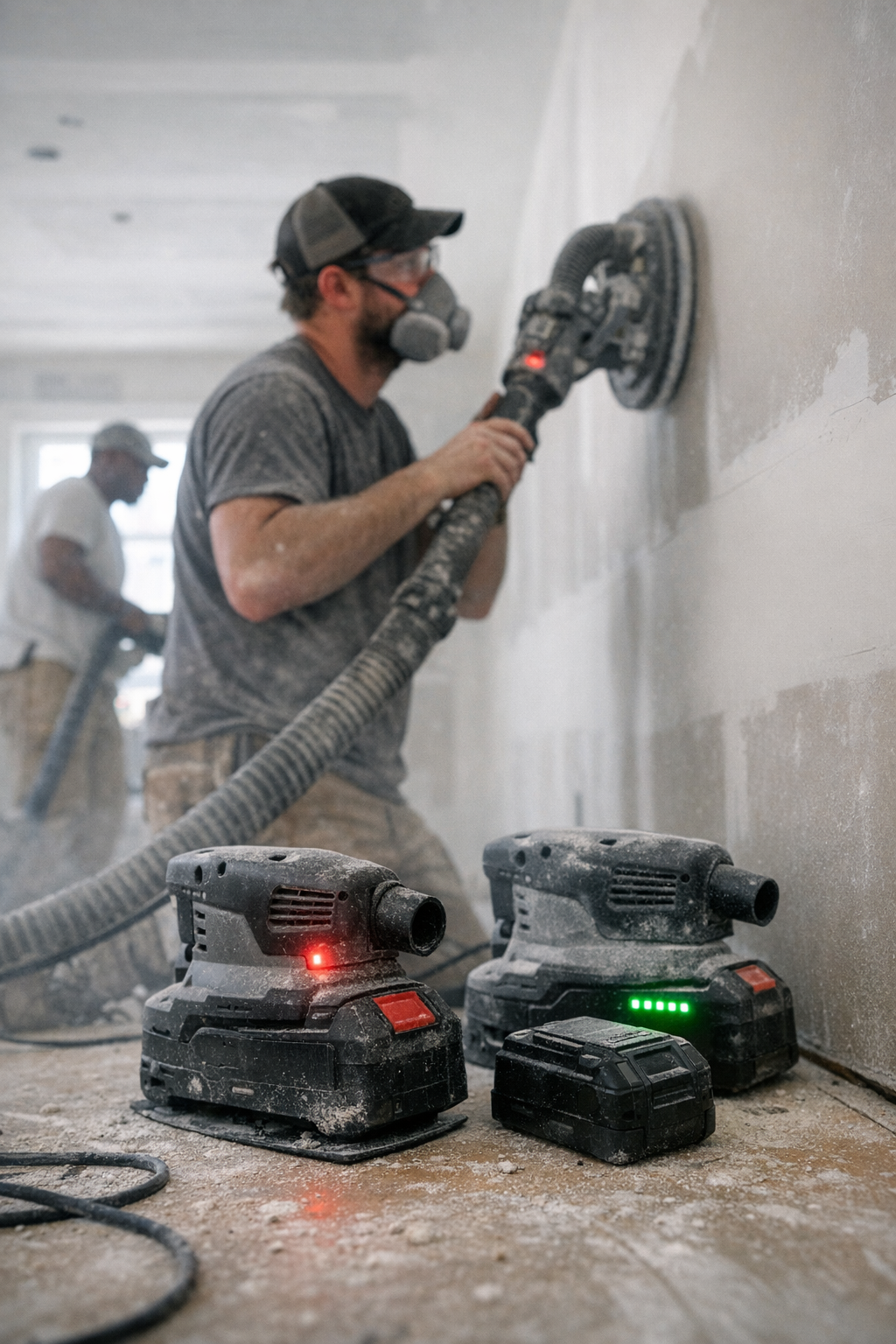
    You don’t see battery fatigue coming—not when your workshop vacuum still screams at full strength or your air scrubber is kicking up fresh airflow with the first pass. The reality sets in much later: behind the whirr and the clean panels, it’s the battery that gets chewed up job after job, shift after shift. By the time you’re halfway through a messy drywall tear-out or mid-sanding run—with dust swirling and tools in constant motion—the small habits around battery swaps end up deciding whether your tools finish the day as strong as they started, or slowly grind themselves down until you’re left chasing lackluster results. It isn’t just shine that fades. It’s performance, and it’s reliability—right at the moment you can’t afford tool drift or missed debris.

    Draining to Empty Always Feels Convenient—But the Downside Adds Up

    Every worker knows the temptation: why stop early when that orange LED hasn’t started flashing? Squeeze out the last pass, let the tool run until auto cut-off, then swap batteries and move on. In theory, you’re stretching every cent of charge. In practice, each full drain chips away at your tool’s backbone. The signs don’t scream for attention. One day, a shop vac that used to yank dust clean in a single pull now takes two, then three. On a long fastening streak or a stubborn drilling sequence, the motor’s pitch changes—not louder, just thinner. Recharge time ticks upward, and the battery simply won’t rebound like it did last month. And you don’t see the difference until you’re five cycles deep into a real job week, where shortcuts show up as missed patches and slowdowns everywhere else.

    When the Work Gets Long, Weak Batteries Work Against You

    The real cost is clearest on tough, drawn-out jobs: after hours sanding out seams, when drywall residue is caked on every joint, or you’ve been carving out cut after cut and the grit is embedded in everything you touch. That first battery still feels strong—until you reach the last stretch. Now, your cleaner isn’t quite reaching into corners. The air’s moving, but somehow each pass pulls up less, and you’re double-backing over what should have been finished. Every extra minute you spend repeating a pass, every sweep that misses fine dust, you trace back to a battery that wasn’t built for this level of daily deep discharge.

    Letting your cleaner or drill push all the way to shut-off doesn’t just mess with your end-of-day results—it wears the battery harder, and the tool starts running underpowered right when finish quality and control matter most. Instead of one clean, precise pass, you’re stuck cleaning up after the tool, which always means more fatigue in your arms, slower changeouts, and that constant itch that you could have done it faster.

    Identical Tools, Different Outcomes—What Sets Them Apart?

    Imagine two teams sanding panels side by side. Both start with the same make and model of air cleaner, same voltage, and the batteries are fresh from the charger. Five cycles in, one team is still making easy, single passes—sharp airflow, suction that clears every groove, no lag. The other? Their machine is dragging, motor straining to keep up, lower panels left dusty. No difference in skill or machine model—it’s just that one battery has been cycled to dead too often.

    The difference is subtle at first—maybe a slight struggle to clear corners, maybe an odd drop in suction halfway through. But push through a busy week, and by Friday one crew has their results on the first pass while the other dreads the slowdown, swapping batteries mid-way, sometimes skipping finer cleanups just to stay on schedule. The output gap widens: one team trusts in a predictable, fully ready tool; the other compensates every day for a battery that’s lost its edge.

    Simple Habit Shifts That Add Years to Tool Life

    The smallest shift? You swap batteries at the first hint of fading muscle—when suction eases up, motor pitch drops, or airflow feels even slightly “off.” In a real shop, that might be an hour and a half in, just as you sense the edge going dull, well ahead of the shutoff click. The key: don’t wait for a dead stop.

    This isn’t about being hyper–cautious. It’s about using your senses—listening for strained sounds, watching for the tool to hesitate on a dense seam, or noticing extra effort required for what used to be routine. When you pull the battery pre-emptively and pop in a fresh one, you keep the tool in its “sweet spot.” Performance stays steady: one-pass suction, consistent drilling torque, repeatable power for clean cuts. No doubling back. No saggy runs. No burn in your arms from fighting a tired tool.

    Missing Signals Means More Work—And More Fatigue

    If you ignore what your hands and ears are telling you—holding out for that final blink or power dip—every shift gets just a little bit longer. Recharge lags, batteries fail to hold their charge through the next cycle, and your tool’s responsiveness drops. By the end of a busy week, what started as a small shortcut adds up: tool control gets sloppy, there’s more bending and backtracking, and simple jobs drag out while the tool loses steam at the worst possible moment.

    Practical Battery Management for Real Job Sites

    Look for signals, not just failures. If you notice even a small shift in airflow strength, new mechanical noises, or you find yourself re-sweeping the same stretch, treat that as your cue to swap. Integrate battery changes into your workflow—when you pause for lunch, when switching between sanding and drilling, or at the end of a big batch, not after your tool dies in your hands. It keeps both batteries at moderate cycles, and all your passes stay tight and controlled.

    This applies straight across the board—whether you’re cutting baseboards, running a dozen fasteners in quick succession, or just keeping a home workshop clean after a weekend project. Battery management isn’t about perfection or pampering. It’s about finishing strong every day, with less time lost to surprise malfunctions or faded-out runs.

    Steady Power, Smoother Flow—Why It Matters When You’re Tired

    You know the unique drain after you’ve redone a row of screws or skimmed the same floor twice because the power just wasn’t there. It isn’t just a few extra minutes lost. It’s the compounding fatigue—shoulders and back wearing down as you repeat slow, underpowered passes. Keeping batteries out of deep discharge cycles protects not just tool performance, but your rhythm on the job. The output stays level. You’re not fighting with your equipment. You’re focused on the cut, the cleanup, the next panel—work moves the way it should.

    This isn’t about protecting battery life for its own sake. It’s about less grinding, more control, and tools that respond like they did on day one—even after dozens of rough, real-world jobs. That’s what turns a decent shift into a productive day and spares you from endless reruns purely because your battery bowed out long before your job was done.

    http://gumboll.myshopify.com

  • How to Create a Pet Travel Setup That Stays Organized on the Go

    The most common pet-travel mistake isn’t forgetting something—it’s trusting a setup that only looks ready while sitting still. The problem doesn’t show until you’re halfway through a day of stops, leash pulled tight, a pet circling the seat, and you reach for a wipe or bowl and grab at the wrong pocket—again. That initial “everything-in-place” feeling from home evaporates fast once you’re actually on the move. Bags that seemed organized break open at the first sign of movement: a treat pouch dumped out, wipes buried, or a water bowl shifting under blankets. Awkward reach, blocked quick access, and dog and human gear tangling together—these aren’t rare slip-ups. They’re the friction that keeps repeating trip after trip, slowing you down when you need to move most.

    When “Organized Enough” Isn’t Enough On the Road

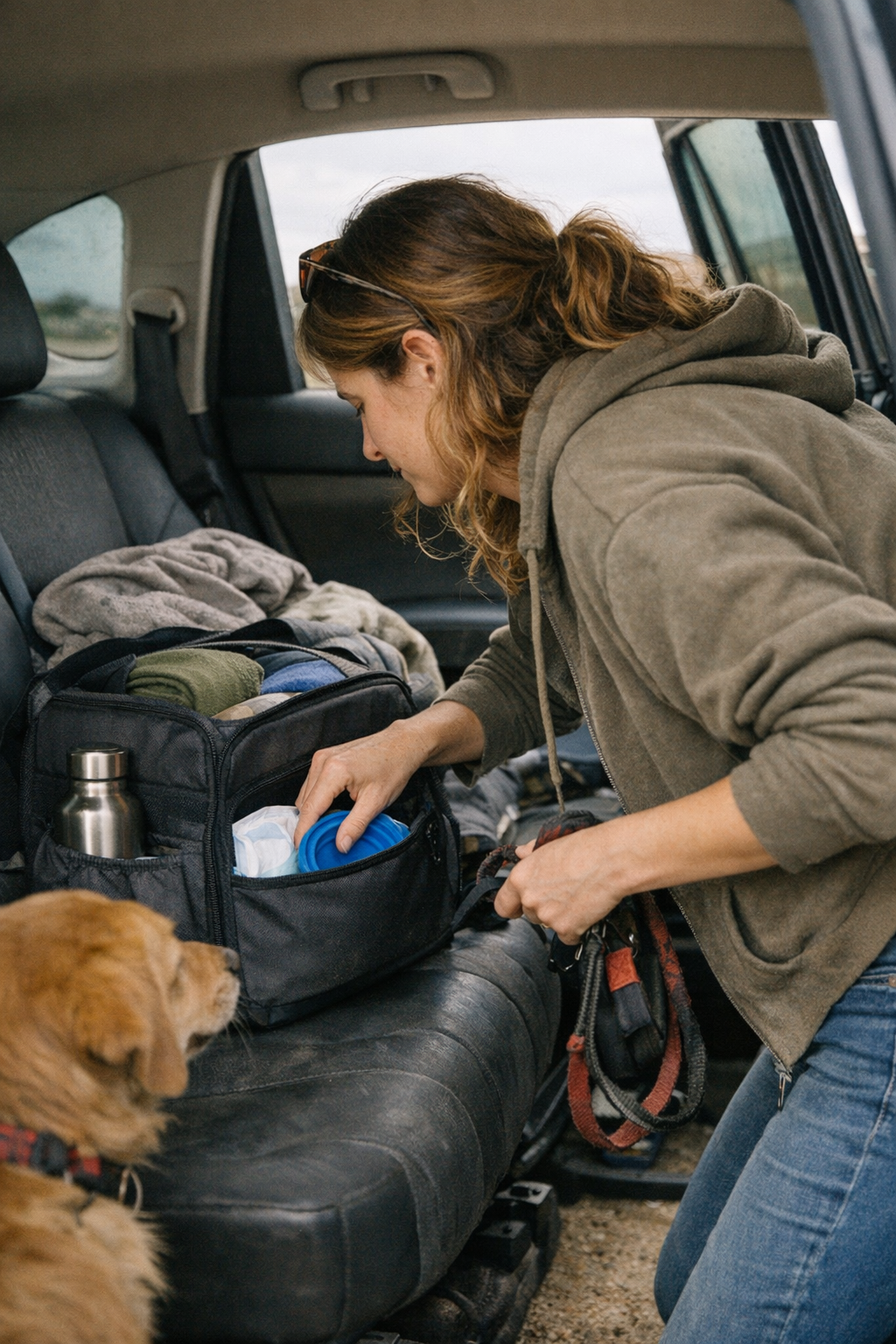
    Most pet owners have lived the letdown: a travel bag looks dialed-in until the chaos of a normal afternoon undoes all that order. Maybe that bowl seemed secure in a side pocket, but now it’s trapped under a blanket and you’re kneeling outside the car, elbow-high, to pull it free. Or wipes set “handy” at home now require digging through a jumbled compartment with one hand, leash or door in the other, while your pet twists to escape.

    By the third stop, the routine falls apart: bags tossed aside to see into the bottom, treat pouches toppled, awkward stretches across the car just to find a single item. Each mini inconvenience stacks up, and a system that felt efficient now drains momentum on every stop.

    Real-World Friction: The Hidden Cost of Travel

    Travel stress isn’t just big messes—it’s the slow grind of repeated, fixable annoyances. A few real patterns stand out after even a brief run of stops:

    • Blocked access: The item you grab three times a trip—water bowl, wipes—ends up buried every single time, never where you need it in the moment.
    • Two-hands-needed problems: Wipes or leashes stashed so deep you can’t reach them while keeping your hold on the door, dog, or bag.
    • Comfort gear causing slowdowns: That blanket soothes your pet but consistently slips loose and blankets everything else, usually when you’re in the biggest rush.
    • Tangled overlap: Leash, keys, and phone all slide together with pet gear, forcing you to dig for each piece, doubling the interruption at every stop.
    • Perpetual reshuffling: Each movement—grab, handoff, zip, unzip—feels like a reset. By late afternoon, the routine is half handling gear, not the pet.

    It’s not chaos—just time lost and patience chipped away, every time you fight your own setup to get moving again.

    Repeating the Same Moves: Why Setup Weaknesses Multiply

    The weakness shows up not once, but in cycles: a setup that works for one stop fails when you grab, stash, and reuse gear five times in a row.

    Picture it: muddy paws after a walk, leash in hand, lifting your pet back into the car. You know wipes are somewhere close—except you’re also juggling a treat bag, a bowl, and a comfort blanket slumped over the pile. The search repeats. Each time, a quick clean turns frustrating, and the so-called “system” means pausing to dig—or give up and let paw-prints spread inside the car.

    This isn’t one tough day; it’s every errand, every weekend trip—an organized bag that grows more unworkable each time you’re forced to repeat the same slow routines.

    A Small Fix with Outsize Impact: Front-Pocket Access

    The anchor that changes this rhythm: keep key daily-use items—wipes, water bowl, leash clip—always in an open, front pocket, shielded from clutter, reachable in one natural motion.

    After enough frustration, the benefit is obvious. Keep that outer pocket strictly dedicated—no stuffing blankets, no loose treats—just the things you reach for three or four times on any stop. The difference? You still reach that pocket easily after a day of re-packing and movement. That single split-second reach, not a full inspection, now gets you what you need—with the same reliability six trips in as on the first one. Instead of reshuffling or adjusting at every break, you simply move on.

    This adjustment sounds small, but it wipes out half the slowdown and lets you stay focused on the next step for you and your pet.

    The Mismatch Between Visual Order and Real-Life Access

    Pet-travel bags and organizers are often sold by how neat they close, packed with tidy dividers and labeled zones. But visual order means nothing if it doesn’t speed up your movement on a real, repeated trip. If you need to move something aside to get what you really use—or keep reaching into the wrong pocket—the bag’s “system” becomes its own kind of slow trap.

    The honest test: a less structured bag with nothing blocking the main access zone will outperform a clever grid of pockets if you can always grab essentials without pausing. In travel, function beats form—especially at the worst moments: rain, mud, a restless pet, or a packed car.

    Diagnosing Where Your Pet-Travel Setup Is Failing

    Red flags almost always show up in small rhythms:

    • Diving into the same compartment for wipes or a bowl at every stop, never finding them on the first try
    • Cleanup gear only surfaces after messes already reach the seat or mat
    • Bags or pockets so jammed you need to drop something else to open them one-handed
    • Pet gear and your own keys or phone mixing, slowing both of you down as you swap items mid-motion
    • The fresh-out-of-the-house “order” eroding into repeated mini-adjustments and quiet irritation

    Each hassle is minor alone, but combined they turn a routine outing into a slog. Rainy days, muddy fields, or quick errands with multiple stops multiply the pain fast.

    What Actually Makes Travel More Repeatable?

    Reliable pet travel comes from structure built for repeated, messy, distraction-heavy movement—not just tidy packing. What lasts on real trips:

    • Essentials always in the fastest, least-blocked spot—even if the rest looks less tidy
    • Compartments designed for on-the-go one-hand access, never double-handled, never under anything floppy
    • Clear, structural separation: your stuff and your pet’s don’t meet in the same grab-and-go zone
    • A rhythm that lets you reach, use, restore, and restart without thought—no unzipping a new pocket every cycle

    When you build for this kind of access and separation, you notice it fastest during back-to-back stops, in less-than-ideal conditions. The outsized result: less friction, more moving, and a routine that adapts to you and your pet—rather than the other way around. No travel setup erases every messy moment, but structure that survives movement is what changes the whole experience after the third, seventh, or tenth stop.

    Explore practical pet-travel setups that work in real life at PawGoTravel.

  • Streamline Your Daily Pet Care with an Organized Reset Routine

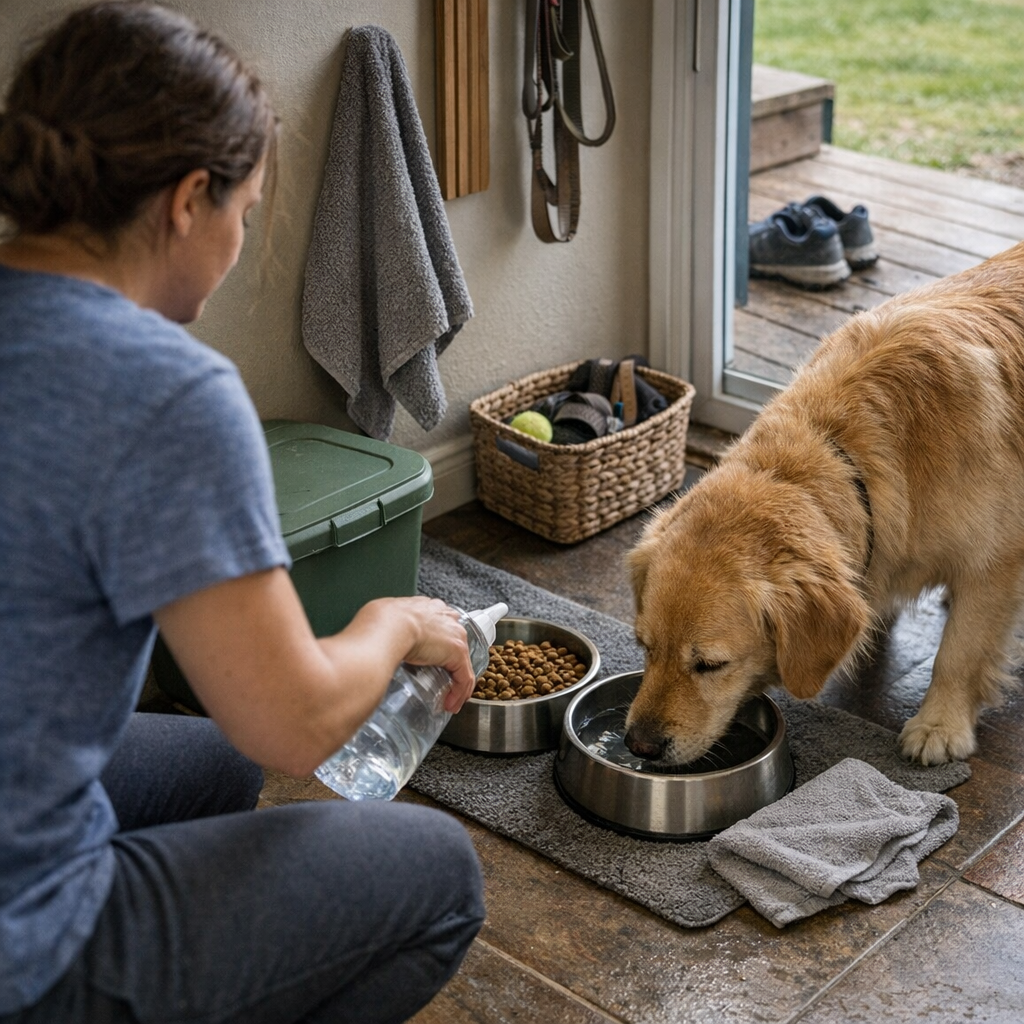
    Resetting your pet’s food and water setup each morning looks simple—just a quick switch, a spot wipe, and a refill for the bowls. But in real daily use, what should be a two-minute reset often turns into a stop-and-go routine: one missing scoop, a towel gone walkabout, or a refill bottle out of reach, and now you’ve started your day with a half-finished chore, a confused pet hovering, and your own coffee getting cold. The real issue isn’t big messes—it’s tiny supply gaps and small delays that pile up when the basics aren’t where you need them, right when you need them. CalmPetSupply is made for exactly this kind of repeated routine friction—the difference between a setup that’s ready for use and one that stays stuck in “almost.”

    The Slippery Slope of Small Misses

    Ever walk up confident you’re set to feed and water your pet—only to halt, mid-task, when you realize the towel’s in the laundry or the scoop has disappeared again? It doesn’t seem like much. But the second you pause to hunt down a missing item, that quick reset unravels. Multiply a few “where’s the refill bottle?” moments across a week, and now breakfast involves more steps, extra trips, and a pet idling by the bowl. Your morning momentum takes the hit.

    Picture this: feeding done, you go to refill water—except the refill bottle is behind yesterday’s mail, and the counter now has crumbs because the towel isn’t there to catch them. Every extra detour, even a short one, slowly eats away at your routine until you start rushing through steps or skipping basic wipes just to move on. These aren’t single-day headaches. The drag shows up over weeks as small inefficiencies that steal time and energy from the rest of your morning.

    When “Tidy” Doesn’t Mean “Easy”

    Setups can look neat: bowl edges aligned, towels on hooks, everything stowed out of sight. But organizing to look tidy often means you end up putting tools out of easy reach, tucked behind bins or inside pantry drawers. If you’re shifting another kitchen item every time you need to grab a towel or food scoop, that surface-level order just hides new frictions underneath. Instead of helping, appearances now create extra steps you feel every single reset.

    It’s not just feeding. Maybe your dog returns from a damp walk, paws needing a quick wipe. The towel? Out of the way, blocked by bags. With a restless pet at the door, you dig around for a cloth. That “quick” cleanup drags—adding five minutes, tracking water through the hall, interrupting your routine yet again. Your floor stays clean, but the effort behind the scenes keeps climbing.

    When One Weak Point Keeps Coming Back

    Plug one gap and another crops up. You finally keep the refill bottle by the mat—but later, it gets moved behind kitchen clutter. You hang a towel within arm’s reach, only to find it borrowed and never returned. The setup always looks fixable, yet keeps breaking at random steps. You only notice the cracks when you’re trying to finish up quickly—late at night, at lunchtime, or right before work.

    Imagine the late-evening water check: if the cleaning towel is present, it’s done in seconds; if not, you stall or consider leaving the mess for morning. Visually, the feeding station reassures, but in action, you end up searching, stepping around clutter, or skipping a needed rinse—all because the “easy” part failed on its third repeat.

    The Flow of Daily Routines

    These disruptions don’t just haunt feeding time. Grooming, litter pickup, toy cleanups, and after-walk resets—all rely on tools that rarely stay perfectly in place. One missing brush, a linen bin stuck behind storage, or a scoop left in the wrong spot triggers fresh interruptions. Suddenly, the reset isn’t so “quick.” These layered delays bleed into the rest of your day, pulling your focus and slowing even unrelated tasks.

    A bowl may look fine from the doorway, but the real indicator is a pet loitering nearby, nudging an empty dish, or sniffing around for a missing treat. Reliable routine depends on having all essentials—within reach, always returned, always visible. The moment supplies drift further from the work zone, the mental load and step count climb. Running a smooth routine means the station resets itself: one container, one towel, one scoop—all anchored at the point of use, not migrating back and forth from storage.

    What Actually Helps—Simple Tweaks

    You don’t need a full overhaul. Improving daily care often comes from nudging each tool closer to where it gets used—bottle beside the mat, towel on a side hook, scoop parked in the container (never wandering to another room). Use, reset, return—same place, every day. Slowed down by the same snag twice? Don’t tweak the whole system. Isolate the step that blocked you and move just that tool into the work zone.

    Over a few weeks, you’ll spot when your setup shifts from “looks fine” to “works every time”—the proof living in routines that stop breaking down under pressure. The difference is no guesswork, no backtracking, no searching for basics when you’re already in a rush. The feeding zone finally keeps up, not just with your standards, but with real repeated use.

    Find practical feeding setup solutions right where routine friction starts at CalmPetSupply.