Blog

  • Why Leaving Space in Cabinets Boosts Storage Efficiency Over Time

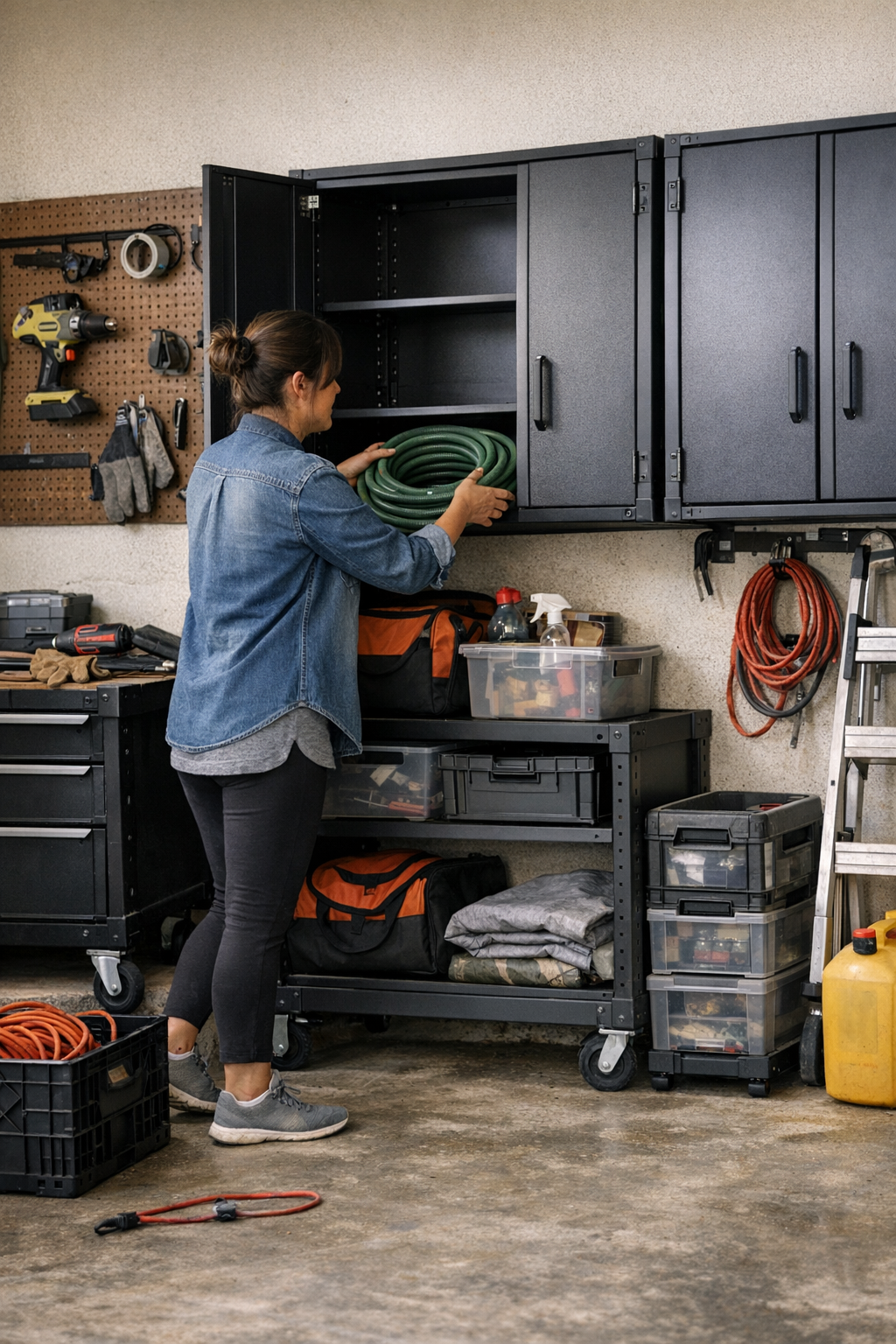
    There’s nothing like the brief high of finishing a garage or workshop overhaul—tools racked, bins labeled, every shelf filled, the whole floor wide open. For a week or two, it looks and feels like a well-oiled machine. But in real, daily use, those picture-perfect setups rarely last. By week three, small frustrations creep in, and the bright promise of a “fit-everything” system starts to dull.

    When “Fits Perfectly” Becomes a Daily Obstacle

    At first, “packed full” feels efficient: cabinets loaded edge-to-edge, wall sections covered in racks, bins nested to squeeze out every bit of air. On move-in day, the logic is clear. But as soon as routines return—hauling out the toolbox mid-week, tucking muddy gear away after a rushed yard clean-up, hunting for a power drill buried behind a season’s worth of other supplies—the tight fit demands a penalty every time.

    Suddenly, each interaction is clumsier. That cabinet you filled to the brim? Now you have to pull out an entire bin just to slide one wrench back in. You find yourself nudging the rolling cart two feet sideways just to swing a cabinet door wide. The spot behind the cart—the one you swore would keep walkways clear—now requires a lurch and a sideways reach to access what you actually need. Corners fill with items that technically “have a place,” but rarely make it all the way back in without a multi-step shuffle.

    Overflow Piles: Where Good Organization Goes to Die

    It’s rarely mess at first—just overflow. Without built-in give, things with no ready slot take over new territory. Last used hose sits coiled by the door, waiting for someone who’ll actually deal with the cramped utility shelf. Extension cords drape across the rolling cart’s handle because there’s no buffer spot left inside. A pair of bypass pruners balance on top of the garden bin “for now” but end up living there all week. None of it is a crisis, but the supposed control is leaking away with every improvisation.

    The toll is slow. Every time you put something away, you have to move something else first. Extra bins, too fat for their cubby, wait permanently in front of closed cabinet doors. The easy path from the workbench to the yard starts collecting gear that doesn’t fit anywhere but also can’t be left outside. The floor is supposed to stay clear, but now it’s a landing strip for whatever didn’t make it back home without a fight.

    Why Backing Off 100% Full Actually Improves Flow

    This is the underappreciated fix that only shows itself with real use: leaving 10–20% of your shelves or cabinet space intentionally empty keeps the rest running smoothly. On paper, it looks like wasted capacity. In reality, it’s what protects your routine.

    That extra gap means you can always return something fast, with no puzzle-solving or back-and-forth. You don’t have to reshuffle three bins just to park one stray mallet. Odd-shaped gear drops right into the cabinet, not onto whatever spot in the garage is convenient and unclaimed. Instead of rate-limiting yourself with brutal efficiency, you give every regular return a place to breathe, keeping overflow bottled up inside the system where it belongs, instead of on your floor or stacked in dead corners.

    Example: The Garage Reset That Actually Worked

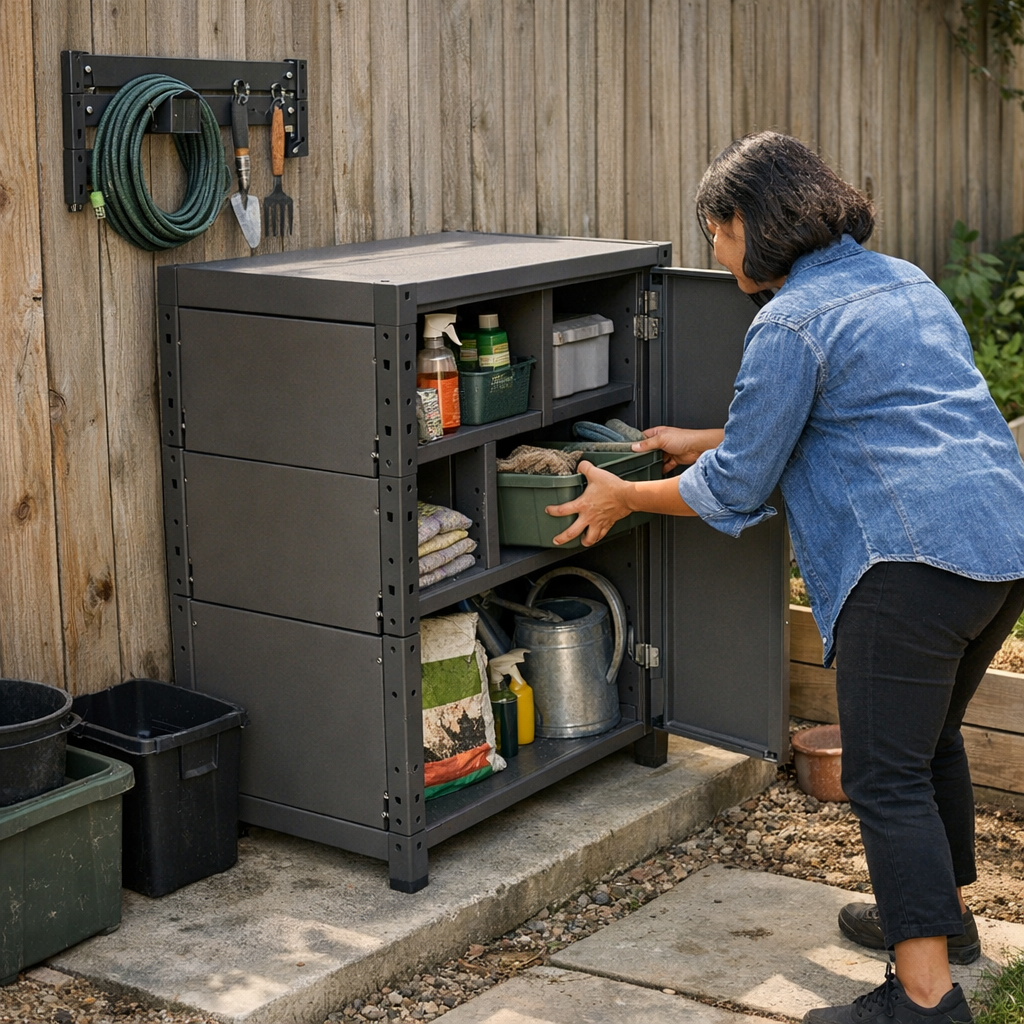
    Start with a real scene: a suburban family’s garage, neatly equipped—wall-mount cabinets, tiled flooring, a rolling cart for weekend gardening. The first month? Pristine. But after two weekends of outdoor projects, the cabinet space vanished. Tools and hoses returned but found nowhere open, so they sprawled at the cabinet’s foot; bikes detoured around the clutter. The rolling cart became a junk tray “until we have time to reorganize.” It never looked disastrous. It just made everything—putting away, retrieving, even walking—slightly more annoying. There was no dramatic mess, only a slow drip of friction.

    What really broke the flow? To return a single rake, you had to first shift bins, wedge the door open against the cart, and plan your moves like stacking blocks. The whole system was airtight, and impossible to flex. The floor was meant to be open. Instead, each “return” ended as an unscheduled drop-off on whatever surface was closest to the entrance.

    The Everyday Payoff of Deliberate Underfilling

    The solution wasn’t another full reset—it was carving out emptiness on purpose. By clearing just one shelf per cabinet and resisting the urge to fit every bin, the pattern changed overnight. Suddenly, overflow had a home of its own. That random garden spade? Tossed inside, no reshuffling. Bin to switch out before dinner? Parked, door shut, job done. Movement stayed clean, the floor open, and the once-persistent slowdowns—the domino effect of too-tight storage—stopped dictating how the rest of the space functioned.

    This isn’t minimalism as virtue. It’s about keeping the area truly usable, preventing the daily shuffle, and letting the setup actually serve the chaos of real life—not just look good on move-in day. The difference won’t make a tour photo, but it’s the only way some corners ever stay clear, and some tools ever make it all the way home after a ten-minute rush.

    How to Build the Buffer Into Your Setup

    If you’re planning—or rebuilding—a garage, workbench zone, or muddy gear wall, try giving yourself the permission to keep a shelf only half-used. Accept that some bins will come and go, some days demand more space than tidy plans allow. The benefit shows up not on day one, but on day 45, after you’ve dumped, retrieved, misplaced, and rushed through every corner at least twice.

    The best setups don’t just store things—they move with you, absorb surprises, and make it easy to reset weekday chaos in minutes, not hours. That deliberate buffer is the difference between a space you admire and a space you rely on every single week.

    Find more practical storage solutions and systems at StackNest.

  • Streamline Your Winter Drives with a Dedicated Visibility Kit Setup

    Every winter, the real battle inside your car is not the cold—it’s the scramble to find your scraper, towel, or deicer while time drains away and your routine breaks down before you even start the engine.

    You step out ready to drive, but the moment you reach for your ice scraper, it’s buried again—jammed beneath a gym bag, kicked somewhere behind the seat, or left all the way in the trunk from yesterday’s quick stop. The deicer is wedged in a door pocket you barely access. Your anti-fog wipes slip under the seat; a spare wiper blade migrates to the far cargo corner. You have everything you need, but never where you left it. Routine winter mornings become a gear hunt—just as you’re rushing out, minutes start slipping away while you dig, kneel, and fumble around the cabin.

    When “organized” is a trap: hidden delays in winter-ready cars

    From the outside, your car might look spotless: clear floors, clean seats, gear stashed neatly out of sight. But the minute frost hits, invisible friction surfaces. Visibility tools drift, lodge, and hide—sapping minutes and patience when you need them most. It’s always the early start or the late departure. Scraper out of reach, you’re pawing through shadows; thick gloves make the smallest search a clumsy irritation. Delays stack quietly: ten seconds, then two minutes lost, before you’re even close to ready. Appearances mean little if the first cold step inside triggers another round of searching and sorting.

    The repeat cycle: invisible clutter, repeated drag

    This isn’t a one-time scramble. Each drive resets the mess, even if your cabin looked perfect before. The scraper slides back under the seat. The deicer falls sideways, just out of reach. By the next trip, the heater’s already fogging your windshield, but your hands are busy picking through loose wipes and a crumpled rag. You end up driving with a half-cleared window or—worse—streak marks made in haste. There’s no outright chaos, just a slow churn of items never where you need them, turning every cold start into a new friction point.

    Sharing the car? The setup frustration doubles

    Everything gets louder if you split car duties—family routines, alternating commutes, shared shuttles. Each person “organizes” winter tools their own way: the scraper wedged in a new door pocket, the deicer stashed in a cupholder, wipes tossed wherever they fit. Half the time, something leaves the car and doesn’t return. After heavy snow, you’re suited up and ready—only to find the essentials have drifted or vanished. Now you’re stretching under seats, tracking slush inside, and working double just to restore the basics before any actual driving begins.

    Routine small frictions: why “tidy” often fails in winter

    Winter gear always moves. Grocery runs push the scraper into new corners. Vacuuming on a warmer day displaces everything. Any attempt to “set up” lasts maybe a week—a single sharp turn or loading rush scrambles the kit again. On Thursday morning, you’re bending over bags, muttering “but I just cleaned this,” while the same unhelpful order reasserts itself. Every minor shuffle pushes tools farther from reach, making small cold frustrations an automatic part of the day.

    Stability vs. style: a working winter-visibility kit

    Adding tools is rarely the answer. Real game-changers are about fixed, ready access—always grabbing what you need with zero crawl, search, or tray digging. A low-sided, anchored organizer—even a simple one tucked behind the passenger seat—changes repeated cold starts instantly:

    • No more awkward dives or glove-struggle retrievals. The scraper stands upright. The deicer, wipes, and glass cloth all within one-hand reach—even with thick gloves or a heavy coat.
    • Stays put even when bags, groceries, or seat shifts knock everything else loose. Organizer containment keeps your kit visible and always accessible—never lost to cargo slides or careless re-stuffing.
    • Loading and unloading don’t bury essentials. Errands, carpools, dog rides, and gym gear all pass through, but your main winter tools are never swept under by the next wave of belongings.

    Instead of cycling between trunk, seat-back, and footwell for each tool, you shift to one reach spot—saving time, lowering stress, and ditching the scavenger hunt that slows down every winter drive.

    After the switch: real-world winter routines with a kit reset

    It’s not just a minor convenience. Over weeks, a dialed-in visibility kit turns into a new rhythm. Here’s when you really notice:

    • Late mornings with no time spill—you clear off the glass in under a minute, even on icy days.
    • Thick gloves no longer cause stumbles—open-topped tools offer direct grab, no fumbling with hidden fasteners.
    • Nothing blocks or buries crucial gear after hauling cargo—your kit stands out, visible in two seconds instead of lost under bags or jackets.
    • There’s no mental double-check at every stop—one look confirms everything stayed in place, ready for next time.

    The most old-school pain—kneeling in slush for a lost scraper, tugging at objects buried by passenger mess, starting with blurry glass—just fades away. You’re not spared the season, but you are spared the drag. Old friction that used to slow down every start quietly disappears once access stops being an obstacle.

    The “clean” illusion: why winter-ready setups mean setup, not just looks

    What works in spring means little when winter returns. A car that “looks” sorted is slow to use when cold snaps hit. Smooth floors and hidden gear quickly unravel—your hand still hits cold plastic while kneeling to extract a tool that should be within easy reach. Setting up for winter is less about minimalism than about position: fast access beats spotless hiding every time weather shakes up your routine.

    Practical beats pretty: for actual repeated use, keep your kit within arm’s reach from the driver’s seat—ideally behind the passenger seat or in a side door pocket you can hit without looking. Gear buried deep in the trunk or bottom of glove boxes? Each extra motion multiplies friction, slowing every round trip when winter is at full strength.

    Pushing winter friction out: why setup structure always matters

    No organizer can turn January into June, but one change—anchored, direct-access setups—drastically cuts repeated drag. The improvement isn’t seen in Instagram shots; it’s felt in real movement, task after task. How your cabin looks barely matters if cold starts and rushed stops still mean searching and bending.

    Shop DriveWellSupply for car organization and winter setup essentials

  • Why Invisible Supports Make Wall Lighting More Reliable Over Time

    Cables stay tidy for a few days—then real life takes over. Stick-on mounts and plug-in lights promise a damage-free, markless setup, but by week two the limits show. Wires droop across desk edges, adapters dangle below shelves, and every brush with a chair leg risks yanking a cable loose. The wall might look “untouched,” but under every shared table, along compact work surfaces, or below kitchen shelves, small distractions build fast—cables sliding out of sight, plugs slipping free, surfaces harder to clean. Setup that seemed invisible at first becomes a daily interruption right where clarity, comfort, and order matter most.

    Why “Clean” Installs Breed Hidden Hassle

    There’s short-lived pride in an unmarked wall: no screw holes, no brackets—just floating fixtures and smooth lines. But when a lighting setup relies on adhesives or skipping hardware, friction is only delayed. The first few days are all about appearances—no hardware in sight, everything flush. Then reality sets in as cable weight tugs free, sticky pads let go, or someone moves a chair too close. What looks seamless on day one starts pulling itself apart under normal use.

    Hidden hassle shows up fast. Each routine action—pulling a chair, cleaning a shelf, plugging and unplugging—sends cables arcing away from the wall, drooping at the edge, or creating a visible dip under a desk. Hands and feet snag on loose lines. What started as a “minimal” solution devolves into near-daily maintenance just to keep the space functional and clean.

    The Real Cost of Bare Installations

    Skipping mounts or cable management buys fake simplicity, but it quietly trades away surface usability. Exposed or drifting wires don’t just spoil the look—their movement becomes a practical problem:

    • Shared work tables: Multiple users, more shifting. Each person adds stress to wires, pulling plugs or sending fixtures askew.
    • Tight corners: Chair backs, bags, or even elbows easily brush up against loose adapter cords.
    • Under-shelf kitchen runs: Quick passes with a broom or a grabbing hand tangle on low-hanging cables or wobble unsecured lights.

    A clean wall rarely means a friction-free space. Without real support—a discreet bracket beneath a shelf, a cable guide along the edge—the lighting setup moves, and that movement becomes visible mess and repeated annoyance.

    Visual Simplicity vs. Lasting Usability

    It’s tempting to hide every piece of hardware in pursuit of a perfect look. But the lack of subtle support leads to visible clutter and frequent frustration, especially where rooms are small or shared:

    • Cable creep: Cords flatten on install day, then arc down painted walls or across table edges as weight accumulates or adhesives fail.
    • Plug strain: Plugs slip from outlets, adapters dangle half-out, or a lamp flickers off after someone shifts a cord just slightly.
    • Snag points: Chair feet, cleaning rags, hands—all find the single wire out of place, pulling it further out of line with every routine movement.
    • Clutter clusters: Desk corners and outlets become hotspots for tangled lines, making the cord mess impossible to ignore before you even focus on the task at hand.

    The illusion holds until small misalignments stack up. Each bump or adjustment chips away at organization. The wall may be pristine, but the lived-in space feels tense and inconvenient—a setup that interrupts instead of resolves.

    Repeated-Use Friction: Real Scenes, Real Interruptions

    Picture the trade-off: You stick an LED strip under a floating shelf with adhesive. It disappears at install, but by day five, the cable slumps below the edge. The next chair roll snags it, feet catch, plugs inch their way out. Clearance under the shelf shrinks, making every cleaning sweep or quick grab for a charger more of an obstacle course. The “invisible” fixture is now visible as an everyday hassle—one that threatens to disconnect or tangle with each use.

    This scene isn’t rare. Under-cabinet lights in tight kitchens, bookshelf fixtures along hallway paths, workstations with shared power outlets—all amplify the same gaps: a missing bracket here, an absent cable anchor there, leading to daily interruptions, workarounds, and adjustments.

    Adjustment as a Red Flag

    If you find yourself nudging the same cable back, retucking an adapter, or dodging dangling wires every few days, that’s a support structure failing under real-life use. When your setup demands constant minor fixes, it’s a clear sign that invisible support is missing exactly where routine movement tests the install. Over time, these fixes become reflex, sapping focus and making the room harder to enjoy—no matter how untouched it looks when still.

    The Small Fixes That Quietly Change the Room

    The answer isn’t heavy-duty hardware on every wall—but a few low-profile pieces, placed where actual friction happens, can transform daily life. Try:

    • Finger-width under-shelf guides that keep cables taut and shielded from hands and legs, leaving surfaces clear without visible marks.
    • Small brackets, tucked just out of the direct touch zone, locking adapters or fixtures in place so plugs don’t shift or slip.
    • Well-placed anchors at shelf ends or along desk supports that keep cables parallel and prevent gradual drift, even if the remainder runs hidden.

    These pieces don’t dominate the look—but they change the feel: fewer disconnects and untangling rituals, easier cleaning, and setups that stay neat and quiet through actual use, not just after install. The space keeps its minimal appearance and becomes easier to live in—cleaner both visually and in everyday function.

    Tips for Sustainable Cable Management

    Secure cables out of sight, not just out of mind. Anchor wires to the underside of shelves, backs of desks, or tucked along edges—pick spots where movement occurs or drooping starts. One or two small supports in the right places last longer and work better than a handful of stick-on clips that loosen quickly.

    If adhesives are your only choice, start at stress points—test their strength where cables are most likely to pull. Reinforce before drift and sag appear. Always pair heavy plug-in adapters with a block or bracket so weight doesn’t pull down the entire setup—a detail most cord layouts alone can’t solve.

    The Hidden Advantage of Subtle Support

    The best indoor lighting arrangements aren’t just “clean” at first—they disappear from thought in daily life. When a bracket or guide holds fast out of sight, you don’t notice cables slipping, lose light to drift, or fight clutter beneath a minimal surface. The clean wall remains, but the space genuinely works—free of mess, continuous adjustment, and those small irritations that kill comfort over time.

    Most rooms don’t need more hardware—just better use of support, where movement and mess start to show. Don’t accept daily disruption to keep walls pristine. With the right lighting supports, you get both visual calm and practical order—untouched looks that actually hold up through use, not just through the first week.

    LightSupport – indoor lighting and support built to maintain real comfort, clarity, and order in practical spaces.

  • Streamlining Pet Travel: How Organized Gear Reduces Stress on Every Trip

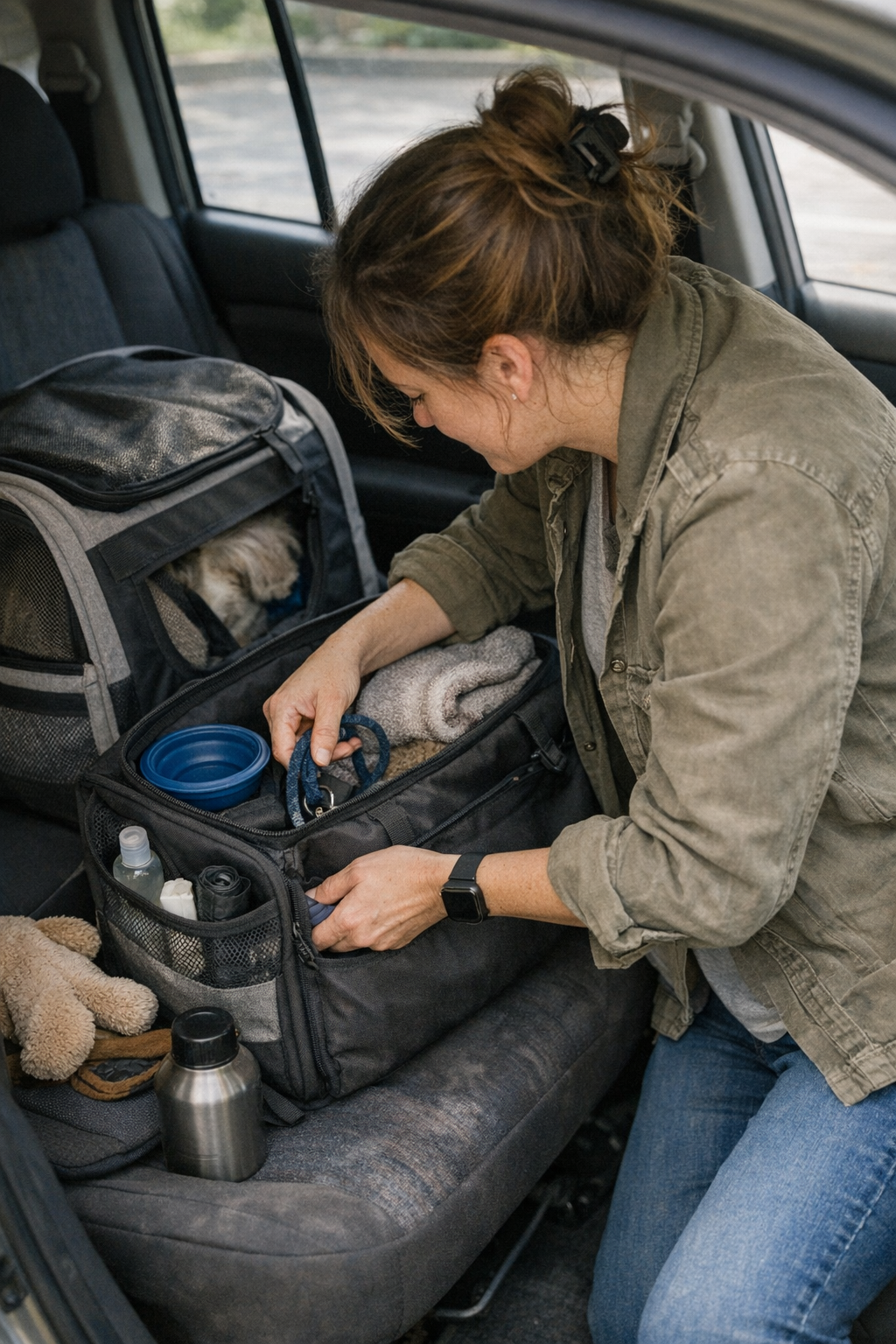
    Every pet travel kit looks “set” until real movement starts. Two errands in, the polished bag turns stubborn: the leash knots under a comfort blanket, wipes slide deep beneath treats, and each quick stop means tension—not just for you, but for your pet waiting in the back. Even a carefully packed carrier gives itself away after a normal stop-and-go routine: slow, awkward reach for cleanup, blocked fast access, items overlapping until the next shuffle, all while your animal picks up on every reset or delayed move. The smooth look at departure rarely survives the first real pause—and by the second, you feel it’s more work than it should be. PawGoTravel is built for these exposed weak points, not the illusion of “ready” that fades by lunchtime.

    Why “Organized” Isn’t Always Easy in Motion

    Most travel setups fail at the first friction: the zipper that catches, the leash jammed beneath bulkier comfort gear, or a round of wipes buried when you need them fast. What looked sorted inside the living room unravels as soon as you hit repeat routines—multiple stops, short waits, unpredictable pauses. It’s not the gear quantity that slows you down; it’s the process breakdown as every item starts to block another.

    Organized isn’t the same as accessible. The bag that lines up leashes, wipes, and treats “for later” works until your hand lands on the wrong pocket, or until a cleaning supply is stuck under a mat meant to soothe your pet. Instead of a single smooth movement, you’re pausing, untangling, and already pulling for order halfway through the trip. That extra beat—your pet notices, too—and a calm outing becomes disjointed before you get back in the car.

    The Cost of Repeated Hangups

    Interruptions stack—one small block at a time. Reach for a backup leash, find it buried under a folded blanket, then spare wipes jammed beneath a full water dish. Each pause costs seconds, but across three or four stops, those seconds multiply into irritation and distraction. The disguised drag is that everything looks “organized” until the structure buckles on real use: tangled items, missed timing, small cancellations of momentum. Your animal doesn’t care how neat it looked just before you left—but they’ll absolutely respond when wait time lengthens at each stall.

    Picture the real run: grocery store, short leash-out at the vet, back in for the next stop. First, the folded mat wedges in the main zipper; by the third errand, treats have worked their way beneath bowls; finally, leashes are covered by comfort gear instead of separated for quick grab. The idea of “prepared” hides these little collisions—until your movement turns to mild frustration instead of fluid travel.

    Where Setups Fall Short: Real-World Scenarios

    That “Prepared” Feeling—Until You Need Speed

    At home, a well-packed bag feels bulletproof. Out the door, the cracks form almost instantly. That leash that was “strategically stashed” takes a two-handed search if the pet starts pulling early; wipes resurface late, always after the window to clean up messes cleanly has closed. Even comfort details, like a padded seat-side mat, end up sandwiched right where you need to dig—solving one problem (pet rest) but slowing another (cleanup, fast leash-on) every time you stop.

    Pet Items vs. Owner Items: The Overlap That Trips You Up

    The consistent friction isn’t lack of supplies—it’s overlap. Treats hide among keys, wipes crumple under your coffee flask, backup collars spill into the slot where your phone was supposed to ride. The more pockets double-up, the more you shuffle, losing time and rhythm with each change. It’s a fight against your own setup, especially when a quick grab turns into a mini excavation every single time you switch from owner to pet tasks.

    The Difference a Split-Access Setup Makes

    Divide and survive—assigning clear, dedicated spaces transforms travel flow. When the outside front pocket acts as the base for wipes and leashes, and the inside holds bowls and pet comfort gear, your hands know where to go before your eyes find the zipper. Quick access is no longer random luck; it’s built in. Suddenly, no part of your handling routine relies on chance—every critical item stands ready, stops reset faster, and the “wrong pouch first” habit vanishes.

    The most telling fix isn’t more compartments, but openings that never get blocked. The difference is seat-side: a zipper that’s always clear, never trapped beneath stuffed mats or heavy gear, meaning exits and returns take one clean, confident motion every time. That’s the adjustment people don’t realize they needed until the drag disappears—not on day one, but over dozens of small, repeated starts and stops where setup finally stays out of your way.

    Assigning Each Section a Single Job

    Real discipline is single-task pockets: cleanup here, leash and walk stuff there, comfort items separate and not competing for space. The logic is simple—overlap breeds confusion. After two or three errands, all-in-one sections collapse into a tangle, and what was once clear at home turns random when the bag lands sideways or gets restuffed on the fly. Assigning each section just one job preserves the travel structure—no matter how much shakes loose midweek.

    How a Better Setup Changes Real Trips

    Faster Recovery After Each Stop

    When a routine’s broken by delays, travel loses its rhythm. A divided setup means you move again before your pet’s patience is tested. Instead of fumbling for the next step, the bag delivers in one reach: leash, wipes, comfort—all in place, making the shift from pause to movement silent and quick. That’s the real gain—less time stuck in the halfway zone between stops.

    Visible Calm—for Pet and Owner

    A pet senses every hesitation. If you’re caught digging mid-walk, their alertness rises and yours drops. When your bag structure supports movement, tension drops for both. Each mapped-out section cuts not just time, but edge, letting routines run cooler and more predictable whether at a gas station or parking lot curb.

    “Looking” Ready vs. “Feeling” Ready

    The real payoff is never at setup—it’s in the fourth or fifth repeated stop, when everything still unpacks and repacks in seconds, not minutes. Looks-organized bags break down under return-to-movement stress; functionally mapped gear keeps travel snags from snowballing, and lets ordinary routines run how they should: without friction, not just without clutter.

    Find practical pet travel solutions that keep your movement smooth, your pet calm, and your own patience intact at PawGoTravel.

  • How Internal Cabinet Structure Transforms Nighttime Storage Routines

    A cabinet with a closed door looks like instant calm—bedside clutter disappears, wires and unread books slide out of sight, and the room seems re-balanced. But if you’ve ever tried to live with this setup, the surface order rarely lasts a full week. The real difference between a clean look and a nightly scramble comes down to what’s between those doors: an interior that either helps or quietly sabotages your routine. Hidden storage that isn’t structured for repeat use will feel organized once but will fight back every night after that.

    When Surface Order Masks Setup Friction

    The first few nights, everything appears improved. Needs are close at hand, mess isn’t visible, and there’s room to walk. But the illusion breaks down as soon as you need something at midnight. You drag open the cabinet and find a jumble—headphones looped around a phone charger, pajamas slumping into the tech zone, last night’s book half-lost behind a stack of towels. Even with the cabinet closed, it becomes obvious the system isn’t working: instead of reaching once, you’re hunting twice, then returning things anywhere there’s space. Soon, nightly resets turn into a string of minor chores, and the “tidy” landing by the door becomes another place for stalled clutter. One zone—often the lowest or widest shelf—starts swallowing overflow, until you hesitate before even opening the door.

    Real-Life Nightly Scenes: Where Friction Builds Up

    Here’s the routine breakdown: it’s late, you open the cabinet hoping for easy access. Instead, you move a folded shirt out of the way to find your e-reader, then bend down farther to untangle a cable caught under a spare blanket. The space that was once a solution starts creating new micro-inconveniences: you forget what’s kept on which shelf, and “tech storage” quietly turns into a dumping zone for whatever needs to vanish fast. If two people are using the cabinet, organization is gone by the end of the week—socks slide into book piles, devices land on top of pajamas, and the closed cabinet becomes a container for tomorrow’s stress. Even worse, once an object blocks the door from shutting cleanly, the whole fix reverses—now the “clean” area blocks the path and invites more spillover instead of less.

    More Storage—But Less Access

    The promise is simple: hide clutter, clear your head. But a deep, open cabinet without the right fittings turns access into an obstacle. Books wedge under cables, small things fall to the back, and the tallest items keep bumping the front edge—making it harder to grab one item without shifting three. A single low shelf encourages piles that tilt and slide forward every time you reach in. As the days pass, the return flow breaks down; things are dropped back out of order, stacks tip, doors are left ajar because the mix keeps growing, and the storage itself becomes an interruption instead of a shortcut.

    Why Hidden Storage Fails Without Internal Structure

    Category drift is the quiet problem: what started as a book zone morphs into tech and towels and whatever else fits. First-day neatness means little if there’s no way to keep categories apart. Without strong dividers, trays, or bins, the entire inside becomes an anything-goes pocket. The real test isn’t how crisp it looks at setup, but whether you can reach for a charger—or put away pajamas—on a tired Thursday night without pausing to reorganize.

    Shelf Sizes That Interrupt Your Flow

    Try stacking a set of paperbacks upright on an over-tall shelf: they gravity-slide sideways, or catch under the shelf above. Layer towels above wires and suddenly the whole pile slumps when you tug a plug. Every mismatch—too much vertical space, not enough depth, or shelves that run the entire width—creates small moments of lost time: shifting piles, re-balancing stacks, or squeezing things back in with one hand. The more you make do, the less likely you are to find what you need when you’re already tired.

    The Small Fix: Re-Working the Inside for Real Use

    Change starts inside—not by hiding, but by dividing. Adding two slim, vertical shelf dividers creates lane-like sections—books on one side, devices down the center, and soft items alone. A small tray on the inner shelf for chargers puts a stop to tangled cords and lost adapters. Suddenly, you can put something back and trust it will be there tomorrow, no daily reset required.

    This doesn’t require elaborate kits. Match the inside of the cabinet to actual hand habits: a cardboard sleeve for socks, a wire bin for quick-grab tech, or a slot-height shelf for overnight reading. The best changes lower effort over time. Rediscovered order is not perfect—it’s predictable. The time you save not shuffling through a heap is the real upgrade, and it sticks even when routines get messy.

    Spotting When Your Cabinet Needs a Change

    Here’s your signal: if you’re opening and closing the cabinet more than once looking for something, or if items are swapped between shelves just to make the door close, the setup itself is the obstacle. Order that only looks neat from outside won’t survive repeated use. A cabinet is doing its job if you can reach in and put something back—without guessing where it goes, and without knocking other things out of line. If that’s not happening, it’s time for a reset inside, not just out.

    Building Reusable Calm—Not Just Hidden Clutter

    Real calm comes from inside structure strong enough to withstand nightly pressure. Lasting order isn’t about the first good cleanout; it’s about those small boundaries that keep items in place, keep categories from merging, and let you run through the routine even half-awake. Strong inside setups never stay perfect, but they stop your storage from leaking mess back onto the room. Calm isn’t a closed door—it’s when closing the door means the zone behind it is actually working for you.

    http://www.gridry.myshopify.com

  • How Evening Pet Care Routines Can Transform Your Home’s Calm and Order

    Ending the day with your pet should mean shutting down the routine—bowls rinsed, towels hung, the kitchen floor clear. But too often, that last reset gets skipped. Bowls cluster along the baseboard, a wet towel sags over the nearest chair, the brush balances on the counter edge. After one night, it’s a visual mess. Let it stretch to a week, and suddenly every care task is slowed by yesterday’s unfinished business. The room may look clean, but the real friction builds every time you reach for something and find the last job still in your way. This is where most everyday pet care setups—especially those not built for repeat flow—start falling apart. CalmPetSupply’s world is built around this difference.

    When Clutter Becomes Part of the Routine

    Leaving a bowl “just until tomorrow” or letting a damp towel hang where convenient doesn’t feel like much—at first. But the skipped resets pile up quickly: in the morning, you hit a line of dishes waiting at the sink, discover a stale food smell rising from a cracked lid, or catch the brush when you reach for coffee. The routine stops being closed. Instead, it becomes a backlogged list—you don’t start the day fresh, you start by finishing what’s left over.

    Interruptions Stack Up: Real Repeated Use

    Every time a tool or supply isn’t where it should be, friction spreads through the whole care routine. You wake up, reach for the water bowl, and it’s stuck with yesterday’s film. You’re heading out for a walk and pause to grab the grooming brush, but it’s still damp and not even visible. None of these are emergencies—but each small block means extra steps, wasted movement, and a subtle drain on your patience. Every leftover item hangs up the flow, slowing you down before you can move forward.

    Looking Tidy vs. Functioning Smoothly

    A home can look pet-proofed yet still trip you up. Stacking bowls, tucking toys into a corner, even flattening out supplies might clear the path for guests, but you still find yourself shuffling items around every mealtime. Shared spaces are especially prone: the brush lands on the kitchen table, the wipes drift across the counter, toys migrate underfoot. The routine resets visually, but you keep doubling back. “Good enough” for appearance means repeatedly fixing yesterday’s almost-done jobs before starting today.

    Reset Friction: Why One Weak Point Repeats

    Most routines fail at the weak link—not a total mess, just one small step skipped until it starts returning every day. You might have the food storage bin sealed up tight, but if the scoop isn’t in its spot, now you’re rummaging with one hand, half-opening containers, backtracking through drawers. Wipes can be neatly stacked, but if they’re never at arm’s reach after dinner, the countertop stays sticky until you circle back later. One item left out means one more point where the flow breaks, and over time, it’s the same vulnerable spot over and over.

    Daily Friction in Ordinary Pet Care

    The drag starts small: the refill pitcher is empty again, the grooming tool isn’t clean or on hand, toys pop up anywhere but the toy bin. Quick access means less if it’s blocked by yesterday’s leftovers. You push bowls aside to set your own meal, move pet items from the worktop before you can rinse a mug, or repeat-fetch a misplaced supply. Each little workaround chips away at the routine, replacing what should be a fluid handoff with small, frustrating detours.

    The Small Habit That Changes the Flow

    No new gear will solve it if the last step is always skipped. The shift happens with a full nightly reset—everything, back where it belongs, right before bed. Hang towels on a set hook, pile bowls on a drying tray, close every bin fully, stow the brush in the same spot. Making basic care tools easy to see and grab means fewer slowdowns and less morning scavenging. Over days, the result is visible: you start each routine, not by correcting yesterday, but by moving straight into today’s care.

    Even when things “look fine,” missed resets creep in. Mounting one low hook for towels by the porch, using one visible bin for food scoops—these small anchors prevent items drifting into high-traffic spots. The one rule that keeps routines in check: don’t let any gear wait for a “next time.” That’s how clutter moves from the background into the path of every feeding or cleanup.

    What Functionality Actually Feels Like

    A routine that’s truly finished every night is not just for visual order. It’s about having every care item where you need it, ready for real use—not quietly blocking the next task. No more tracing a missing brush, wiping yesterday’s spill before cutting fruit, or feeling rushed by slow resets. The setup doesn’t hide pet care; it aligns each tool with each step so the space supports—rather than interrupts—your day.

    The difference isn’t in how little evidence of pet life remains, but in how little friction the routine leaves behind. The right setup removes the repeated hassle: no more stackups, last-second reshuffling, or running loop of “I’ll put it away later.” That’s the real calm—where pet care ends when the day does, and resets never become tomorrow’s speed bump.

    For practical setups that make every pet-care reset easier, see CalmPetSupply.

  • How Proper Charger Spacing Prevents Tool Downtime and Battery Damage

    Power tools don’t let you down—until the charger station does. The day starts organized: drills, drivers, and saws lined up and charged. But a couple of hours into real work, the hidden weak point appears. Suddenly, you’re staring at dead packs, tangled cords, and blinking red lights right when you’re lining up for a critical cut or driving that final screw. Productivity nosedives, and minor chaos takes over the bench.

    Where Charging Chaos Creeps In

    Spend an hour on any busy job site—drilling walls, rapid-fire fastening, ripping boards—and you’ll see it unfold. Chargers lined edge-to-edge, cables coiled tight around each other “to save space,” all looks tidy in the quiet stretch before the day heats up. But as soon as the tool cycle speeds up, the setup cracks:

    • Blocked charger vents crowd in, choking off airflow.
    • Cords spaghetti together—no one’s sure which battery belongs where.
    • Quick grabs pull on cords, half-unplugging chargers or yanking plugs just enough to interrupt the charge cycle.

    The downside hits at the worst time: halfway through a plunge cut, a drill bogs down. You reach for another pack—still blinking, still empty. Now, the scramble begins: swapping chargers, guessing which cord goes where, accidentally unplugging the sander for the finisher’s orbital. “Organized” doesn’t mean much once the real-world pace picks up.

    What Happens When the Job Gets Fast

    Crammed charging isn’t just annoying—it grinds workflow to a halt. Imagine a carpentry crew rotating three saws and a brace of drivers, everyone expecting fresh power on every cycle. When chargers cluster or cables loop over each other, it’s not just about looks. It’s about:

    Vent blockage silently overheating chargers—sometimes you don’t notice until the casing is too warm or you smell faint plastic. Over time, batteries lose capacity, tools lose torque, and your blade starts binding halfway through a long sheet of ply. Cables crossed and twisted, flexing behind benches, develop weak spots. Days or weeks later, that hidden kink leaves a battery half-charged right when you need full performance to keep the cut smooth and jam-free.

    It snowballs in the background. Missed charges, intermittent contact, time wasted tracing which cord actually powers the jig saw charger, and more tool changes than necessary only add fatigue for everyone involved.

    The Mark of a Shop That Runs Smooth

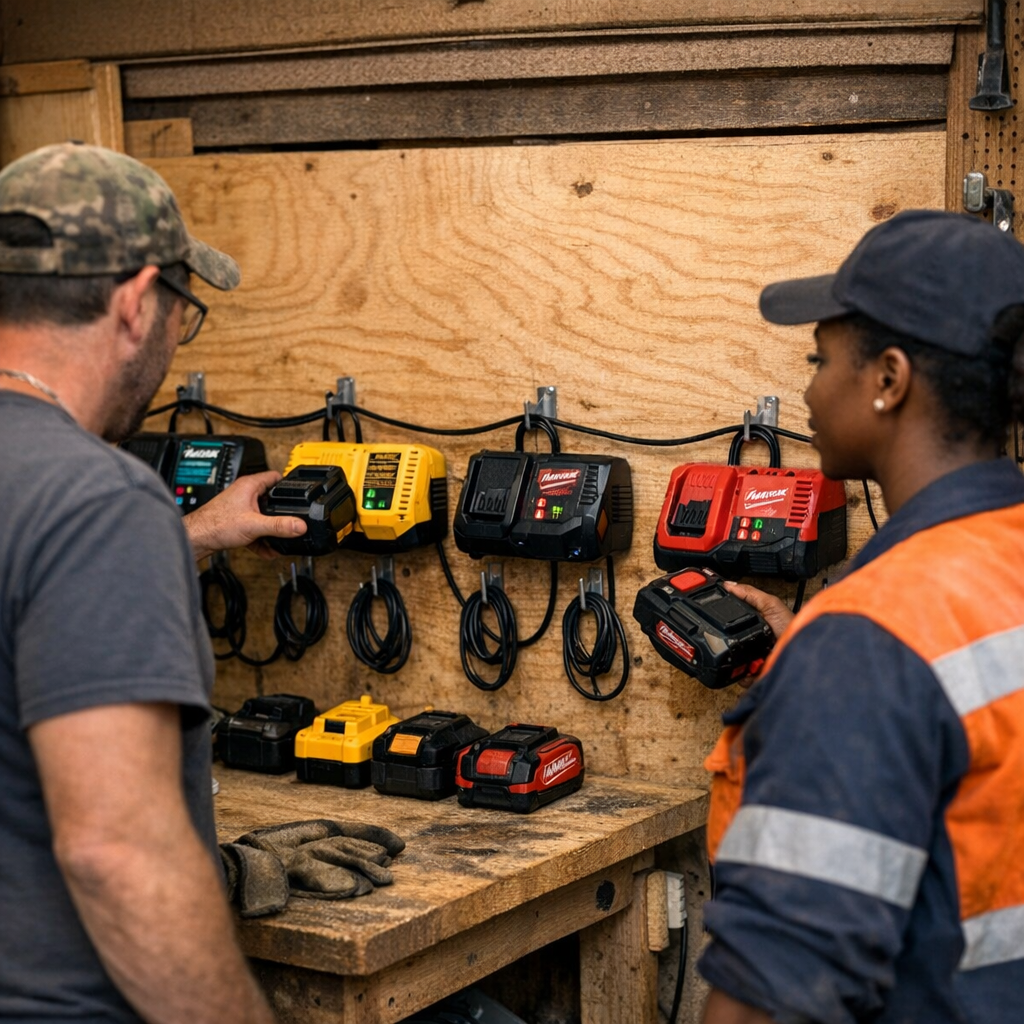
    Visit a crew that never stalls for power and you’ll see the quiet difference: chargers set at least 15 cm apart, every cord cleanly routed and visible, cables hooked—not coiled—out of the way. During the rush before lunch or the last push before close, nobody’s guessing which light means “done.” Packs swap in and out without delays, cords untouched except at the plug. The bench stays open for tools, not tangled wiring.

    Contrast that with corners where chargers are mashed together, cables twisted into piles. The consequences show up by mid-afternoon: a driver suddenly weak mid-fastening, a saw dropping RPMs midway through a board, frustration rising as the crew plays musical chairs with whatever packs look green.

    When Small Tweaks Make the Big Difference

    Giving each charger breathing room—just 15 cm—and separating every cord brings order out of chaos. When demand spikes—cutting hardwood, sanding entire runs, drilling frame after frame—chargers stay cool, charging lights stay easy to read, and batteries come off the bench ready for a full shift.

    This isn’t about spotless organization for its own sake. It’s about reducing the hiccups nobody budgets for: thirty seconds wasted here, three minutes lost there, searching for a charged battery or untangling cords. Over a week, that’s hours reclaimed—time your team can put into cleaner cuts, more precise fastening, and finishing strong rather than fighting fatigue brought on by constant tool swaps and surprise dead packs.

    Catch Trouble Early: The Warning Signs

    Small details at the charging station quickly snowball into downtime. A charger that feels a little warm. A cable with a soft spot from being pinched. Ignore these, and you start to see:

    • Flat batteries halfway through routine jobs—forcing unplanned stops.
    • Chargers that slow down, stretching out fill times just when you need speed.
    • An impossible tangle when troubleshooting: was it this plug or that cable? Why’s the finish sander flat again?

    These are early warnings: if you fix them now—before the next push—you avoid the dead air and scrambling for substitutes when the work won’t wait.

    Simple Fixes That Actually Hold Up

    This isn’t about a perfect system. It’s about daily routines that take pressure off everyone using the bench. Spacing out chargers lets heat escape and keeps batteries cycling safely, with no silent capacity drop-off. Assigning every cord a single hook or run keeps problems visible—a nicked cable stands out, ready to be fixed before it turns into a bigger hazard. You spot loose sockets, worn insulation, or odd charger sounds right away. That keeps the team working—not hunting for fixes.

    Whether you’re pushing through a Saturday in the garage or running a tight punch-list on a big site, a few seconds of care at the charging station echo through every cycle, every swap, every smooth finish with fewer pauses and more control.

    Work-Proven Habits for Fewer Headaches

    1. Inspect cables weekly—even if the system looks tidy. Bends, frayed sheaths, or dark marks show damage before it wrecks a charging cycle. Swap out tired cords so you’re not caught with a sudden short in the middle of an important run.

    2. Tag chargers and batteries—especially for rotating crews or busy shops. Colored tape, initials, anything that links packs to a charger and a tool. The benefit shows up when pressure’s on and the right battery is ready at a glance—no guessing, no mis-swaps, no lost time when the job’s moving fast.

    Bottom Line: Charging Station, Stronger Workflow

    A solid tool workflow relies on one thing more than any touchscreen or upgrade: batteries ready when and where you need them. Small layout habits—those 15 cm gaps, dedicated routes for every cable—mean drills finish the run, saws cut clean, and crews aren’t fighting surprise downtime. Your tools deliver every bit of control and power you expect—no stalls, no strings of half-charged swaps—simply because the weakest link isn’t holding everything back.

    http://gumboll.myshopify.com

  • How Under-Desk Organization Quietly Transforms Your Daily Workflow

    The floor under your desk shouldn’t demand attention—yet it ends up controlling your workflow far more than the desktop itself. When cables drag against your legs, bins drift into knee space, and power strips snake just out of reach, each interruption breaks the illusion of order. Even a meticulously arranged desk becomes a frustration zone if what’s below keeps tripping you up. That half-hidden under-desk area quietly dictates whether you settle in and stay focused—or keep pausing to fix, nudge, and reset the same problems again and again.

    When the Floor Looks Tidy but Still Slows You Down

    Visual tidiness is easy to fake—and quick to betray you. Bins slide neatly under the desk, cords are swept to the side, surfaces look “finished.” It lasts about as long as your first stretch of real work. Halfway through the morning, after a few chair moves, one device change, and a single note-taking switch, the neat floor is cluttered again: a bin inches into your footpath, a charging cable hooks your shoe, and you’re crouched to untangle something that shouldn’t even be visible. These aren’t dramatic failures, but the inconvenience is relentless in small doses. A setup that looks clear still manages to slow you down, interrupt your stride, and force you to fix problems that keep resetting.

    Why Repeated Under-Desk Interruptions Add Up Fast

    What starts as a minor nuisance—bins just shy of where your legs should go, a wire trailing close to your rolling chair, the power strip migrating into pedal territory—compounds with every hour. You might catch it after the third reach for a notebook, or notice it’s become a constant fight by mid-morning. Every chair roll seems to bump a container sideways. Cords that were looped up drop just enough to snag a foot. A power strip meant to be easy-access spirals into a dust-collecting hazard, always a little too mobile, always in the wrong place.

    This is workflow friction on repeat: your returns to the desk are never clean. You stop to move bins so your knees fit, retrieve a cable, or reposition a drawer that’s crept into your swivel line. Instead of gliding back into work, you choreograph a minor reset. The cost isn’t obvious in minutes—it’s the way focus diffuses, pace slows, and task-switching gets harder every cycle. Each “small fix” becomes recurring static in your day.

    A Real-World Comparison: Passive vs. Active Setup

    Here’s the real break: A workstation that looks tidy but isn’t anchored (“passive”) melts into chaos as you use it, while an “active” setup with structural solutions stays predictable. Take cable trays: mount one under the rear desktop, and cords stay corralled above floor level. No underfoot clutter, no lost chargers, no tripping on tech. Drawer units that stop short of your chair’s sweep path don’t become hazards under pressure—they simply exist, always clear, never blocking your reach or yearly wear.

    The most usable desks aren’t pristine for photos; they’re the ones where, after an hour of work or a dozen position shifts, nothing has shifted beneath you. The bins remain anchored, cords invisible, and leg space clear. That’s what actually feels organized.

    How a Practical Reset Fixes the Real Problem

    Every lasting fix isn’t decorative—it’s a structural reroute beneath the desk. That means using a rigid cable tray installed just behind the desktop so every vital wire—laptop, monitor, hub—lives above your feet, off the floor, never dropping into the walking or rolling zone. If a power strip needs daily access, anchoring it in a cradle behind a modesty panel keeps plugs right at hand, no awkward crouching or cable grabs necessary. The result: wires are always within reach for a quick tether, but never in the way, even during fast device switches or phone charges.

    As for storage, abandoning a free-floating bin for a rolling drawer unit only helps if you position it so the chair’s glide path stays clear. That means drawers anchor just out of reach of knees and wheels—no more bins that slide away, wedge against the chair, or demand a mid-session shuffle. It’s rarely dramatic on the first day, but across a week or two, reset friction disappears almost entirely. The real test? You stop even noticing: you just slide back in, no need for a foot-nudge, a hands-and-knees rescue, or a focus break to reestablish order.

    Scenes from Repeated Use: Why “Looks Neat” Can Still Cause Trouble

    • Keyboard to notebook switch: Desk surface is clear, but each pull of your notebook means your knee catches a cable drooping below—a minor snag, every single time.
    • Rolling back after a break: You come back with coffee and the chair jams—a stray bin or drawer has slid several inches out. No smooth return; you stop, shift, and reset before you can work again.
    • Device charging cycle: Every device swap knocks a cable loose; the USB hub cord falls to the floor, so you’re kneeling for a rescue—third time this week.
    • The end-of-day reset: Bins have drifted, cables have tangled; instead of just shutting the laptop and walking out, you’re stuck restoring order that only ever lasts until the next round.

    Mini FAQ: Clearing Up Common Under-Desk Questions

    How can I keep cables off the floor but still access everything?

    Install a cable tray along the rear underside of your desk. This anchors cords up high, leaves plugs easy to reach, and eliminates runaway wires tangling feet or chair. For setups needing frequent device swaps, it’s the fastest way to cut daily interruptions.

    Do “loose” bins really matter that much?

    Yes. Unanchored bins almost always creep into leg space by afternoon, block chair rolling, and turn quick grabs into awkward reach-arounds—amplified as you switch tasks or reposition often. A stable organizer or anchored drawer unit eliminates that constant migration.

    Is it worth fully resetting my under-desk structure, or is surface tidying enough?

    Surface tidying is only cosmetic. A real reset means assigning stable, fixed zones for storage and cables under the desk, so each return is clean—no wasted motion untangling, no knee collisions, no clumsy rearrangement before you can settle back into focused work.

    The Real Test: Does Your Setup Stay Out of Your Way?

    What matters isn’t how the under-desk zone looks at 9 a.m., but whether you can move, roll, reach, and reset—repeatedly—without disruption. The optimal workstation is one that becomes invisible in use, not by hiding the mess, but by eliminating the background friction that breaks your workflow. When bins stop drifting, cables stay where you left them, and resets happen without a thought, real focus finally sticks. So if you keep bending for a fallen cord, nudging a storage bin aside, or wrestling with legroom throughout your week, it’s the under-desk setup—not you—that’s costing you most.

    Explore the full WorkBasic collection

  • How Visible Tool Storage Can Boost Efficiency and Prevent Clutter in Your Garage

    It starts with barely a shift: one rake slides out a few inches on the garage wall, a trowel gets dropped within toe-stubbing distance of the door, a shovel leans—almost asking to fall—into the everyday walkway. At first, these tiny out-of-place moves go unnoticed. But by Thursday, the entry’s been choked narrow enough that you’re squeezing sideways, tools silently multiplying into the footpath, and what was meant to be effortless “grab-and-go” has turned into a recurring shuffle—move this, dodge that, hope nothing topples. Suddenly, the entire garage edge or fence-line feels less like a storage solution and more like a slow-motion collapse into clutter.

    How Setup Friction Becomes the Daily Obstacle

    Hang everything up. Keep the floor clear. Done, right? That’s the myth most outdoor wall storage starts with. For a few days, maybe a week, your system works—the pruning shears are in the open, the rake hooks are empty when you need them. But then routines kick in, family members return gear in the rush, and one by one, small tools crowd the edges while buckets wind up camped next to the exit. You don’t notice an immediate mess—just an invisible drag: pausing to sidestep a shovel, glancing around for space to hang something, swinging a wheelbarrow wider to avoid a gnarl of tool handles. A once-open route morphs into a slalom course, costing you steps every trip.

    When “Organized” Wall Storage Fails the Real Test

    Wall-mounted racks and open utility hooks look clean in setup photos, every piece spaced in crisp formation. But the minute you skip a reset—just once—it slips. One pair of awkward loppers shoves a broom aside. That hand trowel lands on a random hook because the usual spot is blocked. Maybe you squeezed a hedge trimmer against the last open space after wrestling with hoses out back. Within a week, what started as “every tool in its place” turns to “just make it fit somewhere,” and you’re back to foraging. Movement narrows, storage intent blurs, and the wall that’s supposed to make things faster now demands constant reshuffling. Efficiency doesn’t get lost all at once; it unravels, almost invisibly.

    Scene: One Return, Three Problems

    Picture the Sunday cleanup. You head for the garage to hang a hoe, but the rack’s jammed—pruners left crooked from yesterday, broom slid half out, shovel barely clinging. To hang your tool, you have to nudge two others aside, cramming handles tight and blocking your next grab for a rake. Later, you’ll spend extra seconds untangling the pile—or worse, knock something down reaching in a hurry. That original, effortless return flow? Gone. Instead, every drop-off is its own Tetris game.

    Side Yards and Tight Zones: Small Slips Turn Critical

    In the side path or at the edge of a narrow driveway, a few inches make or break the space. The first day, your shovel hangs flush. By the second week—after two rushed returns and a late-night garden tidy—it sticks out at shin height. That hand spade, “temporarily” left at the end, stays there until the next drip of tools fills in around it. Without strict routines, a five-foot-wide walkway halves itself, forcing each person to pivot, twist, or nudge something aside just to pass. Looking organized isn’t enough; the real-life use test is whether the zone keeps movement free—and most wall setups fail by the time the weather’s changed twice.

    Practical Tweaks that Keep Floor and Wall Clear

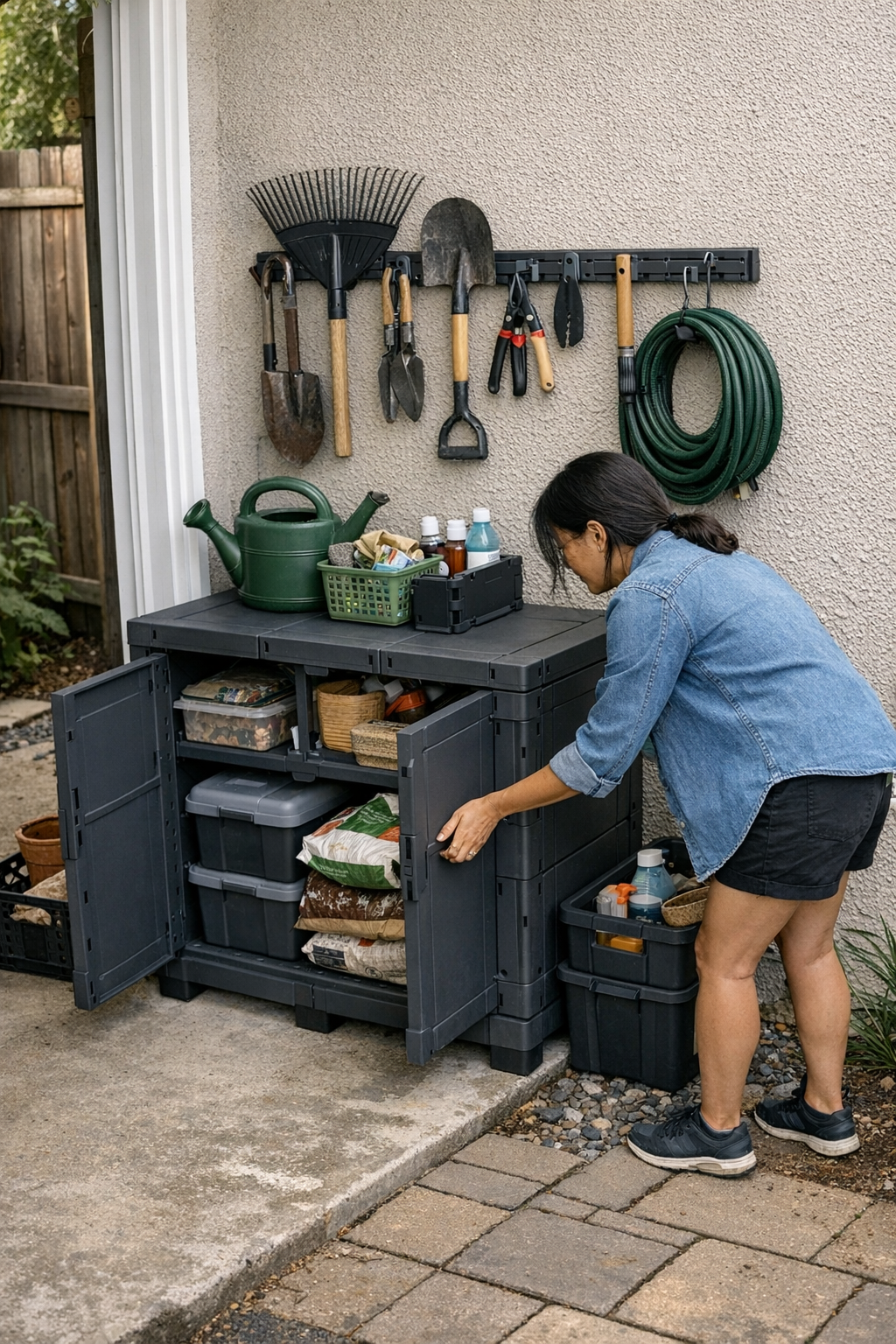
    Throwing up more hooks just means more room for mess. What actually restores usable space? Limiting what gets wall space and giving overflow a clear, confined home. Put a sturdy, covered bin just below the rack. Set the rule: fast-use, grab-first tools go on the wall; everything else—odd-shaped diggers, off-season hand tools, stuff you reach for twice a month—goes in the bin, no exceptions. With even one enforced reset per week, overflow lands in the bin instead of leaking into walking space. Monday’s sweep stays quick: pull the bin forward, drop the extras, restore actual movement room. The difference with this small shift? You can still move naturally through a busy zone two weeks after a hard-use weekend; wall and floor don’t morph into one blended obstacle.

    Real Habits: What Stays Working, What Falls Apart

    Most people cycle through the same handful of tools a dozen times before touching the others. An open rack is a time saver if you guard the boundaries. The second you let rarely used, bulky, or “maybe tomorrow” items sit out, the whole setup reverts to mayhem. Here’s what actually works: Every major use (not just the end of the month), scan the rack. Anything that didn’t move this week gets binned. No mercy, no exceptions. The small effort prevents the slow creep where less-used gear dominates, and guarantees your main rotation always has an open slot— so you never face a wall jam five minutes before rain hits or before the last mow of the evening.

    The Gradual Mess vs. The Quick Reset

    Disorder rarely explodes overnight. One tool too many—left just once, place uncorrected—trains everyone else to lower their own standards. “Just for now” becomes “always here.” Piles build quietly: a power tool box tucked beneath hooks, last month’s bulb planter sidestepping the sweep area, a spare stake that never makes it to the corner bin. Then, when you need real motion—a fast run to grab gloves, a kid fetching a soccer ball—every step includes another lift, shift, or risk of knock-down. Fixing this doesn’t mean rigid perfection. It means honest boundaries: “wall is for dailies, overflow has its bin.” Keep your system visible, contained, and open for real resets, not just for looks. Function returns; resets stop eating your afternoons; traffic lines clear up.

    Find practical outdoor storage that matches your routine: TidyYard

  • How Small Changes in Dog Routines Improve Evening Calm and Rest

    Most evening routines with a dog don’t blow up in dramatic fashion. The comfort-killers are sneakier: the water bowl just out of reach, the bed placed neatly but always a little off course, the misplaced towel that costs you a scramble after muddy paws. Your dog’s slow circles at night or that familiar pause by the bowl aren’t just minor quirks—they’re warning shots. Each repeated hitch quietly erodes the calm you’re both owed at the end of the day, turning “almost-there” setups into nightly friction points. Even after you’ve fluffed the bedding and lined up the toys, the routine keeps snagging—revealing where “done” is just out of reach.

    When “Tidy” Doesn’t Mean “Easy”

    A setup can look immaculate and still trip you up every night. You line the toys along the wall, set the food and water as usual, make a clean path to the bed—until your dog stands still after a drink, eyes the crate but doubles back, or plants themselves in the exact spot you needed to cross. Visual order collapses the moment your dog’s path conflicts with your own. The friction isn’t mess—it’s the subtle lag. The tidy corner snaps a photo but stalls the flow: a rest area that’s never where it needs to be, bowls that force a detour, toys just close enough to block a sleepy step.

    This is where so many routines fail—a layout that hides its flaws until actual use exposes the same sticking point night after night. The longer the mismatch lingers, the less restful bedtime gets and the more the “fix” feeds daily frustration.

    Recognizing the Routine’s Weak Spots

    The clues show early, but they’re easy to brush off—until you can’t. Watch for:

    • The same two-step hesitation at a threshold, just as the house quiets down.
    • Your dog’s pattern of retreating from bed to water and back, never quite landing for the night.
    • Crate entry stalls, with your dog sniffing at the bowl, then looping the hallway again.

    These small but reliable delays are the real leaks—once spotted, they’re impossible to ignore.

    Repeated Use Means Repeated Friction

    What wears you down isn’t a surprise hiccup but a routine that’s slightly out of tune: another “seriously?” pause at the bowl, another backtrack to grab a towel, another three steps to water after settling. When you notice yourself prompting your dog through a runaround, or you cross the same patch of floor yet again to reshuffle toys or fix bedding, the setup itself is quietly creating static. That minor drag piles up, hollowing out the wind-down you meant to protect.

    How Layout Choices Shape Bedtime

    Most homes have every ingredient—bed, fresh water, crate, clean-up items, toys—but their placement turns the script. Only after weeks of the same missed beat does the underlying flaw reveal itself:

    • The water bowl sits just far enough that your dog abandons the rest spot for one last sip, then has to settle all over again.
    • The bed looks right but sits out of the usual path, so your dog circles, then flops near the door instead.
    • The crate faces away from the evening flow, killing momentum and causing a stall-out before entry.
    • Cleanup towels are always “available”—buried under the gear you don’t grab until it’s too late.

    This isn’t about picky pets; it’s a routine whose sequence doesn’t match your dog’s actual needs, leading to small nightly face-offs.

    Real-Life Example: The Stubborn Bedtime Stumble

    Picture this: You finish the nightly loop—lights down, space cleared, toys lined up, and you expect your dog to glide into rest. Instead, your dog hangs by the water, pads halfway to bed, then backtracks, sniffs the hallway, stalls by the crate. The pattern never breaks, even with all your “come on, let’s go” prompts. It isn’t stubbornness—your dog is stuck working around a setup that forces zigzags instead of an easy wind-down. You’re left repeating nudges, calming yourself and your dog, until the rest feels earned but never quite simple.

    It’s the placement—never the product alone. A bed or crate in the wrong lane, or a bowl just out of pattern, redraws the route into repeated frustration, no matter how sorted things look on the surface.

    Why Minor Misalignments Become Major Headaches

    Small layout flaws don’t stay small during real use. Here’s how they multiply:

    • A water bowl a few steps away—just inconvenient enough to trigger double-backs and post-bed movement.
    • A rest spot off the dog’s own “home runway” means late-night detours that break routine.
    • Cleanup tools present, but poorly placed, create last-minute scrambles after a walk or muddy paws.

    Each little detour or reach adds to the routine’s drag. Five extra steps every night became an easy glide lost to frustration—until simply moving one thing removed the bottleneck.

    The Real-World Fix: Adjusting for the Dog’s Path

    The solution doesn’t have to be dramatic. One targeted shift often makes all the difference. In the stuck routine above, moving the water bowl a bed-length closer shut down the nightly loop. Suddenly, the path ran in order: finish water, step to rest, done. That one change collapsed the pacing and hallway detours, shrinking a 10-minute wind-down to three.

    • Bowl within three feet of the bed—a single smooth transition, nothing to backtrack over.
    • Crate turned to open along the route from living area to bed, not blocking traffic or facing away.
    • Cleanup towel hooked by the entry—not hiding with the laundry or jammed under unused gear.
    • Toys set clear of main footpaths: enough for a last chew, not enough to become a midnight tripping hazard.

    The change isn’t in appearance; it’s in the flow. Fewer corrections, less circling, no nightly reruns. Just a routine that finally works as quietly as you hoped.

    From Friction to Flow—Spotting the Difference

    The test for a better setup isn’t tidiness—it’s how much adjustment you stop needing. Signs to look for:

    • Your dog heads straight to bed and settles without looking around for what’s missing.
    • Walking paths are clear, your own movement is more direct, interruptions fade after the last cue.
    • You need fewer reminders; both of you arrive at rest on autopilot, not through repetition or last-minute fixes.
    • Resetting for the next day feels automatic—nothing to track down or replace “just out of sight.”

    The real payoff is in time and headspace reclaimed: same routine, less wasted motion, fewer patience-taxing pauses.

    Don’t Chase Perfection—Just Trim the Drag

    No arrangement is bulletproof. Some nights, mess and interruption are inevitable, especially after long days or unpredictable detours. The goal isn’t flawless flow, but a setup that stops producing the exact same friction every time. If your dog still circles once before slumping down, that’s standard. If you aren’t forced to retrace four loops or refetch a forgotten bowl, you’re already ahead.

    Common Setup Misses—And How They Show Up During Repeated Use

    After enough ordinary nights, real fail-points announce themselves:

    • A bowl always one step too far, so your dog crosses directly in your prep path.
    • A towel meant for cleanup that’s gone missing—again—just when muddy paws return.
    • Toys that fan out into nighttime traffic: tripped over now and reshuffled with a sigh the next morning.
    • Bed or crate choices that barely fit your dog’s preferred sprawl, turning bedtime into negotiation instead of exhale.

    If the setup forces you to keep rearranging or retracing during routines, it’s your layout, not your dog, asking for an upgrade.

    Readjusting for Smoother Evenings

    No need to chase invisible flaws. But if your bedtime routine breaks in the same spot every night, observation pays better than intention. Check what actually happens, not just what you meant to happen. Ask:

    • Does your dog’s last-minute pause, backtrack, or path-cross repeat more than you’d expect?
    • Do you find yourself bending, reaching, or second-guessing the location of supplies right when you need them?
    • Is there a block in the dog’s natural route—whether it’s toy clutter, misaligned crate,