Blog

  • How Smart Carry-On Organization Reduces Travel Stress and Delays

    The weak point in your carry-on setup never shows up in your living room—it attacks mid-trip, always when you need speed the most. You close your bag at home, every item locked into its space, and walk out feeling ready. Then security hits, boarding calls, terminal sprints—the first real reach for a passport or charger in a crowd breaks that order immediately. The flaw isn’t visible until the pace picks up, lines close in, and the smallest delay—unzipping twice, fumbling through a mixed pouch—becomes a routine frustration. The carry-on that looked controlled at home is suddenly an obstacle, forcing extra rummaging or repacking when you’re just trying to keep up.

    Why Orderly Packing Doesn’t Guarantee Easy Access

    Every traveler has watched their “perfect” home packing melt into a hassle at the first checkpoint. Neatly stacked cables and passports slump together; that streamlined pocket turns into a blind search when a security agent asks for your ID. The airport exposes a reality that home organization hides: visual order doesn’t block friction. Chargers slide under documents, snacks hide behind cords, and every “catch-all” pocket becomes a slowdown the first time you need one specific thing—especially when standing, pressed for time, or moving with one hand free.

    The Hidden Cost of Overlapping Access Patterns

    On the packing table, grouping “frequent essentials” in one go-to spot seems efficient. At the airport, it’s exposed as a design flaw: jamming tech and documents together forces you to untangle cords just to get at your boarding pass, or move a granola bar to find your passport. Every overlap between categories is a subtle, recurring snag. What started as a logical main pocket drags the trip into a loop of micro-hesitations—each reach for an item becomes a mini-chore, especially under pressure. The setup that looked minimal now imposes a cost: repeated interruption whenever access actually matters.

    Real-World Triggers: When Carry-On Structure Fails You

    Security: Where the Overlap is Exposed

    Security trays force your hand. You reach for the passport and pull out headphone wires instead. One tug on a charger sends documents sliding out, scattering smaller items across the tray. Someone in line beside you resets their bag in seconds; you’re still double-checking for missing items as the trays pile up. This is where a single mixed pouch, once “justified” at home, becomes a slow-motion mess.

    Boarding and In-Seat Access: The Stationary Headache

    Boarding lines drag and the difference in structure is clear. Some travelers unzip a visible sleeve, flash documents, and drop them back without breaking stride. When your own layout means flipping through wrapper-filled pockets, wrestling open secondary zippers, or even stepping aside for a repack, the price of that all-in-one compartment is impossible to ignore. Quick access is blocked not by disorder, but by too much in one place.

    Mid-Trip Retrieval: Rummaging and the Repacking Spiral

    Once in your seat, trying to grab headphones brings out a cable tangle, loose snacks, possibly your passport. Every retrieval jumbles the previous order; each repacking is messier than the last. By the time you land, “efficient” storage translates into a layered, tangled bundle that delays hotel check-in as you search yet again for essentials you swore were under control.

    Direct Access: How Separation Solves the Repeating Problems

    True travel relief surfaces after just a few use cycles: when you separate items by how and when you actually reach for them, friction drops away. Grouping by event—security, boarding, in-seat—not type or size, means each access is cleaner, every routine is faster.

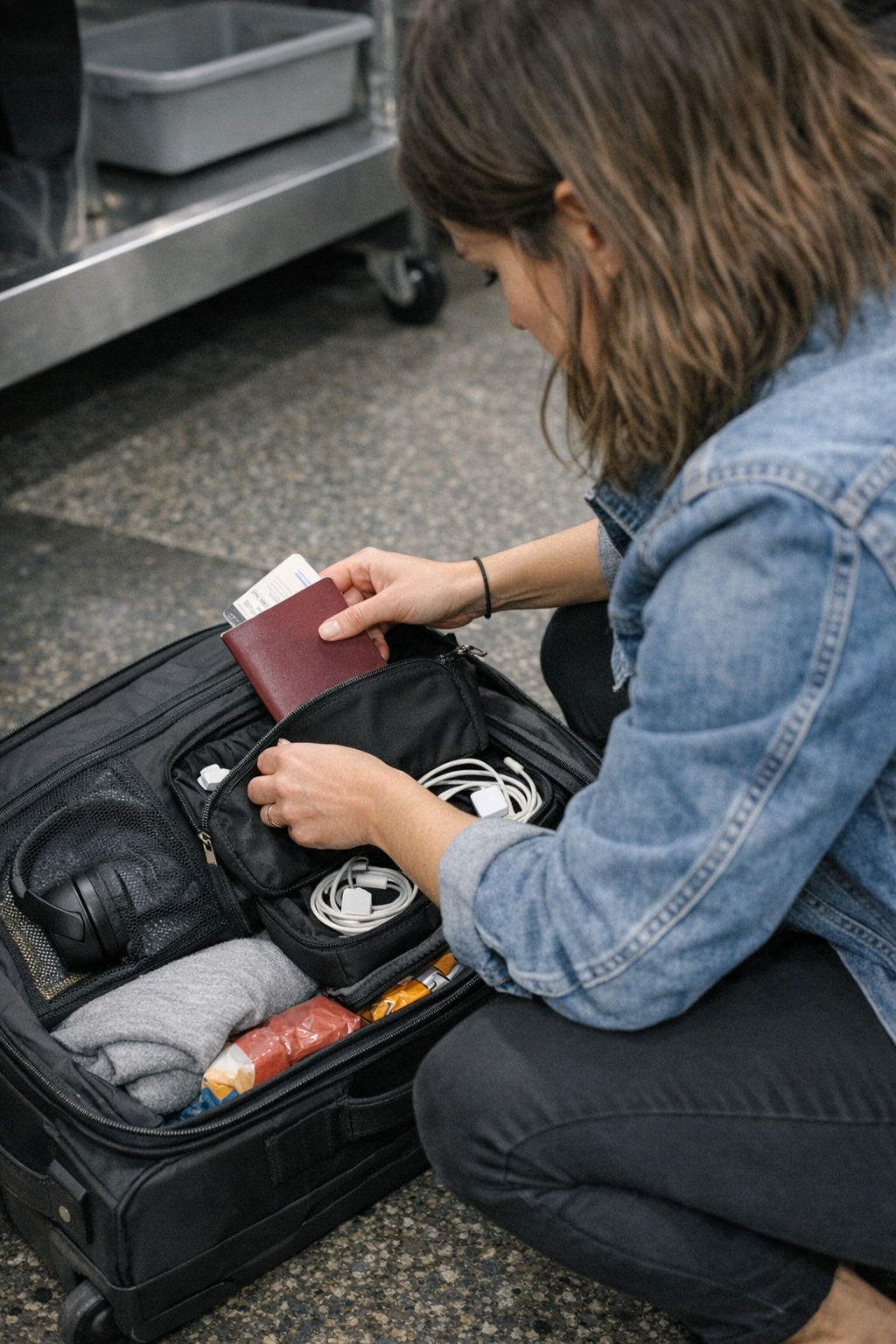
    Practical setup example: A single dedicated sleeve for travel documents. No chargers, snacks, or headphones inside—just what you’ll show repeatedly. Tech cables are sealed away in their own pouch; comfort items (like an eye mask) get their own spot, nowhere near documents. Now, reaching for a passport means one quick unzip and zero detours. Headphones are found minus the cord-web. Each routine—checkpoint, seat setup, snack break—moves without unnecessary crossover, and the bag stays workable even after multiple shuffles or transfers.

    Recognizing and Fixing the Sneakiest Weak Point

    This overlapping-access problem wins by staying hidden through small, repeated slowdowns. Your bag doesn’t look wrong—it simply grows more clumsy to use, one checkpoint or seat change at a time. The worst setups stay photogenic but quietly sap your attention and time; every quick grab becomes a small decision; every reset—however tidy—makes you work harder, not smoother.

    Once you strip out all layered paths, micro-hesitation fades. You stop pausing at every checkpoint. You don’t have to trace which zip holds the passport, or repack mid-aisle after missing one item. The outcome isn’t flash—it’s a bag tuned so your mind tracks the trip, not the next hidden pocket or tangled reach.

    How to Make Setup Work for Real Travel

    • One zip, one function: Assign each pouch, pocket, or sleeve a single repeated-use purpose—documents, tech, comfort items. Don’t double up.
    • Group by rhythm, not appearance: Resist clustering by look or size at home. Instead, group by movement: ask what you’ll need repeatedly in line, at your seat, or in a security tray.
    • Check after each stage: After running security or boarding, did you need to open two bags for one thing? Did anything else fall out by accident? Use this as your friction test.
    • Tweak, don’t tolerate: If you find yourself repacking more than once per segment, shift the setup—documents out of tech pouches, chargers given a solo spot, travel docs always in a visible, quick-access sleeve.

    The Bag That Works—Not Just Looks Good

    Most carry-on setups unravel after a few rounds of real movement. The winning bag is not the one that promises everlasting neatness, but the one that keeps retrieval direct and friction low after repeated cycles of standing, lifting, and retrieving—without the need for a full reset. Each trip row—from curb to seat to hotel counter—will test your layout.

    What matters isn’t a photo-perfect interior, but a structure that makes each access shorter, every retrieval cleaner, and the bag itself less of a focus than your trip. The visible win isn’t order, but time saved, awkward moments avoided, and one less carry-on decision stealing your attention every two gates. The right setup pays for itself in motion, not just looks.

    Visit CarryOnSupply for carry-on travel tools designed for real movement.
  • How Wall Lighting Transforms Room Function Beyond Ceiling Fixtures

    Ceiling lighting makes rooms “look” finished—but leaves desk edges, shelves, and shared tables annoyingly dim. You set up the space, mount a single fixture, and for a moment, it feels resolved. But the promise of general brightness fades fast. Repeated use exposes what the photos hide: the center glows, while everywhere you actually reach—the far side of your desk, the ends of your shelves, the edge of a group table—slips back into shadow. It’s not just one missed spot. Every day, you stretch for a paper and lose it to a dim edge. The shelves you meant to use vanish behind silhouettes. Instead of feeling organized, the room starts demanding small workarounds just to stay usable.

    The Surprising Limits of Ceiling-Only Lighting

    Mounting a ceiling fixture feels like a shortcut to a clean, cable-free room. In reality, overhead-only setups almost guarantee friction where you least want it. The surface may look uncluttered, but it’s a trap that repeats on real days, not just move-in day:

    • Desk edges stay dim—papers slide just past the light, tools roll into unseen patches, and you start dragging items closer to see them.
    • Glare grows persistent—ceiling light bounces off screens or glossy tables, forcing you to shift your seat or shield your eyes just to focus.
    • Blurry perimeters—room edges merge with shadow, navigation feels subtly uncomfortable, and multi-use spaces reveal awkward, underlit stretches.

    This isn’t atmosphere—it’s the ceiling fixture’s central output failing at the edges. During work, reading, or prepping, the border zones become a problem. The difference between “looks bright” and “works everywhere” isn’t cosmetic: it decides whether you end up fixing the setup or working around it every day.

    Compensating for Bad Light: The Common Workarounds

    No one accepts dim edges forever. Annoyance turns into habit-forming fixes that don’t really solve anything:

    • Dragging table lamps across the desk to chase shadows—then stumbling over cables each time you get up.
    • Shifting your chair to monopolize the bright patch, leaving half the surface underused and making shared work frustrating.
    • Threading power cords across worktops or under tables just to force a little more light into a neglected corner or shelf.

    Minimal on paper but cluttered in reality: lamps colonizing every open spot, cords visible before you notice the room. You spend minutes each day re-aiming lamps, unwinding cables, and still find corners you can’t use without extra improvising. The supposed “neatness” of central lighting turns into a daily loop: what edge will you wrestle with today, and how much can you fix on the fly before giving up?

    The Real Fix: Bringing Light to the Edges

    Wall lighting, under-shelf strips, and mounted task lights change not just what you see, but what you can actually reach and use. Vertical lighting—targeted just above a desk, along a shelf, or around a room’s edge—unlocks areas that overhead light keeps underlit:

    • Visibly frames the room’s border—nothing slips into the gray. Every inch of the desk or shelf becomes available, not an afterthought.
    • Reduces glare shifts—task and wall lights balance out the harsh ceiling glare, making it possible to look at screens or documents for hours without fatigue.
    • Cuts clutter instead of spreading it—a wall sconce or under-shelf light manages cables out of sight, ending the daily crowd of lamps and unsightly extension cords across your work zone.

    The result is immediate: the desk edge stays as useful at night as it is in daylight, without cable chaos. Walking by a shelf, you spot what you need on the first glance. In meetings or projects, people don’t battle over the single lit spot or knock over a lamp just to see their notes—everywhere is usable, not just the center patch.

    A Real-World Example: From Dim Corners to Clean Borders

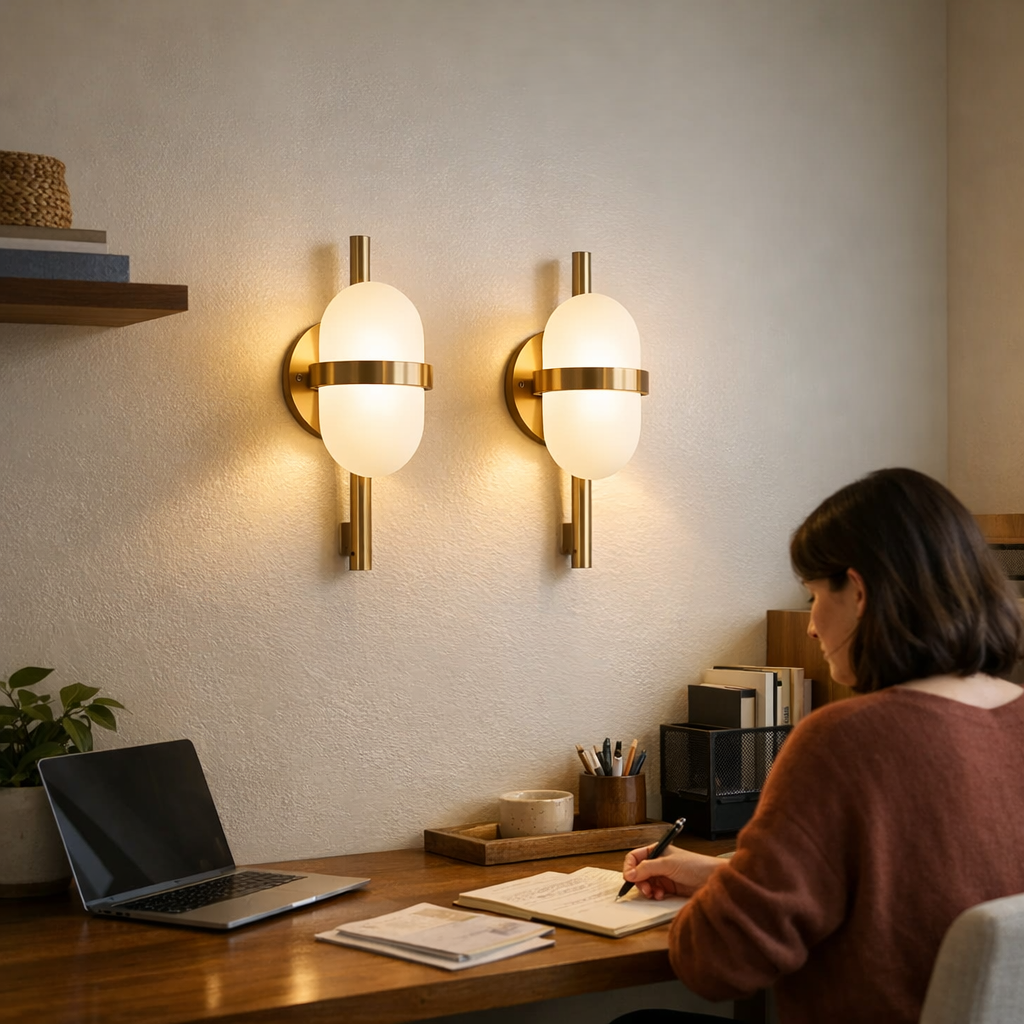
    Picture this adjustment: two pared-back wall sconces, mounted 15 inches above your desk, angled out just enough to wash the whole surface. Before, the far side was a lost zone—where things disappeared into darkness. After, the entire four-foot run of desk is evenly lit. You notice, not just once, but every time you work:

    • Papers tracked across the entire desk stay visible—no more collecting stacks into the “bright” patch and ignoring the rest.
    • Cable lines run behind the mounts, stay put, and fade out—no loops snaring sleeves or trailing toward the floor.
    • The tug-of-war with desk lamps ends. You’re not adjusting, re-aiming, or adding another fixture just to reclaim a surface edge. The light lands where your hands do.

    Why Edge Clarity Beats Appearance Alone

    What fixes the setup isn’t just mounting a fixture to look finished: it’s edge clarity that transforms use. In actual routines—grabbing something from a shelf, glancing down a desk, or prepping materials for the next task—it matters whether you can trust the lighting to show everything. Edge visibility shrinks clutter, demotes cables to the background, and makes routine resets automatic. When perimeter clarity holds, organization is an everyday baseline, not a project you have to redo every week.

    Small Adjustments with Big Impact

    You don’t have to overhaul everything to see the shift. One slim wall light, a plug-in strip under a shelf, or a slight bracket reposition can reveal the hidden capacity of a room. Getting the fixture at the right placement stops a string of daily hacks. These aren’t touch-ups—they’re what finally stops the room from fighting back when you use it for real work.

    Lighting That Keeps Up with Real Use

    Where routines repeat—shared offices, reading corners, dining tables—the right lighting support gives edges actual purpose instead of dead zones. Treating the perimeter as valuable means less scrambling, fewer cable traces, and fewer hours spent “fixing” the layout. The step from visually neat to consistently usable is simple: stop ignoring the edges. When lighting support follows the forces of daily use, the room stops demanding attention—and quietly works the way you needed from the start.

    Find practical wall lighting, mounting solutions, bracket supports, and under-cabinet options at LightSupport.

  • How Simple Cloth Placement Transforms Your Daily Pet Care Routine

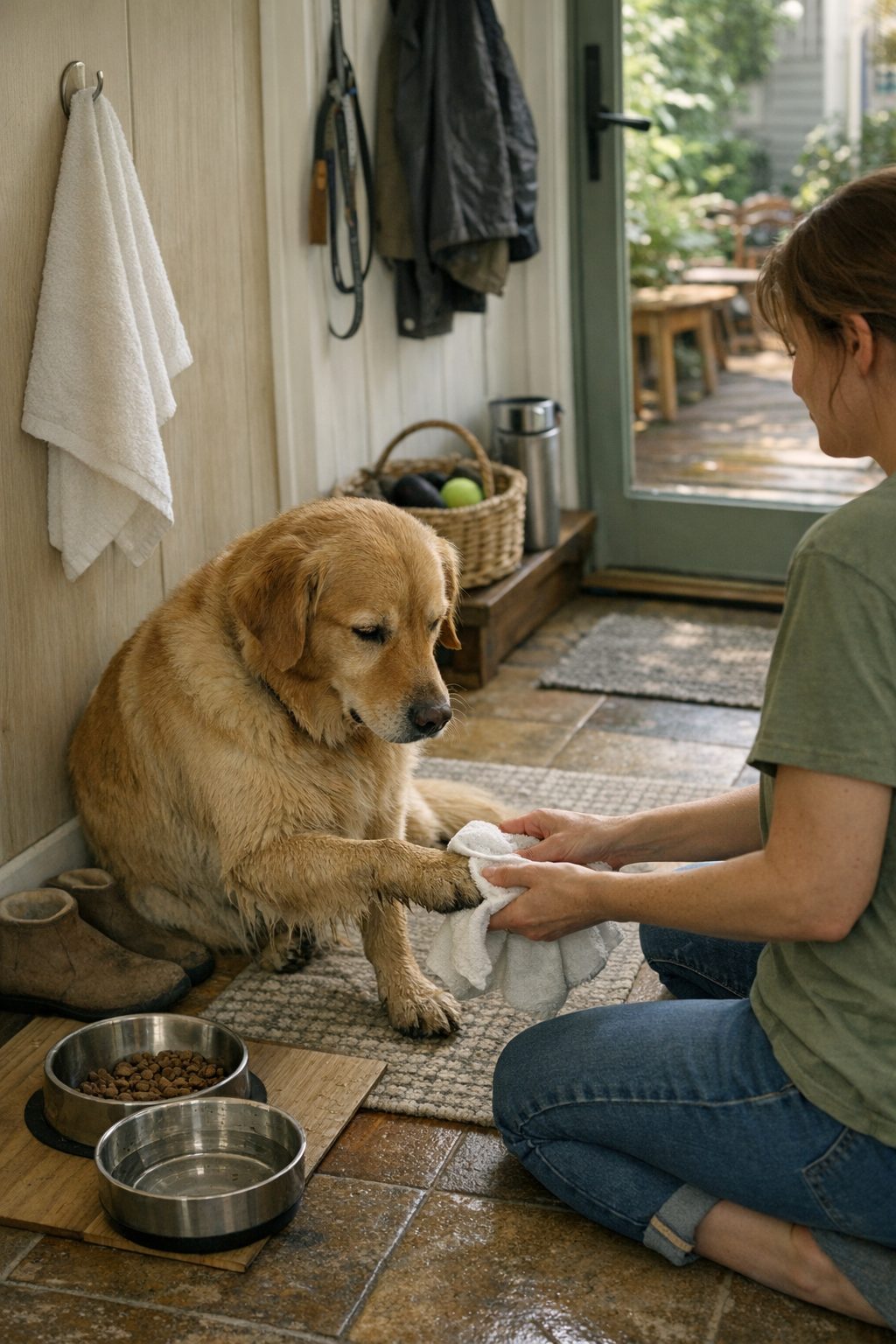
    The weakest link in any daily pet-care routine is rarely a missing product—it’s a towel not where you need it, a brush buried under clutter, or a wipe-down delayed because cleanup supplies are too far from the daily path. The real drag shows up after meals, water refills, or muddy returns from outside: you reach for a cleaning cloth or scoop and run into a block—something left in the way, or the needed item still damp or missing. These small missteps don’t look like failure, but over a week they chip away at the routine, turning quick resets into slow ones, and leaving messes to grow in corners nobody wants to deal with later. CalmPetSupply lives in this territory—refining the difference between setups that only look tidy and those that actually, reliably keep pace with real daily care.

    Where Routines Slow: The Cost of Out-of-Reach Basics

    Picture the usual start to morning feeding: dog eager, bowls stacked, but the food scoop’s behind a water jug and the cleaning cloth is MIA—maybe damp on the counter from last night, maybe in the wrong room altogether. Before you finish, a stray nudge scatters kibble. No towel within arm’s reach? The crumbs stick around. You tell yourself you’ll get them later, but later rarely comes. What should take seconds now drags out, and the next meal starts on top of yesterday’s mess.

    Initial order fades quickly. Supplies meant to be close migrate: towels left in the laundry, brushes parked on a random shelf, or a backup cloth that’s walked to the living room and stranded there. Each recovery costs movement. Once a setup forces you into even one extra lap for a basic item, that friction repeats. Shared spaces make it worse—cleaning supplies drift, chores get interrupted, and every grab for a simple tool turns into another sidetrack.

    Small Gaps Build Up: Delays and Overlooked Messes

    Every time a cleaning cloth, fresh towel, or grooming tool isn’t right at the care spot, two frictions multiply: more small messes are left behind—water by the bowl, scattered food, paw prints into the hall—and every would-be quick reset becomes a job you hesitate to start. Searching for the right towel leads to grabbing a paper napkin or skipping upkeep; midnight wipe-downs get put off when you realize the only available cloth is still drying or out of sight.

    The pattern repeats: at bedtime, you plan to clean up the feeding mat, but the towel’s still in the laundry and you wave it off till morning. One missed reset turns into dried buildup that needs scrubbing later—and the cost is more effort, not just more time. None of this signals a broken routine, but every out-of-place tool creates another small gap that compounds through repetition.

    Visible vs. Functional Organization

    There’s a test for whether setup works: can you grab the cleaning cloth without moving three things or opening a bin? “Looks organized” is shallow if the actual cleanup step is slowed by baskets, closed shelves, or towels buried behind other supplies. Entry shelves hide backup cloths, but right after a soggy walk—when you need a dry towel in two seconds—that tidiness breaks. Muddy footprints spread further every time you hesitate at the point of use.

    The real fix is basic and visible—hang a clean towel on a wall hook at the care zone, not hidden away “for neatness.” When supplies stay in plain sight and in arm’s reach, there’s nothing to search for, nothing to dig out, and resets shrink to a swipe instead of a scavenger hunt. It’s less about storage, more about flow—the setup should put every basic right in the path, not behind one more barrier.

    Real-World Use: From Repeated Pause to Routine Flow

    Compare two setups: One hides the towel in a kitchen drawer, an extra detour every meal. You walk past the pet, dodge a stray toy, and break the flow just to clean up—the routine gets slower, and soon the messes linger because “I’ll do it next time.” In the sharper setup, the towel hangs beside the bowl, always dry, always visible. Spills are wiped as they happen, no buildup, no catch-up days later.

    This logic applies everywhere: keep grooming brushes where you actually brush, waste bags at the door, water refills just above the bowl. When nothing needs to be fetched from another room, late-night checks, after-walk wipe-downs, and midday resets blend into regular movement instead of breaking stride or getting postponed. Not every step vanishes, but repeated stops do.

    The real gain: invisible to outsiders, but in your week, fewer interruptions, no stalled resets, and pet areas that hold their order with less decision fatigue.

    The One Weak Point: When Efficiency Loses to “Acceptable Enough”

    There’s always a snag. Maybe clean towels are well placed, but they only get swapped out once laundry is done—so you reach for one just to find it damp. Toys pile on top of cleaning cloths and block them mid-routine, or a bin looks tidy but buries daily-use items under rarely-used backups. Each slip saps speed. Cleanliness that seems “good enough” starts letting chores slide, with resets only happening when you finally run out of workarounds.

    The steadiest routines keep fundamentals close, visible, and dry—no digging, no delay, no ambiguity. Even when life gets busy or the week is messy, the core supplies don’t migrate or vanish, and skipped resets don’t become chronic. Order isn’t just for show; it’s for unbroken use.

    Practical Placement: Steps to Smooth, Repeatable Care

    Hang a clean towel or two right at every care point—beside the bowls, at the main door, in the laundry zone, or next to the litter box. Ditch deep bins and closed cabinets for daily-use basics; hooks or open shelves let you see at a glance what needs restocking before a damp or missing towel ruins the next reset.

    Rotate towels after each heavy mess—mud, wet paws, sticky spills—and allow dry-food crumbs or simple wipe-downs to go a little longer if needed, but always keep backup cloths within one step of use. A generic kitchen towel works in a pinch, but only if it’s equally accessible—not folded away with the linens.

    The split between routines that keep up and routines that fall behind isn’t the gear—it’s the reach. Every supply that lives right in the line of use shrinks the daily drag. Nothing fancy, just a structure that works even when everything else is too hectic to think about.

    Find daily-ready cleaning cloths, storage basics, and quick-access care goods at CalmPetSupply.

  • How Small Changes to Door Setup Can Smooth Your Dog’s Morning Routine

    Most dog owners know the sound of a door clicking shut doesn’t just mark leaving or entering—it marks a change in the whole flow of the day. Your routine might look organized from a glance: leash on the hook, bowl in its spot, floor mostly clear. But if your dog stands frozen near the door, circles the entryway, or waits for permission that never comes quickly enough, the weak point is obvious. Every morning, small annoyances stack up: reaching for the leash and finding toys in the way, returning after a wet walk only to discover the wipes are across the room, squeezing past a bed that sits too close to the threshold. Tidy in theory, but each step gets snagged by invisible friction built into the setup. The slower your transition, the more each day makes you feel it. Here’s what actually starts to drag—before you’ve even poured your coffee.

    The Unseen Morning Bottleneck

    The trouble isn’t just where the door is. It’s how every routine is forced to pivot around it. Most owners don’t really clock what’s off until their dog hovers at the door, stalling for cues in that blank space after it shuts. Instead of a clean shift to feeding or walks, you get a clutter of circling, sniffing, or just hanging by the entry, never quite moving on. These aren’t just lost seconds—they slow the whole chain. By the time you’re done nudging your dog forward, grabbing supplies from two spots, and untangling the leash from under the bed, the “quick morning” turned into a waiting game you didn’t intend to play.

    You catch it in little signals: a dog reluctant to leave the doorway, that glance back at the closed door, or hesitation between steps. Once you notice, it’s impossible to ignore—your setup isn’t smoothing the way, it’s quietly training both of you for delays.

    Routines That Stall Before They Start

    Picture the pattern: you close the door, ready to start the next thing, but your dog hovers in the entry—still on standby. You reach for the leash, but it’s tangled with a toy or partly pinned under a stray mat. After a wet walk, the wipes are across the threshold, so you’re forced to cross the dirty floor twice—wasting time, adding mess. One inconvenience is nothing. But every repeat makes this stop-start rhythm the new normal. Instead of entering the day, you and your dog rehearse the same shuffle: waiting, moving things, pausing at the bottleneck until everything is reset for the next round.

    How a Closed Door Becomes a “Wait Here” Cue

    Dogs know patterns. Door closes, energy stalls—soon, the entryway becomes a holding zone instead of a passage. It’s a checkpoint where your dog waits for a signal that comes too late or not at all. Again and again, the closed door prompts lingering, double-backing, circling, and hesitation even after obvious “go ahead” cues. The result: every transition gets stretched, not because of training but because the space pushes your dog into a “wait here” loop instead of a clear move-on.

    This is how routines turn sticky. The entryway may look calm, but each repetition builds stop-and-go habits. The dog’s presence at the threshold keeps things on hold, making the difference between routines that flow and those that stall right out of the gate.

    Repeated Friction in Real Time

    This isn’t just a morning phenomenon. When beds or mats overlap with the door’s path, every return home forces awkward negotiation—careful not to pinch the edge, careful around the dog, careful stepping over scattered toys. The doorway fills with tiny obstacles. One extra step, one bed push, and you’re slower every time. Even in a tidy setup, too much within reach becomes the enemy of quick, predictable movement—especially when you’re rushing to reset the space before work or guests.

    The Difference Between “Looks Fine” and “Works Smoothly”

    You organize the entryway: hooks for leashes, bed flush against the wall, bowl not blocking the door. On paper, nothing’s wrong. But the friction hides in plain sight:

    • Bed just close enough to turn the doorway into a default hangout—so your dog waits in limbo rather than resting elsewhere.
    • Towel for muddy paws placed nearby, but awkward enough to grab that the floor gets tracked anyway.
    • Water bowl close enough to trip over during a quick exit or return—making a “good” setup one more thing to dodge when time is tight.

    It’s the routine that feels slow, not the room that looks messy. Each step back from a walk or meal becomes a mini project: move this, shift that, call the dog again, then finally start the real next task. The drag isn’t visible—but you feel it in every delay and repeated correction.

    The Impact of Small Frictions Stacking Up

    Every return is a test: bed still in the swing path means you sidestep or nudge it each time; dog pauses at the entry, so you’re giving repeat instructions instead of moving forward. Over days, these patterns train both owner and dog. Your entire morning starts to stretch, your patience wears, and the “new routine” is built around waiting by the door. The weak point sticks, no matter how good the rest looks.

    Tweaking the Setup: Simple Changes, Real Differences

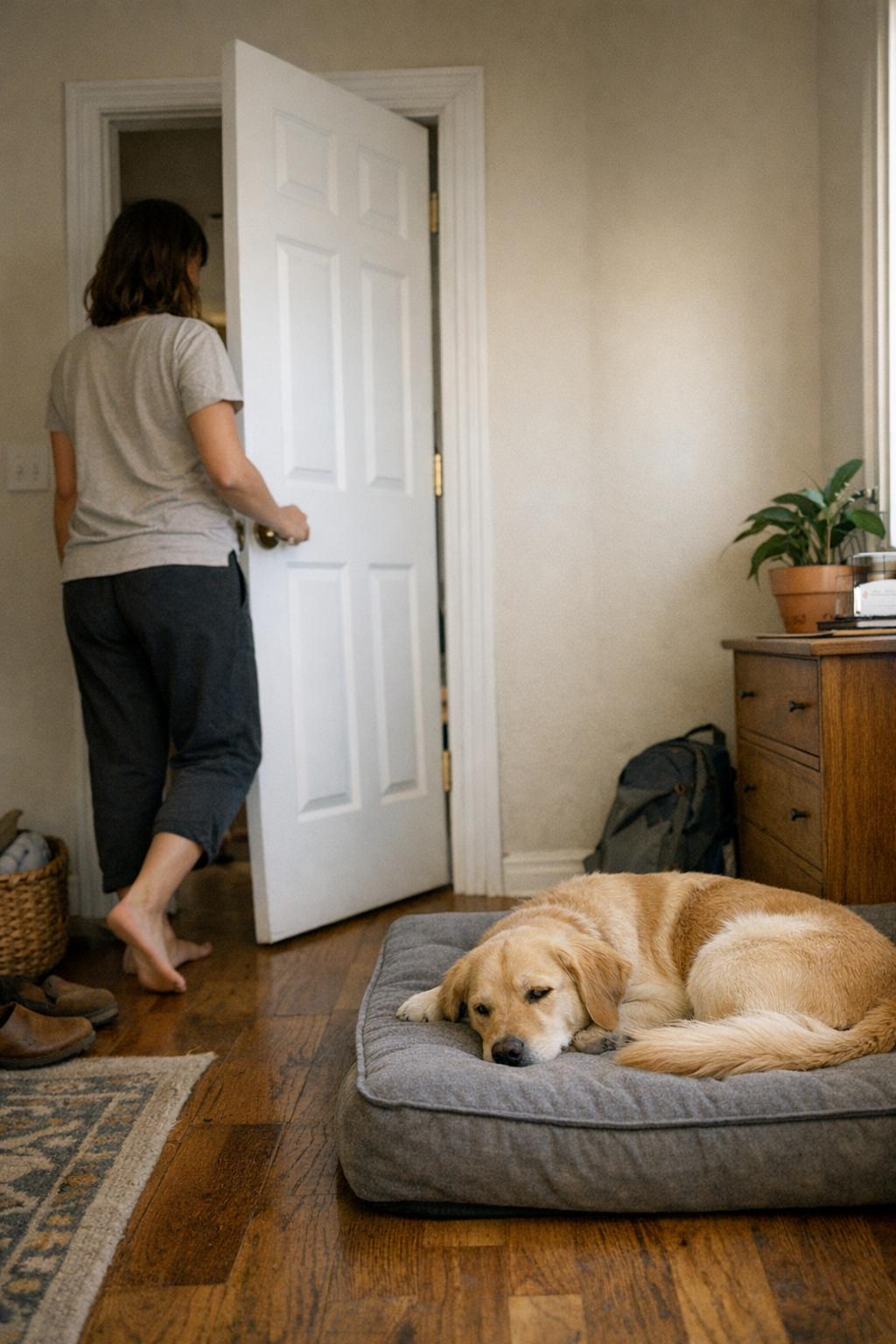
    The answer often isn’t complicated. The most effective change? Rotating the dog’s bed lengthwise against the wall, with space clear of the door’s swing—suddenly, no more indecision at the entry, no more door checks, no need for repeated reminders. The dog’s path is direct: door closes, bed is right there, and lingering at the threshold quietly disappears. Cleanup after walks? Now supplies are next to the exit, instead of requiring backtracking across the floor.

    A New Pattern That Reduces Waiting

    This small shift replaces a “wait for action” zone with a settle-and-reset cue. Instead of using the doorway as a holding pattern, the dog sees a clear space away from foot traffic—the cue is to move on and relax. That new routine bluntly reshapes everything: feeding starts faster, you get out the door sooner, and “wait by the door” fades into the background. The same space does more; the invisible drain is gone.

    Seeing the Routine From the Dog’s Point of View

    To a dog, that bed or mat near the door is a signal: “Don’t relax yet, action is still coming.” Even if the area looks organized, rest doesn’t happen until the physical layout actually clears a path forward. Every pause at the threshold is really the setup talking back—reminding your dog to hang tight, circle, or hover close, instead of dropping into a true reset. That hesitation repeats, rooting a pattern that’s hard to undo just by rearranging items visually.

    Making Calm an Easy Default, Not an Exception

    The best signal isn’t about enforcing “good behavior.” It’s about making rest easy and obvious—clear, physical permission for your dog to quit waiting and let you continue the routine. Once the bed, bowl, toys, and supplies actually support flow instead of crowding it, repeat interruptions fade without you having to micromanage. The day runs quieter, and the difference—less circling, fewer reroutes, no extra steps—shows up fast.

    Spotting the Weak Point—And Addressing It Early

    Letting the “door hover” slide is like accepting a yellow traffic light that never switches. The cumulative effect: meals get nudged later, walks start less smoothly, downtime becomes about managing delays rather than actually resting. The weak point isn’t dramatic, but it multiplies—quiet, persistent drag until the whole routine feels one notch rougher than it should.

    The actual fix is deliberate, not elaborate. Give the rest spot its own clear, inviting zone—no crowding the door, no waiting in the way. Reinforce calm there after each return or door close, and watch as the bottleneck at the entry gives way to a smoother, more reliable rhythm.

    What’s Actually Changing in the Day-to-Day Flow?

    Soon, you’re giving fewer reminders, dodging fewer obstacles, and actually moving on right after the door shuts. Cleanup between walks is easier: towel is by the threshold, wipes are within reach, bowl isn’t the first thing your heel hits coming in. The space stops demanding little corrections and actually helps you reset—one move per step, not a cascade of minor interruptions. Visitors may not notice the difference, but your routine will.

    Paying Attention to Where Friction Hides

    Most setups get organized to look right, not to work right. “Bed here, bowl there, toys in a bin”—but the invisible roadblocks only clear out when the entire daily path runs smooth for both human and dog. The problems—waiting in the doorway, slow resets, item-blocking—disappear only once the arrangement sends a clear signal. Instead of letting the threshold decide what happens, design your setup to tell both of you what step comes next—no room for uncertainty or pause.

  • How Thoughtful Cable Management Transforms Your Workspace Stability

    A desk can look organized at eight a.m.—drawers closed, trays in line, cables tucked into a neat coil. But all it takes is a morning of device swaps, a quick notebook grab beside your keyboard, or a single phone charge, and suddenly cables are dragging across your reach, knocking pens off the edge, or knotting under the surface the instant you adjust your chair. If your clean desk keeps ambushing you with surprise cable catches or a dangling charger tangling with your leg, the setup isn’t working as well as it looks. Without real cable management, every reset is an obstacle course—and the clean-up never holds past lunch.

    Why cable friction wins, even when your desk looks tidy

    Surface organizers and drawer units fix visible clutter, but cables resist easy order. Every ordinary move—plugging in, pulling a device closer, adjusting your monitor—turns unmanaged cords into active friction. Loose lines swing into your elbow space. Power cables drag behind trays, slowing every pull of the mouse or keyboard. Moments lost untangling, pausing mid-task to unhook a catch, or scanning for the right charger are small, but they derail your focus and pile up over the week.

    Even with adjustable arms or under-desk storage, cables often invade the exact zones you need clear: the stretch for your notebook, the reach under a riser, or the pathway between leg space and foot rest. Trays, clips, and boxes might look disciplined at noon, but they rarely last through a day of plugging and unplugging. By late afternoon, most workspaces settle back into low-level cable chaos—just neat enough to pass, but never easy to use.

    Surface fixes vs. the test of actual cable movement

    Most “tidy” hacks struggle when the setup is in motion. Looping cables into a box or securing them in snap-on clips streamlines photos, not work. Try swapping out an external drive or shifting your screen toward the window and you’ll find yourself wrestling those same cables again—nothing about your reach paths or movement zones has changed. The more often you switch devices or reposition gear, the faster the surface fixes unravel. It’s not about being tidy for inspection; it’s about whether you can actually move through your routine uninterrupted.

    This is where under-desk trays and sleeves come in. Instead of organizing by hiding, you route cables on a path that matches how you use the space—anchoring them below, letting them flex just where you need connection, and keeping both knees and elbows unblocked. Devices plug in without reaching under a mess. An open desk edge and a monitor arm feel usable, not booby-trapped. Installation takes real attention: anchoring both ends, checking that nothing sags into leg space, measuring the distance so cables stay taut but not tight. The payoff is clear fast—no more pausing as a cable swings loose or snags a drawer, and no slow accumulation of cable spill under the desk.

    The daily test: Cables move, the desk should keep up

    Real workstation setups are rarely static. If you work between dual monitors with a laptop dock perched at the margin, or shift from typing to note-taking beside your keyboard, you know how easily one loose cable can break the flow. Drag a notebook out, swing a drawer open, or roll your chair back—and a single USB or HDMI cord flops into your path, forcing another micro-reset. The desk looks fine, but you burn time after every small adjustment, tracing and unkinking lines, nudging the dock back, or retrieving a fallen charger. By midweek, you’re repeating these moves by muscle memory—the untidy desk beneath the tidy surface.

    When cables follow a set route—anchored in a tray or sleeve, ending only where you connect—friction drops away. You can slide your chair, flip open a drawer, or adjust screen angle without having to hunt for a lost cable or rescue a charger from underfoot. The improvement isn’t cosmetic; it’s stability that survives actual use, day after day, not just at morning reset.

    What committing to cable management really shifts

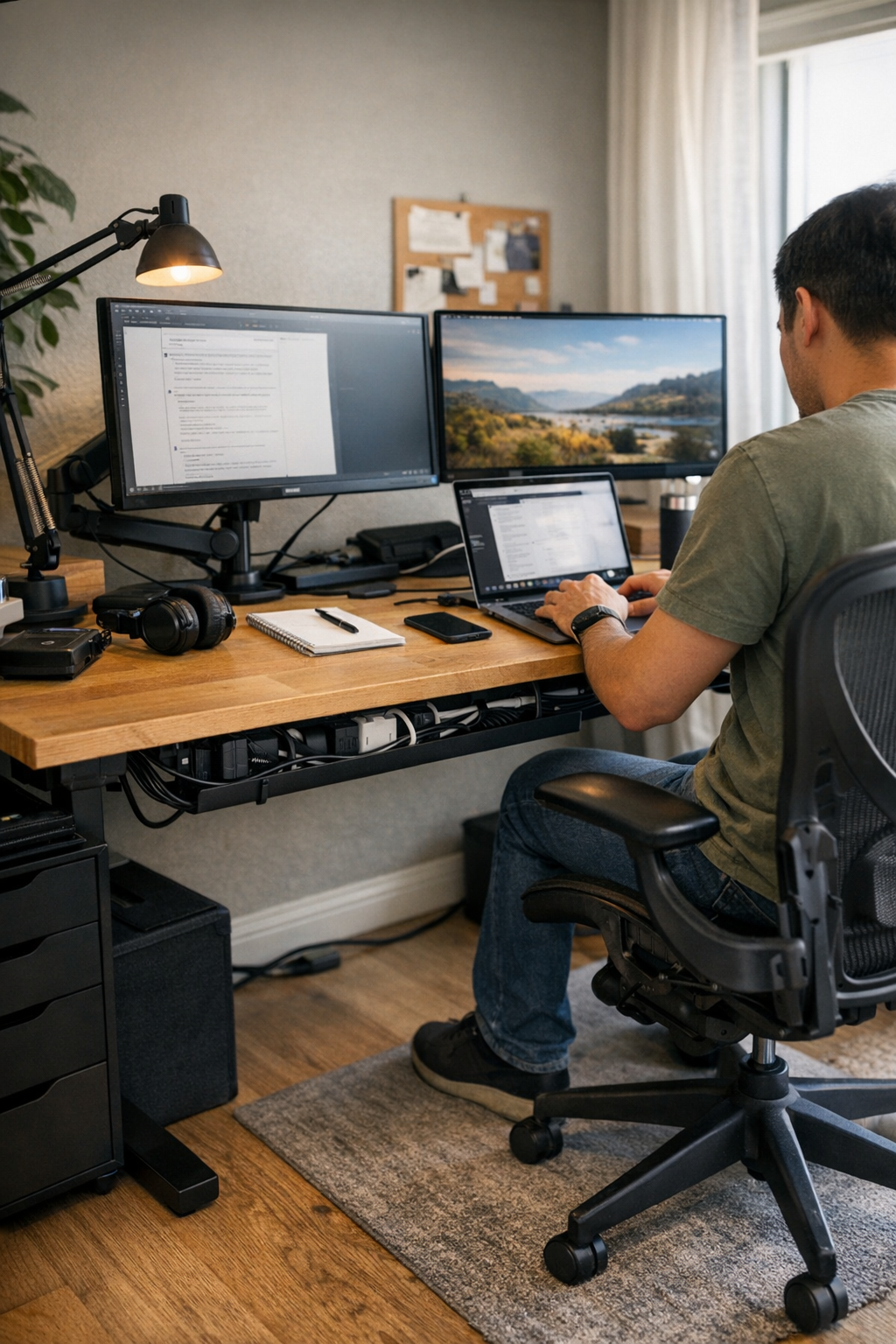
    It took one too many tangled mornings to finally anchor every core cable in a slim under-desk tray. The thickest cord—a heavy monitor line—got locked behind the tray, immune to swings or accidental snags during even the deepest desk reset. Setting the tray five centimeters off the back edge put every connection within easy reach, while eliminating any chance for cables to pile up dust or slip below. Suddenly, charging a phone or moving the monitor started and ended in seconds. No more dragging a cord across the desk or unplugging the wrong device by accident. Each move—screen tilt, chair pivot, second keyboard plugged in—happened without a single cord interrupting the motion.

    The change was obvious in action, not just in looks: even as the workflow grew hectic—files scattered, hardware swapped, monitor arms repositioned—cable friction simply vanished from the routine. Tasks reset smoothly, and maintenance dropped to the background. Reaching to grab a notebook or spinning a drawer open never triggered the familiar cable-snag reflex.

    Quick troubleshooting for live cable issues

    • Constantly re-anchoring cords? Target both ends with under-desk trays or adhesive mounts. Give just enough play for device movement, but not enough slack for bunching or dangling in the active workspace. Surface boxes only mask the friction, not fix it.
    • Frequent device swaps? Lean on drop-in or open cable trays, not closed channels. These let you reconfigure cables on demand without overhauling the whole desk each time.
    • Ignoring cable nests under the desk? Tangles below gather more than dust—they snag feet, block casters, and gradually strain ports and connectors. Addressing the mess under the surface prevents both sudden interruptions and the slow build-up of wear.

    Recognizing real improvement—not just a neater look

    Winning at cable management isn’t about chasing an empty desktop; it’s about a desk that stops fighting your every move. The true sign: you switch from one device to another, adjust your chair, or reset for a new work session without a single cable entering your thoughts or blocking your path. It’s the absence of that recurring pause—the one where you wonder why you’re detangling again, even though everything looked organized at the start of the day.

    The best workstation setups become invisible—because they don’t force you to think about them. If a tidy desk still pulls at your sleeve, interrupts your reach, or makes you second-guess a quick device plug-in, start by tracking the cable paths. Removing recurring cable friction unlocks the benefits of every other desk upgrade—so each part can finally do its work, no matter how many times you reset.

    Explore the full WorkBasic collection

  • How Modular Wall Systems Transform Workshop Flow and Efficiency

    Spaces don’t fall apart overnight. The slow disaster in most garages, workshops, or catchall utility corners happens in plain sight—creeping in, not in a single event, but through routines that quietly bend and crowd the area week after week. Day one, everything feels ordered: gear on wall panels, shelves loaded, tool carts docked, overflow hidden inside cabinets. Then the cracks appear. Carts migrate into footpaths. Tools go missing in their own home. The line between “it fits” and “it flows” becomes clearer with every blocked step and every project you put off just to clear space.

    Why Clutter Isn’t the Real Villain—It’s Friction That Kills Productivity

    It’s easy to judge a setup by its storage capacity, or how peaceful it looks behind closed doors. But in practice, utility isn’t about hiding. It’s about movement—can you reach what you need without a detour, and put it back in seconds without debate? Every extra sidestep adds up. Each time a tool lands “just for now” on the nearest cart or bench, that’s a sign: the system isn’t supporting your routine, it’s subtly getting in the way.

    The friction sneaks up. The once-clear aisle now requires bumping a cart aside just to grab a wrench. Cabinets, originally flush to the wall, block off flow when their doors open into narrow walkways. Simple retrievals become slow dances around corners and obstacles, and resets stretch further out because each return is another mini-task, not a smooth motion.

    When Order on Paper Breaks Down in Real Life

    Blueprints give you “a place for everything.” In daily use, you meet the compromises head-on. Maybe the garden cart “fits” between the mower and the shelving—until you try weaving through with bags of soil, stepping awkwardly or shifting the cart out of the way each time. What should be a passing thought (“I’ll move this later”) turns into a cycle: more items pile up in mismatched zones because putting things back is always slightly more involved than it should be.

    Those micro-hesitations and daily workarounds are signals from your setup. Every time you pause—move a bin, consider where to stash a tool, or let something rest in a “temporary” spot—it’s your system adding resistance. Over time, those small problems lead to a major slowdown. Returning tools becomes a chore, and you catch yourself working around your own layout instead of with it.

    Cabinets, Carts, and Wall Racks—Why Looks Aren’t the Same as Usability

    Closed cabinets and storage chests give that tidy, uniform finish—at a cost. The process to retrieve a tool becomes: walk over, open the door, remember which drawer, dodge around spilled-over carts, and reverse the whole thing just to put it back. It feels functional, but those extra movements eat away at momentum. If every cabinet arc or drawer pull blocks part of your only walkway, the space isn’t working for you.

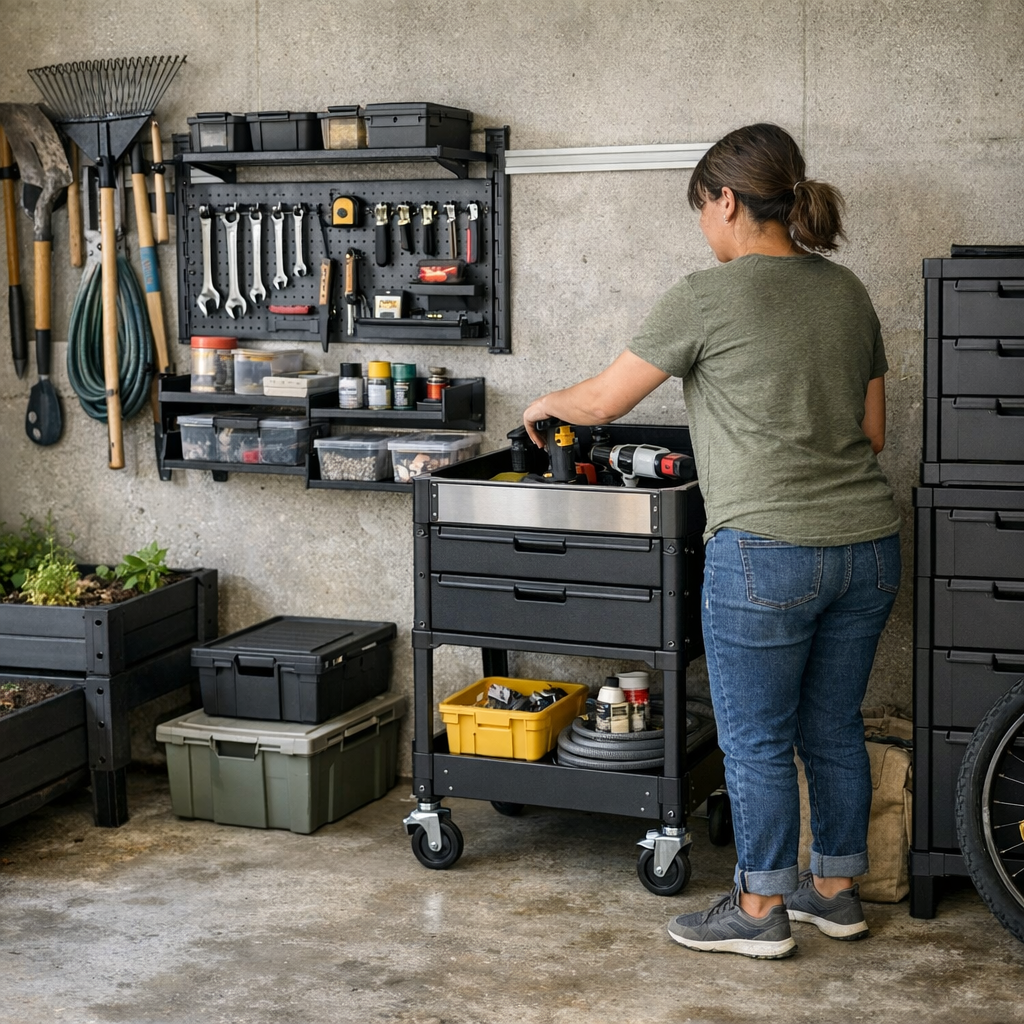
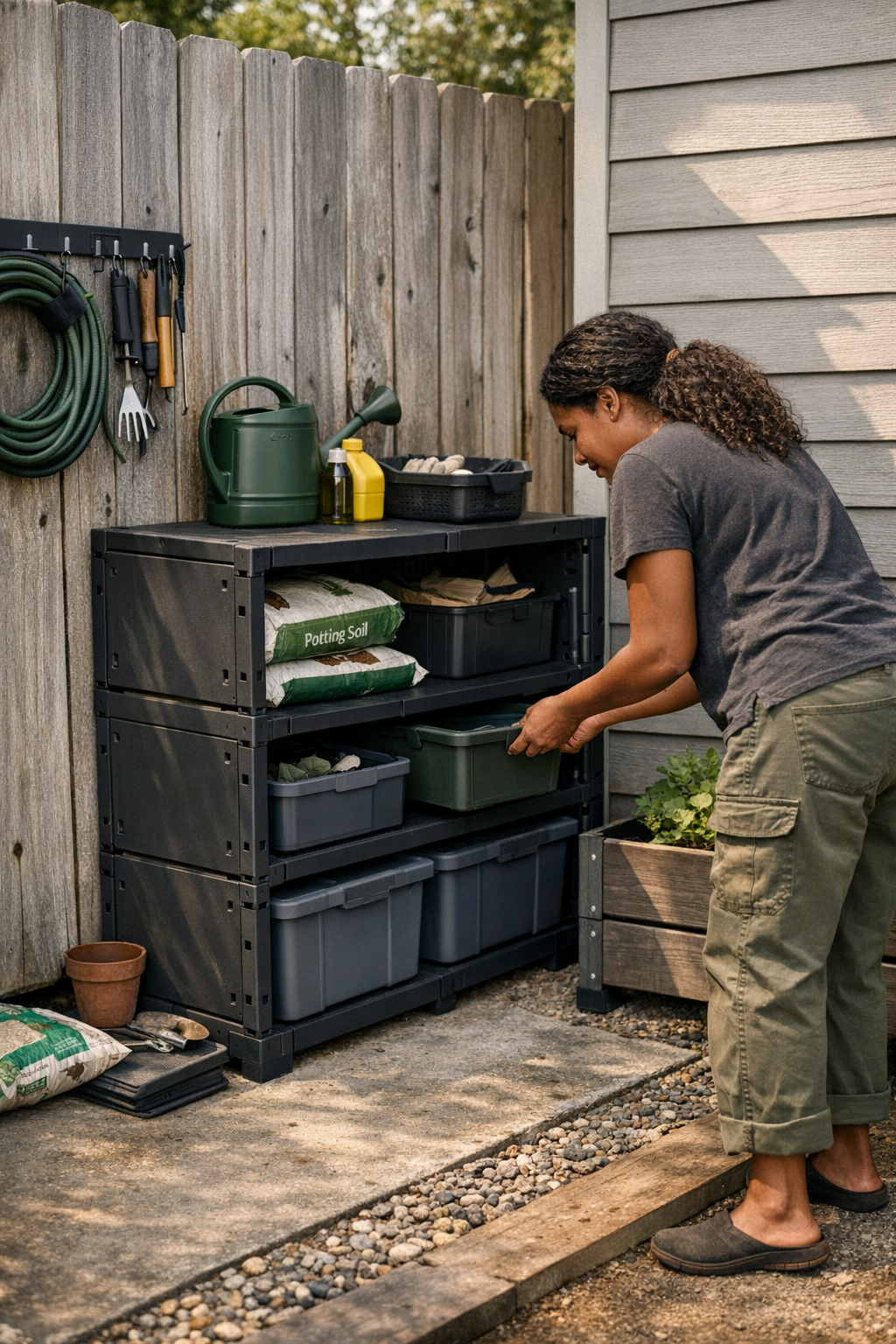
    Open wall racks and modular panels look messier but tell a different story if they’re tuned right. When hooks actually match your grab-and-go tools, resets shrink to near-zero. Glance up, tools at eye level—done. But overload the panel or ignore your real rhythms, and you’ve just pushed the mess where everyone can see, compounding friction and making resets even trickier.

    Small Shifts That Reshape the Space

    Most improvements aren’t sweeping overhauls—they’re tight, specific moves. Raising a utility rail by 10 inches can clear a crowded bench and put your go-to tools where you naturally reach. Replace low shelves with a single horizontal panel, and suddenly your cart glides through clean space that isn’t blocked by bins or corners. The shift feels physical: no more shuffling, no pausing to reroute. The difference? Resetting the space nearly disappears from your mind because nothing interrupts the flow.

    Keep an eye on dead corners—if a certain spot always collects stray items, it’s likely serving the wrong purpose. Mount a basket or drop in a slim bin right there, and overflow vanishes without fanfare. The best tweaks are subtle, but their effect on daily friction is immediate and ongoing.

    When Routine Struggles Signal a Layout Problem

    You feel it before you see it: tight corridors, carts squeezed out of alignment, that “one spot” where everything lingers on its way elsewhere. Reaching for a tool and finding a stack blocking access is not just a minor hassle—it’s a red flag that the arrangement is piling on extra steps. If you hesitate—or regularly wage small battles to get at what you need—it’s time for a reset, not just more storage.

    Ask yourself: Was yesterday’s clean-up a smooth glide, or a multi-step puzzle? Were you caught moving three things to put away one? If your process is a constant reshuffling act, the system is leaking efficiency and inviting new clutter with every use.

    What Actually Makes a Setup Work—Not Just “Appear” Organized

    Strong setups erase decision fatigue. There’s no sorting, no debate—just reach, use, and put away on autopilot. This isn’t about hiding every tool, but about actually aligning high-use items with open paths, keeping doors and corners clear, and tucking rarely-used supplies into deep-storage zones that don’t disrupt your rhythm. Resets get so quick you stop noticing them.

    Pay attention the next time you’re working—are you thinking about the project, or are you strategizing how to maneuver through the space? The less mental effort spent managing storage, the more productive (and less stressful) your routine becomes.

    Quick Setup Stress Tests and Practical Zone Fixes

    • Reset Timer: Wrap up a regular job and clock how long it takes to return everything. If it’s over a couple minutes or involves repeated shifting, focus on that zone’s layout.
    • Walkway Audit: Stand in the main path—can you cross it without sideways steps or stops? Even a foot-wide cleared lane, gained via wall-mounts, opens the whole space up.
    • Overflow Hotspots: Notice where piles always reappear. Add a grab bin or customized rack right there, so overflow lands where it makes sense rather than choking other areas.
    • Favor Habit Over Hype: Tailor setups around what you actually reach for, not just what looks sharp in a catalog. If the system can’t flex with your routines, no amount of sleekness will fix the friction.

    Forget aiming for a space that’s just “organized.” Focus on a setup where moving, grabbing, and putting things back is frictionless—where nothing blocks your rhythm and overflow stops piling up in dead corners. The reward isn’t just a cleaner look; it’s reclaiming the time and mental bandwidth lost to constant rearranging and reset delays.

    Explore modular storage and organization solutions at StackNest

  • Why Structured Entryway Storage Beats Open Bins for Busy Homes

    The moment you finish clearing the entryway, real life ambushes the system you worked so hard to set up. It takes just one rushed Monday morning for shoes to migrate out of their neat line, for tote bags and backpacks to reclaim the bench, and for the “catch-all” bin by the door to swallow stray keys, gloves, and mail. What starts as a hopeful setup unravels in real use: the rows widen, the piles build, and a misplaced leash or solo glove triggers the same last-minute search—again. With each unplanned drop or hasty return, the entry loses its order and returns to its default setting: high-traffic clutter, blocked passage, and slow, distracted exits.

    When Day-to-Day Use Overwhelms the Setup

    Open bins and trays seem practical in theory—just drop and go. But in repeated, rushed routines, those wide-open containers turn into collection points for clutter and temporary “just for now” placements. Monday’s backpack lands on top of Sunday’s shoes; Tuesday adds lunchboxes; by midweek, the bin hasn’t just filled—it’s collapsed as a usable system. Now, every trip through the threshold means digging through mixed layers: gloves hidden under yesterday’s mail, keys stranded beneath a soccer cleat, and a leash that’s migrated out of sight just when it’s needed most.

    The Real Cost of a Collapsing Drop-Zone

    No one schedules time to retrieve lost things in the entryway, but daily friction adds up. The penalty isn’t just visual mess—it’s a routine slowdown, especially in moments under pressure. You’re sent scrambling for a glove at the last second, shuffling bags off the bench to make space, or squeezing around stray shoes that have drifted into the traffic lane. What was meant to simplify departures instead creates resistance points that waste time and attention exactly when you’re heading out the door.

    Why Open Storage Breaks Down in Real Entryways

    In nearly every home, the entry is a squeeze point—part path, part drop zone, always at risk of overflow. Benches that promise a place to sit become landing strips for gear that never fully leaves. Floor bins seem smart on move-in day, but once daily use begins, they’re quickly buried by the very things they’re supposed to organize. The travel path tightens as shoe rows spill out and bags settle wherever there’s space. Returning one extra item can block a small hallway, and a “temporary” dump next to the bin sticks around all week. Even wall racks that look great during a reset can’t stop bags or coats from drifting back to benches or the floor once actual routines reassert themselves.

    Temporary Fixes, Permanent Interruptions

    The cycle is familiar: an overflow bag perches “just for now” on the edge of the bench, a couple of shoes wait by the door for tomorrow’s use, and suddenly, these stand-ins become permanent obstacles. Each pass-through adds one more item left slightly out of place, until navigating the space means bumping, stepping sideways, or moving things just to walk through. Resetting the zone gets postponed—until the buildup forces a messy, inconvenient reshuffle right before guests arrive or someone needs to rush out the door. Would-be “easy access” devolves into semi-permanent blockages and extra work every single day.

    Structure: The Quiet Fix for Repeated Friction

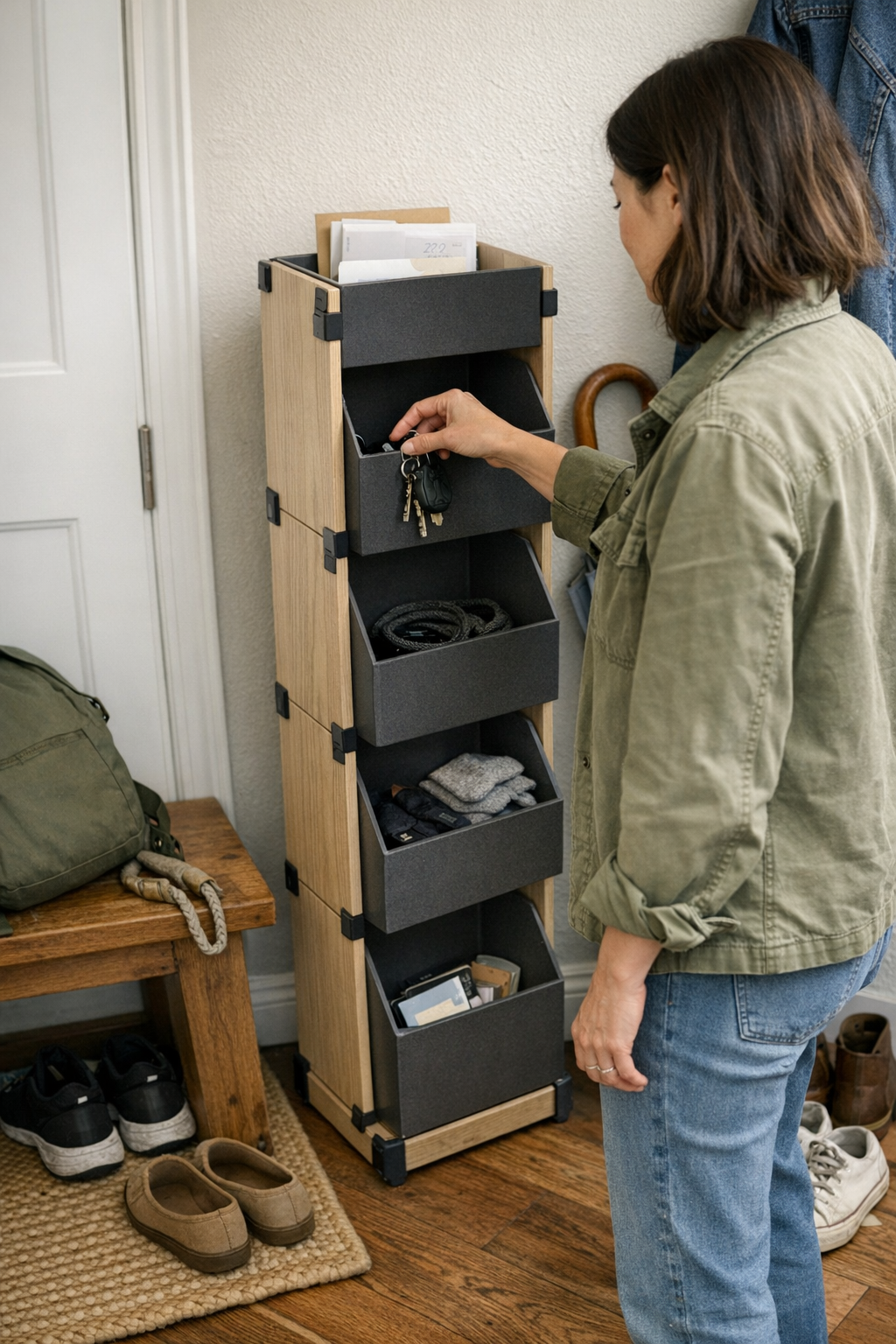
    Open options collapse under the pressure of daily routines, but structured solutions reintroduce control. Adding real structure—through modular cubbies, vertical racks, or labeled slots—turns a dumping ground into a working system. Every key category gets a physical boundary: keys go in a slot, not a heap; gloves fit the top compartment; shoes are corralled in defined rows instead of pooling by the door. The magic isn’t the formality—it’s the way each belonging gains a reliable address, cutting out the constant hunt, the pile reshuffles, and the stalled movements these all trigger in a cluttered entryway.

    Turning Dump Zones into Designated Zones

    • On re-entry, you drop your keys straight into a labeled slot, not a slushy communal bin.
    • Gloves slip into their top cubby, bypassing the cycle of being crushed beneath backpacks or groceries.
    • Shoes aren’t scattered in a loose row along the wall or blocking the walk path—they live upright, side-by-side, always visible and reachable.

    The result is plain: less tripping, no more bench buried in yesterday’s bags, and the access lane staying, for once, actually accessible. Resets are faster because less has drifted out of place—nothing is hiding, and nothing has to be rescued or re-sorted just to leave or return.

    Real Entryway Moments: Where Structure Pays Off

    Picture the weak points: weekday mornings, arms full of work bags, lunchboxes, or groceries, kids scattering in different directions, the dog ready to bolt out the door. The wrong setup means someone’s stopped, shuffling through a pile for the missing leash or tripping over a wedge of shoes in the path. But when structure sorts the entry—leash in its own slot, kids’ shoes in their vertical rack, mail stacked where it won’t vanish—chaos doesn’t stick and access doesn’t stall. Movement through the zone stays clear, even at peak times. Instead of the entry acting as a bottleneck, it works as a checkpoint: everything needed, nothing in the way.

    The payoff: Fewer missed items, less last-second scrambling, and movement that isn’t constantly blocked by spillover gear. When the bench is empty enough to sit on, when walkways hold the line against clutter, and the dog leash is never buried, the system is truly working for your routine—not adding hidden work to it.

    Small Adjustments, Noticeable Uptick in Ease

    Even one or two changes—like a wall-mounted rack for leashes, or vertical shoe slots near the door—can break the old pattern. Labeling storage by category tightens the return flow: everything gets put back right, and nothing disappears into the heap. For small or high-traffic entryways, this category clarity and vertical separation stop the midweek slide into confusion and save time on every pass-through.

    The Real Difference: Looks Nifty vs. Works Every Day

    Entryways that just look organized offer a false finish. What matters is whether the setup survives actual routines—bags dropping, shoes multiplying, hands full, resets delayed. Systems that merely “hold” items buckle under pressure, but a single layer of added structure—modular cubbies, wall hooks at the real-use height, or a vertical shoe rack—changes how the space performs after the first wave of daily use. The right storage doesn’t just tidy the view; it keeps the pulse of the threshold clear before the next scramble, so routines stay fast and friction stays low—even if perfection is always a few steps away.

    See more practical entryway storage solutions at Betweenry.

  • Streamline Cat Care by Storing Supplies Right Where You Need Them

    The difference between “running smoothly” and “wearing thin” in any indoor-cat routine usually starts with one small mistake: putting the essentials just out of reach. Grab the food bowl, and you’re suddenly making a side trip to the bathroom to hunt down the scoop. You’re topping off water from the kitchen while the refill jug sits hidden under the hall sink—just distant enough that you skip it until the next complaint. It doesn’t look like a problem at first, but by midweek, those indirect routes—fetching litter from a closet, tracking down wipes across two rooms, sliding back boxes—turn every reset into an interruption. Surfaces still appear calm, but underneath, each refill or cleanup brings back the hassle of split routines and missed steps. What passes for “organized” on day one quietly becomes a friction loop by Friday in any real home with a cat. StillWhisker setups are built to break that cycle early.

    Why Does Point-of-Use Storage Matter So Much for Cat Supplies?

    The drag on your time—and your patience—doesn’t show up in a single, glaring mess. It shows up in the disruptive pauses: standing in one room while realizing you need something stored two rooms away. Stashing supplies in closets keeps your place looking tidy for visitors, but as each detour stacks up—especially on repeat—you start working around your own setup, not with it. The real friction isn’t just the extra steps; it’s the routine losing all flow.

    • You reach for the kibble scoop, but it’s buried in a bag outside the room. Now your cat is persistent, and you’re sidestepping paws while searching drawers.
    • The plan was to wipe scattered food after breakfast, but the wipes aren’t here. By the time you return with them, crumbs have multiplied—and so has your annoyance.
    • Litter tracking appears at the doorway, but the handheld vacuum isn’t where it should be. The odds of leaving it “for later” climb sharply each time you need to dig for a tool.

    Each interruption seems minor, yet together they unravel any appearance of control. The cost isn’t just time lost—it’s the silent buildup of avoidable friction, dragging routines from automatic to laborious.

    The Hidden Tradeoff: Looking Clean vs. Working Smoothly

    We all want living spaces that look settled and calm—especially with pets around. But there’s a catch: hiding litter behind closet doors, stashing scoops in drawers, or relegating water jugs under utility sinks keeps rooms looking bare at the expense of function. When you separate supplies from where you actually need them, each routine picks up invisible baggage—a few extra steps, a few delayed resets, a little more “not now” every day.

    Here’s the pinch: the more attractive your hidden storage, the more likely your system quietly adds work on the back end. An organized closet feels neat until you’re detouring for something the moment you need it, while a caddy right beside the box or bowl looks slightly busier but keeps routines on track. What works better isn’t what hides more, but what shortens the distance from intent to action—without forcing yet another round of “I’ll tidy this up later.”

    Common Spots Where Supply Placement Breaks Down

    • Litter Storage: Litter bags shoved in a back closet force you into hauling refills at awkward moments—making last-minute top-ups and emergency resets feel like chores worth postponing.
    • Feeding Tools: The bowls might always be in place, but the right scoop or measuring cup often migrates out of arm’s reach, turning what should be a one-hand motion into a two-room expedition.
    • Water Refills: If the jug or pitcher isn’t right at the water station, bowls run low longer, and fresh water gets delayed—right up until the cat starts announcing the problem.
    • Wipes and Cleaning Supplies: When cleanup wipes or vacuums aren’t right near the scene, small messes linger or spread; you catch yourself crossing the house to fetch them and sometimes just let the spot wait, “just for now.”
    • Toys and Rest Mats: Toys and mats drift steadily toward high-traffic zones. If there’s no easy drop spot at hand, objects collect under furniture, triggering that familiar “search and rescue” routine every week.

    Real-Life Routine: How Small Gaps Add Up

    Picture a standard morning: you reach for the food scoop but it’s with yesterday’s litter bag in the hallway. By the time food’s down, you spot kibble on the mat edge—except the wipes are deep in the bathroom. When you get back, your coffee is colder, and the scatter has made its way across the floor for a second lap, courtesy of impatient paws.

    A five-minute routine has turned into fifteen minutes of reshuffling, solely because supplies aren’t anchored where resets happen. None of this looks dramatic, but multiplied by days and weeks, it frays the line between “well-organized” and “always one step behind,” even if everything looks calm on the outside. Visually, the room reads clean; practically, it’s an obstacle course of micro-delays.

    Group Supplies by Task, Not Just Appearance

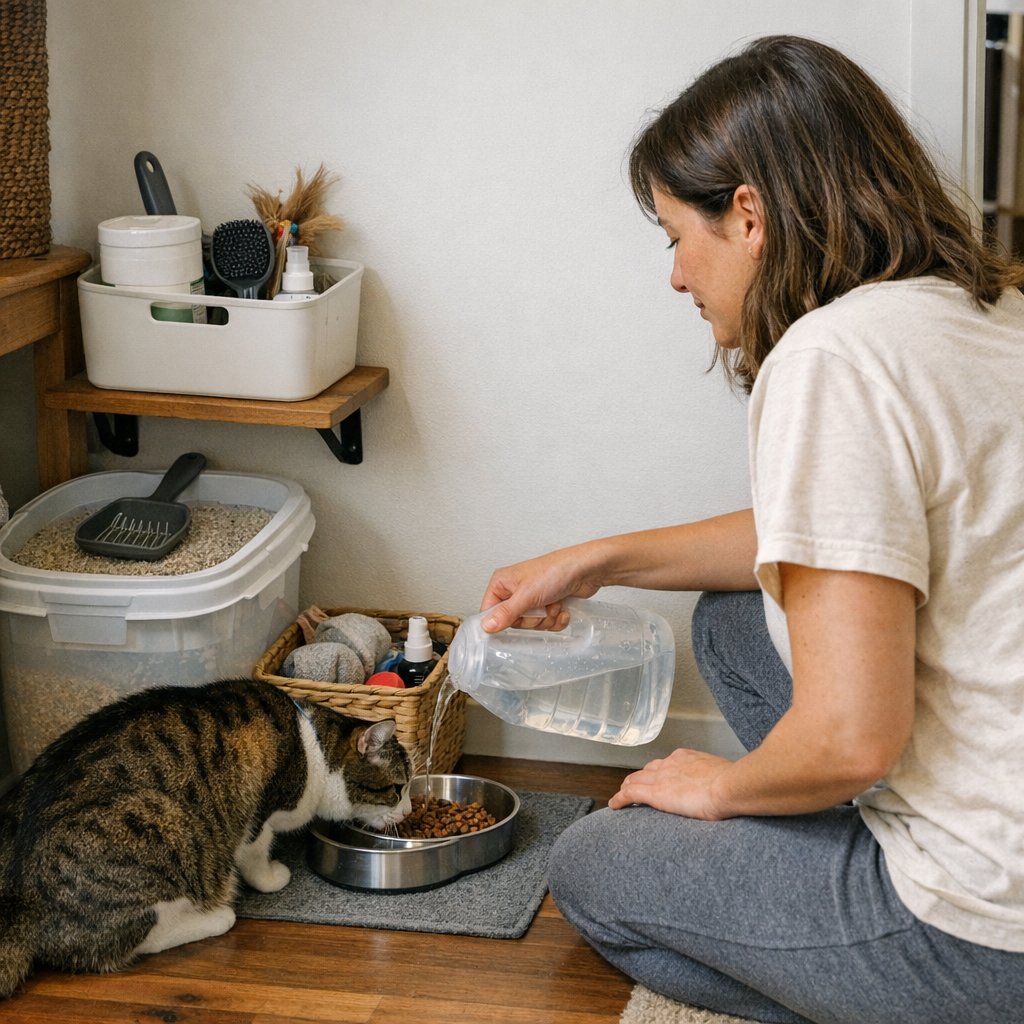
    Bare counters and hidden bins look organized, but only if you ignore the slowdowns. The setups that actually survive repeated use are built around where each task starts or finishes—not just what looks calm. Stash a sealed tub under the box, keep wipes and scoop together in a basket or caddy you can grab with one hand, and accept a little visible “clutter” in exchange for a routine that doesn’t drop you out of stride.

    • Litter, scoop, and wipes within arm’s reach of the litter box—preferably in a bin or caddy you can carry or clean out without scavenger hunts.
    • Feeding cup, spare food, and cleaner slotted right by the food station—a slim bin under a table wins in tight spaces.
    • Water jugs belong next to or above the water bowls, not across the house. A closed basket or shelf neatly tucks it away while keeping it present enough you never skip a mid-day top-off.
    • Keep a tray or shallow basket near the main play area—grab-and-drop toy returns cut down on the spread and lessen the “where’s that ball?” spiral.

    The goal isn’t hiding every sign of pet life—it’s to make each reset quick enough that tomorrow’s mess never becomes an excuse to let today’s slide.

    Examples of Structure That Withstand Real-Life Use

    Practical storage doesn’t need to look custom-made. An airtight bin under the box saves you two-thirds the time of refilling from a closet down the hall. A lidded basket shelved above means wipes and bags are there at the instant you spot the mess, not fifteen minutes later. For feeding, a caddy tucked just under the feeding zone corrals scoops, spare mats, even brushes—so you stay on track instead of peeling off for missing tools at every step.

    One rule holds up: choose containers or baskets that open with one hand and can be closed without fighting the lid. Snap tops, slide-outs, or baskets that don’t jam are worth more than any fancy box—especially when a tail or paw has made you a little clumsier on the fly. Systems that stay easy in daily movement are the only ones that hold up when routines are repeated under pressure.

    Bumping Up Against Small-Space and Shared-Space Limits

    In apartments or tight homes, hiding supplies feels mandatory—until the first time you stall out mid-routine because a bin is out of reach or a lid needs a free second hand. A closed basket in open shelving near the box or food area holds the line between calm and clutter, but too much effort to access, and you’ll soon skip the process “just this once.” Those skipped steps always boomerang by week’s end.

    The best setups balance tidiness with single-step reach-in access: containers that don’t require untangling or clearing other items first. In shared rooms, restrict supplies to a dedicated bin or basket per major cat zone; otherwise, you’re chasing your own system from room to room in a daily shuffle. Order that asks for too much obedience won’t last.

    How to Spot the Early Warning Signs of Inefficiency

    • You keep interrupting your own day to chase supplies, or tidying messes that would have vanished if tools were closer.
    • Tools left for visual calm keep migrating back to the spot they’re used—clearly trying to fix the routine you won’t admit is broken.
    • Water bowls drop below “fresh” before you notice, and litter refills get delayed until the last possible moment, not because you forget—but because the storage location adds resistance.
    • Cleanups happen only after problems are visible, never as part of your natural reset rhythm—showing your structure is built
  • Balancing Space and Function in Low Clearance Underbed Storage Solutions

    Low-profile underbed storage looks clean—until you have to use it every day. Slide slim bins beneath a platform bed, and the room instantly appears more orderly. Clutter vanishes; extra clothes and backup sheets stay hidden. It feels like the perfect storage win—until the first time you need to grab an item in a hurry. Suddenly, bins jam halfway, lids scrape the frame, and nothing slides as smoothly as on setup day. What’s advertised as effortless storage turns into a routine of nudging, tugging, and realigning—every grab pulls the whole zone off-kilter. The surface stays calm, but the friction underneath keeps growing. Hidden storage, especially when used for constant rotation rather than rare access, exposes its weak points fast.

    The False Calm of a Packed Underbed Zone

    Stacking every available bin side-by-side under the bed looks efficient—at first. Each container fills the gap, matched and measured to the nearest centimeter, promising maximum use of “dead” space. But the tighter the fit, the harsher the reality after a week in use. When bins fill every inch, even a quick morning reach for a shirt sends containers bumping rails and snagging corners. A tug on one side knock the whole row off line, leaving containers wedged and mismatched. By the next use, the lineup is already sliding out of formation, with handles poking out and dust gathering in new gaps. Underbed storage set up to be “neat” becomes a constant cycle of small correction—resetting, straightening, finessing containers back into line—especially if you’re rotating items in and out more than once a week. Instead of freeing space, it quietly adds yet another step to your routine.

    When “neat” demands constant fixing

    Within days, even the most carefully-packed setup unravels. Bins drift; edges jut; a cloud of dust marks where a container slid out of place and stayed there all week. The calm appearance persists only if you’re willing to realign and push everything flush after each use. When your storage acts more like an unstable puzzle—where a single rushed return knocks everything sideways—using underbed bins moves from helpful to background hassle.

    Real Scenes: The Subtle Friction of Daily Use

    Typical workday, too little room to maneuver: You reach for a folded shirt stashed in the backmost bin before a rushed meeting. The bin fights you, catching on a bed slat. Yank a little harder, and now the next container on the left drifts into the gap, blocking the return path. It’s a two-hand rescue just to get one item. Replace the bin, and the tidy grid is now skewed—corners sticking out, nothing quite lining up. The friction of access grows with every retrieval: what used to look ordered now nags at your eye every time you walk past, each bin’s crooked angle a reminder of the invisible maintenance required.

    The slow creep of overflow and drift: Even with clear categories—towels here, shoes there—underbed bins quietly morph. Socks slide into the “spare towels” bin. An old phone charger appears where pajamas should be. Out of sight means easy mixing and matching, and soon “categories” evaporate into one big tangle of leftover and lost. By the time you need that last clean pillowcase, you’re digging through a collision of out-of-place items, sending two bins off line, and promising yourself to “reset it later.”

    Design Details That Change the Routine

    The setups that actually work depend on small, repeatable design shifts—not maximum density. That finger-width buffer (about 1.5 centimeters) between the top of every bin and the bed frame? It’s the make-or-break margin: enough space to grip and slide bins without wrestling lids or scraping handles. Wheels and soft glides, too, aren’t vanity touches—they shift friction away from the carpet, so bins don’t stick or drag the whole line with them. A handle that fits the hand without adding height lets you pull with control, not brute force. These cues matter more than squeezing one extra bin under the frame: in daily use, even a single unnecessary jam or realignment starts to shift the whole setup out of “calm storage” territory and into active annoyance.

    Buffer means fewer corrections, smoother mornings

    Trying to use every last millimeter for storage edges into self-defeating territory. Slightly slimmer bins—or sacrificing a single container—returns more functionality than it costs in lost volume. That buffer zone means you can reach, pull, and return a container without jostling every neighbor out of line or kicking off another round of micro-resetting. Storage that looks slightly less “packed” upfront delivers less friction in practice—the habit-forming difference is discovered on mornings when you’re running late and still get your shirt out in one try.

    Measuring the Setup: Practical Checks Before Buying

    Before investing in underbed solutions, check real, not theoretical, clearances. Measure from floor to the bed’s lowest crossbeam—not just the outer rail—and subtract at least half a centimeter as breathing room for sliding bins. Handles and slightly domed lids add height you might not notice until the first time a bin snags. On carpet, bins with wheels or soft glides aren’t just nice-to-have; without them, flat-bottomed bins cling and buckle, forcing awkward tugs that quickly unravel the rest of your careful lineup. Anytime you need to yank or rock a container loose, everything else suffers—a slow cascade from tidy simplicity to crowded, crooked chaos.

    The Trade-Off: Looking Sorted vs. Staying Usable

    The most densely packed underbed arrangement offers a brief visual win—until it’s interrupted by daily living. Maximal storage often leads to minimal return flow: containers block, jam, or stay half-in, half-out. Instead of one smooth motion, you get stuck in cycles of straightening, pulling, and running quick hand-fixes just to get back to zero. If retrieval feels like a chore, or if items move from “in-system” to piled in the far corner, the setup stops serving you and starts demanding service in return.

    Actual value emerges after repeat rounds of use—not at setup, but weeks later. The best underbed storage isn’t the one you never see—it’s the one that lines up, slides smoothly, absorbs overflow without meltdown, and handles rushed mornings quietly. Letting go of one extra bin or leaving a bit of visible buffer pays off in everyday movement, smoother retrievals, and less time spent untangling a system that’s fight-back by week two. Less shuffling, fewer double-hand fixes, and a real drop in “reset” time signal a setup working for your routine instead of against it.

    Visit Gridry for practical storage solutions built for real use.

  • Optimizing Pet Travel Bags for Quick Relief During Heat Stops

    Hot-weather pet travel exposes the cracks in your bag setup long before your pet runs out of patience. Your pet’s panting, you’re fumbling for water, but the “organized” bag won’t give up the one thing you need—because in real shade-stop rush, buried hydration is as useless as forgotten snacks. That first break in the heat betrays the difference instantly: looking packed is not the same as acting ready. Shaded parking spot, kit on the passenger seat, and still you’re wrist-deep, digging for essentials as your pet circles and the window for relief closes. That’s when you spot it: the structure that seemed “travel tested” at home is already working against you on the road. PawGoTravel gear exists for these friction points, not just for appearances.

    When “Packed Neatly” Becomes “Hard to Use Fast”

    On a table, a pet travel bag with zipped pockets, stacked bowls, and clipped leads looks under control. But every real-world stop exposes a different hierarchy: water ends up under a cooling mat; wipes wedge between toys. Shade is supposed to buy your pet a cooldown window—yet what should be a five-second reach turns into a semi-unpack every single time. Efficient packing turns out to be efficient delay. On the second or third stop, you notice yourself reshuffling faster, but the process drags—pet panting, your hands tracing the same obstacle course. By the last stop, there’s no margin for fumbles left.

    Real frictions multiply— what starts as a tidy layout decays into repeated rescues: bottle under pad, treats over wipes, and each item swap making the essentials even less reachable. Visually “smart” setups stall when it’s time to act with one hand and a restless animal two feet away.

    The Hidden Cost in Every Shade Break

    Under real sun and seat-belted restlessness, each shaded pause becomes a race. Every extra second your hand spends inside the bag is one second less vigilance on your pet, one more tick toward distress. Even a bag that was loaded carefully throws you into a loop—stop, search, pull supplies in the wrong order, reset, repeat. The whole point of shade slips away while the heat inside the car lingers and your dog (or cat) starts shifting nervously again.

    Typical moment: You slide the bag onto your lap, crack it open, and—again—the travel bowl is trapped under spare leads and rolled mats. Lifting out one thing sends the wipes off balance and under into the pile. Next stop, you try for a better pack, but the moment you need those wipes, they’re lost under snacks you never meant to move. On a two-hour trip, this cycle is the rule, not the exception—and every time, relief is a beat too late.

    Repetition—How Small Delays Build Into Big Discomfort

    It’s rarely the first break that breaks you. By the fourth, you’re tense and your pet is restless, pacing or vocalizing because routine means “now,” not “wait while I shuffle the gear.” Hydration and cleanup needs don’t line up with your packing logic, and the delay feels longer with every stop. The bag’s slick zipper snags just as a squirming dog pulls on the leash. The bowl comes out, but wipes are buried. Pet drool sets into the car seat as you hunt for cleanup. This is when you realize: each misplaced item adds up—not just in inconvenience, but in cascading agitation for everyone packed into that small, hot space.

    Pressure points: zipper resistance, slick pads that double as cover and as barrier, essential items surfacing at the wrong time. Restarting travel never feels seamless; it’s a partial reboot, not a continuation—and every reset is one more test of your nerves and your setup’s design.

    Exterior Mesh Pockets: The Unassuming Fix

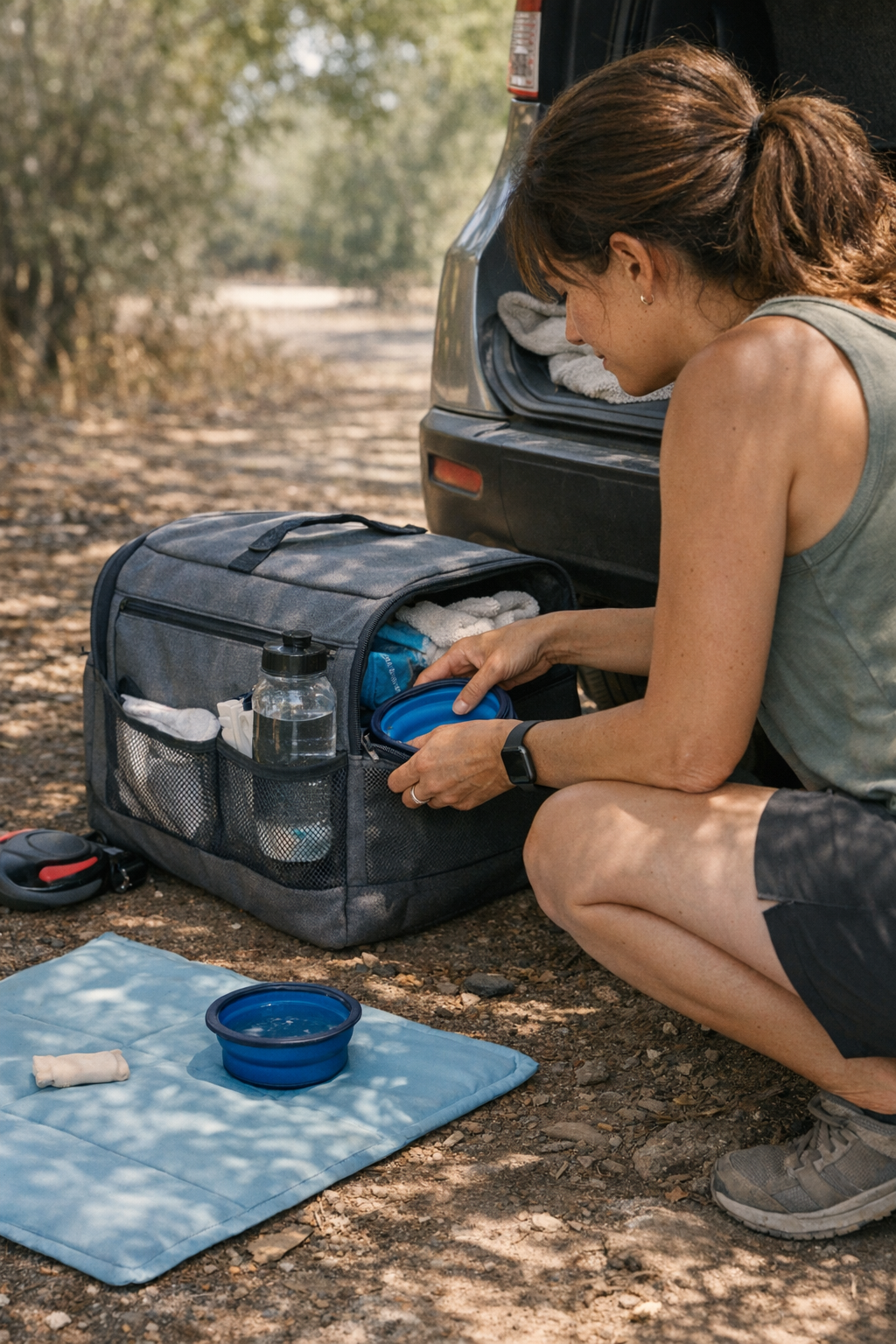
    The simplest structural shift—moving wipes and water to an exterior mesh pocket—rewrites the whole stop routine. No detours through liners or mats, no tactical layering, no wrestling with stiff zippers. Bag down, hand out, water ready, wipes in reach—without breaking eye contact with your pet or juggling overlapping items to retrieve a bowl. In practice, exterior access means less panic, quicker routines, and essentials staying put rather than shifting deeper into packed layers. It’s a five-second reach instead of a two-minute scramble.

    Stops stop being stress-tests. Your pet actually gets the full shaded pause for relief, not just for watching you unpack. You recover instead of re-pack. And when the vehicle gets moving again, there’s no mental checklist gnawing at you—the gear returns to ready, not just to “packed.”

    Comfort That Doesn’t Undercut Itself

    That plush pad you added for your pet’s comfort? If it lands on top, it covers every quick-access item and turns hydration into a juggling act. When relief, cleanup, and water aren’t separated, comfort becomes a block instead of a benefit. The best setups—what you end up wishing for after the second or third heat break—let you reach for essentials instantly, regardless of what “showcase” item was packed first. The difference is in the seconds between parking and helping your pet: with friction, you’re dealing in minutes and spilled supplies; without it, you’re present and responsive, not distracted by bag mechanics.

    Real readiness means more than surface neatness— it means stripping away any pause between stopping and acting. Each layer that forces a reshuffle is a layer that slows actual comfort.

    Why Pet and Owner Items Keep Clashing

    Travel reality: your things and your pet’s things will try to merge, even if you swear you packed them in their own zones. Leash in the same pouch as house keys, snack bag nudging sunglasses, cleanup wipes hidden behind a phone charger. Every short drive and stop shifts the packing order, creating a bag interior that’s new each time you open it. More compartments don’t stop the problem—they usually add more nested layers to sort out under pressure.

    The real answer? Build for stop-and-go with dedicated exterior or side-access pockets for the repeat-use trio—water, wipes, and bowl. That single change deflects owner/pet item confusion, cutting down on spillover and scramble at every rest. Interior order becomes less critical when the top-used items float, not sink, during travel.

    Not Just “Packed Right”—Actually Ready to Move Again

    Side-by-side, the “neat” bag wins Instagram. But real travel—the kind that runs hot, with repeated shade stops and species that do not wait politely—exposes the structural weakness of setups that bury relief under presentation. Tolerance for delay diminishes quickly; every cycle of dig-and-reshuffle burns away your margin for real comfort. Reliable travel gear, especially in heat or with restless pets, keeps what truly matters within arm’s reach, not just in theory but in every messy, real-world reset. It doesn’t matter if your setup looks ready at the start; it matters if it still works after the third time you have to flip it open, half-stressed, when the shade slips away.

    Discover pet travel solutions for real-world routines at PawGoTravel.