Blog

  • How Divided Underbed Organizer Totes Keep Shoes and Cords Neatly Separated

    Underbed chaos doesn’t start big—it creeps in one item at a time. The setup is familiar: a wide storage bin slides under the bed, holding shoes, cords, travel pouches, and odds and ends that have no other home. For a day or two, everything fits and even looks organized. Then real use begins. Chargers get pulled midweek and tossed back on the wrong side. That one missing sock ends up twisted around spare cables while shoes trade places every morning. Suddenly, finding anything means digging sideways, kneeling longer, and moving stacks just to get to the bottom. The promise of easy, hidden storage unravels faster than it’s set up. What looks like order on day one usually devolves into search-and-rescue by day five—especially in bedrooms with limited space, where underbed storage isn’t backup, but the main staging ground for daily items.

    Why Wide, Open Bins Fall Short in Daily Use

    Open underbed bins trade visible clutter for hidden disarray the moment routines collide. You start with everything in place—morning hits, and grabbing a charger means fishing through loops of cord and wayward shoes, bumping into items you didn’t intend to move. Each time you grab or return something, the contents shift, categories mix, and one loose pouch becomes a wedge that splits up shoe pairs. The bin doesn’t lose capacity—it loses all sense of boundaries. Within days, searching for a single cable or missing shoe turns into a full-bin shuffle, the original lines between categories erased by daily use. What should save time and space now creates extra friction: you hesitate to put things back, hope the mess won’t grow, and eventually avoid the bin unless absolutely necessary. The wrong setup isn’t a one-time nuisance; it repeatedly slows your next move.

    Where Category Drift Starts—and Why It Matters

    The underbed bin’s flaw is subtle but steady—“category drift.” On day one, every item has a vague zone; by day four, those lines are gone. Shoes get scattered as bags slide over them and accessories wedge in new corners. Cords slip out of neat coils and wander. Small everyday items—the earbuds, a spare watch strap—inevitably vanish beneath bigger pieces. This drift isn’t an accident; it’s what happens every time two categories collide when you’re in a hurry or resetting late at night. In rooms where the bin is the main storage, each retrieval eats away at order until “reset” means dumping everything out just to re-sort.

    Scene: The Slow Creep of Daily Disorder

    You reach under the bed for a charger and drag out half a cluster of cables by mistake. One shoe comes out with another tangled behind it, a wrist pouch slides out and bursts halfway across the floor. What started as a small grab now means re-stacking contents, pushing things back in, and generating a few more floaters with every use. Over time, this delay piles up: the “quick tidy” morphs into a five-minute session nobody wants, especially in shared spaces or if you rotate items for each season.

    Divided Underbed Totes: Small Change, Real Impact

    A divided underbed tote disrupts this mess by making boundaries physical, not just wishful. Instead of one big well, you get dedicated zones—each a hard stop for different items. Shoes stack together and stay paired. Cords get a section where they lie flat and untangled. Small accessories remain corralled, not swallowed. The outside view changes little, but inside, reset is a snap: returning an item means dropping it into a marked space, not shoving and hoping for the best. There’s less friction in both daily grabs and nightly resets. Categories stick—so quick drops don’t turn into tomorrow’s tangled hunt. What shifts is the feeling of control: you’re no longer negotiating with the bin every single time.

    Setting Up for Real Use, Not Just a Clean Look

    Initial neatness is meaningless without daily resilience. The best-packed open bin looks great on setup day, but by the first rushed morning, small items drift and reorder the whole space. Divided totes keep the little objects—stray adapters, single socks, loose batteries—from triggering a full-bin cascade. When each type of item is anchored in place, bigger things remain easy to spot and reach. The time spent on your knees searching and reshuffling is replaced by quick, single-motion retrieval. The setup isn’t just tidy—it actually lowers the barrier to staying organized in real time.

    Design Details That Matter During the Week

    Dividers only help if the bin invites fast resets and zero digging. Depth is critical: a shallow profile (six or seven inches max) ensures items stay visible and accessible instead of buried. Overly deep bins force stacking, which undoes the clarity you’re seeking. Bin placement also matters: keep the tote close to the bed’s edge and away from furniture legs, so you can pull and replace things in one motion. In tight bedrooms or when the zone sits near a desk or dresser, every obstacle turns a quick grab into a slow awkward reach, quietly discouraging real use.

    Limitations: When Dividers Don’t Fit the Bill

    Not every item works with divided bins. Big or odd-shaped objects—boots, puffy blankets, luggage—crush sections and flex dividers until they break down or block access. For anything oversized, purpose-built open bins are less frustrating—else dividers become one more obstacle rather than an improvement. Use divided storage where mid-size and small items actually benefit from a stable category line.

    Making the Switch: Reset Speed and Low-Level Maintenance

    With a divided underbed tote, the daily reset shrinks from a chore to a habit. Cords drop into their slot without tangling. Shoes slide back as pairs, not as a mixed pile. Accessories can be tossed in and still found a week later—no need to upend the whole bin. The difference becomes most obvious during transitions: seasonal swaps, shared use, or back-from-travel chaos. What once triggered reluctant overhauls now takes seconds and actually sticks, even when two people are tossing things in or pulling things out at different times. You’re not just storing—you’re keeping control, almost without thinking about it.

    One Tip: Mark or Color-Code Your Sections

    Dividers work harder when they tell a story at a glance. A quick label or colored tag on each section means less second-guessing—especially if your household has blurred boundaries between what’s yours, what’s shared, and what’s spare. This way, even rushed routines respect the category line, and tomorrow’s reset isn’t another full-bin rescue.

    Organization That Lasts Past the First Cleanup

    Staying organized isn’t about how a setup looks after your first pass—it’s about what holds up through ongoing, real-life use. Divided underbed storage keeps boundaries stable, even when pressure is high and access is constant. That’s the gap between storage that only fits your stuff and storage that truly supports your routine: fewer resets, less category drift, and more visible calm where you need it most.

    Find practical storage solutions at Gridry.

  • How Smart Organizer Designs Improve Every Stop on Your Pet Walk

    A pet-travel bag that looks perfectly organized at home will still fail you if it can’t keep up on real walks. The flaw shows up fast: the moment you hit the street, every “in its spot” promise gets stress-tested by quick stops and repeat reaches. What seemed sorted in your entryway quickly turns into a sequence of blocked grabs, gear overlap, and too many zippers at the worst moments—especially when your dog is already pulling forward.

    When “Neat Enough” Isn’t Quick Enough on the Move

    Order collapses as soon as minor items get buried the first time you reach for them: waste bags end up trapped behind an extra leash, wipes migrate to the bottom, the collapsible bowl slides under your water bottle. That sensible home setup fades fast. When every block brings a new pause, each “just in case” item becomes a barrier to what you actually need:

    • Digging for wipes—but they’ve migrated under unused gear since you started walking.
    • Grabbing a treat means shuffling through rope or rolled-up leads you won’t need all trip.
    • Pull one leash and a bag of snacks comes spilling out—or something crucial catches on the wrong carabiner.

    The more stops you make, the more your so-called “organized” bag forces slowdowns. Items overlap, pockets collapse, and the outside order never matches what’s actually needed. Every normal pause becomes a reminder that looking prepared is not the same as working efficiently—especially when every second counts for keeping your pet calm and moving.

    The Persistent Friction of Repeated Stops

    Pet travel mostly means interruptions: street crossings, sniff detours, rushed cleanups, quick sips of water. These are not unusual events—they’re regular friction points that expose weak setups again and again:

    • Needing to set your bag down on dirty ground just to locate a single waste bag.
    • Pockets sag or fold after a handful of items have come out, mixing clean and dirty gear in the same pile.
    • Each pause turns into a shuffle: pushing comfort items aside to get to cleanup, or losing your spot while searching under a mess of leashes and snacks.

    By the fourth or fifth interruption, what started as “organized” becomes a string of minor hassles. Your patience drains with every search. If your bag needs to be rearranged every single stop, you’ll start skipping resets—or miss small messes—just to keep moving. That slow leak of convenience is what sets mediocre setups apart from those built for real movement.

    The Gap Between Looking Ready and Working Smoothly

    Visual tidiness is not performance. That bag that looked sorted in your hallway starts feeling like a puzzle box by the third street corner: everything inside was “packed for every scenario,” but now, pulling out one thing ruins the arrangement for everything else. Practical travel setups are not about neatness—they’re about access, speed, and recoverability:

    • A single over-packed compartment turns every grab into a tangle of straps and pockets.
    • Supposed “convenience” pockets look clever at home, then fold limply, swallowing their contents as soon as real movement starts.

    The difference becomes sharpest when you can see your pet looking up, waiting out your next clumsy search for a lost wipe or crumpled cleanup bag. They register the delay even when you try to shrug it off.

    Real-World Scenes: When Setup Flaws Keep Surfacing

    Take a common evening walk: quick leash swaps at intersections, speed bumps for water or sniffing, and at least one rushed cleanup when you’re partially watching traffic. If your cleanup bags are under another pouch, the essentials are never where you want them:

    • Fumble a zipper just as your dog strains to rejoin the sidewalk rush.
    • Lose momentum at busy crossings because the gear for the next step is buried two layers down.
    • Miss a dropped treat in the grass, only realizing you’re out of wipes because you can’t reach the pocket without setting the bag down.

    These aren’t one-off annoyances—they show up every time you expect a clean reach and get friction instead. Sometimes a comfort item for your pet covers the zipper you need in a pinch. Sometimes your own phone, tossed in at the last moment, crashes the sequence—suddenly locking pet and owner essentials together in the wrong order. Clean separation matters more the more often you have to handle or reset gear.

    The Subtle Power of Better Placement

    The fix is rarely more gear—it’s smart layout for how you actually reach. One change, like moving waste bags to a distinct outer pocket, means you only need a single gesture, not a full-bag dump at every cleanup. An owner may not notice the design at home, but on the street, it means no missed moment, no spilled wipes, no gear avalanche when your rhythm breaks. The real impact isn’t measured in “packability”—it’s in the seconds saved and interruptions avoided across dozens of stops.

    Small layout shifts often outperform a total repack. A clearly separated cleanup zone, wipes with their own entry point, or clipped comfort items that don’t block the critical pockets—all of these turn use friction into routine flow. The proof doesn’t show up as neatness at home; it shows up in smoother, less stressful movement hour after hour.

    Packing for Movement, Not Just for Looks

    Real-world pet travel puts repeat action above appearance. Bags and organizers that privilege reach, side-access, and shape-stability reduce the trap of “reset and repeat”:

    • One pull retrieves what you need—no full search or spillover required.
    • Comfort items help calm your pet, but can be stowed so they never block wipes, bags, or hydration gear at speed.
    • Movement resumes without micro-stalls or frustrated resets at every new block.

    The difference is easy to underestimate on day one but becomes painfully obvious after a week of disrupted routines. Your attention goes to your pet, not bag management. You don’t have to steel yourself for the next stop—because the gear is where it should be, every time.

    Why Setup Details Matter More Over Time

    The inconvenience of a so-so kit is a cumulative one: a weak point you tolerate once becomes a daily glitch, a repeated break in your rhythm, or even a small but predictable missed chance to keep things cleaner and calmer. The first time, you sigh. The fifteenth time, you stop resetting—and start accepting small chaos as “good enough.”

    The better move: pack for the real sequence of use, not appearance. Prioritize clear access for high-frequency needs; keep pet and personal zones from overlapping. The result is not just a tidy starting point, but a pet-travel flow that protects your attention every single stop, and keeps showing up—trip after trip.

    Find practical organizers and gear for real-world pet travel at PawGoTravel.

  • Choosing Between Open Shelves and Closed Cabinets for Closet Storage Efficiency

    Closets unravel faster than anyone admits. Shelves look pristine on move-in day; every row of T-shirts, jeans, or sweaters says you’ll be the person who always knows where everything is. But within a week, the truth sets in. Each quick reach pulls a sleeve out of place or collapses a stack. What should’ve been “grab and go” becomes “search and rescue” as clothes mingle, piles slide, and yesterday’s neatness becomes today’s barely-contained chaos. The friction isn’t just cosmetic. The daily grind—finding, returning, reshuffling—chips away at your morning and adds one more invisible obstacle before you walk out the door.

    Open Shelving: Fast Starts, Messy Finishes

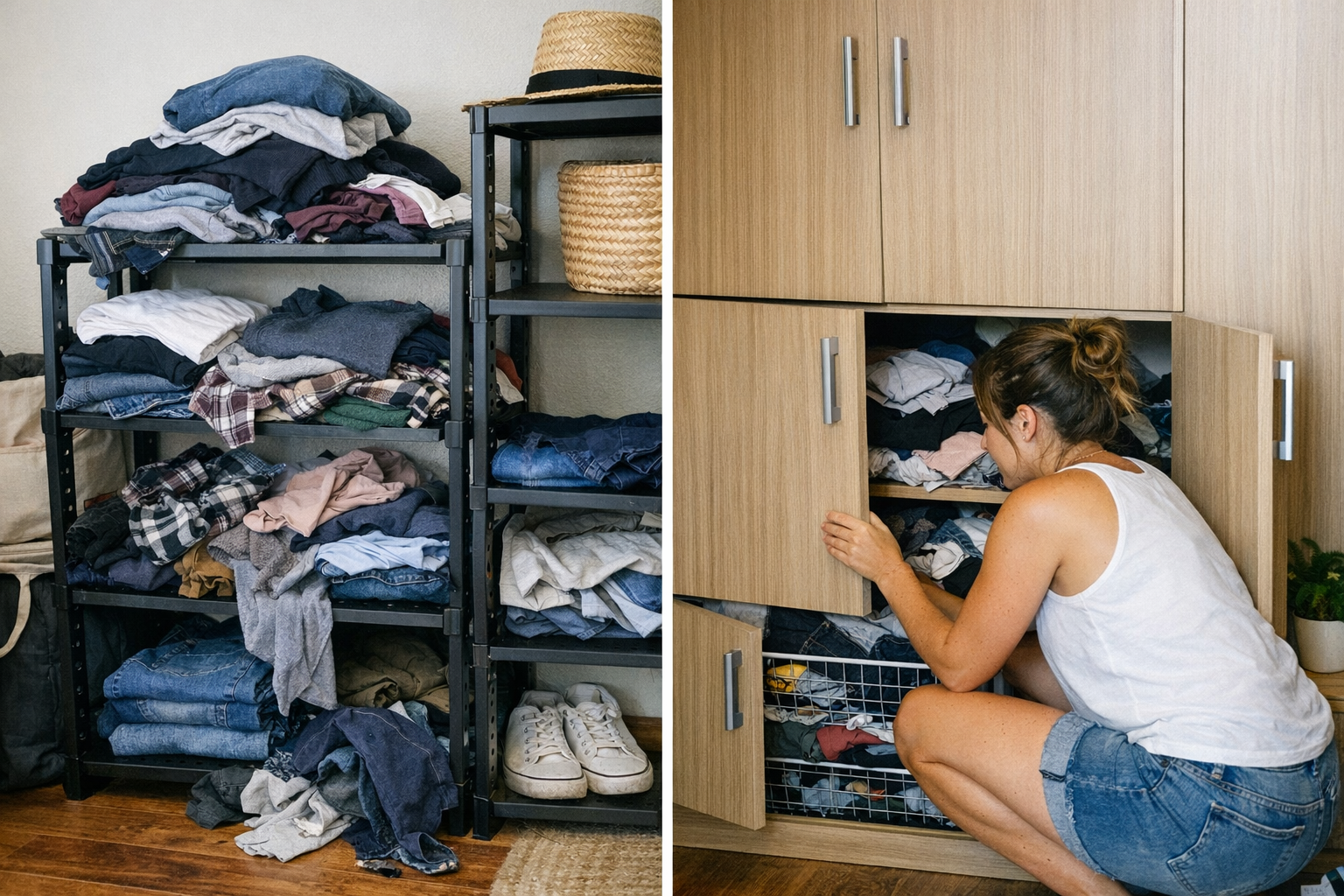
    Open shelves invite bold organization—until the real world intervenes. That first week, there’s no barrier: you spot your favorite shirt, snatch it, and the closet feels like an efficient extension of your routine. But by Thursday, that stack of T-shirts sags, half folded and half slumped onto yesterday’s jeans. A single stray item—a gym towel, a ball cap—slides in and suddenly your “T-shirt section” is just a general pile. Every movement tries to be one-handed and quick, and in the race, categories blur. Before long, the entire shelf is contested ground.

    The upside—immediate access—is also its downfall. Open shelving turns small slips into big messes. One rushed grab leaves shirts spilling into sweaters; a couple of forgotten refolds later and half the closet is in disarray. Instead of one shelf for each category, you end up defending shelf borders from accidental invasions every time you reach for something tucked in the back. Minor disorder grows visible and persistent, demanding regular resets most people never get around to.

    Closed Cabinets: Calm Outside, Chaos Inside

    Closed cabinets give the illusion of control—at least until you open them. Doors shut, clutter disappears, and from the outside, everything looks calm. For anyone craving less visual noise, cabinets seem like a peace treaty. And in tight spaces or high-traffic entryways, that’s no small benefit.

    But function tells a different story. Simple retrieval becomes a chore. Need a shirt near the bottom? You’ll move two stacks to get at it. Looking for a rarely-worn sweater? It’s buried behind months of accumulated “someday” clothes. Over time, out-of-rotation items slink to the back: a single jacket gets lost behind bins, socks vanish behind spare shoes, and entire categories quietly mix until you’re not sure what you own. Cabinets protect from dust, but also hide the warning signs—disorder multiplies unseen, until “just grab that thing” turns into a mini excavation.

    When Out of Sight Means Out of Control

    The surface order of cabinets discourages touch-ups, and that’s the trap. Because clutter isn’t visible, you let things slide; then, when you finally hunt for the winter hat or last clean hoodie, half the contents spill onto the closet floor. Cabinets make it easy to hide problems, but harder to maintain a functional sort. You don’t see the blend of categories or the collapse of folded stacks until you’re knee-deep in stuff you forgot about.

    Why Routines Break Even the Best-Laid Storage Plans

    Most storage “systems” fail where daily habits collide with ideal setups. Maybe you start with jeans, tees, and hoodies in distinct rows on a shelf. After a week, jeans have invaded the T-shirt section, and the original logic is long gone. Or you fill a cabinet with winter gear in April and, months later, aren’t sure what’s in the back anymore—just that it’s in the way when you’re hunting for an everyday item.

    Routines are ruthless: kids jam clothes wherever there’s space; adults toss scarves or bags on the closest shelf. The result? Shelves that crowd too fast, bins that become grab-bags, and closets where each section gradually loses its role. You start with “zones,” but by mid-month, you’re just hoping things don’t fall on your feet. Resetting everything after each use isn’t realistic—a true system should survive imperfect routines, not collapse under them.

    Divide and Contain: Practical Fixes That Actually Stick

    You don’t need a renovation, just a few targeted shifts. Start with shelf dividers: a vertical insert here doesn’t just separate stacks, it prevents jeans from tipping into shirts and keeps the edge of your shelf from morphing into a jumble. With real walls guiding each pile, stacks retain shape longer and category lines stop drifting. Instead of re-folding everything after each morning, you just nudge a sleeve back inside its zone—small, fast corrections instead of full resets.

    Segmentation gives your closet structure its backbone. For deep shelves, store light, high-use items upfront and keep heavier, rare-use pieces at the back, so the stacks in front don’t tip. In kids’ closets, label bins (“Socks,” “PJs”) so even in a hurry, putting things back mostly right is realistic. Consistency matters more than precision, and small changes—dividers, bins, labels—create pockets of order that survive rushed routines.

    Mix and Match: Stacking the Odds for Lasting Order

    One storage style rarely solves all problems. Pair open shelves (for everyday items) with closed cabinets or deep bins (for what you use less often or seasonally). Overlay dividers or bins inside both. This mixed approach cuts down the “closet domino effect”—where one broken section brings the whole system down. Open shelves stay resettable and visible, while cabinets swallow clutter you don’t need right now—without turning every retrieval into a hunt.

    Clues Your Storage Isn’t Working—And What to Do Next

    How do you know you’re heading for trouble? If you’re constantly reshuffling the same stack or losing track of what goes where, those are red flags. The shelf you restack every two days, or the cabinet that absorbs things you never find again—these are cues, not failures. Tweak high-friction zones first: add a divider, assign a bin, or shift categories so “hot spots” get special treatment without reorganizing everything at once.

    The real test is resilience, not perfection. When a closet lets you put things back close enough after a busy day—and makes it obvious what belongs where—chaos stays contained. What matters isn’t how flawless your closet looks for a photo, but how easily it bounces back from daily use.

    Making Storage Work for Your Life, Not Just for Show

    Open shelving shines for speed, but demands frequent touch-ups or clever dividing. Cabinets offer peace to the eye, but can quietly sabotage daily access if left unmanaged. Most lives need a blend, plus smart zoning inside each section. Watch for trouble spots in your routine—crowded shelves, mixed bins, or perpetual reshuffling—and adjust with practical fixes instead of chasing closet perfection. The goal is not showroom neatness, but a closet that never slows you down, no matter how hectic the week.

    Find practical storage systems designed for real daily use at ClosetWorks.

  • How Small Daily Habits Prevent Pet Care from Becoming Overwhelming

    Where Pet Care Routines Start to Strain: Small Slips, Big Friction

    It’s easy to think your daily pet care setup is working—dishes set out, towels folded, everything apparently in reach. But the daily routine proves otherwise. The first sign? You reach for the scoop and it’s not in the bin; you wipe up yesterday’s water ring only after the bowl sticks to the mat; toys are stashed in a basket, yet you still step around a stray ball that rolled where you need to walk. These are the routines that look controlled but feel slow. Tiny slips—one open lid, one towel misplaced—create double work and constant interruptions. Over time, the setup you thought would save effort starts building up friction you can’t ignore.

    Seeing It Happen: How Tiny Gaps Erode Routine

    Picture the reset: feeding spot wiped, water bowl emptied, toys stacked away. It looks finished—until next morning. The kibble bin’s lid, left cracked open for one distracted minute, lets in a stale smell. A towel dropped “for now” is missing when muddy paws appear. Suddenly, feeding is tangled with clearing laundry or searching for a clean cloth. The mess isn’t headline-worthy, but the routine slows: small gaps mean you circle back, make substitutions, or hunt for basic tools just to keep up with simple care. Momentum breaks, and even a clean area turns into a hard-to-keep habit.

    Quick Fixes That Don’t Always Stick

    A setup can look tidy—dishes in order, storage bins handy, tools nearby. But if you go to refill water and have to clear toys from in front of the cabinet or wrestle a scoop out from behind a sack of treats, surface order hasn’t solved real use. Over and over, you wipe bowl residue that’s now crusty, dig out a brush caught in a drawer, or try to scoop food with a kitchen mug because the actual scoop is lost in the morning rush. The lost time isn’t dramatic—just one more repeated hassle every day. Underneath, it’s not clutter; it’s a routine that quietly gets harder with each missed reset.

    When “Good Enough” Turns Into Constant Reshuffling

    Day one, it’s manageable. But let one round of cleanup slip: the towel for paws is damp and out of reach, so you improvise with a random rag. The scoop is in the sink, so you guess at portions. Afternoon means stepping over toys to refill the bowl, or clearing the counter of yesterday’s crumbs before prepping dinner. Every shortcut opens another: what started as “fine” turns into a series of stutters—detours, retracing steps, and more resets just to complete the basics. Over a few days, this pile-up replaces flow with friction, as every chore drags behind the last one.

    Small Habits, Tangible Impact

    The real fix isn’t an overhaul or fancy organizer—it’s hitting the reset as you go. Seal the food bin every time, even with one hand full. Place essentials where you actually grab them, not just where there’s room. Run a damp cloth over bowls right after use to stop buildup before it starts. Hang up the towel even if you’re headed out the door, so grabbing it isn’t a side quest next time mud tracks follow you in. Each of these micro-resets blocks a future interruption and puts your real routine back within easy reach.

    Making the Routine Self-Sustaining

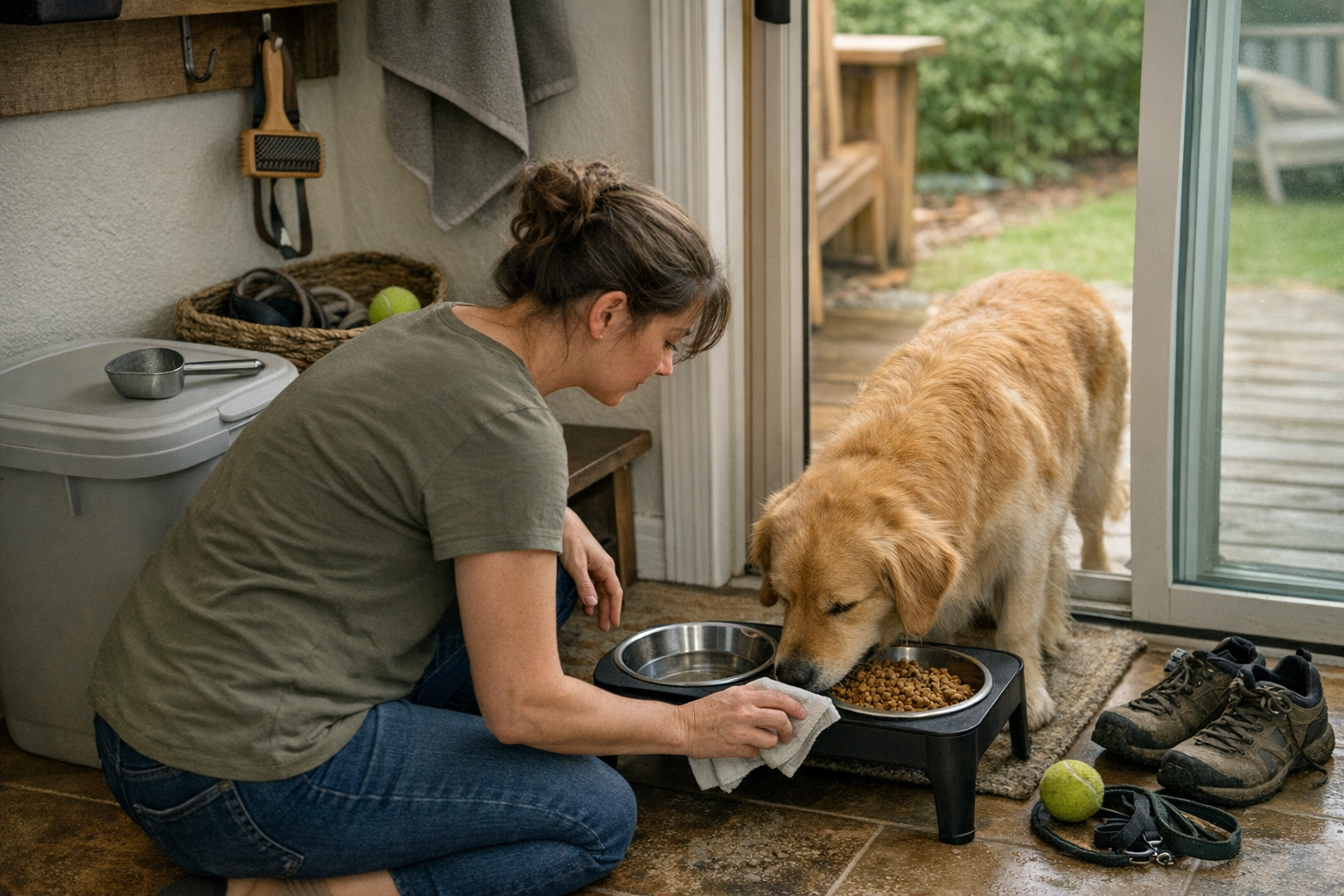
    The best pet care setups don’t just cover the mess—they cut the time you spend stopping, searching, or correcting. Keep cleaning cloths where feeding happens, not just with the mops. Drop a small basket for toys right by the main living zone so you’re not collecting balls from every corner. Parking a spare hook for towels or leashes by the door isn’t about decorating—it means you avoid delays when a walk or post-yard cleanup should take seconds, not minutes. Each small action, done immediately, keeps care flowing and every next step lighter.

    What Consistent Resets Actually Feel Like

    The difference isn’t just visible. It’s having the right tool in hand on the first try—no clearing space, no searching for a missing cloth, no workaround because the scoop is missing. As these pauses disappear, the job shrinks from a list of chores to a sequence of fast, repeatable motions. You’re not chasing order—you’re maintaining it as part of the flow. Over time, this is what makes a routine not just look better but feel genuinely easier each time you use the space.

    Closing Gaps for Everyday Flow

    The real trick to stress-free pet care isn’t chasing after tidy appearance. It’s tying off those micro-gaps—every lid snapped shut, every towel rehung, every tool placed where you reach for it—in real time. Each reset predicts the next interruption and blocks it before it returns. That’s how a routine designed for daily life keeps pace with real mess, real clutter, and real energy. One setup might look calm. The one that works better—CalmPetSupply style—cuts the drag down and gives you room to keep up, day after day.

    Find setups that help you keep your care routine steady at CalmPetSupply.

  • Balancing Hidden and Visible Storage for Efficient Entryway Organization

    The entryway never stays controlled for long—especially if your “solution” relies on hiding daily chaos behind closed doors or under lid-covered benches. In real homes, setups that look neat after cleaning almost always buckle by midweek: shoes spill past their row, bags drift from hooks to the floor, and key gear vanishes behind shut cabinet doors. You notice the friction not as visible clutter at first, but as a missing glove, a misplaced umbrella, or the backup light buried somewhere unreachable—right when you’re about to leave and time is short. The moment the system interrupts your path or adds another search step, you’re feeling the hidden cost of a layout that isn’t keeping up with daily re-entry pressure. Every “out of sight” item risks becoming “out of circulation” when the threshold crowds up under real use.

    When Hidden Storage Turns into Bottleneck

    Cloaked organization—closed cabinets, covered drawers, cushioned benches—promises control, but often trades off immediate access. The more steps it takes to store or retrieve the things you use most, the faster temporary placement becomes a default: shoes abandoned outside the cubby, bags left on the floor near the bench, hats and gloves piled on top of closed bins because opening them slows the routine. The subtle trap is delay by concealment—a routine item quietly drifting out of reach until that familiar crunch: you’re blocked at the door, trying to remember where you stashed the spare keys as the clock keeps moving.

    Neat Surfaces, Slow Movement

    The visual calm of shut storage rarely survives everyday pressure. Test it on a rainy Tuesday, not just after the weekend reset: The bench that looked controlled is collecting undone mail and gym bags. Drawers hide a missing glove, while an umbrella, once folded away out of sight, never finds its way back. The real signal is always in the interruption—a last-second hunt, a blocked threshold, one more delay that turns a “neat” entry into a morning bottleneck.

    Open Storage: Clutter You Can Actually Control

    Visible storage systems—wall rails, open shelves, exposed hooks—can look a little more crowded, but they produce a useful kind of pressure: you see exactly what’s missing the moment something slips away. There’s no silent drift. A single glance answers: are there six shoes or seven? Is the flashlight back or still missing? Swapping one deep drawer for a wall rail or bench-top tray rewires the whole reset—what’s being used stays in circulation instead of slipping into dead storage. A row of shoes directly on a rail stays roughly contained—even as use increases—because correction is immediate. Overflow doesn’t sneak up: it’s right there, nudging you to fix it instead of hiding until everything grinds to a halt.

    Overflow at the Edge—Where the Real Battle Is

    No system is immune to drift. Open setups shift the problem from invisible delay to visible nudge. Benches morph into catchalls: bags land “just for now,” mail piles up, coats edge their way across the line. But with visible storage, this edge clutter signals reset points. You notice right away when a bag blocks the path or shoes spread past their zone. Instead of silent failure, these setups make every misstep correctable, and help keep the entry moveable, even when routines slip.

    What Breaks Down Under Real Pressure

    Most entryway solutions fail during stress, not during setup. When your hands are full, the dog’s leash tangles, and the door sticks, do your things return smoothly, or is “putting away” another mini project? The closed bin swallows gloves until none are matched in a hurry; the stylish bench traps a week’s worth of mess. By Thursday, umbrellas are still missing in action—and one muddy pair of boots blocks the entire space. The patterns are clear: if your system needs two steps just to return something, that “later” pile is only going to grow. Quick access and direct return flow determine whether the area works for the actual family cycle, not just during Sunday resets.

    Return Flow vs. Buildup: How to Spot the Real Trouble

    Every threshold zone is a test of how easily things move in and back out. Systems that slow down restocking—requiring lids to be lifted, bins shifted, or doors opened—quietly train everyone to drop gear wherever, breaking down the intended order. The more your entry setup demands, the steeper the drop-off between “put away perfectly” and “dump it somewhere for now.” If you find yourself shuffling piles or re-clearing the same spot every week, your system isn’t matching the pressure of repeated use. Open racks and fixed spots let you spot the moment a basket overflows; closed systems make it easy for items to vanish, only to resurface when the season changes.

    Small Upgrades, Big Differences

    It doesn’t take a remodel to restore flow—sometimes a single swap is enough to make problems visible and correction automatic. The day you replace a deep, slow-drawer with a short wall rail near the door, the contrast hits immediately: keys, leashes, and flashlights cycle in and out, instead of getting lost in “storage.” Family members gravitate toward the open spot—a sixteen-inch rail becomes the in-and-out command center, exposing anything missing before it becomes a snag that slows everyone down. Resets take seconds, not another round of opening, shifting, or sorting what’s supposed to stay ready.

    Entry Routine Tweaks That Actually Stick

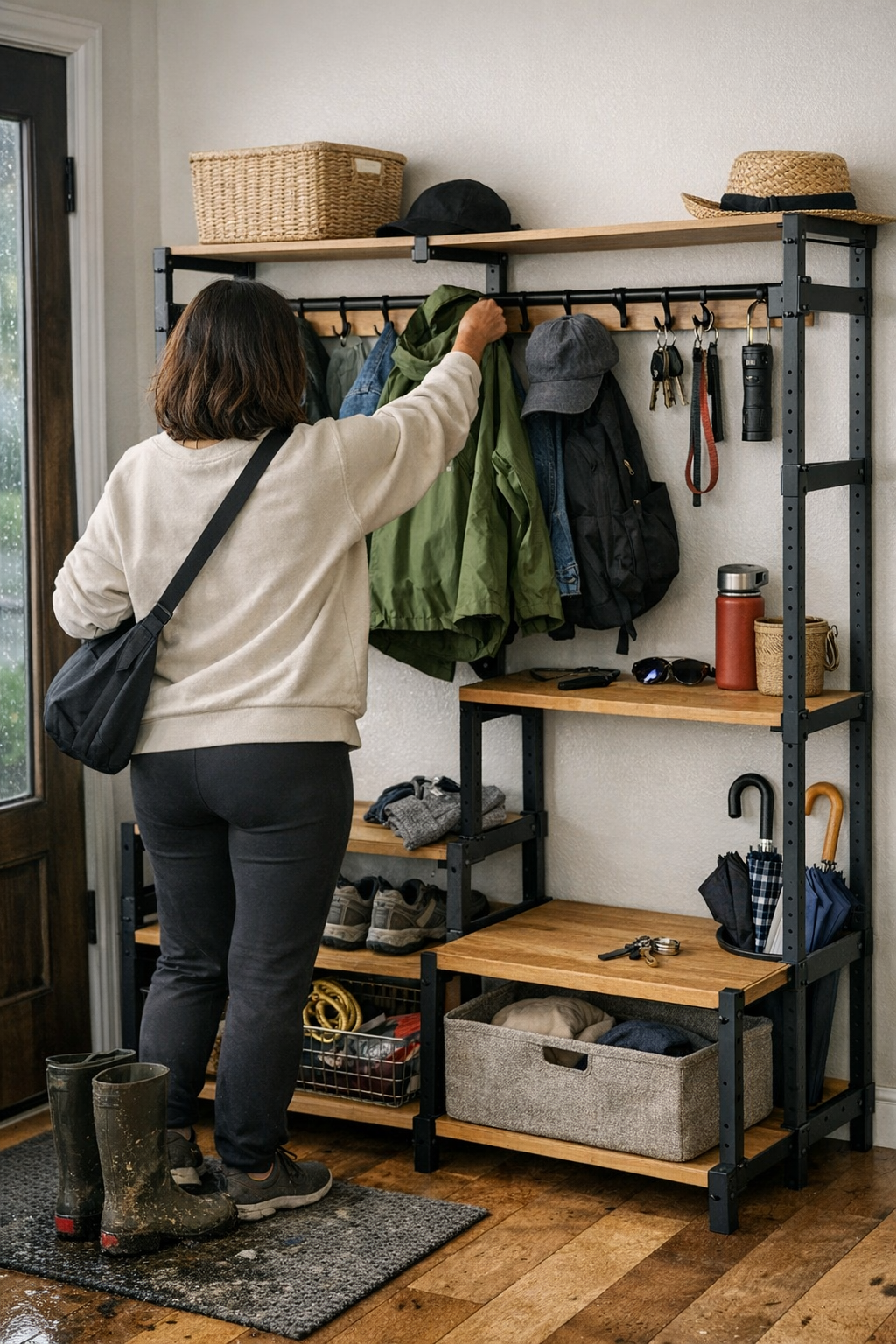
    • Expose your high-frequency grab-and-go items. Put hooks and baskets where they’re most needed for shoes, bags, keys—everything that circulates daily.
    • Limit closed storage to overflow or low-rotation gear. If it’s not touched this week, it can live behind a lid—but retrieval still needs to be easy, not a project.
    • Watch for benches turning into “edges.” Repeated landing spots signal your system is missing a needed touchpoint—use a wall pocket or rail to intercept those drops before they build up.
    • Test your reset faster—midweek, under pressure. The real stress test is whether you can restore order in under a minute, not just after a deep clean. If it doesn’t pass, your flow probably needs redirecting.

    Know When to Adjust—Not Just When to Clean

    The biggest red flag in threshold storage isn’t always a mountain of clutter. Sometimes it’s that single repeated slow-down: detours for a missing hat, awkward steps to dodge a bag that’s in the way, a narrow path getting blocked earlier in the week than you expect. If you’re sliding gear around just for the door to open, shuffling piles off a bench midweek, or repeatedly dealing with the same clogs, your setup is asking for a new strategy. Pay attention to where you’re improvising, not just where things “look” off—daily, visible access usually trumps forced neatness if the goal is to keep everyone moving in and out with a minimum of resets and reroutes.

    Transition Spaces That Actually Keep Up

    An entryway only counts as organized if it works under pressure—not just after staging. Systems that build in visible feedback (and make stray items harder to ignore) correct themselves, using open cues to nudge resets before disorder spreads. Real organization lets you notice what’s broken sooner—before the next trip out the door costs you another three minutes hunting for an umbrella or clearing a bench. The right mix of open and closed storage doesn’t stop at “tidy”—it keeps up with shifting routines, absorbed clutter at the edge, and the true test: day-to-day traffic that never moves in perfect order.

    Find more transition-space storage ideas and solutions at Betweenry.

  • Visible Lint Brush Slots Transform Laundry Routines and Dryer Efficiency

    If your lint brush keeps disappearing, it’s not forgetfulness—it’s your entryway setup breaking down right where daily routines hinge. At first, it’s a small interruption: you reach for the lint brush and it isn’t there. But in a high-traffic threshold—where laundry baskets, bags, and shoes pile up—this single missing tool signals a larger problem. Visual order lasts until actual living starts. As soon as the morning shuffle begins, neatness gives way to drift: the brush slips behind a bag, gets wedged under the bench, or ends up hidden after one distracted reset. Each absence wears down your default reset—turning a two-minute filter clean into a slow, uncertain hunt at exactly the wrong time.

    The Real Cost of a Hidden Tool in Transition Zones

    Transition spaces—entryways, laundry corners, utility walls—aren’t designed for idle beauty. They have to survive dropped bags, scattered shoes, and whatever doesn’t claim a fixed, visible place. The lint brush is the first casualty. Out of sight, it becomes lost in overlapping routines: one person empties the dryer, another tosses in a messenger bag, someone else piles sports gear by the door. Miss one reset and the brush winds up blocked or buried. At first, you hardly notice. By week’s end, you’re brushing lint out of the dryer with your hand, skipping filter cleans, and watching tasks stack up because one tool is always “somewhere else.” Small absences turn routine resets into avoidable backtracking.

    Invisible Calm, Lasting Disruption

    Spaces that appear uncluttered only hide the real friction. Each trip through the zone now triggers another minor delay. Filter cleaning gets postponed for “later,” lint begins to build, and resets require hunting through the overflowed bench or the cabinet nobody ever opens. Outward order masks mounting inconvenience. Dryer performance lags quietly; chores stretch out. Hiding tools doesn’t just cost minutes—it chips away at the reliability of your routine and lets batch tasks multiply. The more hidden the brush, the more likely laundry gets neglected or fumbled under pressure, especially as returns and drop-offs overlap.

    Why a Visible Slot Makes All the Difference

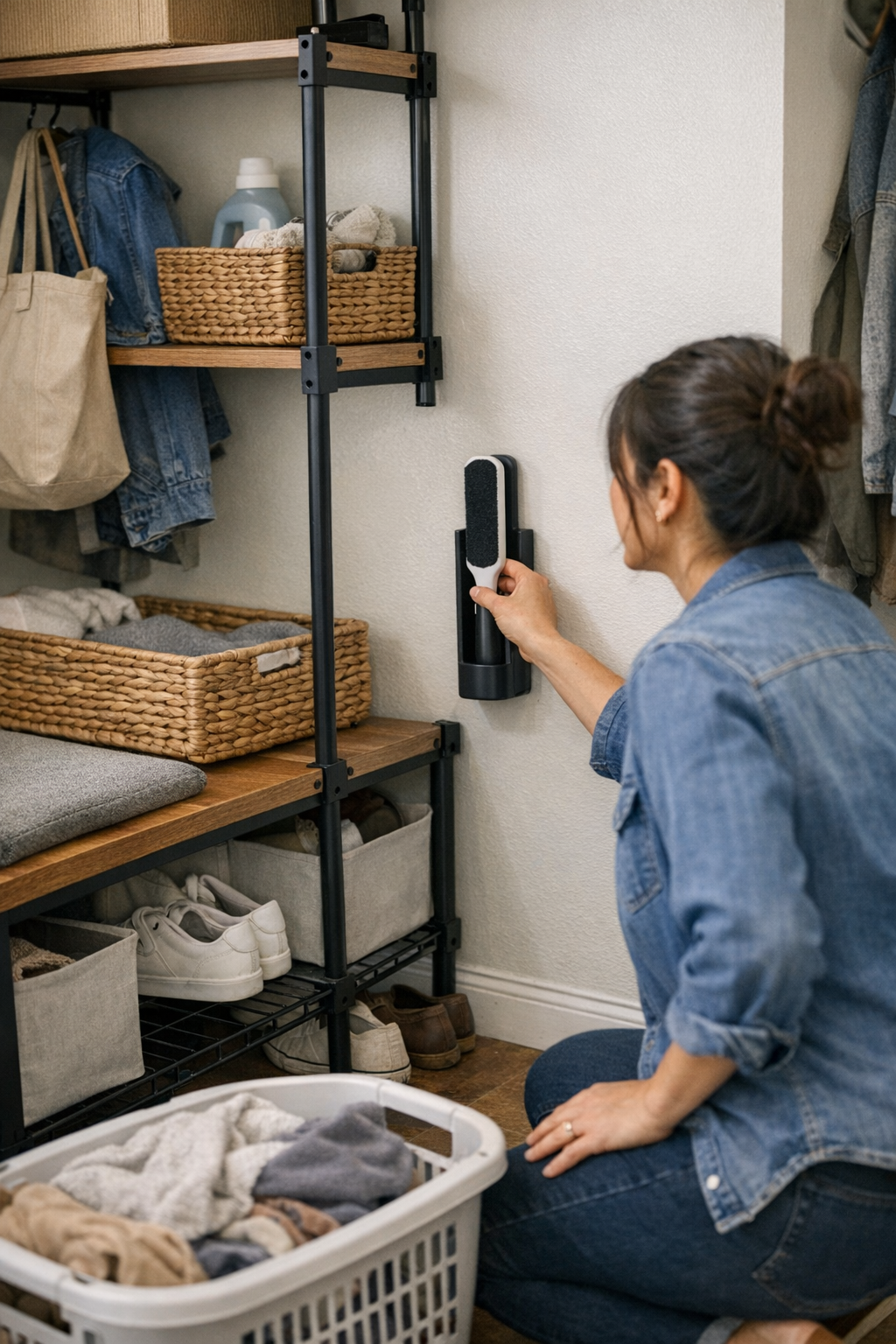
    Visibility anchors the routine right at the threshold. Adding a visible lint brush slot—shoulder height, just inside the main entry or beside the laundry pass—breaks the drift pattern. The tool is always where your hand expects it, whether you’re hauling in a basket, dropping off shoes, or handling surprise guest traffic. Instantly visible and upright, the brush becomes a checkpoint, not an afterthought. The reset now fits the movement flow: you step in, brush in easy reach, filter gets cleaned without extra detour. No fighting cabinet doors, no stooping, no scavenging among half-packed bags or shoe rows widening across the threshold. When the setup answers real movement, not just visual order, every return runs smoother, even on the busiest days.

    Open Access Beats Hidden Order

    It’s tempting to hide everything behind doors or inside bins for a cleaner look. But hidden storage slows down real routines. In multi-use spaces, cabinet doors stick, bins collect stray charger cords, and friction spikes when the needed tool isn’t in direct line of sight. Every extra step—opening, rummaging, shifting overflow—invites avoidance or a “just this once” skip. A visible wall-mounted holder trims the process to one motion: finish, return the brush, move on. Every family member, guest, or tired parent sees the tool instantly—and the act of filter cleaning keeps happening, regardless of the morning’s chaos.

    The Drift Scenario: Where the Setup Breaks

    No setup survives untouched. Picture the threshold by evening: baskets pushing into walk space, two pairs of shoes edging wider, the bench overrun by loose mail and a zipped backpack. The lint brush, last used after Tuesday’s late load, has vanished without a trace. You come in holding laundry, spend a minute sifting through a busy cabinet, then skip the filter entirely because the search interrupts your path forward. Tasks pile up, dryer runs get inefficient, and next time you’re even less likely to bother. The zone that should support repeated resets becomes a bottleneck, all because a tool is “put away” somewhere nobody checks on the way through.

    Visible Slot, Stable Routine

    Swap out the delay. Install a wall slot or upright bracket at arm’s height, next to the everyday return path. Returning home, you drop the basket, spot the brush, and—without pausing to think—clean the filter. No bending down, no guessing game. Even at peak overlap—guests coming in, kids passing through—the brush remains visible, the flow unbroken. With deliberate placement, the reset cycle is self-maintaining and resistant to drift, not reliant on memory or luck.

    Making the Space Work, Not Just Look Organized

    Looking organized fades fast in shared thresholds. Hidden tools or deep storage bins hold briefly, but real routines break down in a matter of days, not months. Here’s how so-called “organized” setups crumble under use pressure:

    • Bench surfaces intended for seating end up buried by overflow items
    • Wall racks get swallowed by bags and jackets, not just gear
    • Shoes fan out, mixing with tools and making retrieval awkward
    • “Temporary” lint brush parking becomes the unplanned long-term spot
    • Blockages emerge whenever one person misplaces an item, disrupting everyone’s motion
    • Constant shuffling every time someone needs access, slowing every threshold pass

    Visible lint brush storage solves for flow, not just appearance. A dedicated upright slot means filter cleaning happens automatically, even during household rush hour. The real test isn’t whether the space looks tidy for a photo—it’s whether the routine endures a week of normal use without breaking down or demanding constant resets.

    Targeted Tweaks, Tangible Results

    Effective setups cut out extra motion at the busiest point. A visible, shoulder-height slot doesn’t just save your knees or free up the bench—it removes half the mental excuses for skipping the task. When the brush always sits just where you move, the reset shrinks to a reflex. Those seconds saved add up: no one needs to debate where to look, and lost tools quit interrupting the rest of the routine. In small spaces or multi-person households, a single wall slot prevents the entire zone from turning into a holding pen for things nobody wants to deal with. The ongoing difference is immediate and cumulative.

    Quick Tips for a Reliable Lint Brush Setup

    • Placement determines success: Anchor the slot just inside your busiest transition area—high enough to reach, clear of foot traffic, and visible from the main walk path.
    • Use upright, mount for one: Mount a wall bracket built for a single brush. Minimized clutter means the tool stays obvious and resets never become a pileup project.
    • Keep it seen, not at risk: Choose a spot that avoids collisions—out of the path of swinging doors and away from where bags usually drop.
    • Make return automatic: Integrate returning the brush into the natural flow after each reset—until it feels as inevitable as parking your shoes or setting down the mail.

    The Payoff: A Routine That Doesn’t Slide

    Adopting a visible lint brush slot is less about “tidiness” and more about making your transition space hold up under repeated pressure. It helps your setup work without added reminders, costly habits, or cleaning sprints every weekend. When laundry, gear, and people all share the same path and reset cycles, a visible slot is a safeguard—not a cosmetic fix. It trades fragile, photo-friendly order for lived-in, lasting function—reset after reset, with less drift and far fewer missing tools.

    http://www.betweenry.myshopify.com

  • Streamline Your Car Interior by Eliminating Unused Duplicate Gear

    The signs are subtle, but the cost is constant: Each time you reach for your only charging cable, a second one tangles underneath it. The center console promises quick access—until you’re pushing past two phone mounts, a jammed organizer, or backup wipes that block the compartment you actually use. Every “just in case” item, every added mount or spare tray, quietly shifts your car from organized to awkward. It’s not clutter in the usual sense—the interior still looks under control. But drive a normal week—work commutes, errands, school pickups—and you start feeling the friction: split-second delays, repeated sidesteps, a cabin that’s less use-ready every time you return to it. The difference between a setup that works and one that holds you up shows in these micro-moments, long before the car looks messy.

    How Car Duplicates Drift Into Daily Driving

    Duplicate gear slips in when routines shift. Maybe your first charging cable gets sticky, and you add a second—though you never actually remove the old one. Or you stash extra wipes beside the originals, confident you’ll use them someday. Slowly, backups become permanent fixtures: side-by-side phone mounts, competing organizers wedged into trays, door bins stashing “emergency” everything. The effect: key spaces—dash, seat edge, driver console, trunk corners—start feeling jammed, even if everything has its spot on day one.

    The interference isn’t dramatic; it’s relentless. Quick stops turn into repeat work: one hand fishing past unused cables, the other shifting a booster seat to get at a cleaning kit you’ve never needed. What feels “fully equipped” becomes a series of micro-obstacles—an interior that demands repeated, minor reorganizing. The result is more than inconvenience; it’s the slow erosion of every smooth motion you expect to be automatic.

    The Hidden Cost of “Just in Case”

    Preparation and practical flow don’t always line up. The more duplicates accumulate—especially in high-frequency spots like cupholders, seat-side pockets, or the trunk—the more the system drags against you. It plays out in small, stubborn scenarios:

    • Phone mount crowding: Two mounts, but only one is actually useful. The other presses awkwardly against your wrist, or floats just enough to fall over a bump, complicating a quick dock or grab.
    • Cable tangle at the console: Grabbing for power while in motion? Extra cords knot together or coil under your phone hand, adding distraction when you can least afford it.
    • Organizer layering in the trunk: It looks efficient until unloading groceries means sliding bins out of the way for every armload, making a simple job twice as awkward.
    • Stacked floor mats: One grippy mat securing space is fine. Add a second, and the edges begin to curl, dirt pools in uneven seams, and you trip over coverage shifts stepping in—especially when rushing kids into the back seat.

    None of these slowdowns is catastrophic, but together they grind down the confidence you have in your car staying ready. You fix, shift, and re-tuck small things, making “preparation” feel suspiciously like maintenance.

    Why Fewer, Better-Placed Items Change Everything

    The advantage isn’t visual; it’s interaction speed. The instant you strip out duplicates that see little real use, a different car emerges:

    • Smoother charging routines: A single cable routed cleanly along the dash is a no-look plug-in; your hand knows where it lands each time, without knots or cord drift.
    • Unobstructed flooring: Well-set mats hold underfoot, no bunching or low spots, so every park-and-return stays stable and there’s less gunk to trap or clear.
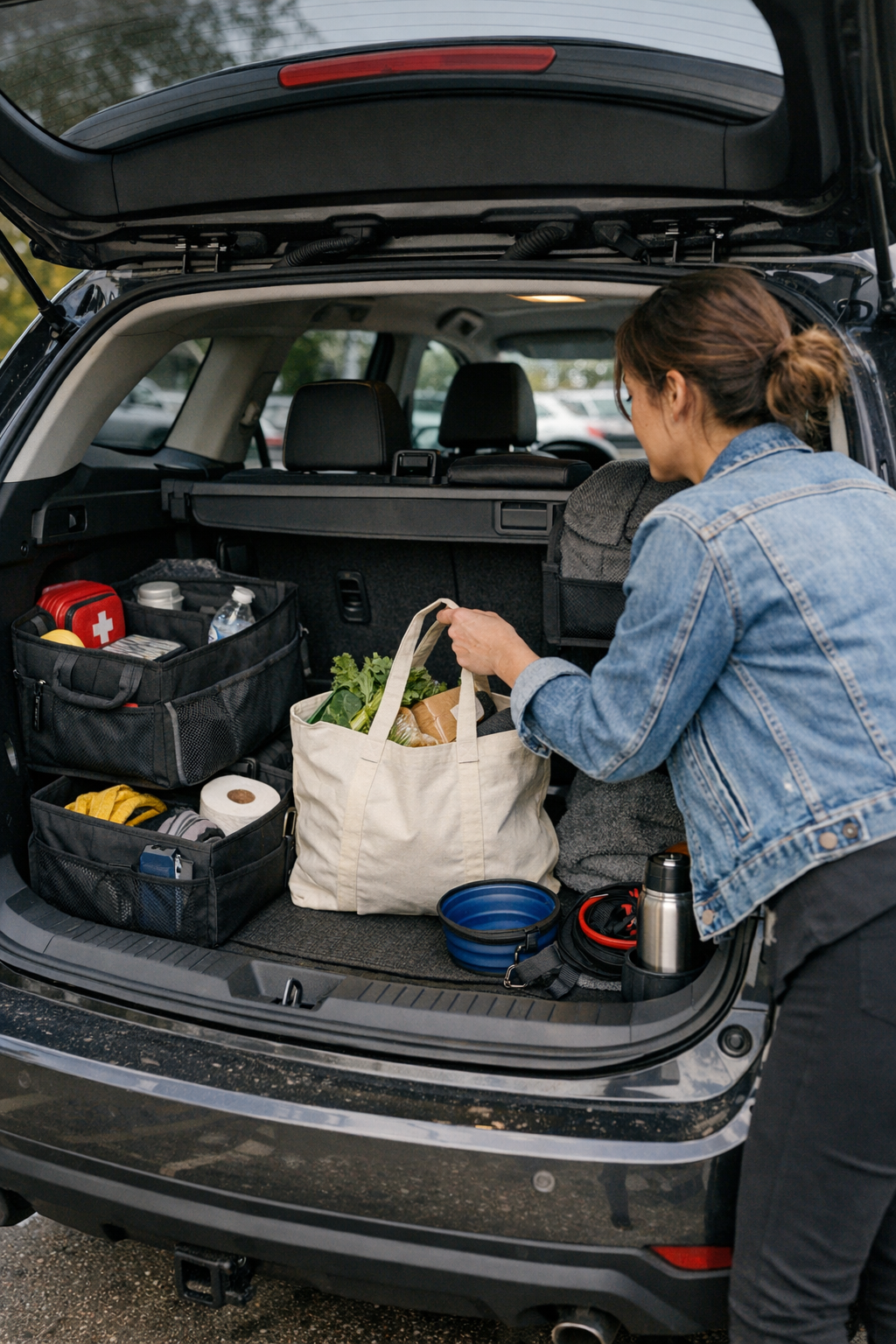
    • Trunk space that breathes: One well-sized cargo organizer means bags and tools settle without shifting, and you can drop in bulky loads without a preemptive reshuffle.

    A “prepared” car doesn’t mean over-layered. When every high-touch item does its work with no unnecessary backup, the difference is immediate: less adjusting, faster transitions, and no lingering doubt about what’s where.

    Emergency Readiness—Minus the Overlap

    The hesitation is familiar: If I clear out duplicates, will I be less ready? But the real hit to readiness isn’t simplicity—it’s invisibility. A single, accessible backup—emergency tool, jump kit, charge cable—keeps you safer than three buried spares you never touch. The real test is “reachable in a rush,” not “somewhere in storage.” Audit what actually works in a pinch, and cut duplicates that only get in the way of the gear you need when things go wrong.

    Spotting Duplicates That Hold You Back

    Some extras blend into the interior until practical use reveals them as friction points:

    • Unused second phone mount: Always in sight, always blocking a cable path, but never actually supporting your main device.
    • Console cords that rarely connect: Bundled backups clutter trays, slow charging access, and snag your hand reaching for cupholders or wipes.
    • Forgotten wipes and air fresheners: Jostle under seats, wedge into crevices, and become extra steps (not solutions) during fast cleanup.
    • Extra mats or bins: Create surprise dirt traps and paper slip zones, forcing last-minute pickup just to reach the floor or clean out the trunk.

    Test your layout by what you reach for in a regular week. Put back what gets actual use; relocate or remove what’s only creating sidesteps or blocking smoother car routines.

    Real-World Changes: Faster Flow, Fewer Interruptions

    Once low-need extras are gone and your real-use setup is visible, the change feels physical, not just cosmetic:

    • Reaching for USB power at a red light becomes a single, frictionless move—no more one-handed cable audits at 35 mph.
    • Trunk loading after errands is instant—bags drop in, gear settles, nothing gets shuffled for a second trip.
    • Passenger-side seat space stays reliably open, so everyone climbs in cleanly, not tiptoeing around stray cargo or tools.
    • Weekly cleaning gets faster: less need to move idle gear aside, more straight-shot vacuuming, and fewer hidden crumbs and wrappers wedged in “just in case” bins.

    If every trip involves untangling, shifting, or clearing space—even when the surface looks tidy—you’re not saving time, just moving the roadblock further down the line.

    The Payoff: A Car That Supports the Way You Actually Use It

    The best car setup doesn’t maximize what you carry—it removes what blocks what you use, over and over, all week. Clearing duplicates isn’t about living minimal; it’s about structure that supports repeated routines. With only what works, both driving and cleanup get easier. Reach, reload, and return—all smoother, with less device-juggling or seat readjusting.

    See the before-and-after for yourself: taking out duplicates is a low-effort, high-impact step toward making your car fit your actual life, not just an ideal version of it. Especially when your daily flow means getting in, out, and back again more times than you want to count.

    Shop DriveWellSupply essentials for streamlined, repeat-friendly car use.

  • Preventing Wiring Crowding to Ensure Safer Indoor Lighting Fixtures

    When crowded wiring hides inside your ceiling light or wall sconce, failures don’t show on day one—they appear when you need dependable, clear light and get flicker, delay, or a warm fixture base instead. In a bathroom, the mirror glow you count on for shaving or makeup starts to flutter the week you’re running late. The hallway fixture snaps on half a second late as you rush past, but you notice it every single time. At first, all looks normal: the switch works, the surface is smooth, and the fixture sits flush. But hidden tight bends and forced wiring inside the box mean stress builds with each switch, each bulb change, and each stretch of damp weather. It’s not obvious clutter—it’s strain you only see when routine moments start snagging on unreliable light. Real indoor lighting issues are about what you don’t see compounding until the room becomes harder to use, even when the setup “looks finished.”

    The Trouble Starts Where You Don’t See It

    Pushing wires to fit a fixture box to get the cover on—especially in flush mounts or compact bathroom lights—seems harmless, but compressed wiring turns daily use into slow sabotage. That packed box under your hallway or stair landing light? Every switch and surge sends minuscule stress through bent wires and jammed connectors. In the places you rely on most, like above the mirror or along a narrow corridor, that shortcut begins to show up as flickers, as delayed starts, or as a fixture base that’s warmer than you ever expected. The “out of sight, out of mind” approach becomes a recurring interruption—right when you need safe, stable light for movement, grooming, or finding your footing at a stair turn. Each use quietly worsens a flaw hidden by what seemed like a tidy install.

    Where It Shows Up Fastest: The Hardworking Corners

    Crowded wiring gives itself away in rooms where lights cycle constantly: laundry counter, bathroom vanity, or that kitchen hallway where every person flips the switch dozens of times a day. These are friction points—not for show, but for practical movement. Dim dips and untrustworthy startup creep in fast, often signaled by a faint buzz, a shadow clinging to the far side of the work surface, or a light that takes just that one beat longer to blink on. In wet areas or busy utility spaces, you start noticing warmth under your palm when swapping a bulb or, worse, feel forced to pause mid-task just to get light to cooperate. It rarely begins with dramatic failure—it’s a slow bruise, felt in routines.

    Appearance Can Be Deceiving: Finished Look vs. Function

    Flush mount ceiling lights and wall sconces earn their spot by staying out of view—edges crisp, covers smooth, everything tucked away. But burying a crowded box under a flawless lid turns “looks done” into a trap. That surface-level beauty hides an internal mess: excessive wire, forced wire nuts, and connections under stress every time moisture, dust, or normal movement settles in. You’ll notice it not on install day, but months later—when a steamy shower provokes flicker from the vanity, or a muggy day triggers buzzing inside your utility-room ceiling light. The fixture still looks pristine, but small breakdowns accumulate underneath, from breaker trips to delayed warm-up, all tracing back to hidden crowding slowly degrading performance where you want it tightest and safest.

    The practical cost? The room that seemed “bright enough” suddenly betrays you with spreading shadows across the counter, or a flicker in a hallway that unsettles your movement after dark. The gap between visual completion and true reliability grows with every shortcut in the box.

    Everyday Scenes: The Routine Reveals the Flaw

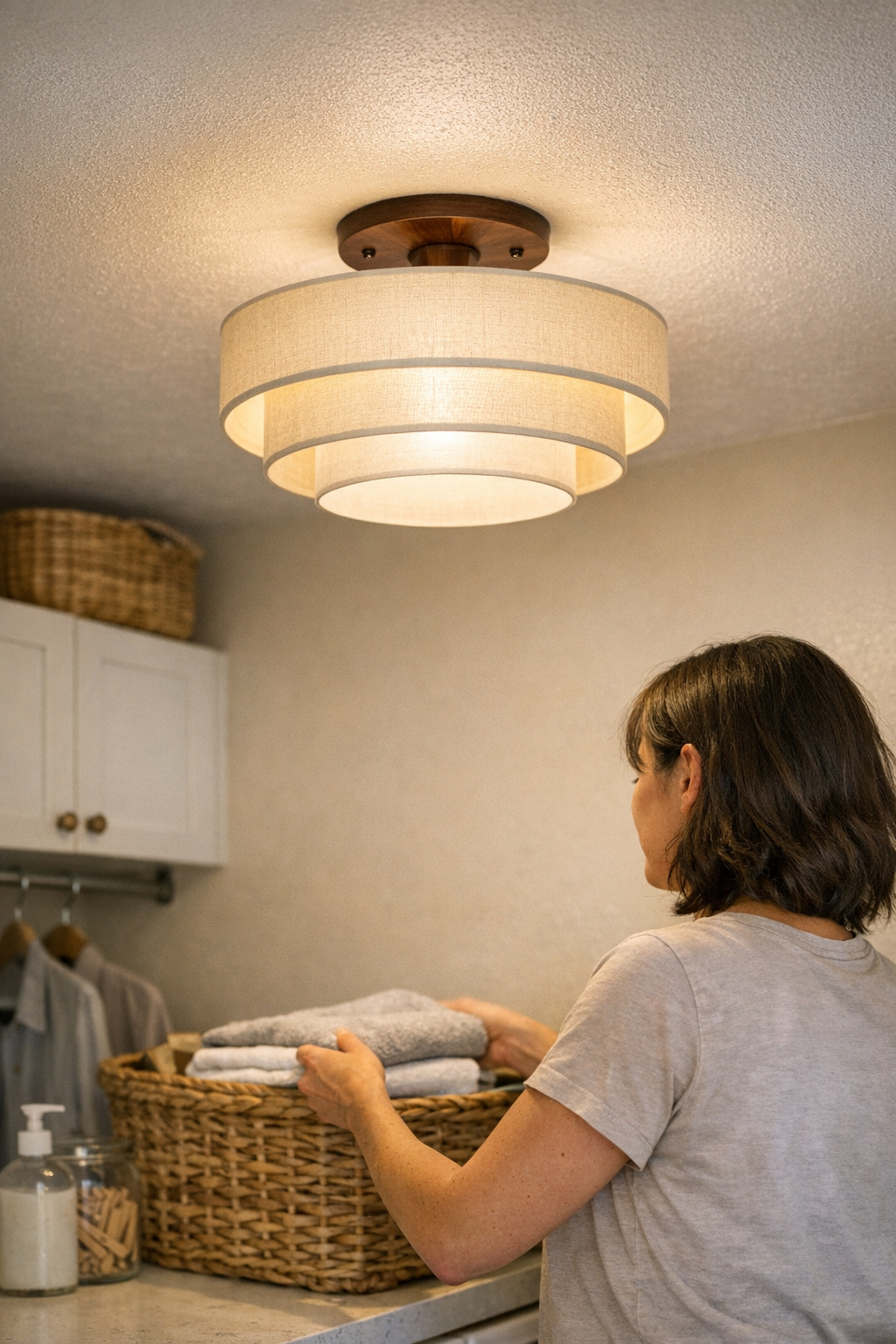
    Picture a compact laundry room with a low ceiling: the fixture appears fine, tucked close above the folding zone, but a shortcut—cramped box, wires pressed hard for the cover to fit—shows up only after weeks of cycling the light through busy afternoons. The problem announces itself with a sharp click or flicker the instant humidity and repeated use combine. A subtle shadow “sticks” across the basket or counter edge, breaking your flow while sorting clothes. Similar quirks emerge in any high-touch area when wiring is tight: the light falters, routine movement stalls, and the room demands attention for all the wrong reasons. Flawless appearances wear thin when daily habits depend on problem-free, shadow-taming light.

    The Simple Shift That Makes Lighting Invisible Again

    The difference often comes from a single practical change. Upgrading a compressed junction box—even by just an inch in depth—gives every wire the slack to lie flat, untwisted, and clear of accidental contact. That one adjustment turns a moody fixture into a steady, cool performer, ending the chorus of flickers, buzz, and warmth. In the revived laundry setup, pale shadows vanished from the back counter, and the light ceased grabbing attention every time the switch flipped. The upgrade was invisible in appearance, but obvious in use: lighting faded into the background, routines restored to easy, uninterrupted flow.

    Spotting the Hidden Signals

    If you notice heat at the fixture base, persistent flickering, buzzes, or a light that hesitates after months of smooth use, look first for tight, crowded wiring inside the box. These signals point to trouble compacted with every forced fit—a risk that rises from nuisance into real hazard if left ignored. Even a perfect visual finish can hide slow wiring damage. Should random breaker trips or redundant troubleshooting start to define your lighting experience, opening up the box to check for stress points is a practical fix worth making before more costly issues surface.

    The Low-Key Investment in Everyday Reliability

    In practical zones—stair landings, vanity counters, under-cabinet work spots—the price of getting wiring right is paid invisibly in frictionless routines. You want to lean at the mirror without chasing shadows, cross a stair turn without the risk of late-onset darkness, and flip a hallway light knowing it’ll simply work. None of this is possible when boxes are crammed and wires knotted behind the finish. Space inside the box means connectors relax, heat dissipates, and the fixture’s “invisibility” returns with each reliable switch. The result isn’t just safety—it’s silent, stress-free movement, week after week, across every threshold and workspace where light quietly makes life work.

    A Practical Tip: Don’t Force the Fit

    When installing or updating a fixture, do not force wires into a box that resists the fit. Before fastening the cover, check that every connection sits loose—nothing pressed tight against metal or another wire. Use right-sized wire nuts, lay out connections flat within the available space, and, if the box runs out of room, upgrade to a deeper or larger option once. It’s a one-time adjustment that removes daily irritations and turns lighting from a source of tension into a background strength you no longer worry about.

    Lighting That Works as Hard as Your Routines

    No matter the space—a utility hallway, stairwell, or tucked-away work counter—wiring choices behind the surface decide whether your routines stay smooth or constantly trip over flickers, shadows, and small failures. A well-sized box keeps the fixture from turning the easy part of your day into a troubleshooting session. It doesn’t just protect during install—it pays off every time you pass through the zone, lean closer at the mirror, or count on reliable, steady light. The fixtures you choose, and the way you install them, transform from a sequence of minor irritations to an invisible part of making indoor space safe, usable, and comfortable, every single time.

    Visit LightHelper for practical lighting that works where you do

  • How Smart Outdoor Storage Transforms Yard Work Into Quick Tasks

    The satisfaction of a freshly organized deck box or storage bench is always short-lived when real life returns. That neat little setup by the back gate, along the garage, or wedged into a patio corner will pass the “looks good” test for exactly one rainstorm, one busy Saturday, and three half-finished projects. Then the cracks show. Now the “organized” space is stalling you out—tools clatter under pool floats, garden gloves pile up against winter salt, bin lids need prying, and suddenly getting one thing means moving three. What used to feel under control now feels tight and slightly sabotaged, like the storage is quietly running out of patience before you do.

    The Subtle Shift from “Organized” to “Obstacle”

    The problem never announces itself: it just creeps in. Three weeks of normal Saturday yardwork and the walkway is narrowed by an “extra” tote, the garden bench traps the trash bin, and that fence-line chest becomes landfill for every “just this once” drop-off. This isn’t random mess—it’s the slow, relentless friction of storage that doesn’t adapt. What looked smart for a static photo becomes a speed bump in actual use, making you reshuffle and route around your own setup with every visit.

    The bins and boxes aren’t failing—they’re just building in resistance, step by step. Every time you “just put away” one thing, it blocks something else. Deck boxes become a game of unpack-the-closet. Wall rails become clutter displays nobody touches. Over time, you don’t beat clutter—you just reshape its path, letting it rebound in new corners and behind new lids. Daily movement gets slower, more awkward, and subtly more annoying, even if the space still looks fine from the patio door.

    Where Good Setups Break Down: Real Moments in Outdoor Storage

    Retrieving One Tool Blocks Access to Another

    You step onto the deck to grab a hand pruner—simple. Except the pruner is under a tarp, squeezed beside three gloves and last week’s hose. You dig, dump, and finally unearth it, only to realize you’ve started two new piles outside the box. Routine chores become minor projects, and in a few days, unused tools stay out just to skip the hassle. The “system” works—if you never change it or rush it.

    Wall Space: Used, But Not Always Useful

    Wall racks arrive looking efficient, but if half the hooks are behind the storage gate or set above your line of sight, they quickly turn into untouchable displays. The gear you actually use—pruners, loppers, sturdy gloves—drifts right back to chairs, steps, and door handles. The grid promises easy access, but if you need to dodge a ladder or rearrange hanging tools for one rake, the wall is just another obstacle, not a solution.

    Overflow Finds Its Own Zone

    Every setup has that inevitable overflow zone—the patio’s awkward far corner or the trunk of concrete behind the compost bin. It’s where “just for now” piles live indefinitely, where folding chairs and sand toys linger after a storm, and where bins dragged away from the main path quietly become permanent. Once overflow claims a spot, gear leaks out along the fence line and piles start rerouting traffic—dead space breeding more dead space.

    When the Layout Interrupts the Routine

    True frustration builds when storage asks for more work than it saves. Returning the trimmer shouldn’t mean rolling back a storage bench. Putting away the hose shouldn’t force a deck box reshuffle. When resets demand extra steps, even small ones, your outdoor routine unravels: tools stay out, hoses snake through footpaths, gloves pile up on any chair within reach. It’s not neglect—it’s a layout that never matched your pace in the first place.

    Give it a season and you spot it everywhere: there’s a fence chest on week one, but by July, the fence line is a parade of bikes, tools, and leftover planters. The piece that “fit perfectly” now asks you to slide, lift, and nudge just to reach what you use daily. Each return becomes a detour.

    Designing for Access, Not Just Appearance

    The Value in Open Storage and Smart Walls

    Deep deck boxes and closed benches promise to contain mess but often become the black holes that create it. Open shelving or wall grids look busier but keep your essentials both visible and instantly reachable. These setups aren’t showroom pretty, but they spare you from routine obstruction: grab, store, done—without reorganizing half your setup just to return a pair of pruners.

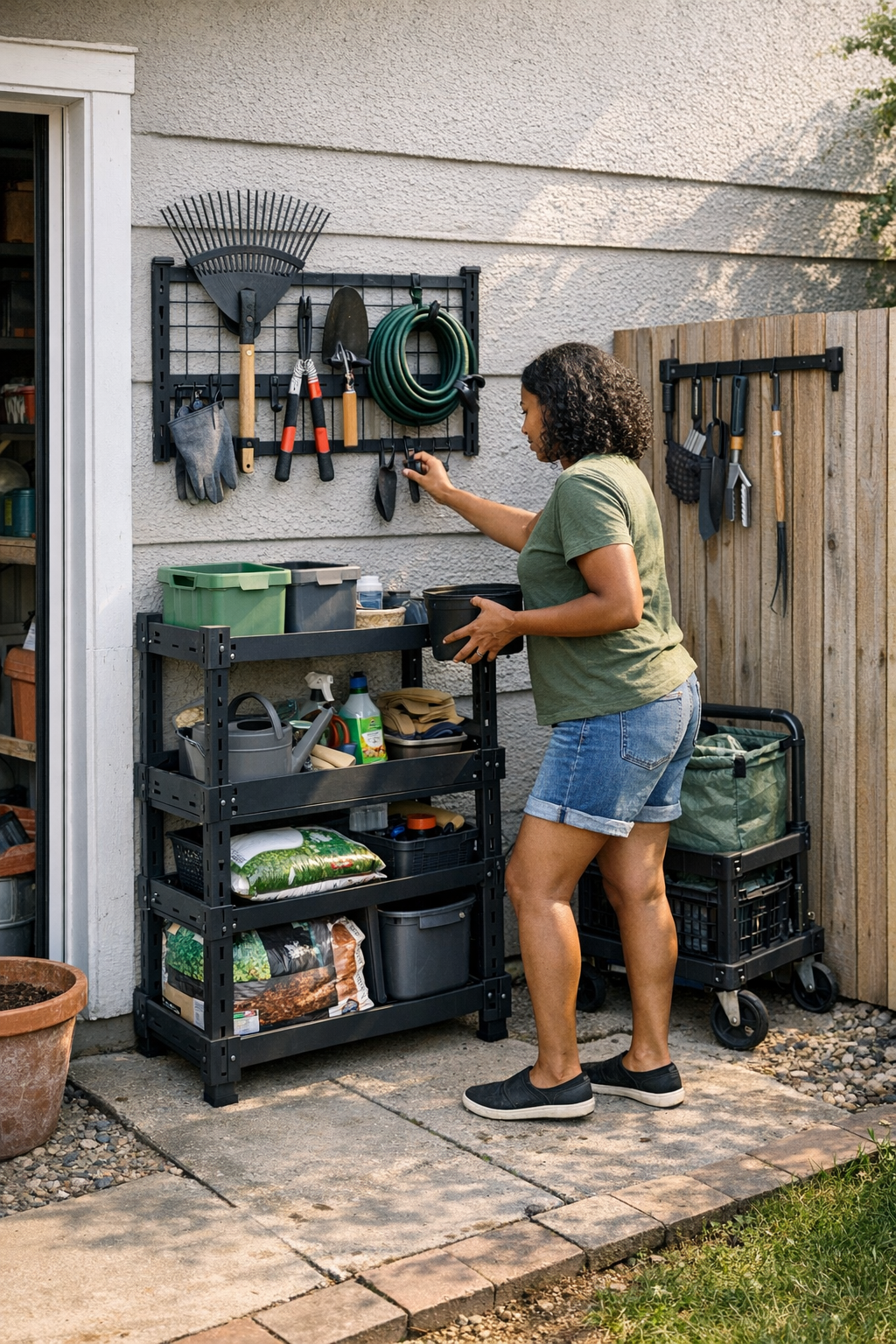
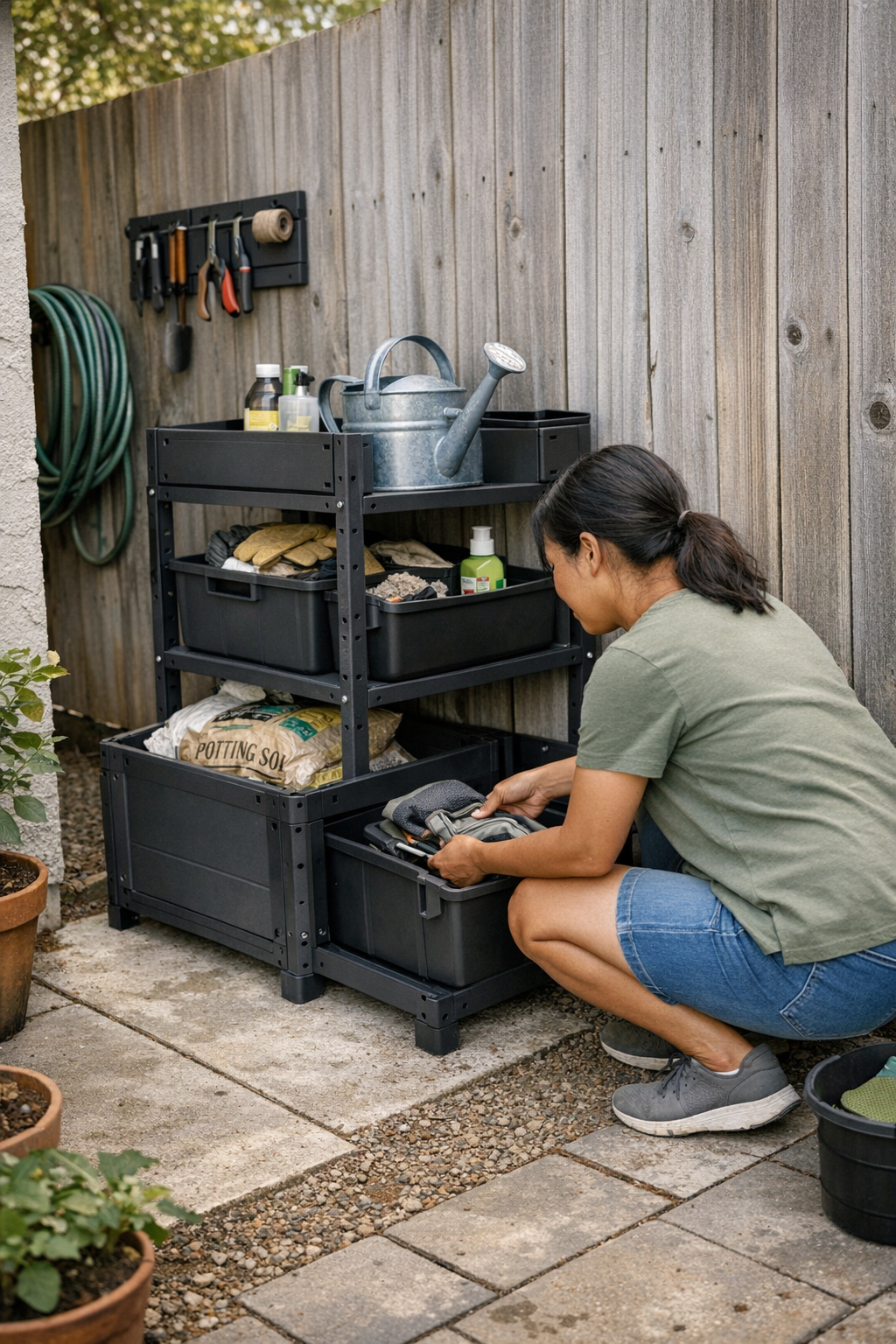
    When high-use tools live on a slim rail at standing height, you move right through the job—no bin unstacking, no puzzle-box resets. A mobile caddy that rolls out beside you and tucks instantly away can keep project clutter from trailing into every yard corner. On busy days, these choices determine whether a quick trim is a ten-minute chore or a drawn-out session wrestling with your own storage.

    One Thing at a Time: The Rule for Reset Speed

    If your storage setup demands three moves for every return, it isn’t built for actual use. Retrieval and return should mirror each other: one grab, one drop, zero rearrangement. Wall hooks at arm’s reach, bins shallow enough to see everything, and modular trays that prevent over-stacking all speed up the flow. Anything that tacks on extra steps will quietly start collecting “waiting-to-be-put-away” gear—and that’s how setups fail, even if they never technically run out of room.

    The Real Test: Return Flow

    The difference between a space that works and a space that nags is never the first week—it’s the fifth evening in a row when you have to cram in a fast cleanup or reset. The best setups bend to unpredictable routines: spring mulch days, late-evening tool drops, gear trashed by rain, last-minute tidy-ups before guests. They keep footpaths clear, push overflow back to the fringes, and make tidying as simple as tossing gloves on a hook or rolling the caddy out of sight.

    Watch for this pattern: If the same item lingers out three times in a week, your storage isn’t the problem—you’re just being honest about how much work it asks. Move high-use gear to grab-and-go positions: eye-level pegs, easy side rails, shallow bins. Save the closed bench or deep box for things you rarely need—holiday lights, rainy-day tarps, backup hoses. Let your flow shape the storage, not fight it.

    When Setup Matches Routine, Outdoor Work Gets Easier

    The goal isn’t flawless order or magazine-cover neatness—it’s a setup that forgives the blur of real outdoor use. You’ll still find a spatula on the fence post or a stray trowel on the patio, but you won’t have to wrestle your own system just to put things away. Strong setups don’t eliminate clutter; they shrink the effort required to reset. The real win is a space where outdoor projects stop feeling like a battle against your storage, and tomorrow’s reset still feels possible—even after the busiest day.

    Find practical ways to build outdoor setups that can actually keep up with you at TidyYard.

  • Mastering Reciprocating Saw Control for Cleaner Demolition Cuts

    There’s a familiar thud of disappointment that hits every time your so-called “clean cut” turns into another repair job. You line up your reciprocating saw, start strong, and by the end of the cut, you’re patching splintered edges or filling gaps you didn’t plan for. The frustration isn’t just about rough lines—it’s about wasted time, extra cleanup, and the nagging sense you’re wrestling the tool instead of working with it.

    Why Good Cuts Go Bad as a Project Progresses

    That first pull through drywall is effortless. The blade hums, the dust drifts, and you’re reminded why demolition sometimes looks easy on camera. But as the day stacks up—moving from open space to awkward angles, from fresh wood to mystery studs loaded with old nails—that sense of control starts to fade. A shoe that’s floating a quarter inch off the workpiece doesn’t seem like a big deal at first, but several cuts in, the difference is hard to miss: lines wobble, vibration doubles, and you’re reaching for patching compound yet again.

    It’s not about getting one cut perfect. The real challenge shows in the third stud, the fifth section of drywall, the endless parade of oddball framing. Over a long session, neglecting shoe pressure turns minor wander into a recurring headache—especially when every “just a little off” line adds up on finishing day.

    When Shoe Bracing Fails, Repairs Stack Up

    Picture the scene: You’re halfway through a window demo, shoe pressed firmly on the sill. Then you hit a patch of buried fasteners, your grip slips, and for just a moment, the shoe lifts. That’s all it takes—suddenly the blade kicks, tracks off line, and you’re left staring at ragged plywood and splintered trim. One lapse in pressure becomes a half-hour erased, with repairs eating into any progress you thought you’d made.

    The problems multiply. With each floated pass, heat builds in the blade, fasteners deflect the cut, and the tool jerks in your hand. By afternoon, what began as basic demo feels more like triage: chasing crooked cuts, filling torn-out openings, and sanding away the evidence. Bracing isn’t just a technique—skip it, and the mess compounds fast.

    Shoe Bracing: The Simple Shift That Pays in Precision

    The pros know the difference: steady, deliberate shoe pressure. Anchor the saw’s shoe flat against the surface every time, and you gain control back from the tool—managing vibration, steering the blade, keeping the line from drifting with every kick or snag. It transforms cuts from jagged prodding to smooth, predictable progress—even when fasteners try to jerk you off course.

    Take a simple experiment: ten quick cuts through framing old pine, some with the shoe braced, some floating. Where you hold steady, deviation hugs the line—barely 2mm of drift, even if you clip a hidden brad. Float the shoe on that same series and it’s a completely different story: wander, splinters, and up to 6mm swing per cut. That difference might sound small, but multiply it over a hundred feet of framing, and your finish work adds up fast—painfully so when sanding arm fatigue kicks in.

    Scenario Check: Cutting in Tight Spaces Behind Tile

    Bathroom renovations bring the worst: cramped angles, hardback tile, and rusted lath nails that defy clean cutting. Here, even one dropped bracing hand on the final inch means the blade veers, chipping more backing than you planned. Apply focused shoe pressure with the other hand close for balance, and you’ll feel the tool settle and the cut smoothing out. That discipline—feeling the shoe, not just the vibration—saves full sheets of tileboard and keeps you off the phone for another last-minute materials run.

    Blade Choice: Where Speed Can Ruin the Finish

    No trick of technique rescues a bad blade—what you load matters. Low TPI blades are made for fast, aggressive demolition in soft woods, but every jump in speed risks more harsh chatter, chipped edges, and flex when you meet hidden nails. For finishes that’ll actually disappear behind paint or tile, higher TPI steel is the unsung hero: a little slower, but the result is fewer ragged ends and less of those “whoops” edge moments that nobody enjoys patching. Use the rough stuff for raw framing, save the finer teeth for visible lines—your putty knife and sanding block will thank you.

    Spotting Cut Drift Before It Becomes a Disaster

    The signs show up fast: sudden blade chatter, dust collecting thick on the good side of the line, or those early inches where the blade starts pulling away before you even reach the far stud. Any of these should trigger an immediate pause—a habit check to reset your shoe, realign, and change grip before you commit to a full cut you’ll regret.

    Reset, Every Time: The Five-Second Demolition Habit

    Taking five deliberate seconds before each cut—flattening the shoe, bracing your stance, breathing—pays in ways you’ll notice later, especially under tough work conditions. Whether you’re overhead, cutting at odd angles in tight soffits, or pushing through repeated stud walls, that constant reset fights off slip-ups. The result? Less rework, fewer patch jobs, and less wear on both you and your tools.

    Winning the Cleanup Game: How Bracing Shifts the Whole Day

    Tool control is more than just a good habit—it’s the hidden secret to finishing jobs with clean edges and less dust. Braced shoe pressure means fewer seams to fill, less material chewed up, and a noticeable drop in that end-of-day fatigue that sets in after too many fix-its. Stay disciplined with every cut, and the reward is real: straighter lines, shorter cleanup, smoother finishes, and more time to move on, instead of circling back for another round with the sandpaper.

    See the practical lineup at Gumboll for jobsite-ready saws, blades, and accessories built for real-world repeat work.