Blog

  • How Small Car Setup Flaws Quietly Undermine Your Driving Focus

    Your car might look organized—center console clear, nothing spilling over the seats—but the minute you reach for your phone mount or dig for a charger, you hit the same hidden snags. The cupholder isn’t cluttered, the dashboard seems streamlined, yet that wobbling phone mount droops again after a week, and the charging cable you tucked away slides right back between the seats. Underneath tidy surfaces, friction quietly builds up—forcing you to stretch, re-adjust, or hunt for a loose cord every rushed mile. Slick first impressions don’t always survive real use. Problems surface fast: a phone mount that sags after every bump, a cable that vanishes under the seat, or a slick seat-side organizer that forces a shoulder twist each time you grab essentials on your way out of the drive-thru. All the visible order means nothing if the next stop adds moments of frustration instead of saving them.

    When Orderly Looks Hide Daily Disruptions

    A new organizer, a cable routed just so, a protective cover—on day one, the setup feels smart. But after two days of errands and stoplight calls, cracks show. It’s the third or fourth exit, arms loaded, keys sliding across the console, when those annoying reminders snap back: the phone mount rattles after every pothole, the cable you so carefully positioned last night slithers towards the floor, and a travel mug ends up wedged against your bag—or your knee. These aren’t “nice-to-fix” quirks. They’re repeated disruptions that slow down everyday routines, especially when your schedule’s tight and attention is split between traffic and the little problems creeping back into the car’s flow.

    The Hidden Cost of Repeated Reach and Fixes

    These friction points aren’t dramatic—no catastrophic failure, just a mounting toll. What seemed stable, like a suction phone mount, starts drifting just enough to pull focus every time you corner hard or jam the brakes. Every small fix—adjusting, reaching, fishing out a cord lost in the shadows—pulls another second from a routine that should feel seamless. On a solo Saturday, that’s an annoyance; during a weekday school pickup, it’s an unwelcome, repeating distraction. The less organized your access really is, the more your clean-looking interior exposes its hidden flaws—especially when the pressure’s on, not when you’re parked and alone.

    Surface Tidy Versus Functional Flow: The Real Test

    Appearance deceives. Many setups seem under control until you use them on repeat: the slim seat-pocket organizer looks elegant but puts frequently-used items just out of comfortable reach, adding an awkward lean every time the phone rings or a charger is needed. That cable routed under the daylight-clear center-armrest? By day three, it’s slid off its perch, waiting to snag the next time you jam the brakes. A trunk that looks empty might block fast access when you’re reloading groceries or pulling an emergency kit in the rain. Under real patterns—short errands, re-entry, picking up kids, unloading bags—what’s supposed to save time repeatedly steals it back.

    Examples from Real Daily Driving

    The Loosening Phone Mount

    Picture quick back-and-forth drives, groceries in one hand and calls on the other. The phone mount that held tight for a day now shifts millimeters with every speed bump. By Friday, it needs a push back to the right spot every single trip, taking your eyes off the road when it matters most. The distraction’s never dramatic—always just enough to leave you one beat behind.

    Charger Cables That Wander

    A charging cable that started the week neatly tucked along the console keeps migrating—toward the floor, into the seat gap, under your bag on the passenger side. It’s not a one-time fix; every new start means an awkward hunt, sometimes delaying calls or navigation when you’re halfway to the next appointment.

    Organizers That Slow You Down

    Organizers promise tidy storage, but some add a new hurdle: you reach for sanitizer or an extra mask, and the slot’s now blocked by a stacked notepad or a coffee sleeve jammed during a sharp turn. Instead of a grab-and-go, you’re shuffling items, rearranging each trip, only to have it repeat when you return. Less visible mess, but more micro-hassles built into the process.

    Design Decisions That Bypass Repeated Distraction

    The real improvements aren’t about appearances—they’re about setups that stay out of your way when driving, loading, or jumping in for the tenth time that week. Replacing a generic friction-fit mount with a vent-lock style, for example, means your phone stops wobbling, full stop. Re-routing your charger cable with a low-profile clip or L-connector can end the constant cable drop—so you no longer reach or fish around at every stop. Choosing an organizer with open top access instead of a zipped pouch means you actually use it without the repeated clumsy reach. The difference is small in any single moment, but obvious after a dozen “no-problem” grab-and-gos start to stack up.

    Building a Car Setup That Works as Hard as You Do

    A car isn’t truly organized until it keeps pace with your routine after dozens of trips, not just the first drive. If you’re still untangling, refitting, or digging for essentials every time you enter, the sleek setup isn’t solving real problems. When organization is built for repeated, hurried, real-world use, daily interruptions fade—you stop losing seconds, your focus stays on driving, and small hassles stop multiplying. A car that works is one that lets you handle errands and commutes without having to think about your setup at all. Once that’s in place, you notice it less—but you also don’t want to go back.

    Find low-friction car accessories that hold up to your real daily routine at DriveWellSupply.

  • Why Simple Pet Travel Bags Outperform Complex Organizers on the Road

    Pet travel bags rarely fail on the first outing—they start working against you after a second or third stop, right where the trip keeps getting interrupted. The bag you packed so carefully at home, with every toy and treat in its place, becomes a surprising obstacle after just a few errands. Suddenly, the leash that was easy to grab before gets snagged under a pouch; wipes drift out of sight when you need to clean up fast; your search for a snack turns into a one-handed battle as your dog pulls at the lead. What looked organized in your living room turns unworkable at curbside, exposing a pattern: every restart, every quick reach, has a cost you didn’t notice until you had to move, pause, and move again. If it feels like your “perfect setup” slows you more each outing, you’re not imagining it. This is the fault line where most travel bags show their true limits—and it’s the friction PawGoTravel was built to address.

    Where Most Pet Travel Bags Fall Short (And Why You Don’t Notice Right Away)

    Lining up compartments and applying “organizing logic” at home feels productive but misses the strain of repeated travel use. That organizational structure looks stable when nothing shifts. Once you’re out for three errands, four pauses, and the dog’s energy spikes at the worst moment, cracks appear: that deep pocket with wipes becomes unhelpful when it’s wedged under a leash and a collapsed water bowl; food that seemed accessible now hides behind too many dividers. You rarely notice on trip one—problems build at stop two, three, and beyond, making every retrieval slower and forcing you to break your own flow just to access what was supposed to be simple.

    Real pattern: the logic makes sense until you’re under time pressure or wrangling a restless pet. Suddenly, your “intuitive” pocket forces awkward twisting, or a zipper now opens the wrong section first. With every stop, items not only drift but overlap: leash clips tangle with blankets, chews wedge themselves behind other essentials, and side pockets become so crowded you avoid opening them until you have no choice. Each friction is small, but together they drain patience and disrupt whatever smooth routine you thought you’d built.

    Repeat Routine, Repeat Frustration: The Cost of Over-Organized Travel Bags

    If you’ve ever put off pulling out a wipe or treat just because it meant digging, you’ve met the dark side of “hyper-organization.” The real difference between a travel bag that works and one that merely appears ordered comes down to access—in the moment, not just at packing time. You don’t feel the drag until the third stop, when you find yourself thinking, “Can I make do without, just to skip the hassle?” That’s not minor; it snowballs on any real week of travel.

    Layered Compartments: More Order, But Slower Moves

    Dividers, pouches, and carefully-zipped layers do make packing feel neat. But each layer also makes everyday actions slower. When getting waste bags means unpacking a snack pile, or returning a toy means reshuffling half your gear, the cost is momentum. Sunday night’s order turns into Monday morning’s mini-chaos. You end up sorting and re-packing, repeating the cycle at every stop, building more resistance each time. Organization that blocks movement is not organization that helps you travel.

    The Time-Drain Equation—Small Delays, Real Impact

    No stopwatch is needed: each time you pause, unclip, or reach for something that isn’t immediately there, the underlying design has failed. The real expense isn’t measured in seconds, but in hesitation—especially when errands crowd together or a pet’s impatience grows. Multiply those little interruptions by every trip, and “good enough” organization turns into the thing you dread re-opening before the last stop.

    Real-World Scene: The Busy-Morning Test

    Picture any Tuesday: You pile into the car, pet in tow, with five stops lined up. Run into the vet, then the park—then realize, post-walk, that wipes are now wedged behind a snack bag, under the leash, while your other hand manages a fidgeting dog. You balance the bag awkwardly, try to dig one thing free, and drop a toy onto wet pavement. The tidy rooms you built into your bag? They’re now working against you, layer by layer, as your dog gets distracted and every small retrieval turns into a brief standoff. The “organized” setup didn’t fail at home; it failed in motion.

    This is never a one-off. Errand after errand, you rebuild and reshuffle, finding yourself hesitating every time you think, “Do I really want to go through that again? Or can this wait?” Each inconvenience stacks up, eroding what little patience you and your pet have left as the trip wears on.

    Where Simpler Design Outperforms “Expert” Organization

    The real solution is not another layer—it’s a return to directness. Practical improvement means cutting out delays, not adding compartments. Pet bags that allow open side reach, wide-mouth seat-side grabs, or one-hand pockets skip the friction entirely. Instead of digging, you move: leash, wipe, or treat is there, not buried. What looks less “organized” in catalog photos performs radically better when the engine’s off and your hands are full. The less you have to think about setup, the more your routine flows—but only if access is truly instant, not just supposedly logical.

    Details That Matter: Access Without the Block

    Small upgrades—like an outside pocket you can reach from the car door, or a divider that separates (but doesn’t bury) basics—quietly transform travel. It’s about access, not appearances: if your comfort items, towels, and toys live where your hand naturally lands, you stop losing time debating whether another dig is worth it. You get that time back at every stop, and the stress you shed is real: less fumbling, less tension, and no more watching your neatly packed setup collapse into a mess as soon as your pet gets excited.

    Cleanup and Comfort: Only Fast Matters After Stop Three

    Nowhere is organization’s weakness clearer than in cleanup. The minute wipes get hidden even one layer deeper, you start skipping small messes and promising to deal with them later. Open pockets or seat-level placement transforms cleanup from dreaded chore to simple step. Likewise, comfort gear that’s easy to return—always visible, never forced “just anywhere”—keeps your entire routine from sliding into chaos after the third or fourth stop.

    The Overlap Problem: Pet and Owner Essentials Fighting for Space

    Shared zones become battlefields when your water bottle rolls against the dog bowl, or your wallet ends up pinned under a leash. The “efficiency” of mixed packing quickly breaks down in living use: chargers, keys, or phones drift under pet supplies, and the barrier between your plans and your pet’s needs vanishes. The result—interruptions pile up, not just slowing you, but splitting your attention when you should be returning to movement. A bag that splits owner and pet space releases tension and makes fast re-packing possible, even on a rushed schedule.

    How to Set Up for True Repeated-Use Success

    • Keep essentials visible and instantly accessible. Wipes, treats, and leashes should always sit at the top or in a front pocket, never behind zippers or under other gear.
    • Skip deep nesting and extra dividers. If you can’t reach an item with one move, the structure will always slow you down at the next stop.
    • Optimize for one-hand, outside-car, or seat-level reach. Select or adapt bags so crucial items can be pulled without moving the entire setup onto your lap—especially when holding a pet or closing a door at the same time.
    • Physically separate your items from your pet’s gear. Even a single soft barrier blocks wallet-leash tangles and stops repeated interruptions cold.

    The Real Payoff: Less Pause, Smoother Movement, Happier Routine

    A pet travel setup that drops the “packed perfection” ideal and adopts direct-access logic wins where it matters: after the fifth restart, during the rushed pause, in the second half of a long errand day. You feel the change when grabbing a leash doesn’t trigger groans, when wipes can be snatched and returned in seconds, and when your hands and headspace aren’t hijacked by fussy compartments. Your pet reads that calm, and your travel moves—plain and simple. Honest design for how people and pets actually move: that’s the PawGoTravel difference.

    Find gear that matches the way you actually travel with your pet at PawGoTravel.

  • Why Closed Entryway Storage Traps Moisture and Odor Over Time

    Change hits the entryway fast: What looks crisp after a reset can shift by week’s end into blocked traffic, shoe clutter, and stale air. A single rainy day, a loaded grocery run, or just overlapping routines—all it takes for closed benches and deep drawers to fill, trapping wet boots and bags out of sight, but not out of circulation. By Thursday, socks pick up dampness, shoes come out smelling worse than before, and “tidy” begins to mean losing five minutes to rummaging through a sealed, humid storage box. The entry zone slips from functional to frustrating, even when it looks clean from the threshold.

    When Out of Sight Traps the Trouble Inside

    The logic feels solid: close a drawer, drop gear inside, shut the lid, and the clutter vanishes. But repeated comings and goings—especially with families, roommates, or guests—reveal the flaw. Moisture from boots and jackets gets trapped under those neat lids. Air stops moving. Yesterday’s weather lingers under the surface. Instead of resetting, you’re piling new clutter on top of old dampness, and by week’s end, even clean laundry thrown on a bench edge emerges with a subtle must.

    What looks organized rarely functions that way under repeated use. Each closed drawer or bench compartment hides mess, but also hides air. The apparent order starts working against you—reset gets slower, and gear gets less usable each cycle.

    Why Closed Storage Backfires in Busy Entryways

    No air means slow resets and stale gear. It’s easy to fill a drawer or lidded bench in a flash—especially after three people come home in the wet, or two days’ worth of routines stack up. The first time you open that bench midweek, you pick up on it: old humidity sealed in, odor left to compound, and now even “clean” sneakers feel off.

    • Remove boots, toss them in the bench, close the lid. Next day, you’re greeted by trapped moisture and a musty edge—even if the surface looks clear.
    • Entry clutter multiplies: umbrellas, backpacks, extra pairs of shoes all jammed together underneath. One item turns to three, and nothing dries right.
    • Tighter packing means zero airflow. Damp piles get damper, and halfway-dry gear never recovers. By the next reset, fresh items pick up whatever’s lingering in the box.

    Wall Storage: Airflow That Actually Outperforms Hidden “Order”

    Open alternatives—racks, wall-mounted rails, or vertical bench slats—don’t hide clutter, but they clear a bigger day-to-day problem: airflow. Place shoes on a slatted rack or hang jackets with breathing space, and every item dries. Even a narrow entry handles active use. Instead of digging in a box or re-sorting a stuffed drawer, you grab what you need in seconds; nothing gets pressed out of shape, and mustiness never really takes hold.

    After switching to a wall rack at home, the difference showed up in lived routine: reset, once a 10-minute dig, now takes a single sweep. Items aired, no surprise odors, no gear forgotten at the bottom of a pile. The drawer went unused—except for things you barely touch in wet weather.

    The Reset Reality: Friction at the Door

    Entryways break down at friction points: overstuffed drawers jammed tight, benches doubling as overflow, wall hooks ignored because they’re out of the direct line of arrival. “Neat” almost always collapses as soon as real pressure hits:

    • Drop a loaded work bag on the bench, and the space purposed for sitting vanishes under stray groceries and mail. Next trip, you’re balancing boots in one hand and a backpack in the other just to find a place to sit—or giving up entirely.
    • Return on a soggy evening, try wedging shoes into a full drawer, and feel the path block up. You reshuffle, items topple out, and still the dampness ends up shut in with the pile.
    • Racks or rails line up shoes side by side, spreading the row but making every pair visible—and dry. Even in a cramped pass-through, grabbing the right item means one motion, not three.

    How Open Storage Handles Real-World Repeats

    Entry gear doesn’t come through once—it cycles multiple times a day. Two kids home from soccer, groceries dropped and retrieved, a wet umbrella returning at midnight. Closed systems slowly grind to clutter; open, ventilated storage lets the gear reset itself. Items dried by air won’t stick together, so each return trip feels less like digging out, more like a clear exit and entry.

    Wall-mounted storage has no blind corner hiding a slow buildup. Mistakes stay visible—and fixable—before they spread. Reset becomes habitual; blocked traffic and unplanned cleaning sprints almost disappear.

    Entryway Reset Tactics That Actually Work

    • Skip the sealed compartment for daily gear. Wet shoes or jackets left even half a day in a closed box start building odor. Use wall racks or open shelves: every item ventilates, every item is visible, nothing festers out of sight.
    • Lidded benches are for off-season or bone-dry gear— never the daily, never the damp. Store your winter boots up high once they’re dry; keep current rotations open and clear so resets happen in under a minute.
    • Shortcuts like dryer packets don’t fix the air problem. Dampness always wins if airflow and structure work against you. If there’s no way for wetness to exit, gadgets only buy you an afternoon at best.
    • If the footprint is tight, mount storage vertically on the wall—edge the racks or hooks right in the path of entry. Every inch gained on the floor means less tripping, less edge buildup, less new clutter drifting into the main zone.

    Looking Ready vs. Actually Working Under Pressure

    Appearance misleads: a flush bench, a smooth line of closed drawers, all can feel under control on a calm day. But routines rarely stay gentle. With three events in one evening, or guests cycling through, overflow appears overnight: drawers jam, surfaces revert to clutter zones, and a single misplaced bag clogs the path for everyone. Returning one pair of shoes means shuffling four other items, and by Friday, the “clean” look is just a shut lid over confusion.

    • Drawers go from half-empty to overloaded, blocking grabs and quick returns. One stuck sole means everything stacked above it comes out, mess multiplying while you’re already late.
    • Benches collect overflow by default; sitting to remove boots turns into a dance around yesterday’s drop-offs. Surface “order” gives way to temporary piles that never really leave.
    • Wall racks keep gear spread instead of stacked—fewer forgotten items, less blocked traffic, and a routine that resets by habit, not by frantic end-of-week cleaning.

    When air can circulate and gear is visible, the entry runs itself. Reset pressure drops, and functional order survives the week’s bumps—without turning small messes into recurring problems.

    Why Visible, Ventilated Storage Changes the Whole Entry Routine

    The clean look is a side effect, not the main win. The real payoff comes in lower reset effort and functional recovery after busy days. When gear has air and space—on a rack, a wall rail, or an open shelf—it dries out, remains fresh, and is ready when you need it. Every threshold crossing is faster, every clutter buildup smaller, and even small entryways can ride out the chaos without bottlenecking. Choosing structure that lets air move means trading in friction and hidden dampness for a zone that flexes and resets, not just once, but every single day.

    Find practical entryway storage solutions designed for daily reset and real movement at Betweenry.

  • How Adjustable Closet Shelving Towers Improve Daily Storage Efficiency

    Closet shelving towers rarely fail all at once—they break down shelf by shelf, in the wear and tear of daily routines. It starts when you’re forced to double-stack shoes on a narrow shelf, or wedge a sweater under an overstuffed pile just to close the door. By midweek, what looked organized after setup has quietly become an obstacle course of tight slots, shifting baskets, and items slipping from their zones. If you find yourself digging for basics or avoiding a cluttered tower entirely, you’re feeling the real cost of hidden design mismatch—a structure that can’t keep up with retrieval, return, and normal life pressure.

    Crowded Shelves, Hidden Friction: Where Closets Quietly Break Down

    The real test isn’t how a closet shelving tower looks the day you arrange it, but whether it can handle the morning rush and evening reset all week. Shelves stacked too close force you to layer or nest bins; on paper, this maximizes capacity, but in practice it creates blockages. Retrieving one pair of shoes can mean shuffling three others, and putting back a folded shirt sometimes means collapsing a whole stack to find space. Each small delay builds friction: what’s quick on Monday turns messy by Thursday, as shirts spill over, baskets drift, and an “organized” system absorbs overflow rather than preventing it.

    At first, you barely notice yourself shifting a bin or adjusting a row. But micro-forced moves pile up. By week’s end, clean categories have blurred; shoes migrate to the closet floor; shirts jumble out of line; and every reset takes longer. These aren’t rare accidents—they’re routine consequences of shelves that were never mapped to fit the real flow of return and retrieval.

    The Mirage of Order: When Looks Don’t Match Real Use

    A closet can look perfect on day one—two towers with crisp shelving, all mapped just so. But shelf spacing that fits only when things are placed carefully breaks down fast. If your shelving is too shallow or inflexible, forced stacking and cluttered overlap creep in. The problem hides in that first morning: you reach for a sweater, but removal means disturbing a precarious pile below. Shoes tucked deep vanish behind the front row. By midweek, the “row” is now a mound, and the fastest fix is tossing whatever doesn’t fit. High-volume setups don’t fail on capacity—they fail when they lose hold of clear zones after a few cycles of actual use.

    Every blocked return and awkward retrieval accelerates breakdown, especially in shared or high-turnover spaces. Mini-resets become major reshuffles. That initial feeling of calm gives way to a closet that resists you, not one that supports your rhythm.

    Is Your Storage Absorbing Routine or Interrupting It?

    The difference between a closet that works and one that quietly drags you down comes down to one question: does the shelving actually match your cycle of retrieval and return? Fixed, shallow, or overcrowded slots invite spillover and mixing, no matter how organized things look in the beginning. Instead of a smooth handoff, you end up pausing—hunting for a landing zone, delaying return, or constantly sliding stacks just to squeeze one more thing in.

    Watch for a tell: you start standing still, searching for open space or debating which pile to disturb. When putting one thing away means moving two others, frustration compounds and categories blend. These small snags are symptoms: the storage structure is bottlenecking your routine, not supporting it.

    Small Shifts, Big Gains: Adjustability and Clear Zones

    Functional shelving towers aren’t about packing in the most slots—they’re about recovery, daily. Adjustable shelves let you create enough clearance so hands can reach, shoes can slide in, and bins don’t compete for space. When every visible shelf has a single, claimed category—a buffer above the tallest boot, a direct landing for folded shirts—returns are automatic, resets are short, and you stop asking “where did that pile move?”

    Contrast this with deep or crowded shelving. Reach too far back and items disappear. Stack too tightly, and second layers become lost before week’s end. Adjustable zones don’t just look better at the start—they make everyday movement faster, and breakdowns less frequent over time.

    Quick Tip: Tune Before You Stack

    Before you start filling any shelving tower, carve out dedicated landing zones and leave a hand’s width of breathing room above even your tallest item. That means reserving open space for hats, a direct shelf for bags, and refusing to jam shoes edge-to-edge just because space seems available. Giving up one “potential” shelf often means reclaiming minutes every reset, minimizing category drift and recovery chaos.

    Overflow and Category Drift: How Small Gaps Grow Into Clutter

    Overflow doesn’t announce itself with a dramatic avalanche—it builds as mismatches between shelf size and real item dimensions. Shoes overlap, small items escape through side gaps, bins get buried behind out-of-season jackets. Each “almost fits” moment weakens the whole arrangement. By month’s midpoint, formerly separate categories blend into a catchall zone, requiring a full teardown just to recover order.

    Critical pattern: Highest efficiency doesn’t mean the most crowded shelf; it means the fastest, least-blocked reset. The best storage makes daily return as frictionless as retrieval, with every bin visible, every shelf single-layered, and category drift held in check by clear separation—not fragile initial stacks.

    From Setup to Routine: Storage That Really Works

    A shelf tower either fits your living routine or quietly interrupts it every reset. That difference is more visible midweek than day one: breezy, one-move returns are a sign the setup matches your use; delayed, careful reshuffling means every small action takes more time. The right structure isn’t about adding more shelves, but calibrating space and category to your habits—leaving real working room, keeping categories clear, and making order easy to recover even when the closet is slammed with use.

    Lasting storage works because it prevents weak return flow, invisible blockage, creeping spillover, and hidden breakdowns inside the towers you depend on. It won’t look sorted just once, but stay actively usable week after week—so instead of a shelf that just holds more, you get a system that quietly gives you back minutes, day after day.

    http://www.gridry.myshopify.com

  • How Smart Cable Routing Extends Cord Lifespan and Boosts Work Efficiency

    Desk cable failure never announces itself with drama—it begins with small, invisible war. Every day, a phone charger drags across a sharp laminate edge, or a headset cord snaps taut as you pivot for a file. The desk looks organized, but after a month of unthinking movement—plugging in chargers, shifting monitors, brushing a notebook past a cable—the plastic jackets cloud over, a hint of stray fuzz hugs the contact point, and the cables that once felt new start splitting open near the plug. You don’t notice device problems at first. But soon enough, connection drops and signal crackles pile up, all feeding back to the overlooked grind of cords wearing thin exactly where order meets friction. In a workspace that resets twice daily or constantly swaps devices, the cost isn’t aesthetic—it’s the routine failure hidden under a surface that seems under control.

    When ‘Clean’ Looks Hide the Real Problem

    External calm fools nearly everyone. Tucked cables, routed through grommets, and nothing trailing across the surface—the standard signs of a well-managed desk. But under the finish, trouble builds fast. The first time you shift a laptop an inch to plug in—cord drags. Monitor pivots—cord tightens and scrapes that same cutout. It’s never a single, dramatic scrape. Fifty tiny movements later, the jacket grows grainy to the touch, cables curl wrong, and dust collects at the desk edge. Presentation and practicality start to drift—the desk stays photo-friendly for a week but falls apart under a year of everyday reach and reset.

    There’s a direct split: stick to visual neatness, or adjust for survival. Under-desk cable trays and soft sleeves absorb movement by letting lines flex and run around trouble points instead of over them. The tidy look softens—cable arcs under the desk now—but for anyone doing real work, that compromise repairs the cycle: your workspace starts adapting to repeat motion instead of quietly grinding every wire down.

    The Way Movement Really Attacks Cables

    Most cable casualties concentrate in the places you actually use—behind dual monitor stands, hugging the wireless charger, or slung along the edge you graze every morning. Device habits set the damage. Maybe the right monitor always eats the audio line; maybe the phone charger bends around a drawer every time you clear a notebook left of your keyboard. By week eight, the cord that once fit tight is flaking or split near the edge—and call audio starts flickering out mid-meeting, or your charger breaks contact if it shifts a few centimeters. The first impulse blames device quality, but most failures trace back to repeated strain at the same pinch point—often built in at setup and ignored until the cord is toast.

    The real friction isn’t the occasional unplug. It’s the daily, unnoticed drag: every new cable replacement is slower, but the weak spot returns unless you redesign how cords move. If you’re stuck cycling through replacements, it’s rarely bad luck—more often, unseen desk friction is wearing new buys down the same old path, week after week.

    What a Small Hardware Shift Actually Changed

    By the time meetings start dropping calls and chargers fail mid-cycle, resistance to a hardware fix usually evaporates. Installing a simple under-desk cable tray—a 40 cm bar mounted behind the work surface—shifts the equation immediately. Now the cluster of power lines and device cables lifts clear, routed away from abrasive edges and corners. Plugging in a device means nudging a cord into the tray—an extra second in the daily flow—but it breaks the loop of abandonment and re-buy. Plastic remains smooth, dust and lint finally stop collecting around the trouble zone, and plugs lose that familiar wiggle that signals a cable near its end. It’s a shift measured less by looks, more by the silence when devices simply work.

    No fix is seamless. The tray makes cords visible under the desktop, and there’s setup work untangling and rerouting for the right slack—but once in place, friction recedes. Not every device gets fuss-free instant access, but the cycle of silent damage is interrupted. Instead of surprise disconnects on deadline, the workspace resets for use instead of repair.

    Everyday Scenarios Where It Matters

    Clearing space for a notebook beside your keyboard shouldn’t catch a charger cable that’s kinked and stiff from weeks of rubbing a desk lip. Adjusting your monitor at 6 PM, tired and just hoping for a clean shutdown, shouldn’t flicker the screen as a cable snags or stretches. These aren’t edge cases—they’re exactly where normal use erodes every neat setup. The tidy-desk illusion crashes when hidden pinch points force you into triage-mode: chasing resets, swapping cords, discovering the break point only after valuable time vanishes to mid-task troubleshooting.

    Ultra-concealed cable runs—the Instagram solution—don’t usually survive daily use. Climbing under the desk to replace a cable or tracing invisible lines after a surprise device failure means lost minutes and extra mess. Accessible but protected cable paths—trays, sleeves—aren’t always the prettiest. But for people who move devices, jot notes beside the keyboard, or pivot between monitors, the right cable management is less about display and more about not losing function every time the desk shifts from static to in-use.

    Practical FAQ

    How do I stop my desk cables from fraying?
    Route cords away from rough or angled edges with under-desk trays or soft sleeves. Give cables just enough slack to travel on device move—tight angles and forced bends concentrate wear. During setup, run a hand along each line: any spot that feels pinched or repeatedly twisted becomes a weak point. Reroute those lines into smoother, moving-friendly channels before you think about hiding them.

    Is it better to hide cables completely under the desk?
    Complete concealment fixes visual clutter but often blocks access. When your setup involves frequent rotation—adding a peripheral, un-docking a laptop, angling a monitor—a semi-visible tray or sleeve is a better insurance policy. It keeps lines out of harm’s way but lets you swap, replace, or troubleshoot without crawling under the desk or ripping apart your setup every time something changes.

    Why do cables wear out faster near desk edges?
    High-motion cables forced across hard or unfinished surfaces face repeated micro-abrasions right where the jacket flexes during device use. Each small reach or plug strains the same spot, quickly thinning the insulation and working toward open wires, unreliable connections, or cord failure just when you need a stable line most.

    Final Observations

    The desk that looks clean isn’t always the desk that lasts. Creating real stability means tracking where cables grind against edges, where clutter crowds out movement, or where “organized” paths still route through trouble spots repeated every work cycle. Under-desk trays and cable sleeves aren’t just about less mess—they reroute daily wear away from the same device-killing friction, week after week. The payoff isn’t a prettier desk; it’s a setup where reaching for a charger or shifting a screen doesn’t risk failure or wasted time. Real order lasts longer—and you notice it most in the absence of small, silent disruptions that used to grind the day to a halt.

    Explore the full WorkBasic collection

  • Why Your Garage Storage Feels Unsafe and How to Fix It Fast

    The first day a storage setup is finished, your garage or workshop looks like a catalog shoot: all tools in clear view, no tripping hazards, every bin and shelf lined up in tight formation. But fast-forward a couple of weeks—after a string of real jobs, spontaneous projects, and rushed cleanups—and the cracks start to show. What seemed like flawless organization is now a familiar pattern of everyday friction: the mobile cart needs dragging out of the way for the third time this week, a ladder blocks your only straight path to the tool wall, and the overflow zone—invisible at first—has quietly formed behind and beneath the bench. It’s the difference between a setup that simply stores things and one that actually works with the way you move.

    Every small snag compounds. What felt “sorted” at install becomes a series of slowdowns: you stretch over one more stacked bin to reach the drill, your shoulders register the weight of returning a saw overhead, and more often than not you abandon perfect resets in favor of a fast pile-up just inside the door. The presentation may look right, but the routine tells another story.

    Does Your Setup Still Work When You’re in Motion?

    So much of storage design is built for appearance—neat lines, nothing on the floor, a sense of control. But day-to-day use attacks those ideals. Does your system still allow for quick grabs, easy returns, and clear movement? Or is it quietly slowing you down, one awkward reach or blocked walkway at a time?

    • The wobbly rack you instinctively leave for last, because pulling heavier boxes feels like baiting disaster.
    • The overloaded hooks where the hammer and pliers migrate to the outside edge, leaving crowded tangle and sagging hardware behind.
    • The low shelving unit that forces you to sidestep—again—just to wheel a cart through, turning a clear path into an obstacle course.

    Over time, corners that once seemed tidy fill with what’s hard to fit elsewhere. One area becomes the default drop zone for overflow. The rhythm gets choppy: grab, detour, reset, repeat. Instead of the setup supporting your work, you’re working around the limits of your storage—reshuffling each time just to begin.

    Wall Storage: Looks Open, Functions Crowded

    Pegboards, rail systems, and wall panels promise total visibility and open floor space. On paper, it’s the magic fix. But after a few busy afternoons, reality sets in. Are you actually using that upper row of hooks, or are the heaviest tools always on the edge, easy to knock down but hard to hang up?

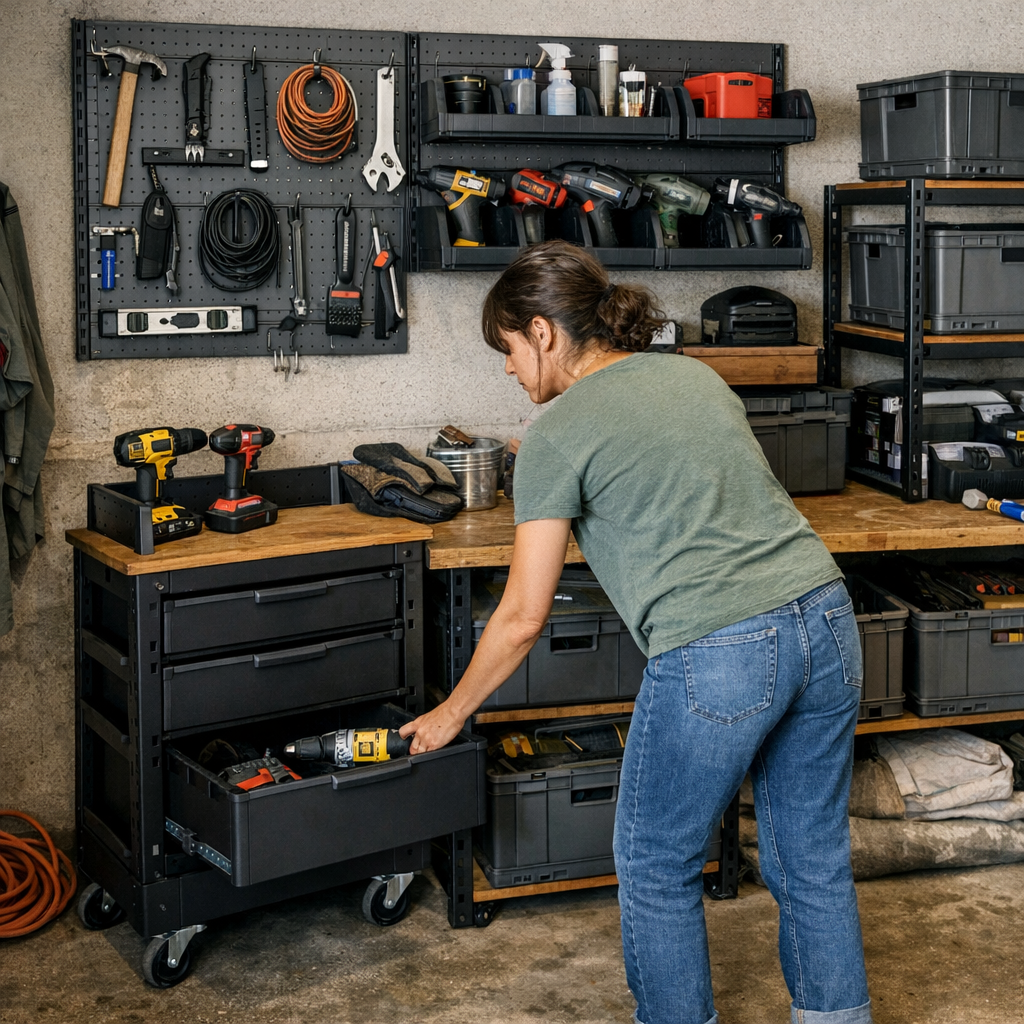
    The light-duty stuff—the screwdrivers, the tape rolls—stay accessible. But repeatedly heaving a power tool overhead, or wedging toolboxes onto out-of-reach pegs, skips usability for the sake of display. The clean look fades fast. Hooks wiggle loose, dust settles onto shelves you barely touch, and the items you use most are packed onto the lowest, closest ledges—never quite making it back to their assigned heights. The floor beneath starts to collect “in transition” piles that choke off movement and chip away at usable workspace.

    Scene Check: The Wall Panel Over the Bench

    Imagine working in a single-car garage that once felt roomy. Over the bench, a big wall-mounted panel holds everything at arm’s reach—at first. By week four, you’re standing on tiptoes to return the sander, and every time you want a wrench, it means an awkward lean around a bin that’s permanently wedged under the panel. The surface of your workbench, meant for projects, is now half-filled with stray tools awaiting a slot. The “efficient zone” is less a showcase and more a stack-up zone, slowing every turnaround.

    What started as friction-free access gradually becomes a bottleneck: Just getting in and out of the work area involves detours, second thoughts, and half-finished resets you keep promising to fix “when there’s time.”

    Floor Units: Stability That Crowds the Path

    Free-standing shelving, sturdy modular racks, and rolling carts feel reassuring at the start. Heavy gear finds a spot, and the floor holds what the walls can’t. You can load up with confidence—but that solidity comes with compromise. Are you making the most of your space, or are floor units shrinking your open area with every new addition?

    An extra-deep shelf might swallow seasonal storage or car-care kits, but if it juts out just far enough to make passage tight, you start swinging wide. Rolling carts, so handy in theory, develop a habit of camping in the main path when not in active use—requiring a nudge, each and every visit, just to get anywhere. After a while, you stop pushing them back altogether, turning mobile convenience into stationary hassle. Corners go dead. The route between door and bench becomes a zigzag and the idea of a “quick reset” fades as just another deferred chore.

    Movement Blocked: The Slow Drift Toward Clutter

    Every shop or garage hides its own roadblocks. A too-wide cabinet that demands a sideways squeeze on every pass. A watery path between the lawn gear zone and storage wall—constantly choked by what can’t quite fit elsewhere. Those corners where bins, boxes, and crates accumulate, “temporarily,” but never quite move. These drags are subtle, but over weeks, they change your approach: more shuffles, less walking straight in, and mounting resistance to even starting small tasks. You spend more time working around obstacles than working on projects.

    How to Spot When the System Is Failing

    Storage problems rarely announce themselves. The real signs are in your routine: hesitation at the entrance, slow returns, and overflow corners that gather the misfit and the half-used. If you keep shuffling the same cart out of the way, or habitually avoid one overloaded shelf, your setup is costing you—one unnecessary step at a time.

    This isn’t just “wasted effort.” Every workaround chips at efficiency and safety. The pile on the bench gets a little higher, the walkway a little tighter, and the mental friction grows. Before you know it, the functional space you started with has shrunk dramatically—without a single new item added.

    Lasting Fixes for Everyday Reset

    The right changes aren’t dramatic; they’re targeted and specific. Move the gear you use most—especially the heavy, awkward stuff—to stable, waist-level zones where access is smooth and returns are no struggle. Let infrequently used items ride on higher shelves or less central racks. This one shift restores the natural rhythm: grab, use, return—no detours or lifts that make you reconsider putting things away.

    You notice the change fast. The floor stays clearer, problem spots no longer mushroom before you catch them, and resets become quick habits instead of one more weekend project to dread.

    Final Test: Walk Your Routine Before You Call It Done

    Don’t let the setup’s clean look be the last word. Walk through your actual sequence—hauling out the air compressor, parking the mower, reaching for frequently swapped hand tools. If at any point you need to shift, duck, or sidestep extra furniture, your system still needs work. Rethink before habits (and clutter) lock in.

    Build for Continued Movement—Not Just Day-One Order

    Real satisfaction doesn’t come from a showroom moment of perfection, or even a rock-solid weight rating. It comes from a setup that stands up to daily movement: clear pathways, easy access, and no hesitation about where something should go. Watch for the subtle blockages and redesign before friction becomes routine. The setups that last are the ones that recover quickly from real, messy use—not just look “done” for a photo.

    See storage solutions designed for real movement and repeated reset at StackNest.

  • Why Edge Storage Transforms Small Yards Into Usable Outdoor Spaces

    If you have a tight outdoor space, every storage choice either smooths—or complicates—your entire routine. Drop a shed, a storage bench, or even a single rack in the wrong spot, and suddenly movement slows, piles form, and your yard feels smaller every time you try to use it. The difference between “it fits here” and “it actually works here” becomes painfully obvious after just a few days of normal living.

    The Subtle Creep of Center-Heavy Storage

    It’s tempting to drop a big storage bin right in the center of your patio or yard. It looks organized, seems reachable from all sides, and promises convenience on paper. At first, it delivers: grab a cushion on your way out, toss in a tool after you prune—simple.

    But as soon as you stack two or three real-life activities—garden Saturday, impromptu soccer, a neighborhood BBQ—the “convenient” center quickly turns into a traffic jam. Storage planted in the middle stops being helpful and starts blocking everything else. You end up weaving around it with muddy boots or armfuls of toys, setting one thing down just to move another. By the end of the week, you’re not grabbing what you need—you’re shuffling, detouring, and stacking temporary piles, just to make room for the next task.

    A Real Scenario: The Never-Ending Reset

    Picture this: It’s Saturday. You drag out hoses and trowels, dodge a bin set dead center, and start gardening. Halfway through, bags pile up in your “easy access” pathway. The wheelbarrow’s route turns diagonal to avoid the chest. Shoes and tools cluster wherever you hesitate. By midday, your path is strangled by overflow, not order. Finish up, tidy what you can, and it still takes too long to reclaim space for dinner—the “mini-reset” never really leaves things clear. Day by day, your yard gets harder to put back together, not easier.

    Choosing Where Storage Belongs—Why It Makes or Breaks a Small Space

    This isn’t just about cramming things wherever they’ll fit. It’s about how bodies move around those things, every single day. Center-stage storage may look efficient, but in small yards, it steals breathing room and cuts up your natural walking lanes. Movement slows. Every reset gets heavier.

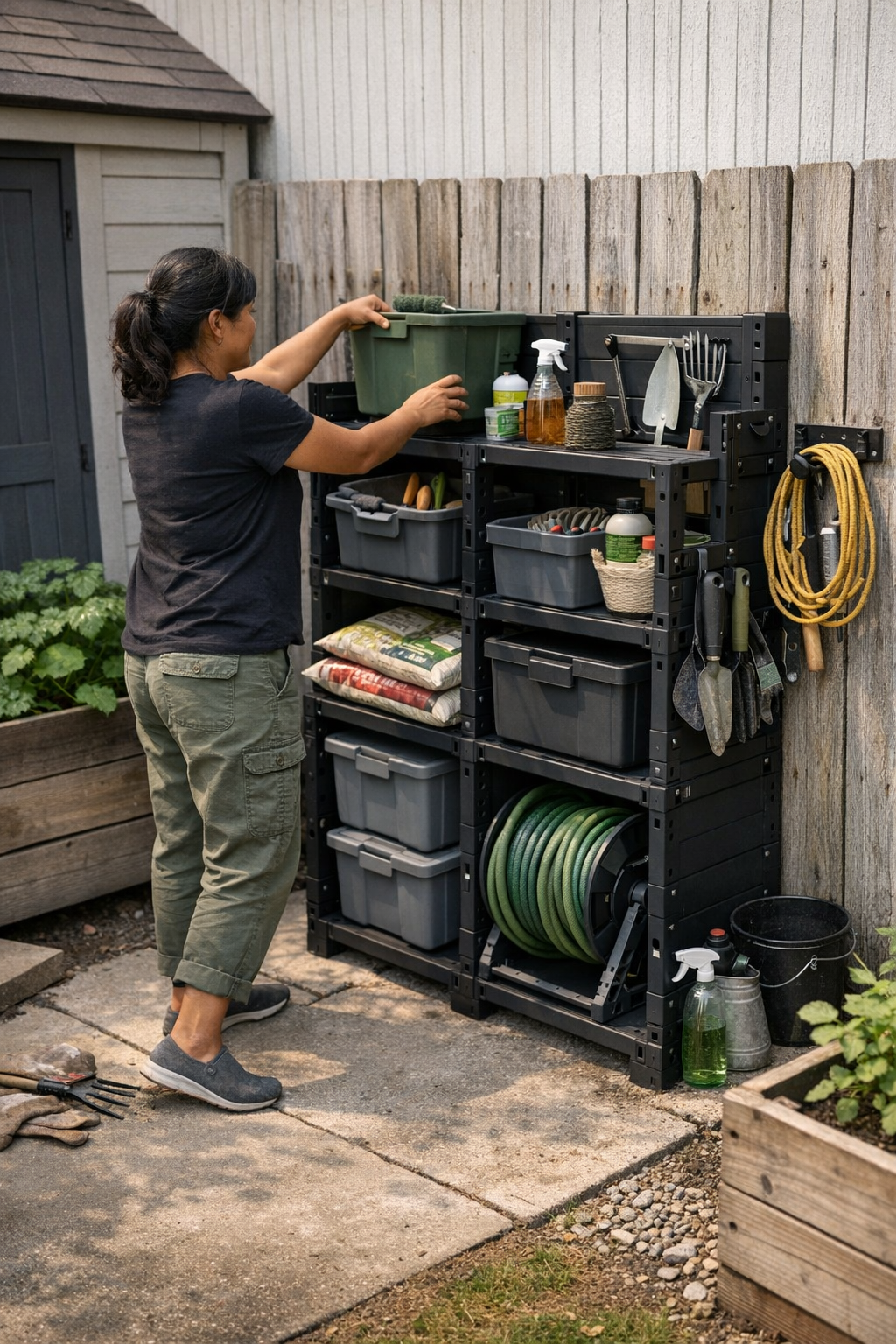
    Edge and wall storage flips the whole equation. Install wall racks or slim lockers along the fence, and suddenly your yard develops an actual “lane”—a clear, unbroken route for push carts, soccer games, wheelbarrow runs, or just refilling the bird feeder. Instead of stepping over an obstacle or dragging bins to reclaim space, you stay in flow. The center opens up. You stop playing traffic cop and start using the yard the way you meant to.

    Repeated Friction: When Storage Fights the Way You Move

    The trap is visible in almost every rushed setup: a central bench or box looks tidy but only works when nobody else is around. The moment two people need something from it, you’re queuing up, pausing for lids, or making awkward workarounds—one person digging while another waits, or stashing wet gloves on top because there’s no space to hand things off. By evening, temporary drops—balls, hoses, backpacks—start filling what little open floor was left. Resetting gets slower, and instead of containing clutter, your storage setup creates it.

    Edge and Wall Storage: Actually Use-Focused

    The best outdoor storage earns its keep during the mess, not just in empty moments. Hanging racks along a fence or tucking modular cubbies against an out-of-the-way wall means the gear and overflow stay out of the movement zone. The useful space stays in the center, not the sides—and that lets you stage, work, host, or play without pushing a bin or detouring around the aftermath of “being organized.”

    Real Use: The Difference After One Change

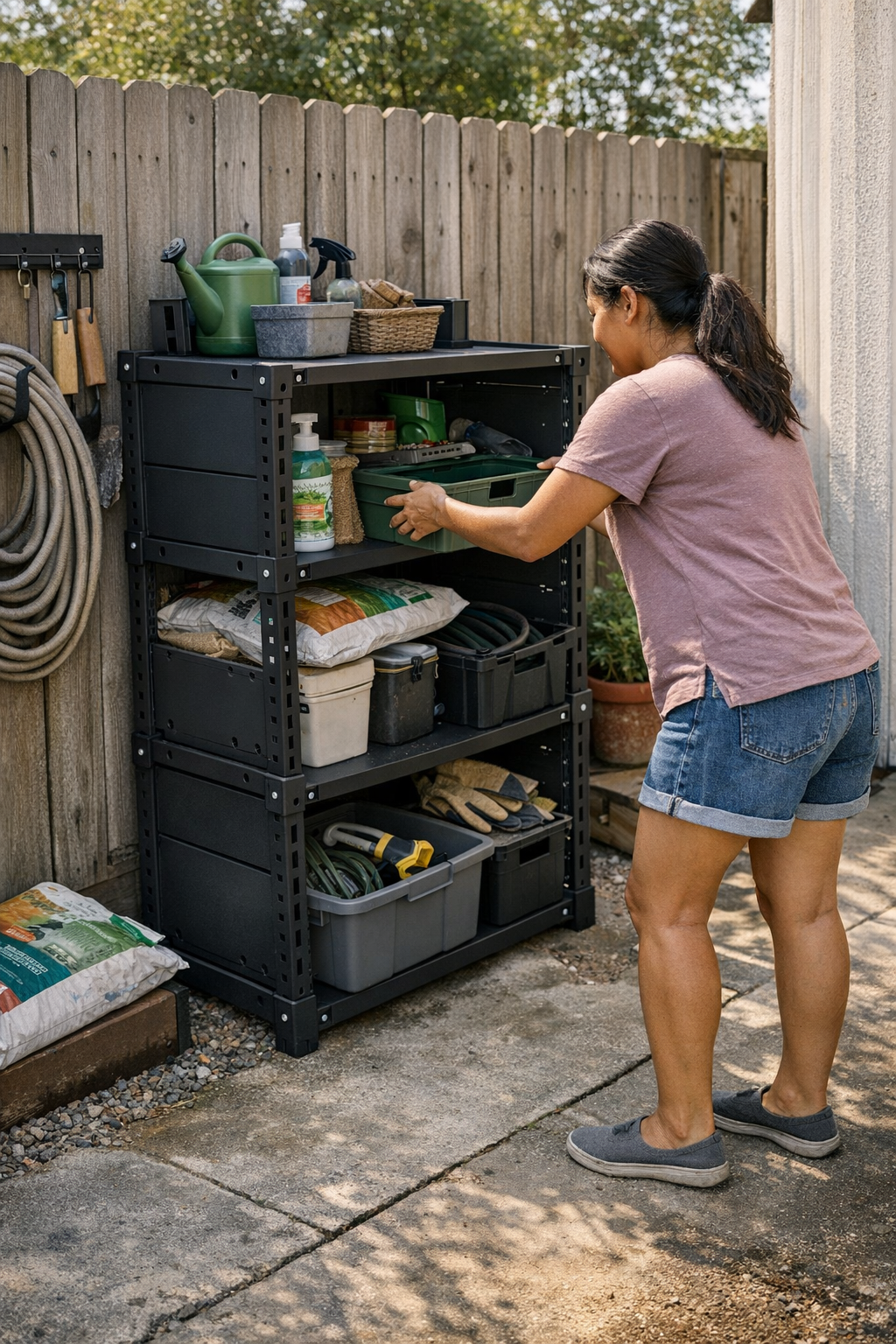
    Mount a weatherproof wall rack along the back fence and you feel the result instantly. You can push the mower, drag that unwieldy garbage can, or run alongside your kid without zigzagging around a stubborn box. Reset after a muddy project? You hook up tools in seconds. Nothing’s in the path. The difference isn’t extra storage volume. It’s that you never have to move one thing to get to another—or spend five minutes making the path clear again simply to use the space.

    The Hidden Pitfalls of Floor and Corner Storage

    It’s a classic error: see an empty corner and drop in a bulky tote “out of the way.” But real use reveals how fast corners swallow up everything—boots, bags, stashed hoses—until overflow blocks the path or half-buries the gate. Fill every floor inch, and routine tasks become dodging missions. The storage fits, but the movement never does.

    Wall setups aren’t immune to failure. Hooks placed just out of reach, shallow shelves too short for real tools, or racks never used except as a holding zone for that one thing—the result is always the same. Clutter returns. If you keep dropping things on the ground, your wall setup isn’t solving the problem. It’s just shifting it around, and the real reset still demands more bending, lifting, or temporary piles than it should.

    Real-World Fix: One Adjusted Zone

    Installing a vertical tool rack by the garage door instantly rerouted how weekend cleanups happened. No more hedge trimmers sliding around the patio table, or gloves wedged behind a central chest. Instead, everything lands in its own spot—no crossing the yard or working around obstacles to put things back. The path stays open. Ends of task and beginnings of the next connect more naturally, because less is blocked in between.

    Tips to Dodge Classic Outdoor Storage Traps

    • Initial order doesn’t guarantee easy resets. If reclaiming clear space always means moving the same box twice, rethink your zones.
    • Edges and boundaries should direct, not just store. Let walls and fences control foot traffic—not collect rejected clutter.
    • Test the return flow at the end of a full day. Does clean-up happen in one natural sweep, or do you chase piles from zone to zone?
    • Watch for overflow magnets. If a single area hoards stray shoes, hoses, or toys, it’s not about adding bins—it’s about redefining that space’s job.
    • Don’t ignore gear weight and weather. Wall systems only help if they can handle real use—reinforce where needed, or support with slim floor units.

    Setup That Matches Your Actual Routine

    An outdoor setup should make movement automatic—not force you to pause, arbitrage floor space, or repeat the same slow reset after every use. Open flow beats empty floor every time—storage only serves if it lets you glide through the daily pattern without circling barriers or nudging overflow out of the way.

    Real difference happens in small things: the two extra minutes you save not shifting boxes, the trip you skip because tools have a clear return spot, the weekend that doesn’t end with you re-choreographing the same old piles. Ignore flow, and even a perfectly staged space turns cramped. Organize by the way you actually use your yard—not just by what looks neat for a day—and you get a space that feels bigger, moves quicker, and resets itself faster, even when life is messy.

    For outdoor storage systems designed to keep edges working, circulation clear, and resets short, visit TidyYard.

  • Why Leaving Slack Space in Drawers Improves Daily Organization and Access

    We all want our storage to do more—especially in the closet. But filling every inch, every drawer, every shelf to the edge? That’s how order gives way to everyday frustration. What looks perfectly arranged on Sunday turns into a slow-drip mess by Thursday: stacks won’t stay put, categories blur, and what should be one quick grab becomes digging, jostling, and reshuffling just to find a simple pair of socks.

    When a “Perfect” Drawer Fights Back

    Picture that freshly organized drawer—every T-shirt wedged upright, socks nestled in rows, no empty space in sight. It’s impressive, until it isn’t. A couple of mornings in, you’re already struggling to pull a shirt from the back without toppling the rest. Socks that started in their own zone now wander, slipping under the next stack. The tighter the fit, the more it resists you: each tug and grab knocks something else out of place. Before you know it, the once-crisp order collapses into a jumble, and you’re forced into a mini-reset after almost every laundry cycle.

    Slack Space: Your Secret Weapon Against Storage Chaos

    Leave room to move—literally. That little bit of empty space between stacks is what stops your system from unraveling the moment real life intrudes. With a gap—a clear thumb’s width—each item has freedom to slide in and out without dragging neighbors along for the ride. You don’t have to sweep aside a pile to reach the bottom, or squeeze your hand past a wobbly tower just to pull a tee. Instead of sprawling sideways, categories stay defined. Vertical stacks stand tall days after folding—not because of a rigid system, but because nothing is crammed to the limit.

    Real-World Example: Why Breathing Room Matters

    Think about your busiest drawer, maybe underwear or workout shirts—high-traffic zones that see action every single day. When you overfill it, grabbing anything from the middle means nudging piles around, unplanned mixing, and shirts or socks sneaking into the wrong section. Leave a sliver of space between groups and suddenly it’s different: you lift a pair from the back, nothing topples. Shirts on the left don’t swallow the socks from the right. After laundry, instead of wrestling items into an already-strained drawer, you’re sliding each stack right where it belongs, no reshuffling needed.

    This isn’t showroom perfection. It’s practical, sustainable order that survives the week—no matter how many hands or hurried mornings hit that drawer.

    The Real Cost of Maximum Fill: Clutter that Spreads

    Stuffing every square inch isn’t just a closet problem—it creeps into the rest of your life. In the bathroom, overcrowded bins lose their borders until random toiletries start blending together. Entryway shoe racks become chaos as one pair of boots nudges sneakers across boundaries. Stacks on shelves buckle, and “organization” turns into a constant cycle of pushing things back into place. The few extra items you managed to squeeze in now cost you minutes—and aggravation—every single day.

    Routines That Don’t Fall Apart: The True Value of Slack

    The beauty of slack space isn’t what it looks like at first—it’s how usable it stays. Grab what you need, put it away, and trust that the setup will hold all week. No more sorting piles just to make things fit, no more resetting drawers because last night’s shirt sweep knocked everything loose. Each section retains its role. You aren’t scrambling to find missing socks or restack toppled jeans on a Wednesday morning. Routine maintenance becomes a five-second tweak, not a chore that steals half your afternoon.

    How Much Slack Is Worth It?

    A little margin goes a long way. Aim for a thumb’s width gap between each stack or bin—a space wide enough to reach in and move something without disturbing the neighbors. It doesn’t shrink your storage, it protects it: you’re not wasting room, you’re earning back time. Forget squeezing in the last T-shirt if it means you’ll spend five minutes—every day—fixing the fallout. The right system isn’t just organized when it’s untouched. It’s organized after the rush, after laundry, after another busy week.

    Less Is More: A Change You Actually Notice

    Resist the urge to fill every inch. That small shift—from maximum capacity to maintainable breathing room—transforms not just how your closet looks, but how it works. Suddenly, you’re not wrestling with overfilled drawers, restacking after every reach, or letting clean laundry stall out in a basket because nothing fits “just right.” Instead, you get easy access, smarter resets, and an organization system that feels calm—even when life isn’t.

    Shop practical closet systems and storage at ClosetWorks

  • Choosing the Right Laser Level for Precision in Tight Spaces

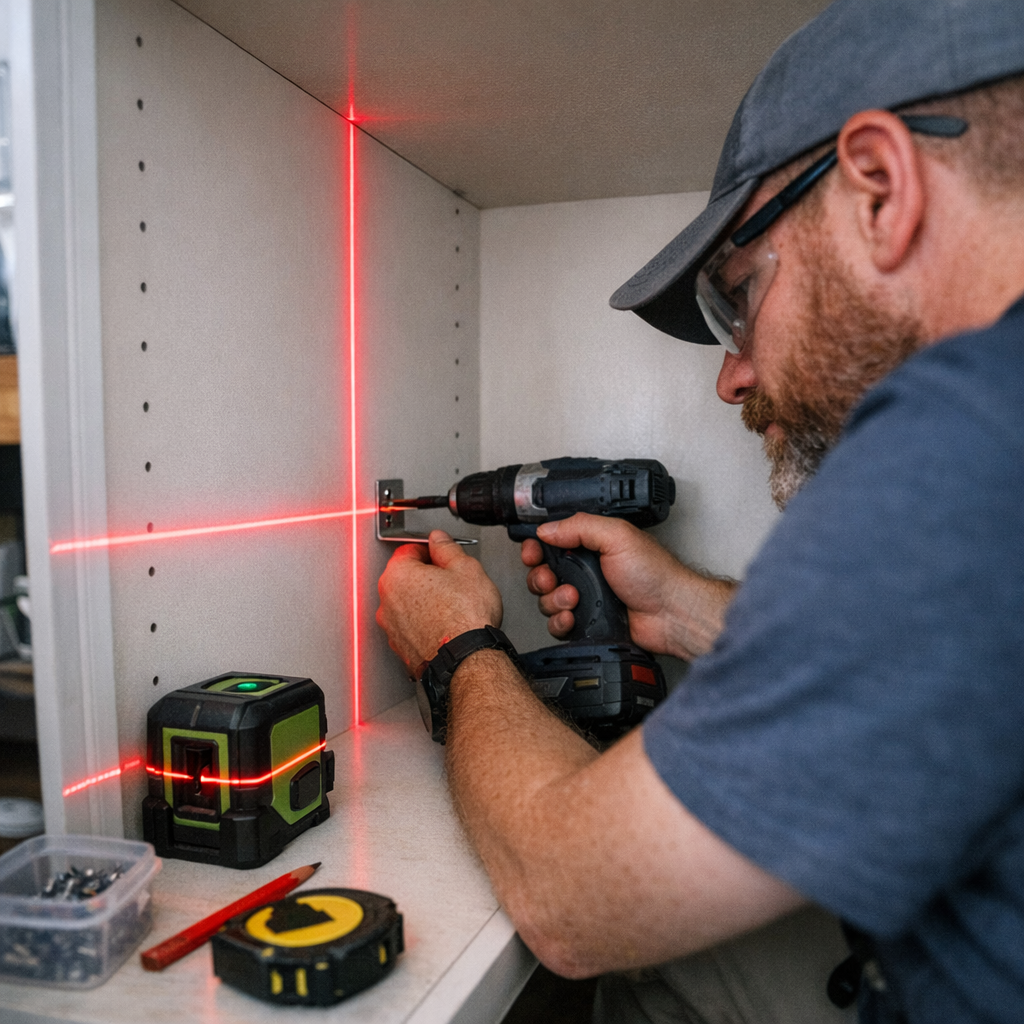
    The real pain starts the minute you try to measure inside a cabinet—cramped, awkward, hands wedged between hinges—and your trusty laser suddenly lets you down. What was crisp and reliable across an open wall quickly becomes shaky guesswork when you’re deep in a 75cm-wide base or tight closet. Instead of a sharp guide, you get fat, blurry lines with hazy edges bouncing off melamine or glossy laminate. Every mark is a question: “Is that really level, or just close enough?” You might not see the problem until later, when the hardware’s up—one bracket sitting proud, another sagging off square, uneven gaps you can’t unsee no matter how much filler you pack in. If you’ve ever run a drill or set a bracket inside a narrow carcass and come out with ragged results, you know the mess a basic laser can leave behind in tight spaces.

    Why Standard Lasers Struggle Where Space Is Limited

    Give most box lasers a clear, open expanse and they look flawless—straight projections, level lines, plenty of working room. But jam that same tool inside a built-in or above a short set of shelves and different rules apply. The beam bounces. Edges double up. The so-called “fine line” washes out across glossy panels. Suddenly you’re nudging the unit, trying to snap lines that don’t drift, or hovering over every measurement. And each 1-2mm misalignment—imperceptible at first—turns serious once the hardware goes up. That’s the moment you realize: what passed for precision on drywall just causes trouble in close quarters, translating into sanding, re-drilling, or wrestling with drawer slides that never quite pull smooth.

    A Little Drift, a Lot of Problems

    In the guts of a small cabinet, what starts as a barely-there wobble gets amplified at every step. A pencil line drifting off by just a millimeter can leave brackets visibly crooked or drive a shelf install off flush—stuff that looks “okay” until the flashlights and the client’s eyes hit it. Correcting these slips isn’t just cosmetic. An extra round of sanding, plugging faulty drill holes, or carefully trimming a misaligned panel wastes real time, burns patience, and can easily eat an hour you can’t bill.

    The Specs That Matter in Close Quarters

    Forget the spec-sheet noise—most lasers tout self-leveling, robust casing, or “long-range” projection. But when the working gap is little more than your forearm, you need:

    • Minimum throw distance: The shortest space where the line isn’t smeared, doubled, or unusable—just a crisp reference edge, even 25cm from the target.
    • Narrow beam width up close: Under 2mm thick, so when you line up the drill or strike-off for the saw, you’re not guessing which edge is real.
    • Steadfast short-range accuracy: The alignment doesn’t flutter as you press the tool flush or work near high-gloss paint that might reflect stray light across your reference points.

    Most mainstream models can’t keep up here. Beam washout or panel reflections turn quick installs into slow-motion fixes. A proper close-range, sharp-beam laser—though less flashy on paper—simply works where you need every line to count the first time.

    What Actually Happens Inside Cabinets and Built-Ins

    Imagine sinking four shelf brackets inside a pantry corner. The laser’s propped up awkwardly. You peer in, trying to read a faint, fuzzy line that splits as the beam hits the adjacent side. You sigh, mark your best guess, and move on. After install, two brackets sit flat; the rest drift off, the error glaring only once everything’s in place. You either break out the filler stick, or—worse—drill again, hoping the next marks won’t peek out from underneath the hardware.

    Or say you’re marking for a drawer slide where the space is so narrow you can barely angle the drill. Using a basic laser, you see two edges, blurred together. Which one was your real reference? Spend five minutes second-guessing, and fifteen cleaning up after the fastener slips or the slide goes in crooked. One tool quirk and a four-hole job drags into lunch break.

    Compound Friction in Tight Spaces

    Every mistake inside a small cabinet multiplies. One crooked bracket, one drifted anchor hole, and now every cut or fastener is slightly off. You find yourself sanding shelves down to hide the tilt, or grabbing a putty knife to fill mismatched holes. Soon you’re not installing, you’re fixing—all because the tool didn’t adapt to the space you were actually working in.

    The Switch: Using a Close-Range Laser in Confined Jobs

    The change is immediate once you swap out the usual model for a laser designed specifically for cramped conditions. It might take a minute to balance it on a stack of shims or clamp it at an awkward orientation inside a base unit—but the line is razor sharp, clean as a scribed pencil, even a few centimeters from the edge. Now you drop in brackets or center-punch anchor points and everything lines up. Smoothing edges or filling gouge marks becomes rare. The job moves forward instead of backtracking after every round of hardware install.

    Even better, a true tight-space laser stays dialed after you rotate or flip direction between shelves and dividers. No constant recalibrating or fighting to subdue double-edges. You’re working—not stopping to chase “phantom lines” or fighting tool drift in every cabinet run.

    Is Your Laser Level Failing You in Tight Spaces?

    Run a simple check: make your marks, slide the laser sideways, and see if your line still tracks. Over 2mm of drift? It’ll only get uglier as you fasten brackets or cut in runners. And pay attention to ghost images when working near reflective finishes or glass—if you’re hesitating, choosing between double lines, or fixing “almost right” holes, it’s time for an upgrade. Tight drawers, crowded pantries, small closets—these are where your tool’s real capabilities (or limits) show up, fast.

    Habits That Save Time (and Material) Inside Cabinets

    • Always dry-fit hardware and trim before drilling. Use painter’s tape to trace lines or edges, confirming the real fit before the bit ever touches the panel. That’s where most mistakes get caught cheap.
    • Recheck alignment after every pause or reposition. In a crowded cabinet, a single bump can throw the entire reference off. Take a breath, re-verify your points, and only then commit to the next round of holes or cuts.

    Getting Real: Why the Right Laser Means Less Waste

    Whether you’re on a site, working in the back corner of a rental, or hunched over a cluttered basement bench, reliable accuracy isn’t luck—it’s making sure your tool truly matches the job environment. The open-space models are fine until you’re pressed against the frame, fighting reflections and space, burning time fixing mistakes instead of finalizing clean installs. The right short-range, precise laser doesn’t make you perfect. It just cuts the wasted hours and fatigue, letting careful layout and solid hardware land right the first time—so your cuts, fasteners, and final product actually look intentional, not improvised.

    Skip the endless sanding and patchwork. For your next round of tight-cabinet work, bench a close-range laser that brings real control to real spaces. Notice how much smoother every step gets—from that first dry-fit to the last bracket going in straight.

    http://gumboll.myshopify.com

  • How Predictable Treat Timing Transforms Indoor Cat Behavior and Home Harmony

    The treat routine that started as a lighthearted “just this once”? By week two, it’s rerouting your every kitchen move. If you often find yourself pausing mid-step, coffee scoop in hand, because your cat has planted herself between you and the counter—blocking the fridge, singing out sharp, expectant meows at every hint of a snack—you’re dealing with more than playful begging. You’re experiencing the repeat disruption of an indoor-cat treat habit gone structural: kitchen crossings now come with feline patrols, every cabinet creak can trigger a sprint or a standoff, and what began as harmless is now reshaping how (and how well) your shared home actually flows. The kitchen doesn’t just look different—it works differently, with StillWhisker-level details suddenly at the center of every refill and reset.

    When “Just This Once” Becomes Every Day

    Giving a cat a treat sounds simple—until each treat changes the rules of your home. At first, it’s a single bag hidden away, a quick reward, a happy scramble. But to an indoor cat, scattered treats aren’t random. They teach her to read the kitchen as a daily event. Soon, you’re shadowed to the drawer, intercepted at the pantry, slightly off-balance at the sink while your cat blocks your footing—believing you might turn snack run at any moment. Double-bagged treats or closed cabinets don’t erase the circuit: anticipation lingers, turning non-food routines (anything near the treat spot) into daily triggers. Refill, reset, and even a midnight glass of water now come with feline choreography you didn’t sign up for.

    From Clutter Control to Cluttered Living

    Maybe your setup looks fine: containers lined, a mat by the bowl, clean edges, hidden bags. But functional order breaks down fast once your cat’s new “treat patrol” launches. Head on into a reset and suddenly you’re negotiating with paws in the way, or choosing between prepping food quickly or dragging out the distraction dance. The real friction is the friction that returns with every meal, every cleanup, every movement, never quite leaving—even as the area looks organized. Clutter might be invisible, but daily interruption is not.

    How Treat Timing Shapes Shared Space (and Why It Adds Up)

    Anticipation is the real mess-maker. A scattered treat schedule glues your smallest actions (open a drawer, rinse a dish) to your cat’s “might be treat time” radar. Your kitchen shifts from food prep zone to hope-and-holdout territory. Walking through becomes slower, movements stall at feline checkpoints, and cleaning—especially quick wipes or resets—takes longer because you’re dodging, redirecting, or working around a hopeful audience.

    Every Move Feeds the Cycle

    Here’s how this pattern wears on ordinary routines:

    • Reach for the coffee scoop—cat darts into the line of fire, blocking your next step as she eyes the treat drawer.
    • Late-night water trip? That crinkle means a chorus of meows, hopeful circles, and a cat waiting right in front of the food zone.
    • Cleanup stalls as crumbs or bags bring instant feline attention, making it harder to finish resets without detours.
    • Wiping the counter happens late, slowed by the need to intercept your cat before she leaps up or noses into the treat cabinet the moment you’re distracted.

    The result? Kitchen flow stalls—not because it’s messy, but because your routine is now split between “my task” and “feline management.” Treat anticipation leaks into every refill and reset, splitting your attention and stretching basic tasks into a series of interruptions.

    Invisible Wear, Real Friction

    This isn’t just an occasional annoyance—it’s visible if you look for it:

    • The kitchen mat grows a bald patch right in the waiting zone, showing just how many hours are logged on treat patrol.
    • Circling cats shed fur onto prep surfaces, raising cleanup frequency—and making quick wipes feel never quite finished.
    • Small tools migrate to new, awkward spots so you can keep them cat-free and reachable mid-interruption.
    • You start handling tasks with one hand, always angled to redirect a determined paw without dropping the coffee scoop.

    It’s not the appearance of mess—it’s a practical loss of flow. Every reset, every refill, is a little harder than it should be. Organized storage only shields the surface; the underlying pattern is constant friction fighting what should be smooth home movement.

    Why Predictable Treat Routines Change Everything

    The fix isn’t just a better-looking setup—it’s structure. Treats tied to fixed, predictable moments (after meal prep, or as part of a set evening reset) pull anticipation away from every random kitchen move. Instead of a cat on edge for each creak or step, you get gaps in feline attention: the house settles, the routine clears. You regain the use of your space, with interruptions shrinking and maintenance finally back to planned resets instead of constant detours.

    The Shift: Less Hovering, More Usable Space

    After just a few days on a fixed-rhythm treat schedule, owners repeatedly see changes like:

    • Cat downtime moves out of kitchen high-traffic areas, letting you reach the fridge or prep zone without a barricade of paws.
    • Vocal demands decrease—less insistent meowing, fewer “just-in-case” reminders at every kitchen trip.
    • The mat recovers as cats spend less time camped in one spot, showing less visible wear.
    • Resets happen quicker—fewer quick stops to redirect a cat, easier batch cleaning, less back-and-forth.

    The kitchen isn’t transformed into a cat-free zone, but it becomes usable in the way it’s supposed to: one owner, one cat, real space to complete each task without layered delays. Structure beats optics; what matters most is a routine that removes obstacles from repeated daily work.

    What “Organized” Looks Like Versus What Actually Works

    Closed cabinets and matching bins set a hopeful visual—but if the treat rule is “whenever I pass by,” real friction remains. Storage alone won’t short-circuit expectation. In practice, a cat will abandon even her nap zone to shadow every movement that’s treated as a maybe. The true test is when the cleanup or reset falls apart despite how good the area looks five minutes after a deep clean.

    Real Example: The Calm-After-Meal Routine

    Notice the kitchen mat: one owner found a worn spot always under feline watch. She shifted treats to after meal prep and a second slot post-cleanup. Days later, the mat’s wear faded, the cat returned to distant napping corners, and kitchen flow—fridge to counter, drawer to sink—became routine again instead of an obstacle course. Cabinets hadn’t changed, but the tempo of paw vs. person reset entirely. Real order wasn’t just visual—each pass through the room felt smoother, resets took less time, and feline interruptions moved out of the way of actual use.

    What Works: Linking Treats to Rhythm, Not Randomness

    Winning setups don’t hide chaos under storage bins—they assign a rhythm. Treats follow a daily marker (lunch breaks, evening resets, or after returning home), not every stray trip past the food zone. What to try:

    • Select one or two routine events per day—lunch reset, post-dinner batch cleanup, or returning from errands.
    • Keep treat storage steady, but don’t depend on hiding it; the timing shapes behavior more than the container location.
    • Give the new rule a week—less loitering in traffic zones, fewer random meows, and smoother resets typically follow.

    This isn’t about strict control—it’s about outgrowing repeat friction and making the space work closer to how it looks: organized and, more importantly, fully usable, even with a cat who’s always part of the action.

    Recognizing The Real Setup Win

    The improvement isn’t measured just after a deep clean. It’s in quick noon resets, end-of-day meal preps, coffee runs, or those fifteenth trips for grocery bags when the routine either jams up or keeps pace. With a predictable treat rhythm, the difference is clear: kitchen traffic thins, resets slide back toward done-in-one, and you stop negotiating every movement. Every setup—feeding, water, cleanup, or rest—runs closer to its purpose, not just in looks but in daily use, making each interruption rarer and each maintenance task less of a battle, even when the surface is ordinary and the schedule is busy.

    See the StillWhisker home setup collection