Blog

  • Why Traditional Garage Storage Fails When Rain Hits Your Workspace

    Every tidy garage or workshop comes with an expiration date. The first setup always feels satisfying—a weekend spent stacking metal shelves, lining up bins, and coaxing wall hooks into a grid that makes the space look driven and ready. Open the door, and you’re greeted by crisp ranks of tools and clear walking paths. But that visual order is fragile. The first stretch of wet, unpredictable weather puts the whole arrangement under pressure, and beneath the surface, the cracks spread faster than you think. The routine that felt sharp on day one quickly turns clumsy, weighed down by minor hassles that multiply as the months drag on.

    How Rain Exposes Every Weak Link in Garage Storage

    At first, it’s tempting to call any packed wall “good enough.” Shelving runs are loaded up, bins line the concrete, and for a while, everything stays more or less under control. Then the weather slides into its third gray week. Muddy boots come in, garden trimmings pile up, and water finds every low spot. Bins stacked low start to fight back; you kneel down only to realize they’re stuck like glue to the floor. Even a minor spill feels like an ordeal as you mop around every shelf post and box edge. Quiet leaks turn into slow rot behind wooden walls, or trigger streaks of rust on lower steel supports—problems you barely register until they’re routine.

    This is the kind of friction that creeps up, not crashes in. Cabinet doors that used to swing wide now creak and catch. Handles get sticky, drawers swell, quick grabs become small wrestling matches. Those “quick fix” habits—propping up a bin with a spare board, sliding containers away from puddles, using towels as makeshift moisture barriers—go from rare to permanent. Each work-around edges the whole system closer to chaos, and yet the room still manages to look neat at a glance, lying about how hard it’s become to use.

    Looks Organized, Feels Clogged: The Misery of Static Storage

    Every storage setup photographs well on day one. But the reality of real use, over time and especially in less-than-ideal weather, peels back the façade. Low bins and flush shelving turn into anchors for condensation. Shelves by the main door become landing strips for runoff. Neat rows get blockaded by overflow—landscaping gear, cardboard left “for later,” a damp bag that never quite gets emptied. Movement slows to a shuffle: you nudge a rolling cart to clear your way, duck past the corner of a cabinet that always juts out, or reach awkwardly behind bundled hoses just to get at a screwdriver.

    Wall space, originally meant for fast access, turns patchy and awkward. You use the hooks, but too many things hang in reach without ever really staying accessible. Corners that should be empty fill up with every unfinished project and “active” pile—visible, taunting reminders that the system supports storage, but not flow. It’s storage that works on paper but never quite matches how the space is actually used when the weather turns challenging.

    When Wet Weather Turns Routine into Obstacle Course

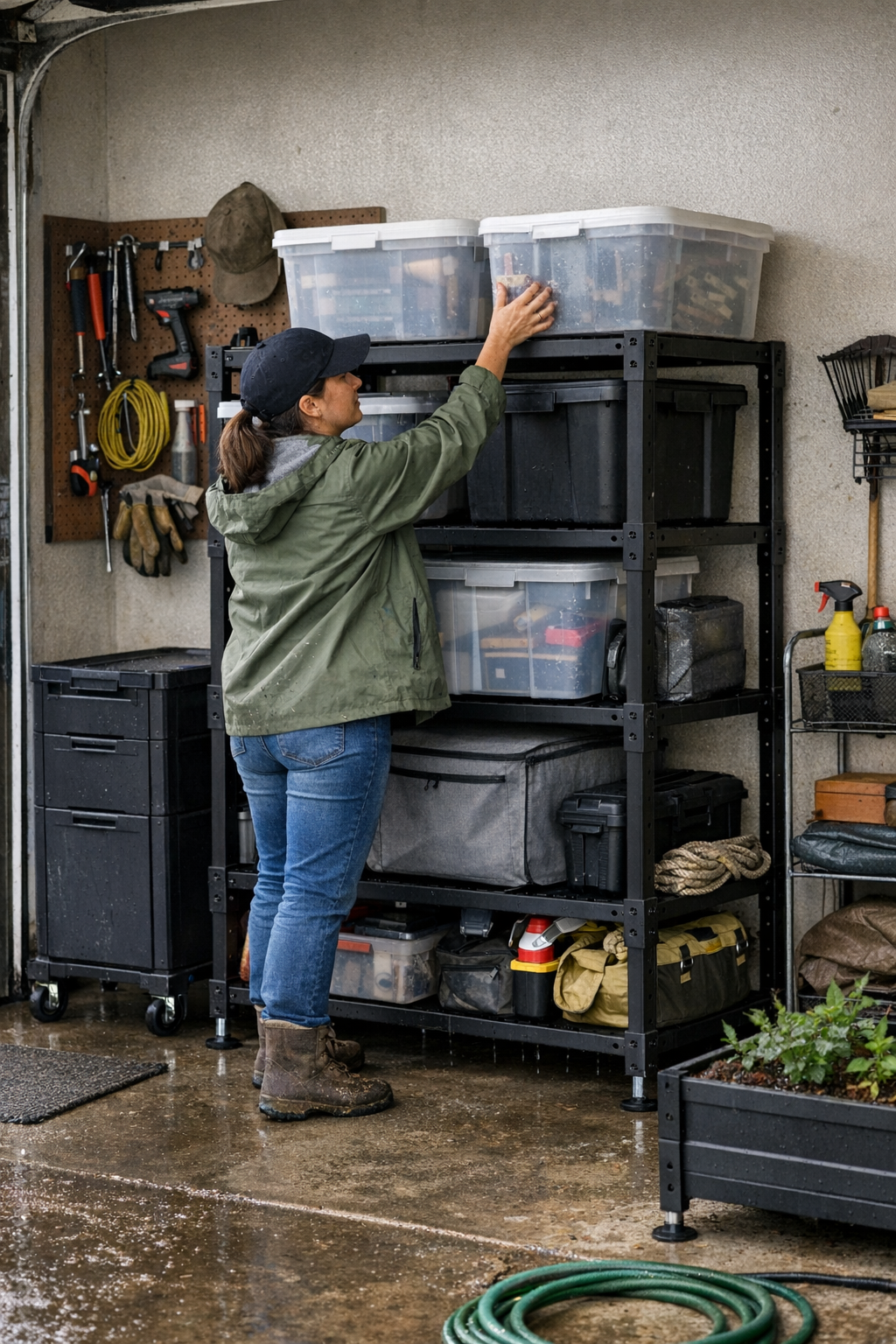
    Picture the reset after three days of relentless drizzle. You tramp inside with spattered boots, tools in one hand, dripping gloves in the other. The bins nearest the door are fused to the concrete by humidity. A storage rack beside the window shimmies with rust, starting to resist every time you pull on it. A plastic tote, its lid warped from inside damp, refuses to close no matter how you press. Last week’s mud lingers as a gritty crust where water pooled, and what once was a ten-second handoff—drop tool, grab boots, swap gear—now slows to a routine of wipes, shuffles, and unplanned wrestling matches.

    It doesn’t blow up at once—it just gets messier, slower, and less inviting. Miss putting something back once and a new stack forms “for later.” Soon, a clear aisle clogs, key shelves become landings for overflow, and each pass through the garage means maneuvering past blockades you never intended to build. It’s a familiar downward slide: less access, more reshuffling, and a growing sense that the setup isn’t keeping up with you, just holding you back.

    The Shift: How Raised Modular Storage Quietly Solves Everything

    Eventually, after enough cycles of frustration, the pattern snaps into focus—and the solution isn’t just new shelves, but a wholesale shift in the way storage meets real conditions. Elevated, modular systems change the baseline: shelves perched above the floor avoid wet zones entirely, open frameworks promote airflow beneath bins, and wide open legs mean you sweep or mop underneath instead of around. No more muscling plastic bins off soggy concrete. No more unloading whole shelves just to discover which box is damp. Instead, weather-induced rewrites—propping things up, rehousing overflow, creating weird new traffic routes—fade out. Every “reset” becomes quick, functional, and almost boring in its simplicity.

    One less shelf to drag dry. No more stacked-together bins trapping moisture for weeks. And most days, you don’t give the rain a second thought—you just hang things up, push the cart back to its zone, and move on. That’s the subtle but tangible upgrade: movement returns, bottlenecks disappear, and every item feels not just stored, but ready for use the moment you reach for it.

    How Do You Know It’s Time to Adapt?

    If your garage is a perfect climate capsule—sealed floors, never a hint of condensation, bone-dry corners even in storm season—you’re lucky and possibly alone. Most setups are at the mercy of at least one weak spot: a door that leaks, vents where cold air condenses, walls that sweat, or concrete that gathers damp overnight. The real signals? You have to sidestep an overstuffed bin to reach anything. A corner always smells musty and never quite dries out. Putting stuff back takes more steps every season. Those are signs the current setup was made for another reality, not for repeated daily flow in the real world.

    What Real Adaptability Looks Like: Beyond Eye-Candy Organization

    Not all shelving earns its keep over time. Wood warps, steel dulls and rusts, even “heavy-duty” hinges get sticky. The appeal of modular, raised setups is that they adapt—add a riser under a shelf, swap a warped panel, shift an entire bay as needs change or seasons shuffle the playbook. You aren’t locked into a layout that made sense only in dry weather or when storage was static. You can lift lower levels out of puddle range, widen a narrow shelf to keep gear apart, reroute carts for returns that don’t require zig-zagging around permanent obstacles.

    This is the real secret to storage that works—and keeps working: it bends, evolves, and keeps access clear, instead of forcing you to fight a losing battle with last month’s footprint. The worst corners become useful again; blank wall feels like an asset instead of wasted real estate. Instead of repeating the same slow dance around roadblocks, you finally get to reset, adapt, and stay ahead of the frustrations that usually collect under the radar.

    Flow Restored: Living with a Space That Moves with You

    Raise your storage, and the biggest issues just start to vanish—not perfectly, but enough that friction recedes into the background. Water stains and swollen drawers become early warnings, not full-blown headaches. You stop burning ten minutes on cleanup for every trip inside. Wall hooks support what you use, instead of just displaying “stuff.” Aisles stay routes, not catch-alls. Most revealing: entering your workshop or garage actually feels like entering a workspace again, not an obstacle course or a holding pen for seasonal overflow.

    The end result isn’t showroom perfection. It’s a setup that resets cleanly, zones that stay accessible, and routines that run smoothly no matter what the weather throws at you. Each season, you’re unpacking less regret and more readiness—the real payoff of a system made for use, not just for show.

    Find more practical setups at StackNest.
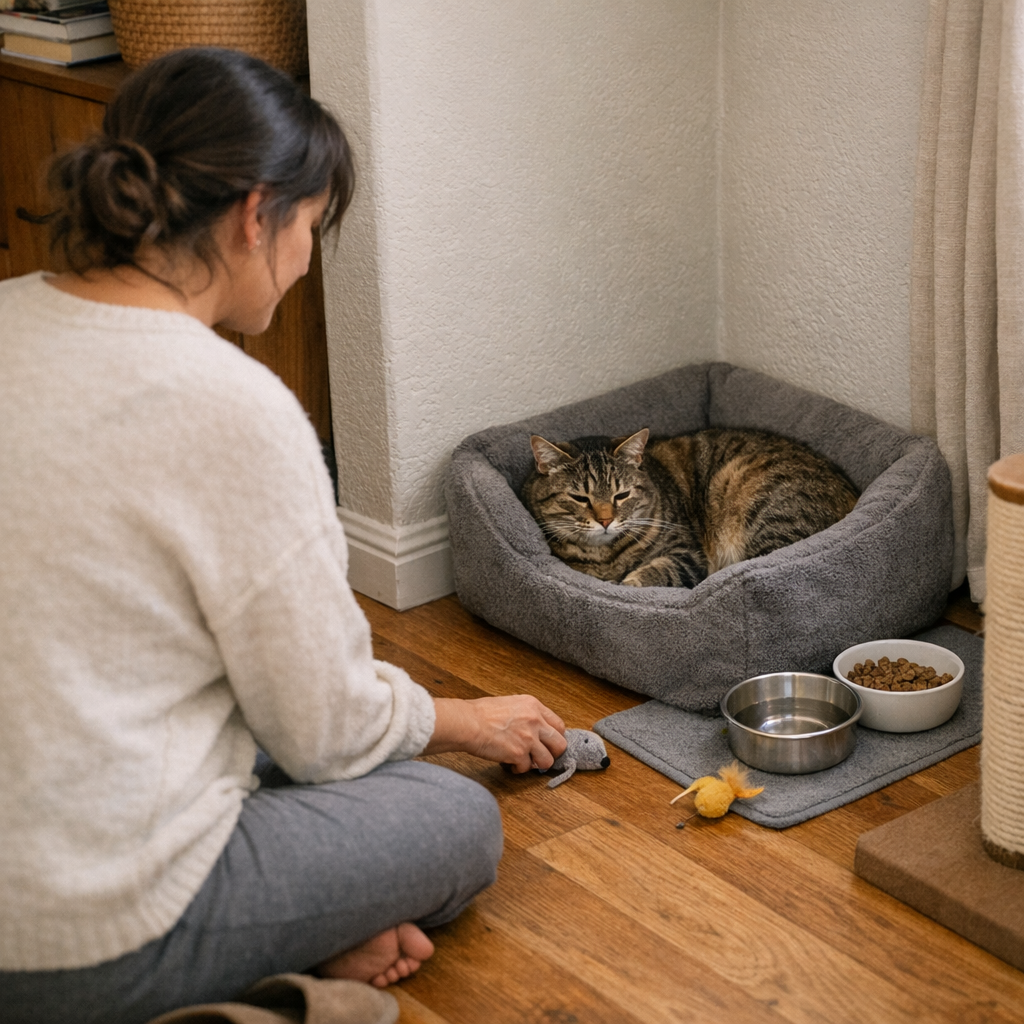
  • How Strategic Cat Box Placement Minimizes Mess and Daily Upkeep

    The “perfect” cat rest spot has a shelf life. That plush box or calming mat looks solved for about a week—until the reality of feeding resets, spilled water, midnight dashes, and repeated cleanups corrupts the quiet. A bed in a tidy corner always looks good on day one, but real use—with hallway traffic, uneven routines, scattered toys, and persistent fur—unravels that order fast. The most repeated pain points? Bowls tipped off the mat after a startled exit, a toy disappeared beneath the couch for the third day running, and a thin coat of fur collecting near doorframes no matter how often you sweep. Looking organized is no guarantee that the work is actually over. StillWhisker’s setups may blend in, but only if you get the location logic right from the start.

    When “Looks Settled” Isn’t the Same as “Stays Tidy”

    Most cat owners don’t spot the real problem until it’s routine. Each night you straighten: water bowl back in line, mat edge uncurled, stray toy hunted from under a radiator. But by morning, fur is already dusting the baseboards and the bowl has inched outside its zone again. There’s rarely a dramatic “mess”—just relentless, invisible resets. Every seemingly settled space is hiding extra labor: piles to wipe, edges to refit, bowls to nudge, and missing toys wedged out of reach. The work keeps coming back because visual order doesn’t guarantee a friction-free setup.

    The surface may look calm, but maintenance habits keep surfacing underneath. That’s the trap—with rest zones deployed along busy walkways or near noisy rooms, you spend more time in low-grade upkeep than you realize. It’s not the product failing; it’s the room exposing the weak point, again and again.

    The Abrupt Exit Chain Reaction

    Nothing unravels a cat’s rest area faster than being startled. One clang from a pot or a family member rushing through the hall is all it takes. In a second, you get a high-velocity bolt straight out of the bed: bowls scraping out of place, mats bunched, toys launched into never-seen gaps, and fur drifting into every crevice. It never feels catastrophic in the moment, but a week of repeat dashes turns your “reset” routine into chasing tiny undoings—re-centering bowls, flattening mats, retrieving toys from impossible angles—rather than real cleanup.

    Real-life pinch point: Picture after-dinner kitchen clean-up. You clatter cutlery, your cat—previously curled in a box near the archway—rockets away, jolting water out of the bowl and delivering her toy mouse three feet behind a shoe pile. Multiply that by five nights and the cost in constant micro-corrections adds up. These aren’t dramatic disasters, just the real texture of indoor cat routines.

    How Everyday Routines Expose Setup Weakness

    The slip shows up slowly at first—every abrupt exit leaves comfort undone and the setup half-unraveled. Night after night, the same clutter patches appear. Blame falls on the cat or the products, but the true culprit is usually placement: the intersection of your cat’s zone with the rhythm, noise, and movement of daily home life.

    For example: Is that corner catching fur at double speed? Are you excavating the same three toys from beneath the radiator, thanks to near-nightly dashes out of the rest area? Has the water bowl migrated again, needing a wipe beneath it because an edge slipped off the mat? All of these hint at a rest spot that “contains” the mess, but simply moves the repeated work around. It fixes nothing unless it makes resets easier too.

    Why Rest Zone Location Matters—More Than the Bed Itself

    Placement trumps design—every time. Even the comfiest cat box, plopped right beside the living-room traffic lane, becomes a chore generator. If it sits within easy range of family steps or next to a fridge’s daily rumble, you can count on frequent startle-outs, bowl tip-overs, and toys scattered out of reach. Fancy bedding helps nobody if the location keeps throwing the cat back out.

    Matched colors and smooth mats may photograph calm, but unless the area is buffered from sudden entrances, appliance noise, and social bursts, entropy wins. The rest area “looks settled” but becomes a site of invisible daily repair—repeated realignment, endless toy rescue, and recurring wipe-downs. It’s not a bedding function failure. It’s exposure, amplified by use.

    What Real Fewer Startled Dashes Feels Like

    Small layout changes change everything. Shift the rest spot out of the walk zone. Give it two solid backing walls and only one open front. Keep line-of-sight to main activity low, and buffer out the clang and chatter from kitchen or family space. The difference shows in a week:

    • Mats stay in alignment: no more nightly edge-flattening.
    • A single toy gets lost all week, not a fresh search party every cleanup.
    • Fur and water scatter are down when you reset—fewer traces to wipe or sweep.

    When a raised box edge absorbs panic motion, the boundaries hold steady, and your routine resets become quick—no more kneeling for ten minutes rescuing toys. The net effect: comfort isn’t just visual, it’s operational, and the repeated work drops away.

    Placement Versus Product: What Actually Changes Your Routines?

    Changing the bed—even upgrading to a fully enclosed dome—won’t banish micro-mess if the spot is poorly placed. Some cats favor a low wall in a shielded nook. Others want just enough visibility for comfort—never full exposure. But no enclosure or padded surface eliminates chain-reaction chores if dinner clangs, hallway parades, or open doors keep triggering fast exits and scattered clutter. High-spec products won’t cancel out a setup that lives underfoot.

    Poor placement multiplies chores. If you’re refitting mats, chasing bowls, and collecting toys four or five nights a week, stepping around a “solution” that lives in the problem zone, the fix isn’t a product swap. It’s moving the setup out of the crosshairs of daily disruption. Labor signals structure weaknesses.

    Signals That Setup Location Isn’t Quite Right

    • Toys appear in new, distant spots each time the rest zone is disrupted.
    • Mats or bedding require repeated reshaping after sleep, play, or guest visits.
    • Fur tracks develop along the same walls right after noise spikes or movement.
    • Water bowls stray from their original spot, always after a rapid retreat.
    • You find yourself nudging the setup back into position multiple times a week.

    These aren’t marks of a messy cat—they’re structure errors revealed by your real routines. No home is immune, but tolerating slow-drip busywork just because an area “looks fine” is optional. Placement tweaks pay off in minutes reclaimed, not just a cleaner look.

    Making a Rest Spot That Holds Up: Practical Adjustments

    The endless reset cycle is rarely about mats, boxes, or bedding—it’s about whether the designated spot can actually survive normal disruption. What shifts the balance?

    • Pull the box out of foot traffic. Even slight shifts away from main walkways reduce stress to both cat and setup.
    • Use real corners as defense. Two walls give both protection and predictability—less chance for surprise means fewer upsets.
    • Limit open sides. One approach line lowers the cat’s stress and the odds of scattered flight.
    • Audit appliance proximity. Silent fridges and dishwashers get noisy at the wrong times and spike outflows or bed exits.
    • Time your own reset. If you can’t clear toys or straighten mats in a minute, the arrangement is blocking as much as it’s helping.

    Each room lands differently. But the real sign of success? Reset time shrinks; annoyance fades. Placements that genuinely reduce repeated chores—not just mask them—are worth the adjustment. Product only wins if structure lines up with your real traffic and cleanup flows.

    Competing Needs: Cat Comfort vs. Human Room Use

    Compromise is constant—owners edge beds closer to human paths so cats feel connected, and inevitably trade away calm for convenience. Week after week, that “included” box ends up the silent source of more shed fur, nightly toy retrieval, and unfinished sleep. Shared spaces always look a bit neater with everything in its place, yet only the right location leads to fewer invisible chores behind the scenes.

    If your clean look costs daily maintenance, reconsider how comfort and function are separated—or aren’t. The goal isn’t pretty calm, but a setup that nearly disappears from your routine. The best signal is the one you stop noticing, because your day isn’t shaped around little interruptions.

    When to Rethink: Signs It’s Time for a Placement Reset

    Some signals you shouldn’t ignore:

    • Zones that “look fine”
  • How Proximity of Outdoor Storage Transforms Small Yard Cleanup Efficiency

    In a cramped yard or along a busy patio edge, even the smallest setup flaw gets loud—fast. Walk any side-yard, narrow utility strip, or multi-use corner and you’ll spot it: storage sits just out of reach, a handful of steps too far from where things actually happen. And that gap—barely noticeable at first—repeats on every reset. A so-called “organized” space quietly turns into a pile zone: tools dumped beside bins, garden bags stacked where people cut through, one floor patch that fills up no matter how many times you clear it. By the end of the first week, the storage isn’t helping the flow—it’s quietly making routine work harder.

    Small Setup Choices, Persistent Friction

    The first day, everything looks contained. Maybe you placed a deck box along the fence or a couple of modular cubes by the back gate. Technically, the gear fits. But after a few rounds of real use—a gardening session, hauling out bikes, prepping for guests—you notice the cracks.

    Picture the scene: you’re carrying fertilizer to the shed, someone shoves past with a wheelbarrow, the kids are hunting for gloves before soccer practice. The box you set up is two feet off the main path, so tools land on its lid, not inside. “Just now” becomes later. Before long, the lid’s blocked, spillover piles up, and every return means juggling: move a rake to reach the pads, slide a cooler aside to shut the gate, unjam a hose because someone wedged a broom behind it last time.

    Where Floor Storage Eats Space—And Movement

    Floor storage claims more of your yard than you think—and eats it at the worst times. A low bin or storage bench tucked along the patio edge might feel out of the way, but when a project’s on or guests show up, that few inches stolen from the walkway becomes the reason for jams. Shuffling items to open the lid, double-stacking stuff that blocks the tools you actually need, making extra trips because the return flow never lines up—this isn’t rare. It’s the everyday reality when floor space fills before the workday ends. One “overflow” corner always seems to reappear, hosting half-used bags or lost toys you just relocated.

    Distance Defeats the Best Setup—Every Time

    The gap between “it fits” and “it works” becomes visible over a few daily resets. An outdoor cupboard at the yard’s edge makes sense for overflow—but once it needs an extra detour, stuff gets left by the door. It takes one awkward armload or a muddy afternoon before return trips start getting skipped. Layer by layer, the perimeter fills up: buckets left near the step, hedge clippers on the chair, hoses coiled one fence section short of where they actually belong. The official storage stays technically empty while clutter creeps back into the main walkways.

    Turning the Setup Around—Matching Storage to Movement

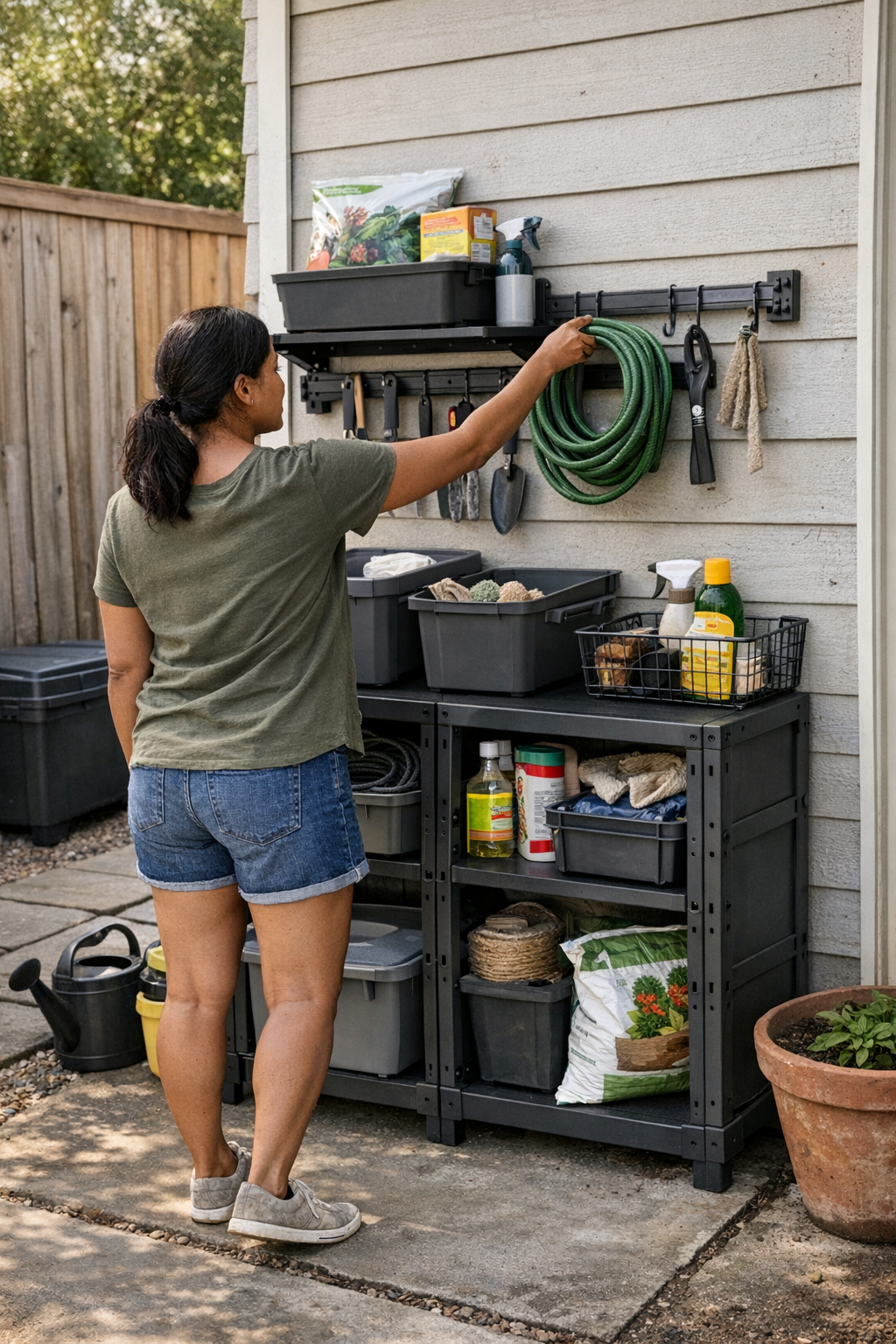
    Everything shifts when storage catches you mid-flow instead of waiting for you at the fringe. Install a low wall rack just inside the most-used door, or a slim hook system at the fence opening. Now, returning gloves or hanging up a hand trowel takes zero thought—you pass, you hang, you go. Any overflow is instantly visible, not buried in a box or behind the swing. Cleanup gets stitched into movement, so “I’ll get to it later” happens by default, not by exception. Reset stops being a chore—it becomes automatic, even if your hands are full.

    This isn’t theory. Try mounting a bar or peg strip at standing height, right where your routine turns from one area into the next. Suddenly, the spot that used to collect pileups becomes a checkpoint—gear gets returned before you lose momentum. Spaces with regular traffic (kids, guests, garden equipment) stay open because the buffer between “used” and “stored” just shrank to seconds, not minutes. Less shuffling, less time negotiating for elbow room, more clarity about what belongs where.

    Modular Storage: Flexible, or Just More to Move?

    It’s easy to believe a reconfigurable system will solve everything. But in tight or shared spots, flexibility without matching the real flow just means rearranging clutter again and again. You set up shelves that slide together, only to discover that the spot for buckets is still a few steps off route, and the stuff you use most ends up on the floor. The real test isn’t day one—it’s week three, when you’re still moving bins to reach a rake, or wishing you’d put the rack right by the door instead of near the back fence.

    Adjustment is the rule, not the exception. Before adding another piece, try swapping positions seasonally. Move a rack into the main pass-through for a week. Notice if things pile less and resets stay quick. The sweet spot is always where your hands pause naturally—where return flow is met, not forced. Forget maximizing volume or counting lids: make sure storage captures motion where it actually happens if you want routine friction to drop.

    Where Setup Breaks Down—And Where It Works

    Side-yard shortcuts: Every narrow access strip has a trap: the storage bin parked just beyond arm’s reach becomes a backlog point. Full hands make for great intentions—until the extra steps add up. “Temporary” becomes standard. Loops of hoses and garden shoes collect at the halfway mark. Eventually, the main walkway turns into a slalom with tools blocking the route and nothing where it should return.

    Patio-edge practicality: Mount storage beside the back door, and cushions or grilling tongs fall easily into place on the way inside. But if the area clogs with a swing or spare cart, even smart wall storage stops working—people start dropping items on benches again. When setup matches real movement instead of just filling blank space, you get clear floor, cleaner returns, and less end-of-day sorting.

    Dead zones: perpetual overflow: Not every nook needs filling. Watch which patch attracts castoffs week after week. If three categories (spare shoes, gloves, small tools) always land there, don’t drag them across the yard—set up a simple rack or hook where the overflow happens. Stop pretending that more bins will fix a zone that needs a smarter intercept, not more volume.

    Everyday Fixes, Real Routine Differences

    The win isn’t downsizing gear. It’s setting up the space so you aren’t moving things twice just to put them away. Storage within the lived flow—never more than two or three steps off your real path—unlocks time you used to spend retracing, reorganizing, or clearing way for someone else. Instead of collecting new clutter, the area returns to clear with each pass, not just at the weekend reset.

    That’s the shift most setups miss: the invisible friction between “looks structured” and “actually keeps up with life.” When the whole family or crew moves through a changing yard, storage needs to meet them mid-motion—not wait for the perfect cleanup moment. The right layout adapts as living patterns shift, keeping frustration low and the routine smooth—even as the season, activity, or users change in real time.

    Find practical outdoor storage tailored for real movement and real spaces at TidyYard.

  • How Under-Desk Outlets Transform Workspace Clarity and Efficiency

    The vanishing act of visible outlets: why it matters more than you expect

    An “organized” desk can come undone in less than a week—especially when power strips and charger cables slide back into view. The setup looks intentional at first, but by day three, twisted charging wires slice through sightlines, block access to notepads, and edge into every attempt to reset your work zone. Instead of focusing on a task, your eyes catch on looping cords and plastic extensions, each one a small distraction—each one creeping closer to where you type, sketch, or shift your chair. The real friction isn’t just visual: outlets start dominating prime space, and changing a device stops being routine and starts requiring an awkward shuffle just to find a free socket.

    The reality of desktop power: instant access versus constant interruption

    Desks often begin with everything in its place—chargers and power bars along the back, cables routed to the side. But one laptop swap or short-notice phone charge and the logic falls apart. The cable that was routed so neatly yesterday is now stretched across your mouse pad, the power brick blocks your notebook, and the back edge is a tangle after every reset. What looked organized soon becomes a work zone built for planned stillness, not real motion.

    When your setup means sliding between laptop, monitor, and handwritten notes—especially on a shallow desk—every new device adds cable drag. By the second work cycle, you’re untangling cords just to shift a reference book or stretching across a scattered mess to reach an outlet. Convenient placement slides toward convenience for today only: outlet strips that stay tidy for photos but migrate closer with each new charge, until friction wins and desktop order evaporates.

    Why putting outlets under the desk feels like a breakthrough (until it doesn’t)

    Beneath-the-desk cable trays, boxes, and under-mounted power strips give instant visual relief. The work surface looks spacious; no more charger blocks stabbing your wrist or cables circling in front of your notepad. Everything appears reset, with monitor centered and keyboard clear—until you need to plug something in fast.

    The catch shows up immediately. Halfway through a call, your phone pings low and you reach for power—except now you’re fumbling blind under the desk, twisting for a cord, or shifting your monitor just to get under the tray. Each mid-session charge breaks concentration. The “clean” setup starts to create a cycle of small interruptions: a workflow that looks fixed from above, but always makes you reach further or pause to plug in, especially if your routine demands frequent device changes.

    Desk clarity versus actual usability: where small placement changes add up

    The real test isn’t whether you can hide cables, but whether you can reach power without breaking stride. On compact or team-shared desks, those seconds add up fast—swapping from screen to handwritten notes, making room for a reference book, or sliding your chair sideways so someone else can join in. With under-desk outlets just out of reach, the setup grinds: a cable too short means stretching your phone awkwardly; a tray too far back means moving your monitor just to find a socket. The supposed fix demands extra steps every single time.

    What begins as a small hassle compounds quickly. Cumulatively, each awkward stretch, each reset-induced cable hunt, turns efficient desks into slow-moving puzzles. Multi-device stations especially reveal the cracks: every plug-and-unplug takes a few seconds longer and quietly chips at the pace and comfort you’re actually after.

    The daily routine: when an under-desk setup actually works

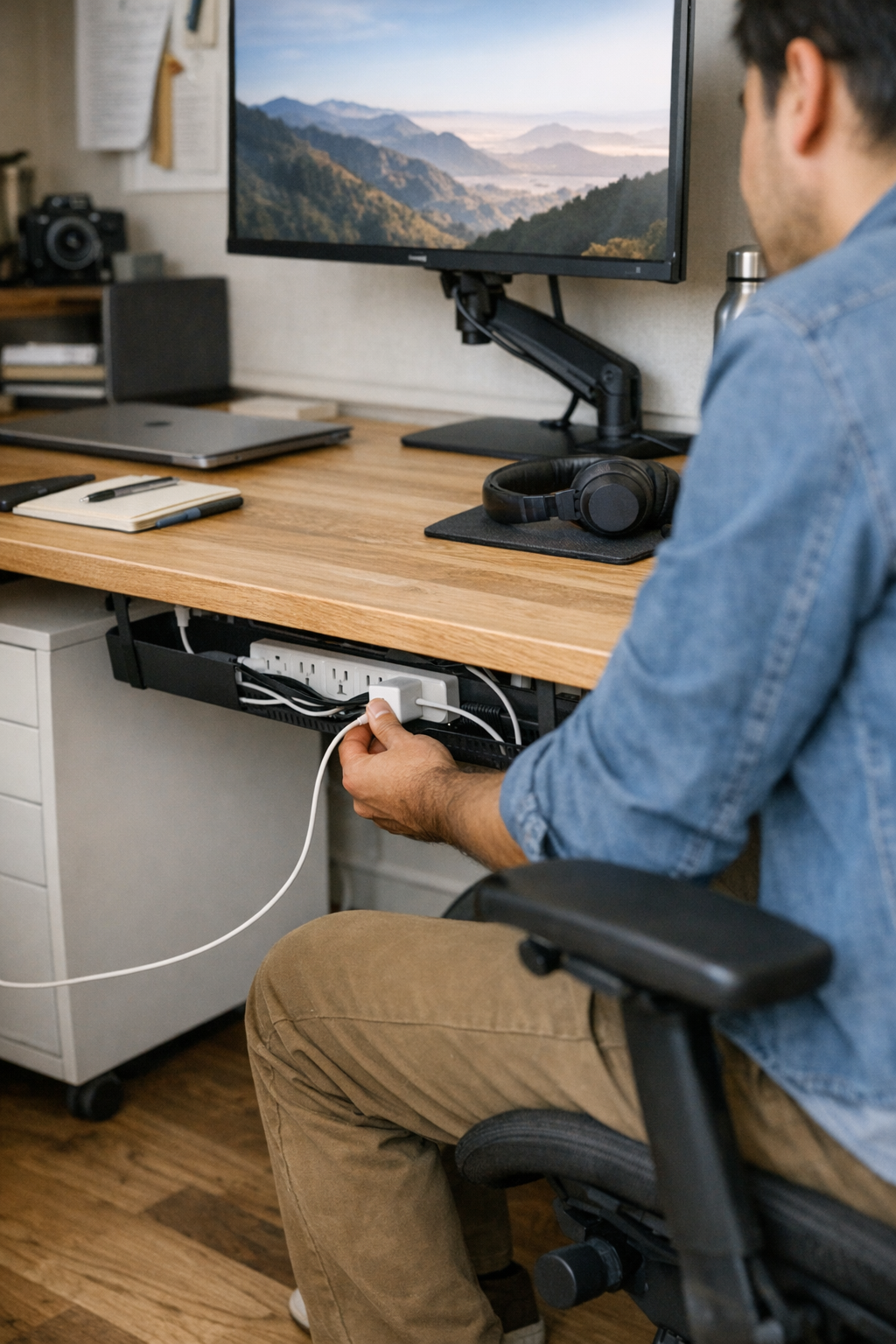
    Getting it right boils down to exact placement. Mounting a cable tray along the rear edge—close enough for an arm’s reach while seated—makes all the difference. Outlets stay hidden, but access isn’t a stretch or a blind reach below knee level. Real utility is measured not by looks, but by how quickly you can dock your charger behind a monitor or tuck a cable next to your day’s notes—and forget it’s even there.

    Small detail, huge impact: cable slack rides above your knees and chair wheels, instead of drooping into leg space or causing an unplug each time you slide your seat back. Snagged cords, unplugged laptops in mid-call, or unexpected tangles underfoot vanish from the daily routine—not because of surface tidiness, but because nothing interrupts the flow of real work.

    What the photos never show: when the right setup prevents new headaches

    Most “perfect” desk photos capture only the after—clean surfaces, no clutter. What they miss is how the setup responds when the workday shifts. Hide every outlet and you may trade visible order for the daily hassle of finding power out of sight. Go the other direction—everything accessible at arm’s length—and you face a permanent web of cables drifting across your workflow.

    It’s almost never about total concealment. The quiet win is in calibrating tray and outlet placement to match repeat reach: enough cable slack for comfort, not so much it drops to the floor. Too-short cords bring clutter back on top, while cable overflow becomes a hazard to legs and chair movement beneath.

    The sweet spot: a work surface where deliberate order isn’t skin-deep, and the details fade into the background because resets and mid-session changes just work. The surface adapts and recovers—without drawing attention back to a problem you thought you solved.

    Quick questions for real-life setups

    Can under-desk cable management work with any desk? Not always. You need at least a 10–15 centimeter clear back edge with no support rails or hardware blocking access—or blocking chair movement—if you want trays or power boxes to fit comfortably.

    Does hiding power always make sense if I’m charging all day? No. If you’re constantly plugging and unplugging, completely hidden outlets often cost you time. The best route is a hybrid: a tray or box mounted just within daily reach, or a desktop pop-up to handle the most-frequently swapped devices without pulling everything apart.

    Why does clutter return even after I hide outlets? Because the real world ignores best-laid plans. If cables are too short, or sockets are difficult to reach, you’ll start abandoning the setup—devices will migrate back to the desktop and the cycle restarts. It only holds if placement lines up with your genuine use pattern, not just the hope for less mess.

    Desk order that survives actual work

    The best desk setups are the ones you stop noticing. In practical terms, that means trays or cable boxes are hidden just far enough to clear the line of sight, but always within your routine’s natural reach. No arrangement stays perfect—devices multiply, tasks change, reset motions add up. Desk organization survives only if it moves with you—always a step ahead of cable creep, surface crowding, and the silent friction that comes from hunting for the right socket, again and again. The difference you feel isn’t in how the space looks but in how smoothly you can switch tools, reset, and move into a new task without even thinking about power. When access and order match your real workflow, the desk finally stops working against you.

    Explore the full WorkBasic collection

  • Why Bare Entryway Shelves Fail and How Containment Transforms Clutter

    Entryway Storage: Why Open Shelves Fail When Daily Life Moves In

    On day one, open entryway shelves give the illusion of order—shoes arrayed in a tidy line, bags parked, every surface clear. Within a single week, that controlled image collapses under real use. Wet boots leave pools that stretch across the shelf; backpacks wedge awkwardly, blocking the path; loose mittens and keys start to edge off the surface. Every drop-and-go is a little reset failure, and soon the entry zone is less a pass-through and more a bottleneck—clutter stretches out, footpaths shrink, and it takes a full sweep just to make space for tomorrow’s commute.

    The Drift: How Entryway Shelves Lose Control

    Open shelves promise simplicity but rarely withstand weekday traffic. Small disruptions multiply: one shoe shifts out, another item hovers over the edge, a lunch box topples into the shoe row. By midweek, your threshold narrows—not because you intended clutter, but because every dropped item compromises the clearing you rely on. Without containers or clear boundaries, disorder spreads in slow motion: a puddle spreads across shoe soles, grit builds up in corners, and bags dangle half-on, half-off the shelf, daring anyone to restore order.

    Routine movement adds friction every time. Bringing in groceries? That extra bag gets wedged, and the shelf collects clutter faster than it’s cleared. Rainy morning? One muddy shoe streaks the edge; by week two, the shelving is ringed with water stains and scattered gear. The initial quick-grab setup is lost—a grab-and-go zone becomes a site of delay and detours, and resetting the area requires a full-blown cleaning event, not the two-minute tidy you imagined.

    Seeing Open Shelves Tested by Real Life

    Direct comparison exposes the cracks: two entry zones, one with bare shelves, one with bins or dividers. Both look neat at first—shoes aligned, baskets for hats. But friction builds:

    • A spill on an open shelf creeps, touching every nearby item. With trays or bins, the mess stays contained—the fix is to empty a tray, not scrub a whole shelf.
    • Shoes spread: without clear edges, they migrate until you’re tripping over a splayed line instead of walking cleanly through.
    • Small objects slide to the front, tip over, or disappear underfoot—what’s visible is never what’s actually reachable. Each missed recovery adds to the reset workload.

    It’s not about how much room you have, but whether your setup holds the line against daily disorder—or simply stages it for a messier collapse in a week.

    Crowded Days Expose Weak Spots

    After a busy afternoon, the system’s flaws spike: Several people arrive—muddy boots, armfuls of gear, dripping grocery bags. Open shelves let water and grit spread unchecked; towels, meant to help, get left behind as soggy evidence. Every arrival pushes untidiness outward—eventually you stop even noticing the creep, and resetting feels less realistic every time.

    One extra bag is often all it takes for shoes to block the threshold. Instead of a free pass-through, you’re now forced to reshuffle piles just to get inside. The clear traffic line dissolves into slow-motion clutter, and instead of a returned item, you inherit a new obstacle that lingers for days.

    Containment Adds Boundaries—and Real Relief

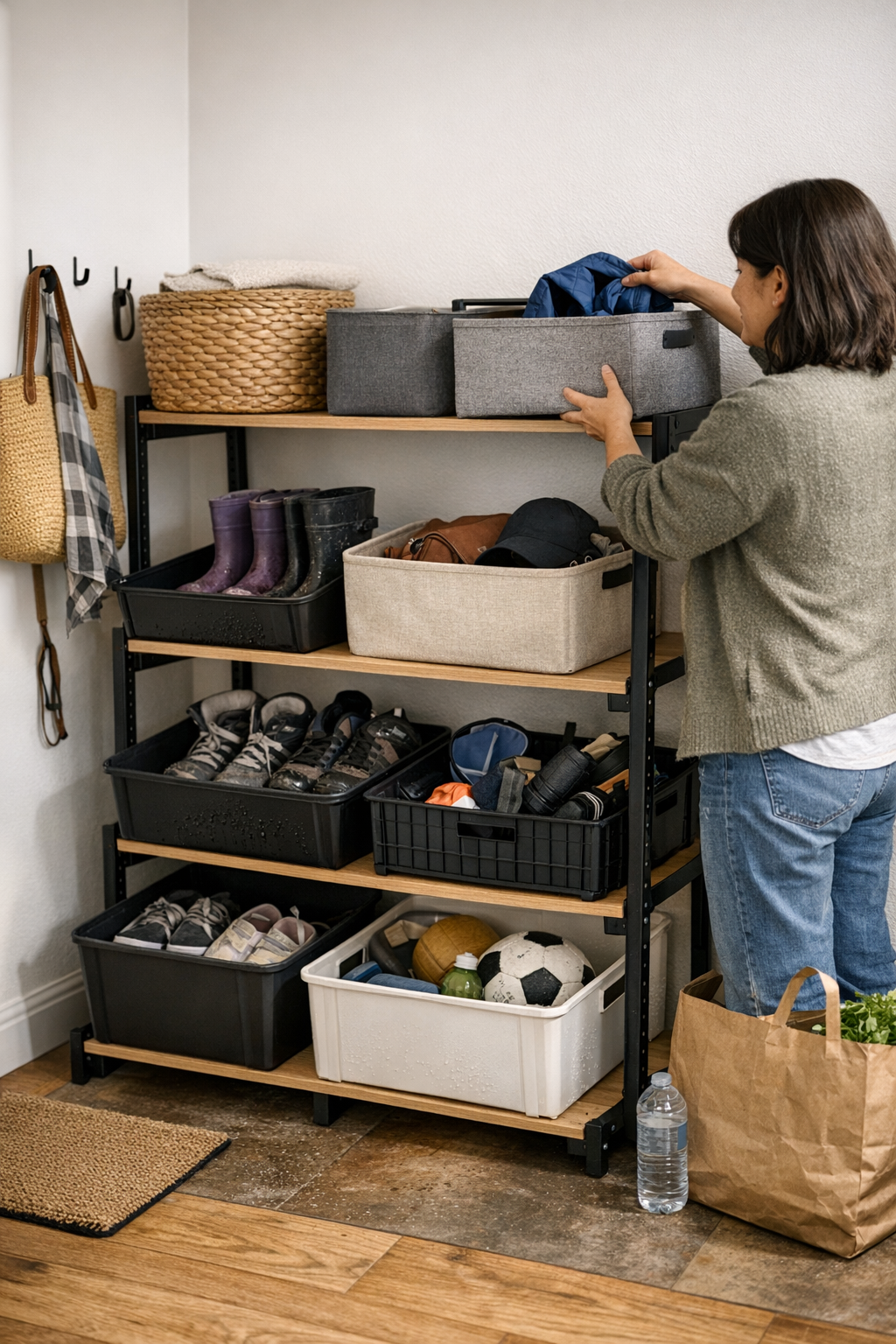
    Adding deep bins, trays, or modular containment means a subtle but firm shift: now each item has a designated zone, messes don’t leak into each other’s territory, and recovery shrinks from a major task to a quick fix.

    • Crumbs and debris are isolated in trays, not broadcast across an entire shelf.
    • Shoes stay grouped—lift the tray, dump, done—rather than hunting single shoes around the room.
    • Spills and dirt become localized cleanups, not silent, spreading backlogs.

    The reset stops feeling impossible. Instead of staging a whole-area rescue, you empty a single bin, wipe a tray, and the entryway’s clear path is back. The storage now works with daily traffic rather than losing to it, making the zone a lasting entry—not just a day-one illusion.

    Floor Space, Wall Storage, and the Illusion of Order

    It’s tempting to believe that lifting clutter off the floor onto wall shelves cures the entryway chaos. And wall-mounted shelves do open up tight passageways and reduce tripping. But without hooks, baskets, or closed compartments, even eye-level storage collects all the same drift—bag straps tangled, hats stacked, misplaced gloves migrating shelf-to-shelf. During a rushed morning, top shelves go unused, and whatever’s awkward to reach simply lands wherever there’s open space. Mixed solution works better: wall bins handle hats and gloves, lower trays catch shoes and wet gear, hooks anchor always-moving jackets—so the threshold holds up under traffic, not just in photos.

    Trouble Spots That Keep Coming Back

    • Shoes drift and sprawl: The row starts neat, then edges wider until the walking route is squeezed to the wall or crowded entirely.
    • Bench turns into overflow: The spot meant for sitting is lost under a pile of bags and coats left in passing. Now, tying shoes means balancing on one foot or clearing a mountain first.
    • The corner of no return: Mail, keys, and “for later” items build up in the same dead zone, forgotten until the next reset marathon.
    • Endless resetting: Every attempt to tidy up just pushes items from one zone to another—never really reclaiming openness for more than a few hours.

    Containment doesn’t erase these cycles, but it shortens the reset window. With every drop, there’s now a real destination—so messes stop becoming permanent squatters, and recovery happens in evening passes, not weekend overhauls.

    Quick Reference: Common Entryway Storage Questions

    Are wall-mounted shelves better than floor units for entry zones?

    Wall-mounted storage wins space and clears the entry path—especially in narrow hallways—but without bins, hooks, or divided sections, clutter simply migrates upward. For cleaning speed and everyday reach, combine wall-mounted racks with baskets or hooks, then use floor bins below to capture overflow and wet gear.

    How can I keep rain boots from spreading mud or puddles?

    Assign a watertight tray or deep bin directly for boots. This holds mud and water in one place, letting you dump or rinse the mess after storms instead of letting it reach the rest of the shelf. Make the habit: dump the tray regularly—otherwise, moisture still escapes the bin and spreads out again.

    Should I use closed cabinets or open shelving for drop zones with mixed use?

    Closed cabinets hide clutter but slow retrieval, especially when multiple people use the space. Open shelves increase speed—but only if you prevent overflow with bins or trays. For mixed, repeated family use, pair open shelving with deep or modular containers, or position the most-used bins inside lower cabinets for a balance of speed and containment.

    The Takeaway: Make the Reset Realistic

    In real transition zones—the “Betweenry” of household life—minimalist arrangements dissolve under the pressure of actual routines. Every dropped item tests your setup’s boundaries. Choosing bins, trays, and smart dividers prevents that slow slide from controlled threshold to daily obstacle course. An entryway that rebounds quickly after a messy day—a setup that clears with a five-minute reset, not an hour—keeps the threshold functional for the next round of entries. Every solution that shrinks the reset burden brings the zone closer to something you actually use every day, not just on move-in day.

    http://www.betweenry.myshopify.com

  • Why Choosing a Wide-Turn Pet Travel Bag Transforms Your Routine

    The first sign your pet travel bag isn’t working comes before you reach your destination—a quick reach, an awkward twist, or a knee smacked by a stiff bag edge as you wrestle keys and leash at the curb. No matter how carefully you pack, the real test of a pet travel setup is what actually happens in those stop-and-go moments: seat to sidewalk, lobby to elevator, coffee stop to car re-entry. What looks neat on the seat often turns clumsy in your hands. A bag that seems organized in the quiet of your driveway can become a bottleneck once you start juggling pet, leash, and your own essentials while trying not to trip over an overloaded side pocket. Yes, structure matters—because repeated travel exposes flaws far faster than any tidy first impression.

    Why Bag Shape Isn’t Just a Style Choice

    Pet travelers rarely test their bags anywhere but home and car, which hides the real pressure points. The appeal of a narrow, compact bag is obvious—it hugs your side, lines up with the seatbelt, stacks vertically. But movement tells a different story. Muscle memory breaks down when you need to swing your bag clear of your pet’s carrier, avoid pinching the leash, or slide out of a tight parking space. A slim shape that sits pretty will, after two or three transitions, knock your knees, force your wrist into odd angles, and limit your ability to grab wipes or treats without shuffling everything around. One-handed lifts grow messier by the hour.

    The little hits compound. Each pause on the road makes you more aware of blocked pockets, squashed items, and the grind of elbow-against-bag every time you guide your pet in or out. The difference surfaces fastest during short, repeat stops—the opposite of Instagram’s smooth travel setups.

    The Hidden Cost of Looking Tidy: Repeated Micro Frustrations

    Organized does not mean accessible. Stop for a gas station break or a quick errand, and the “perfectly packed” bag reveals its buried flaws. The wipes you need after your dog’s shake are wedged under the comfort pad, requiring a half-emptying just to reach. Grab for a water bowl and get the treat bags first—again. The pet carrier leans as you fumble zippers in search of what should be handy. Meanwhile, your wrist blames you for designing a pocket lineup that stacks essentials behind tight seams rather than opening up at your side.

    None of this is a one-time hassle. Each shuffle, each blocked reach, means repacking and recalming—not just for the pet, but for you, and not just once, but at every pit stop and pause.

    The “Wide Turn” Fix—and Why It Changes Everything

    The game changes when your bag shape supports real movement—especially around doors, seats, and those fast curbs that demand quick handling. A bag or organizer with enough width is not about carrying “more stuff.” It’s about avoiding that swing-tight, pocket-block pattern that narrow bags seal in. The payoffs are immediate:

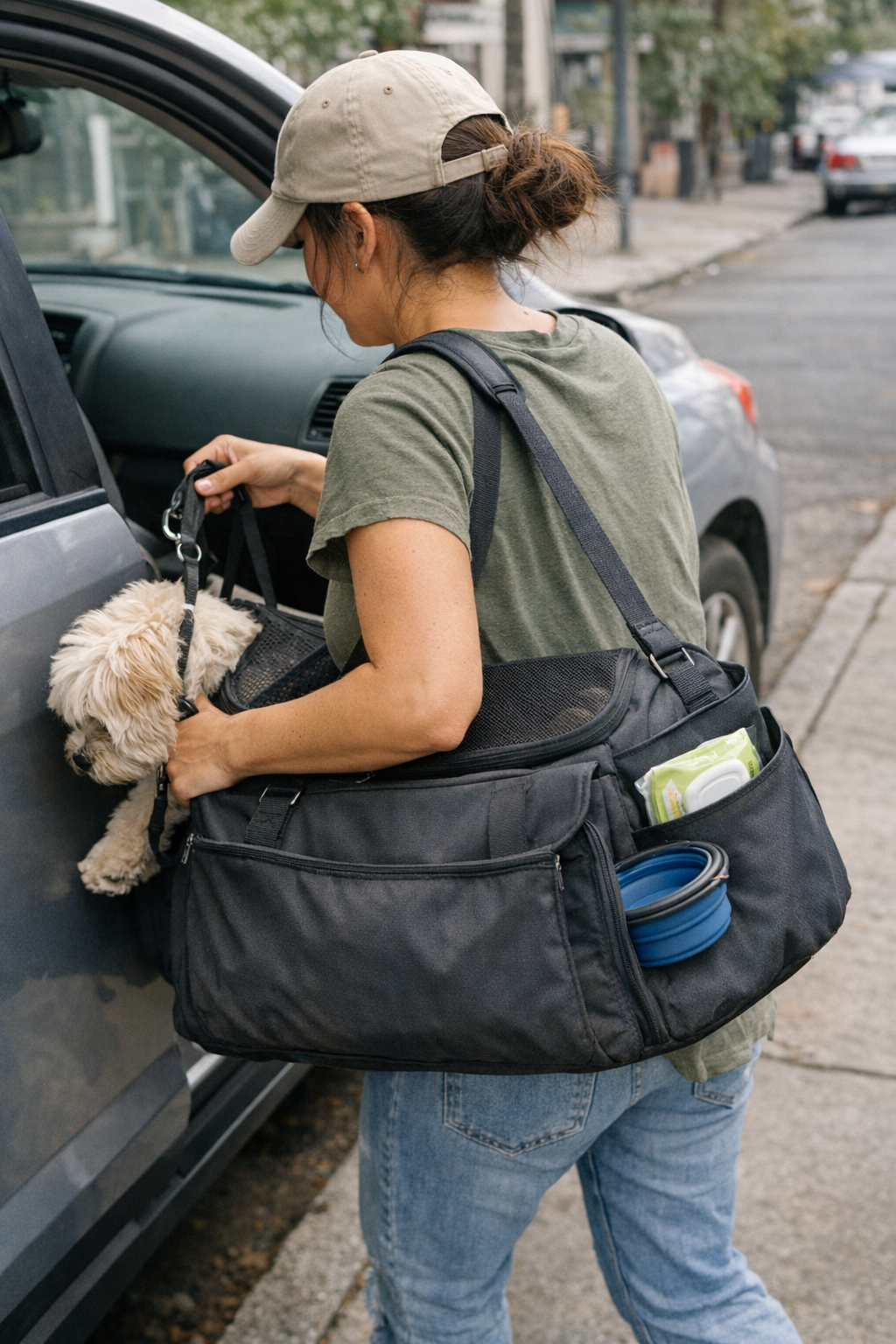
    • Body movement stays natural. Your arm swings out, not pinned by straps against your side. The bag arcs away from your knees and clears your stride by default, not with forced contortions.
    • Pockets and essentials open sideways, not in stacked layers. Instead of digging deep or rearranging every time, you reach laterally—wipes, bowls, toys each within sight and grab range, even during a quick stop.
    • Pet side stays calmer. During seat exits or sudden stops, the bag tracks away instead of slamming into your pet or leash hand, saving both of you that startle-and-reset cycle.

    This isn’t about organizing more neatly; it’s about breaking the reset loop, letting you recover from interruptions faster and restart movement without the same doomed repackings every few stops.

    Real Use: How Narrow Bags Keep Tripping You Up

    It’s a cycle most pet travelers will recognize: Park, unclip, try to squeeze your hand past a bottle and snack pouch. The handle’s jammed; your elbow scrapes a door pocket. You start to slide out, but the bag thumps your knee, again. On the sidewalk, you need wipes, but they’re buried, and the pocket you want is blocked behind the carrier. Pull out one thing, and everything else shifts, tangling leashes and pet gear. Comfort mats and toys are meant to smooth the trip—until they cover what you need, forcing more reshuffling.

    The bag still looks prepped. The travel routine collapses anyway. Packing perfectly at home fixes nothing about repeated sideline searches and blocked access once you’re actually using the setup for stops and starts.

    Choosing a Setup That Works After the First Trip

    The shift comes from switching to a travel bag or pack that lets you reach into a wide central compartment—not a pair of stacked, slim pouches that demand constant rearranging. Now, instead of a blind hunt or forced emptying, bowls, waste bags, and wipes land in your palm with no contortion. The bag swings out of knee range during seat exits, and after each pause, you restart moving instead of wasting time coaxing your pet and repacking lost gear. Real relief is not about a bag never getting messy, but about less friction every single stop after the first.

    The Compromise of a Clean Look

    Slim, tightly-packed travel bags promise tidiness at the expense of speed. If you must dig for a comfort mat meant to soothe your pet—but it’s blocking wipes or leashes—you lose both order and calm at crucial moments. It’s not a matter of packing more carefully; it’s about picking a layout that handles movement and sudden need, not just shelf appeal.

    What Happens When Pet and Owner Items Collide

    The overlap of “your” stuff and “their” stuff is rarely a one-time annoyance. You reach for pet cleanup and grab your own keys first, search for sanitizer only to tangle with a chew toy. Cross-packed pockets don’t just slow things down; they create repeat interruptions that compound every stop. The more compressed your packing, the more owner and pet gear crowd into the same bottleneck, and the more common these hiccups become—especially if you try to consolidate into one sleek, divided pouch.

    Does “Compact” Ever Work?

    Stacked dividers and compact, multi-pocket organizers make sense—right up until you try to use them while moving. If your bag forces you to stop, reshuffle, or double-check every time you need wipes, water, or a comforting toy, it’s working against you, not for you. The reality for anyone making repeated short stops: narrow, packed organizers create more stops-and-starts and more jostled pets, not fewer.

    It’s not about appearances—it’s about how your travel setup actually moves with you. Choose structure that supports wide, natural turns and single-move access to essentials. Your commute, weekday errand, or even road trip will run with fewer snags, quicker recoveries, and less pet stress. Neatness is easy. Handling, in the real world, is where a well-structured pet travel setup earns its keep—again and again, in every repeated use.

    Find practical, real-use-focused pet travel setups at PawGoTravel.

  • Transform Your Dog’s Morning Routine with Simple Placement Fixes

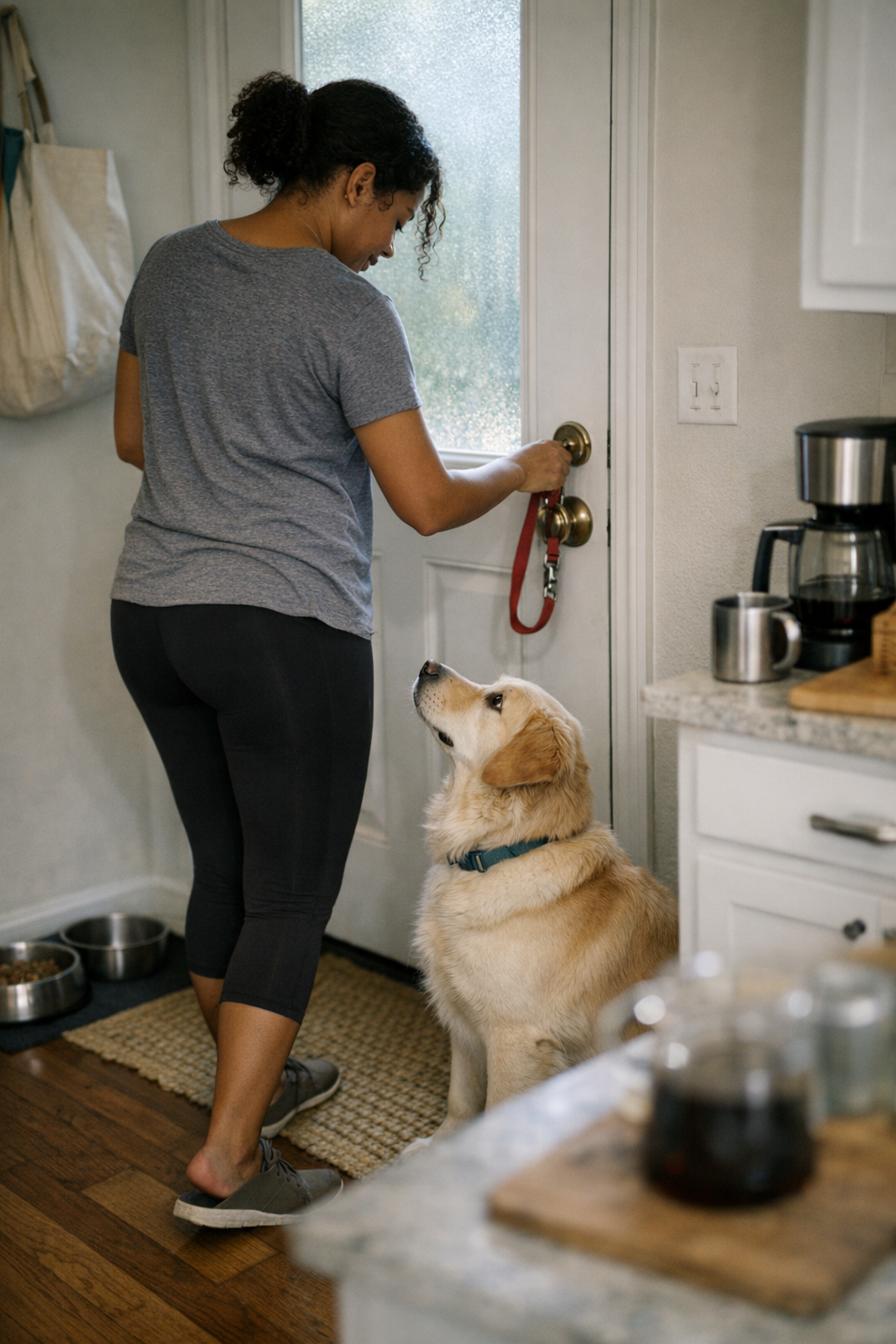
    Every dog owner knows the low-grade scramble: hands full, dog dancing by the door, and the leash is—missing or blocked by a basket of shoes. You’re already running late, yet again. Add an off-center water bowl or towels you have to cross the whole house to grab, and morning friction becomes routine, not exception. The difference between a routine that moves and one that drags isn’t chaos; it’s the same few setup mistakes showing up every single day.

    When the Routine Looks Tidy but Trips You Up

    You scan the area and think it’s organized enough. Leash somewhere by the door, bowls in a corner, toys out of walking space—or so you hope. It looks fine for a photo, but right as you’re trying to get out or clean up, something blocks the flow. You cross the living room for the third time, tripping over the chew toy near the door you meant to move. You’re patting down counters for wipes while your dog shakes mud across the entryway, because the container is tucked under the sink—out of eyeshot when you really need it. Visual neatness fades the moment real routine kicks in: every misplaced item turns the next dog task into a clumsy shuffle.

    The Small Pauses That Stack Up

    Individually, missteps feel harmless—a leash not at hand, a bowl placed three feet from where you actually feed the dog, wipes forgotten again. But when you’re backtracking five mornings a week to collect the same leash, or doubling back with a full mug and kibble scoop, that wasted motion is the real cost. Your dog’s circuit of anxious waiting at the door, your own silent grumbling, and the slow creep of clutter all feed each other. Routine quietly devolves into repeated micro-resets, never quite clean or calm. It’s not one mistake—it’s the same weak spot tripping you up in familiar ways, day after day.

    Spotting the Predictable Stalls

    The real warning sign? You already know where you’ll get stuck, every morning. If the leash is never on the right hook, the bowl always winds up blocked by a chair, or wipes migrate anywhere but the place your dog actually enters after a walk, you’re staring at built-in setup failure. These aren’t flukes—they’re spots where your current layout actively resists your daily rhythm. Like potholes you stop noticing, until another morning grinds to a halt for the same reason.

    Scene: Late Again, Same Leash Scramble

    Normal weekday, familiar scramble. The dog paces at the door, expecting you to move, but your hand comes up empty where the leash should hang. It’s looped over a dining chair two rooms away, from last night’s soggy walk. Your tone sharpens, the dog circles tighter, and now the delay turns up the tension for both of you. Five minutes later, you’re finally out, energy already drained—and it all started with a tiny, fixable placement blind spot.

    Access Over Appearance: Why Placement Beats Neatness

    Setup that looks “managed” often founders under real pressure. Bowls stashed just out of sight make sense until you’re caught mid-breakfast parade, detouring around chairs. A stylish leash hook isn’t much help if it’s in the wrong corner. Function fails before form—because repeated use, not first-glance tidiness, reveals where the friction lives.

    Movement reveals the cracks. The real test is whether everything you touch during the routine—bowl, leash, wipes—can be reached in stride. Are you forced to sidestep, double back, or stash items in spots that interrupt both you and your dog? The pause to hunt for a towel, the hesitation as your dog waits for a signal you can’t deliver yet, or the water bowl hidden behind your coat all signal a setup that absorbs, instead of easing, daily motion.

    Example: The Breakfast Path Change

    A minor shift—sliding the bowl directly along your kitchen entry—meant breakfast no longer involved acrobatic sidesteps. Now, food goes down on your way to the coffee, the dog settles on cue, and space stays clear for you to move. Not perfect, not pretty, but suddenly, mornings stopped grinding at the same spot. Small repositioning stripped out the repeated friction, lightening the start of every day.

    After the Walk: Reset or Repeat the Mess?

    Post-walk—the real test zone. You’re juggling a leash, keys, and a dog who just found every puddle. Where’s the towel? If you have to leave the entryway to track it down, wet paws get everywhere and cleanup snowballs. Wipes drifting out of reach, or the leash dumped on a random shelf, only guarantee a bigger mess and a slower reset for the next outing. When the gap widens between what looks “put away” and what you can grab with one hand, friction climbs quietly.

    Walk cycles fail if reset is a hassle. Every extra step between where you unclip the leash and where you wipe paws is a step you’ll be tempted to skip, setting up a bigger problem tomorrow. A towel bin at the door, wipes within easy reach, the leash always ending up on the same hook—all reduce the temptation to defer reset, turning chaos into habit you can repeat even when tired.

    Scene: The Never-Ready Towel

    It rains. The dog comes back dripping. The towel you need is nowhere near—the linen closet’s around the corner, the entry mat’s already soaked. So you let the dog in, and the job shifts from simple wipe to chasing muddy prints across two rooms. Reset gets pushed later, and soon, every entry brings new mess. Multiply by a week and no one wants the cleanup job, so the “routine” blurs into an ongoing, losing battle.

    When Looking Organized Makes Living Harder

    An area arranged for the camera does not always serve an actual daily routine. Bowls under low shelves look neat, but force a crouch every meal or spill into walkway space. Toys in stylish baskets overflow and block the path by lunchtime. Crates installed for symmetry end up blocking closets or making shoe access a daily obstacle course.

    The mismatch rarely shouts for attention—it’s the low-grade drag you ignore until a spill, a trip, or frustrated shoes-in-hand finally snaps you out of autopilot. Accepting small, daily delays or discomforts eventually crowds out time and energy. It’s rarely a crisis; usually, it’s the buildup of silent resistance every time you run the same clunky circuit.

    How Tiny Setup Shifts Restore Rhythm

    Some fixes are so low-tech and effective they disappear into routine: hook the leash on the doorknob, breakfast bowl in your flow, cleanup bin beside the return door. The change is instant—walks start on time, feeding blends into your own prep, wipes are always actually there when mud happens. There’s no app, no gizmo—just setting up to match the way you already move.

    The real payoff isn’t in how it looks but how it feels to use, over and over. The best setups ask nothing extra from you—no willpower, no memory games, no daily search party. They force friction out of the pattern. Suddenly, mornings are lighter, not flawless. You don’t win by chasing tidiness, but by clearing what always saps time or patience, one tweak at a time.

    Sign: Routine Holds, Even When You Don’t

    You know the setup works when stress spills over but the basics hold: leash in reach, bowl in place, towel at the door. Less doubling back. Fewer silent curses. The dog waits, but not in a confused circle. Routines tighten up just enough that even on a bad day, you notice any new friction immediately—because the absence of hassle finally stands out.

    Friction Always Returns—Here’s When to Rethink

    No matter how dialed-in your layout gets, daily use pushes things out of alignment. Bowls shift after a mop, leashes go rogue after a last-minute walk, the best entry spot gets blocked by new clutter. If you’re pausing, searching, or sidestepping for the same item more than twice in a week, it’s time for a tiny rethink—or you’ll just keep resetting a routine that never quite fits the day it’s supposed to serve.

    What looks neat at rest might undo itself the second real movement resumes. If the bowl lands back in the high-traffic lane, or towels migrate away from wet entry points, or the leash needs constant hunting, set up again, this time matching where your routine actually pulls you. When the setup serves you instead of slowing you, the whole day runs with less drag—and you’ll notice the difference at the door, the kitchen, and every return trip after a muddy walk.

    Explore practical daily-life dog setups at DogPile

  • How Thoughtful Storage Solutions Keep Your Closet Organized Daily

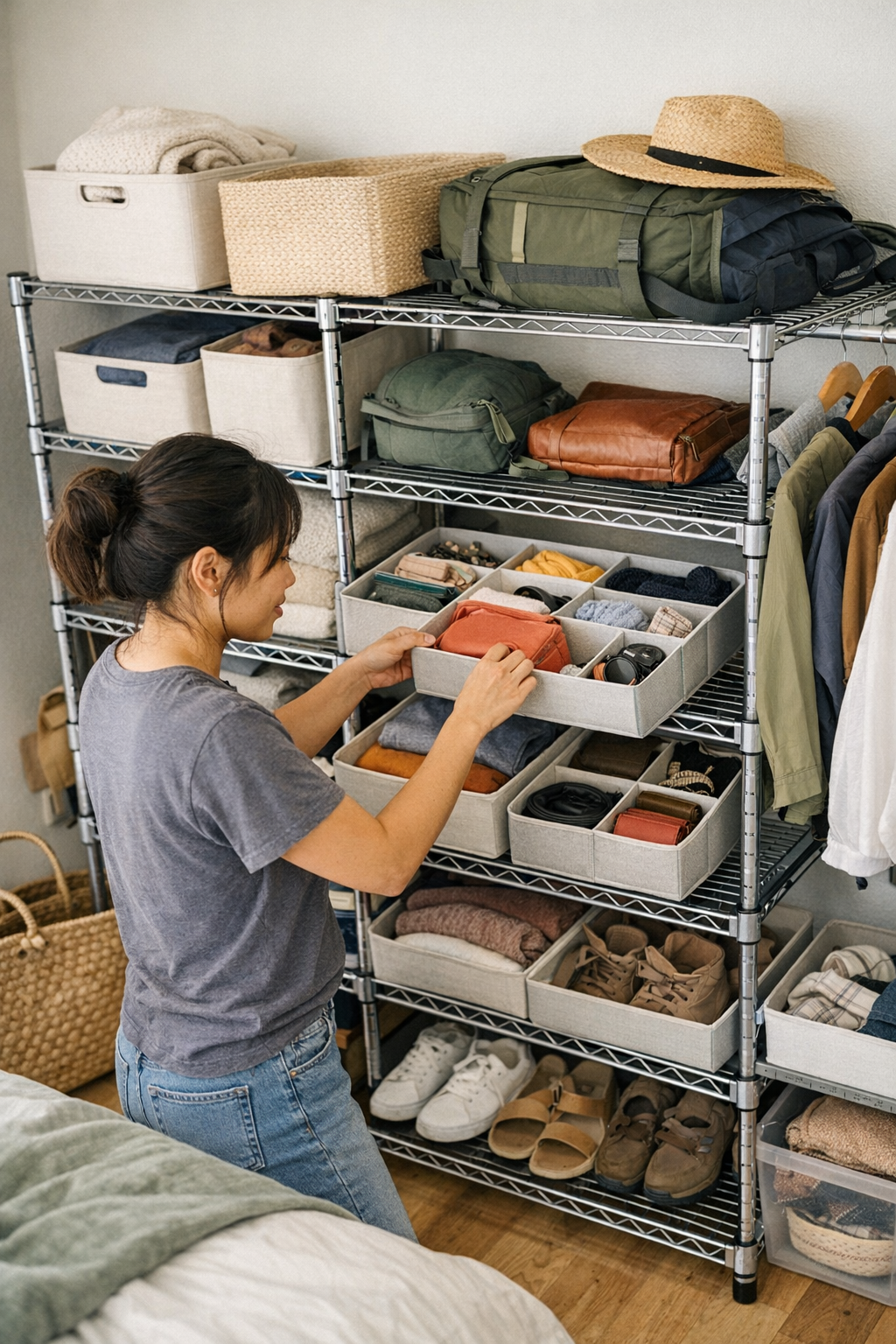
    The False Start of Tidy Storage — You know the sequence: Sunday’s overhaul leaves your closet looking like a catalog shoot—shirts in crisp stacks, baskets squared off, everything in its lane. But this isn’t your first round. By Wednesday, those neat rows are tilting, categories bleed together, and the bins meant to simplify things quietly morph into black holes. Socks, belts, a balled-up t-shirt—all thrown together in the same catch-all container. By Friday, the system frays. Now every quick reach or rushed search pulls you into a low-level guessing game: Where did that shirt go? Why are the gym shorts under a winter scarf? The longer you use it, the more daily friction creeps in, slowing you down and undoing all that Saturday work.

    Where Storage Setups Really Break: Daily Routines

    The true test of a closet, shelf, or entryway isn’t how sharp it looks right after sorting. It’s in those everyday drills: grabbing a sweater before work, rifling for a missing glove, sliding aside a pile for just one item at the back. Shared closets amplify the problem—two people, one small space, and a constant shuffle just to find what you need. Every tug, every over-ambitious pile, exposes the weaknesses that don’t show up in organizing videos. It’s never just about how things look—it’s about whether your system can take a hit and reset, or if it quietly falls apart under routine pressure.

    When Order Blurs: Blending Categories and Overflow

    Visual order vanishes at the first sign of hurry. Stacks start straight and strong but bend as soon as anyone grabs from the middle. That small disruption—snagging a t-shirt midweek—topples the tower, and next time, the gym shorts and undershirts get stashed in the same pile. Flat surfaces get colonized by whatever lands there next: a coat that didn’t get hung, last night’s laundry, the bag you swore you’d empty later. Each overflow blurs what belongs where, until there’s no real logic beyond “what fits right now.”

    Baskets and bins, if left unchecked, become a muddle. What starts as designated space for accessories blurs into a pile-up of mismatched socks, flyers, wallets, and whatever was easiest to stash out of sight. Without real separation inside the bin—or a habit of regular resets—what’s supposed to be convenient only sets you up for more work later.

    Deep Bins: The Quickest Path to Lost and Mixed-Up Items

    Deep storage doesn’t equal better storage. Deep bins seem practical—great for bulky items or seasonal swaps. But in daily use, they become the land of the lost. You toss things in “just for now,” but months later, good luck finding the scarf or backup towel you meant to keep handy. Worse, every new addition presses into the layer cake below, mixing unrelated things into forgotten territory. What began as a backup solution becomes yet another mess you’ll have to unpack and re-sort.

    This plays out all over the house: hallway cubbies that eat umbrellas and shoes until you find only mismatched pairs, or laundry areas where every clean wash ends up in the one overlarge basket, blending socks, towels, dish cloths into one heap that resists every reset.

    Reshuffle Fatigue: When Storage Asks Too Much

    When every retrieval feels like two steps forward, one step back, something’s off. The telltale signs: you’re restacking piles just to get what you need; you’re playing sliding tower to avoid a landslide; you’re fishing for lost socks at the bottom of a bin that was only ever meant for hats. If you waste minutes resetting what should be ready to go, your storage isn’t keeping up with real life. Over a week, a minor inefficiency multiplies—what should be a one-motion fix becomes a daily irritation you have to work around.

    Scene: The Shared Closet Crunch

    You and your partner reach for clothes in the morning. The front row looks tidy, but anything past that—half-zipped hoodies, off-season gear, the last-minute “where does this go?” items—sits half-buried in the back. The basket for belts is now a free-for-all: wallet, keys, a single glove. Every morning turns into a mini-reshuffle just to start your day. The original organization has turned into a puzzle box where the solution gets harder each round.

    Storage that Works: Anchoring Categories and Streamlining Access

    The leap from “looks organized” to “stays organized” comes from really dialing in how you separate, see, and retrieve what you need. Shallow bins with clear dividers stop the domino effect. Each type of item gets a defined slot—no rooting around, no upending a whole basket for one belt, no blind guessing. Categories stay visible and honest. You can use, return, and move on without breaking the setup; the shelf edge stays neat and nothing slips backward to be lost.

    The simple upgrade: Save deep bins for things you touch rarely—extra bedding, winter boots, those bulk-pack towels you never need in a rush. Reserve prime space for shallow, segmented containers, right where you need them. Label if you want, but the bigger win is making category lines so clear you don’t accidentally cross them during a hectic week.

    High-Traffic Trouble Spots: Entryways and Utility Zones

    Storage congestion isn’t only a closet problem. Entryways pull in their own circus: baskets for hats become the drop zone for whatever’s in your hands—mail, keys, reusable bags. By Friday, you’re digging through a mixed pile just to find the gloves you need for the morning commute. The fix: tighten the function. Use dividers or separate bins for each high-use item—one for mail, one for gloves, another for scarves or sunglasses. That focused separation means less spreading out, less “I’ll deal with it later,” and fewer last-minute delays while you hunt for something obviously out of place.

    Laundry rooms show the same tension. One giant bin might look efficient, but in practice, spills into other surfaces as soon as someone’s in a hurry. Smaller, labeled bins or trays for detergents and supplies mean you can restock or wipe up without constant rearranging. The end result: a daily reset in a couple of minutes—not a mini-project every weekend.

    Is Your Storage Setup Failing Your Routine? Key Warning Signs

    • Piles that sag, spill, or lean—never holding shape through the week
    • Bins that become a jumble—everything mixed, nothing clear
    • Overflow creeping onto the floor or spare surfaces
    • Needing more than one step to find your daily essentials
    • Locked in a weekly loop of sorting, shuffling, and starting over

    If these sound familiar, your storage isn’t keeping pace with real habits—it’s hiding extra work behind a surface-level reset, letting clutter regroup behind the scenes.

    Small Tweaks, Real Daily Difference

    Take fifteen minutes to map out your friction points: which surfaces collect clutter fastest, which shelves collapse by midweek, which bins you dread opening. Trade deep catch-alls for shallow, sectional storage in the high-traffic zones. Label only if it helps, but trust that real separation—physical dividers, distinct slots—matters more than a pretty tag. Sometimes just one divided bin transforms the daily grind—you grab what you need, things stay put, and the end-of-day tidy is almost automatic.

    The best storage doesn’t just look good on Sunday—it survives Monday’s rush and Thursday’s overflow with barely a reset. When you can access, use, and return each item in a single step, messes don’t pile up and “organizing” stops feeling like a never-ending redo.

    http://closetworks.myshopify.com

  • Shelf Liners Transform Entryway Cleanup Into Quick, Effortless Tasks

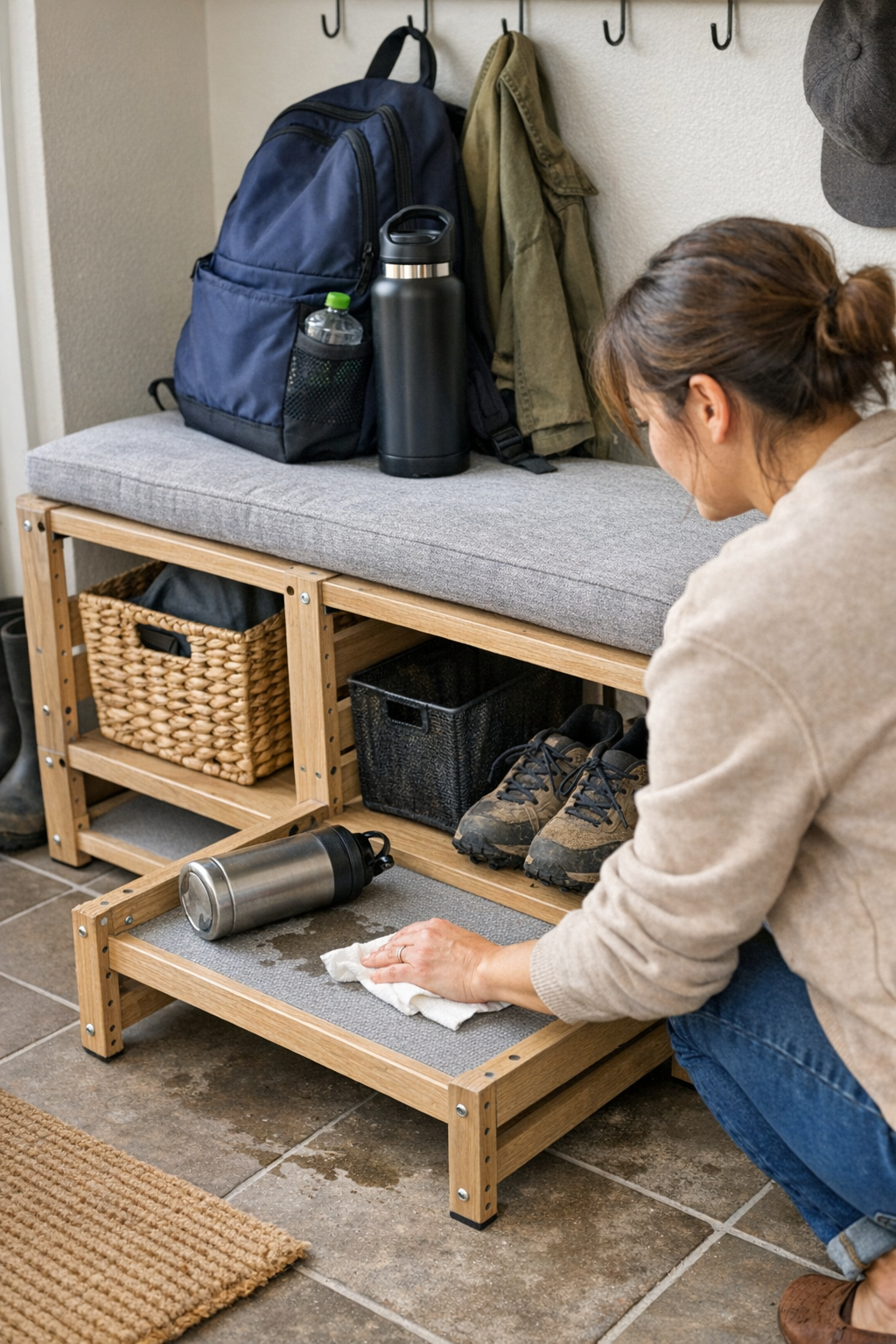
    No entryway setup stays manageable for long—especially when real life rushes through it. The baskets may sit straight and the bench may look clear after a weekend reset, but the order slips the moment someone crosses the threshold with rain-soaked shoes, a runaway water bottle, or an armful of gear. One muddy drop or missed spill is enough to shift your storage from “reset-ready” to “clogged and stained”—with dirt pressed into paint, seams swelling under leaks, and sticky patches you dread tackling. The illusion of control fades fast. If your entry zone isn’t built to withstand daily friction, every cleanup slows down, and each pass-through leaves the space less usable the next time.

    Mistakes That Don’t Show Up Until You’re Rushing Out the Door

    Most so-called smart storage plans seem fine at first—but they rarely keep up with real, repeated use. The difference becomes obvious only after routines collide day after day. A bench that once fit three pairs of shoes is now ringed by double that number—mud trailing off the soles, extra pairs crowding the path. Baskets underneath fill with umbrellas and backpacks, but one slow leak from a forgotten bottle stains the bottom and starts a chain of delayed resets. Soon, what was meant to speed your mornings just blocks the route out. Order that looked “set” begins to resist maintenance—reset times climb, and the urge to ignore messes grows stronger.

    Where Shelf Liners Change the Game

    The real test of an entryway isn’t how neat it looks right after a reset—it’s how quickly you can undo the mess when a spill or splash strikes. Shelf liners draw a hard line between daily mess and permanent damage, turning a messy drop zone into a manageable, wipe-and-go surface. When someone drops a dripping raincoat, or a yogurt tube leaks inside a bag, a liner means a fast cleanup—no basket-pulling, no scrubbing. The threat of water stains creeping under storage or dirt biting into painted wood simply disappears.

    Skip liners, and every reset multiplies in effort. Stains get worked into seams, sticky zones demand a full scrub, and “just a wipe” turns into a full job. You start letting cleanup slide. Over time, a small mess grows into a larger, more permanent obstacle—and even a quick reset feels out of reach.

    Real-Life Reset: A Scene from the Side Entry Zone

    The reality of any in-use entry is pressure at the busiest moments—bags dropped on the seat, shoes overflowing onto the floor, and a bottle tumbling until its cap pops free. At that critical moment, your storage either holds up or becomes a bottleneck.

    • With liners: You notice the spill, grab a towel, do one pass, done—no checking for water pooled under baskets or damage at the seams.
    • Without liners: Moisture seeps into corners, sticky patches turn into stubborn stains, and resets drag out as you dig out baskets, hoping the swelling hasn’t already started.

    The real friction isn’t the mess itself—it’s the added reset burden that compounds. Eventually, anyone in a hurry sidesteps the whole area, and the original flow of bags, shoes, and people is blocked at the threshold. The supposed “system” quietly shifts from help to hassle.

    How Liners Shorten Cleanup and Save the Setup

    The difference a liner makes is lived, not imagined—especially during the peak moments after storms or on heavy-use weeks. Each minute you save on cleanup is a minute the storage actually works under pressure. In direct use, swapping to removable, slightly textured liners cut one family’s muddy shelf reset from ten minutes down to two on a 32” shelf. That payoff matters—not just for neatness, but for reclaiming the entry as a through-zone, not a work zone, even with crowding and back-to-back arrivals.

    Instead of dreading the stubborn gray line at the shelf edge, you clean once and move on. Drips and pools no longer set the timer on long-term damage. The real win: you keep up daily, so the mess never builds high enough to reshape routines around it.

    Where Liners Help—And Where They Don’t

    Liners solve the mess—not the overflow. They defend against mud, salt, and routine leaks, essentially giving your entry shelf an armor against repeat abuse. If your threshold is hit daily with wet boots, open lunch boxes, or sandy gear, liners keep the reset simple and keep the underlying surface ready for another round without a full teardown.

    But liners don’t control accumulation or flow. They can’t make kids put boots on racks or stop bags from taking over the bench. System drift—where temporary drops become permanent piles—still happens if the structure doesn’t match your actual use. Liners just keep a small mess from turning into a job you start avoiding.

    Tips for a Smoother Threshold Flow

    • Pick removable liners: Quick to shake out or swap—even after a season of mud and grit.
    • Get texture with restraint: Enough to grip gear but not so much it holds grit beneath surface wipes.
    • Cover seams and corners: The first places water creeps and grit eats through paint—skip these and resets get longer, fast.

    The Practical Payoff: Reset That Matches Reality

    Shelf liners in transition spaces won’t impress guests—they’re there to defend the zone you actually use. The setups that last are always the ones that make resets short, storage accessible, and friction invisible. If you can clear soaked sand, salt, and spilled drinks in seconds—not minutes—the path stays open, routines keep moving, and the “system” stays a tool, not a time sink. The real advantage comes not in show, but in reclaiming the entryway as a true transition space—one you reset easily, so blockages and workarounds never become a permanent feature.

    Find practical entryway and threshold storage solutions at Betweenry.

  • Creating a Dedicated Power Corner to Boost Shared Workspace Efficiency

    Most desks can look clear, but still force awkward pauses and clumsy reaches—especially in shared setups. Whether you’re working from a compact team bench, a hot-desk, or a family study area, the discomfort isn’t always obvious at a glance. It shows up the moment you need a charger: adapter bricks slide just out of reach, cables cross your notebook, and finding power means fishing beneath the desk while someone is trying to type. What looks organized quickly breaks down as each person moves, swaps devices, and makes improvised changes. The friction keeps returning, no matter how clean the surface appears.

    Where Tidy Meets Trouble: The Subtle Ways Clutter Creeps In

    Start the week with a clean slate—laptops charged, cables tucked into a desktop tray, adapters in the corner. But watch how fast real use unravels that neatness. By noon, someone snakes a charger across the desk, another person nudges a cable under the monitor, and by the afternoon, the old patterns creep back:

    • Cables sag over the keyboard just as you open your notebook mid-call
    • Adapters drift towards the mouse, catching sleeves or shifting piles of paper
    • Outlets vanish behind monitor stands, so plugging in means blind hand acrobatics

    This is the “desk reset” nobody wants: order disappears with every user. Without a fixed, anchored power corner, friction accumulates unannounced—broken focus, tangled wires, and that all-too-familiar crawl under the desk for a socket. The cycle repeats: accidental unplugs, slow restarts, and more interruptions than you notice in the moment.

    Defining the Power Corner: What Changes, and Why It Matters

    A true “power corner” becomes the one spot where cables and chargers don’t invade your workspace. Set at the back edge—near wall power but away from arms, legs, and your workflow—it acts as a stable control point. Every laptop brick, phone charger, and adapter stays routed to this base, held inside a cable box or tray, not spilled across the surface. That one detail transforms the routine: no more dragging a chair around stray cords or realigning the mouse each time after charging a device.

    The shift is instantly clear in daily use:

    • Cables hold their line—they don’t wander into another person’s elbow zone
    • Nothing is coiled up around chair legs or pooling beneath your briefcase
    • Devices can be unplugged and replugged without a tactical shuffle of notebooks or reaching under the desk

    This isn’t about cosmetic tidiness—it’s about cutting out the hidden resets and keeping essential cables right where you can find and use them. After several handovers, you notice: fewer device mishaps, no missing adapters, and you gain back all those seconds normally lost to fiddling with wires.

    How Desk Setups Fail: Recognizing the Real-World Friction

    A clean-looking desk doesn’t guarantee smooth work. Under repeated use, flaws surface:

    • Chairs repositioned just slightly, pulling a cord across your writing arm
    • Bricks teetering at the desk edge, falling and breaking your train of thought
    • The outlet “hunt”—one person packs up, takes a charger, and throws off the next user’s routine

    Here’s where the real difference emerges: an anchored power corner trades a bit of clear space for reliability. Power and data lines follow the same route, time after time. No more pausing mid-task to untangle or reorient before plugging in. It’s a structure that survives the actual pace of work, not just the appearance of order.

    Testing the Difference: Clutter Drift vs. Anchored Calm

    Day one: the desk’s clean, but each new user has to trace cables, untangle a charger, or slide a device aside to find power. The trip-ups build: work slows, energy leaks away, even if nobody notices in the moment. People become cautious, trying not to trigger another unplugged laptop or snagged headset cable.

    Day two: after adding a weighted cable box and charger tray to one rear corner, the rhythm changes. Wires stay out of sight, adapters are where you expect, and legs aren’t navigating a mess of cords under the desk. Swaps between users don’t require a micro-reset; the desk is ready in seconds. These returns matter most where team turnover is high or devices change rapidly—co-working tables, rotating project benches, creative stations used by several people a day.

    Simpler Returns: How One Change Alters the Whole Routine

    Add a single cable tray and weighted box at the rear-left desk edge, and the routine shifts. No more cords looping through the mouse area, or charging lines threading under notebooks. Coming back from a meeting isn’t a rescue mission for cables or adapters—it’s direct: sit, open, resume. The behind-the-scenes structure absorbs the mess, so you don’t have to fix it each time.

    This is most obvious after a few full cycles: Instead of daily order breaking down, an anchored power spot keeps basics in place. The desk resets cleanly no matter how many hands or devices swap in. Projects can shift, people can come and go, but the essential cable zone stays predictable—supporting fast returns and steady attention on the real work instead of the logistics.

    Quick Desk Power & Cable FAQs

    How do you practically set up a “power corner” on a shared desk?

    Choose one rear desk corner, typically nearest a wall outlet. Fix a cable box, tray, or weighted organizer in that corner. Route every power brick, charger, and data line through this entry point—don’t let cables migrate across to other zones or dangle into leg space. If cables tend to shift, use clips or sleeves to anchor excess, and label only the primary long-stay lines so every reset sends devices back to the same point—no searching required.

    Why is cable control more urgent in shared workstations?

    Without clear boundaries, power cords and data lines intrude everywhere, forcing resets all day. As more people swap in, the mess multiplies—slowing every user, raising the odds of accidental unplugging, and guaranteeing that every new task starts with someone fixing the layout instead of actually working.

    What’s the most common cable mistake on busy desks?

    Allowing chargers and wires to sprawl unchecked, both on the surface and underneath. This leads to tangles that grab on notebooks, falling adapters, and endless seconds lost to sorting out what goes where. On a busy desk, clean cable management isn’t just aesthetic—it’s critical to keeping work smooth, reliable, and fast to reset.

    Seeing the Payoff: How Anchored Power Brings Calm to Shared Spaces

    Improved desk calm isn’t about surface looks—it’s about how you move from morning to mid-day without being tripped by the same cable twice. Less hesitation, less device drama, less time wasted on micro-resets. That small, lasting change—anchoring power at a single point—quietly prevents momentum loss that scattered setups make routine.

    If your work involves shared desks, frequent device switching, or simple co-working, make the “power corner” your new standard. You’ll feel the reset friction drop with every return—and find out how much smoother work runs when the invisible details finally start working with you.

    Explore the full WorkBasic collection