Blog

  • Why Breathable Underbed Storage Bags Keep Linens Fresh Longer

    Underbed linen storage looks like the obvious answer for tight bedrooms—until the hidden tradeoffs start stacking up. That underbed zone promises clear shelves and easy resets, but in real use, it can turn into a cycle of musty sheets, baffling slowdowns, and extra laundry. What’s sold as a low-profile solution quickly becomes one more system to fight: bedding packed away clean re-emerges slightly stale, resets take longer than they should, and the space you “freed up” ends up pushing new clutter to other corners. The difference between just hiding bedding under the bed and actually making everyday resets smoother only shows through real routines—especially when fresh backup linens are supposed to be ready at short notice, not just tucked out of sight.

    The Hidden Drift: When Linens Go Stale in Storage

    Pulling the storage bag out the first time feels like progress. Everything’s zipped away, shelves look clearer, and there’s even room in the closet again. But weeks later, friction reappears: the bedding that went in crisp and clean comes out oddly flat—sometimes with a faint, stale smell. The outside’s still tidy, but the next swap stalls at the first sniff-check. You’re left with an unpleasant choice: use linens that don’t feel fresh, run an unplanned late-night wash, or start reshuffling other storage zones to find a better set. This isn’t a one-off nuisance; it quietly repeats, turning quick resets into a new kind of slog.

    That extra rewash is a real cost. Shared rooms or multi-use setups especially can’t afford slow reset cycles. Instead of a grab-and-go swap, you’re stuck airing sheets in the hallway or scrambling through layers of storage you were supposed to avoid. “Stored and ready” rarely lives up to the name when underbed setups don’t actively keep linens usable.

    Breathable vs Airtight: Where the System Fails First

    The everyday difference between airtight bins and breathable underbed bags isn’t about looks—it’s about how well routines hold up. Airtight plastic bins or vacuum bags feel efficient and promise dust protection. But sealed storage traps even trace moisture, especially if bedding gets packed away before it’s bone dry or if the weather’s humid. After only a few weeks, that sealed environment turns crisp sheets dull. The first attempt at a quick reset often reveals a wall of invisible setbacks: linens need re-airing or rewashing, and your “organized” storage is actively slowing you down.

    Breathable bags—especially those with dense cotton or mesh panels—let air circulate just enough. They rarely look showroom-sharp, but you can grab sheets without a pause: no stale odors, no lost minutes to extra prep. The payoff is subtle but immediate during changeovers: bedding is ready when you are, not held hostage by the storage choice.

    Real-World Reset: Where Airflow Makes or Breaks It

    Picture a normal weeknight. You reach under the bed for guest linens ahead of a late arrival. If airtight bins have locked in must and condensation, your options shrink: run a last-minute wash, settle for less, or scramble for a backup buried in another zone. The friction of a delayed reset only gets worse when you have multiple beds or frequent guests. A setup that promised more calm just passed the work along to you, one slow reset at a time.

    How the Wrong Setup Becomes a Hidden Time Sink

    Neat stacks and dustproof bins can disguise the real failure: storage that requires too much interference. If you find yourself dodging the bottom layer, pulling sets early to air them out, or avoiding the underbed stash entirely, the system isn’t working. Quick grabs become a hassle. The “organizational win” that looked so sharp—lined-up bins, hidden clutter—quietly adds up to shuffling, decision fatigue, and stray backup sets drifting anywhere there’s open space.

    In small rooms or shared spaces, every inch is supposed to serve a function, not just a visual ideal. Repeated micro-delays—wrestling out bins, checking for freshness, dodging damp in the corners—multiply until your storage is a source of friction, not relief. You lose time, linen availability, and any sense of routine flow.

    Breathable Bags: The Imperfect Edge That Makes Resets Work

    Switching to zippered, breathable underbed bags may mean giving up those razor-straight lines. But the difference in actual use is immediate. Linens stay fresh for weeks—not just shielded from dust, but actively ready to use. Instead of sniff-testing, airing, or returning to re-sort, you pull out bedding and go. The shape may sag and shift, but the workflow stops tripping over itself. The best setups are the ones you barely think about: when beds can be made in a single motion, and storage stays neutral instead of hijacking your reset routine.

    Practical Underbed Linen Storage: Real Tips, Not Just Theory

    • Pick breathable bags with tightly woven or mesh panels. They block dust but let enough air through to keep linens fresh, even during long gaps between uses.
    • Always pack linens bone dry. Even slight dampness triggers must or mildew—wait those extra minutes for cool, dry fabric.
    • If dust keeps breaking through, line the bag with a washable cotton layer rather than switching to plastic, which traps more humidity than it blocks dust.
    • Build in a gentle reset: Every 4–6 weeks, open the bags, shake, and refold. This low-effort move prevents stale buildup and flagging freshness.
    • For humid rooms, a brief monthly airing is often enough—don’t wait for a problem before acting. A missed refresh only gets noticed when it’s too late.

    The “Organized” Look vs. a Setup That Actually Works

    The line between order and function shows up in how easily you can keep the system running—not how perfect it looks after you set it up. Airtight, stackable bins push clutter out of sight, but keep you coming back to troubleshoot. Breathable bags trade style for reliability: access is faster, resets flow without extra steps, and hidden friction fades away. Over months, what matters isn’t dustproof perfection, but the hidden cost of organizing that can’t keep up with daily use.

    Practical underbed storage isn’t a one-shot improvement—it’s a quiet difference you feel every time you change the sheets, or don’t have to. See more practical storage ideas at Gridry

  • How Accessible Comfort Items Transform Pet Travel on Unfamiliar Streets

    Every pet owner hits this wall eventually: The travel bag looks ready for the trip—wipes zipped, comfort plush on top, everything lashed down. But the first curbside stop blows it open. One leash tug and the bag’s tidiness collapses: wipes vanish under a blanket edge, the toy you need buries itself, leash loops snarl around a handle, and cleanup becomes a reach-and-dig scramble. Your pet loses patience as you search, and a routine walk feels clumsy, interrupted, and less in-control than anyone planned. The gear said “organized,” but repeated use keeps exposing one weak spot after another—forcing the same slow restart over and over. This is where PawGoTravel’s world—the world of setups that actually work under pressure—shows its real difference.

    The Illusion of “Packed and Ready”

    Sitting at home or just before you start the car, it’s easy to believe the pet travel bag is “set”—food stacked, wipes at hand, blanket folded neatly, comfort toy looking ready. Yet it takes barely two normal interruptions for the whole setup to lose shape. A leash catches under a bowl, a blanket slides deeper, and the pocket you trusted now hides the thing you needed most. What seemed accessible at rest is buried in motion. The “packed and ready” look doesn’t survive the first real stop—the moment every section gets tested by movement, quick grabs, and curbside pressure.

    What’s Actually Slowing You Down?

    This isn’t about being unprepared—it’s about placement and repeated-access flow. As you move the bag from seat to sidewalk, essentials simply migrate out of reach: wipes drift just out of grab range, leashes find new ways to snag, plush toys slip away with every jostle. Every minor tangle or search adds friction. The seconds add up, and your setup starts to feel unreliable, not because of poor packing, but because the layout can’t keep pace with real stop-and-go routine.

    The Hidden Cost of Lost Flow

    Any interruption that forces you to dig slows you down—and your pet feels it, too. When a comfort toy takes two hands to fish out, or wipes cling to a bottle at the wrong moment, you lose rhythm. It’s not just mess; it’s trust in your routine. Hesitation seeps in: “Where did the blanket go this time?” “Why is the leash always tangled?” Each restart grows heavier, and pets feed off this restlessness—more squirming, more correction, more missed opportunities for a clean exit or calm reset.

    Where Neat Packing Breaks Down

    The cracks start showing right after things start moving. The leash, supposed to clip easily, grabs instead onto a half-open pouch. “Easy access” wipes drop behind stacked bowls. That blanket, perfect at home, becomes a buried hassle once your pet is pulling at the wrong time. It’s rarely a disaster—usually, it’s a pattern: each small misfire slows the next restart, multiplies stress, and makes what looked like a tidy setup feel like an obstacle course under even routine, non-chaotic conditions.

    Small Adjustments with Real Impact

    The right tweak—not a total overhaul—actually solves more friction than the perfect packing plan. Moving a dog’s calming plush from way up top to a left-side pocket—one that opens seat-side—means you grab it first try, not fifth. Blankets, set visible and near the main zipper, stop vanishing. The bag’s content flow matches the stop-and-go reality: less reshuffling, no burst of clutter with each open, one-hand access rather than balancing act. Small placement shifts ripple out, removing whole layers of repeated interruption.

    Placement and Closure: The Overlooked Details

    Repeated handling exposes weak design fast. Compartments that face outward and lock tightly—via zipper, tough snap, or even stiff elastic—anchor items so they stop drifting every time you lift, swing, or reset the bag. Inward-facing pouches or loose flaps let essentials disappear just when you need them. If a pocket forces you to dig deeper after every normal stop, that’s not a minor annoyance—that’s a design flaw one good swap can fix for every future walk or trip.

    Real Example: Problem and Payoff

    City trips punish weak layouts instantly. With a comfort blanket stashed in an outside pocket right by the carrier opening, one reach meant instant comfort for the dog—no wrestling, no leash-or-wipe collisions. For once, the wipes stayed top-side, not lost at the bottom. Walk restarts sped up, curb waits shrank, and the dog settled noticeably faster. The only change: moving one item to the outer pocket where a hand could always find it, morning to night.

    Looks Organized vs. Works in Motion

    Every pet travel kit can pass the “looks organized” test when shot for social media or zipped up for a driveway photo. The real difference emerges on the third stop—when the leash is in one pocket and the blanket’s tangled two compartments away, or when grabbing the wipes means digging past your own water bottle. Smooth packing is not the same as smooth access: a zipped, segmented bag can still block you when real movement turns quick actions into a clumsy sequence.

    Overlap Zones: Where Owner and Pet Needs Clash

    Owner and pet needs pile up in the same cramped space. It’s keys snagging a leash, your phone bumping wipes, a snack pouch wedging shut just as the dog needs calming. Where things overlap—especially in “shared” pouches—interruptions stack up. Ten seconds lost sorting mixed items at every stop sounds minor, but on a travel day of five, ten, or more stops, it’s the repeated drip of friction that turns a manageable setup into something that drags at each transition.

    Making Movement Smoother—Not Just Neater

    A setup that reduces mess may still slow the rhythm. The goal isn’t always organization; it’s recovery—how fast you reset after any interruption. If you’re shuffling gear every single stop—blanket up, wipes hunted, leash unclipped—then your setup only looks good, not works well. Repeated delay signals something needs to sit closer to the top, move outward, or separate from owner gear: the difference between “organized” by design and “ready” by experience.

    Ongoing Adjustment Over Perfection

    No arrangement stays perfect, but every repeated hassle is a signal. Field-tested setups adapt—items shift as priorities change, but friction shrinks as you learn which moves make restarting easy, not exhausting. The real win isn’t a bag that photographs neatly; it’s one that shrinks small failures, lets you reset in seconds, and makes interruptions less costly, stop after stop. That’s what separates travel gear that truly works from the merely “organized.”

    Find practical, field-tested travel gear at PawGoTravel.

  • Why System-Based Storage Outperforms Motivation-Driven Closet Setups

    The real test of any closet or shelf isn’t how good it looks after you’ve cleaned it—it’s how it holds up the next time your morning is running late and you need to grab the right pair of shoes in the dark. That’s where most storage “solutions” get exposed. What starts as a picture-perfect setup quickly runs into the mess of daily life: clothes tumbling from stacks, baskets collecting everything but what they’re supposed to, every search for a missing hat turning into a small avalanche.

    If your storage only works when you have time and motivation, it’s not really working. The difference between a tidy shelf and a functional one becomes obvious in those repeat moments—when you’re moving piles just to get a shirt, or shoving shoes aside because the bin’s already full. Organization should survive real life, not just the Sunday evening reset.

    When “Organized” Shelves Start Slowing You Down

    The appeal of neat rows, matching bins, and folded piles is undeniable. At first, there’s a sense of calm—everything in its place, labels facing forward. But that order rarely survives the week. On a busy Thursday, you’re reaching over two storage boxes just to hunt down a kid’s soccer cleats, sending a pile of sweaters sliding in the process, or tossing shoes back in a rush and ruining the line.

    “Project organizing” feels productive—stacking, sorting, labeling, and admiring the result. But what happens when you’re trying to put away groceries with one hand and keep a child from tripping over a pile of boots with the other? The system falls apart not all at once, but in small, daily breakdowns.

    How Categories Disappear—One Reach at a Time

    Uniform bins promise clarity but, by Friday, most become grab-bags. The container that started with just hats picks up loose gloves, stray receipts, and someone’s headphones. Each hurried morning or tired evening erodes the original order. That means more searching, more reshuffling, more time spent rooting through shelves just to find the right scarf—or the second glove buried at the bottom.

    The problem isn’t laziness; it’s the friction in the setup. You shouldn’t have to take out an entire basket just to retrieve a pair of socks, or re-stack a pile of shirts so they don’t topple while you dig for one at the bottom. What you gain in visual neatness, you lose in speed and clarity.

    The Everyday Clues Your Storage Isn’t Keeping Up

    There are patterns you’ll start to notice—subtle ways your “organizing” system is resisting you instead of helping:

    • Stacks of folded shirts collapsing halfway through the week, because real use is never top-down
    • Shoes creeping out of bins and spreading across the floor as pairs get separated and space dwindles
    • Baskets turning into dumping grounds for anything homeless—yesterday’s mail with backpacks and mittens
    • Shelves loaded from front to back, so every retrieval means shifting the whole row forward
    • The creeping realization that, even after a weekend of cleaning, you’re just days away from clutter taking over again

    Entryways: Mess Finds You Fast

    Shared spaces expose storage flaws quickest. If grabbing a school bag means moving three pairs of boots, or if hats, scarves, and water bottles merge into an indistinguishable pile by Wednesday, your system isn’t keeping up. Maybe everything looks calm after Sunday’s reset, but by midweek routines, order dissolves. Shelves become landing zones, bins overflow, and the “categories” you set slip away with every rushed exit or muddy shoe drop.

    Why Motivation Can’t Beat Everyday Wear and Tear

    The problem with project-style organizing is that it depends on big bursts of energy—and those never arrive when the house is chaotic. True storage solutions don’t count on your motivation; they make staying organized the path of least resistance. A system that works means you can put things away quickly and grab what you need without setting off a chain reaction of clutter.

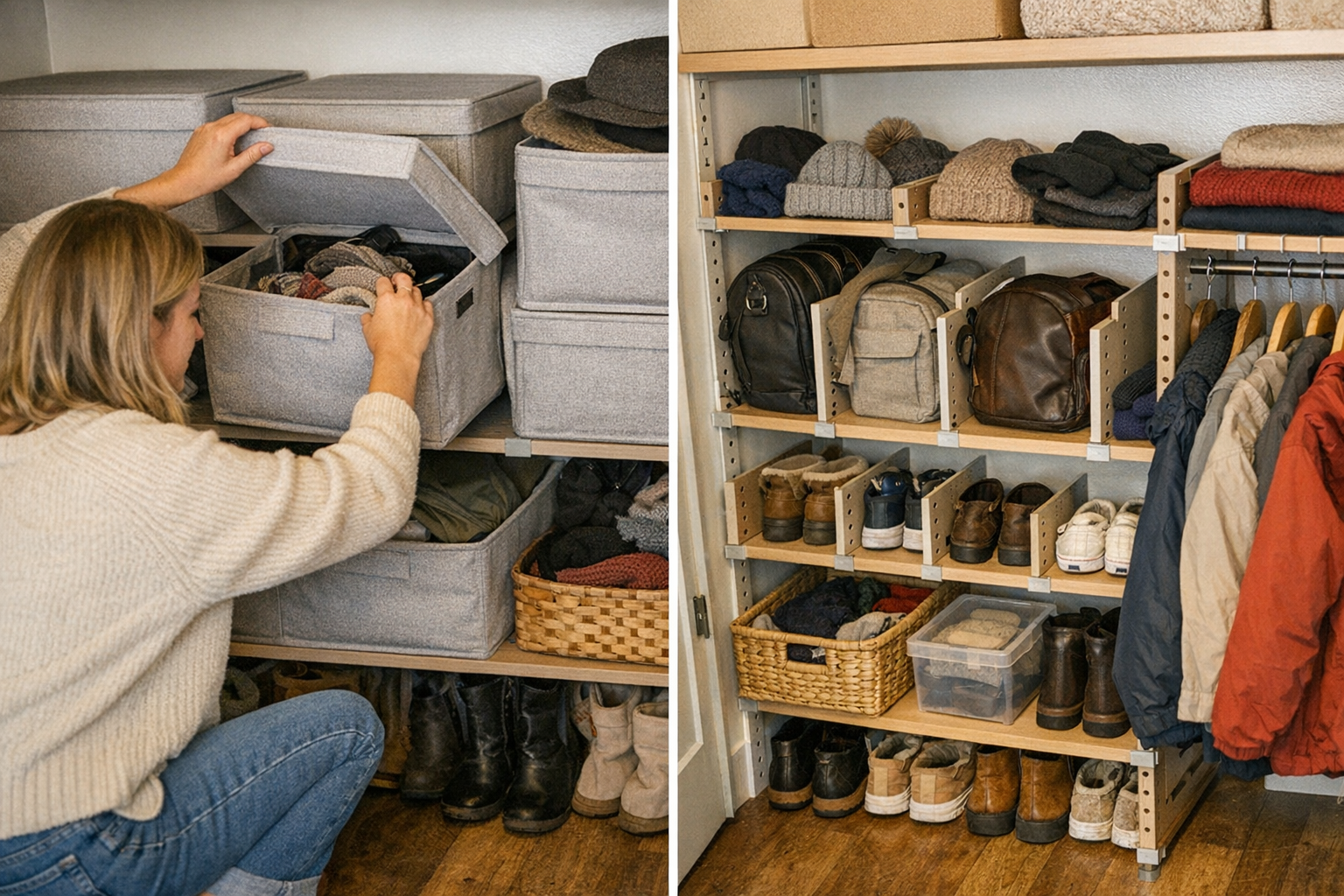
    Shelves with built-in dividers or tiered sections make every category obvious and accessible—a pair of shoes has a true “spot,” bags don’t pile up on boots, and gloves aren’t lost among scarves. Low-profile separators keep items from migrating; using sections prevents stacks from merging into one indistinct heap. You shouldn’t need a two-handed effort to extract a sweatshirt or dig for keys. Well-defined storage turns retrieval and resets into one-move actions, not clumsy reshuffles.

    What does this feel like in practice? There’s no hunt, no restacking, no mini clean-out every time you need something. Everything returns to its space quickly, whether you’re resetting for the next day’s commute or just clearing the bench in five minutes before guests arrive.

    Real Improvement: Stays Useful, Not Just Tidy

    You’ll know your storage is working when you aren’t dreading the reset. Instead of stuffing baskets until they’re overflowing or stacking shoes wherever there’s space, you guide them back to a defined section—one that actually fits, holds shape, and keeps categories from blending. The shelf still looks organized—more importantly, it acts organized—after repeated use and three rounds of laundry.

    As a quick, daily check: notice where you still find yourself shifting one group of items just to access another. That’s usually the spot that needs a divider, an extra tier, or a clearer boundary—not more effort from you, but smarter design for repeat situations.

    “Stored” vs. “Usable”: The Real Difference

    The long-term payoff isn’t in magazine-perfect photos. It’s in how often you find yourself not fighting with the setup. Spaces built for easy, repeatable grabs and easy returns stay sane, even when family routines are unpredictable and messy. Organizing projects run out of steam the moment daily life starts erasing their lines; system-based storage stays grounded because it’s made for how things are actually used.

    If you’re constantly rearranging a shelf, or if grabbing one thing scatters three others, it’s time to switch focus from surface “order” to real, daily function. Your closet or shelf doesn’t have to be perfect—it just has to work, reliably, when routine life is at its most chaotic.

    See smarter closet and shelving systems designed for life in motion at ClosetWorks.

  • How a Simple Pouch Transformed Car Charging and Organization Habits

    A car interior that looks organized isn’t always easy to live with, especially after a week of busy routines. You get back in after a quick stop—the dashboard’s clear, cupholders empty, no visible junk. But as soon as you reach for a phone charger or adapter, the same friction returns: cables tangled deep in the console, adapters hiding beneath receipts or sliding under the passenger seat. The setup looks orderly on first glance, but it breaks down where it matters—when you need fast access, not just a tidy surface. In a DriveWellSupply world, a neatly arranged interior means nothing if your daily reach still lands in a mess.

    Why Loose Car Adapters Become a Daily Aggravation

    Most drivers settle for routines that seem “good enough”—an adapter tossed into the console, a charging cable looped around the gearshift, a handful of spares in side doors. But next time you pull over for a quick charge, you’re back at square one: searching blind under the seat or fishing through a sea of loose coins and wrappers. The visual order turns out to be an illusion. Tidy compartments mean little if your go-to cable is always somewhere else.

    Multiply this aggravation by every errand, rideshare, and trip with new devices. Stop after stop, lightweight adapters work free and slip beneath floor mats or wedge under a fallen jacket. Short cables vanish between seats. That “quick plug-in” becomes a micro-task you repeat—and resent—every time you park and re-enter. Focus splinters, tiny frustration builds. And if you share your car, you know the script: cables relocate, adapters mix, and your system resets itself to chaos overnight.

    Clutter Hides, But the Real Friction Is Loss of Access

    Visual clutter gets blamed for most car chaos, but it’s delayed access that actually wears you down. When your cable is there—but buried—organization becomes a mirage. Digging through cramped consoles, untangling adapters from sunglasses, and reaching past last week’s receipts turns a three-second task into a repeated hassle.

    That lag multiplies with each trip. You circle back to the same hunt: re-locating adapters, untangling cords, re-routing the cable tangled by a passenger’s bag. For anyone who shares a vehicle, this churn becomes routine—what’s “put away” for you is already drifting out of sight for someone else. The friction isn’t a messy look; it’s the time and focus lost, again and again, just to charge a phone.

    Why a Dedicated Pouch Reshapes Routine

    The logic behind a seat-edge adapter pouch is blunt: stop letting essential gear become loose cargo. Fix a soft, anchored pouch at the seat edge or along the center console, and you create a “return point” for cables and adapters built for repeat, not display. Every trip, plug-in, or device swap routes through the same, predictable spot—even when the rest of the car’s contents are in flux.

    Within a day or two of errands or rideshares, the shift is obvious. The right adapter sits exactly where your hand expects, no more deep dives into the console or fingertip scrabbling past snack wrappers. On busy mornings—school drop-off, gas station, lunch run—the pouch transforms fumble into flow: reach, unzip, grab, connect, go.

    How Seat-Edge Pouch Positioning Changes Access

    Placement isn’t cosmetic. Mounting at the seat edge or center reach puts adapters and cables where your hand lands naturally, without blocking cupholders or eating into legroom. Contrast this with floor-level pockets or deep side doors: gear migrates backward, or sinks beneath bags after a sharp turn. Cupholders fill fast, consoles get buried—while a fixed pouch at reach stops cable-jumble and item loss cold, trip after trip.

    Scenes from Real Life: Where Good Intentions Fall Short

    If you’ve swapped cars with a partner or picked up a dropped charger mid-week, you know real-life “organization” rarely holds. Charging cords end up clasped around keys, adapters slip beneath scattered napkins, and—right when you need a boost for a quick text or map check—you’re left tracing cables through a crowded console. Each rush amplifies these flaws. You load groceries, toss a jacket, and next trip every cable has retreated to a worse hiding place. Visual order doesn’t save the day if your hands can’t recover what matters on the first try.

    These aren’t rare mishaps—they’re built-in friction points. Without a dedicated “home,” adapters and cables keep drifting, so each entry or exit creates more micro-cleanups than progress. Apparent order isn’t real if usability collapses under normal use.

    The Transition: From ‘Neat Enough’ to ‘Always Within Reach’

    Switch to a set pouch and the effect is immediate in daily driving. No more cables skidding into footwells or adapters punctuating the floor with every corner. The pouch resists the background drift of jackets, bags, and backseat shuffles. When everything else in the car shifts—even with kids jumping in, or groceries loaded up—your essentials stay parked, not buried. The gap between “organized” and “usable” finally closes.

    Charging time stops stretching out. There’s no more checking three storage spots or dismantling console piles just to find a working cable. It’s now a single action: open pouch, grab cord, plug in, drive. Over weeks of errands and quick stops, the consistency starts to matter more than any first-glance neatness. The minor, repeated wins add up—each time the system holds, the day moves just that much smoother.

    One Simple Fix, Repeated Relief

    Cars accumulate friction where routine meets bad structure. It’s not the mess that slows you down—it’s the hidden access problem quietly sabotaging every quick task. Locking down a single, dependable “return point” for your highest-use adapters or cables does more than clear clutter. It compresses repeat effort, so charging and switching become as predictable as starting the engine. Let the car shift, the trip change, or your passengers re-arrange things: your routine finally stops resetting itself at every stop.

    See practical car-use solutions at DriveWellSupply

  • Why Careful Wiring Makes Indoor Lighting Reliable and Safe Over Time

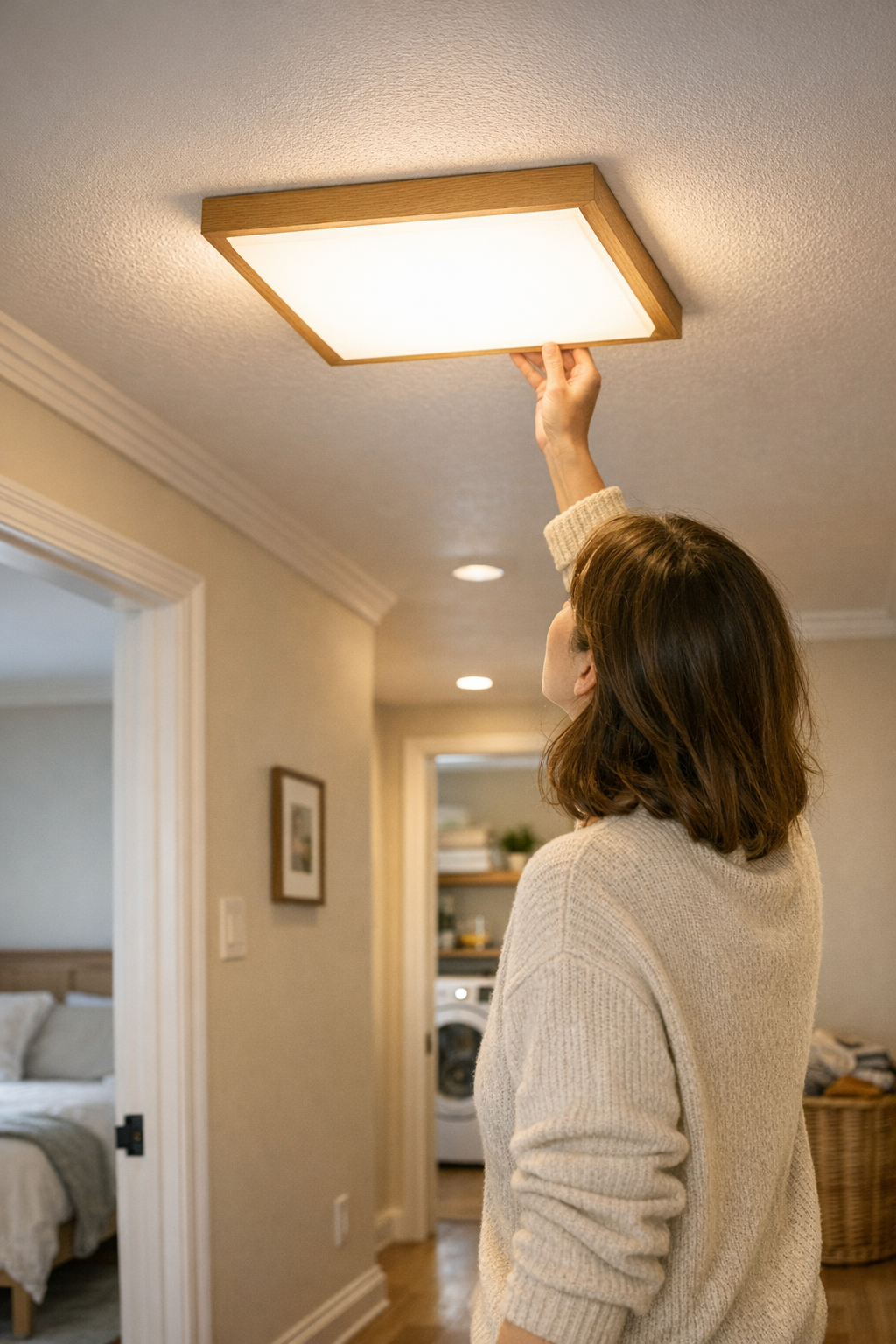
    Most indoor lighting problems don’t start with dramatic failure. The fixture powers on, the room looks “done”—but you only notice the real problem after weeks of daily use. That soft flicker at the stair turn, the moment your bathroom vanity light creeps from crisp to uneven just as you lean toward the mirror, or the faint buzz in the laundry room when your hands are wet and visibility matters most. The issue is almost never sudden blackout; it’s the subtle, repeated interruptions—tiny hesitations at corridor thresholds, unexpected shadows over the only uncluttered patch of counter, light drifting from reliable to irritating. Poor connections behind the plate turn “okay for now” into a routine inconvenience that’s easy to excuse until it costs real comfort or clarity. In the world of flush mounts, sconces, vanity lights, and under-cabinet runs, the difference between “lit” and “usable” emerges only as you live with the light day after day.

    Where Weak Connections Surface: The Spaces That Reveal Trouble

    No one expects a new ceiling or wall fixture to become unreliable after just weeks—but certain spaces turn small flaws into daily friction. Hallway lights often flicker as you cross a worn patch or nudge a door closed; the bathroom sconce dips or hums, just when you’re checking your face in the mirror; under-cabinet spots lose even spread as you stack groceries or slide dishes, leaving the work surface half-shadowed. The frustration isn’t a full outage. Instead, it’s a ritual of double-tapping the switch, pausing to adjust, or shifting your stance to catch clear light. Every movement near these fixtures tests their stability—one closet slam or laundry pile can jar a “good enough” connection, pushing it closer to failure. When wiring shortcuts hide out of sight, even the best fixture can undermine your daily routine without warning.

    How “Just Installed” Turns Into a Daily Problem

    Lighting that looks flawless on install often reveals its weakness at the worst times—not in showroom calm, but during daily repetition. That’s when the second, tenth, or hundredth switch cycle, a week of humidity in the bathroom, or the steady thumping upstairs finally exposes how well (or badly) the fixture is wired. Flush mounts in hallways might rock subtly when doors close, and corridor edges can fall into shadow with uneven connection. A semi-flush or wall sconce, fine out of the box, begins to buzz or dim as vibrations or damp air creep into the wiring. Nowhere is this clearer than at the vanity: a rushed job creates exactly the kind of shadow line or color drop that makes you second-guess the mirror. Lighting that looks “bright enough” on day one can become tiringly unreliable when every movement, appliance, or passing footstep exposes inconsistency.

    Seeing the Bottleneck: It’s Not Always in the Bulb

    If you change a bulb and the flicker or dimness returns within days, the problem is almost always deeper. Poor wire connections behind the fixture turn every use into a gamble: laundry room lights blink as you slam the washer shut; under-cabinet strips create jumping shadows when drawers slam. Counter edges vanish at the wrong time. When a fixture regains brightness after a nudge or goes silent after you tighten the switch plate, it’s the wiring—out of sight, but not out of impact. Each repeated action—a pulled drawer, cabinet door swinging, stair footfall—tests whether the connection is solid or primed for another minor failure.

    Warning Signs in Everyday Spaces

    • Hallway and corridor: Flickers or dull spots as you cross, breaking your pace, even as the fixture glows overhead
    • Bathroom mirror zone: Dimming, buzzing, or shifting shadow bands as you reach for the hair dryer or swipe at condensation
    • Under-cabinet task areas: Light dims or jumps as you move items, and the work surface loses even coverage right where you need it
    • Stairways: As you turn the landing, light lags or steps fade into unevenness, making each transition less automatic (and less safe)

    The Simple Fix: Intentional Wiring, Real Results

    The gap between a light that just looks right and one that stays reliable year-round is almost always care during installation, not expensive maintenance. Deliberate, tight wire connections—slow, confident twists and fully seated connectors—prevent nearly all the habitual flicker, fade, and hum that creep up after the fixture’s in place. A single local laundry upgrade proved it: once the strip light’s wires were resettled with screw-tightened firmness, months of machine vibration and wet hands couldn’t shake its steady glow. The “fix” isn’t complex; it’s a matter of blocking the gradual decline before it picks away at your routine. No more squinting over stains, no more second-guessing if the counter’s actually clean, no more need to tap the fixture back to life.

    Why Reliability Matters in High-Use and Humid Zones

    Certain home zones—stairs, tight corridors, bath vanities, laundry nooks—demand lighting that just works, every time, without pause. In these areas, each missed step, hesitated movement, or shadowy patch adds up: a flicker on the stair isn’t just annoying, it slows you down or nudges you into leaving a light on all day out of caution; a foggy, shadowed mirror means you might miss details or repeat tasks. These aren’t theoretical problems. A small break in visual confidence can disrupt your whole routine, making once-simple spaces a source of unease or delay. True lighting success isn’t a burst of brightness—it’s steady, invisible support that stays out of your way no matter how often you cross the threshold.

    Diagnosing Unstable Wiring Before It Disrupts Your Routine

    The real giveaway is repeat disturbance: flickering after a new bulb, light that comes back with a nudge, brightness ebbing after every round of switching, or sudden buzzing when the room is crowded. These aren’t “just” quirks—they’re clues that the problem is wired in, not a function of bulb or fixture style. Try crossing the hallway at dusk and see if your eyes ever need to catch up; check a bathroom mirror on a rushed morning for even, unwavering light; experiment with under-cabinet strips, noticing any fade or jitter as you stack, clean, or cook. Reliable connections make light vanish into your day. Unstable wiring keeps reintroducing itself, just enough that you adjust your routine without even seeing why—until you finally pause to fix what’s hidden behind the plate.

    Lighting You Can Trust: The Payoff in Everyday Calm

    A fixture you don’t notice is not just free from outages—it’s free from interruptions and doubts. Each unbroken trip down the hallway, every mirror check without a frown, every unobstructed kitchen task is a direct result of solid, intentional wiring and fixtures matched to space demands. Indoor lighting isn’t decoration—it’s the silent backbone that keeps rooms not just looking good, but working right. The best setups aren’t always the brightest or boldest; they’re the ones that let you move without friction, see without squinting, and trust the space to keep up with your routine, no matter how often you pass through.

    Find lighting designed for real indoor movement and clarity at LightHelper.

  • Choosing the Right Jigsaw Blade for Precise Curved Cuts Every Time

    Nothing derails a cut—or a whole project—quite like a jigsaw blade that refuses to play along with your template. The first gentle sweep through birch ply feels promising, until the curve tightens. That’s when the blade stiffens, buzzes, and leaves a jagged track behind. Push harder, and you’ll see familiar signs: the blade bending outward, the saw motor sounding strained, and the “curve” quickly veering off your pencil line. If you’ve tried fitting panels or shelves with hand-cut arcs, you know this pain—wobbly edges, splintered veneer, and more time spent fixing than cutting.

    When the Blade Fights Back: What Actually Happens Mid-Cut

    Curves rarely look intimidating on paper. But in the real workshop, fitting a tight scribe for a cabinet or cutting a patch panel that needs to mate perfectly exposes just how unforgiving curved cuts can be. Most people pop in the standard jigsaw blade—the one fresh from the tool case—and assume it’s good enough. As the saw rounds the bend, though, you watch the line start to wander, no matter how steady your grip. Getting a clean, usable part feels less like carpentry and more like damage control.

    On actual jobs, this drift means more than a scruffy edge. The piece won’t nestle into place. Joints are uncooperative, and you end up sanding and test-fitting, sometimes until the fit goes loose. The struggle isn’t about your skill—it’s almost always about the wrong blade working against you.

    Curve Cuts Demand the Right Blade, Not Just “Any” Blade

    What sabotages you halfway through a cut is the blade itself—specifically, its width and tooth design. The typical 6 TPI blade (the default in most kits) is wide, aggressive, and eager to blast through straight runs in pine or spruce. Slide that same blade around a 40mm inside radius in MDF or plywood, and resistance ramps up instantly. The blade bows, the kerf drifts wide, and chips tear out along the edge. Try to bull through multiple curved cuts and suddenly every part needs extensive sanding. Small pattern slips balloon into sanding marathons, driving up fatigue and frustration.

    Swapping to a blade designed for curves—narrower, with 10–12 TPI—flips the script. Instead of wrestling for control, you watch the saw glide steadily around templates. The blade tracks predictably, and the dust comes off fine, not in chunks. When you compare both cuts, the curved-blade edge is ready for finish work with minimal touch-up. The time you claw back from sanding is real—and so is the drop in muscle fatigue.

    Reality Check: Fitting a Panel Without the Guesswork

    Picture yourself tracing out an S-curve on a shelf blank to clear pipes or baseboard. Run it with the kit blade: it bites hard, motor groans, splinters fan off both sides, and the fit is off by a mile. Slap on a 12 TPI, narrow profile blade for the rerun. Now the jigsaw hugs the template without skittering. The cut’s edge is smooth, the test fit just happens—no grinding, no filler, just a panel that drops in flush. One pass, one light sanding, done.

    What Changes When the Blade Suits the Curve?

    The difference turns up everywhere: how much control you feel, how steady the saw sounds, and how fresh your arms and wrists are by cut three or four. The right blade means it’s the tool—not your hands—handling the curve. You don’t have to muscle it around radii or course-correct constantly. The saw keeps a true line; you’re not compensating for flex or hoping a sander will rescue a rough corner later.

    Across a project, these savings multiply. Fewer stop-and-sand breaks, fewer ruined parts, and way less physical strain. In a shop, those “little” moments add up. The right blade isn’t luxury—it’s how you keep small jobs from swelling into exhausting, error-prone slogs.

    Spot the Warning Signs: When Your Blade Is Losing the Battle

    Watch for these telltale signals that your blade isn’t cut out for the job:

    • Escalating vibration as you round corners or switch grain direction.
    • A fuzzy, torn edge forming mid-arc—especially noticeable in MDF or laminate.
    • Visible saw marks or bottom-face blowout appearing right off the line.
    • The cut line bulges away from your tape or pencil mark, denying even a careful guide.

    These aren’t minor annoyances—they’re clues you’re losing time and risking a bad fit. Don’t accept a tool fighting you as “normal.” Swap blades before cleanup becomes the biggest task.

    Field Your Questions: Curve Cutting Answers from Real Shop Time

    How do I choose a jigsaw blade for tight curves?

    Always look for narrow blades with a higher tooth count—ideally 10–12 TPI. These blades flex less in tight turns and deliver cleaner results, especially on radii under 50mm or on materials likely to chip. For broad, shallow curves or thick framing, sure, the standard blade can handle it. But for finish-level work or fragile faces, fine teeth and a slim profile win every time.

    Why do my curves always tear out or finish rough?

    Most often, it’s a coarse or wide blade grinding against the material rather than slicing through it. Plywood in particular hates aggressive blades—they rip fibers and leave ragged edges. Instead, slow your feed, let the blade do the work, and reduce saw speed. Don’t try to “overpower” a bad blade choice.

    Does adjusting my jigsaw’s speed or orbital setting matter?

    Definitely. Pairing a narrow, fine-toothed blade with slower saw speed and minimal orbital action produces the cleanest edges, especially around intricate templates. You get less chip-out in hardwoods and a silky finish in laminates. If clean curves matter, always try reducing both before blaming your skills.

    Workshop Tips for Smoother, Easier Curve Cuts

    • Follow the blade’s lead. Let your feed rate match the blade’s ability to turn—not the other way around.
    • Keep one or two sharp curve-cut blades at the ready and swap instantly when resistance crops up.
    • Double-mark important arcs—use pencil and masking tape—so you catch drift immediately, especially where a visible veneer edge matters.

    You don’t need a drawer full of specialty blades. A basic set of curve blades, alongside the stock types, pays for itself in hours recovered and repairs avoided.

    Recognize Blade Trouble Before the Mess Grows

    It’s easy to stick with a blade that “sort of works,” especially mid-project. But the cost piles up—crooked lines, aching hands, endless sanding. Whenever your cut starts veering or the saw begins to chatter, that’s your cue: pause, switch blades, and let the tool carry its weight. Stepping back for a moment beats losing time—and materials—to a fixable problem.

    Find jigsaw blades and accessories at Gumboll

  • Choosing Outdoor Storage Structures That Keep Your Yard Organized Over Time

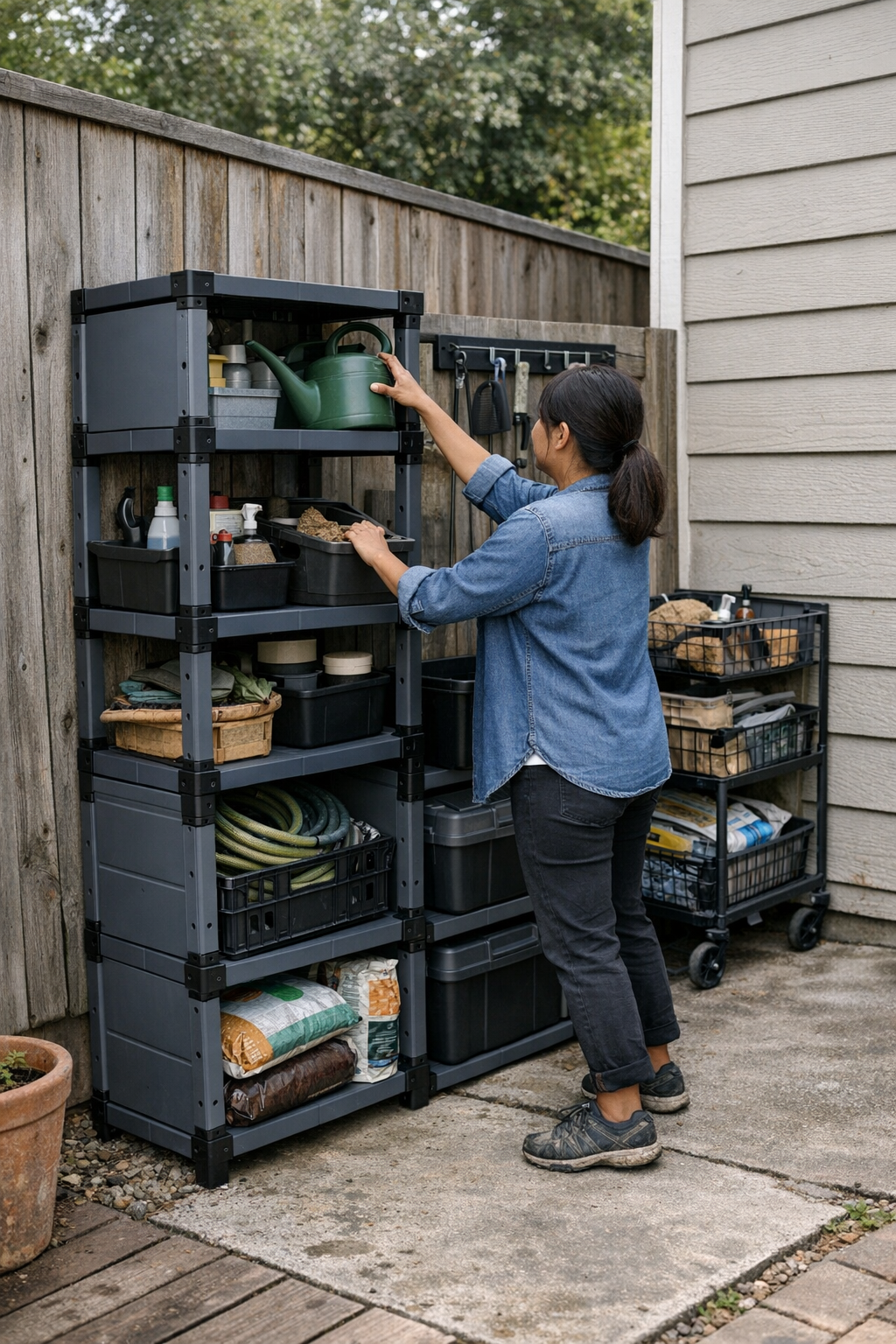
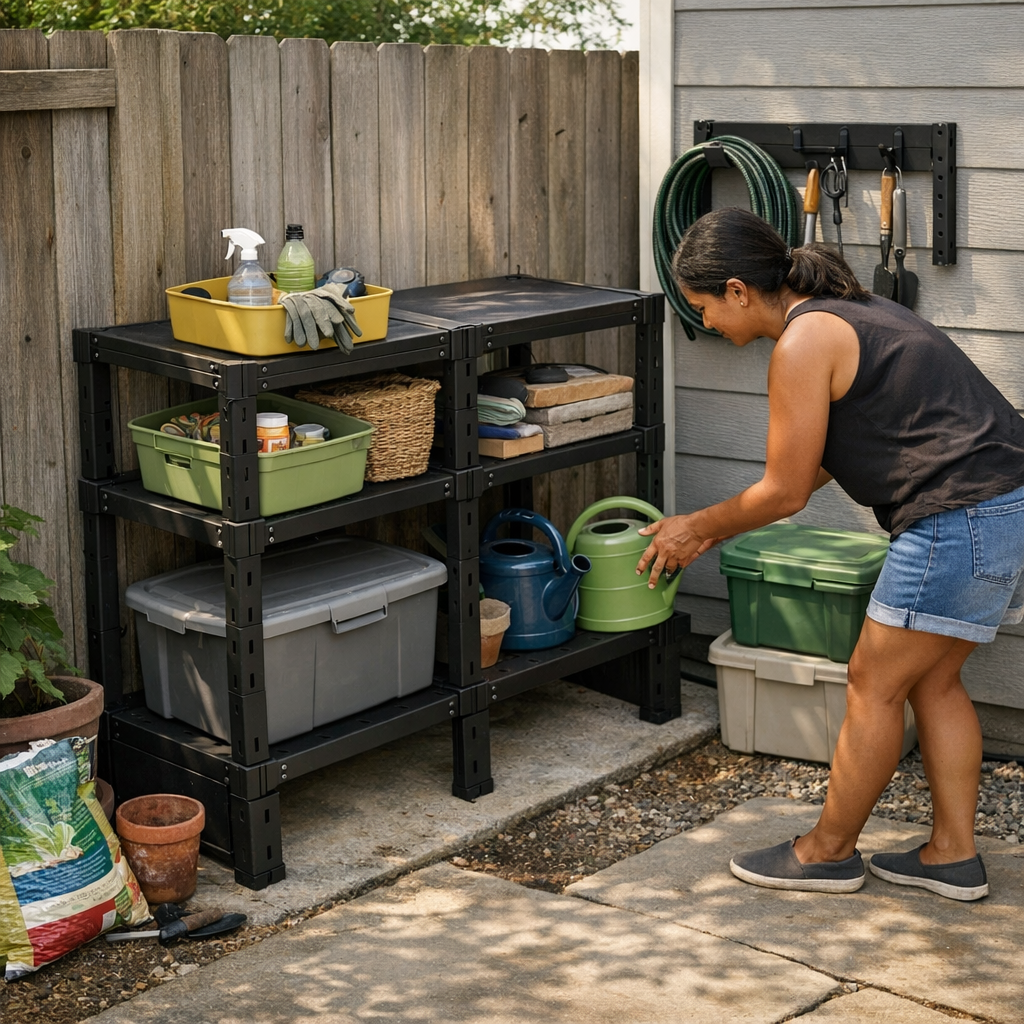
    The difference between a good outdoor storage setup and a bad one isn’t just space—it’s what happens the fifteenth time you try to move through it. The side yard that looked “sorted” two weeks ago is now an obstacle course of half-returned gear, stray bins wedged just out of reach, and a shovel that’s back in your way, again. You know the drill: you meant to create order, but each rainy day, extra trash bag, or spontaneous clean-up exposes where your system quietly breaks down. In real backyards, garage thresholds, and narrow utility strips, the gap between “fits your stuff” and “fits your routine” shows up fast—and the friction piles up even faster.

    The Real Impact of a Storage Mismatch

    No one buys a shed or organizes a utility corner expecting daily annoyance. But layouts chosen mainly for looks, or by measuring boxes instead of habits, almost guarantee slow-motion trouble. What begins as one tool out of place becomes a sequence: bins blocking the path, bikes leaned against the wrong wall, and overflow that never finds its way home. The big clue isn’t the mess after a busy Saturday—it’s how many steps you add to put anything back on a regular day.

    • Walkways that pinch down as tools compete for wall space, refusing to fit hooks meant for something else.
    • The gate area earning a permanent pile of yard waste bags, “just for now” until next week slips by.
    • Bins supposed to hold tools filling with unrelated clutter, because actually opening the shed for a small return feels like overkill.

    Individually, these moves are small. But over a month, the structure starts dictating where you step, what gets used, and how much energy you spend redoing what you “fixed” last time.

    Wall, Modular, or Fixed: What Happens Over Time?

    In almost every backyard, side strip, or garage edge, storage fits into one of three worlds—in theory. In practice, each fails and flexes differently when real-life use stacks up:

    Wall-Mounted Systems

    Good wall systems pull brooms, bikes, and hoses out of the walking path. But the strength is measured by return flow. If your most-used rake is forever half off its hook, or fat rails eat up wall space without matching your actual stuff, you haven’t gained ground—you’ve created new dead zones. Over time, “I’ll just lean this here” becomes a small heap that grows whenever you’re busy.

    Modular or Movable Setups

    Bins and caddies promise flexibility. Movable units seem perfect for changing seasons or adjusting after a cleanup. But watch the edges. When the boundaries between bins fade, the clutter migrates—tools and toys spill onto the floor or cluster in tight walkways. Mobility is only an upgrade if the parts actually defend their zones instead of blurring them.

    Fixed or Traditional Sheds

    Sheds hide piles and keep patios tidy—until you need anything from the back. Boxes bury each other, “occasional use” supplies eat up reachable space, and simple swaps (move the mower, grab the hose) become mini-projects. Post-storm or after big jobs, the slow, sweaty reset means more is left outside “just until tomorrow,” and the cycle sets in.

    Where Return Friction Shows Up Fastest

    Return friction always reveals the weak link. You notice it in these moments:

    • Finishing up outside and realizing every “quick return” turns into a stash pile by the back door.
    • Finding hoses and hand tools leaning against the fence because the storage bin is too far, too buried, or too annoying to open.
    • After a busy weekend, seeing the garage or side yard threshold jammed with stuff no one wants to carry back “all the way.”

    Most small-yard or side-area layouts already feel tight. When bins and hooks start repelling more returns than they absorb, your outdoor routines pay the price: detours around fresh clusters, squeezing past overflow, or forgetting what’s stored where until the next forced tidy.

    How Setup Choices Really Shape Routine

    It’s not just about dust or clutter—it’s about the rhythm you’re forced to adopt. If bike hooks are angled wrong, bikes end up parked on the mat. When “modular” bins have no clear purpose, tools migrate off-base and play musical chairs across the patio. In classic sheds, the row of things left out after the first seasonal shuffle tells the real story: resets are draining, and staying “organized” costs more energy than it saves. Suddenly, every walk through the zone is an obstacle course of yesterday’s quick fixes.

    Scene: The Daily Blockage Loop

    Picture the side yard: wall rack lined with small tools, while the big rake leans (again) in the walkway because nothing fits. Muddy gear after rain? Too much hassle to hang, so it joins the stack. Each messy day pushes you further off-track, until walking to the gate requires sidestepping a melting cluster that grows rain by rain.

    The Reality of Overflow and Awkward Zones

    Some outdoor corners just won’t play along. A bin shaped for balls and scoops doesn’t fit a folded chair, so both end up awkwardly off to the side. When garden gear invades general storage, neither routine works well—each grab-and-go needs a shuffle, and every tidy-up reroutes tomorrow’s movement. A spot that should make the yard smoother becomes a trap, only looking organized after a big reset, while the real-life routine keeps wearing uneven paths through the area.

    Everyday Example: Reset Fatigue

    You haul the trimmer out to mow, but later, the bin’s already overloaded. Lean it against the shed “for now.” Within weeks, a ragged row of “temporaries” claims the footpath. The frustration isn’t just lost space—it’s realizing every chore ends with an extra round of navigating the unintended obstacle course you didn’t plan for.

    When To Rethink—and What to Look For

    If a space gets reset more than it gets used, something’s off. The clues are everywhere:

    • Paths narrowing until you walk sideways.
    • Garage or shed doors that can’t swing open because overflow blocks access.
    • Unused wall hooks while pathways get packed.
    • Every attempt at “putting things away” becoming an all-Saturday event instead of a simple step.

    These are not minor frictions—they’re setup failures that ask too much in exchange for so little order.

    Fixes That Actually Change Flow

    A truly workable setup puts movement—not just capacity—first. That usually means a few key changes:

    • Switch in heavy-duty, right-shape hooks—solve for your gear, not for someone else’s list.
    • Break one overcrowded zone into smaller wall units or modular bins, each with a clear “home base,” ending the pile-up of everything at once.
    • Shift the drop spot for overflow bins away from routine paths, so stray returns don’t choke the walkway every time the weather turns.
    • Stop combining seasonal storage and daily-use gear in one traffic jam—let each zone serve one purpose clearly so routines don’t compete.

    Quick tip: After any “busy” outdoor day, walk the area. Which items always get left out? Which bins or hooks get skipped? Target the fail points next—not the place that merely looks the cleanest after a round of sorting.

    The Payoff: A Space That Actually Works With You

    The right setup doesn’t make you work to keep it working. You feel it in little wins: nothing blocks the gate after guests leave, the sidewalk stays open even after a kid’s game, and returning a tool doesn’t mean moving four others or sidestepping a pile. Boundaries stay predictable. Resets shrink to a sweep, not a project. Function outlasts the “just organized” look; the space supports your rhythms, instead of resetting after every busy day.

    Find real-world storage ideas—from wall racks to modular bins—built for actual backyard, side yard, and patio utility, at TidyYard.

  • How Small Pet Mess Habits Drain Energy and Disrupt Your Day

    You can wipe a countertop and pick up scattered toys, but a home only works for real daily pet care if the setup matches what actually happens—where things get messy, where your hand reaches by default, and where supplies save or waste your energy. The letdowns don’t start with a disaster. They start when you kneel to refill the bowl and a tote bag’s in the way, or when you rush to wipe muddy paws and the one decent towel is across the hall, not by the door. One thing out of reach means the mess sits until later—or spreads. Those gaps add up: every time you hit friction, cleanup slows, resets get missed, and your setup stops helping you.

    Small Gaps, Big Friction: Where Pet Care Routines Break Down

    Routine drag almost never announces itself. You go to scoop food and find mail piled on the bin. The water bowl’s dry, but you only notice after you’ve finally sat down. That brush you left out for quick use? It’s tucked away, so the quick fix gets skipped yet again. What should be automatic turns into a repeat search—and eventually, a silent drain that makes each extra step feel heavier than it should.

    These friction points blur into the background. The feeding spot made sense by the door, until you’re dodging shoes and chasing the mat every meal. A towel is “right there” in theory, but it’s never waiting when muddy paws actually cross the threshold. What started simple quietly builds into a string of minor resets—postponed wipes, missed wipes, fetch-the-brush, detour-for-the-bottle—stacking until the end of the day feels cluttered no matter how often you regroup.

    Real-Life Reset Struggles: Scenes From Everyday Use

    Morning: You toss kibble in a rush, knock crumbs to the floor, reach for a paper towel—and remember they’re nowhere nearby. Crumbs stick as the hours pass. By the time you’re back, it’s a bigger, dryer mess—and cleanup is now a chore, not a quick swipe. Damage clicks in long after the moment.

    After a walk, damp paws hit tile. Last week you kept a towel at the door; now someone has tidied it away, and you’re tearing down the hall as mud hits both carpet and kitchen. The reset wasn’t missing so much as out of reach—which, when you’re tired or pressed for time, is the same difference.

    These aren’t just lapses—they’re signals that your routine design asks too much. A refill bottle out of sight puts off water changes until dry bowls cause a scramble. Grooming tools placed “tidily” instead of conveniently get skipped at bedtime. The gap between “looks good” and “works right now” is sharpest on the busiest days, when you realize your routine only held up when nothing else went wrong.

    The Spreading Effect: When Pet Gear Takes Over Shared Space

    Pet care gear doesn’t just collect around feeding areas—it spreads. A bowl nudged to avoid kitchen foot traffic soon ends up wedged behind table legs, forcing awkward reach and repeated reshuffling. Toys dropped in the living room become sudden obstacles when you’re carrying groceries. An area that feels orderly at noon can turn into a new circuit of clutter by dinnertime, triggering repeat interruptions.

    The headache isn’t always the pile itself. It’s the moments your hand hesitates: searching behind shoes for a brush, stopping mid-step to locate a refill bottle, or circling back when the only clean towel is at the other end of the house. Friction peaks at the worst times—late at night, as you’re rushing out, or after work—slowing you down just when you’re least willing to deal with it.

    Why “Tidy” Isn’t Always Enough

    Visual calm can be an illusion. You can line up containers and tuck away every bin, but if feeding means walking to another room for the scoop, or if every wipe-down means bending or dragging supplies into reach, you quickly stop bothering. A sealed food bin that’s “out of the way” gets skipped for refills. A mat that slides underfoot means more time repositioning than cleaning. Friction lives in the gap between what looks organized and what helps when you’re running out of patience.

    These small weaknesses reliably return: a towel never left at the threshold, a water basin that has to be checked constantly, a mat that never stays flat, supplies that migrate back out of reach. One minor inconvenience is tolerable; three or four mean you’re always a step behind and pet care never feels quite effortless.

    Shape Your Space for Real Life, Not Just A Clean Snapshot

    The real fix is not a dramatic overhaul—it’s placing basics where you always reach in a rush. Put a water bottle right by the mat so you pour without thinking; hang a towel at pet height on the spot where paws enter, not three steps away; stash a brush at the main traffic point so last-minute grooming isn’t another trip. These shifts make resets part of your routine, not add-ons that fall off on busy days.

    Watch your own friction points. Stopped mid-routine to hunt for gear? Postponed a task because tools were “put away” instead of on hand? Those are the gaps slowing you down. Fix the placement, and the whole system starts running itself—because the setup finally matches your actual flow, not just your highest-effort days.

    Reduce Reset Friction: Keep Basics Within Reach

    The real test of any pet setup isn’t Sunday-deep-clean perfection—it’s how much it interrupts you at your most distracted. Store towels, refills, and brushes exactly where spills and tangles happen. If you can clean up every mess with a single reach—no detours, no digging, no retracing steps—you cut the routine drag before it multiplies. That’s a care setup that actually backs you up when you run low on energy.

    Place the essentials where you naturally pause: at the entry, by the bowls, along traffic paths. Every obstacle removed and every reach shortened means less drag, less resentment, and fewer repeats. Routines that soak up messes and allow quick resets don’t just save time—they absorb chaos so you can return to what actually matters.

    Lasting Calm: A Routine You Can Rely On

    Most pet routines don’t collapse because you missed something huge—they slip because basics are misplaced, supplies are separated, or cleanup asks too many extra moves. Store the tool where the problem happens—at the point of entry, right on the usual path—and watch daily mess become a two-second reset instead of a multi-step hassle.

    Everyday, a setup that’s correctly aligned means your care actually matches your energy—especially on hard days when a single delayed reset can undo your best intentions. The difference is visible: less friction, more time, and a home that looks calm because it’s easier to keep that way, not because you scramble to maintain the illusion.

    See which small realignments make the biggest daily difference at CalmPetSupply.

  • How Frequent Travelers Organize Carry-Ons for Fast Airport Access

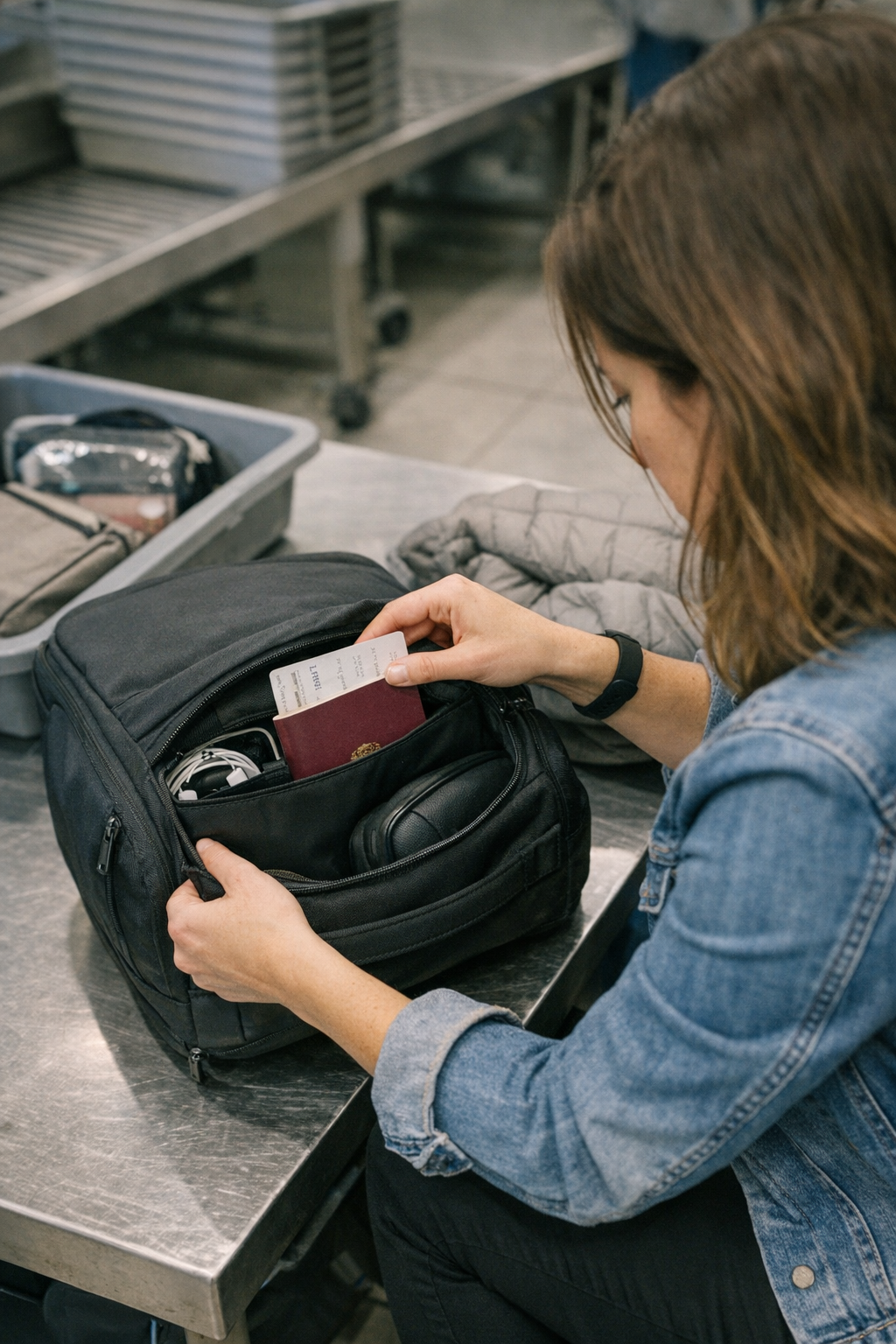
    Your carry-on can look perfectly organized—and still slow you down every single time you move. If you’ve ever felt that spike of frustration when you reach for your passport at a crowded security tray or need your ticket at a boarding gate, you’ve seen it: all those orderly pouches and zipped compartments turn into barriers the second speed counts. What seemed smart on your hotel bed becomes a tangle of layers—passport under tech gear, charger tangled above travel docs, ID wedged behind toiletries. Suddenly you’re pausing, hands in multiple pockets, the line behind you building impatience. That moment exposes the difference between having control over what’s in your carry-on and actually being able to get to it when it counts. For frequent travelers, this friction isn’t rare. It’s repeated—every line, every tray, every return to the bag.

    Why “Looks Organized” Isn’t Enough When Moving Fast

    One mistake almost every traveler makes: believing more containers automatically mean better access. Sure, your bag sits like a showroom piece on a hotel surface—everything slotted, parallel, staged. But the real world isn’t neat or slow. You’ll feel the flaw the first time you have to reach for your passport while the queue surges and realize it’s trapped under two pouches and a cord sleeve. Each extra layer—promising “less mess”—actually raises the odds you’ll hunt for zippers, dig through pockets, and lose rhythm under pressure. What looks composed quickly becomes a bottleneck the moment movement speeds up, especially in environments built around flow, not aesthetics: security lanes, crowded boarding areas, narrow aisles. Forgetting that access comes before order means having to unpack confidence in public again and again.

    The friction isn’t just first-day nerves. It compounds: Open, shuffle, pause to think—then repeat for every checkpoint, tray transfer, or boarding group. By mid-trip, the setup you praised for being “handled” is dragging you backward, forcing public repacking as other travelers press forward. The order hasn’t vanished; it’s just blocking what you need most when you need it fast.

    Where Carry-On Friction Builds … and Keeps Returning

    That Familiar Scene in Airport Security

    6:05 AM. Security line jumps forward unexpectedly. You edge your bag onto the tray, aim for your passport—and remember it’s zipped beneath layers you thought would “streamline” your trip. Now it’s both hands juggling cubes, moving gear in a rush, knees pushing the bin. What felt like control becomes an awkward scramble: fingers stuck in the wrong pocket, devices on display, small items sliding loose under stress. Repacking now means resetting the same trap for later, as quick “just for now” moves turn into more steps at the next touchpoint.

    Boarding Lines and Overhead-Bin Moments

    Gate calls boarding. You grip phone, pass, headphones—then freeze as you realize your ID is zipped two levels below, behind a wall of “systemized” pouches. You shift items, bag sags open, a slip threatens to spill, anxiety spikes. The group behind you tightens as you dig. By your seat, the neat repack takes twice as long because you’ve just performed a one-handed pouch shuffle in the middle of a boarding stream. Travel order resets, but the interruption cost is real—and it comes back every time.

    In-Transit Retrieval: When “Everything in Its Place” Blocks Flow

    Mid-flight. You want your headphones. Instead, you’re unzipping a compartment layered with paperwork and stray receipts—documents now wrinkled, cables uncoiled, what was “orderly” devolving into a quick-access obstacle course. Small retrievals create new mess, making every later reach risk another mini unpack. The system that kept things visually perfect now means repeated micro-adaptations in motion—time lost, and focus scattered throughout the trip.

    A Practical Shift: How Frequent Flyers Actually Pack for Access

    Experienced travelers ditch symmetry and prize fast reach: essentials don’t get buried—ever. That means separating passport, tickets, key tech, and phone into top-access, one-motion compartments. Forget stacking—these use slip pockets or open flaps you can reach while your bag’s still on your back or shoulder. The neat logic of hotel-night packing vanishes at gate pace. Suddenly, it’s not about ultimate visual order, it’s about extraction speed on the fourth trip through a checkpoint.

    Envision a tight transfer at a major hub: your passport, “secure” under nested organizers and a charger roll. On paper, safe. In practice, a multi-zipper fumble as you sense the line close behind you. Travel doesn’t pause while you repack. Well-meaning setups that look perfect on Instagram don’t survive real airport rhythm.

    The “Quick Exit” Pocket: A Quiet Solve for Repeated Interruption

    The unlock isn’t more organization—it’s a single, easy-access pocket for only your highest-use essentials. No zipper routes, no overlap. A wide, rim-facing slip compartment on the outer layer keeps documents, passes, and go-to tech visible and grabbable—without letting the pocket turn into a dumping ground for snacks or paperwork you don’t need to touch. Limit this section to what you actually reach for during transit. Each retrieval becomes a single, predictable move, not a three-step shuffle. Even when reboarding or lunging for a bin, you aren’t slowing for a pocket search. You move—your bag moves with you.

    How Over-Organization Can Slow the Real Trip

    Packing cubes, color-coding, standalone cases—they look like solutions, but on the move, they create new hurdles. Each added sleeve increases the chance of pouch confusion, forcing your hand to follow a choreography that fails once timetables shrink. Outer compartments—designed for speed—turn into deep “junk drawers” as layers stack, and each access becomes a search, not a withdrawal. This isn’t a hypothetical: most travelers see it halfway through their trip, repeating the same access puzzle in lines where impatience is the rule, not the exception.

    The pain point is real at busy times: after takeoff, in low cabin light, you stand for headphones and discover a grid of shifted cubes and extra cases block what used to be a simple grab. Instead of pulling and sitting, you risk dropping gear or holding up others, forced again to patch up neatness under pressure.

    Designing a Carry-On Setup for Real Movement

    The rule of thumb: If you’ll need it before landing, don’t bury it. Group slow-use and “just-in-case” items down deep; defend the top entry and outer slip zone for repeated retrievals—documents, passes, compact chargers, a travel pen. Leave room for the setup to flex: slight mess is fine if it means you never hesitate at the worst moment. The point isn’t photo-friendly order, but snap decisions and recovery—a setup that stays light and accessible through every checkpoint and churned boarding, instead of locking you into routine repacking cycles.

    The best carry-on isn’t the one that impresses in photos, but the one that spares you reentry friction after the first tray, the first boarding line, the first time you need to move faster than your bag’s “system” allows. Minimal steps, one-reach access, fewer crowd-induced fumbles: that’s the kind of flow most repeat travelers quietly learn to build, and the difference that makes every round trip less of a process and more of a path.

    Ready to dial down carry-on friction for your next trip? Browse gear that fixes repeated travel interruption at CarryOnSupply.

  • How Linear and Panel Ceiling Lights Transform Nighttime Room Brightness

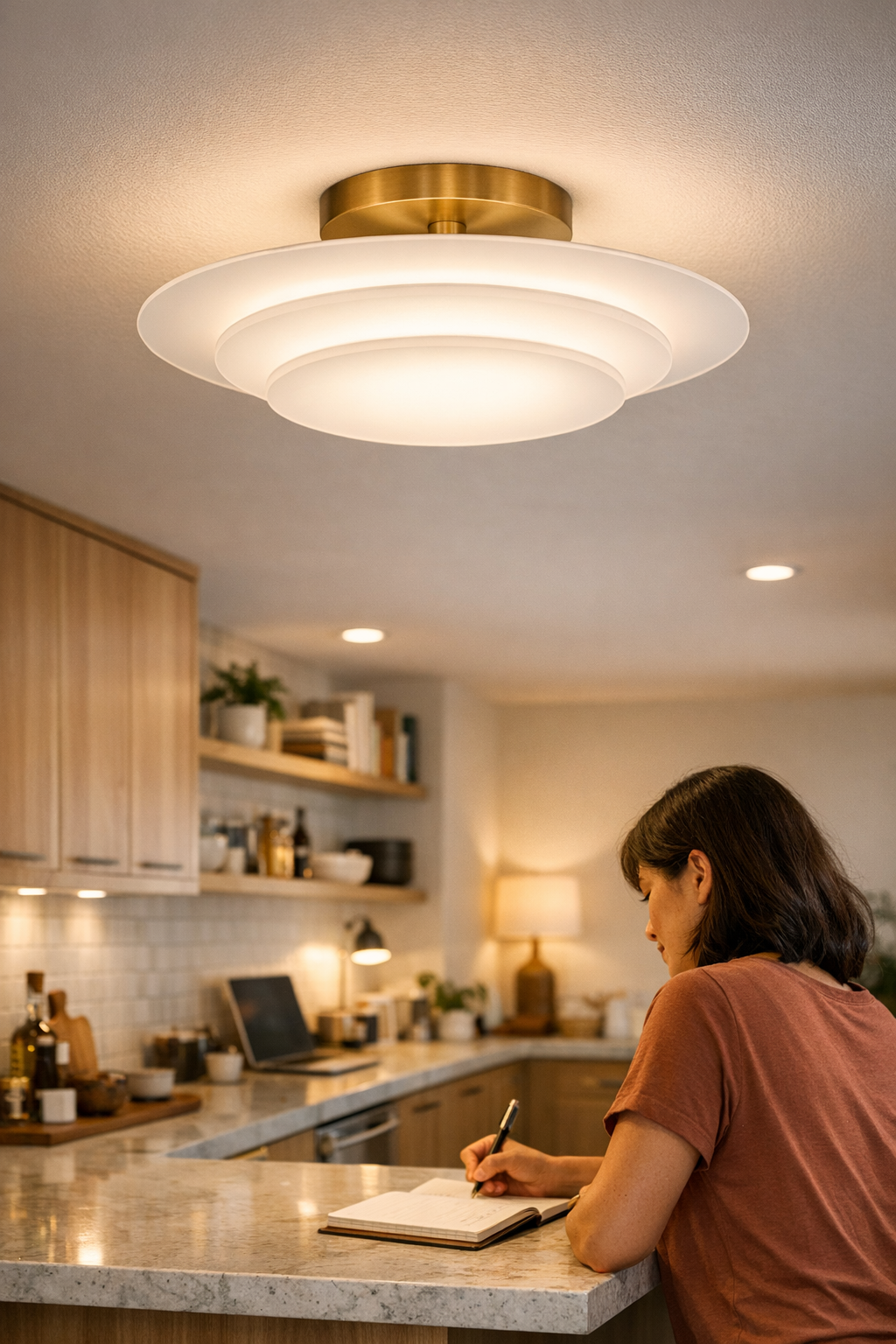
    The difference between ceiling lighting that looks resolved and lighting that actually works shows up fast: the countertop zone left dim while every cable still catches your eye, the glare off one side of a desk, the shadowed half you avoid at night because it feels like a hassle to fix. A “minimal” fixture or tidy flush-mount promises a seamless look but in practice, it’s the edges, corners, and work surfaces that get ignored. After using the space for a week, you stop bothering with the kitchen backsplash, read from only one side of the shared table, and start stacking stray items under shelves where the lighting gives up first. Glare, patchy coverage, and cable clutter don’t fade—they become part of the routine.

    How Looks-First Lighting Choices Create Everyday Friction

    The first mistake is picking a ceiling fixture for its shape, not for how it really lights up your routine. You like the uncluttered ceiling—until two evenings later, when the central glare means you stand off to the side to avoid squinting, or shrug and leave half the island in shadow. Even when cables are “out of the way,” you keep noticing a drooping line or a support bracket just off your main sightline. Clean layouts on paper rarely survive the irritation of moving seats to stay out of glare, or leaving pantry shelves for “later” because you can’t see what’s near the wall.

    This friction adds up: a corner used only to pile stuff, a desk edge avoided after dark, fresh cable marks on the ceiling where you tried to fix the last misalignment. The workarounds pile up—and the room’s weak zones gradually become baked into daily habits.

    The Quiet Difference of Linear and Panel Ceiling Lights

    Switching from a single-point fixture to a linear or panel ceiling light doesn’t guarantee solved lighting—unless placement, mounting, and cable management work with your real room layout. Linear and panel lights break up harsh, central glare, spread brightness to side zones, and make the edges of counters and tables actually usable. Suddenly, prep work doesn’t crowd into one patch, papers don’t migrate from shadow to light, and the awkward “dead” zones get back into play after dinner. Evening comes and the whole surface stays visible—instead of one bright spot shrinking as you move away from the center.

    The risk: even a well-designed linear fixture can look as unfinished as a bulky flush-mount if you allow bent cable lines, loose brackets, or a slightly off-center install. “Low-profile” only helps if alignment and support disappear; otherwise, minor setup errors take over your visual focus and make the upgrade feel like another compromise.

    Spotlight Troubles With Single-Point Flush Mounts

    Flush or globe fixtures offer one dramatic oval of brightness—then leave the rest of the room fading into dull perimeter. Directly under the light, your eyes catch a sharp reflection off glossy surfaces or a too-bright patch on the desk. Move an inch toward the edge and you’re stuck squinting, shifting a laptop, or giving up on the far end for the night. Seeing cables first, light second, becomes normal—and glare makes every late-night cleanup or paperwork session feel like a negotiation.

    Real-World Setups: When Routine Use Picks Winners (and Exposes Weaknesses)

    Think of a shared workspace or family kitchen. A single overhead fixture keeps one spot serviceable—while everything outside its reach gets assigned to “some other time.” You don’t choose the best zone, just the one that isn’t in shadow. It’s not by design; it’s by lighting default.

    Over weeks, this creates lighting hierarchies you never planned: one side cleaned daily, the other side avoided by default; the shelf with nothing but backstock because reaching things there after sunset risks a stubbed finger. Most telling: during real routines, clutter grows exactly where light fails, not where storage runs out. A crowded prep counter is rarely a storage problem—it’s a lighting boundary.

    Moving to a linear fixture with supports hidden behind cabinet lines and cables wedged tight to a ceiling beam, the difference is immediate: consistent light lands across the whole work surface, flimsy excuses for not using half the room disappear, and after dark, there’s no need to chase down extra lamps or dodge stray reflections. The “good” spot isn’t the only one available—whole stretches of counter or desk finally stay in play. No empty corners, no shifting tasks when the light moves.

    The Real Impact: A Concrete Example

    Switching a four-foot linear light to run parallel with the kitchen counter rewrote how the space worked—especially at night. For the first time, the entire counter—from sink edge to back wall—stayed visible right through after-dinner cleanup. Brackets vanished behind trim, and an unruly cable tucked out of sight. Suddenly, routine movements flowed: prepping, rinsing, packing leftovers—no one hunting the old countertop “hot spot” and no stray lamp left in the way. Edge work and minor tasks could shift around without ever feeling half-lit or sidelined.

    Setting Up for Steady, Usable Light—Not Just a Finished Look

    Map out real traffic and task patterns before placing a single fixture. A desk isn’t just a rectangle: check where hands, eyes, and tools move, and run linear lights the same way. For kitchens, place panel or linear lights to hit counter spans evenly, with support brackets avoiding sightlines and cables routed away from overhead storage or walkways. Spreading out the light and securing attachment hardware does more for usable surface than another showy fixture ever could.

    Support hardware—brackets, cable management, anchor points—holds equal weight with the fixture. Skip corners with flimsy supports or exposed lines and every cleaning run turns into a reminder: the cable path was never finished, the bracket line shows in every photo, or that “almost” centered panel throws shadow every time you actually use the space. A neat install means cables follow the room’s lines, not your last workaround.

    Lighting Decisions That Outlast the First Impression

    Installing a ceiling fixture that solves “brightness” but skips coverage or cable control is a short-lived fix. The missing detail isn’t subtle: dim or half-lit corners, stacks and devices shifted for better light, and that tired “I’ll get to it later” feeling in every missed task zone. Ignore visible cables while mounting and you’ll catch your sleeve on one, or lose cleaning patience as crumbs pile up near the exposed edge. A room that feels “done” for photos still falls flat in daily use if movement and sightlines don’t match real routines.

    Consistency means more than symmetry: spread fixtures to reach deep work edges, not just the center; use soft-edge diffusion to prevent abrupt light-drop; disguise cables against beams or seams so they disappear from view. A linear light that’s too long distracts, while a short run leaves zones out. Picture your routines running through the finished layout—routine reveals every oversight your first impression misses.

    When the Setup Holds, You Notice What’s Missing—Fewer Adjustments, Less Compromise

    The best setup stops reminding you it’s there. If a week goes by without adjusting your posture for glare, moving piles out of shadow, or scrubbing around an exposed supply line, the improvement’s clear. Tasks spread out naturally rather than being dictated by the nearest patch of light. Those “just out of reach” cords, crumbs near the wall, or reading glasses left by the glare—these habits fade as steady, even light turns more of your space into usable territory.

    But even the right fixture fails without honest, clean setup. No panel, bracket, or under-cabinet light will stay invisible if cable droops, anchor points drift, or sightlines cut across ordinary work. Choosing light is only half the job; it’s the support, the cable route, and the final alignment that divide rooms you use from ones you tolerate.

    Find lighting and support solutions at LightSupport