
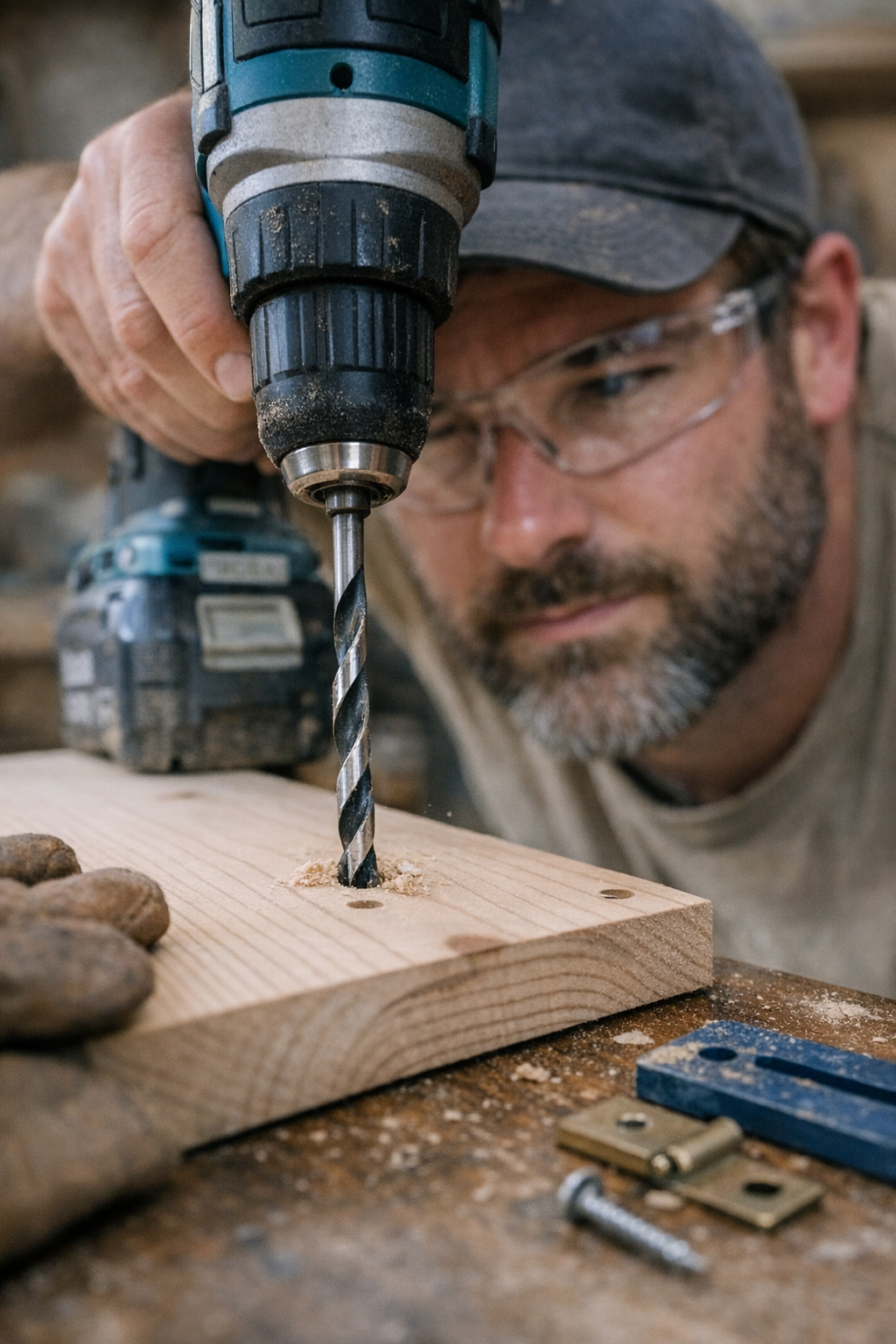
Anyone who’s drilled more than a few holes knows the moment when things start to slip: chips spit sideways, the bit wobbles in your grip, or a line of holes starts out straight but veers off—just enough to throw the whole thing out of whack. Misalignment sneaks up fast. A millimeter off at the start, and by the end, assembly feels more like covering up mistakes than building something real.
How Slight Misalignment Derails Real-World Work
Whether you’re laying out shelf pins along a kitchen wall, sinking fasteners through plywood, or adding joinery to a stubborn hardwood frame, the pressure is always there—get the hole right, or get ready to fix it later. Rushing setup to save time feels natural. Trust your hands, sight a rough mark, and go. But every missed alignment costs you more down the line. That tiny first slip leads to the next hole drifting; the project starts folding in on itself with each new pass.
Each mistake gets harder to hide. Suddenly you’re spending as much time patching holes and shaving edges as you are drilling. Hardware resists. Pins snag or rattle. A clean row becomes a headache, and work that should be dialed-in now feels clumsy and slow. Alignment isn’t cosmetic—it shapes how the whole assembly feels under your hands.
“Looks Fine” Is a Trap: Why Quick Visual Checks Fail
Glancing over bits on the workbench, they all seem the same—sharp, clean, ready. You line up out of habit, squeeze the trigger, and expect the best. But the bit tells the truth. When aligned, it cuts forward with a steady hum—no hop, no roughness. Let the angle wander? You’ll know it: the drill chatters, the surface fights back, dust clouds up unevenly, and the tool seems to veer on its own. Veneer lifts, the face chips, and you can literally feel the bit strain against the wood.
Every weird vibration or lopsided chip is a warning. That’s the signal things are off and the row you’re drilling is about to cost you. Ignore it, and no clamp or filler will make up for it at assembly. The line between crisp work and a patch job is often decided long before sanding or finishing—sometimes in the first ten seconds at the drill press.
When Alignment Costs You: Scenes From Real Work
Think about mounting shelving in a cramped alcove or retrofitting cabinets for new hardware. You hit the first hole just a hair off—doesn’t matter until the third or fourth, when pilot dimples no longer line up. Then the problems multiply: shelves tip, doors bind, fasteners only half-engage, brackets sit proud or float. Suddenly, nothing fits together without backtracking—more drilling, more sanding, more filler smeared everywhere. The effort spent fixing easily overshadows the time “saved” by skipping careful alignment.
Across a real jobsite, you see the difference. One worker rushes, chasing measurements and fighting materials. Another builds in slow, precise steps: holes align, hardware drops flush, finished product looks intentional. The contrast is plain. Cutting corners early doesn’t save time—it leaves scars the customer, or even just your own hands, will always feel.
Pilot Dimples: The Quiet Fix That Changes Everything
The small act of making a real, visible pilot dimple—something deep enough to actually seat the bit—turns rough work into something repeatable. It’s not a pencil flick or a dent with a nail, but an actual punch, 1.5 mm or deeper. With a solid guide, the bit anchors instead of skating, and your control shoots up. Set the drill to speed before it touches the work: the initial bite is crisp, the exit clean. You’re not fighting tear-out or side drift—just making steady, reliable progress.
A shallow dimple is a wasted step. Bits bounce, find the grain, or slide on tough faces—leading to torn edges and a creeping sense of sloppiness. Go a little deeper, and each start is consistent—even late on a twelve-hole row or across tough end grain. It’s a small habit, but it stacks up: cleaner surfaces, less tool wandering, and a smoother build from start to finish.
A Routine That Actually Works: Lining Up for Success
Level Your Eyes, Level the Work
Forget “good enough.” The pros get their eyes right to the plane—checking left-right, up-down, and every possible slant before committing. Hunters for invisible tilt, they don’t press in until the bit sits laser-straight in that pilot mark. It feels deliberate because it is. This isn’t perfectionism for the sake of show; it’s the only way to avoid chasing misalignment through the rest of the project.
Read Your Tools as You Drill
Your drill broadcasts every detail: when the pitch shifts, resistance spikes, or chips fly uneven, that’s the clue something’s wrong. Pros stop—not push. They reset instead of muscling through, because filling or enlarging a gone-wrong hole means a softer grip, wasted parts, and a mess. Pausing to reset isn’t lost time; it’s earned precision and half the finish work later.
Why Repairs Never Add Up to a Clean Build
A misaligned hole can sometimes be rescued: dowel, filler, or oversize hardware. But it never feels right. The grip isn’t as solid, fasteners give under pressure, and visible patchwork becomes the calling card of every rushed job. The regret is immediate—wishing you’d taken a moment to double-check before drilling. Real shops solve these issues ahead, not after. In practice, prevention saves aggravation, time, and the sharpness of every next step.
Reliable Drill Bit Alignment: Habits That Stick
Never skip the mark. Awls, self-centering punches, marking gauges—any method that gives you a solid, visible pilot is non-negotiable. For every repeated hole, a drill guide or simple jig saves sanity. If you feel the drill labor or notice a tighter grip, stop and check the bit itself—dull or chipped bits magnify the risk of drifting off track before you ever touch wood.
Keep that charger out: low batteries mean dropping torque, and that’s when misalignment goes wild, especially in thicker or denser stock. And every so often, check your chuck tension—if the bit shifts in the grip, no marking can save you. Cutting, sanding, even driving screws—every high-torque task starts with the small, deliberate choices that make the rest of the day easier.
Alignment Isn’t Glamorous, But It Decides the Outcome
Alignment doesn’t make a tool flashier or the build faster. But it’s the difference between final assembly that drops together in minutes and endless half-solutions: shimming, shaving, or wondering why that hardware just won’t sit flush. Precision comes from those quiet, routine moments—checking, anchoring, adjusting before you commit. Over the lifetime of a project, those seconds turn into smoother assembly, less fatigue, and a build that holds up in the real world.
Discover power tools, sharp bits, and work accessories built for shop realities—not just showroom perfection—at Gumboll.