Category: Yard & Utility

  • How Partial Containment Transforms Outdoor Storage Maintenance

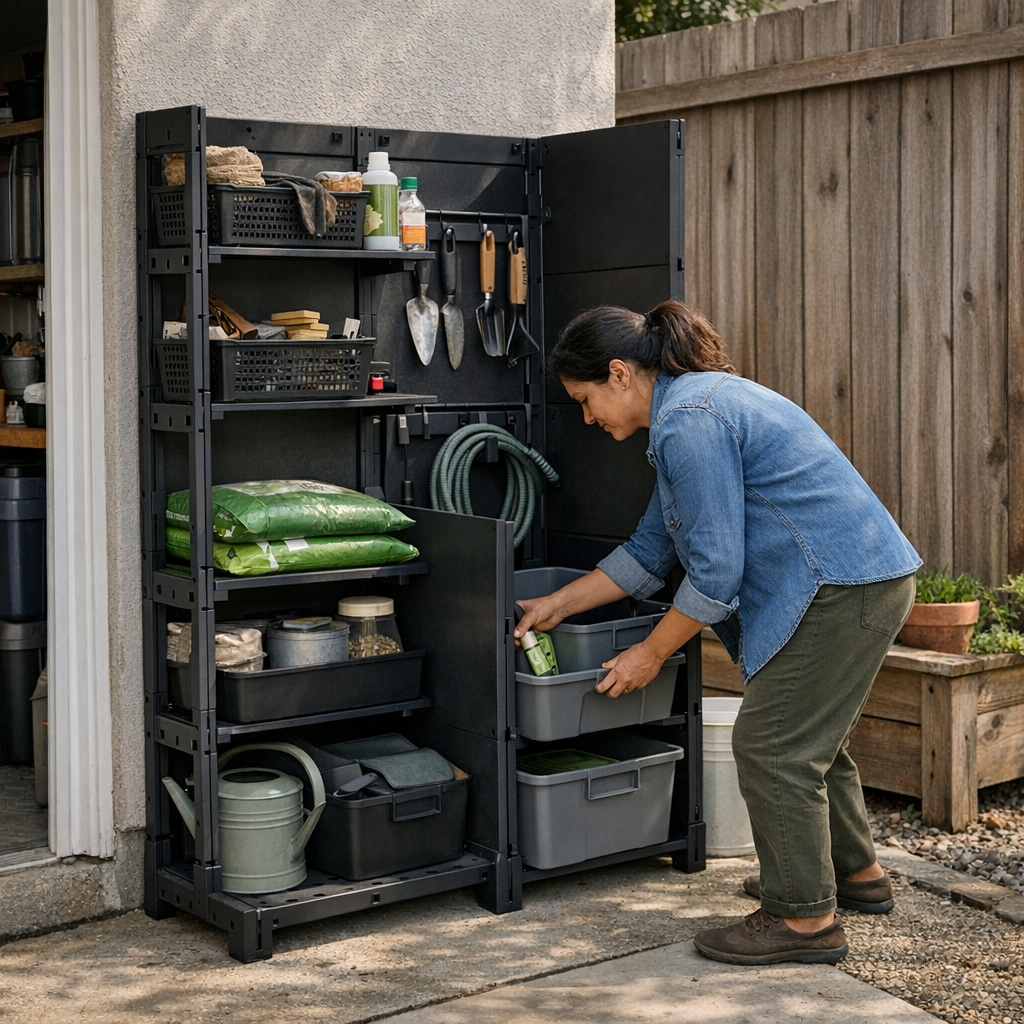
    There’s a moment every backyard or side-yard setup hits—not the obvious crisis of “I can’t fit anything else,” but the slower grind where even your best outdoor storage can’t keep little gear and tools from drifting loose. In the real world, shelves and open bins always seem like the answer. You start with trowels hooked at arm’s reach, gloves clipped in sight, seed packets lined up, every item visible and ready. It feels under control—until the second week, when order collapses with barely a sound. The trowel buries itself beneath a bag of soil. Gloves slip behind boots, then vanish for days. Resetting turns into shuffling piles just to clear a walking path. Suddenly, the zone you counted on for smooth movement and easy storage is the one spot that slows you down, blocks your step, and makes you wonder where all the “efficiency” went.

    Where Outdoor Efficiency Collapses: The Real Return Friction

    The truth is, it’s not about square footage—it’s about the return. Not “Can I fit this?” but “Can I put it back, without blocking something else or derailing my next trip in?” Wall racks and open bins might look like a system built for ease. But after a handful of uses, what’s supposed to be simple access turns into chase-and-reshuffle. You grab the rake, toss it back five minutes later, but now it’s blocking the spade. By the weekend, every reset takes longer. Storage goes from fluid to fussy, never quite matching the rush and repetition of actual backyard routines.

    This is the real test: After a week of working in the yard—watering, weeding, rearranging pots—can you return tools without shifting an entire row of supplies just to open space? If not, the system isn’t broken, but it’s quietly failing. One cluttered barrier at the edge, one pileup in a corner, turns functional setups into new snag points—forcing you to move leftovers out of the way, over and over, just to keep regular paths clear.

    Open Systems: When Visibility Turns Into Scatter

    Open racks and bins promise speed. Everything visible, nothing forgotten, every tool within reach. But spend a week with them in an actual side-yard or garage edge and the cracks show up:

    • Hand pruners get tossed on top of seed trays, forcing you to rearrange both the next time you need either one.
    • Light gloves slide behind taller shovels and don’t come out again until you empty the whole shelf.
    • A giant fertilizer bag ends up collecting three unrelated trowels and a hose—blocking access and hiding daily-use gear.

    The hardware isn’t the issue. It’s the way routines take advantage of every tiny opening. Without clear physical boundaries, “putting it back” just means dropping it anywhere there’s a gap. The more open the system, the more things start to scatter and drift—until the zone’s main job is hiding what you need, not presenting it.

    The Pileup Zone: When Good Storage Becomes a Blockade

    Picture it: that garage threshold you finally organized, a fence-line stacked with modular bins, spray bottles on hooks, extra planters in neat rows. For three days, it works—everything in its zone, every tool where you want it. But fast-forward another week. You’re tiptoeing around seed packets that slipped behind planters, stepping over trowels that somehow migrated to your walking path, ducking to retrieve gloves from underneath a crate. Bins with lids, instead of containing the mess, start swallowing it. Once something drops in, it stays there until you lose patience and dump the whole box to fish it out. The cost? Every trip in or out of the zone slows down, and the setup that was meant to keep things easy is now the thing you’re working around.

    Partial Barriers: The Overlooked Fix That Holds the Line

    Most outdoor storage failures have nothing to do with layout—they blow up when the return flow falls apart. Small, odd-shaped gear drifts, fills corners, and fills the first open “edge” it can find. The eye can see everything, but the hand still has to dig or move something else just to make use of the space. The fix is usually not sealing everything away, but putting up just enough of a barrier to catch the loose ends.

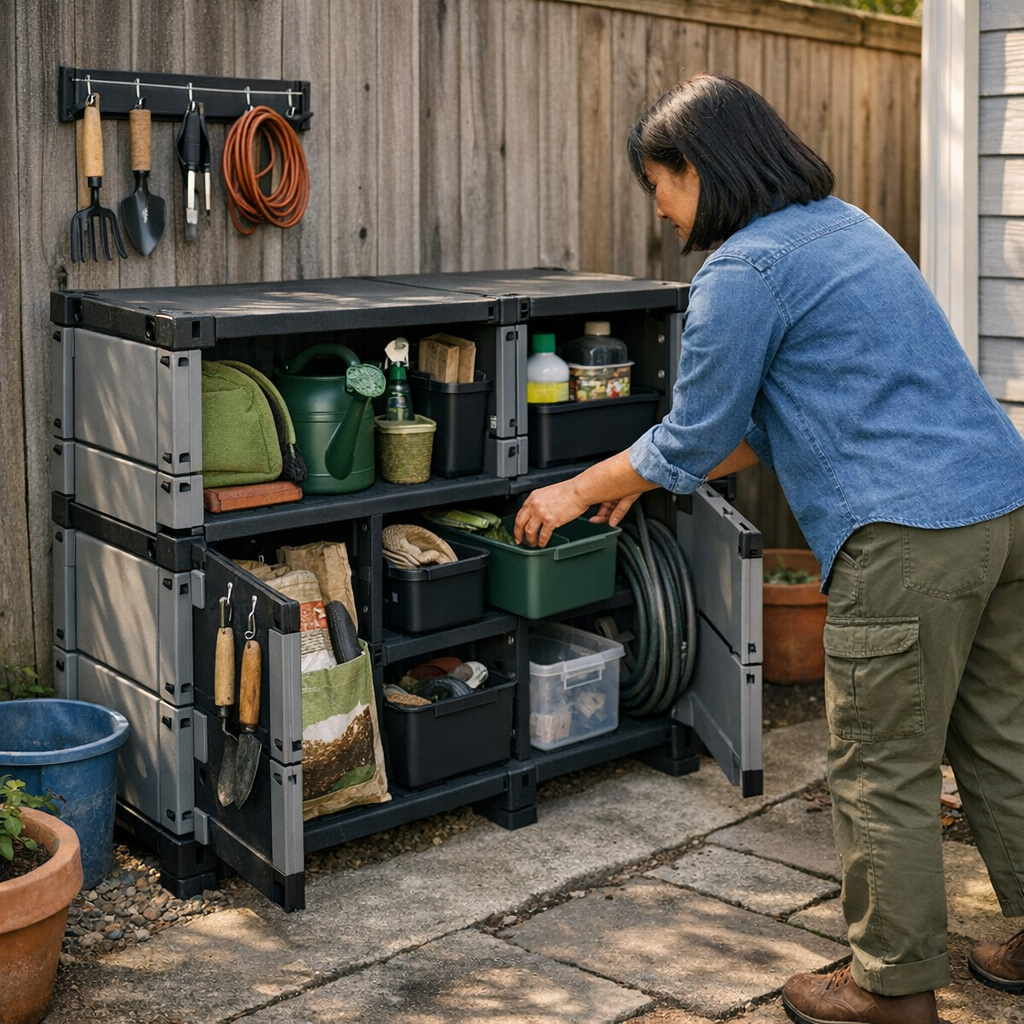
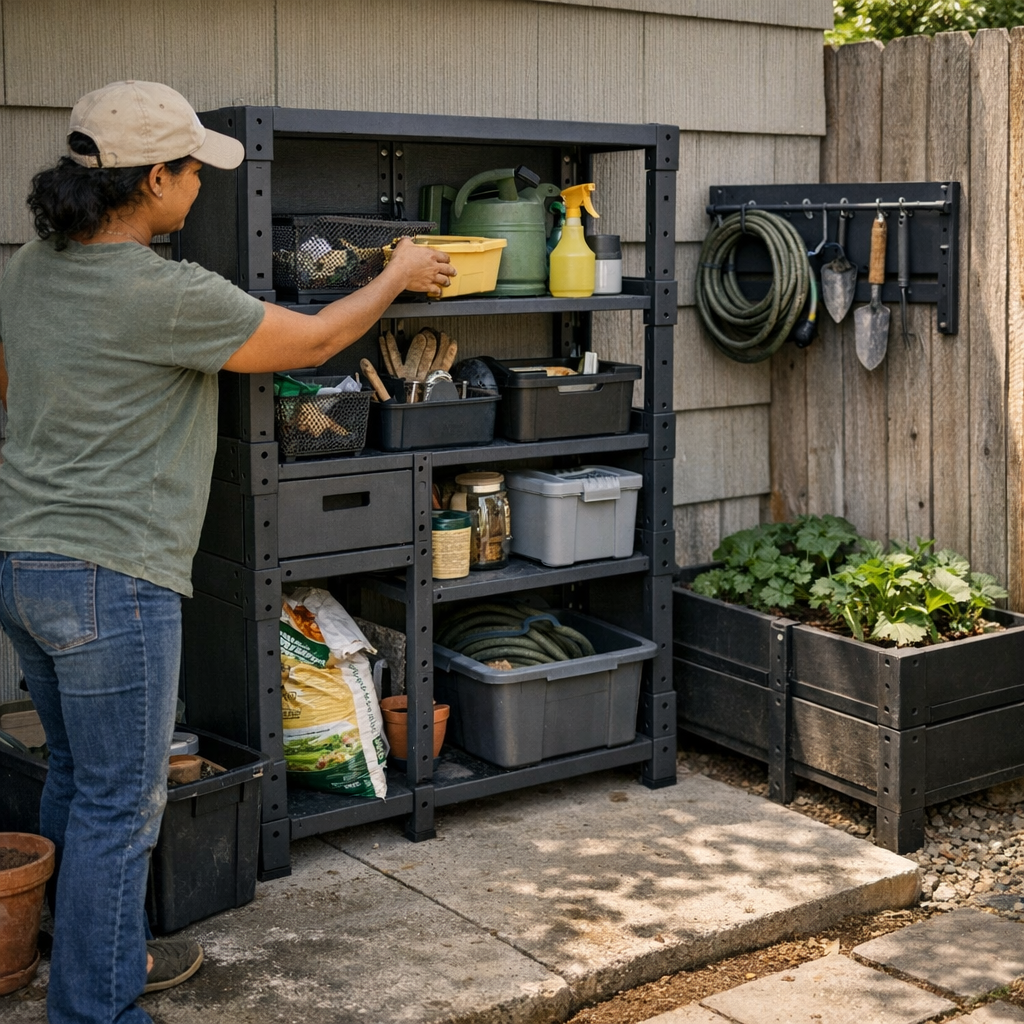
    Swapping one open shelf for a partial vertical block—a simple 28-inch board along the edge—cuts down migration instantly. Small tools and slippery packets can’t wander past the soft edge. Strays land where they can be scooped up together, not hidden across scattered piles. Your most-used piece still stays grab-ready, but the daily mess clusters instead of spreads.

    You’ll notice the change immediately: less stuff creeps across the floor, drop-offs gather in one manageable place, not all over your traffic lane. Cleanup shifts from half an hour of hunting under bins to a single-pass reset. The corner that gobbled up gear now becomes the holding zone you actually use, not avoid.

    Let Routine Dictate Structure—Not the Other Way Around

    Pay close attention to exactly where things pile up after a week outside. If you’re routinely stepping over the same drop zone, install a side barrier there. If the fence-line shelf always collects loose gloves and packets, slot an open-top crate right into the drift path. Make your storage stop and hold clutter at the cutoff, not invite it to leak into dead corners. No outdoor setup needs to look perfect—it just needs to steer your mess where you can find and fix it fast.

    Closed Bins: Useful for Some Things, Frustrating for Others

    On bad days, it’s tempting to shove everything into a closed bin or cabinet and call it done. For rarely-touched gear, that works. But anything you grab or put back more than a few times a month? Closed bins only trade visible clutter for invisible, slower resets. Layers build up—one quick drop, then you forget until it’s time to dump everything out. If you keep high-traffic tools sealed away, you’re just hiding the next scavenger hunt.

    The trick is blending both approaches. Store seasonal, backup, or bulky gear tightly closed. Use partial barriers and open access for everyday hand tools, gloves, and the gear you handle most. This way, you never have to unearth last week’s mess just to hit today’s routine.

    The Difference You Notice: When Setup Starts Helping You Back

    You don’t see a storage system’s weak spots when it’s freshly cleaned. You spot them after a week of actual movement: pushing past a bucket in your path, having to free buried gloves, noticing one wall section keeps collecting more than it should. Setup isn’t about the “organized” look—it’s about function that survives repeated real-world resets. When structure gently pushes each tool and supply back toward where it belongs—and lets you clear the way in seconds, not hours—you’ve hit the sweet spot.

    Outdoor storage is alive. It gets tested the minute you start slipping back into old habits—dropping gear, skipping perfect placement, working against weather and time. The systems that last aren’t the ones with the slickest layout, but the ones that shape your routine as much as the other way around. Look for structures that block drift, keep your highest-use sections open, and make regrouping a fast, visible move. That’s the difference between storage that “fits outside” and storage that actually works outside—day after day, reset after reset.

    See outdoor storage and setup options built for real use at TidyYard.
  • How Buffet Sideboards Transform Dining Storage for Everyday Efficiency

    A buffet sideboard signals calm, but under repeated use, calm quickly unravels if the storage isn’t built for real routines. The difference between a dining room that works and one that only looks organized shows up fast: a sideboard might look neat after a weekend reset—doors closed, surfaces cleared—but by Wednesday, you’re stacking plates at risky angles, nudging glassware aside, or searching for a tool that vanished into a crowded compartment. The friction isn’t visible at first. It builds as dinner-to-dinner movement slows, hidden storage traps what should be within reach, and the reset drags out—making “looks fine” and “actually works” drift further apart with every use. For most dining zones, the core issue isn’t the amount of storage but whether the structure matches how often—and how awkwardly—your own routines push against it.

    Where Hidden Storage Falls Short in Real Life

    Closed doors and tidy surfaces feel orderly, but inside, hidden storage often creates new problems. The main struggles stand out after a few real meals—moments where the sideboard’s internal setup gets in the way instead of helping:

    • Grabbing a plate but finding it buried under bowls you didn’t intend to stack there.
    • Returning glassware, only to see the shelf is just slightly too low, and you’re left juggling—should you shuffle the whole row or leave the glass stranded?
    • Trying to fit serving utensils but every space is blocked, forcing you to balance them beside a tilting tray or dump them elsewhere for now.

    Each time you put something back, hesitation creeps in. Instead of a smooth routine, returns become a shuffle—squeezing, restacking, or resorting to any open space, even if it’s not where things belong. Surfaces get extra piles “just for now,” internal categories blur, and by week’s end, hidden overflow slows every step. The zone stays visibly tidy but feels bogged down whenever you try to move quickly or keep things sorted.

    Looks Organized—Until Everything Moves

    There’s a visible difference between a calm facade and storage that stands up to daily churn. Sideboards that rely on large, undivided spaces tend to fall apart under pressure: plates tip, utensils wander, and serveware drifts into places reserved for something else. Reset becomes a guessing game after each meal—one shelf fills up, so the next piece gets wedged in at an odd angle. You spot it most when a routine slips: suddenly, opening a door means contending with half-stacked items or moving overflow that never found a home. The entire area remains “neat” on the outside, but under the surface, every category quietly loses its boundary.

    The earliest warning sign is hidden overflow. When shelves or compartments aren’t matched to specific categories—when a shelf is too tall, too shallow, or open-ended—random pieces creep in. That one-off holiday platter never returns to deep storage and lingers all month; gadgets or “occasional use” items muscle into daily-use slots. Soon, every reset takes longer, and you’re left weighing whether to put things away correctly or just get it done. The zone starts missing its own purpose: visible order masks slowed movement and rising frustration.

    How Internal Structure Shapes Everyday Flow

    What fixes the day-to-day bottleneck isn’t more storage but smarter use of what you have. The shift comes from sharply assigning each segment—one shallow shelf fits just your main plates with no scraping; glassware stands upright without overlapping; utensils and servers go in a defined slot or divider, not a loose bin. When every return and grab matches how you actually use things, movement speeds up, and surprises drop. The worst trap? Dedicating a “miscellaneous” section. It absorbs every leftover, becomes impossible to clear, and quickly turns into the new friction point that ruins reset flow. The turning point is always the same: separate categories win, while blended or undefined storage triggers the delays and reshuffling.

    Repeated Friction in Real Use

    Real-world sideboard headaches are rarely dramatic, but they repeat until the area feels like an obstacle course. These patterns make the difference:

    • Doubling back for the same item, since drifting piles have buried what you need or forced it into an unintended spot.
    • Shifting overflow between compartments, instead of confidently returning an item to its own place.
    • Flipping open several doors, just to carve out a spot for one extra plate or bowl—a sign the structure isn’t holding up.

    Individually, these moments are small, but together, they steal time and block routines. What should be a simple after-dinner flow turns into constant adjustment. You may even delay cleaning up or start stacking things elsewhere “temporarily.” A sideboard that requires more thought to return items than to retrieve them signals the setup, not the user, is at fault.

    Tuning Your Setup for Repeatable Order

    Solving these issues isn’t about adding more sideboards or cabinets—it’s about committing to clearly defined zones within what you already have.

    Start by declaring rigid categories. Use shelf heights, riser inserts, and dividers to give each group—dinnerware, glassware, serveware—its own non-negotiable space. Track what repeatedly overflows. Ask: does this piece really belong in the dining zone, or could long-haul and “sometimes” items move to a utility shelf or wall unit elsewhere? Visible separation holds the line against clutter drift.

    If your hosting needs or routines shift, modular sideboards and adjustable interiors buy flexibility. Moveable components can help you reset compartments on the fly—but only if you keep internal categories strict. Flexibility without clear boundaries just enables a more elaborate shuffle, not a better flow.

    Real test: If you notice clutter build up by week’s end, try a “one in, one out” cleanup—remove a single non-essential piece and see how much smoother return and retrieval become. Often it’s volume, not frequency, that sabotages usable order.

    When Structure Matches Routine, Resets Get Lighter

    The most reliable sideboards aren’t those that only look perfect after a deep clean. They’re the ones that make the right compartment so obvious you can put things away half-asleep and still get it right. Every shelf and drawer tells you, by what fits and what doesn’t, what belongs where. No cramming, no shifting piles, no guesswork. Return flow becomes as frictionless as grabbing the item in the first place—no special angle, no hidden balancing act, no stalled cleanup.

    When structure truly matches routine, the dining space is ready as soon as the last meal ends. The next prep begins with everything in the right place—no hunt for a missing server, no silent accumulation of “just for now” clutter. You move through the room, not around bottlenecks. The outside order matches the inside logic, and every repeated cycle—grab, serve, return, reset—feels lighter, even when energy is low or time is tight.

    Sideboards and storage cabinets that fit these patterns—clearly separated zones, easy return paths, capacities that match what you actually use—quiet the lingering friction dining areas often collect. It’s not about a prettier setup, but a structure that stays transparent and responsive as real routines change and pressure builds.

    Find sideboards and inside-storage solutions that support real routines at Gridry.

  • Balancing Dust Protection and Moisture Control in Entryway Storage Solutions

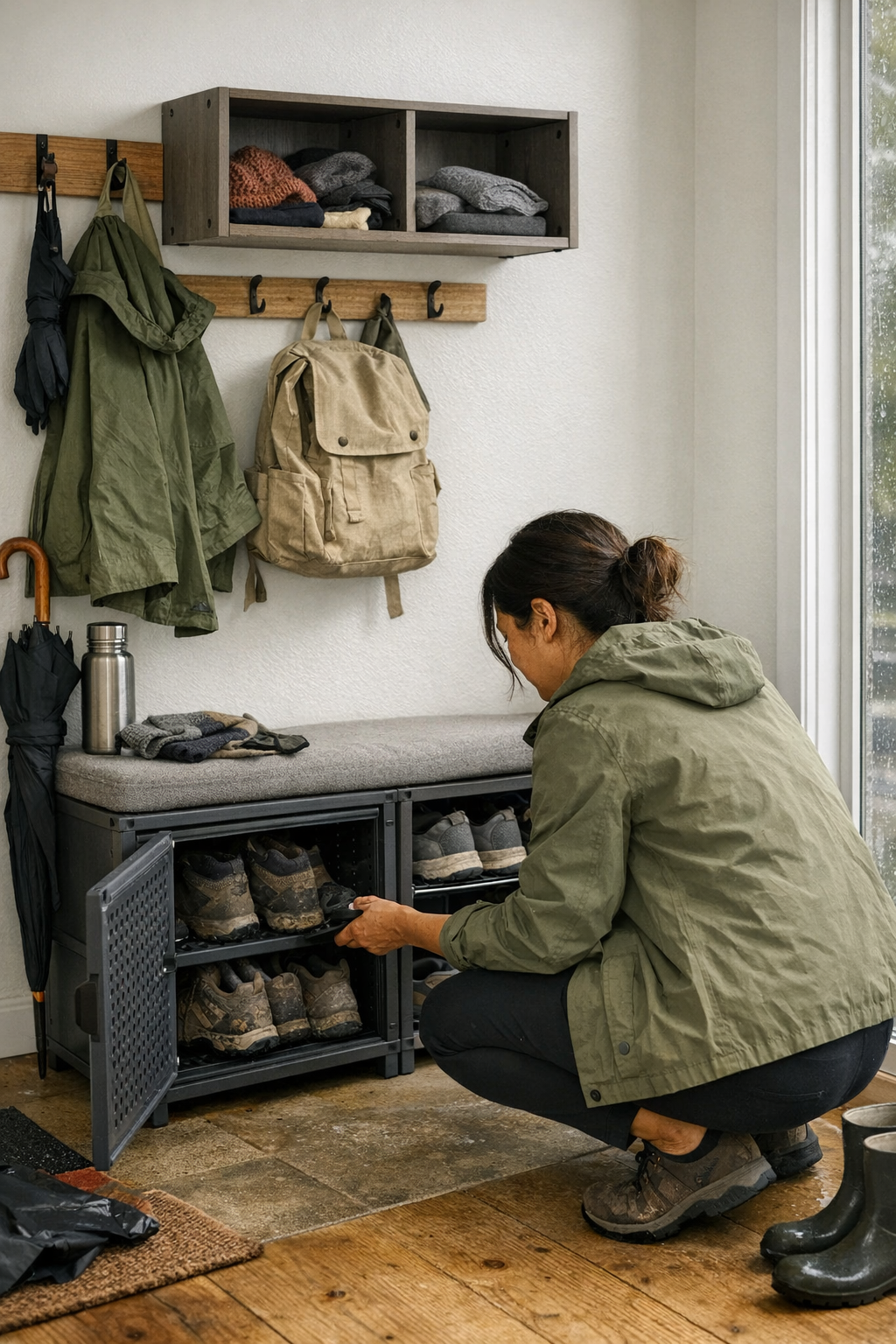
    Every entryway makes a promise the first week—shoes tucked away, bags out of sight, a floor that runs clean from door to kitchen. But the real test starts with the first wet return: shoes rimmed in grit, a rain-soaked jacket, or a muddy backpack dropped after soccer. In that moment, your storage choice—gasket-sealed versus ventilated—immediately shapes what happens next: will order hold, or does your threshold quietly shift from reset to rework every day?

    Looking Ordered Versus Living Ordered

    A sealed cabinet can give an entryway the look of control: flush doors, surfaces wiped down, nothing spilling out in the open. For a dry stretch, it delivers, hiding the shoe row and bench scatter. But introduce a drenched umbrella or a backpack with hidden puddles, and the system starts resisting your routine. You stash things out of sight, only to find them stuck in their own weather: boots that feel spongy, gloves mislaid and now half-damp, a musty air when you open up midweek. Resetting turns into an extra step—a pause to air out, a hunt for dry gear instead of just grabbing and passing through.

    This is the hinge point for transition storage: what contains disorder visually can create silent messes behind closed doors. The split isn’t a theory—it’s the trade between spotless lines and gear that stays ready, between cabinets that shield from dust and setups that prevent your whole flow getting jammed with every wet sweep through the doorway.

    Dust Tight: Where Gasketed Cabinets Shine (and Stall)

    Gasketed, sealed storage works smoothest when life at the threshold is mostly dry—city dust, pollen, and pet hair threaten most, and your entry links to the outside but doesn’t double as a mudroom. Here, tightly sealed cabinets act like a shield: guests kick off clean shoes, you sweep less, and gear slides in and out with hardly a thought. Temporary drop-offs rarely matter because everything inside is already dry and the friction stays low.

    Trouble builds as soon as water is in the mix. After rain or snow, sliding even a nearly-dry pair of boots or a tote with a damp base into a sealed compartment traps just enough moisture to grow lingering humidity inside. The next return amplifies it: more damp gear layered in, never quite drying between uses. What was once order becomes a cycle—resets slow down, a sour smell grows, and you find yourself holding doors open with a foot just to let things air out for five minutes, then forgetting anyway as you head to the kitchen.

    When the Hidden Mess Appears

    These aren’t big, single failures—the cost is in slow buildup. Shoes start sticking instead of sliding out. Gloves swapped for dry ones, only to realize the backup pair is now not-quite-dry. Each reset nudges you off pace, adding small delays or extra reshuffling. The illusion of tidiness masks a drift towards clutter and extra laundry in disguise.

    Ventilated Racks: Give Up a Little Order, Gain Back Time

    Ventilated racks and open shelving change the deal. Everything’s visible—the “picture perfect” calm of a sealed cabinet is replaced by active gear in motion. Shoes dry out; bags lose condensation instead of collecting it. The sweep of the week is messier to the eye, but the movement’s quicker: hats left on a wall hook are actually aired out, boots dry where they sit instead of festering and transferring moisture from one item to the next.

    The main tradeoff? The clutter spreads unless you reset daily. Floor gets sandy after a windy day, sock pairs go missing in open view, and you’re more likely to see the ongoing chaos of a shared threshold. Still, resets are lighter: you’re reaching for a dry item instead of rescuing what’s been stewing in its own dampness. The cycle favors flow—less hidden buildup, fewer delayed departures, and fewer “wait, these are still wet?” moments as you rush out the door.

    The Real Routine: Where Friction Builds

    • You drop a gym bag on the bench, intending to sort it later, only to realize the sealed cubby below is still holding yesterday’s damp shoes—now both areas are blocked, and the pathway closes in.
    • After soccer, sneakers get stuffed into a closed compartment “for now”—next outing, they’re greeted by a sour, stale odor carried over from the last missed venting.
    • Wall-mounted racks eat up hats and scarves efficiently, but when the overflow doesn’t get cleared, items start slipping off onto the floor, turning the entry channel into a slalom again.
    • If you forget just once to wedge open a sealed cabinet after dumping wet gear, one tight seal sets the stage: re-entry means a wall of humidity the next day, not the clear passage you hoped for.

    Small Adjustments with Outsized Results

    Either setup can fail or flex, usually on the margin of a small habit. Leaving a gasketed cabinet cracked for thirty minutes after wet returns—a thumb’s width, no wider—lets trapped damp escape before it breeds problems. In reality, it’s easy to skip, especially on rushed mornings. The penalty: clammy soles, lingering chill in gloves, reset cycles that eat time you thought you’d saved. Stick to a partial-vent routine and the difference is immediate: floors stay clean, bags are ready the next day, and the threshold feels less like a slow obstacle course.

    Matching Storage to Your Threshold Reality

    If your threshold only sees dry gear and sweeping dust, sealed storage runs nearly frictionless. But in busy homes with wet cycles and unpredictable comings and goings, open racks or intentionally vented cabinets are non-negotiable for keeping flow ahead of frustration. The right fit is found not in a static snapshot of order, but in resets that match the turbulence of repeated use.

    Key signs you need to rethink your storage:

    • A closed cabinet develops musty air, even after a single rainy afternoon.
    • Gear comes out feeling cold, sticky, or not fully dry—your “grab and go” becomes “grab and second guess.”
    • More time shuffling items or making space than actually passing through the entryway, especially with back-to-back arrivals.

    Most real setups land somewhere mixed: sealed units during pollen-heavy, dry spells; open racks for winter, monsoon, or back-to-back activity days; and a built-in habit of venting when moisture rides in. The system works if it shifts with you, not just in a photo but after a week of lived-through resets.

    Tip: Create a “Vent Routine”

    Whenever wet gear comes home, pause and leave cabinets cracked—set a timer if you need to. Even short vents in a well-designed entry zone can stop moisture from taking over, cutting down on hidden mess and regaining lost minutes in your return flow.

    What Matters Most: Performance After the First Week

    The real difference between sealed and vented storage is never visible on organizing day—it shows after a spill, a muddy bag, and a cluster of rainy entrances. Pick what stands up not just to the idea of order but to the stretch where paths get crowded, gear returns wet, and every shortcut matters. Efficient threshold storage isn’t about hiding the most, but about matching real rhythms: keeping shoes genuinely ready, spots clear, and resets light—even when arrivals pile up or routines go sideways.

    The best systems flex, recover, and quietly handle the churn of daily use without letting friction pile up. See how adaptable entry storage options can reset your threshold routine at Betweenry.

  • Why Small Yards Benefit More from Systems Than Extra Storage Products

    It’s not just a lack of square footage that makes small yard storage so exhausting—it’s the way perfectly good setups quietly trip you up. The side-yard cabinet, the bins lined along the fence, the deck box that promised an empty patio: they fill up, overflow, and then start to get in your way. Shoes line up along the back step where the shelf is always one move too far. A spade perches on the gate post, waiting for its “real” home. That storage bin meant to rescue your flow? It sits half-a-foot forward, quietly squeezing the walkway every time you pass. None of this looks like chaos, but it chips away at the space’s usefulness, day after day.

    When Clever Storage Stops Feeling Clever

    Every outdoor setup hits that turning point where a good idea turns into a small headache. The new storage chest arrives and, at first, everything tucks in. But patio chairs block the lid halfway. You need to move two things to return one. Bins that started out organized turn shapeless with the mix—seed packets, stray dog toys, one muddy glove, the random bit of wire. Floor space becomes an obstacle course. What looked tidy one weekend slips gradually: a toolbox balanced on the bin lid, the grill brush wedged behind the folded chairs, the path to the side gate now a sideways shuffle. Organization becomes friction—each “reset” feeling heavier than the mess it’s meant to prevent.

    Why Traditional Storage Keeps Losing to Real Routines

    The breakdown isn’t dramatic—it’s cumulative. The more you rely on big bins and closed cabinets, the more you end up digging, doubling back, or skipping the reset altogether. A bin swallows rope, then hides that trowel you reach for midweek. Overflow collects in predictable blind spots: gardening pots stack up behind the shed, balls roll under the table, watering cans cluster by the fence. Those “dead corners” soak up the overflow. So every few days, you reshuffle, reclaim an awkward patch of floor, and know it’ll fill back up before next week.

    Wall Storage: The Illusion of Freeing Space

    Mounting hooks and racks is supposed to clear the floor, but unless they’re placed where your routine naturally passes, they’re decoration more than solution. Gloves land on the hooks on day one, but on day three, they end up on the nearest bench. A rack above the spigot stays empty because it’s that one step too far when your hands are muddy. Wall panels fill quickly, but the path between gate and fence keeps getting tighter. Wall storage that only looks right is quickly outpaced by how you actually move.

    The Daily Reset Struggle, Scene by Scene

    Picture the cramped side yard after a week. Morning watering means dirt-caked boots pile outside the door—close, but never quite inside. Gloves disappear beneath last season’s planters, forcing a midweek hunt. Deep bins become black holes: last Sunday’s pruning shears lost to a tangle of forgotten gear. By Thursday, you’re sidestepping piles instead of working. That precious five minutes for a quick project is eaten up by dealing with minor blockages—paths constricted, corners filling with overflow, access narrowing room by room. The system isn’t broken, but it isn’t working for the way things actually get used.

    The friction is all around you—tight walkways, mounting overflow, and a reset routine that gets heavier with every return trip. Storage setups that ignore the way you move just hide the mess until it spills back across your path.

    When Setup Follows Real Flow

    No storage system handles the work for you, but you feel the shift when organization starts matching your outdoor habits. Take the difference between a deep bin at the patio edge—where pruners and trowels get buried—and a few hooks and trays right on the fence by the planting zone. Suddenly, the reset is built into the motion: finish watering, hang the hose; drop gloves in a tray just outside the door. Stray items stand out instead of hiding in a pile. It’s not perfect—some dirt collects, and sometimes an item is still misplaced—but the clutter you have to handle stays visible, and the tidy-up shrinks from a major chore to a passing gesture. Over the months, those micro-adjustments reclaim time and space that would otherwise be lost to constant reshuffling.

    The Power of Tiny Tweaks

    Small physical changes transform how you use your space. It might be a hook near the back gate so the sprinkler gets returned after use, or mounting a narrow shelf right where muddy boots actually land. Replacing one dead corner with a vertical module forces overflow upright—overflow you see and deal with, not trip over. Suddenly, resets happen mid-routine: gloves hung one motion earlier, tools dropped where you actually finish working, not where the system says they ought to go.

    Questions That Actually Unclog Outdoor Organization

    Why not just add more bins?

    Because another bin becomes a new hiding spot, not a fix. It turns daily-use items into missing tools, especially if there’s no assigned zone or route. More storage without smarter setup only stretches out the same frustration—longer hunts, more blocked paths, another heavy reset ahead.

    How do you keep the small stuff from vanishing?

    Visibility beats containment. Shallow trays and hooks, placed directly along the routes you already use (not just on available wall space), keep essentials from getting swallowed up. The next time overflow threatens, you’ll spot it and adjust before it takes over. Deep bins only hide what you’ll end up searching for anyway.

    Tidy versus usable: can you actually have both?

    Only when you split the setup. Keep open, visible storage for everyday tools where you already walk, and stash seasonal or rarely-used items further out of sight. This cuts down reset time and keeps core pathways uncluttered. No more scavenger hunts—just a straight return.

    Turning Setup Friction Into Real Flow

    Outdoors, there’s no “forever tidy.” The goal isn’t pristine surfaces, it’s a system that bounces back with minimal fuss. If you’re dragging bins aside to reach the hose, or wading through corner clutter to find a tool, your storage is asking to be realigned. Usually, it’s as simple as moving a unit, planting a hook by the exit, or swapping a buried bin for a visible tray. The biggest gains come from tweaking the trouble spots: the fence bend where stuff piles up, that garage threshold that always bottlenecks, the shadowy patio edge that fills with overflow. Once your setup works in step with your routine, resets happen as a side effect of use—no big cleanup block required.

    In the end, the real difference isn’t how much storage you have outside—it’s whether the setup makes your space easier to move through every day. The best outdoor organization isn’t invisible; it earns its keep each time a task resets itself before the clutter gets a chance to build again.

    http://tidyyard.myshopify.com

  • How Living Room Cabinets Can Simplify Daily Organization and Resets

    The true test of any living room storage cabinet isn’t how it looks after a perfect setup, but how it holds up when people actually start using it—grabbing remotes, tossing in chargers, stuffing shelves when company’s on the way out the door. By the end of just one week, the surface calm starts to slip: drawers swallow things whole, “put away” zones turn into catchalls, and the cabinet’s tidy face hides a scramble of mismatched categories. The cabinet that felt like a fix on day one can quietly become a source of lost items, slower resets, and creeping disarray that interrupts daily routines instead of smoothing them. If your storage hides clutter but keeps you hunting, sorting, and making up new spots on the fly, the cabinet’s looks just set an expectation it can’t deliver.

    When “Just Put It Away” Stops Working

    Cabinets promise order—close the doors, hide the mess, display just enough to look calm. But real use exposes weak points quickly. Each day brings small but costly mix-ups and shortcuts:

    • Someone pulls a charger from a drawer and it never finds its way back to the right bin.
    • The TV remote disappears into the craft supply drawer, meaning the next movie night starts with a slow search.
    • Open shelves become emergency drop-zones—mail, remotes, random odds and ends all flooding one edge before guests arrive.
    • From five feet back, it all looks “organized”—but look inside, and categories bleed together, piling up behind closed doors.

    By Friday, “resetting” the room isn’t a two-minute pick-up. It’s sorting through tangled tech, paper piles, and cross-wired categories. This isn’t just mess; it’s slow accumulation of tiny mismatches and reset delays that drag every shared routine.

    Why Internal Structure Matters More Than a Tidy Front

    Even the most organized-looking storage can unravel under daily pressure. If the inside doesn’t keep real boundaries, everything steadily drifts—until the only system left is “find it if you can”:

    • Open shelving looks clean, but the line between display and dumping ground disappears fast. Books, chargers, remotes—everything squeezes onto one shelf when time runs out.
    • Deep drawers hide clutter but swallow what matters. Remotes slide under paperwork, temporary storage becomes “lost for days,” and you end up opening three sections just to get one thing out.
    • Closed fronts disguise disorder until you crack a door and everything needs breaking apart again—surface calm, but hidden reset struggle.

    Real storage weak spots show up at the worst time: in the rush, when you hand off to family or guests, or when a “quick return” turns into a ten-minute hunt. Without enforced boundaries inside—bins, dividers, or clear shelf lines—each use nudges the whole system further off track.

    Shared Living: Where Storage Logic Gets Stress-Tested

    Consider three people, one living room, and everyone’s stuff in rotation: one’s settling in with the TV, another hauls out craft supplies, the third plugs in a laptop and chargers after hours. The cabinet has to flex, but weak structure means:

    • Remotes, mail, and keys all land in the most visible tray—until the pile blocks access altogether.
    • Chargers get pushed into the puzzle bin, making tech retrieval a two-room operation.
    • Game controllers float from shelf to inside drawer with no clear home, slowing every reset.

    Instead of a quick swap for next use, resets stretch three or four times longer. Every hand in the house has their method, but the cabinet can’t enforce a lasting routine. The real cost isn’t just misplaced items—it’s lost time, extra steps, and routines that break when categories quietly collapse behind closed doors.

    Small Upgrades That Change Everything: Dividers and Defined Zones

    What actually turns the tide? Adding firm, well-chosen dividers and bins. Assigning a clearly marked slot for remotes, a side bin fitted exactly for chargers, another for crafts or media. Each category claims a real spot, not just an open space—but a signal for where things must return.

    This changes the rhythm: the stray remote stands out instantly, bins aren’t just catchalls, and resets return to a quick, visible check rather than a drawn-out shuffle every night. Even when routines overlap, clear boundaries keep the system from unraveling. Organization doesn’t evaporate by Wednesday—it holds up through the week because misplacement becomes obvious, not quietly buried.

    Tip: Let Obvious Boundaries Make Misplacement Visible

    Choose dividers and bins to match real item sizes, not an idealized layout. Make it explicit—remotes go here, chargers there—and don’t let “good enough” hide slow drift. The moment something ends up adrift, it stands out, and reset effort shrinks to a two-minute check, not an overdue overhaul.

    Closed-Front Cabinets: Why Calm Looks Only Hold Up With Internal Order

    Shutting doors over a muddled layout only hides new resets. A closed front looks quiet, but unless compartments inside actually sort and defend each category, the resets just happen later—and slower. The closed cabinets that work aren’t just boxes—they’re mapped with slots, dividers, and clear shelf roles so that inside order survives daily pressure.

    Open shelves and deep drawers tempt with quick access, but without category cues, almost everyone—especially guests, visitors, or kids—defaults to the nearest opening. The surface stays tidy for a day, but reset pressure quietly mounts and logic erodes out of sight. The result? Storage that technically holds everything, but still slows daily life.

    Spotting Drift: The Telltale Signs Your Setup Is Slowing You Down

    Look for these recurring signals:

    • You reach automatically—but hesitate: is the remote actually there?
    • One drawer or basket is always overflowing, while the rest remain mostly empty—storage that’s crowded, not organized.
    • Reset and cleaning time creeps up instead of down, week by week.
    • The whole zone looks fine at a glance, but routines stall—items are in the cabinet, but the logic that put them there has disappeared.
    • One person winds up doing most of the fixing. The reset burden isn’t shared; it’s inherited, night after night.

    These aren’t tidiness failures—they’re structural signals that your storage setup loses clarity with every use. Surface fixes can’t solve an invisible drift of categories and growing return friction.

    Making Living Room Storage Work for Real Life, Not Just Appearances

    The right cabinet doesn’t just hide items or blend in. It forces storage routines to last—protecting visible lines between categories, matching actual routines, and resisting quiet drift after the first few days. Sharp boundaries, correctly matched bins, and clear zones allow storage to keep pace with real, repeated use—even when everyone’s return flow is slightly different.

    Setups that succeed in real-life, high-traffic, mixed-use rooms block category creep at the entry point, keep resets short, and protect access without requiring military precision. The result isn’t perfect order—it’s a layout that supports actual living, with storage logic that lets Wednesday night feel as workable as the day after a deep clean.

    Find inside-storage setups designed for real, repeated use at Gridry.

  • Why Quality Rollers Transform Mobile Entryway Storage Experience

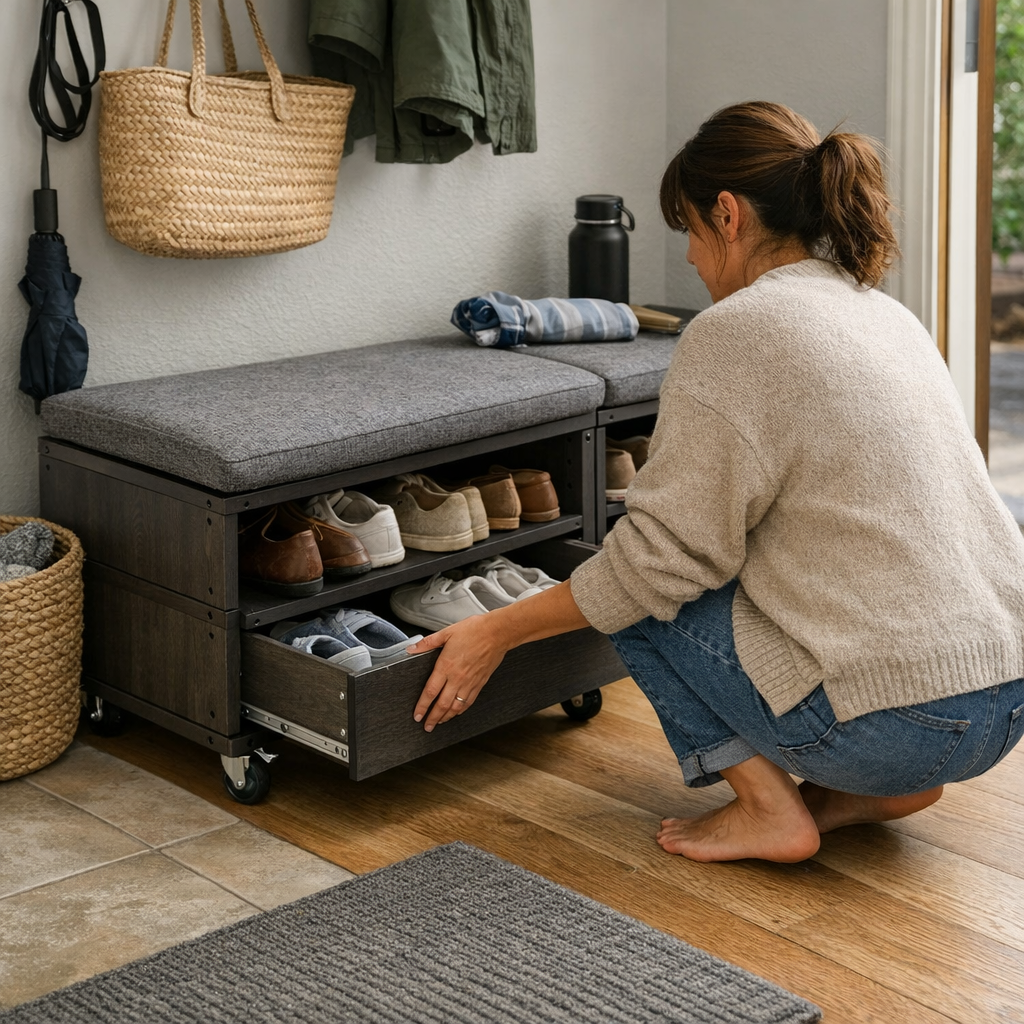
    Most transition-space headaches aren’t what you see in the entryway—they’re what you can’t reset fast enough. The difference between easy-gliding mobile storage and the daily drag of stubborn casters is obvious the first time you try to clear a path and the bench jams against a rug, or the shoe rack catches a floor seam just as you need it moved. Mobile storage is supposed to make the threshold flexible, but when the wheels resist, every adjustment—bag drop, shoe lineup, or cleaning pass—turns into its own minor traffic jam.

    When Mobility Makes or Breaks Your Threshold

    Entryways never stay put, no matter how well you organize in the beginning. Drop a bag and suddenly the path’s blocked; slide the bench to vacuum and realize it won’t move in one go; pull back a cart to hang up a soaked coat and find it wedged tight against the floor. The area looks organized—until you actually try to shift things with hands full or guests waiting. Here’s where most setups quietly fail: hardware that moves too roughly or too little. Instead of quick resets, you get stuck pivoting, bracing, and scuffing surfaces, feeling each small resistance stack up in your routine.

    The real problem isn’t clutter—it’s slow recovery from it. Glide should mean push-and-go, not wrestle-and-reset. If the wheels catch, every routine tweak—a quick bench move, a shoe rack shift—becomes a stop-and-fix moment. Delays pile up, the bench migrates into the walkway, and clutter escapes containment. Over time, even a well-laid-out threshold devolves into friction: slow, noisy, workarounds every time you want to reclaim the floor.

    Why Rollers Matter Long After Setup Day

    Every new entryway piece promises easy routine: clean bench, storage in line, shoes put away. But “easy” crumbles in actual use cycles. Standard casters glide the first week, but wear, dust, and uneven loads quickly change the feel. After a dozen resets:

    • Reset friction grows: The floor picks up marks, the shift goes from smooth to shoving, and even simple cleaning gets skipped more often.
    • Clutter returns faster: When moving storage feels like a chore, shoes get dropped further out, bags block the bench, and returning order requires an effort you start avoiding.

    The area’s organization isn’t lost all at once—it slowly unravels because the storage can’t adapt quickly to real, daily motion across mixed surfaces.

    Everyday Scenarios Where Roller Quality Shows

    1. Dropping Bags and Shifting Storage

    Coming home juggling groceries and a shoulder bag, you try moving the bench with one hand so nothing drips on the floor. Good wheels? Push and it’s done—nothing tips or drags. Cheap casters? The bench lurches, jams at the rug, and you end up blocking the threshold until you wrench it sideways, scraping the floor and losing patience for the next reset.

    2. Resetting Zones for Cleaning or Company

    Cleaning days shouldn’t mean breaking your layout. Usually, you just need to sweep or mop a patch that collects debris right where everyone comes in. If the storage glides, five seconds clears the space. If not, dragging noise, gouged floors, and awkward shuffling slow every attempt. Eventually, you either skip the reset—living with mess returning faster—or grind your way through and resent the process.

    3. Shoe Overflow and the ‘Good Enough’ Shuffle

    Shoe rows always drift when storage won’t cooperate. The shoe rack anchored by friction means shoes migrate into the walking lane, bags pile up wherever there’s space, and threshold width shrinks day by day. A unit with real rollers can be nudged back in place—containment restored in a moment. With stubborn hardware, every tidy-up is a hassle, so the area slowly collapses into “good enough” until you finally clear it in frustration.

    The Real-World Difference: Premium vs. Basic Rollers

    The difference is immediate: Do you adjust your routine for your storage, or does your storage adjust for you? Premium sealed bearings and soft-rolling casters cross seams and tile lips without pause. No scraped floors. No stuck corners mid-cleanup. No hesitating to reset before guests arrive. The area stays workable as entry routines repeat—push, glide, done.

    Basic wheels, chosen by default, start fine but quickly stutter as soon as weight shifts, mats bunch up, or dirt collects—turning resets into mini-workouts. Pinch points show up at:

    • Mixed floors—tile meeting wood, or rugs at the doorway—where most cheap wheels jam or scrape
    • Thin mats or uneven strips that tip or catch the unit mid-move
    • Narrow entries, where resisted movement means losing inches of usable space to overflow and awkward alignment

    With quality rollers, these problems fade into the background. Without them, even the best-organized space can’t reset fast enough to keep up with daily life.

    Small Upgrades, Big Everyday Impact

    Can I add better wheels to my current bench?

    Usually, yes. Most mobile benches and cabinets use standard mounts, and a swap to sealed, soft-rolling casters is all it takes. This small upgrade changes resets from “production mode” to one-hand adjustments—no new furniture, no living with gouged wood, no lost time every time you clear a path.

    Which floors show the biggest difference?

    Hard flooring exaggerates every hardware shortcut. Hardwood and tile highlight every scrape; even short carpet quickly scars up baseboards when a stiff caster fights the move. No floor type hides cheap wheels for long. Upgraded rollers mean less resistance everywhere: at door lips, tight bends, or blend points near wall edges that see the most storage movement under real pressure.

    Tips for Keeping Entry Mobiles Working Right

    • Fit storage to your most demanding spot. If your entry includes seams, lips, or tight bends, use or upgrade wheels to match the toughest stretch—not just the easiest area.
    • Watch for problem cues. Squeaks, jolts, or debris sticking to wheels signal it’s time for a quick clean or swap—restoring smoothness in seconds and keeping resets painless.
    • Think about return flow. Mobility isn’t just for spring cleaning; it speeds up every item retrieval, returns shoes to order, and lets you shift the bench out of the way without stalling daily routines.

    The Threshold that Works—Every Time

    Transition spaces do most of a home’s heavy lifting—absorbing drops, resets, bags, and debris day after day. The best setups contain clutter when idle and go instantly adaptable under pressure. Real mobility isn’t a design flourish: it’s the difference between a constantly reclaimed threshold and a slow-slide back into blockage and mess. Swapping to quality rollers quietly transforms entryway storage into the friction-free, background support that keeps the pathway open—even as routines and rush hours change by the week.

    Stick with default hardware and resets slow, overflow drifts in, and you start seeing the cost in skipped cleanup, blocked paths, and a transition zone that looks under control but can’t keep up with reality. Upgrade the wheels, and the difference travels with you: clear paths, quick recoveries, and a threshold that stays ready—no matter how often routines pile up.

    betweenry.myshopify.com

  • How Wall-Mounted Yard Systems Outperform Open Storage Solutions

    The first day with a new outdoor storage setup always feels like you’ve finally won back your own backyard. The patio edge is clear, the bins along the fence are tidy, the chairs line up as if this time, the system will hold. But give it a week. Now the rake sits awkwardly between recycling totes because someone needed room for a bike, a soccer ball is wedged by the back step because that’s fastest for the kids, and someone—never the spouse who planned the zones—slides a garden trowel behind a bin that already overflows. The clean look dissolves. The footpath shrinks. Even grabbing a broom means shifting a chair first. Suddenly, the “organized” area gets in the way as much as the old pile ever did.

    When “Organized” Becomes a Daily Puzzle

    Yard storage that looks neat on day one meets its real test after a week of traffic. The difference between a space that just looks organized—and one that actually stays easy to use—shows up fast. It’s not a dramatic mess at first: a bike leans where you need the rake, buckets teeter in a stack, a bag of mulch slides into the path. Each return adds friction in quiet ways. Movement slows. Suddenly, there’s a silent game of slide-and-shove every time you want the hose or gloves; nothing comes free without first rearranging something else. In households where multiple people make returns at different times, priorities clash. Someone’s shortcut is always another person’s headache.

    The Unseen Creep of Overflow

    In a backyard that actually gets used, the wrong setup turns small mistakes into permanent problems. One person resets every night, but that “system” collapses when everyone else stashes gear where there’s just a sliver of space. Bins and freestanding racks silently max out, then spillover seeps into corners that were supposed to stay clear. The hooks fill unpredictably—overflow on the easy-to-reach ones, others collecting cobwebs because they’re too high or tucked away. Floor space turns into the emergency drop zone for garden shears, bike helmets, or anything that doesn’t fit the system in a rush.

    The friction is mostly invisible. A “temporary” chair slowly claims the entire walkway. Someone sets the hedge trimmers down, just for a moment, and somehow that becomes the tool’s new home. Every week, the so-called fix starts to unravel—not as a visible mess, but through time lost in slow detours and a lingering sense of annoyance. Not real chaos, but a slow-moving gridlock that never quite goes away.

    Where Flexible Storage Loses the Plot

    Flexible layouts—open shelves, big catch-all bins, low racks—promise to swallow anything. They do, at first. Then things get blurry. Bins overflow fast, stacked buckets start toppling, and the “flexibility” turns into a maze of grab-bags and mystery piles. You want the pruners and find them beneath pool noodles, behind an unused soccer net. What once felt like options now feels like hunting through someone else’s garage sale.

    Every corner becomes a magnet for items that will “go back later.” A plastic tray near the fence fills, a single glove claims the sunniest post, an old basketball just lives under the table. Even if you’re determined to reset the area, the space itself doesn’t help keep things sorted. Flexibility turns to friction: more stuff, less clarity, the endless cycle of moving piles just to open a path.

    Wall-Mounted Systems: Restriction That Actually Frees You

    At first, wall-mounted setups look strict—hooks are fixed, trays are shallow. There’s no room for improvisation. But as you actually use the space, the payoff is obvious. Every piece has a true home, and even if someone uses it differently, the wall system’s logic nudges everything (and everyone) back into line.

    Compare how a wall holds up after a full week of careless returns: the rake always lands back on its hook, hoses find their trays, helmets aren’t buried in the bin, and the path under the system stays open, never hijacked by “waiting to be put away” odds and ends. You still see less-than-perfect behavior—gear crooked on the hook, a bucket set one spot off—but the structure corrects chaos automatically, making resets rare and never overwhelming. This isn’t about achieving a photo-perfect reveal; it’s about a setup that quietly handles repeated, even careless, real-world use.

    The Real Test: The Garage Threshold

    Picture the garage edge on a normal Saturday: bikes squeezed next to a row of rakes, folding chairs stacked for one backyard meal, the whole setup well-intentioned but brittle. By week three, a bike blocks half the entrance. The pile of chairs, once neat, migrates so that grabbing a shovel means shifting everything around it. A helmet drops “just for now” and starts a chain reaction—soon there are two chairs to move before you can access the hose. What looked like a practical footprint now blocks movement and slows down every errand.

    Rescue attempts feel endless: sweep, straighten, promise to keep it clear. But within days, those open bins fill and pathways narrow again. Without structure guiding behavior, any setup ends up needing constant resets—until the routine feels harder than the original mess.

    Reset Without the Resentment

    You can only restore “day one” order so many times before frustration takes over. The trick isn’t working harder; it’s designing storage that helps lazy, distracted, or hurried returns land in the right spot—with no heroic effort.

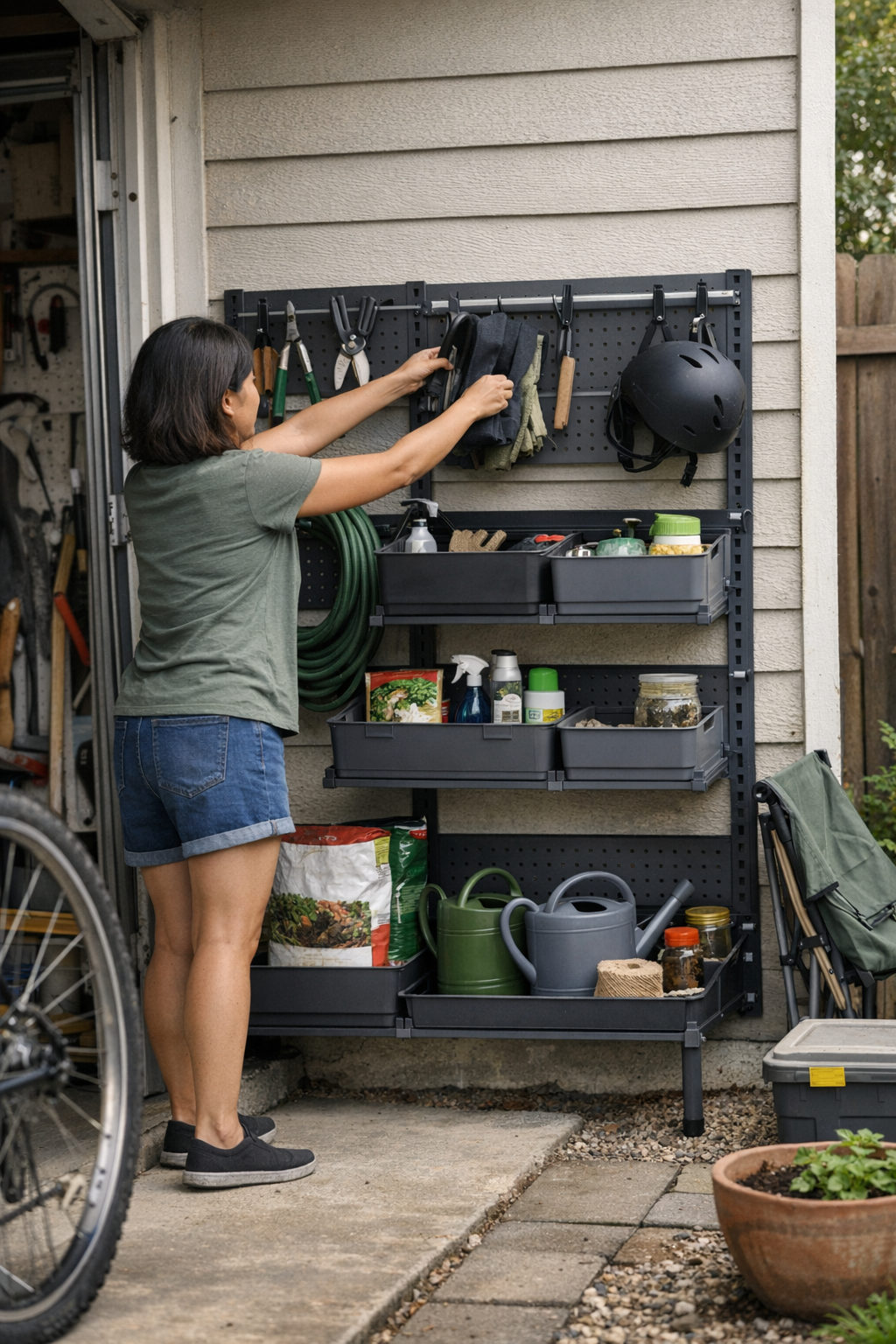
    Break the wall in zones: Replace a row of freestanding bins with wall hooks for every full-size tool, and install shallow trays a foot off the ground—just enough room to slide boots, small items, or gloves underneath, with nothing hogging the footpath. The clearance stops piles from creeping underfoot. Even on off days, dropped gear stays above the walking surface, and the main lane stays open, not hidden beneath spills and overflow.

    Upgrade sticky corners: Find a zone where overflow piles up—behind the bin, beside the hose, beneath a bench. Don’t add another loose tote. Mount a hook or tray instead. Even one fixed anchor on the wall is enough to redirect daily drops and stop a dead corner from claiming your stuff.

    Organization That Lasts by Absorbing Real Life

    The only outdoor setup that survives a real month is one that handles shortcuts, half-hearted returns, and the daily shuffle. When design makes it obvious where everything goes—tall items high and tight against the wall, all the quick-grab stuff low and visible, the main path unobstructed—routine use barely disrupts the flow.

    This isn’t about a flawless reveal. It’s about knowing that, when you come in dirty after weeding or a kid comes flying off their bike with helmet in hand, the setup won’t punish a rushed or lazy return. The right storage absorbs day-to-day mess, nudges stray items back into place, and keeps any one mistake from snowballing into a turf war or endless reset grind. In a real backyard, nobody needs to become the routine enforcer. The space simply works, quietly holding its own through dozens of uses—no daily shuffle, no creeping bottleneck, no one corner turning into a permanent overflow lot.

    Find practical outdoor setup solutions at TidyYard.

  • Why One Fixed Storage Spot Beats Flexible Solutions Every Time

    When storage setups drift, daily routines break down fast. Maybe you start with bins and hooks snug against the wall or shelves stacked with intention. Everything looks under control for the first few days. But by the end of the week, reality sets in: the sliding rail has shifted, baskets wander to new corners, modular bins start to multiply, and the tray that once just held your keys is slowly suffocating under layers of chargers, random mail, last week’s receipts, sunglasses, and more. Instead of cutting down on wasted motion, these storage “solutions” become constant sites of friction—a quick step to grab headphones turns into five seconds of rummaging. Suddenly, the space that looked efficient now stalls you at the worst possible moments.

    Why Flexible Storage Systems Break Down So Easily

    The first crack is barely noticeable—a bin tucked under a shelf, a catch-all basket that was meant for overflow but never leaves. The adjustable cord holder migrates just far enough to throw off muscle memory. Before you notice what’s changed, you start reaching twice for your phone charger or asking who last saw the spare mail key. Flexible systems promise adaptability, but when the actual storage units don’t hold their ground, every category inside them gets blurry. Chargers don’t stay put. Mail splits across surfaces. The “sorted” tray is back to chaos in a week. The more the storage arrangement shifts, the more you’re forced into micro-resets—repeating the same tidying and searches again and again.

    It’s not that flexibility is useless—it’s just that, in real life, storage that keeps moving eventually creates its own maze. The ripple is always the same: routines lose speed. An area that seemed to solve your mess becomes one more stop that interrupts your flow, especially in shared or high-traffic spaces.

    The Quiet Strength of a Fixed Storage Point

    Stable storage outperforms the clever stuff. The unmoving hook by the door or the shelf anchored in place doesn’t draw attention, but it keeps routines from unraveling. When a storage spot stays put and its purpose is obvious, the retrieval-and-return cycle becomes almost automatic—even as the days get busier, or the contents change with the seasons. You waste zero energy wondering where things migrated. The hand-off just works: sunglasses, keys, headphones, even two remotes all return to the same spot.

    This isn’t about demanding rigid order. It’s about minimizing doubt. The more you relocate your anchor points, the more invisible clutter and hesitation creep in. In a shared house, mobile storage multiplies confusion. One person’s “solved” zone is another person’s “where is it now?”

    Scenes from Daily Use: When Storage Frustrates More Than It Solves

    The Entryway Reset That Never Sticks

    You come in loaded with bags, mail, and keys—aiming for the same tray as last time. But it’s slid down the console or landed halfway onto the counter. Sunglasses are in the basket, keys are buried, and mail has already scattered into a side pile. By Friday, a ten-second grab turns into rifling through a mound that’s half yesterday’s change, half mystery items.

    Overflow Corners and Guesswork Zones

    The living room’s modular bins start out organized: books, toys, remotes. Then the overflow hits—sports gear, receipts, a phone that needs charging. One bin swallows the rest and, within days, you’re opening every lid searching for a single cable. Shelf space looks busy but not actually functional.

    Blocked Movement and Awkward Footprints

    The floor basket that seemed perfect at first expands into the path—now someone always stubs a shoe or steps around it. Rolling carts back up into dead zones, used more as an accidental barricade than accessible storage. A setup that once hugged the wall now sprawls awkwardly, boxing you in just to reach one item.

    Why Anchored Spots Make Return Flow Automatic

    Stable return flow depends on the spot never shifting, even as the mess builds up around it. Mount a hook precisely where you naturally reach—or secure a tray where your hand lands after walking in. The fix is immediate: your stuff lands there with zero added thought and resets don’t stretch into the next day. Because the location is constant, everyone stops guessing, and essentials always surface first.

    Over a normal week, the difference is visible:

    • No asking “Did I move it, or did someone else?” every morning
    • Overflow is spotted and managed quickly—never swallowing the anchor point completely
    • One recovery spot prevents you from hunting through half a dozen bins or baskets for a single missing charger

    Keeping Overflow from Contaminating Category Clarity

    Overflow happens—but with an anchored storage spot, the spill is contained. Extra mail or backup cables pile up nearby, not mixed in with daily-use items. The anchor never gets buried. The family’s main keys or chargers always resurface in moments, while secondary clutter signals itself at the edge. Resetting stops being a half-hour hunt and turns into a quick hand sweep.

    Where to Anchor for Long-Term Usefulness

    Focus on storage anchors at daily transition points. That means:

    • Directly inside your most-used door—so nothing detours out of sight
    • Beside the main outlet where every device gets charged
    • On the direct line between bedroom and bathroom for routines that happen half-asleep
    • At the spot next to your favorite chair—minimizing the urge to drop items “just for now” onto surfaces or the floor

    Forget about symmetry for its own sake. The right location is the one that stays frictionless through repeated use—even as habits and people change.

    When Consistency Matters Most

    Shared spaces—hallways, kitchen corners, open mudrooms—expose every flaw in mobile setups. Each different rearrangement fractures routines. An anchored point builds muscle memory for everyone. If you let storage points keep migrating, confusion multiplies: a “temporary move” becomes a week-long guessing game. The real reward for keeping storage fixed is simple—smoother resets, fewer lost items, less disruption, especially when pressure’s on.

    The Bottom Line: Stability Beats Flexibility When It’s Time for Action

    Adding more flexible storage feels like the easy fix when clutter spreads. But the system that lasts is the one with an immovable anchor for must-use items. When overflow happens, it surfaces around the edges—not inside the core routine. Instead of chasing the look of order, anchor your most-used zone and let it do the heavy lifting even as conditions change. The setups that actually keep up—on your busiest, most distracted days—are the ones that can’t drift.

    See practical storage systems for real use at Gridry.

  • Why Structural Rigidity Matters in Entryway Cabinets for Daily Use

    The Hidden Cost of a Weak Entryway Cabinet: Blocked Paths, Daily Drift

    You lay down a shoe rack or wedge a slim cabinet beside the bench, hoping the entry stays managed. But most entryway storage only works when it’s new and nearly empty. By the end of the first week, real life wins: shoes splay, backpacks slide, and heavier coats tug shelves out of line—a silent shift that turns routine drop zones into friction points. Entry becomes a stop-and-go lane: cabinet doors hang crooked, the shoe row spills past its edge, and what was meant to keep the flow moving now interrupts it. That brief appearance of order dissolves, especially when every return or rush out the door resets the mess instead of containing it.

    Where Flex Gives Way: The Inconvenience Shows Up Fast

    Cabinets pass muster on showroom floors or after a weekend install. The real breakdown comes under pressure: a muddy bag lands, boots pile up after rain, or your kid’s lunch is dropped on already-crowded shelves. Suddenly, flexible storage isn’t just bending—it’s misaligning, pushing rows outward, and jamming the path. Most cabinets don’t fail dramatically; they slowly lose the fight in everyday use. Shelves bow, doors drift, shoe lines bulge, forcing constant reshuffling just to get through the threshold. Every drop-off becomes a small struggle, every reset less effective than the last.

    Threshold Creep: The Start of the Slow Slide

    You notice it mid-task: a bag coaxed onto its shelf slides toward the front; a door that used to swing free now snags on a leaning rain boot. Shoes, once straight-lined, now pile at an angle—so returning one item requires compressing, shifting, reconsidering where anything goes. Instead of a quick grab-and-drop, you’re stuck untangling the drift at the margin, especially right when you’re late.

    Snapshots of Real Entryway Tension

    The Quick Drop Is Never Quick for Long. Come in with wet shoes and groceries. The bottom shelf flexes under new weight, bags tip sideways, and soon the shelf sags. By Thursday, the line of shoes blocks the swing of the cabinet door—and now every single retrieval means moving something else first.

    Bench Relief Turns Into a Catchall. The bench made for sitting becomes the fastest overflow: you go to untie laces and, with nowhere to put your bag, it lands on the bench—joined soon by jackets and mail. The wall cabinet, maxed out, can’t keep pace. Overflow slides to the nearest surface and then to the floor, erasing even the illusion of usable space.

    One Return Throws the Whole System Off. Narrow margins by the door mean one wobbly shelf or misaligned cabinet creates a domino effect. Return a backpack or jacket, and nearby shoes nudge out of place—or worse, tumble into the path. No single zone holds its boundary, and what should take seconds to return becomes a multi-step roadblock.

    The Real Price: Disrupted Routines, Chronic Reset

    This isn’t just a tidiness problem; it’s a slow routine wreck. Sinking shelves and persistent overflow make the simple act of leaving or returning home more awkward—clutter collects at the threshold, the path narrows, and every bottleneck adds seconds and frustration. Resetting the entryway every few days isn’t a solution—it’s a sign the setup is outmatched. Instead of one clean motion, you’re pausing, lifting, shuffling, and still rarely getting things back to “clear.”

    Movement Stalls, Access Fades

    Transition zones should smooth re-entry. But if storage flexes under normal use, items slide forward, clogging both access and exit. One shelf starts to bow and shoes push out, bags fill open gaps, and the pass-through tightens. Multiple people at the entry amplify the friction—there’s no room to move, so everyone waits, shifts, or detours. Rigidity, not just storage space, is the deciding factor in keeping zones functional day-to-day.

    How Rigid Cabinets Reset What’s Possible

    Rigid cabinets turn daily chaos into lasting order. Structural firmness does what surface tidiness can’t: it preserves flow under pressure. A cabinet with real internal support withstands loaded boots, collapsed umbrellas, and stacks of bags without warping or shifting. Doors align, close tightly, and never wrestle against sagging contents. Shoes remain in neat rows, bags rest flat, and resets take a brief sweep—not a complete reshuffle.

    • Shoes line up without spreading past their boundary
    • Bags sit where they’re put—no sliding, no tipping piles
    • Evening resets become quick touch-ups, not frustrating projects
    • Entry paths stay open for the next rush hour, not blocked by today’s overflow

    The upgrade becomes visible immediately: routines simplify, traffic flows again, and the edge clutter that used to rebuild overnight holds its line. What used to shift with every new arrival now absorbs pressure and stays put—even at peak use.

    When Design Materials Fail Entryway Conditions

    Decorative cabinets often use thin panels and light supports—plenty for static bedrooms, hopeless in a shared threshold. Entryway demands are heavier: repeated slams, shifting loads, wet gear, bags filled beyond expectation. Under this stress, thin shelves sag, doors torque, and grouping categories collapse into a single muddle. Cabinet weight and shelf strength matter more at the entry than almost anywhere else—real supports turn daily shoving and stacking from a source of mess into background noise absorbed by the structure itself.

    Early Warning: Is Your Cabinet Already Losing?

    Don’t wait for a visible collapse. The clues show up first in practical friction:

    • Shelves tilt or bow under backpacks or just a few jackets
    • Doors stick and misalign after routine dump-and-go sessions
    • Items shift or roll off with each new placement, never staying put
    • Resets drag out longer and work less each time—clutter resumes almost overnight

    Each sign means the cabinet is actively undermining your movement flow. Flex isn’t minor; it slows, blocks, and interrupts repeated entry and return.

    Field Tips for Durability—Not Just Decoration

    Whether diagnosing a current pain point or planning your first upgrade:

    • Do a Load Test: Pack shelves the way you actually use them. Watch for bowing or corner gaps in the first week, not just on day one.
    • Demand Reinforced Design: Seek out storage with crossbars or thicker, stiffer components—especially if you mix shoes, bags, and coats on one piece.
    • Define Each Zone’s Load Limit: Avoid stuffing wall units just because space looks available. Overflow bites back by creeping to any flat surface—wasting the setup’s entire effect.

    Final Difference: Lasting Order or Relentless Mess?

    Keep a flexible cabinet in a transition hub and congestion is guaranteed—it just shifts and grows with every use. Introduce rigid support and the change is immediate: drop zones hold, movement flows, reset work shrinks. Entryway rhythm survives heavy use, varied family routines, and storm-day gear dumps—no energy wasted on daily recovery.

    Reliable storage isn’t about appearance. In a between-space, it’s the difference between looking managed and actually staying clear when pressured again and again.

    http://www.betweenry.myshopify.com

  • How Fixed Outdoor Storage Cuts Down Yard Work and Clutter

    You know the exact moment your outdoor storage makes life harder—you step outside to drop a trowel or toss a soccer ball back, and what should take seconds turns into kicking aside shoes, yanking open overstuffed bins, or clearing yesterday’s clutter just to reach your target spot. Small yards and side corners reveal their failings fast. One-minute resets balloon into drawn-out detours, blocked walkways, and a silent dare: how much more mess can this corner absorb before someone calls it quits? What looks neat on Sunday becomes a frustration loop by Tuesday—especially when the gear doesn’t end up where it’s supposed to, and the area stops working as a path and becomes another pileup zone.

    Why Most Outdoor Storage Fails in the Real World

    The real friction isn’t about bin size or shelf style—it’s about whether the setup lets you and everyone else make a single, obvious move in and out, every time. If your routine becomes a relay race of moving one thing to get to another, the cracks show fast. Each missed return—gloves here, boots over there, a stray coil of hose—adds invisible labor that stacks up with every use. The larger the family or the more frequent the chores, the more you notice the slowdown.

    What seems organized at first—a new rack, a few sturdy bins—evolves in a week. Benches double as clutter shelves. Bins fill and overflow, lids crack open just enough to tempt, but not enough to empty. A once-usable path now snakes around abandoned bikes or forgotten sports gear. That “quick yard reset” isn’t quick anymore. Instead, you’re untangling someone else’s stash just to do your own simple job. The setup isn’t neutral—it quietly dictates how often you’ll have to start over.

    How “One-Trip” Storage Shifts the Pattern

    You see the upgrade the first time you can put something back without moving three things out of your way. Suddenly, five-minute chores really are five minutes. When the most-used gear has a visible lane back home, not just “a spot somewhere,” pickups and drop-offs become natural. In houses with kids, roommates, or regular guests, only storage that holds up to chaotic, multi-person use stands a chance. Everyone’s habits get baked into the flow—or the setup collapses back into chaos anyway.

    The Real-life Collapse of Bins and Racks

    Loose bins and simple open racks almost always unravel. By midweek, that roomy deck box swallows everything—then overflows. A ball bag disappears under a pile of towels. Rakes and spades vanish behind camping chairs. Pretty soon, digging out what you need makes each trip longer—and each “return” dumps something else further out of line. The bins shift, the piles mix, and each retrieval makes the next return harder. Momentum builds—but in the wrong direction.

    Wall Systems with Built-In Paths: Breaking the Cycle

    Now picture a wall track with labeled hooks, baskets, and defined landing spots. The setup shows, not just tells, where a watering can or a muddied set of gloves belongs. A missing item stands out; a pileup gets corralled quickly. No guesswork, no endless shuffling. The outdoor area stays navigable even after a busy weekend—small laps, not big resets. Items find their spot, or at least don’t block the entire flow when everyone slacks off. Instead of the same bit of gear being the trip hazard daily, it lands in its pattern and the system absorbs the mess, rather than broadcasting it.

    Bottlenecks: What Clogs the Side Yard

    Walk any real side yard or narrow driveway in summer and you’ll map the pain points quickly. Hoses get half-wound and sprawl into the walkway. Folding chairs pile up just inside the fence—right where everyone needs to move. No system for how to return things means every user picks their own landing spot and chaos scales up. The difference between a shelf and a hook, floor vs. wall, changes the work: one setup sheds mess, the other traps it.

    The classic pattern: one person hangs bags, another leaves muddy boots by the gate, someone stashes tools in a crate. By Saturday, planning to hang hammocks or grill is a slow-motion obstacle course. Need a rake? It’s under chairs. Want the soccer ball? Both racks are now buried. Resets get drawn out—more shifting piles, more walking in circles, less actual use of the yard. Each “quick tidy” just rearranges the same problem spots.

    When a Simple Wall Track Clears the Choke Points

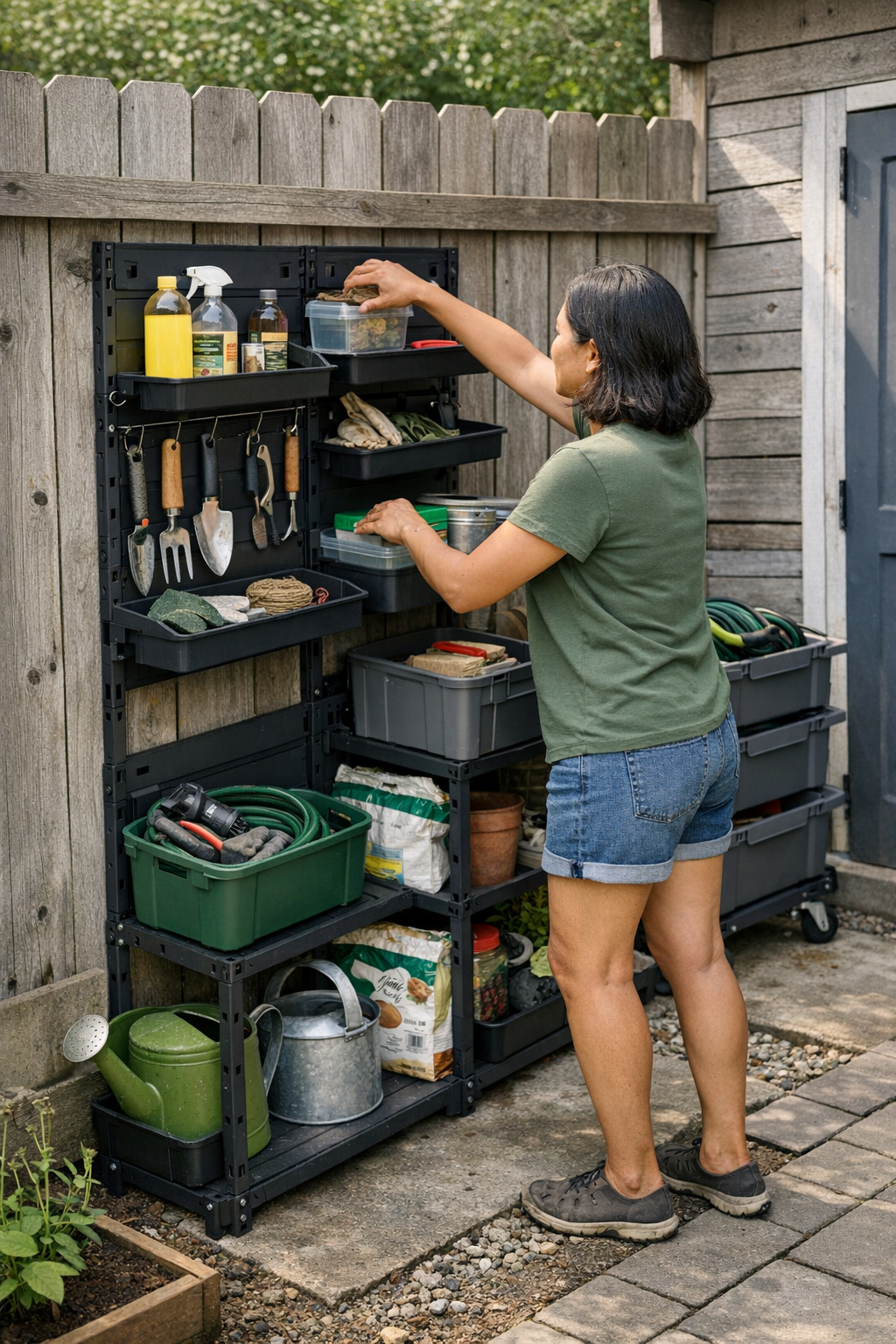
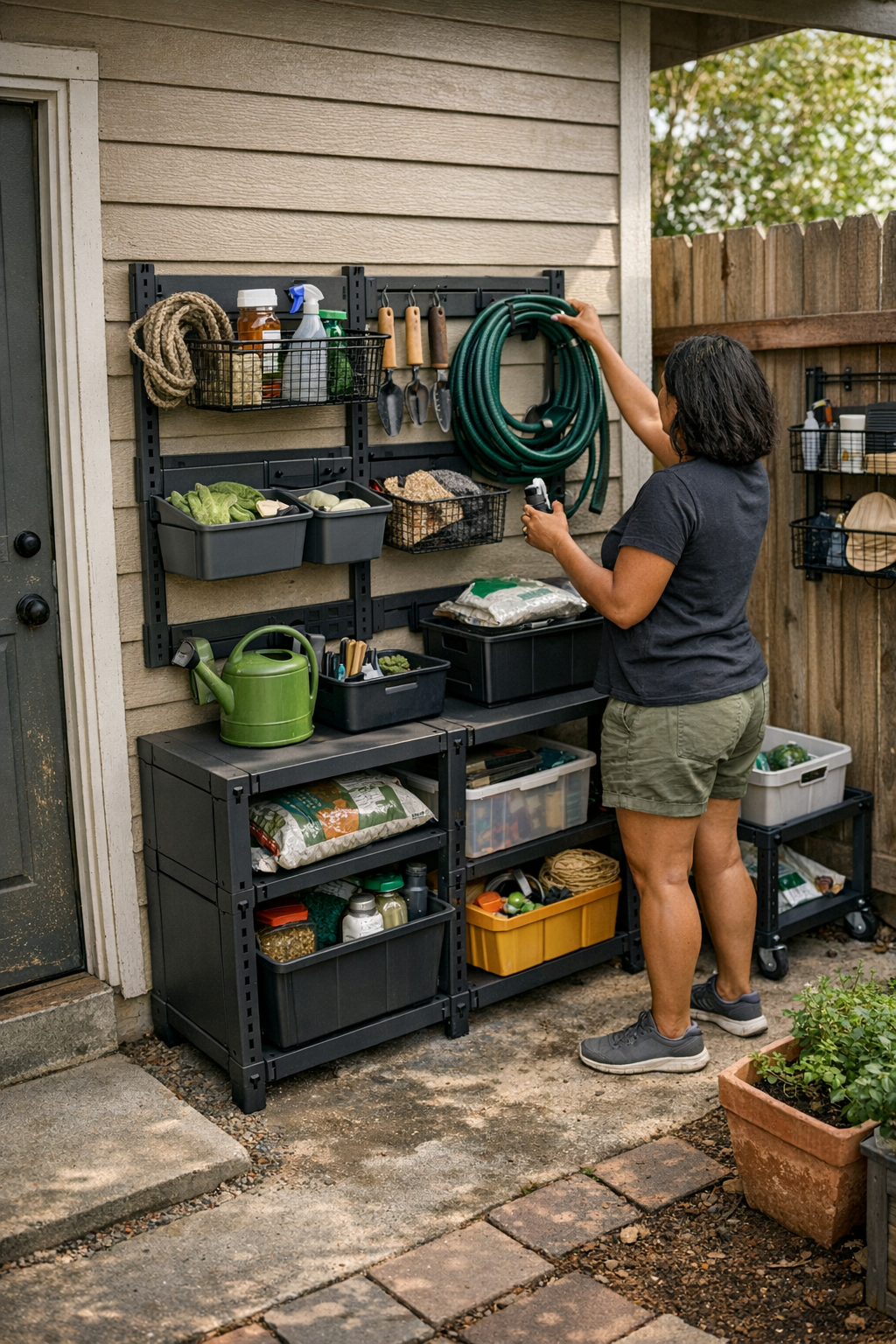
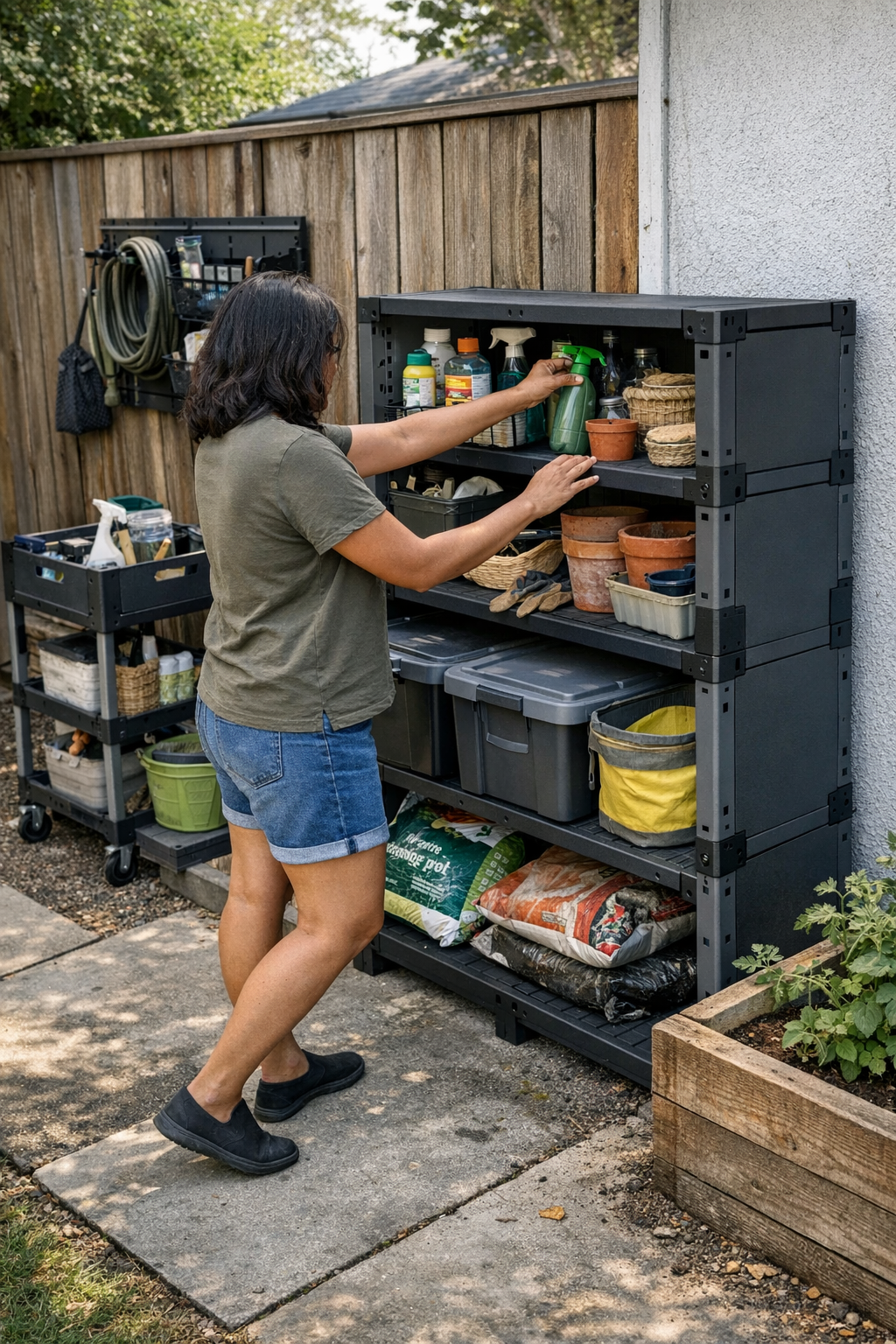
    Swap loose bins for a six-foot wall rack with hooks and deep baskets—suddenly, each everyday item (watering can, brush, gloves, grill tongs) gets a visible spot. After a cookout or a round of gardening, putting things away means one direct loop instead of three. Even when people leave piles—chairs near the track, stray shoes—the fix takes a minute, not an afternoon. The new system absorbs the drift. Walkways stay open, and everyone—even chronic slackers—tend to play along, because the alternative (mess pile) feels like more work than using the wall.

    Spotting Outdoor Storage Friction Fast

    • Loose floor bins block movement. They fill quickly and sprawl, interrupting natural paths. Even a “flexible” bin set traps you into reroutes when grabbing something buried below.
    • Wall space is underused or oddly placed. Hooks too high, baskets crammed tight, or sections not aligned with entry points—so the overflow always lands back on the floor.
    • Hidden dumping grounds swallow the overflow. A single corner, tower, or bench gets loaded with extra gear midweek. It looks manageable until you actually try to put something away—then it’s clear you’re up against the pile, not the system.
    • Resetting always needs two or three steps. To store gloves, you push the garden bin aside, realign chairs, and pop a stuck lid—all before getting to the real task.
    • Surface order, hidden friction. Even when racks look organized, if traffic routes get blocked or the path from yard to door clogs, the setup isn’t working—it just looks tidy from a distance.

    What Actually Holds Up: Storage That Survives Habit

    The best outdoor setups aren’t those that look perfect on install—they’re the ones that bend to real habits and still hold shape. Modular wall tracks with spaced-out return spots, hooks deep enough for awkward tools, and wide baskets with room to see what’s inside keep routines moving, even when two or three people are bouncing in and out at random. The right layout absorbs chaos instead of multiplying it. Messes stay contained. Routes stay open. The reset after a long week drops back to a true five-minute loop, not a half-hour overhaul.

    The benefits snowball: every clear return path means minutes saved each day, and full hours reclaimed over a season. Less tripping over bins. Fewer blind corners overflowing by Wednesday. A yard that feels ready for anything—because the system meets you at your practical worst, not just your organizational best. When outdoor storage cuts physical retracing and allows direct returns, the whole space breathes easier—even if people don’t change their patterns.

    Smarter Moves for Real Setups

    • Put high-traffic gear in the easiest spots—even if it breaks the “theme.” It’s better to grab and return in one step than to preserve textbook order no one actually uses.
    • Don’t block every wall just because you can. Leave visible open lanes near doors and walkways—this makes it faster to notice out-of-place items and stops gear from swirling into traffic zones.

    Any outdoor setup gets messy—but how messy, and how hard it is to reset, comes down to whether your storage absorbs or amplifies daily movement. Every trip saved and every shortcut restored means less of your weekend gets burned on rerouting piles or hunting for “lost” gear. The difference between theory and real use is clear the next time you need to find—or put away—anything before dinner.

    Find practical outdoor storage that fits real routine, not just square footage, at TidyYard.