Category: Pet Life

  • Understanding Dog Walk Pauses to Restore Calm and Flow in Routines

    The problem isn’t the drama you expect—a yanked leash, a sudden dog detour. It’s the grind of small frictions stacked into every walk. You grab the leash expecting a reset, but end up bumping into the same old hang-ups: leash knotted around the treat pouch, cleanup bags lost under the keys, the towel just out of reach right after muddy paws hit the floor. These aren’t one-off annoyances—they’re repeated signals your setup isn’t working as well as it looks. And if you walk often, those signals don’t fade. They accumulate, turning “routine” into another source of tension, with each misstep reminding you nothing is as ready-to-use as it should be in a DogPile day.

    The Everyday Walk: Where Routine Runs Into Micro-Issues

    No walk is ever truly effortless. The plan: leash, bag, door, done. Reality: you clip the leash but the roll of bags is jammed tight, the treat pouch dangles and catches, the dog tries to bolt before you’re set. That first confident step gets jammed up when the same corner always triggers a stop, the curb generates another delay, or a side-street patch of grass becomes non-negotiable territory. If you’re rushing before work, these routine stalls cost real minutes and patience—especially when the point of the walk was to make the morning flow smoother, not slower.

    The frustration isn’t a single stall but a loop—each pause triggering a series of tiny corrections: leash goes taut, you tug, the dog hesitates harder, your stride falls out of rhythm. It’s almost never dramatic. But the low-level disconnect grows walk after walk, and you get back inside tenser than when you left. Even a short outing leaves traces: your dog acts restless, takes too long to settle, cues you for help instead of resting, and suddenly the door isn’t the end of the walk friction—it’s where it morphs into indoor interruption.

    Noticing the First Signs: Glances, Pauses, and Stubborn Spots

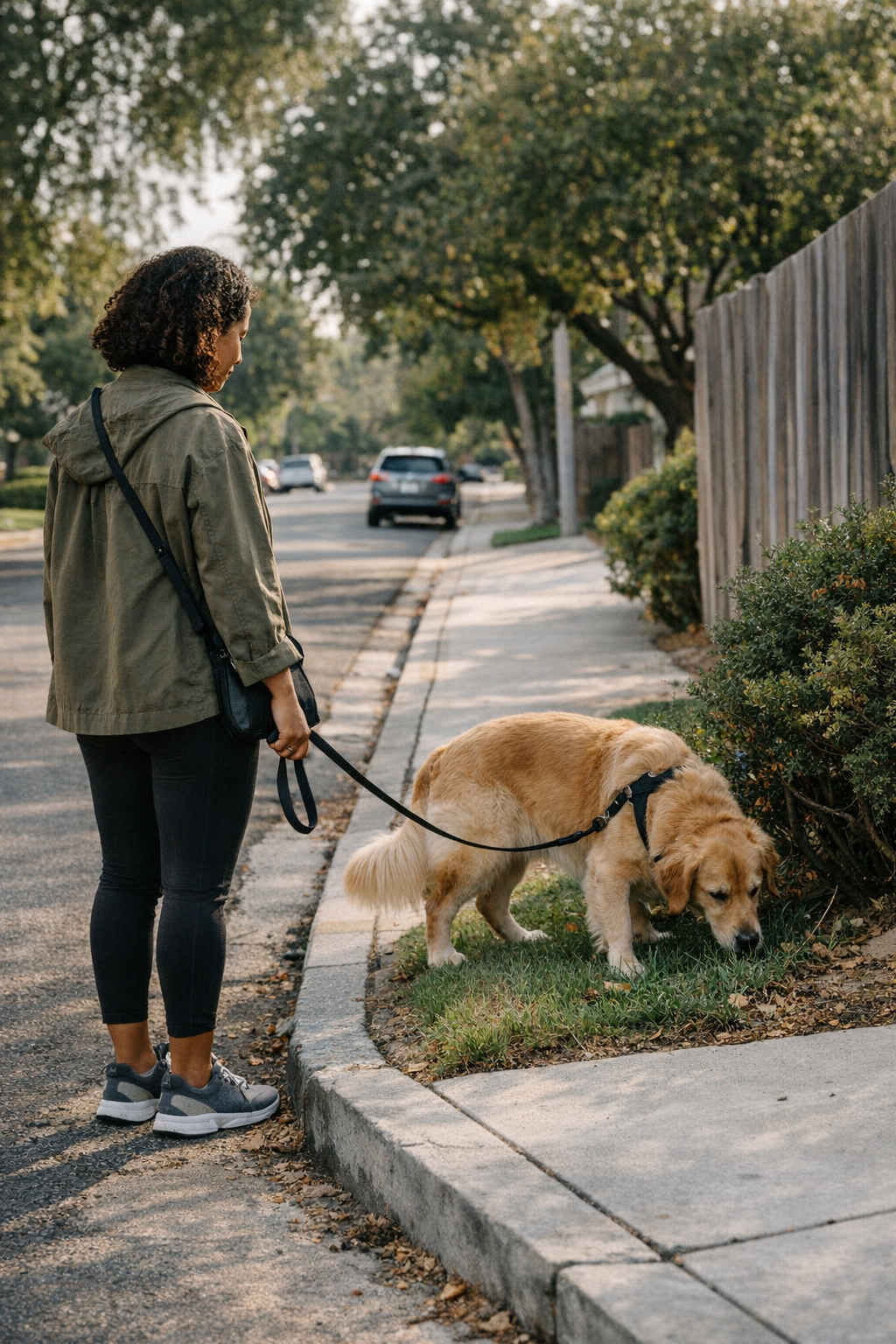
    Every owner sees it eventually. The slow turn of the head, the loiter at a familiar gate, the set of paws at the edge of a sidewalk slab. It happens in the same place, again and again—a kind of waypoint your dog almost dares you to ignore. The easy reflex is to dismiss it as stalling, tighten the leash, and try to push through. But every micro-correction creates its own cycle: nudge, stall, pull, repeat. The walk, in practice, turns into a string of friction points—a negotiation that leaves both of you less settled than before you left.

    Overlook enough of these “minor” signals and you’re not just dealing with dawdling—you’re stuck in a loop. The leash is tense, your pockets are reorganized mid-walk, and neither you nor your dog gets the smooth return to normal you wanted. If the same weak spot shows up every block or two, it’s not just habit—it’s structure calling out for a tweak.

    Scene from a Real Walk

    Early morning, leash in hand, you set off with the best of intentions. But midway down the street, your dog brakes at the same yard edge, sniffs, drags feet. You’re tight on time, so you pull gently, hoping to move along. The dog resists, then finally follows, but the rhythm is broken. Now you’re watching for the next slow zone—and finding your mind rehearsing the same correction steps before each corner. By the time you’re back, instead of being ready for what’s next, you’re retracing the sticky parts of the walk and prepping for more friction at the next transition—wiping paws with the misplaced towel, moving bowls so you don’t trip, regrouping for another try tomorrow.

    The Ripple Effect: How Minor Friction Multiplies

    One chopped-up walk isn’t the problem. The real cost comes when micro-friction follows you inside. Your dog circles the water bowl, delays settling, re-charges with more energy instead of winding down. What should be the calm reset after a walk flares up into more routines—clean up, settle, re-cue—that strain the rest of your morning.

    The invisible thread: a missed leash adjustment at the curb leads to fumbled entry, then to a tangle in the hallway, then to a messy water bowl zone. You feel the tension accumulate in every after-walk move, not just during the outing. When a walk is choppy, everything downstream tends to get sticky—resetting takes more effort, and the day keeps echoing with tiny interruptions you didn’t sign up for.

    Stalled or Sticky? Recognizing When Your Walk Structure Needs a Tweak

    The test isn’t whether your stuff looks organized. It’s whether you can get what you need—leash, wipes, towels, treats, bags—exactly when you need them, setup after setup, even as routines change. When the leash is blocked by a forgotten jacket, when wipes vanish after muddy paws streak in, when you reach for a bowl and have to push toys aside, you know your dog-life structure is all display and no real function. Even a neat-looking area trips you up if a single item is never truly at hand, or if every new day exposes the same old routine drag.

    Patterns matter more than appearances. Bowls lined by the door but blocking access, toys neatly stacked right where you need to pass, a rest corner that looks inviting but sits in a high-traffic splice between rooms—these choices seem smart until you actually run through the dog’s routine more than once. If it slows you, interrupts you, or makes you reshuffle every day, it’s not working—no matter how “organized” it seemed at first glance.

    What “Working” Looks Like—and Where Setup Fails

    Most routines stall in the split-second an item isn’t where you need it. Maybe you fix one thing—hang the leash by the door—but the towel is still in the wrong room, or the treats migrate under the table. A setup that looks under control on Sunday night collapses by Wednesday afternoon. You’re faced with small, repeat failures: stretching for a cleanup towel that’s never close, tripping over a water bowl in the doorway, pulling a leash only to find it tangled or blocked by a crate edge. The surface says ‘ready’, but the friction is constant—and always shows up when you’re least able to deal with it cleanly.

    Small Adjustments, Noticeable Results: Changing the Walk Flow

    A good dog routine doesn’t fix itself with repetition. It changes the moment you notice which friction point drives you up the wall and do one thing about it. See your dog pause at a known slow zone? Give an extra leash’s slack for just a moment. Instead of pushing, wait out a few seconds—often a small shift settles the tension before it grows, and the next patch actually flows. The difference is easy to spot over a few outings: less tug-of-war, lighter steps, fewer “do I have everything?” scrambles.

    No, it won’t rewrite your whole week. You’ll still face a frantic morning or a botched handoff when routines collide. But you’ll spot the snag earlier, cut off the correction cycles before they tangle into a full standstill. Over days, these mini-fixes add up—fewer arm yanks, steadier leash, easier re-entry, less pacing after the walk. The shift isn’t just physical; it’s the end of wasted energy on hidden stress points that keep coming back unless addressed where they start.

    Real-World Benefits—But Not Perfection

    Expect setbacks. Some days, the old weak spot returns—the wrong corner, the blocked entry, the towel missing again. But the friction is new: it stands out, it’s easier to spot and interrupt, and it stops dominating the whole routine. You spend more time resetting, less time correcting, and the cost of ignoring a setup flaw becomes impossible to shrug off. One practiced adjustment means the week doesn’t get away from you with the same slow flow of repeated mistakes.

    The Walk’s Impact on the Entire Routine

    Every setup you use—leash at the door, towels in the entryway, water in reach—is multiplied in dog-life. A smooth walk transition means easier paws to wipe, calmer bowl time, straighter path to rest, and less time hunting for missing supplies in the middle of a jammed flow. When essentials are ready, and hesitations are met with quick access rather than tension, the after-walk routine finally gets easier instead of trickier. But when weak points repeat, they bleed across your whole schedule—the difference between a streamlined flow and a low-level drag that never quite clears no matter how hard you try.

    The fix isn’t a top-to-bottom overhaul. You don’t have to move every bin, add more gear, or retrain every slow spot. It’s about targeting the one friction point that keeps showing up—reaching for a leash that’s always tangled, scrambling for a towel in the wrong room, shuffling bowls you can’t step past, or tripping over toys at the threshold. The best tweaks are almost always small, structural, and low-drama—a cleanup pouch where you actually need it, supplies by the door for real, not just for show. Every step that becomes frictionless under repeated use pays off all day long.
  • How a Predictable Play Schedule Transforms Indoor Cat Behavior During Work Hours

    Your indoor cat finds the cracks in your routine faster than any organizing bin or tidy corner can keep up. A workspace that starts the morning looking orderly—baskets lined, toys stowed, surfaces wiped—quickly breaks apart the minute work and cat-life collide. By the second interruption, what seemed “easy to reset” now traps stray toys under rolling chairs, scatters pawed balls across hallways, and leaves cleaning cloths just out of reach when you need them most. The real pushback isn’t visual: it’s the repeated grind of routines that keep exposing the same weak points, from toy drift into shared space to cleanup that never stays finished. Each small interruption—batting a pen off the desk, dragging a string out of a “contained” box—clutters both the calendar and the room, turning every work break into another recovery mission. This is not just about order slipping; it’s about a setup that looks calm at 8 a.m. and feels unworkable by noon. StillWhisker’s world is built for these moments, so the solutions fit the points where daily life actually catches.

    Why “Appears Organized” Doesn’t Hold Up to Daily Cat Life

    The fantasy: neat workspace, a few toys nearby, no visible mess, and a setup that your cat won’t disrupt. The reality: after three “full resets,” minor cracks become obvious. Toys migrate under office chairs. A ribbon ends up in the hallway. The curated toy basket? It routinely empties itself as soon as your back is turned, leaving a wake of scattered objects in places you’re not ready for. The gap between “presentable” and actually functional widens with every day you have to restack, refill, or dig out a favorite item that’s vanished under furniture.

    Unlike a food spill that you spot and wipe immediately, the slow breakdown—one toy at a time—means every step feels a little less controlled. What started as a clear walkway becomes an obstacle course before lunch. Each attempt at restoring order is undone by the next round of unscheduled cat energy. The invisible line separating your work zone from your cat’s play area ends up blurred, and daily resets start to feel less like solutions and more like delays before the next round of chaos.

    Unpredictability Teaches Persistence—and Interruptions Grow

    An indoor cat left to guess your boundaries will turn every pause in your attention into their open window. Sit for a meeting and a paw invades your keyboard. Answer an email and a toy appears on the edge of your mousepad. These aren’t accidents—they’re your cat’s way of testing when the rules slip. Each time you respond, you reinforce the routine: every minor break in your focus is one more chance for them to move the boundary. Soon, you notice yourself building your own schedule around anticipated interruptions—not because you want to, but because the costs of ignoring them build up quickly.

    This seesaw logic rewards both unpredictability and persistence. Your cat learns that the smallest cues—a shift in your chair, a lid closing, a sigh—could mean playtime. You end up with play supplies inching across a shared workspace, boundaries gone soft, and cleanup loads sneaking upward. The turning point isn’t dramatic: it’s that gradual realization, midafternoon, that three plush toys have overtaken the walkway and the “fast reset” you managed at breakfast feels long gone.

    What Actually Contains the Chaos: The Power of a Fixed Play Window

    More toys or “better baskets” don’t solve this underlying cycle. The part most setups miss? A fixed window—a reliable time block when energy is allowed to peak and play is expected. Instead of reacting to endless interruptions, you set a mid-morning or afternoon play zone, pulling toys from the same accessible storage point. Your cat starts saving up for this event, learning that fun happens predictably—and that attention won’t always be up for grabs during meeting lulls or mid-call coffee breaks.

    This rhythm changes the terms of daily life. When you always use the same basket, open it at ten, and play until the time’s up, your cat learns to anticipate. The difference isn’t hypothetical: walk through your space at noon, and the toys should be back in the basket, not peppered across every clear patch of floor. Fewer off-schedule requests, lower non-stop mess, and clearer boundaries flow from the window, not just the appearance of control.

    How the Structure Pays Off Over a Real Use Week

    Consider the ordinary week: it sounds harmless to drop a handful of toys by the desk for casual play. By Wednesday, balls edge under your bed, a plush mouse interrupts your coffee run, and your “clean corner” now mirrors every scrambled cat zone in the house. Even a careful sweep at night does little if there’s no real structure—play surfaces bleed into walking paths, and next morning’s tidy start falls apart faster.

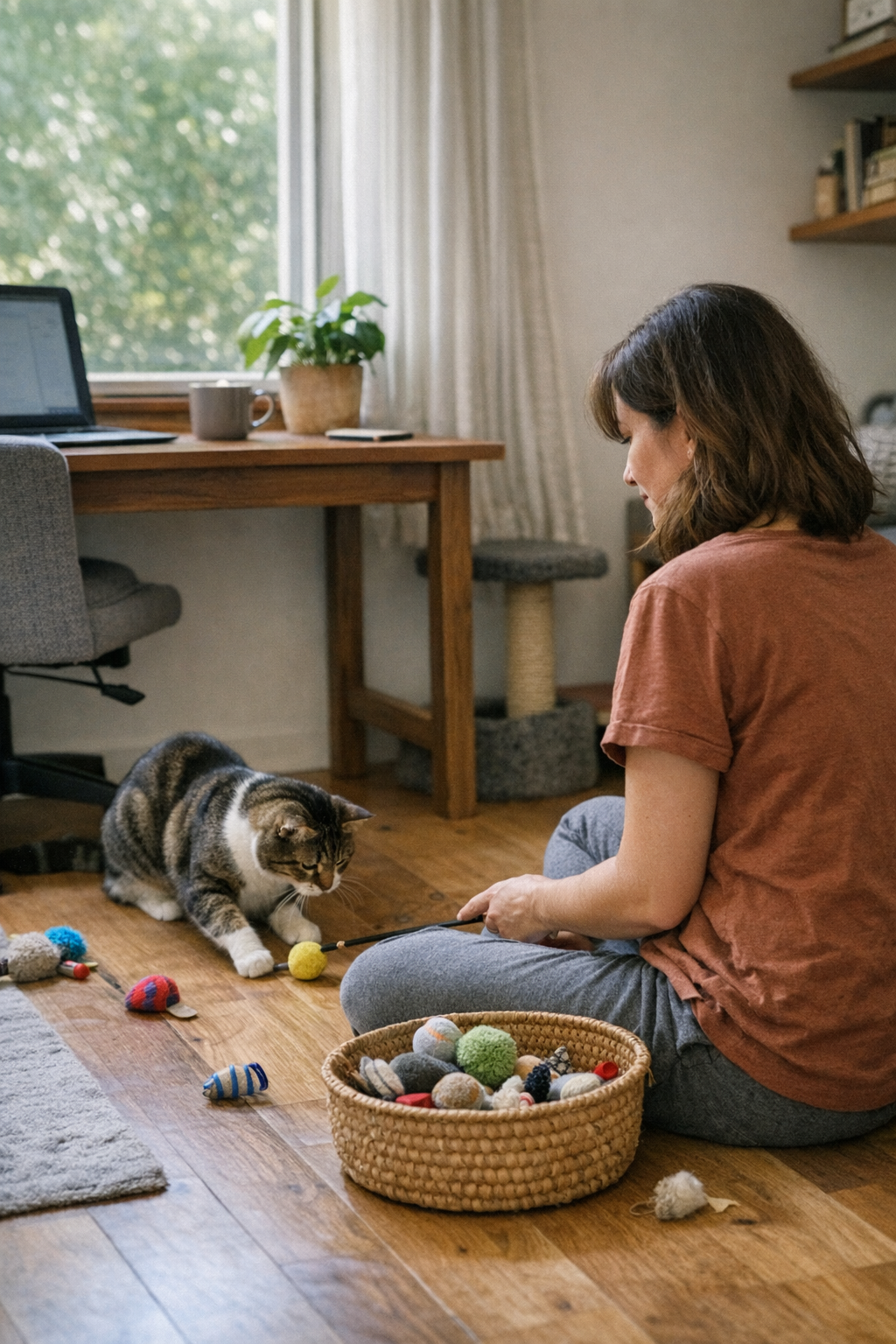
    Anchor playtime. Use a fixed window—eleven minutes at eleven o’clock, for example. Toys come out only for the block and are cleared before lunch. Cleanup isn’t “solved,” but now it’s compact and predictable. You’re no longer crawling under furniture between calls or discovering crumpled string toys under the fridge two days too late. The change isn’t perfection—it’s a cycle that’s lighter and less likely to derail your day.

    Building in Boundaries: Location, Storage, and Reset Signals

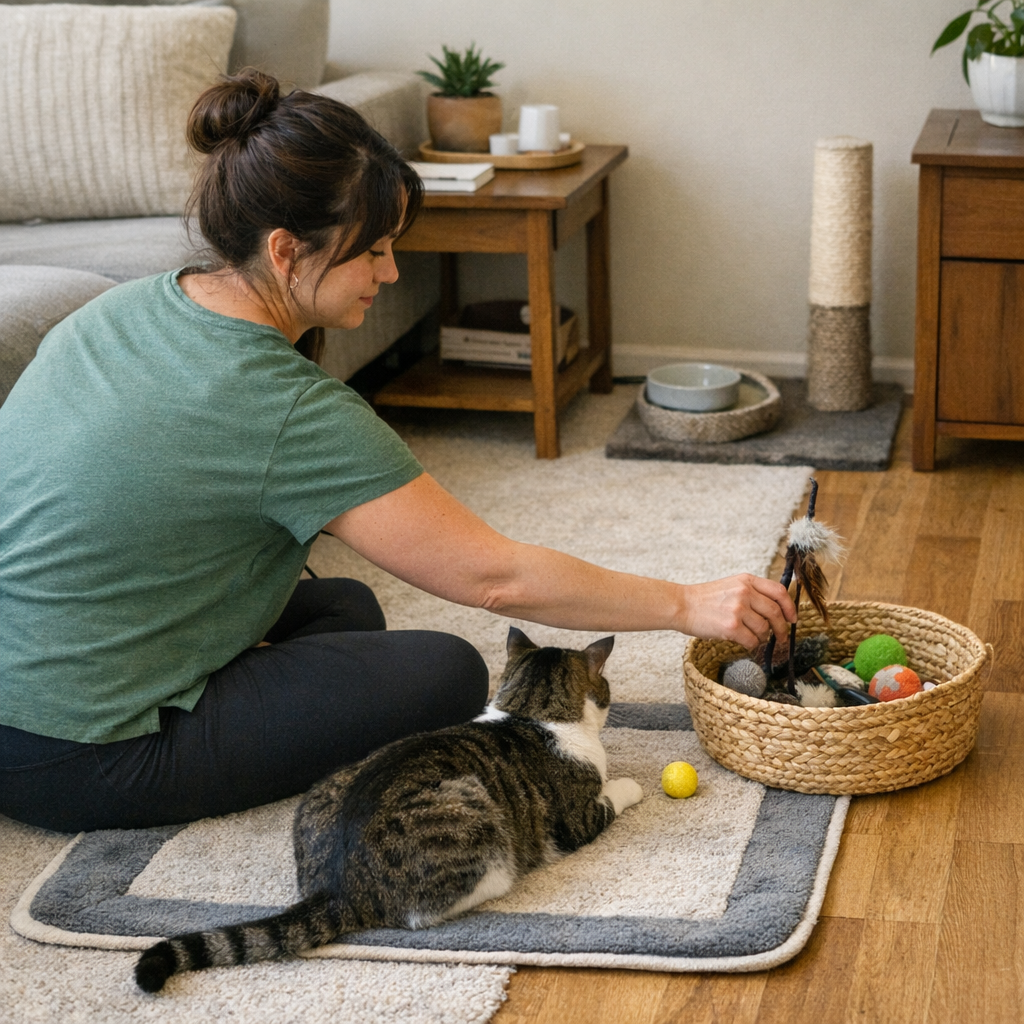
    A fixed play window is only reliable with real location discipline. The subtle shift: a single low-sided basket or box at the play hub, always returned to, becomes your reset trigger—fully visible, easy to reach, and never so deep that items disappear for days. Every toy goes back after play, not “when you get a minute.” Anything buried, blocked, or hard to grab: replace or move it until putting things away becomes nearly automatic.

    Other specifics that reduce the friction:

    • Keep daily-play toys in one basket, but stash a backup toy (like a felt ball) for solo play, tucked under a mat or behind a table leg.
    • Position the basket within your work or walk zone—under the desk, beside a reading chair, or near a window if your cat prefers looking out.
    • Always finish with toys back in the basket. If you leave “for later,” the drift resumes, and resets turn into sluggish rounds of hunting for the missing plush or crumpled ball.

    Forget making the room flawless. The win is muscle memory: you reset toys as predictably as grabbing your keys. Your cat begins to track the same signals—when play is over, everything returns, and the room returns to its dual use.

    Real-World Breakdowns: What Trips You Up (and How to Address It)

    Even tight routines have weak points. Your fixed play window may not match your cat’s energy spikes—if they keep pestering at other times, shift the window: early afternoon instead of morning, or closer to dusk if that’s when they liven up. Real success comes from timing that lines up with actual behavior, not just the owner’s schedule.

    Toy fatigue creeps in when the options don’t rotate—or when “backup toys” never change. If you’re seeing interest fade, pull two toys out of rotation and introduce a “forgotten favorite.” Even a simple swap reignites the system and helps the main cycle hold.

    Setup details matter. If your basket is annoyingly far from your main chair, or so deep the smallest mouse vanishes for ages, change it. The best structure is one you barely think about when moving from work to play to reset. If wipes live in a drawer two rooms away, place another set closer. Don’t let a minor convenience gap become the opening for clutter to sneak back in.

    Shared Space: Preventing the Toy Spill from Taking Over

    Zoning breaks down most when shared spaces—walkways, eating areas, reading corners—become toy holding zones. Once toys bleed under key furniture or into traffic paths, each reset demands more effort, and shared space can feel surrendered. Smart setups don’t hide every sign of cat life—they draw clear lines so the cleanup stays doable.

    Everyday cues that help build these boundaries:

    • The play basket lives out only during the window, then gets shelved or moved aside (not abandoned as semi-permanent clutter).
    • A quick sweep after scheduled play ensures toys aren’t collected mid-routine or underfoot. This sweep should be as short as it is non-negotiable.
    • Reserve “backup toys” for solo moments, tucking them just out of sight so every play reset feels finished instead of lingering across the whole room.

    After a week on this structure, results get visible: the living room returns to human use quickly. Fewer toys creep into shared floor space, and interruptions slowly drop—not because the system’s perfect, but because the signals finally match what’s workable for both sides. There’s always stray scatter or an extra wipe-down, but the spread stays contained, and the room doesn’t feel surrendered to cat chaos.

    What to Expect After a Week—And What’s Still Up to You

    Give a fixed play block seven days, and most cats start anticipating the routine—waiting for the basket, loitering at

  • How Small Changes in Pet Care Setup Save Time on Exhausting Days

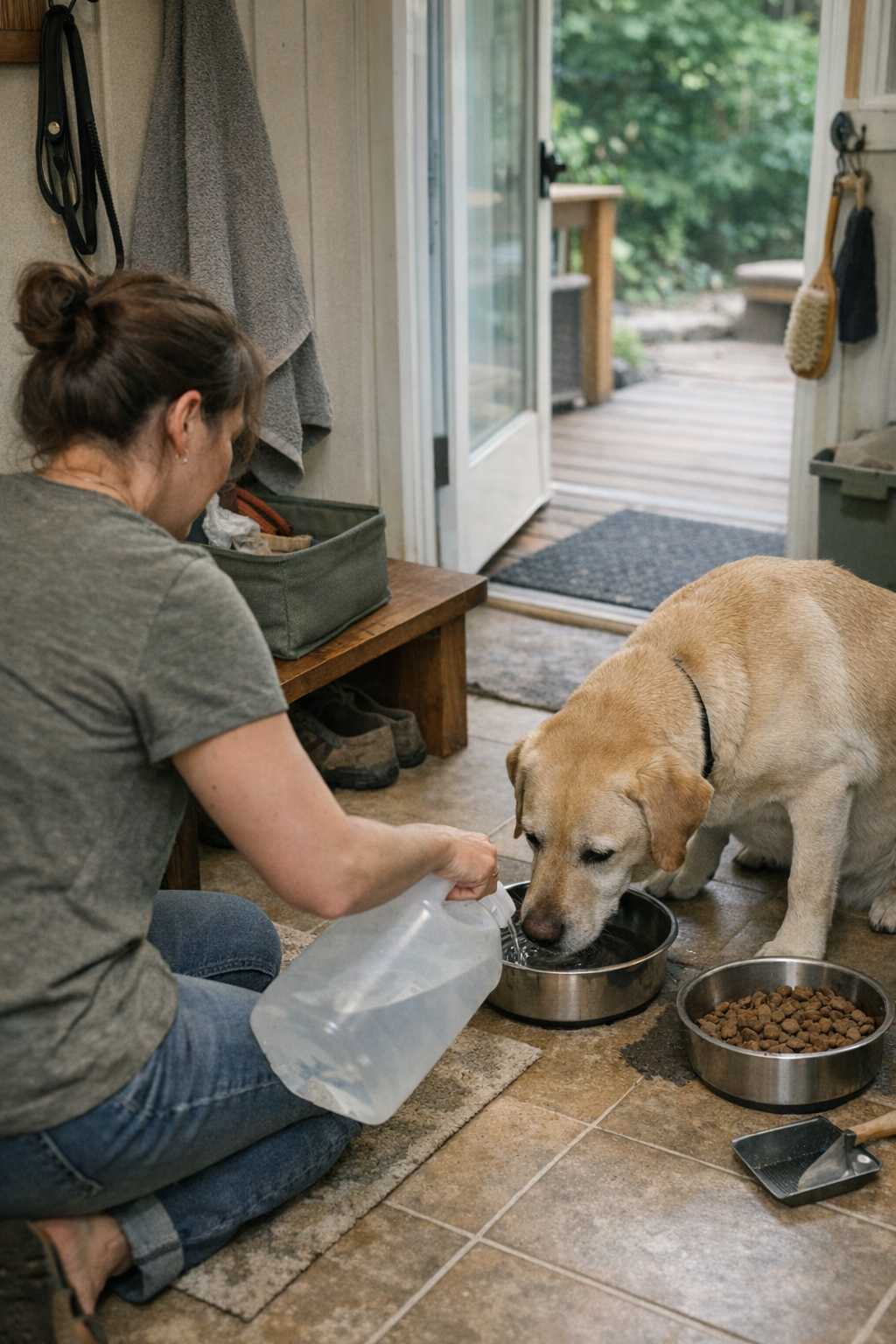
    A pet-care setup rarely fails the day it’s arranged. It breaks down the first night you try to clean up after dinner and realize the water bowl’s still under the mail, the towel you wiped paws with is missing, and you’re stuck rinsing muddy feet over the kitchen mat just to get everyone settled. The difference between a setup that feels “organized” and one that works is simple: a working system won’t let you get blocked by one lost bowl, a misplaced brush, or a towel that’s never where it needs to be. CalmPetSupply isn’t about how a corner looks at 7am; it’s about not losing five minutes—and your patience—just trying to reset after a normal, hectic day.

    The True Test: Daily Pet Care Under Pressure

    A setup only matters when you’re short on time, tired, or just want normal routines to finish without friction. Picture rushing to refill a water bowl during the dinner rush—except it’s shoved behind groceries, the bottle is buried beneath recycling, and the only towel is somewhere in the wash. Instead of a quick five-minute reset, you’re retracing steps, moving clutter, and leaving half the mess for “later.” Real pet care is about whether the feeding, cleaning, and resets can survive the busiest, most distracted day—because that’s when weak setups start to fall apart.

    Why the “Tidy” Setup Fails Real Life

    Most routines break not from chaos, but from a setup built for appearances, not use. Brushes stashed in high cabinets don’t help when loose hair’s on the sofa. Towels hidden in drawers can’t dry paws at the door. By Friday, you’re stretching to grab a towel from the wrong room, scraping by with cleaning wipes you can’t reach, and opening every drawer for a scoop you thought would be easy to find. Those “tidy” systems require more steps, making daily care just clunkier under pressure—not smoother.

    Small Delays Become Big Frictions

    Start with one rainy walk: your dog’s paws are muddy, but the towel you meant to have by the door is still spinning in the dryer. Now you’re tracking prints through the kitchen, opening cabinets, and wiping floors long after the walk should be over. Every time a needed tool is missing or out of reach, small delays mutate into real interruptions—and background stress grows faster than any visible mess.

    Essential Items Go Missing at the Worst Times

    Even with “almost organized” routines, the cracks show fast. Bowls slide into the hallway, wipes wander to a room you hardly use, and the brush you thought was next to the door is now under the newspaper pile. When you’re forced to hunt for basics or skip steps because one item is slightly out of place, routines drag: water doesn’t get refilled, surfaces stay sticky past feeding time, quick resets become hour-late chores. It doesn’t take much for daily pet care to start feeling like a string of small failures.

    The Reach Factor: Keep Supplies Where You Use Them

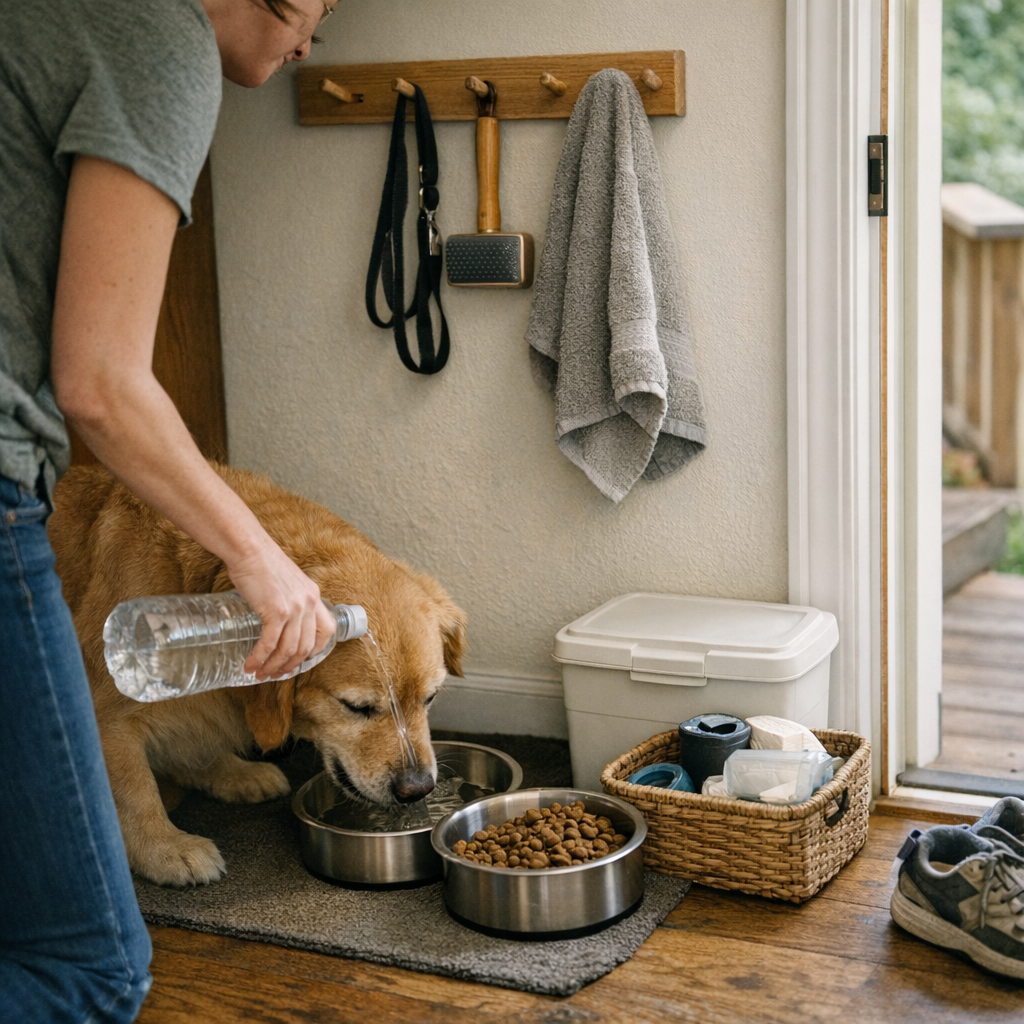
    What actually saves time isn’t hidden storage, but smart positioning. A towel hook inside the entry means muddy paws get wiped before chaos starts—no retracing steps to the laundry. Keep the food scoop next to the food bin, not buried behind snacks. Place water bowls in a spot you walk past often, not a tucked-away corner that only attracts mess. When every supply stays where you use it, the task shrinks—the friction fades. The less you fetch, the faster you finish.

    Pet Supplies That Get in Your Way

    Pet supplies tend to migrate into space you need for real life. Toys end up underfoot, feeding mats creep into the busiest stretch of the kitchen, and storage bins crowd out counters. An “organized” setup can morph into a routine speed bump by midweek. You spend more time moving bins, shifting mats, and sidestepping piles just to use the space for anything else—pet gear that looks good on day one but makes daily routines clumsy everywhere else.

    The False Promise of “Clutter-Free” Organization

    It’s tempting to hide every supply for a cleaner look, but a routine only works if the basics are always at hand. If you’re constantly digging for wipes, opening the wrong cabinet for a towel, or shifting three things to reach the bowl, the order is only surface deep. Genuine routine support means the right item is always in its spot, with no extra searching. A “clutter-free” system that hinders care just creates a cycle of friction—and more mess over time.

    Realistic Streamlined Care in Action

    A functional setup feels different in real life: After a muddy walk, a dry towel hangs on a hook by the door—grab, wipe, done. Food scoops and treats live directly above the bowl, never behind a stack of groceries. Water bowls rest near daily foot traffic, making every pass a reminder to refill. Wipes and a cleaning cloth are within arm’s reach of the litter box, cutting response time from “I’ll get to it” to handled immediately. When tools are only ever an arm’s reach away, care doesn’t pile up—it stays manageable, no matter the day.

    Practical Shifts: Function Over Form

    Real improvement means choosing location and accessibility over tidy appearances. Add a ground-level bin where supplies pile up, not where they “should” look nice. Hang a brush visibly by the door instead of storing it in the hall. Every move that brings supplies closer to use cuts steps—and cuts excuses to delay. Once ease of use becomes habit, the urge to hide everything fades, replaced by routines that actually last.

    Finishing Thoughts: Build for Real-World Flow

    The only pet-care setups that last are the ones built for real life: missing tools, sudden messes, tired evenings, rushed mornings. If you still lose time searching for basics or cleaning up interruptions, it’s a sign the system only looks calm—it doesn’t work calm. Test every tool’s placement not by how it looks, but by how quickly you can grab it when the routine is at its worst. A small move—a hook, a visible shelf, a closer bin—often makes care predictable, calm, and genuinely easy to keep up, even when the day falls apart.

    See the CalmPetSupply real-life-ready collection

  • Ending Cat Play Early Prevents Toy Chaos and Keeps Homes Tidy

    If your cat’s toys keep slipping back underfoot—even after every “final” cleanup—it’s not a storage problem. The real wear comes in the gap between when cat playtime should end and when it actually drags on. Most indoor cat owners know the friction: you clear the living room, every toy boxed or binned, and still, right as you refill a water bowl or carry laundry through, a crinkle ball surfaces in your path. One stray sprint resets your tidy setup—and the loop begins again. In a StillWhisker world, surface order isn’t enough if the cleanup can’t keep up with where your cat’s nerve-ending energy actually escapes. The scattered aftermath isn’t random. It’s usually triggered by letting play fizzle past its real stopping point instead of wrapping up when your cat first starts to drift. And what feels like a minor annoyance—one missed reset—quickly compounds into repeat toy scatter, sidestep routines, and a cycle of invisible, persistent disruption that makes your “clean” space feel one step behind.

    How Play Sessions Leak into the Rest of the Day

    Letting play wind down on its own—waving the feather wand until your cat wanders off—sounds simple, but in the rhythm of an indoor routine, slow endings backfire. As your cat’s attention cools but doesn’t fully shut off, that leftover spark flares up again: a late sprint into the kitchen as you set the kettle, a rogue ball pinging off the wall, or a half-forgotten mouse showing up next to the main walkway. Without a decisive wrap and sweep, the toys migrate as soon as you turn away.

    Surface resets vs. hidden mess: You can design a stylish toy basket, space out the play area, or keep all accessories tight to a corner—but when play fizzles rather than finishes, toys still snake under couches or appear right where you’re carrying groceries. The living room looks maintained until a surprise burst sends a kicker under your heel mid-task. Trouble isn’t dramatic: it’s the quiet mismatch between how the setup looks and how it sidetracks your routines.

    Why Toy Scatter Keeps Returning—Even in a Tidy Home

    It’s logical to expect order from baskets, boxes, and labeled cat zones—until you notice clutter creeping back into walkways hours after cleaning. The true breakdown is timing. If you only tidy up when play is just “over,” that residual energy finds its own path, scattered across the room whenever you’re busy elsewhere. That’s why you pick up, breathe out, and still get interrupted later: toys marooned in high-traffic areas and another “quick” sweep before sitting down to eat.

    It becomes more than a minor mess. When late-stage play spillover keeps colliding with your normal flow, the sense of order wears thin. Every pass through a supposedly reset area risks new dodging, new pickup—a home that stays “almost” clean, never steady for long.

    Spotting the Real Stopping Point: Reading Cat Cues

    The missed moment: Your cat slows to a dawdling prowl, chases but doesn’t commit, or flicks an ear toward a ball but won’t pounce. Hit stop here—don’t push for that last lap around the rug. If you let play unravel past this dip, your evening likely means crawling under the couch for toys, nudging objects aside during a refill, or managing a small collision when a quick streak meets a water bowl edge.

    With practice, these cues stand out: the slow wander away, idle sitting with a toy, or half-hearted chase followed by a pause. Ending play right then—plus a swift visual sweep—interrupts the feedback loop. The aim isn’t abrupt cut-off, but a timely close so you contain the cascade, not just the clutter.

    Preemptive Gathering: Closing the Loop on Mess

    What actually makes a difference? Stopping while attention dips, then picking up every toy (yes, especially the sly ones behind chair legs or in the walkway) shifts your cleanup from reaction to prevention. Toy migration tapers off. The unplanned dash across shared zones fades. You’re suddenly resetting spaces that stay usable instead of just looking neat for a brief window.

    When the Cat Setup Looks Tidy But Feels Off

    Scan the room: basket in order, toys corralled, dish areas clean. But the “just finished” feeling doesn’t last if toys keep leaking back into daily movement paths. The gap is structural—your setup hides mess for a moment, but can’t contain the routine breakdown when toys resurface in the same traffic zone or under the same table, especially when you’re moving quickly or distracted.

    Day after day, the cat zone and human zone blur. A tidy basket by the armchair proves useless when it’s raided before bedtime, or a wand stick ignored after play triggers a whole new unscheduled chase. The breakdown isn’t explosive—it’s friction that accumulates. You spend more time re-clearing the same spots than actually using your space as intended.

    Everyday Interruptions: Where Routine Breaks Down

    The pain points persist because cat play migration doesn’t stay in the “cat area.” Reach for the water bowl; find a ball jammed near the base. Take laundry across the hall and bump a kicker in your path. Over a week, these micro-interruptions stack: unplanned pickups after work, sidesteps before bed, repeat touches on the same objects you counted as “handled.” When resetting gets delayed, comfort and shared access slip—and a setup that “should” work takes more effort than expected.

    This isn’t just about neatness: it’s the slow, real cost of handling the same intrusion multiple times, stealing time from meal prep, bedtime, or just sitting down undisturbed.

    Reset Habits that Actually Change the Friction

    It’s not about more bins or baskets. It’s about when you reset—catching the lapse before it grows. End play intentionally at the first slowdown and sweep up every loose piece, especially in key trouble spots: under the dining chairs, next to water and feeding areas, along shared walkways. Preemptive pickup stops tomorrow’s chaos from leaking into today’s setup.

    It pays to double-check usual trap zones: corners collecting balls, sofa undersides, paths from play to kitchen. Take care of the lone straggler now; waiting means it’ll become the trigger for the next round of mess during a rush or when your focus is lower, not higher.

    Example: The Ball by the Water Bowl

    Classic sign: later in the day, a plastic ball blocks your access to the water bowl. You think, “I’ll get it after,” but forget—until your cat sends water across the floor and you’re mopping up at midnight. The real slip wasn’t ignoring a ball, it was missing the moment for a tight reset after play. That’s the difference between calm and a spiral of late-night interruptions.

    More Predictable Routine, Less Unscheduled Cleanup

    Dialing in this stop-and-reset approach, your whole home shifts. Cat zoomies stay local to play sessions rather than bleeding into dinner or cleanup. The same periodic scan for outliers is quicker, less draining—you’re spending less time catching up and more simply living in a space that holds together between resets. There’s less backtracking; the room you set up tends to stay set.

    The goal isn’t perfection. It’s trimming the invisible labor—the repeat pickups, the lost minutes to small sprints, the home that looks more stable but finally feels easier to use again.

    When a Setup Starts Working for You—And Not the Other Way Around

    This isn’t about a showroom setup. A real StillWhisker setup holds its shape longer, demands less from you to reclaim space, and fits movements you repeat all week. You start noticing: meal prep flows without a plush fish at your feet, main paths stay open, and you don’t have to hover over every play session for the room to feel under control. By ending on the first loss of focus and carrying out the total reset—no toy left for later—your spaces back each other up: comfort for your cat, less chaos for you, and actual relief from endless reshuffling.

    The payoff is simple—a daily setup that’s easier to live with, not just cleaner on the surface, and a living space that finally works the way you wanted from the start.

    Shop practical indoor cat setups at StillWhisker

  • How a Simple Pause Transformed Our Dog Walk Routine for Good

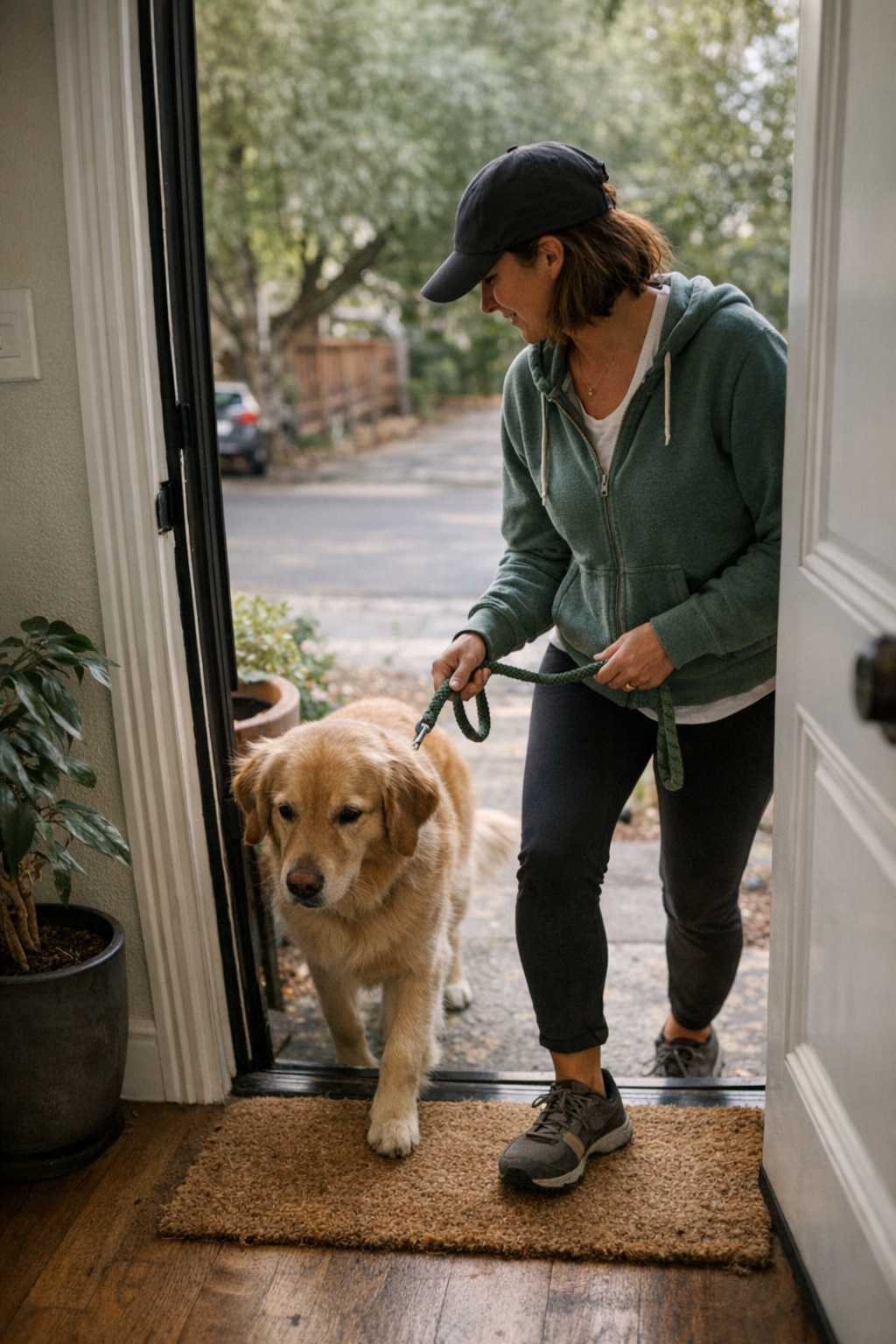
    Front doors are supposed to be quick—clip the leash, grab your keys, head out. But the real routine goes sideways: you reach for the leash, knock over the water bowl, dig past an overflowing hook, keys wedged under a chew toy, your dog doing circles or locking up between the mat and the open door. Instead of a smooth exit, every walk starts with a repeat bottleneck that drags down both you and your dog. If you’ve ever found yourself blocking the doorway, fumbling for wipes, or bracing while your dog stalls or bolts, you’ve seen how a setup that “looks ready” breaks down the moment real-life movement piles up. The first step outside is never just a step. It’s the daily test where small setup flaws turn into messy starts—over and over again—resetting the whole tone before you even clear the doorstep. In the DogPile world, that’s the front line where what’s tidy on paper rarely matches how things actually run.

    When the Start Keeps Catching: How the Front Door Becomes the Main Roadblock

    Missed leash hooks, corner-stacked baskets, water bowls wedged next to the path—these details only seem minor until they repeat. A dog side-stepping today but flat-out refusing tomorrow, pausing in the exact same spot before every outing. After weeks, you expect friction at this one threshold. Even reaching for the handle triggers the routine bracing—your hands already too full, the rhythm lost before you step into the world. “Just leaving the house” turns into a daily micro-battle, resetting even a well-organized entryway.

    As these hiccups stack up, they bleed into everything else: leash pulls earlier, paces are out of sync, even your dog’s first glance tells you both that something’s off. The porch was supposed to mean go. Instead, it signals scramble and repeat. The walk’s ease drains out of the first sixty seconds, long before route or weather even matter.

    Recognizing the Real Weak Point

    The catch is never just about willingness. Morning after morning, you fumble for the leash while the bowl blocks your path, or you find yourself dodging the same treat pouch dumped halfway into the walk zone. The setup might look shipshape, but every move—clip, scoop, grab—collides with one friction point that stubbornly stays. By the time your dog is finally harnessed, you both feel scattered. If the reset always means reshuffling towels or stretching past awkwardly placed bins, the “put together” entry is just another daily chore.

    That’s how setups start to betray you: visually neat, practically jammed up. The real threshold is never the door—it’s this spot where the same frictions restart, erasing the idea that routine means “simple.”

    Why This Handoff Really Matters—More Than the Route or the View

    Forget the new trail or varied scenery; none of it matters if the inside-to-outside transition keeps jamming the gears. When the handoff at the front door is a scramble—your dog is stalling, you’re sidestepping supplies, a mat slipping underfoot—no walk can fix that tense beginning. Patterns get carved in these seconds, teaching both sides that the pause and shuffle are just “how it goes.”

    The real control point isn’t the neighborhood, it’s the exit flow. Most advice skips over the handoff, but this stretch—how you catch the leash, move through clutter, give your dog a clear signal—decides if the outing feels doable or draining. Over time, a rough start burns in the message: expect tension. The walk becomes a routine disruption, not an escape—unless you fix the setup, not just the route.

    Repeated Friction, Lasting Consequence

    Hovering on a doormat while your dog hesitates—or zags sideways—builds frustration faster than any long route. The delivery truck idles, someone’s waiting their turn, and your hands are full, nudging gear, urging your dog, hoping not to yank or spill something. Even after you get moving, that sticky transition sets a tempo: unease on both ends of the leash, the rhythm stubbornly off for every block. It’s not just a nuisance; it’s the handoff that shapes how both of you approach “going out”—and whether it feels like progress or another repetition of the same snag.

    A Calm Door Routine: Simpler Than It Sounds

    Most “fixes” suggest training a super-calm stay, but the real shift happens earlier and simpler: insert a clear, predictable pause—every single time—before crossing the threshold. Not a new gadget, not a rigid routine. Just a practiced, shared moment—leash clipped, both of you still, gear in hand—before you move through the door. This small buffer steadies both of you much sooner than a complicated protocol or a picture-perfect sit.

    That pause isn’t dramatic, but you miss it every time things go wrong. A reliable clip-pause-move rhythm means less circling, less tension, fewer sudden bolts. When you and your dog know what happens next, nerves diffuse before they start. Over days, this tiny adjustment trims away the background stress left by a hundred messy exits.

    How the Three-Second Pause Changes the Routine

    Try this: after you’ve wrangled gear and clipped the leash, stand still with your dog just inside the door. Count a real three seconds—don’t rush—then give your signal to go. No circles, no scolding, just a shared pause and a clean step forward.

    That hold signals: the walk starts now, not in the scramble. It cuts through the rush, lets anticipation level out, and lines up both your focus and your dog’s. Most people find the freeze-and-zag moments start to fade, replaced by a straightforward, even exit. Dogs settle into the routine. Owners do too. The difference is felt not just in the first step, but in the recovery of the whole outing’s pace.

    Daily Frictions: The Small Stuff That Isn’t So Small

    Success isn’t just about where things sit—it’s about whether the motion actually works at real speed. Hooks hidden behind the door force awkward stretch-reaches. Baskets for leashes look neat until you need to wrestle one out with your hands full. A mat that bunches up under your dog’s first step sets the whole body off balance. Wipes or treats just out of arm’s reach trigger last-minute backtracks, guaranteeing that both calm and momentum start leaking away.

    None of these are emergencies. Under the daily repetition, though, they pile into genuine drag: mood dampened, dog uncertain, owner patience frayed. Visual organization isn’t enough—if routines mean sidestepping, reshuffling, or interrupted starts, you’ll end up strained no matter how good everything looks. The right setup supports real movement, not just a tidy snapshot.

    Comfort Versus Cleanup: The Balance Isn’t Always Obvious

    Go too far for comfort, and you end up tripping over solutions that slow you down. A plush mat for your dog can jam the door, making every exit a shuffle. Baskets with tight lids corral gear but add seconds to every rushed attempt at “quick walk.” It’s easy to miss how a cozy zone for your dog undermines your own flow. The trade-off hides in plain sight—looks great, but at the cost of smoother handling and cleaner restarts. When setup decisions pile on seconds and interruptions, comfort backfires into repeated hassle.

    Reset Moments: Where the Same Weak Point Comes Back

    Swap in a new mat, move the basket, angle the crate—still, the same glitch returns: you reach for the harness, but something’s always in the way. The walk is ten seconds late again, small frustration rebooted. Organization only works if the flow through the space actually matches what happens each day. The gap is always between “looks prepped” and “feels easy enough to move.” Storage that hides clutter but keeps essentials out of reach is still sabotaging your reset point.

    Reentry after a walk often shows where any system falls apart. Dirty paws and shoes meet towels that slipped behind a bench. Wipes are missing (or buried) just when you need them. Every slow, clumsy reset guarantees tomorrow’s start is thornier. Each beat missed here is another friction built into the next outing’s opening moves.

    Turning “Looks Fine” Into “Feels Better”

    The most useful routines don’t stop at looking organized; they make movement easier, reduce reshuffling, and shrink the exit hesitation to almost nothing. A practiced pause and a setup that lets you grab, clip, wipe, and move without a hitch rebuild the flow that clutter hides but friction reveals. Your dog lines up in sync. You don’t brace for the jam-up. The space holds up because it’s built for everything to get used, not just stored.

    Even one change—a reliable three-second pause before heading out—can replace weeks of stalling with smoother, more reliable walks. The front door shifts from a stress checkpoint to a predictable part of the day’s rhythm. The difference shows up in the quiet: you and your dog step out together, free of the routine drag, in a DogPile kind of entryway that keeps up

  • How Small Changes in Pet Care Setup Save Time and Reduce Hassles

    When Calm Looks Right, but Care Slows Down

    Surface calm in pet care setups fools you fast. Everything looks in order: bowls lined up, toys gathered, floors wiped. But the moment you try to grab the wipe-down towel and find yourself moving a stack of baskets, or need the water refill bottle only to dig for it in the wrong cabinet, the weakness in the routine shows. These aren’t messes, just the kinds of micro-delays—blocking a quick feeding, stretching a basic cleanup, forcing one more retrace through the kitchen—that turn what should be a minute into three. If care stalls at the refill or the brush always goes missing after a walk, it’s not your organization that’s lacking, but your setup’s real readiness. CalmPetSupply isn’t about looking tidy; it’s about setups that hold up after ten resets, not just one.

    Invisible Friction Wears Down the Routine

    Invisible friction builds up fast in daily use. Refilling the cat’s water? First, wedge aside yesterday’s mail blocking the bowl’s usual spot. Grabbing a towel to dry the bowl? It isn’t hung up, it’s lost somewhere in the linen pile. Returning from a walk, hands full and leash dangling, only to realize the cleaning cloth for muddy paws is packed away on a shelf across the room. None of this looks disastrous. But the seconds lost, the interruptions, the return trips—they sap momentum and stretch simple routines until you resent another “quick” reset. It’s the small blocks in real flow—never the nightly mess, always the daily slowdown.

    When Calm Is Only Surface-Deep

    A pet area might pass the visual test—food scooped, brushes put away, toys in a bin. But the gaps appear in the repeat: a late-night bowl swap drags out because the refill isn’t where you need it, or the brush is buried in a drawer when muddy paws show up. On paper, you’re organized; in reality, the scramble for missing basics costs time you notice most on days when routines need to fly. Efficiency on day one fades if reach and placement don’t match the actual rhythm of feeding, cleaning, or after-play resets. Each small detour isn’t much alone, but by the week’s end, frustration adds up.

    Scenes from Actual Daily Use

    Evening reset: you rinse pet bowls, pop them in the dishwasher, set out a clean water bowl—then realize the water filter jug is clear across the house. On your way to fetch it, the cat hears noise and expects dinner, but you’re nowhere near done. Or midday, facing scattered kibble, you use an old napkin to clean up because the proper towel is under folded laundry—leaving residue for next time.

    Later, after work, you just want a quick tidy before bed. You gather toys from every corner, but with each reshuffle of the storage basket, the comb you need pushes further from reach. What should be a five-minute check-in blurs into extra searching and even slower winding down. All because the right tool is never at hand, exactly when it should be.

    Barriers to Quick Pet-Care Add Up

    It’s easy to settle for a setup that looks calm but sets you up for the same old hurdles. The towel marked “always nearby” isn’t really reachable. The refill jug sits just far enough from the bowls to require one more trip every rushed night. Each extra reach, shuffle, or detour slows you down most when you most want to move on, turning routine care into avoidable work.

    These sticking points gather fast. The week fills with repeated round-trips; tasks that should be quick stop feeling finished. Clutter returns to shared spaces, resets get delayed, and the supposed calm of a tidy area gives way to the drag of constant minor breakdowns.

    The Core Difference: Order vs. Function

    “Tidy” is not the same as “truly ready.” A serene surface won’t keep a feeding or cleanup from stalling if key items are out of reach. Stashing pet gear out of sight creates new lag points—every second you search or reshuffle chips away at the illusion of order. Organization that only looks good from a distance is a setup that breaks down under pressure, often in the same spots, for the same reasons.

    If pet bowls, tools, and toys drift back into living areas or block each other, you’re forced into repeated resets that look harmless but feel heavy. Each time you reload supplies, shift toys just to fill the water, or notice the grooming kit stuck behind a pile, the cost is just hidden enough to tolerate—until you’re doing two tasks for every one that should be done.

    Practical Adjustments That Make a Lasting Difference

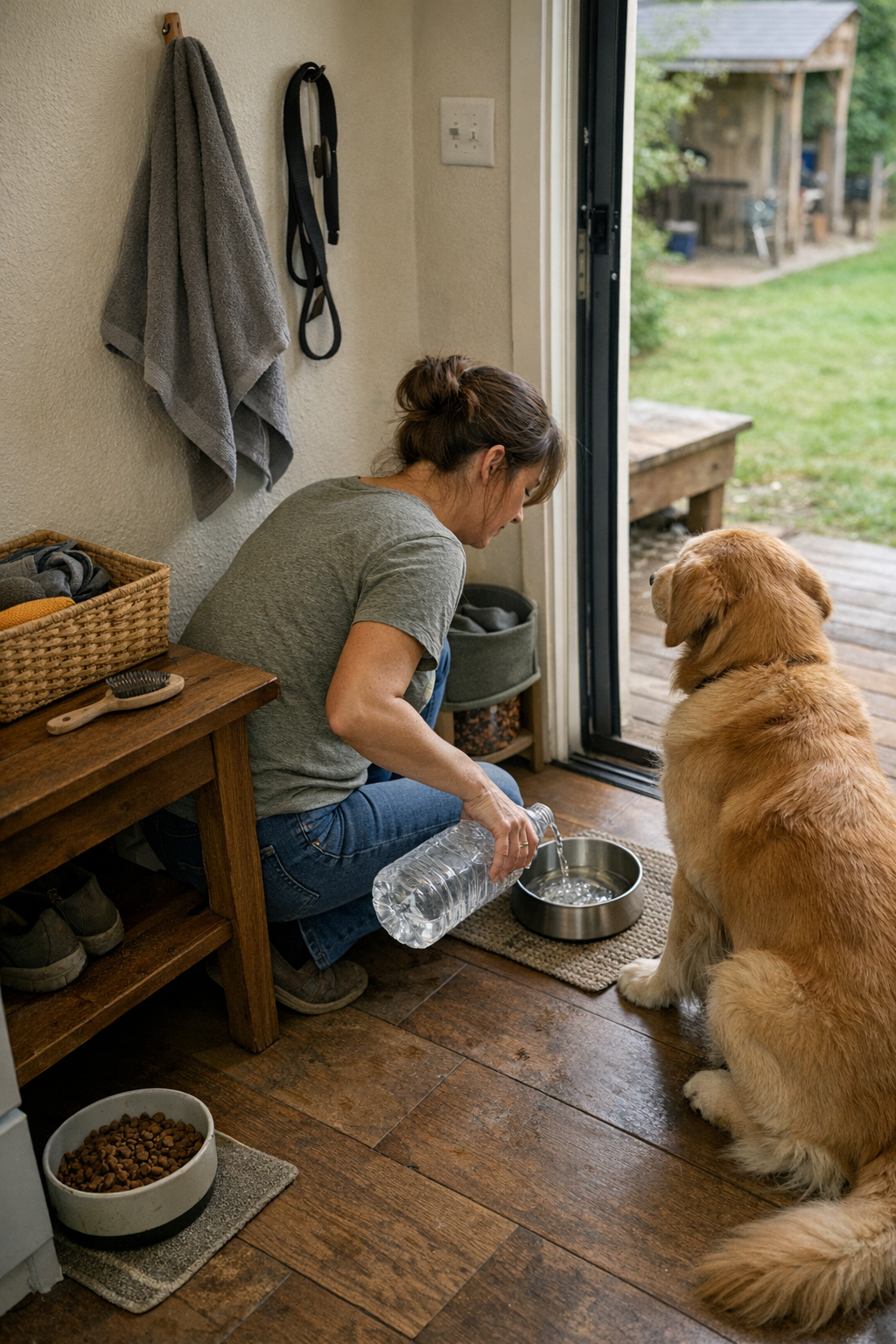
    Actual improvements don’t call for perfect organization—just placement that fits the real rhythm. Mounting a towel hook near the kitchen door means there’s always a clean towel within arm’s reach for quick bowl wipe-downs, not just after deep cleans. Keeping the water refill bottle in the feeding zone (not a high shelf) turns an interruption into a two-second step. These aren’t pretty fixes; they’re functional adjustments that cut down on the tiny, invisible round-trips that wear down routines and make you dread another reset.

    Making the Routine Reliable—Day After Day

    Small setup tweaks create a loop that actually supports real daily care: bowls refilled and wiped without pause, tools always at the point of use, never buried in a bin. Instead of facing the same reset friction every morning or late at night, you get flow—reset after reset, nothing major, just unblocked care that holds up in real life. Calm isn’t the look of your setup; it’s the absence of extra steps every time you feed, clean, or check in.

    Over weeks, removing these stumbling blocks moves pet routines from tiring to automatic. If your setup is only visually neat, the drag returns. If it matches your real pace—even imperfectly—routine pet care gets out of your way and stays quietly, usefully calm.
    Find simpler daily-care setups at CalmPetSupply

  • Reducing Cat Toy Clutter to Improve Home Flow and Daily Cleanup

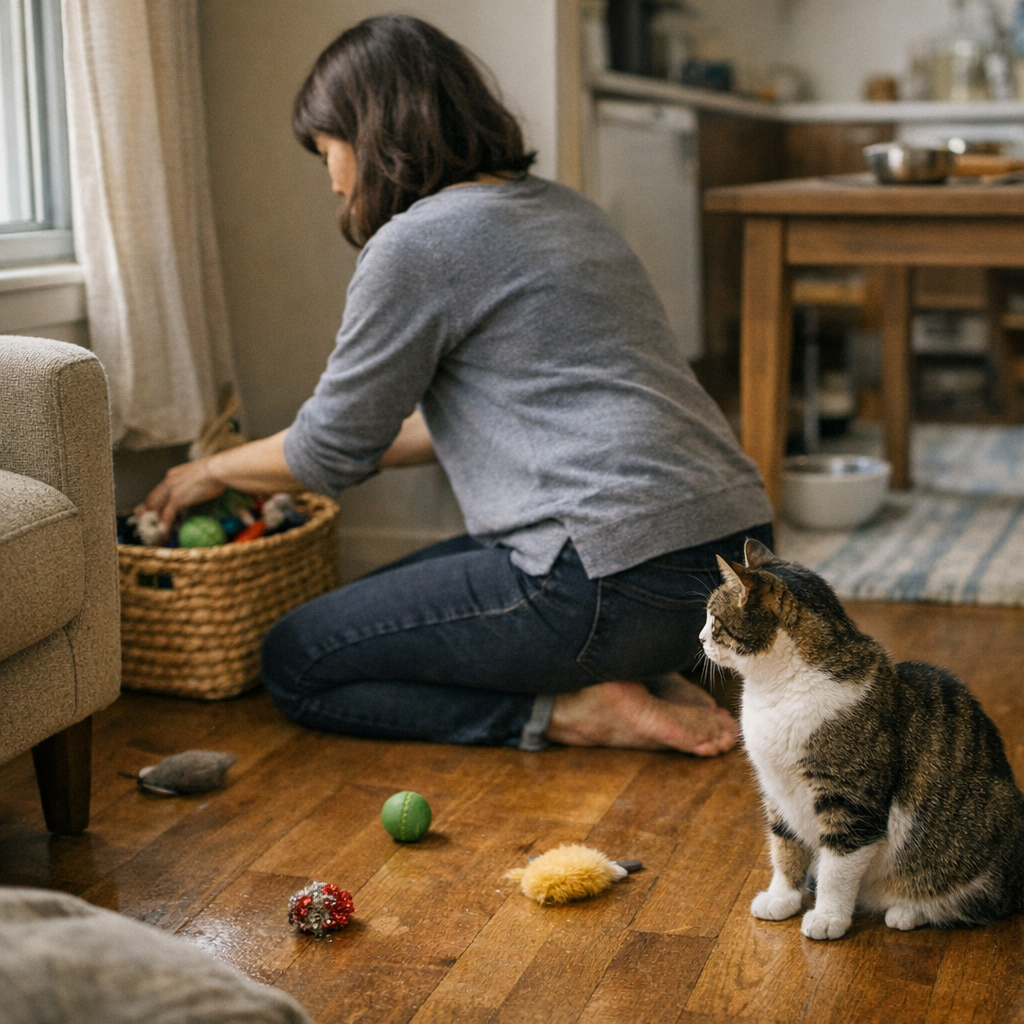
    Scattered cat toys can seem harmless until they turn every normal routine—refilling the water, wiping a surface, even walking from one room to another—into a series of sidesteps and repeated pickups. What appears tidy after an evening sweep doesn’t survive a busy weekday: by midweek, balls and plush mice are once again blocking walkways, wedged under chairs, or parked right by the food dish. The problem isn’t the clutter itself—it’s the slow, constant pressure these toys put on daily movement, cleanup, and basic comfort. Every misplaced toy quietly borrows time from the next reset, and the “fixed” living room slips back into obstacle course mode before you notice.

    When “tidy enough” isn’t enough: The problem with toys on repeat

    Scattered toys rarely trigger alarm until they start breaking up every step of the day. A crinkle ball wedged under the table gets nudged aside out of habit; a fabric mouse appears at the hallway edge and is ignored unless someone trips. But the real snag is how these small interruptions never fully reset. By day three, you’re back to nudging toys in the way just to get to the water bowl, or pausing mid-routine to collect another hidden “surprise” from behind a dining chair. You might toss toys in a basket, line them against a wall, or sweep them away at night—only to find the pickup never lasts. The cycle always restarts: a buildup here, a concealed plush there, and the start of every task is delayed by toy rescue or detour.

    Over time, you realize you aren’t reacting to visible mess so much as ongoing interference. Each cleanup feels necessary, but the space is never truly “back to zero”—maintenance becomes a silent partner in every cat routine, outlasting your plan for order.

    Why keeping fewer toys out changes the entire flow

    Indoor cat homes tend to accumulate toys—some favorites, some ignored, others just passing through. Letting the pile grow seems harmless, but the more toys are left out, the more maintenance each day absorbs. After what feels like a clean sweep, stray toys quickly settle back in: lightweight ones slip under the sofa, others land right at a doorway, a few vanish until the broom finds them again. Each extra toy slows the next reset and shrinks the chance of ever getting an open floor again.

    This isn’t just about how things look. Rooms with too many toys get noisier and more distracting—cats dart between scattered options, play is less focused, and cleanup after each session sneaks into every other task. People end up choreographing around toy zones, not walking straight lines. Weeks pass before you notice that a “5-minute reset” now lasts half an hour—and even then, the room never quite feels open, only acceptably messy.

    The domino effect: Mess, missed resets, and creeping maintenance

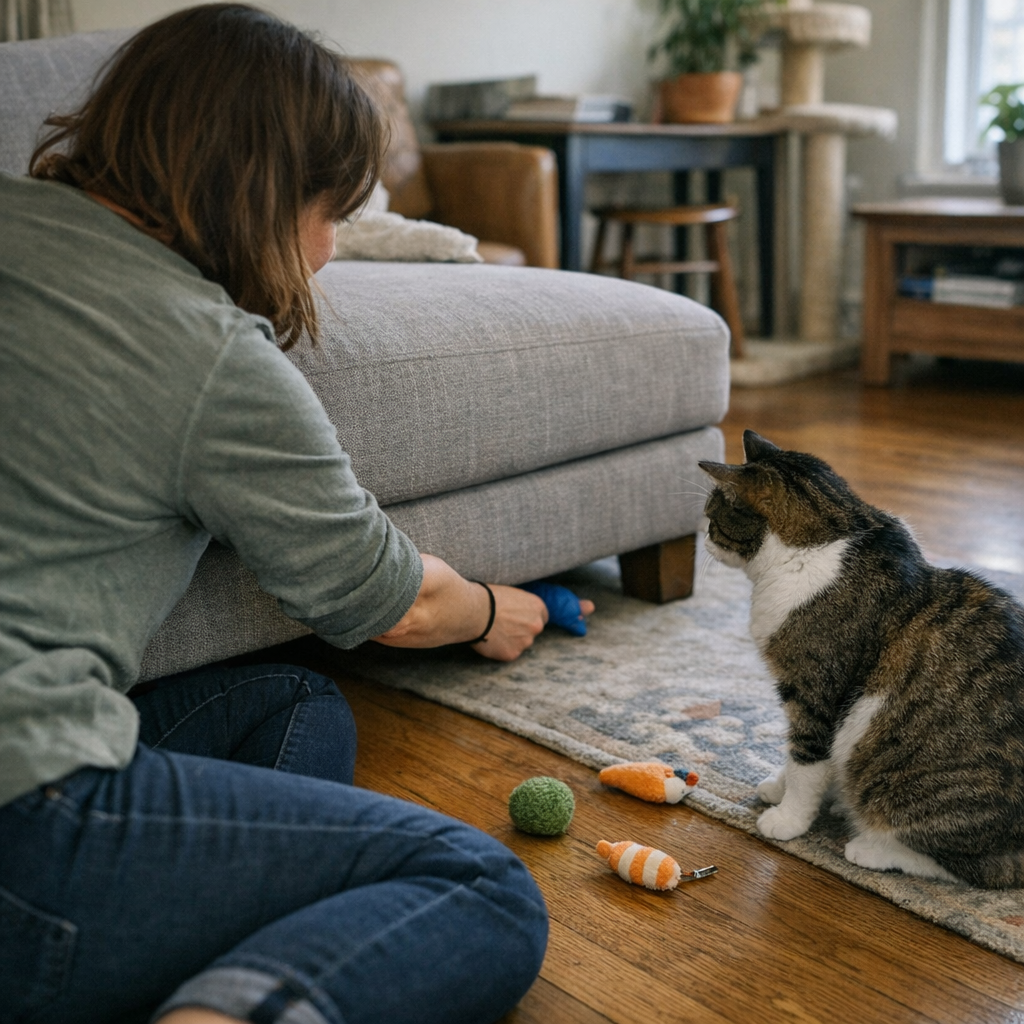
    It’s missing one reset that pushes clutter from mild hassle to slow-moving headache. One night without collecting toys and you start the next day stepping over yesterday’s scatter: the blue felt mouse just reappeared by the water dish, three crinkle balls block the hallway, and any attempt at a quick floor wipe means kneeling, hunting, and prying toys from under furniture.

    As the accessible toy count climbs, cleanup becomes a drawn-out sequence—not just a toss into a bin, but a sweep, a reach behind plant stands, and awkward grabbing under tables. Each “put away” round gets unraveled the next day, the illusion of control replaced by a growing loop of scattered, returned, and scattered again.

    Interruption in the everyday

    This maintenance tax lands hardest in ordinary moments: grabbing the bowl and discovering a plush wedged in the path, hunting for spilled food only to find toys mixed in, or realizing a broom can’t reach another hidden ball behind the cabinet. Tiny inconveniences add up; movement is interrupted, rooms feel busier, and cleanup never fully disappears from the home routine.

    Setting a clear toy limit: Where small changes make the biggest impact

    Choosing a daily limit—three to five toys left out, with the rest tucked into a bin—flips the routine. Cleanup stops being exhausting and becomes a short, finishable step. The moment a familiar toy pops up where it shouldn’t—a blue mouse in the walkway, a crinkle ball at the foot of the stairs—it signals a one-minute reset, not a lost afternoon. Limiting what’s on the floor doesn’t mean less play, but it rebuilds control: people and cats share space again, paths stay open, and the reset after play is part of the flow, not a project to dread.

    Rotation keeps things interesting for both sides; new toys get swapped in weekly, favorites go back on the line-up, and every reset keeps the chaos from sprawling. The pile shrinks, and so does the temptation to leave half of it out “just in case.” Cats adapt quickly, resuming play with whatever’s accessible, and rooms stay clear for longer stretches without major intervention.

    Scene from the real room

    Test this for two weeks and it starts to show: the living room reverts from maze to open ground. Reset doesn’t mean crawling under the furniture—just a quick pickup, a bin within arm’s reach, and no more late-night hunt for the missing plush. Even if one stray toy sneaks out, it never tips the area into undoable chaos. Suddenly, “clean enough” actually holds for days, not just moments—less out means less to lose to drift, and resets snap back into place before the setup slides out of control.

    How toy limits help with other repeated home routines

    Strong toy control immediately lowers friction in other cat-home routines:

    • Feeding area access: You aren’t balancing dishes while nudging toys out of the way, or trying to reach the water bowl with a plush blocking the path.
    • Cleanup and wipe-down speed: There’s rarely a need to delay sweeping or wiping because toys are clogging under tables or mixed in with debris after a play burst.
    • Litter-adjacent management: Toys stopped drifting into the litter area, so there’s less cross-contamination and no accidental “burial” to discover during cleanup.
    • Shared space navigation: Family and visitors move freely—no more rerouting around surprise toy piles or toy-induced bottlenecks in doorways and halls.
    • Return and storage: Putting everything away is quick—just a handful each time, not a mass pickup, sorting, and reorganizing. Rotating in a new favorite is painless, not another excuse to delay.

    Keeping boredom at bay: Toy limits done right

    The worry that stashing toys might bore your cat rarely plays out. Cats tune into what’s new, not what’s abundant. Rotating through a small pool of toys resets their interest and keeps the clutter contained. Any toy reintroduced after a week becomes a novelty, often earning more attention than it did sitting in the pile. Track your cat’s favorites, switch out two or three at a time—and resist the urge to dump the entire toy box back on the floor. The bonus: the cleanup stays manageable and both play and order last longer.

    Practical resets: Reclaiming the routine

    For StillWhisker homes, the system stays simple: three or four toys left out, the rest up and away. If a toy crosses into a high-use walkthrough, pick it up immediately—it’s not a special task, it’s just part of real movement. After five days of this, resets don’t drag on, doorways remain clear, and the last sweep each night takes seconds instead of minutes.

    Measuring the difference: Not just tidy—truly easier

    The biggest change isn’t surface-level neatness, but a home that runs smoother. Walkways open. Cleanups no longer take over. Cat play holds interest without the usual trail of clutter filling every shared zone. No, resets won’t vanish—scattered toys still find their way out, and routines still demand the occasional hands-and-knees reach. But a hard toy limit means less maintenance, fewer broken flows, and a space that actually feels adapted for both cat and human routines—rather than always playing catch-up.

    This is how “just a few toys out” turns into reclaimed breathing room: walkways, play zones, and shared areas act as intended. The next refill, litter round, or floor wipe fits smoothly into the day, not around the mess. Setup matters—getting the right toy limit unlocks a home that still works after the routines pile up.

    Find more ways to make your cat’s space work for both of you at StillWhisker.

  • How a Simple Pause Transforms Your Dog Walks and Reduces Tension

    Every dog walk has a point where daily convenience quietly unravels. It doesn’t shout, but you feel it: that hesitation near the hedge, the fumble for a leash at the door, or the awkward pause at a narrow curb—the moment when what should be routine starts demanding double the focus. For most owners, it repeats in exactly the same spot. One overlooked pause or skipped cue—more muscle memory than decision—turns a predictable walk into a string of leash surges and mid-block interruptions. This isn’t chaos or disobedience; it’s the silent build-up of missed moments, and it keeps showing up no matter how organized your entryway or how fine-tuned your gear seems. Smooth on paper, but every evening you’re left fighting the same delay or tug, wondering why the routine never quite resets.

    The Everyday Walk: Where Setup and Rhythm Collide

    Walk routines get assembled from habit—leash on a hook, poop bags somewhere by the door, dog ready to go. It’s supposed to be seamless. For a few blocks, it is: you match steps, pockets are stocked, you know every corner by instinct. But then comes the spot you always skip—a subtle slow-down you forget, the leash tightening a second too soon, or a curb approached with one eye on your phone instead of your dog. Routines survive on these little signals, and when one slips, so does the flow. Now you’re adjusting grip, nudging for alignment, and the rhythm you relied on disappears. Each walk starts with a neat setup and still ends in frustration, signaling the real split between “organized” and “ready for repeated use.”

    It’s never about willpower or stricter correction. It’s the friction that sneaks in between expected comfort and what the real routine demands—an overlooked moment here, a silent shortcut there. The leash pulls taut, your dog surges or holds back, and suddenly you’re managing conflict where there should be calm. You react through the rest of the walk. Routine doesn’t save you—unless it’s lived through, it just covers for yesterday’s mistake until it shows up again.

    One Missed Turn—And Why It Refuses to Stay Small

    The pattern is frustrating because it hides in plain sight. Skip the pause at a wide turn, forget the deliberate slow-down at a driveway, or step ahead at the corner because someone else is walking by—now the leash tightens, the dog senses urgency, and the pace jumps. Even when you recover, the damage lingers. Every new block: more checking, more “wait,” more mid-walk restarts. The tiniest surge becomes the new template for the whole outing, until you’re back home with both of you a step more wired. The reset that should have happened mid-walk just gets carried inside, tension leaking into the hallway, kitchen, and any attempt to settle afterward.

    It never feels dramatic, but friction compounds. A leash that was loose now feels like a silent warning. Your dog’s ready to pivot from calm to restless in a blink—and you both know where and why it started, even if you don’t say it out loud. Consistency in the small moments, not just gear, is what keeps the routine from breaking down.

    The Quiet Cost of Skipping the Pause

    Owners get tricked by routine’s appearance: supplies by the door, leashes at the ready, everything visually in order. But routine only works if it survives repeated use. That two-second pause before a corner, the extra second letting your dog check in near the hedge, or the deliberate leash slack when you step onto the curb—these are the parts that reset the walk and strip away friction. Miss them, and the rest of the routine slowly loses its grip.

    It doesn’t take an outright mistake, just a shortcut: grabbing a leash from under a pile and delaying, watching your dog interpret your pause as “permission to lunge,” or rushing a turn and tangling the leash around your hand instead of letting it move naturally. Over time, these micro-missed connections build into a pattern that’s hard to diagnose but always annoying to live with. When the flow falters, both owner and dog start bracing for rough patches where smoothness should be automatic.

    • Digging for a waste bag while your dog slips into “go” mode—turning a loose leash into a two-handed scramble.
    • Approaching a corner, then realizing you’re blocked by another pedestrian and the leash was never reset—now you’re tangled, correcting after the fact.
    • Rushing to keep up through familiar shortcuts, only to find your dog is now using every pause as their own signal to speed ahead.

    As these glitches add up, what looked like a reliable setup becomes a repeating weak point. The tidy entryway or organized supplies don’t change the underlying loop—when missed cues keep happening, neatness just hides the friction, it never removes it.

    How Rhythm Breaks: The Aftereffect of the Skipped Slow-Down

    A two-second mistake can tangle your walks for days. Allow one corner to go un-paused, and the leash turns from support tool to obstacle. Mental autopilot kicks in—trusting the routine—while your dog recalibrates to the new rule: “more tension means I lead or react.” Suddenly, every approach to a turn is a test. You’re half a step behind, fixing grip at each block, losing the original calm that made the walk useful in the first place.

    This cycle never fixes itself through luck. The first lost pause sets up a domino effect: walk stops mid-block, corrections escalate, and once inside, your dog keeps pacing or hanging in the entry, expecting more motion instead of settling. The routine feels broken even when the gear or layout looks right. Until you spot the actual pause or shortcut you keep missing, the same struggle repeats—even after the rest of your routine seems stable.

    Real-World Friction Zones on Walks—And Back Inside

    • Entryway gridlock: Leash or harness is tucked behind bags or shoes, slowing you down and priming your dog to tug at the first chance.
    • Muddy cleanup choke point: Towel or wipes are “there” but not in reachable sight—leads to quick paw prints across the house before you can react.
    • After-walk energy overflow: Dog paces or circles inside because the missed leash reset outside never let them finish winding down.

    The Reset: Pausing on Purpose (Not Overhauling Everything)

    The smallest fix isn’t dramatic training or a busy new setup. It’s a two-second pause at each turn, just long enough to slacken the leash and let both of you regroup. You don’t freeze or make a show; you slow just enough that momentum returns only when the routine is aligned. Suddenly, you find leash slack cutting through more of the walk, and the loop—turn, regroup, walk—stays intact for whole blocks at a time. The benefit isn’t flashy, but it’s unmistakable: less awkward tugging, fewer micro-stops, and a smoother reentry when you get home.

    • Signals your dog not to surge, breaking the association between pause and excitement.
    • Avoids catch-up corrections, lowering frustration for both sides of the leash.
    • Extends post-walk calm, so settling back inside happens naturally—without a separate reset routine.

    This kind of pause won’t fix every outside distraction or sudden burst of energy, but it resets what routine is supposed to protect—usable calm, not just a collection of neatly placed supplies. It’s not about never slipping up, but about making the walk easier to recover without launching a new project every time something drifts off rhythm.

    Spotting the Change—In Walk, in Setup, in Home Flow

    After a few days of deliberate pauses, the difference shows where it counts. Now your dog checks in at every stop without circling or pulling. The leash stays loose even at your old trouble spot; you step back in without a hallway standoff, and the kitchen stays clearer instead of doubling as a pacing ring. The routines that once felt full of little snags stretch out and reset more easily, and you notice fewer after-effects trailing into the evening.

    The deeper lesson isn’t that your setup was wrong, but that “looks organized” rarely equals “works in real time.” Entryway gear, cleanup supplies, grooming tools—they can look perfect in a photo but miss the rhythm demanded by repeated use. The strategic pause is the same: invisible, not costly, but changing the whole chain of events for the better. It’s how a walk that started in friction ends with a household that doesn’t need separate rescue routines.

    Why Big Overhauls Don’t Fix the Real Pressure

    Most walk problems aren’t because you need more gear or a stricter routine—they show up because one small alignment keeps getting knocked loose and ignored. Beautiful hooks or perfectly arranged bowls won’t help if your leash, towel, or wipes are blocked at the moment you need them, or if the handling never matches your real rhythm. A setup might reduce visual mess, but still trip you up with repeated-use drag: slow leash reach, towel lost in

  • Creating a Functional Pet Care Corner to Simplify Daily Routines

    The Hidden Costs of a “Tidy” Pet Care Corner

    The polished look of a tidy pet care corner—bowls lined up, towel folded, brush within sight—rarely survives a full week of real use. On day one, everything seems within reach. By day three, you’re already sidestepping a refill bottle that’s wandered halfway across the kitchen, moving yesterday’s mail to grab the scoop, or opening three drawers before you spot the wipes. The sense of order evaporates not from big messes, but from micro-delays: pausing to hunt for a missing tool, doubling back for the cleaning towel, or dragging pet items in and out of shared spaces. This slow drift turns a setup that “looks ready” into one that quietly amplifies hassle and routine drag.

    Where Pet Care Corners Break Down in Real Use

    Most setups fail under daily pressure. The trouble isn’t obvious until everything speeds up—morning feedings squeezed between making coffee or evening routines when arms are already full. Suddenly, you reach for a water bowl and find sports bags or groceries blocking it because “pet stuff” pooled further than you planned. The grooming brush that seemed easy to grab is missing again—either buried under towels in the hallway or shuffled somewhere after the last meal. Every time something isn’t where it belongs, you lose the thread of the routine and start shuffling: towels in one room, wipes in another, food bins inching out of their lane. What looked intentional now forces you to play catch-up, one piece at a time.

    Ordinary Routines, Interrupted

    Imagine the cycle right after dinner: your cat’s waiting by the feeder, you refill the water bowl, check the floor—no brush in the bin. You reach behind the litter box, hands damp from refilling, and by the time you dig out the brush, a puddle has crept under the food mat. The cleanup wipes are further away than the chore is worth, so surfaces get left half-cleaned. What should have been a two-minute reset is now a pile-up of small, avoidable detours—clutter building up as delays compound.

    It’s rarely the outright mess that breaks routines; it’s every misplaced, overlooked, or “almost accessible” item. A wipe left just out of reach. A refill bottle that migrates and never comes back. Even with best intentions, the same weak point crops up during every routine rush, forcing a reset in the middle of a task. The impact isn’t just mess—it’s each fragmented step that slows things down and interrupts the rest of your day.

    The Difference Between Looking Ready and Being Ready

    Most pet care corners start with plans for visual order: feeding bowls lined up, leashes on a hook, supplies grouped “close by.” The cracks show as soon as several care rounds stack up. Bowls used for wet food are left to dry in the next room; towels hang too far away to avoid a drip trail; the brush is a step further than practical right after a meal. The system passes a quick glance, but actual routines expose new gaps—each mini-interruption revealing another part of the setup that works for display, not for use.

    Instead of efficiency, you face a low-level obstacle course: sliding bins or bags to get to what you need, moving clutter to finish another chore, and finding wipe containers missing after a snack-spill sprint. Shared spaces are slowly overtaken by pet care bits that never return to their zone, escalating the cycle of chore drag and unfinished resets.

    What Actually Works: One Purposeful, Central Care Corner

    The shift comes from choosing a single, practical spot—a corner near both the feeding zone and a water source, never in the way of main household traffic, and close enough that you’re not forced to wander mid-task. All essentials—bowls, a full refill bottle, brush, towel, and a lidded bin for wipes or bags—live there, always. Tools aren’t “almost” nearby; the brush hangs direct by the corner entrance, not in a drawer three steps away. Cleanups work because everything stays put.

    For example, place all supplies on the same shelf: wipes and bags in a bin with a lid that opens one-handed, the food container just below, brush hanging from a hook that’s visible as you enter. As soon as pet care ends—feeding, refill, after-walk wipe—spend ten seconds resetting: bowls wiped, refill bottle checked, bin contents returned. This reset keeps the next routine smooth before distraction can let items drift out of place.

    When every tool returns home every time, delays are squeezed out before they start. Instead of hunting, you pick up the next task—and the care corner works as intended, supporting routines rather than stalling them.

    The Real Payoff: Less Mess, Fewer Delays, More Calm

    A corner that keeps supplies in authentic arm’s reach—everyday, not just at reset—does more than look organized. It actively prevents the small slowdowns, pick-up clutter, and missed wipe-downs that keep routines from running cleanly. The goal isn’t spotless show-home looks; it’s eliminating those repeat sticking points that turn quick care into annoying obstacle courses.

    With a setup that holds up to repeated use, daily patterns change: feedings, water checks, after-walk cleanups, and quick grooming become almost automatic. Cleanup supplies aren’t a hallway away. Home spaces aren’t overrun, and routines get done with less friction. The difference is easy to feel—you spend less time resetting, track down fewer missing tools, and sidestep surprise messes before they spread.

    A care corner that fades into the background—where nothing’s ever missing, nothing blocks the flow, and routines end cleanly—doesn’t just seem calm. It keeps your entire setup genuinely low-pressure, leaving more room for what you want to do next.

    Explore more ways to smooth your daily routine at CalmPetSupply.

  • How One Simple Play Cue Transforms Indoor Cat Toy Management

    Every indoor-cat home has one thing in common: toys don’t stay put, they invade your routine. You clear the living room, but hours later there’s a crinkly ball floating beside the food mat, a plush mouse wedged at the edge of the litter box, or a feathered wand you’ll only find after moving half the furniture. Even when you’re organized, cat toys seem to ignore boundaries—showing up in the path between shared rooms, rolling underfoot as you reach to fill a water bowl, or interrupting evening prep with yet another “where did this come from?” pause. What feels like a tidy setup at 9 a.m. quietly unravels under the weight of daily play, forcing you to repeat the same small, annoying resets—this is the main friction of indoor-cat life you can’t ignore.

    How Toy Drift Turns “Tidy” Into a Frustration Loop

    It’s easy to think sweeping stray toys into a bin ends the problem. But with nothing anchoring toys to one spot, every cleanup resets the clock, not the room. The real friction isn’t just visual mess—it’s the persistent, unnoticed labor. Every wandering toy creates a new moving target: a hallway blockage, stuttered footsteps in the dark, and lost minutes playing “find the wand” when all you wanted was a quick break before dinner. Instead of feeling organized, you’re left patching the same inconvenience, session after session.

    One Day Looks Fine—A Week Tells the Real Story

    A freshly picked-up room only tells half the truth. By midweek, the cracks appear—one toy you left on the couch now blocks the kitchen doorway, another has drifted into the walkway between the bed and bathroom, and you’re spending scattered minutes hunting through corners you just swept the day before. Each time you toss a toy back in the bin, two more have drifted out, making your reset routine stretch longer and wear thin after multiple rounds. Clean in the morning, cluttered by night—if you track where time gets lost, it’s here.

    The Real Cost: Time, Hassle, and Interrupted Routines

    The exhaustion isn’t the pile of toys, it’s reaching for the water dish and finding a jingle ball blocking the mat, or pausing mid-grocery-carry to scoop a forgotten plush before stepping on it. Every unwanted pick-up adds seconds—or minutes—to ordinary routines you expect to be quick. Over a week, this stealth “reset tax” piles up, slowing down every feeding reset, wipe-down, or shared-space crossing, making the entire room feel slightly less yours.

    Small Setbacks Multiply: How Ordinary Routines Slip

    In a single week, watch how disorganization creeps in: the play mat stays in place, but the wand migrates far from reach. Litter area gets a stray ball mixed in, tracking debris into new corners. Stepping around half-hidden toys with full hands risks a spill, and escalating frustration follows as quick resets stop feeling quick. It’s not chaos—it’s a low-level, ongoing grind that eats away at how easy your space is to use, clean, and enjoy without warning.

    Why Most Cleanup Approaches Quietly Fail

    The fallback move—periodically stuffing toys into baskets—always seems logical until it isn’t. The moment a toy vanishes under the sofa or your cleanup bin sits out of reach, the friction starts over. The cycle remains: toys “disappear” into the wrong room, show up out of place, and your setup only works if you’re willing to repeat the same hidden chore, every day, forever. Because the system isn’t built for how you and your cat actually use the room, tidy is never lasting—it’s a mirage that needs constant chasing.

    The Reality of Shared Home Space

    This friction multiplies with each extra person—partners, kids, or guests—using the same space. Toy scatter turns the hallway into an obstacle course, kitchen walkways into sidestep drills, and most tellingly, the human urge to “just move it later” turns into full-blown clutter by day three. Even if others don’t complain, you see the difference—there is always something to pick up, shift, or work around, and the mental drag isn’t imaginary.

    The Structural Shift: One Consistent Play Cue, One Zone

    Adding bins or multiplying toy choices doesn’t fix the loop. The real change is structural: tie every play session to a single play cue—a sound, a spot, and a (preferably favorite) toy—anchored in one recognizable area, every time. Use a dedicated mat as the visible border. Bringing play back to this reset zone cues your cat and your own routine, and toys no longer orbit the house on their own schedule. You flip the pattern: toys stay anchored, resets shrink, and random clutter drops away.

    The First Days: Visible Change, Easier Reset

    Give this routine a genuine week. Ditch the multi-room scavenger hunt: leave toys by the mat, signal play from the same place, and finish each session by returning everything to arm’s reach storage. In days, most owners notice the difference—cleanup is a handful of seconds, not a full sweep. Even better, your walking paths and shared spaces stay clear, so routines feel less interrupted and more predictable, no matter when play happens.

    When Toy Storage Helps—And When It Actually Gets in the Way

    The right storage isn’t about more space—it’s about instant access and anchored habits. Open baskets or trays always kept next to your reset mat keep toys in view, grabbing them as easy as starting play. Tucking bins behind doors or in other rooms quietly kills the system: you forget, your cat loses interest, and toys freely wander. The only solutions that hold up make the return-to-zone habit automatic for you, not another step you have to remind yourself to do.

    What About Rotating Toys or Spreading Play Around?

    It’s tempting to scatter toys or rotate them for novelty, but this quickly turns “enrichment” into extra work. In lived practice, limiting toys and anchoring play to a single space actually makes the session more focused and anticipation higher; it’s the play ritual—not the raw toy count—that keeps your cat engaged, and your reset friction low.

    The Visible Rewards: Less Reset, More Flow

    Stick to a single play cue, a single zone, and clutter shrinks fast. The mat border becomes a visual anchor: toys stay where cleanup is easy, storage bins don’t overflow, and background mess doesn’t seep into every living area. You’ll notice the benefits most during transitions—no last-minute hunt before guests arrive, no bending down halfway to the door, no pause to clear stray toys before a litter or water reset. “Tidy” becomes repeatable, not another box to check off.

    Resetting Becomes a Moment, Not a Project

    What used to mean prowling from room to room, gathering wayward toys, now finishes in a ten-second pickup. Play ends, storage is right there, and nothing lingers to interrupt the rest of your routines. The method holds because it fits normal life—no alarms, no elaborate system, no dependency on perfect memory. Even when everything else is hectic, this corner stays under control.

    Don’t Settle for “Tidy” That Still Interrupts Your Day

    More containers or extra organizing won’t close the loop if toys still drift and daily resets stretch out. The reality is, only an anchored play zone and cue—integrated right into where you and your cat already use the space—eliminate the invisible reset tax that comes from weak structure. What looks clean in a snapshot may still cost you extra minutes and mental energy all week—fixing it at the root gives real, daily relief.

    See practical indoor-cat setup ideas and solutions at StillWhisker.