Author: jaesoon_admin

  • How Small Changes in Dog Rest Areas Improve Daily Relaxation and Recovery

    You set up a dog’s rest corner thinking it’s finished: bed fluffed, blankets in place, corner claimed from daily clutter. But then comes the repeat: your dog approaches, circles, eases down half, then pauses—ears catching hallway footsteps, head lifting at every family pass. The rest area looks right, yet your dog never fully commits to the spot. Instead, you get sidelong glances, uneven weight shifts, and naps broken by every noise. This isn’t rare; over time, those small hesitations—one paw on, two eyes tracking movement—build up. The real drain? Daily routines start stalling; rest isn’t restorative; and all the tidying in the world can’t hide a setup that actually disrupts instead of resets.

    The Rest Zone Looks Fine—So Why the Hesitation?

    Patterns appear in the friction: the midday nap that never quite starts, the end-of-day curl-up interrupted by footsteps, the repeated circling at a bed your dog once rushed to claim. Watch closely and you’ll see it in the moments between intention and settling—your dog pausing, half-reclined, attention split between bed and hallway. It’s not just a personality quirk; it’s a signal that the space isn’t working under real routine pressure.

    This micro-pause is the start of bigger trouble. Instead of deep sleep, you get half-dozing: every muffled voice in the hall means a lifted head. Naps get shorter. Peaceful lounging turns into restless watch duty. The clues always surface in the approach—when your dog lingers at the edge, waiting or tracking movement instead of collapsing with trust. The rest setup that looked great loses ground as the routine exposes its weak spot.

    Recognizing the Quiet Cost of Half-Rested Dogs

    You feel it before you name it. The dog is needier, the evening tighter, and the day’s small interruptions multiply. Your dog paces in, surveys the space, but won’t drop cold; instead, you get sideways glances, light sleep, a shoulder always lifted against the next noise. This tension creeps into play, feeding, and downtime—rest isn’t a true break, just another checkpoint in a too-busy flow.

    It’s easy to write off as “just how they settle.” But repetition tells you otherwise. Approaches drag out, resting becomes fragmented, and your own flow gets pulled off course by constant low-level resets—closed door here, drop of a backpack there, repeated trips for a missing towel or misplaced toy. The routine is quietly broken by environmental friction the eye misses and the dog can’t ignore.

    Example: The Crowded Rest Window

    Picture after-work chaos: dog heads for her bed as you finish a call, only to freeze as kids shoot past with school bags. The pause is visible. She waits, half-hoping for quiet. Ten minutes later, when things calm, she finally settles, but stays alert—body twisted, eyes on the main drag. Her nap window closes while you untangle leashes and clear the hallway. By dinner, her energy’s frayed—and yours is too. What looked like strategic placement in the morning now traps both of you in a pattern where rest is never uninterrupted, and cleanup starts bleeding into living space.

    Traffic, Noise, and the Sneaky Power of Place

    It’s almost always about the path. Even a well-padded bed, if set next to a main walkway or near the kitchen, puts your dog in the crossroads of noise and scent. Each trip to the fridge, each backpack drop, each snack tossed, keeps your dog half-waiting—ears primed, not relaxed.

    This design flaw slips past initial setup. The “quiet” corner at breakfast is a highway after lunch. Placement that looks clever one week silently undercuts downtime the next as movement patterns change. What shows up on repeat use?

    • Your dog flinches at each door open or hallway echo.
    • Naps last minutes, cut short by footsteps or voices.
    • Energy never resets—playtime fizzles, crate time gets jumpy, and the dog follows you, not because she’s attached, but because her rest zone is always in flux.

    It isn’t about cushion comfort alone. Without a physical or visual buffer, rest collapses into alert monitoring. Change the angle, block a path, or create a sheltered side, and the pattern shifts from pausing to deep downtime. Fail to, and you’re left troubleshooting the same restless behaviors no matter how well-meaning your setup.

    Real-World Friction: When Rest and Routine Collide

    The most telling moments happen after walks or muddy-yard trips. You return with the leash in one hand, a distracted dog in the other, and discover the bed is in the spill zone for shoes and gear. The wipes or towels—if not buried under piles—require a hallway dash to fetch, while your dog drips, shakes, and delays settling. Instead of a quick reset, every transition turns slow: you’re mopping paw prints out of traffic lanes, the bed edge gets damp, and the rest area starts leeching mess into daily flow. Organized? Maybe. Efficient? Not even close.

    The difference is stark: a space that looks tidy can actually slow everything down if you’re always circling back to fix what the setup keeps breaking. The real test isn’t visual order, but whether you can flow from walk to cleanup to rest—without detouring for missing gear or nudging your dog off high-traffic real estate.

    From Minor Adjustments to Major Difference

    If you’ve lived this, you know: even small misalignments compound. That midday pause at the bed isn’t just hesitation—it’s your whole routine forced to adjust, again, to a rest area that makes sense only on paper. Every family pass or kitchen sound draws your dog’s body higher, splits focus, erodes downtime. Instead of closing the loop with a true nap, your day becomes one of micromanaged transitions: fast shuffling from leash to towel, barking at every entry, reworking the space that should simplify, not complicate, the flow.

    But few fixes are as quick—or as ignored—as relocating the bed by even a stride. This isn’t theory; it’s what improves routines from ‘almost fine’ to seamless. Shifting the bed just a step off the main walkway, giving it one more wall for psychological cover, transforms the approach. The dog that used to hover now commits: forward motion, quick curl, chin down, full exhale—a measurable retreat from the main drag back into real rest. The earlier friction—pausing, scanning, resisting calm—lessens in a matter of days. New gear is rarely needed; the win comes from structural adjustment, not accumulation.

    The One-and-a-Half-Step Solution

    Case in point: after watching my own dog stall at her old bed site, I moved the setup roughly one and a half strides off the heaviest traffic line, pressing it to a side wall with no direct hallway view. First day: some doubt, same pause. By the third try, the change kicked in—fast entry, one circle, stretched-out sprawl, and, finally, head away from the commotion. Gone was the old pattern of staying on watch; instead, she settled, and real downtime returned. It wasn’t overnight, but it was undeniable—less frequent interference, less retracing steps, a visible shift in the day’s flow.

    The real difference isn’t in how clean the bed looks, but in how the dog—and owner—move through the steps after each routine event. Placement starts doing work, not creating more of it. Fewer reminders, fewer resets, downtime that means something again.

    Spotting Signs Your Rest Setup Needs a Tweak

    Watch for the giveaway patterns—these aren’t quirks but warning signs:

    • Dog hesitates at bed’s edge, waits before lying down
    • Excessive circling with eyes trained on entry points or footpaths
    • Half-settling, raised shoulders, head always pivoting toward routine noise or movement
    • Light, interrupted sleep—constant ear-flicks or quick lifts at everyday sounds
    • Restlessness that migrates: play fizzles, meals get messy, evening routines stall

    If the same friction persists days in a row—despite a freshly organized, cleaned rest zone—you’re not facing a neatness problem, but a structural one.

    Quick Wins for Resetting the Routine

    You don’t have to stage a remodel. Instead, try:

    • Sliding the bed one step off the direct path or door line
    • Angling for a partial wall or visual barrier, blocking direct sightlines from high-traffic spaces
    • Placing towels, wipes, or cleanup supplies at arm’s reach, not buried in another room—so resets after walks, outdoor play, or muddy paws don’t require detours
    • Positioning just enough gear for transitions, but not so much it

  • How Pet Travel Organizers Slow You Down Over Repeated Short Trips

    A pet travel bag never fails you on the very first trip—it’s the slow unravel that gets you. The “organized” kit promises calm, but within a week’s worth of errands, the cracks show: wipes that slip behind water bowls, a leash looped through three pockets, treats lurking with the clean-up gear. In theory, it’s all there and ready, but when you’re juggling a fidgety dog and a car door, every extra reach or mis-timed grab is another second lost—and another reminder that a packed bag isn’t the same as a practical one.

    Why Pet Travel Bags Lose Their “Ready” Feeling So Quickly

    The initial confidence from a freshly packed kit—pockets zipped, pouches assigned—fades fast once real routines take over. What promises order at home often delivers friction at the curb. By the third day of errands, you notice it: the travel bowl isn’t where you thought; wipes slide beneath a comfort toy; the leash, meant to be at the top, now knots around the bottom. Suddenly, cleanup and comfort compete for the same space, and your “efficient” setup blocks you at each stop. Looking prepared is easy. Staying functional, again and again, is the real test.

    The drag on pet travel comes less from missing supplies than from slow, awkward access. Essentials overlap, snag, or bury each other by accident—pockets meant for speed instead become traffic jams. The week starts strong, but by midweek, every delayed grab chips away at smooth movement, and your patience starts to follow.

    Real-World Interruptions: Where Smooth Setups Start to Stumble

    Bring your pet on a round of errands and patterns surface fast. At your first stop, wipes are easy to spot and grab. By the third stop, they’ve vanished under a half-folded blanket, and the collapsible bowl has slipped behind cleanup pouches you never meant to rearrange. Repeated use turns one-handed access into a clumsy shuffle—one hand holding your pet back, the other fishing for a missing item. Those tiny timing slips add up: your dog shifts anxiously, you lose rhythm, and the “quick stop” drags on.

    Blocked quick-access isn’t just an annoyance; it disrupts the flow for you and your pet. Cleanup bags tangle with leashes, pouches wedge into seat cracks, compartments that seemed smart in the kitchen slow you down at the curb. The calm, streamlined promise of your setup dissolves the moment you need something and can’t grab it without a hunt.

    Why Most Carriers Start Strong But Lose Steam Midweek

    It doesn’t take a “bad” design, just repeated motion. Wipes wander between sections; treats drift next to harnesses. Leash holders meant for speedy clipping catch your fingers every time you reach around them. The more perfectly you packed, the more your setup drifts off-spec as reality smears everything together. You’re not losing items—you’re losing rhythm, repeatedly forced to reshuffle or repack in the middle of a routine you thought would be easy.

    The hidden cost isn’t a single forgotten item, but the pileup of two-second delays and forced workarounds. Need a comfort blanket fast? Out comes half the bag. Search for wipes? Now you’re balancing gear between footwell, seat, and a squirming pet. Over a week, the stress of repeated micro-adjustments wears you down far more than the occasional missing treat.

    Seat-Side Reach: The Difference Between “Looks Ready” and “Works Fast”

    The breakthrough isn’t more compartments—it’s a better flow: a shift from a deep catch-all carrier to a seat-side kit where high-use essentials claim space near your dominant hand. If you always need wipes and a water bowl at stops, having them in an outer pouch means real one-handed grabs—no rooting, no shifting, no breaking focus mid-move. A simple sleeve for the bowl, wipes at the edge, leash clipped openly: you stop wrestling with your bag and start handling the trip itself.

    With a setup like this, the visible “ready” is replaced by true ready: after five errands, wipes are still reachable, water stays at hand, and the worst midweek tangle fades out. It doesn’t look as picture-perfect as a catalog shot, but every move is faster, every return to the seat less interrupted. It’s a structure that favors real flow over artificial neatness.

    Knowing When It’s Time to Rethink Your Setup

    If you keep hitting the same snag—digging through stacked pouches for wipes, or emptying a bag just to uncover the bowl—it’s not a bad day, it’s a sign your setup isn’t matching your routine. Overpacking makes the overlap inevitable: too many small things layered together guarantee blocked access. What “looks organized” at home becomes a slow, cumbersome shuffle by Wednesday, and every unnecessary delay signals time for a simpler fix.

    Watch for repeated friction points. Do you need both hands just to fish out a leash while also steadying your pet? Are comfort items mixed deep with essentials you actually need every stop? When the same obstacle comes up again and again, swap out the rigid, compartmentalized kit for one that favors open pouches, quick reach, and single-motion grabs. The difference is immediate by the second or third run.

    Practical Fixes for Repeated Movement

    The true wear of pet travel isn’t mess—it’s friction across dozens of small moves. Fixes that last aren’t about impressive packing; they’re about layout. Keep bowls in sleeves, wipes outside deep pockets, and comfort gear from sinking beneath everything else. Each reduction in overlap translates into a faster reset, a cleaner handoff at the door, and one less reason to stop and reshuffle.

    Neatness matters, but it only helps if you can return to movement fast, with one hand free and no digging. Travel setups that survive a full week of stops do so because their structure still works—not just because their contents were sorted right on day one.

    See practical pet travel solutions at PawGoTravel

  • Why Carry-On Bag Design Can Make Post-Travel Moments More Stressful

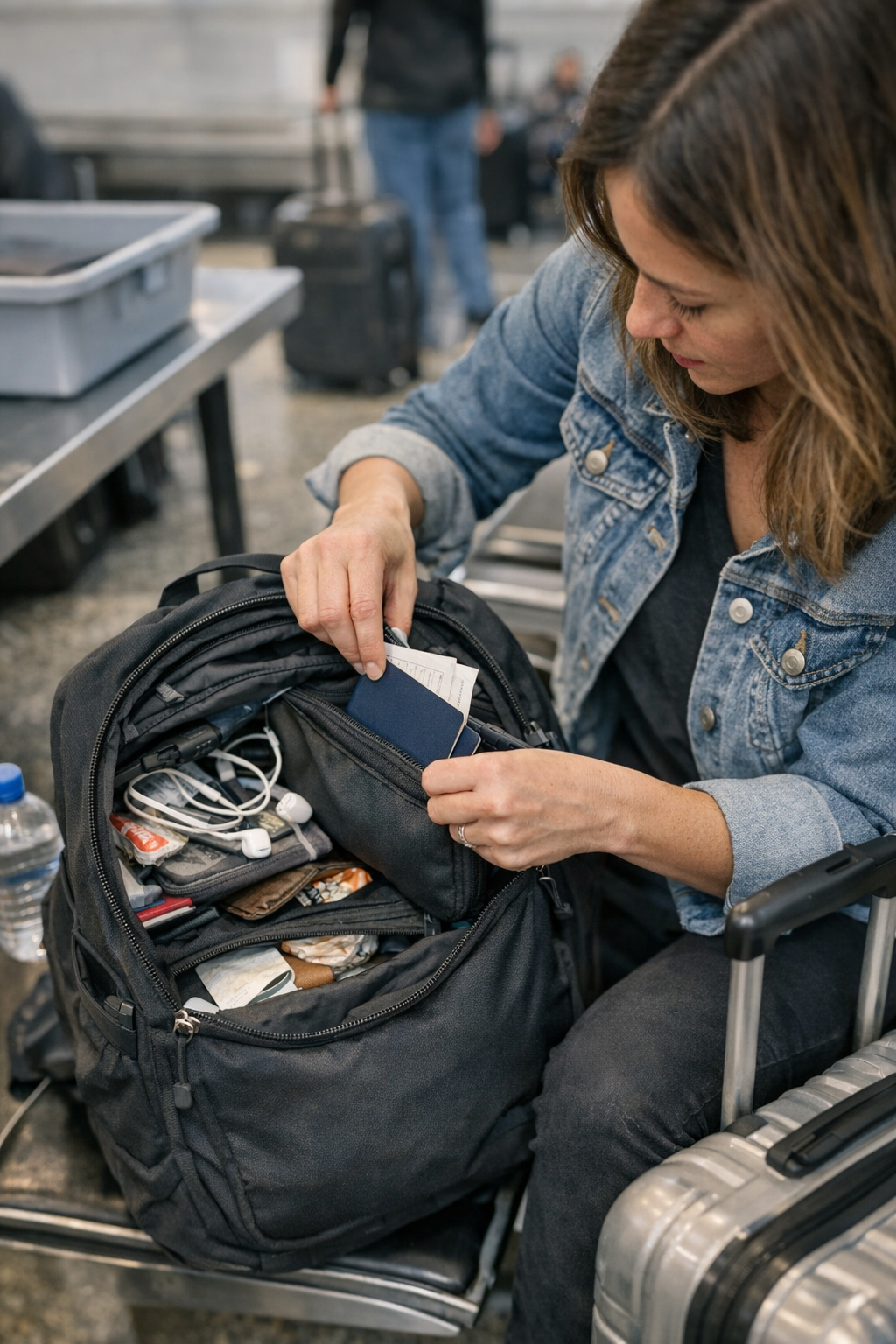
    The quickest way to ruin a trip isn’t a delayed flight—it’s that supposedly “organized” carry-on that slows you down every time you move. The problem doesn’t wait until the end of your journey. Even before you’ve found your gate, a bag that looked squared away on your bedroom floor can turn every airport routine into a sequence of awkward pauses, mid-aisle shuffles, and frustrated zips. What promised flawless order at 6:00 a.m. becomes a slow leak of patience by the third time you need to pull out your passport or your headphones.

    When “Organized” Isn’t Fast Enough

    Plenty of travelers trust they’ve solved packing with a lineup of pouches, tidy tech sleeves, and document slots. But travel has a way of exposing what “organized” actually means under pressure. It’s never the first reach—instead, it’s the repeat. Picture this: headphones behind a double-zip, passport wedged deep in a sleeve, chargers at the bottom in a tech kit. As soon as the security line snakes forward, you’re hunting for a boarding pass that’s trapped under a pouch that just lost its shape, or you’re unzipping three layers just to confirm your ID. Each fix takes more time than you had in mind. The bag that looked ready for anything resets itself into disorder with every grab and rushed return, making each re-pack a little less clean than the last.

    Friction in Every Routine Reach

    Travel pressure amplifies small design flaws. Need your passport for an unexpected check? It’s pinned under that quick-access pouch that worked perfectly—until three routine checks turned it sideways. Earbuds disappear, buried under yesterday’s napkin and a stray receipt. Your laptop, intentionally low-profile, now means digging through a pile you just organized minutes ago. These friction points don’t just cost seconds—they sap attention and stack stress, especially as the hours and checkpoints add up. By the time you’re lining up for boarding, “organized” becomes negotiation: one hand holding a half-closed pouch, the other blocking what might tumble out next.

    Gate Rushes, Security Lanes, and the True Test

    The gaps in your bag’s setup rarely show when there’s time to breathe. They hit hardest when speed matters: a last-minute gate change, a tight group boarding moment, or a cramped aisle with others behind you. Quick access is the real dividing line. If your headphones take three steps to retrieve, or your sanitizer is somewhere beneath a shifting stack of pouches, that moment of indecision costs you rhythm. Placing your bag in the overhead? Every extra movement amplifies the risk: something slips, a pouch opens, or worse—the thing you actually need gets sealed away again, forcing a fresh round of opening, searching, and hurried repairs in a moving cabin or crowded walkway.

    The Hidden Cost: Visual Order vs. Usable Flow

    The illusion is strong: organizers and tech sleeves show off perfect grids and zipped compartments when everything’s unused. But movement exposes the tradeoffs. That good-looking document wallet? It becomes a roadblock if it means pulling out two unrelated items to reach your boarding pass under pressure. Nested pouches and deep storage feel clever until repeated retrievals toss their order—and your mood—into chaos. Looking organized is not the same as moving efficiently. By your third gate, every “quick check” adds clutter, splayed zippers, and a guessing game about where the next essential actually landed. The setup designed to impose order is now part of the bottleneck.

    Reality Check: The Same Bag, Repeated Problems

    Patterns show up fast. The same items migrate to the depths, even after a full reset. Your “grab and go” pouch is gradually overtaken by whatever didn’t have a true home—tickets, loose masks, gum that escaped its wrapper. The tech organizer, zipped for neatness, becomes a hesitation point because grabbing the charger risks unlacing the entire system. Security trays make things even clearer: you upend half the bag to satisfy the scanner, debating how much to unload and how to stack everything again with the line moving behind you. Five minutes later, you’re half-repacked and realize you forgot something at the bottom. One careless close and now your cable is on the tray, not in your bag.

    Small Changes, Real Gains: Rethinking Access for Movement

    Rebuilding from scratch isn’t needed—repositioning is. Transitioning travel essentials (passport, boarding pass, earphones) to a single, shallow zip pocket clears the first obstacle. Direct access isn’t just faster. It’s physically easier—instead of testing your memory with every checkpoint, muscle memory takes over. A dedicated quick-access slot or slim outer pouch can shrink retrieval time and reduce disruptions during boarding, seating, or sudden document checks. Even a single, logical zipper down the side can change a tense shuffle in a narrow aisle into a pass-through. It’s not about gadgets; it’s about a structure built to survive—not just appear—repeated use under travel strain.

    The Long Game: Less Linger, Less Drag

    The true standard isn’t the “Instagram moment” before the airport—it’s the fifteenth reach, the hundredth zipper motion, the reflex to open (or hesitate with) a particular pocket. Slowing at the same pinch points signals a faulty design: too much depth, illogical zipper paths, or essentials buried out of line with the rhythm of travel. Every small delay is the hidden penalty of prioritizing visuals over function. As you begin to separate “packed well” from “works in the wild,” you’ll notice what should stay visible and what can be buried. A lighter load sometimes comes from subtraction, sometimes from shifting what belongs where, but always from picking access over appearance when the pressure is on.

    Pack for how you’ll actually move—not for how your bag sits unopened. For carry-on structures and tools that improve with use, visit CarryOnSupply.

  • How Structured Seat-Back Organizers Reduce Front-Seat Clutter Interruptions

    The sense of order in your car doesn’t break down gradually—it snaps, often by midweek, the moment you reach for something and find your routine blocked. That bottle you set aside for later is now wedged against your seat rail. A short charging cable twists itself around your bag handle. What looked organized on Sunday turns into friction by Thursday: stalled errands, slowed entry, tangled gear, and a growing mess where you expected only quick access. This is where most tidy car setups fail—not during cleaning, but under the grind of daily use.

    The Hidden Problem: Order That Doesn’t Survive Real-World Use

    Every driver’s seen it: items meant to stay contained—wipes, a spare water bottle, emergency chargers—creep out of reach spots and invade your main space after a few drives. At a glance, the cabin still appears controlled. But slide open the door after groceries or a gym run and the true mess reveals itself. A cable loops into the footwell, bottles roll behind brake pedals, wipes lodge themselves where the vacuum rarely reaches. Each of these requires an extra motion before you can settle in or get moving.

    These small breakdowns aren’t minor—they add up. It’s not just a matter of untangling a charger, but of having to hunt and reach for everyday essentials over and over. You start to recognize how the same handful of objects are always drifting: resurfacing in awkward places, resisting your plan for a smooth drive, and building up reasons to fix your setup sooner than you wanted.

    Why Most Seat-Back Organizers Look Better Than They Work

    The typical car organizer promises “clutter-free living” with pockets and zipped compartments. But once the errands and short commutes begin, their design flaws show. Closed pockets hide mess, but force you to dig blindly—one hand on the steering wheel or a bag, the other rummaging for a lost wipe or backup cable. Soft bins and loose pouches slide open and eject their contents at every sharp turn or hard stop, undoing your effort in hours, not weeks.

    This is the heart of the problem: these organizers look tidy at rest but fight you in motion. They slow seat adjustments, block quick returns, and turn casual grabs into awkward lunges. The difference is stark—organizational “solutions” that stall your flow vs. structural upgrades that actually withstand daily cycles of use.

    Real Scenes from Repeated Use: Recognizing the Everyday Friction

    Parking and Quick Stops: When Items Slip the Net

    You pull in to load groceries—a routine move. Instantly something’s off: a bottle rolls forward from a sagging rear pocket and pins a phone cable under your seat. Loading takes longer as you free the cable and stuff the bottle back, already knowing you’ll repeat this at the next stop. One shortcut becomes three interruptions, and the cycle restarts each day.

    Return Trips: The Subtle Slowdown

    Short delays from loose items make every re-entry slower. With soft-binned organizers, wipes and bottles slide out by day two and make you spend time fetching, wiping down, or returning them. It’s telling when you recognize the same objects migrating—no matter how recently you cleaned—turning each return to the car into another round of corrections just to drive away.

    Access in Motion: More Than a Cosmetic Fix

    The test comes when you need to grab something while on-the-go. Stopping at a drive-thru, you expect a wipe within arm’s reach; instead, you twist behind your seat, digging through a too-deep pocket, or trying to snag a charger out of sight. The extra seconds kill momentum and prove the setup isn’t helping when it counts.

    What Works: A Structure That Withstands Daily Pressure

    The real fix is switching to a rigid seat-back organizer with upright, open-top pockets integrated at the upper edge—precisely where you use items most throughout the week. Unlike soft bins that collapse, these hold shape, keep chargers, wipes, and bottles right where you left them, and stop the migration of loose gear. You stop chasing essentials around the cabin. Instead, you reach, grab, or return—with nothing snagging or sliding below seat level.

    This is active stability, not just appearance: reinforced, open zones let one hand drop something in or pull it out, even during a rushed stop, without pausing to unzip, search, or detangle. By Thursday, you still find things where you expect them. An organizer that stays reliable under actual driving pressure keeps the friction down, so routine trips feel as smooth as they should.

    What to Watch For: Hidden Weak Points That Sneak Up

    Many car organization products advertise a “solution” but introduce their own daily headaches. Deep or sealed pockets swallow gear, making you fish around during the busiest moments. Soft bins sag and empty out sideways, undoing your intent to contain things. Items skidding back into seat rails are the first clue your setup is slipping—especially after only a few regular drives.

    If you see the same trouble spots—cables creeping under seats, wipes returning to footwells, bottles rolling after every stop—you’re doing double cleanup and feeling the drag of an organizer not matched to real use. True order means less correcting, not continual maintenance throughout the week.

    Making Each Entry Smoother: Why Practical Setup Beats Visual Order

    The best car interiors don’t just present as tidy—they actually help you move through repeated routines with fewer snags. A strong seat-back setup earns its keep by what it prevents: items remaining upright, access points staying clear, and no time lost re-tracking runaway gear every time you get in or out. It’s about reducing the sum of small daily annoyances, so your routine flows without you having to think about supplies, cables, or cleanup between trips.

    The key is what becomes invisible: after a workweek’s worth of errands and returns, you don’t have to stop and reset your system—missing wipes, tangled chargers, sliding bottles simply stop being issues, and the car keeps up with your day instead of slowing it down.

    Find setups that keep your driving zone functional, not just presentable, at DriveWellSupply.

  • How Under-Desk Cable Management Transforms Your Workspace Efficiency


    Most desk clutter hides out of sight—underneath, not on top. What actually unravels your workflow isn’t the pens or notebooks above but the cable knots lurking below: charging cords snagging your ankle every time you roll your chair back, adapters sliding off invisible ledges, and the same USB hub pulling free the second you shift for a stretch. The supposed “clean” surface becomes a trap—every time you move your feet or reach for a notebook, there’s a silent catch or something half-yanked loose. These constant under-desk tangles quietly slow you down, forcing routine motions into caution and turning simple resets—like plugging in one more device—into a mini obstacle course. Hidden cable mess doesn’t just annoy; it blocks posture change, steals legroom, and builds a cycle of distraction most setups never make visible until you try to move.

    Desk Clarity Starts Below—Where Cable Structure Sets the Rhythm

    A tidy desktop fools you until repeated use exposes the real problem zone underneath. Cable order only lasts when cords have a real structure—a tray, sleeve, or channel that keeps them exactly where they belong. Without this foundation, even a minimalist surface slides into chaos by midweek: that carefully cleared workspace is suddenly hemmed in by looping wires or stray chargers drifting toward your knees. The friction doesn’t come all at once; little by little, each laptop plugin, monitor reposition, or foot shuffle lets another cable invade your personal space, adding just enough resistance to interrupt your flow again.

    Small changes amplify fast. Bring in a new docking station, and by next morning your reset ritual balloons—untangling extra HDMI cords one morning, crawling under the desk after dropped adapters the next. No matter how organized the surface stays, the underlying structure (or lack of it) decides whether you work or troubleshoot all day.

    Scenes Where Cables Break Flow—And When the Right Tray Fixes It

    Real interruptions never look dramatic—just repetitive, and expensive in time:

    • Pushing your chair back hits resistance—again. It’s the charging cable, wrapping itself around your foot for the fourth time this week.
    • The mouse stutters mid-call, forcing you under the desk for an impromptu cable swap—right into a tangle you can’t see or sort with one hand.
    • Switching from sit to stand pulls the Ethernet cable tight. A half-centimeter more, and the connection would drop; your posture stalls until you crawl below to untwist it.

    None of these break the desk—they just crack your focus and force awkward compensations. An under-desk cable tray quietly erases this friction. Instead of cords hanging low or spreading across the floor, everything is channelled above your knees, tidied behind a simple barrier. Day-to-day, you stop noticing cables at all—no more adjusting legs to keep from kicking power strips, no more fearing a routine device swap will scatter adapters across the carpet.

    How a Simple Tray Adjusts the Desk Routine

    The visible difference isn’t just neatness—it’s the speed of resetting your workspace. With cables locked into a tray at the back edge, movement becomes automatic. Swing from keyboard to notebook without catching a loop; add or remove a device without sending chargers tumbling out of reach. Instead of bending double for a single cord, you pull, adjust, and return—all in the natural path of work.

    Desk size doesn’t spare you: even on a compact writing desk, reclaiming barely three centimeters above your knees can turn crowded posture into open access. On a high-motion standing desk setup, a cable tray is the one stable line that keeps power cords from sabotaging every sit-stand change. Every setup without it forces you to adapt—to lost space, slower swaps, and extra fiddling after each task.

    Not Every Cable Solution Is the Same—Tradeoffs in Real Use

    Quick fixes—adhesive clips, soft sleeves, or a cable box shoved deep under the desk—work until they don’t. Clips slide off when you bump a cord once too often. Sleeves get overloaded and start dragging down, making the tangle messier with each new device. Even cable boxes solve only half the problem: hiding power bricks but taking up foot space, blocking natural chair movement, or adding a fresh obstacle when you need to trace a wire fast.

    Only a mounted tray or defined under-desk channel keeps cables clear and reliably routed, even when your setup evolves. Because these are fixed, they let you add or swap gear without reintroducing the problem—new monitor or lamp, old path stays neatly controlled. The less you have to touch the cables, the less chaos returns with every upgrade.

    Everyday Reset: From Chaotic Clutter to Quiet Order

    With the right tray, suddenly unplugging a power brick is a top-down motion—not a hands-and-knees routine. Dragging a foot or rolling your chair becomes automatic, with nothing to snag. Those spare adapters that always slid to the floor now live one reach away, out of sight but not out of mind. Properly placed trays, especially at the far rear desk edge, let you see and adjust cables as needed without sacrificing work area or movement zones.

    The change is less about appearance and more about how the desk moves with you: resets go from halt-and-fix to seamless, legroom stays open, and the invisible pain points—lost time, constant cable worry, the frustration of a “clean” surface that still tangles—start to disappear for good.

    Quick-Scan FAQ: Real Questions From Daily Use

    Do cable trays really help for tiny desks?

    Yes. On small desks, cable trays open up crowded knee space, stop charger sprawl, and make every notebook or device swap less of a balancing act. Even a small increase—just a few centimeters away from the floor or legs—shifts comfort and makes resets routine instead of disruptive.

    Are cable boxes ever a better choice?

    Sometimes. Boxes hide large adapters and power strips, but at a cost: they take up space where your feet or chair need to move. For setups where you only change gear rarely, that’s fine. But for desks with frequent height or posture shifts, trays keep cables riding safely above the daily traffic zone—making movement the default, not a risk.

    Is there a “wrong” way to manage cables?

    Yes—using only sticky clips or loose sleeves means cables don’t stay put. Over time, cords edge back into movement zones, pile up in hard-to-reach pockets, and make every new device a scavenger hunt. What works one day unravels the next unless there’s a fixed, mapped route for every core cable line.

    The Quiet Cost—And Payoff—Of Structured Cable Flow

    Cable management isn’t for looks—it’s about repeated freedom of movement. A well-channeled setup turns frustration into predictability: you grab what you need, move how you want, and reset the desk without renegotiating hidden mess. The benefit stacks up—lost minutes crawling after cables, awkward posture tweaks, and the small interruptions that make every workday feel more congested than it should. The real payoff shows up in hours, not seconds: focus holds, posture adapts, and resets shrink to a blink instead of a chore.

    The right tray or channel becomes the behind-the-scenes structure that holds the whole workstation together, keeping your routine effortless, whether you’re switching tasks, adjusting position, or just trying to make the space feel less like an obstacle course. Most improvements barely show, but you feel them—and once the friction goes quiet, you notice every time you use someone else’s desk and find your feet blocked, cables loose, and chaos one move away.

    Explore the full WorkBasic collection

  • Why Stable Lighting Accessories Matter for Everyday Desk Use

    Most lighting setups feel “done” the moment tools are down—but it’s during the normal, messy week that the flaws show up fast: a cable you tucked neatly behind the desk starts creeping forward until it snakes around your foot; the lamp you positioned just right on Monday crowds your mouse by Wednesday; a low-profile bracket that seemed clever lets the fixture wobble after barely two days of shifting gear or adjusting seats. What looked stable at install can unravel with every bump, plug-in, or surface wipe. These repeated-use breakdowns don’t show in before-and-after photos. They’re obvious when you have to pause, fix, or dodge the lighting and support choices supposed to free your routine, not interrupt it.

    Why Lighting Support Problems Rarely Show Up Right Away

    Right after installing, everything feels squared away: cables vanish behind adhesive clips; under-shelf lights line up edge-to-edge; brackets disappear behind hardware. But sit through one real workweek, and weaknesses surface. The cable that looked invisible yanks loose after a third device swap. The lamp edge shifts every time you plug in something else, and the under-desk wires that once seemed anchored find their way back under your chair. Clutter isn’t always visible—it creeps in as slack, sag, and subtle drift until your so-called finished setup needs constant touch-ups just to function.

    Surface Setups: When Neat Appearance Isn’t Enough

    Looks can mislead, especially on a shared worktop. Maybe you anchored cables with slim adhesive clips along the rear desk edge. By Thursday’s device swaps, wipes, and quick rearrangements, the clips start peeling—humidity wins, the adhesive gives up, and cable loops drop into leg space. Just as you reach to adjust your lighting, a loose line tugs a lamp sideways. The “minimal” setup turns high-maintenance as soon as more than one person uses the space, or the routine breaks even slightly. What held visually clean Thursday morning falls into distraction by week’s end: slumped wiring and shifting fixtures force you to manage the desk, instead of just using it.

    Accessory Choices: Why “Simple” Supports Often Fail First

    Quick fix options—tiny clips, stick-on brackets, ultra-thin cable guides—promise invisible control. But the real test is not installation; it’s a week of actual use. Humid days weaken adhesive. Extra adapters or cleaning sessions pull stick-ons loose. Suddenly, those “simple” fixes turn into daily annoyances: exposed cables flopping out, tripping points under the desk, tangles you can’t ignore.

    By contrast, a rigid cable raceway screwed along the wall or desk edge holds steady, even as cleaning, device swaps, or the rush of a Monday morning shuffle everything else. The best support isn’t always the most seamless to the eye—it’s the one you can’t dislodge without actual force, and never have to readjust as routines shift.

    Unseen Instability: Brackets and Lighting That Don’t Quite Hold

    Lighting that feels solid on day one won’t necessarily stay put. Take the typical under-shelf or wall-bracketed fixture: you clip it in, feel the click, and call it done. Live with it a week—reach for supplies, dust the corners, nudge boxes—and the bracket flexes or tilts. The light bar droops, cables wedge into new gaps, and every small movement adds distance from your “fixed” position. You end up pushing lights back into place, closing gaps that collect junk, and cleaning around an unsteady mount.

    The mistake was easy, fast installation over practical grip. The desk edge goes from clear to cluttered, lighting casts new shadows, and even basic cleaning means interrupting your flow for maintenance that shouldn’t be needed. In flexible or shared rooms, these weak spots unmask themselves with every routine shuffle.

    Real Fixes Reveal Themselves Over Time

    The “aha” shift usually comes once you’ve resecured a sliding bar or tangled a cable for the tenth time. Swapping from stick-on fasteners to a fixed cable channel finally sticks the landing: cables remain anchored, work surfaces clear, lighting stays where you aimed it—even after a week of rearrangements. Installing a solid channel along my own desk edge was the only way to end the cycle of re-tucking, re-clipping, and untwisting lines. After that, equipment swaps and weekly sweeps can happen without even noticing the supports—the best signal that the solution works is forgetting it exists.

    Lasting support means less fixing, less tidying, and zero daily nudges. Not Instagram-perfect, but vital in real work: smooth cleaning, organizers that slide freely, lamp bars that hold steady for months without adjustment.

    Testing Your Setup: The One-Week Rule

    Unsure if your lighting or cable setup is finished? Test with a real week. Use the room as usual: roll the chair, wipe surfaces, swap chargers, plug and unplug wherever needed. If you have to fix or reseat any support more than once, something’s off. Screw-mounted brackets and firm channels nearly always pass this test. Adhesive and friction-fit supports routinely fail after a few days of real movement or cleaning.

    Ignore setup-day appearances. Wait for five ordinary days. Any support that shifts, sags, or needs re-anchoring under your normal routine is a weak link flagged for upgrade.

    A Few Useful Upgrades That Actually Last

    No setup survives forever, but a handful of changes can make life measurably easier:

    • Choose stability over invisibility: Visible, screw-in channels and mounts resist tugging, humidity, and device swaps far longer than stick-on or micro-sized alternatives intended only to hide clutter.
    • Anchor near the problem spot: Plug-in adapters and extension cords should be secured close to outlets and fixtures, not left dangling mid-cable—every extra inch is an invitation for slack, twisting, and mess.
    • Expect more from shared spaces: If a setup is used by more than one person or changed often, select brackets and clips rated for heavier weight and frequent adjustment. “Good enough” generic options rarely survive real sharing without constant fixes.

    The goal isn’t flawless looks; it’s removing the need to think about the setup when you move, wipe, or work—so routine friction disappears instead of coming back every week.

    When Setup Effort Means Everyday Calm

    You know the space is right when the supports never call attention to themselves, when lighting stays pointed and cables fade from sight through every shuffle and surface change. Lasting calm isn’t about pretty first impressions—it’s about setups that don’t demand weekly rounds of untangling and realigning just to get light where it’s needed.

    Find lighting and support accessories that turn setup effort into real, lasting calm at LightSupport.

  • Why Realistic Expectations Transform Indoor Lighting Upgrades Successfully

    The most common lighting mistake reveals itself only after the fixture is up and daily routines resume: the room looks bright, yet something always interrupts clear movement or tasks. Not the design, not the wattage—the flaw is how the light falls short where you need it most. A stair landing feels risky after dark, half your face disappears in the bathroom mirror, or the hallway’s new glow never reaches that stubborn, shadowed corner. It’s not until actual use—dozens of trips, pauses, head-tilts, and small hesitations—that these gaps become annoyances you live with instead of problems you solve. Most lighting “solutions” focus on the initial look, not the way a space functions night after night with real routines, real movement, and real visual needs.

    Small Shadows, Persistent Friction: When Lighting Interferes With Routine

    The promise of every new light fixture is simple: see what you’re doing, move without pause. Yet that promise breaks down in the first week of normal use. Picture a flush mount ceiling light in a narrow hallway—it washes the center, sure, but cut one foot left at the stair turn and your path vanishes into a wedge of shadow. Or install a bright bar light above the bathroom mirror: what seemed “done” now forces you to lean, rotate, or squint because half your reflection is always in partial darkness. These aren’t rare flaws—they crop up in everyday traffic zones and workspaces, quietly turning routine actions into repeat frustrations. Over time, minor inconveniences become built-in friction: slow movement in corridors, awkward grooming pauses, extra effort just to see what’s right in front of you.

    Lighting that appears “finished” but interrupts real routine is far more common than most admit. The goal isn’t just illumination—it’s unhindered movement, full reflection, shadow-free prep. Instead, mismatched fixtures force awkward sidesteps, blind spots, and daily workarounds that never seem to vanish.

    Understanding the Real Lighting Problem: It’s Not Just About More Light

    Most people double-down on brightness or size when lights feel off, but blanket changes rarely fix the real trouble points. True lighting problems hide where everyday motion and tasks break from the room’s basic grid—edges, corners, and work zones left dim by even “ample” ceiling fixtures. The decision question isn’t, “Is it bright enough?” but, “Does this layout cover what I actually use and how I move?”

    • Stair Turns: A single ceiling light may fill most of a hallway, but the pool of light fails to reach the turn or landing. Movement here becomes guesswork.
    • Bathroom Mirrors: An overhead fixture creates a sharp divide—half the face in glare, half in shadow. Shaving or makeup now means hunting for evenly-lit angles.
    • Under-Cabinet Spaces: Kitchen counters that look sunny at a glance can swallow your hands in shadow once you start chopping or reading fine print. The overhead light soaks the air, not the work zone.

    Quick check: At night, walk your usual routes using only the installed lights. Every spot where you pause, shift, or squint marks a true coverage gap—not a style issue, but a functional miss your next upgrade should address.

    How Shadow and Glare Compete—and Both Can Lose

    Many fixes trade one problem for another. Overpowering a dim vanity with a bright bar light above the mirror kills face shadows—but now every glossy tile glares, and your eyes catch harsh reflections instead of clarity. Replace hallway bulbs for higher wattage: the edges turn brighter, but a new slice of glare shines off the floor or the walls, still failing to reach the trickiest nook. Lighting design is less about “more” and more about “targeted”—where a well-placed sconce or side wall light, at eye level and aimed to soften, diffuses both shadows and glare without flooding the room or washing out details.

    The pattern is always revealed in the small, repeated adjustments. One week, you’re pausing to let your eyes adjust; next, you’re shielding them against glare. Consciously or not, you begin to work around the lighting instead of relying on it. The setups that actually work don’t just look right—they align with your routine, countering the precise friction points your habits expose.

    Tangible Upgrades, Immediate Results

    The best fixes aren’t about total overhauls—they’re usually one precise adjustment that removes a daily headache. Add a small wall sconce at head height beside a stair corner; you won’t see the effect from a distance, but your step lands as confidently at midnight as it does at noon. No more inching forward or guessing in the dark wedge. Or in that awkward laundry nook under the staircase—where the flush mount never reaches the washer controls—a budget under-cabinet fixture above the surface does more for visibility than any ceiling upgrade. Even reading a label or folding clothes stops being a chore of finding the angle; the light lands exactly where hands move and eyes focus.

    Evaluating Effectiveness: The Disappearing Problem Test

    The surest sign of a lighting win? Forgetting there was a problem. Once a sconce is moved or an under-cabinet light is added, and you go days without pausing, leaning, or fighting a blind spot, you know the change was right. The friction dissolves—not in appearance, but in the routine. Real success comes from living in the space and feeling the old adjustments fall away, not in bright catalog photos or perfectly balanced poses.

    Choosing Upgrades That Actually Fix the Routine

    Lighting improvement isn’t about bigger fixtures or chasing a “bright” look; it’s measured by the quiet relief of friction disappearing from routine use. Standard tips push aesthetics or raw lumen counts, but the payoff comes from that hundredth trip through a hall or the unbroken view in front of a mirror that always used to bother you. Choose upgrades that specifically reduce those daily pauses, strains, and shifts—the real “unfinished business” of any space.

    • If you’re still pausing for visual clarity, your lighting isn’t actually finished—regardless of how well-lit it seems.
    • Distinguish between rooms that “appear bright” and setups that let you work, move, and see without hesitation.
    • Target recurring problem spots—like shadowed corners, mirror imbalance, or dim under-cabinet zones—instead of spreading more light everywhere at once.

    You’ll know you’ve made the right change when you stop thinking about how to see and simply get on with what you’re doing. Lighting shouldn’t dominate attention; it should disappear into the flow of your routine, solving its job so quietly you forget it was ever a problem. For practical lighting made for real spaces and real use, check LightHelper’s full selection of indoor fixtures and solutions at http://www.lighthelper.myshopify.com.

  • Effortless Removable Liners Keep Entryway Storage Clean and Organized

    Entryways show their true nature at the worst moment: when you have exactly one hand free and the threshold’s already crowded. Drop a bag at the door—watch the clear zone vanish. Line up shoes in the tray—see the row creep sideways, blocking the pull handle that’s supposed to make resets easy. The difference between an entry that bounces back daily and one that sags into mess isn’t about how pretty it looks on day one. It’s what happens on day ten, with two pairs of boots wedged deep, a tote slumped across the edge, and a liner you can’t reach without reshuffling the whole load. The real divide? Whether cleaning fits real-life movement—or becomes just another “reset” nobody wants to start.

    “Removable” in Name Only: The Hidden Hassles That Slow Down Resets

    Plenty of storage benches and drop-zone bins promise a “removable liner”—but that feature rarely survives daily routines unscathed. If pulling the liner means sliding out mud-caked shoes, prying up a wedged-in tray, or nudging aside a week’s worth of dropped bags, resets just don’t happen. Every pass-through adds another obstacle: an edge that catches, a shoe that blocks release, a drip of winter slush that dries before anyone bothers to clear it. By the third or fourth day, you’re not using the “removable” feature at all. What’s left is overflow, a clogged access lane, and a threshold that quietly fails to keep up.

    Everyday Choices That Turn Small Setups Into Big Obstacles

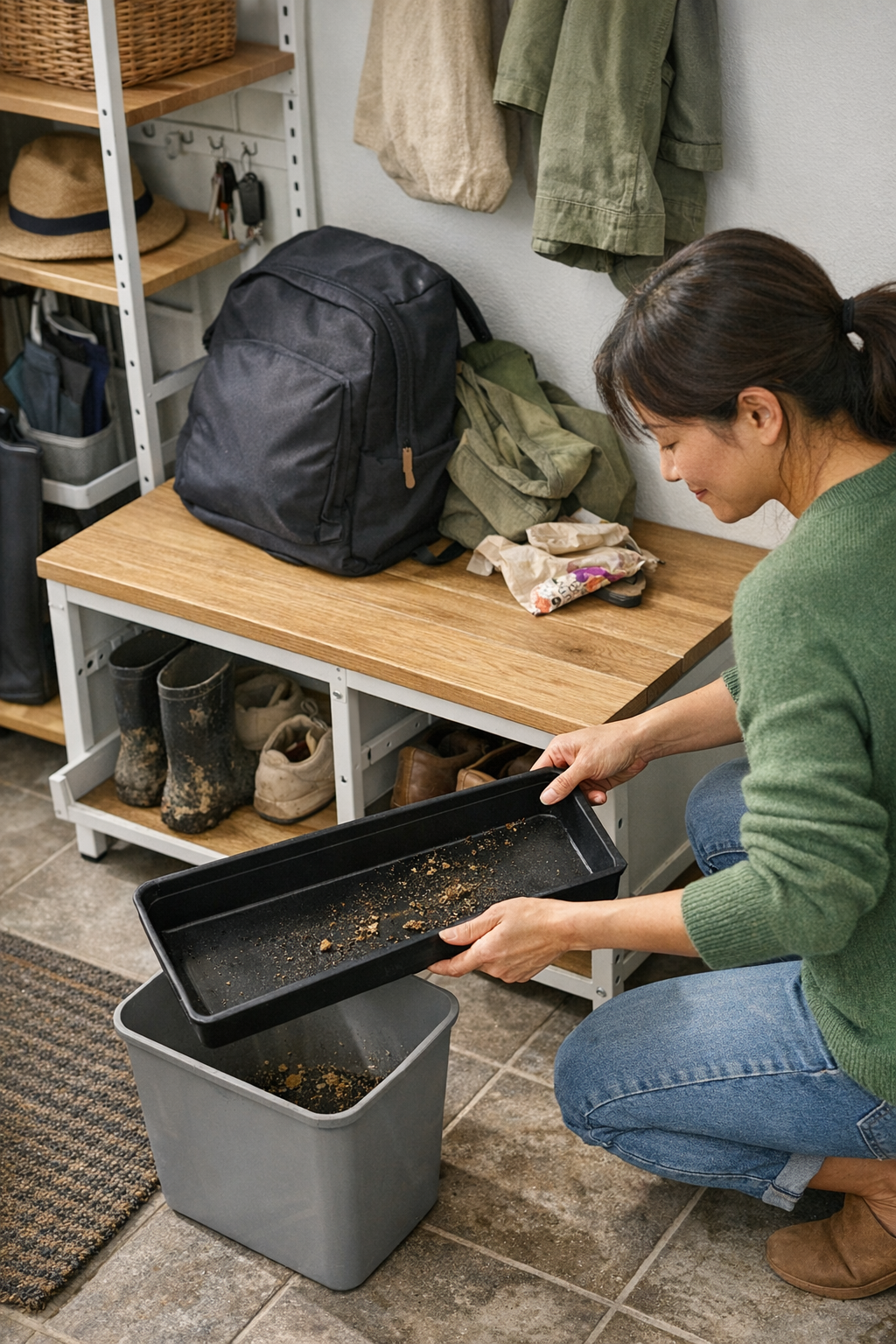
    Picture the after-school stack: backpacks thud down, snacks scatter, and boots overflow the liner’s intended area. It barely takes two days—one messy return, one extra delivery box wedged in—for access to get lost. That liner you meant to keep handy? Buried. The difference between a reset that takes five seconds and one that feels like a project is simple: Can you grab the liner edge, right now, without disturbing everything? A setup that lets you lift, tip, and replace with one hand actually gets used—while a buried or blocked liner lets grit collect until it becomes part of the furniture.

    The Fastest Test: What “Accessible” Really Looks Like

    If you can’t see where to pull, the liner may as well be fixed. Real access is practical, not theoretical. Look for a finger-width notch at the front, a built-in tab, or a lip that invites an easy grip—even when half the gear is still piled in. If the liner’s buried under a tightly-packed shoe row, or squeezed so tight you need two hands to free it, every reset becomes a reason to quit.

    Entryways aren’t static—activity pushes the limits every day. Shoes drift beyond the tray’s edge, wall hooks fill, and bags that were supposed to be “temporary” linger indefinitely. Once liner access is blocked for two days, new dirt lands outside the intended zone. Overflow turns the liner from a helpful feature to a neglected base plate, and you find yourself skirting the mess rather than resetting it.

    Movement, Not Perfection: What Actually Keeps the Threshold Calm

    Surface-level order at the entryway fades fast. Functional calm depends on whether reset moves fit naturally into passing routines—or pile up as irregular chores. If clearing the tray means arm-wrestling boots out of the way or shifting a bench that blocks half the door, that “reset” slides to the bottom of the weekend list. An accessible liner, pulled out in seconds, lets you slip daily dirt back outside the moment it appears—preventing slow buildup that always gets harder to undo.

    Recurring Pinch Points: What Slows Down the Entry Flow

    Wet arrivals, instant complications: Stepping inside with soaked shoes, the easy move is to drop them right at the door. But if the liner lifts smoothly, water and salt land on a surface you can empty in a swoop—no need to clear everything first. The right setup saves tomorrow’s threshold from last night’s delay.

    The bench that traps, not just seats: What looks like extra seating often doubles as a drop zone. If every new bag tossed in means covering the liner’s handle or wedging the tray in place, overflow follows fast. Soon, movement clogs; that storage solution starts creating the very bottleneck it claimed to solve.

    Shoe creep, the unrelenting spread: Today’s neat row means little tomorrow. If liner access is visible and stays open, returns are quick—grit stays in bounds, and the tray gets cleared before obstruction sets in. Hide the edge for too long, and shoes, grit, and daily spillover start attacking the rest of the entry, forcing everyone to sidestep the buildup just to get in or out.

    The Habit Hinge: When Small Features Change the Routine

    The switch isn’t dramatic—just a liner with a finger-width pull, always reachable. Suddenly, cleaning up grit is a two-second motion as you step in or out. That pull moves a reset into the time it takes to drop your bag—not the time nobody ever finds for a full entryway clear-out. In homes with staggered schedules and repeated comings-and-goings, this makes the critical difference: The threshold stays navigable, and resets never become intimidating.

    The Real Access Sweet Spot

    Perfect fit is a trap. If a liner rattles loose with every shift, it’s annoying; if it jams tight, it’s worse. You want a tray that anchors for normal use but slides free when you need it, even with ten pounds of mixed boots and stray gloves nearby. If every return home means contorting around a jammed tray or nudging a bag out of the way to find the handle, you’re not just living with minor annoyance—you’re building a routine that’s quietly unsustainable.

    Reset in Motion: Where Clean Zones Actually Last

    Entryway cleaning rotas are fiction for most households. What actually keeps a threshold under control are micro-resets every two or three days—or every time a mud wave sneaks in. An easy-access liner, visible and free to pull, means these quick clears become standard. The area stays ready for feet, bags, and short-notice guests—without the stress of a looming cleanup project hanging over every weekday. That built-in readiness means you aren’t paying back a week’s neglect in one go.

    The Real Difference: Accessibility Beats Aspirational Organization

    It isn’t about a liner that could be removed—it’s about whether you can remove it without effort, without clearing a path, and without breaking the flow of actual daily entry. The setups that work aren’t just clean; they let the threshold get dirty and cleared, again and again, before things pile into full-scale backlog. If your routine clashes with your entry storage instead of syncing with it, consider whether “removable” has become a feature in name only—and what a real upgrade might finally make possible.

    If you’re ready to make entry storage that actually fits daily life, Betweenry offers setups made for real movement—so your threshold stays clear, no matter what the day brings in.

  • Why Flat Underbed Storage Boxes Transform Gift Wrap Organization

    Every gift wrap closet promises order—until real use turns it upside down. Upright rolls might look sorted on day one, but repeated use brings mess fast: tubes topple, lighter wraps get wedged behind heavier ones, and “grab-and-go” becomes shuffle and dig. Each birthday, holiday, or last-minute rush chips away at that early neatness. Instead of quick access, you’re met by shifting stacks, loose ends underfoot, and bent paper every time you need to wrap. The tidy vertical lineup only stays tidy if you barely touch it—which defeats the point of dedicated storage in a busy home.

    Why Upright Bins Fail Under Real Pressure

    Upright bins give instant visual order. On a closet shelf, rows of tall tubes signal control—at first glance. But every retrieval destabilizes the lineup. Pull one roll and others sag into gaps or crash sideways. Return a tube, and lighter paper leans, slides, or sinks beneath heavier rolls. Within a month, straight edges degenerate into a jumble of crooked heights and pinched ends. One torn sheet signals the system’s weakness: upright bins can’t hold up to repeated rummaging and quick returns.

    Real use always pushes the limits. Need a roll from the back? You’re removing the front ones, risking scuffed edges or ripped designs along the way. Any rush—wrapping two gifts before heading out—means working against a shifting maze. You wouldn’t stack plates on edge and expect them to stay sorted. Yet upright bins expect paper tubes to behave as if they weren’t moved. Every session leaves the closet a little more scrambled, a little closer to a full reset. Even light use becomes friction: each return is an instant invitation to future clutter.

    Flat Underbed Storage: Eliminating Return Friction

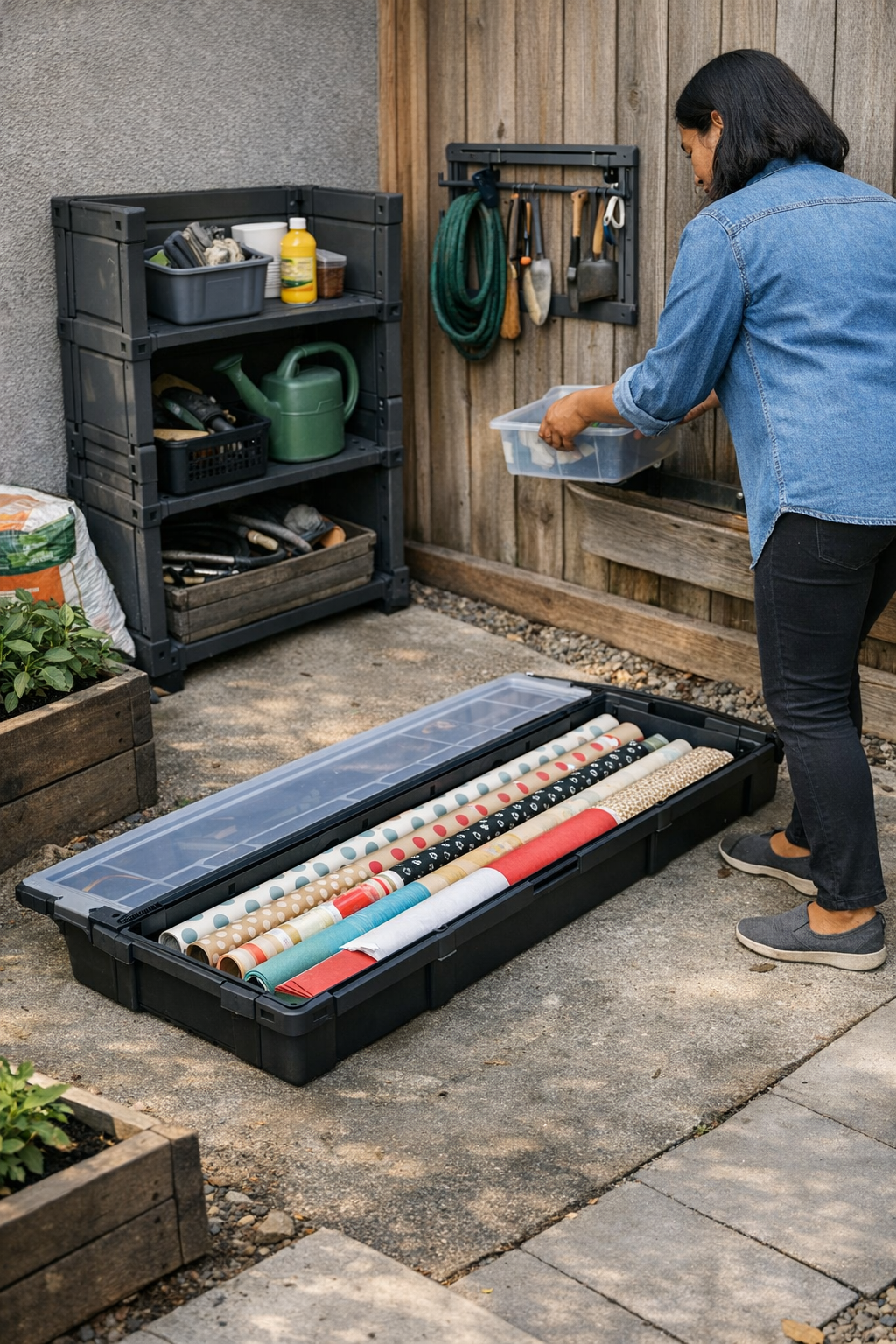
    Switching to a long, flat underbed box moves storage traffic laterally, not vertically. Instead of balancing rolls, you lay them side by side: easy viewing, zero tipping, and no weight fighting for prime position. Retrieval is direct—slide the box out, every design visible, nothing buried. There’s no forced reshuffling; rolls lie still, and paper survives unscathed. Access finally matches intention: quick, predictable, without resetting every single time.

    This setup also cuts silent waste. Edges stay crisp for months, not weeks, since the paper isn’t crammed or tugged past obstacles. You don’t have to restore order after every use. Even in holiday crunch time, the box holds its logic: grab what you need, lay it back, shut the container. Footprints stay contained under the bed instead of creeping into closet floor space or blocking walkways. Flat storage adapts to busy seasons without making “reset” its own chore category.

    Floor Space and Route Clearance

    The underbed solution comes with its own boundary: you need clear space beneath the bed, and a box that actually fits (most max out around 36 inches for wrap rolls). But the payoff is more valuable zones elsewhere. Closet shelves stay free from spills and rollovers; access paths open up. Zone discipline returns—not just visual order but real, ongoing usability for everyone in the household.

    The Real Test: Crises, Crowding, and Repeated Hands

    Nothing spotlights a system’s weakness like a rush job: reaching twice for a buried pattern, chasing a roll that rolled under shoes, pausing a busy morning to stand all the collapsed tubes upright—again. These aren’t isolated slip-ups but recurring failures baked into vertical setups. Minutes get lost smoothing bent edges or playing catch-up after each session. The breakdown becomes predictable: more users, more frequent wrapping, more mess to untangle each time.

    With a flat underbed box, the entire pattern shifts. A typical weekday: someone slides out the box, scans the lineup, picks a roll, and leaves everything else perfectly undisturbed. No domino effect, no emergency tidying. Reset happens by default. And when multiple family members share gift duty, the benefit grows: nobody has to decipher someone else’s attempts to restore vertical order. The system tolerates impatience without getting unsorted.

    Preserving Usability Amid Daily Cross-Traffic

    Left unchecked, every wrap station attracts category drift—bows tossed into the box, tape jammed between rolls, ribbons tangled with paper. If you mix everything, your “organized” solution dissolves into another bin to unload before use. Flat boxes support clarity only if you maintain category boundaries. Rolls get their box. Accessories go elsewhere: a shallow drawer, a shelf caddy, or even a tray on the wall. This split isn’t fussy; it’s structural. It makes presets possible: holiday wraps on one side, everyday patterns on another, all visible and retrievable without mixing.

    Small Adjustments for Real Storage Flow

    Prevent sideways drift with a few habits: set gift wrap sheets flat under the rolls and weigh them with cardboard so they don’t migrate. Use a quick divider—even a cut-down plastic folder—between delicate prints and heavy-duty paper. When the flat box starts to bulge, don’t squeeze in more: purge what you never reach for. The pressure of real use always shows up at the edge—so let that edge signal what belongs and what should exit.

    The Shift: From “Looks Organized” to “Refuses to Fall Apart”

    The biggest gap between upright bins and flat underbed storage isn’t just looks; it’s the difference between a system that survives being used and one that demands constant maintenance. Vertical bins present order once. In daily life, they slide toward disorder with every grab and return. Flat underbed setups focus on unbroken flow—you access, use, and reset without extra steps or secret clutter zones creeping in behind a neat facade. The box takes the hidden wear, not your schedule.

    Real improvements in storage aren’t about appearances; they’re about removing friction from the routine itself. If your system still interrupts you—forcing resets, bottlenecking access, or inviting clutter overflow—it’s camouflaging the real cost. Choose something that stays usable even when the pace picks up, family hands multiply, and the gift-giving season crowds your routine. The days of reconstructing order after each use are over—storage should solve problems, not simply delay them.

    Find more practical storage solutions for inside spaces at Gridry.

  • How Open Yard Storage Systems Prevent Clutter and Boost Usability

    It doesn’t take much to send even a “tidy” backyard sideways. One weekend of real use—rain, rushed gardening, the kids tearing outside for chalk or a soccer ball—and suddenly the clean lines of storage bins and deep cabinets start failing in small, persistent ways. The problem isn’t always the mess you came home to, but how the setup slows your return: pop a lid, dig for gloves, squeeze everything back mid-routine, realize the thing you need is behind two others. Frustration grows quietly. You pause with wet pruners at the garage step, arms full and nowhere obvious to toss them, so you drop them by the fence and tell yourself you’ll deal with it “later.” Three days and a few minor rearrangements later, that later pile is a slow-motion blockage—always in the way, never quite resolved, so next time you do the same. Setup friction wins.

    A Yard Only Works If the Flow Stays Open

    What looks organized after a once-a-season clean-out rarely holds up in daily use. Outdoor life is all about movement: returning clippers on your way in, grabbing a soccer ball as someone’s unloading groceries, dropping muddy boots without sidestepping two crates and a hose. If the system expects you to wrestle a stack just to put away a trowel, most people will default to “temporary” piles—at the garage threshold, along a fence line, wherever there’s space but not actual storage. Those corners quietly capture overflow. Walkways shrink as bins migrate outwards, and a dead zone forms where things never quite get returned, just shuffled to the edge until it’s time for another big reset.

    When “Organized” Means Unusable

    Deep cabinets and matching bins line the wall. On day one, it looks under control—everything hidden, plenty of capacity. Then, midweek, you need the rake from the bottom bin and end up hauling out two layers to get to it. That watering can you use twice a week stands in front of the cabinet, always blocking the door. Putting away garden clippers means a juggling act with three other muddied tools that landed wherever was easiest last time. The more steps between use and return, the more likely you’ll just bail out and drop things wherever you can—especially if you’re hurrying, or if someone else is squeezing down the same path. Over time, you can map the friction: the sticky corner by the patio, the bottleneck at the garage entrance, the forgotten zone behind the grill where “temporary” now means “semi-permanent.” The setup that looked right on paper now asks for too many maneuvers and delivers too little flow.

    Modular Outdoor Storage That Actually Keeps Up

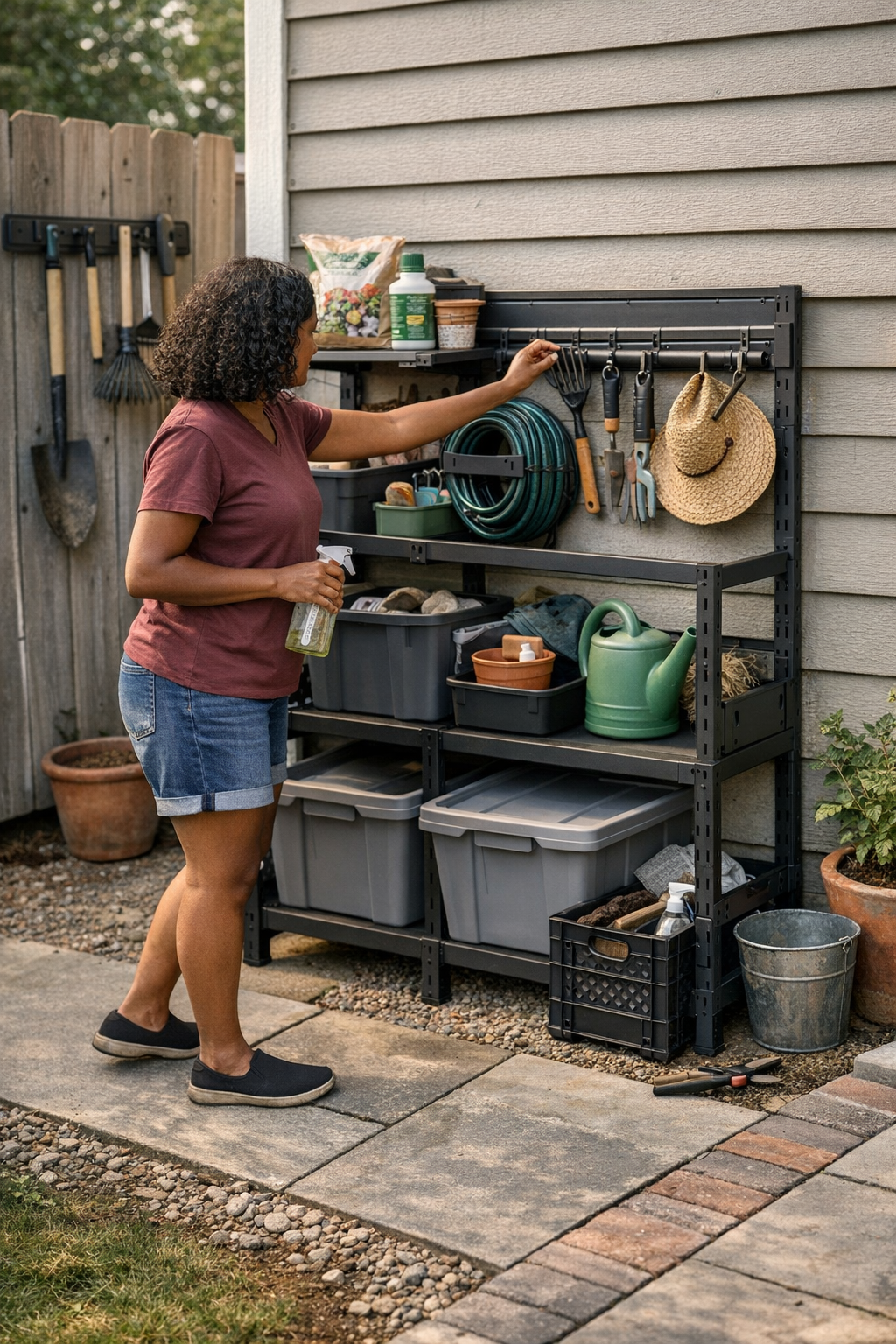
    What actually works isn’t more storage, but smarter, faster points of return. Open wall rails and shallow bins screwed up at eye level make it effortless to hang a spade or toss gardening gloves with one hand—no moving a crate out of the way, no fiddling with stuck lids. A side-yard strip, for instance: replacing those floor-stacked crates with a single open wire basket and a simple rail transformed the route from a bin-drag obstacle course into a smooth grab-and-store loop. No more shoving the mower over a half-blocked path; tools came off the wall and went right back after use, so nothing ever had a chance to pile up awkwardly. Overflow that once spread into the walkway now just… didn’t happen.

    It’s not about hiding things, but about creating snap-return zones along the real lines of travel—at hip height by the door for shoes, shoulder height for handled tools by the side gate, plus an open bin for kid stuff by the patio. When the system fits the route you actually walk, resetting takes seconds instead of a whole Saturday. The testing points are unmistakable: If you have to put something down to open storage, you probably won’t; if you block access for every other return, overflow starts—all over again.

    Scene: The Saturday Stress Test

    Picture a real yard in motion: two people trading off yard work, teenagers grabbing bikes, the dog chasing a ball, shoes dropped mid-commute, someone squeezing a folding chair through the narrowest part of the side path. Every missed return adds up. Wire racks and rail hooks make it possible to snap things back with one hand, without blocking the only walkway. Every time someone had to pop open a bin, a spillover pile formed at the edge. But once returns could be done mid-stride—hook a shovel, toss gloves, set plant ties in an open basket—the pattern of overflow stopped before it started. Corners that always filled up kept their airflow. Entryways stayed passable without a cleanup marathon first. The difference wasn’t cosmetic, it was just less drag on every return.

    Practical, lived tip: Put a no-lid, no-stack return point on every main route. Rail hooks or bins at areas of highest activity—the garage step, side gate, or near the fence—absorb real mess before it evolves into corner sprawl. The less decision it takes to put it back, the less reset you’ll need later.

    Change the Routine, Not Just the Look

    It doesn’t matter if a storage setup looks photo-perfect for five minutes after a deep clean. If it can’t absorb the constant shuffling of real life—tools used out of turn, gear dropped after dusk, overflow during family weekends—the mess cycles back faster than you want to admit. Every second saved on returns leaves more open space for next time. Flow feels natural, because even the busiest corners don’t get blocked or backlogged, and routines actually reset instead of repeat the same mistakes. Instead of navigating overflow, you see your yard as passable, usable, ready for immediate use—rather than “will be tidy after next weekend’s cleanup.”

    No system erases mess entirely. There’s always one glove left behind or the single extra stake tossed hastily. But when small resets are built into the flow, these hiccups stay isolated. You’re not facing a project every time the yard gets real use—just a loop around the path and it’s done. That’s what organization looks like when it actually works outside: less fighting the setup, more moving through it. Find more practical outdoor storage ideas at TidyYard.