Author: jaesoon_admin

  • Why Choosing a Wide-Turn Pet Travel Bag Transforms Your Routine

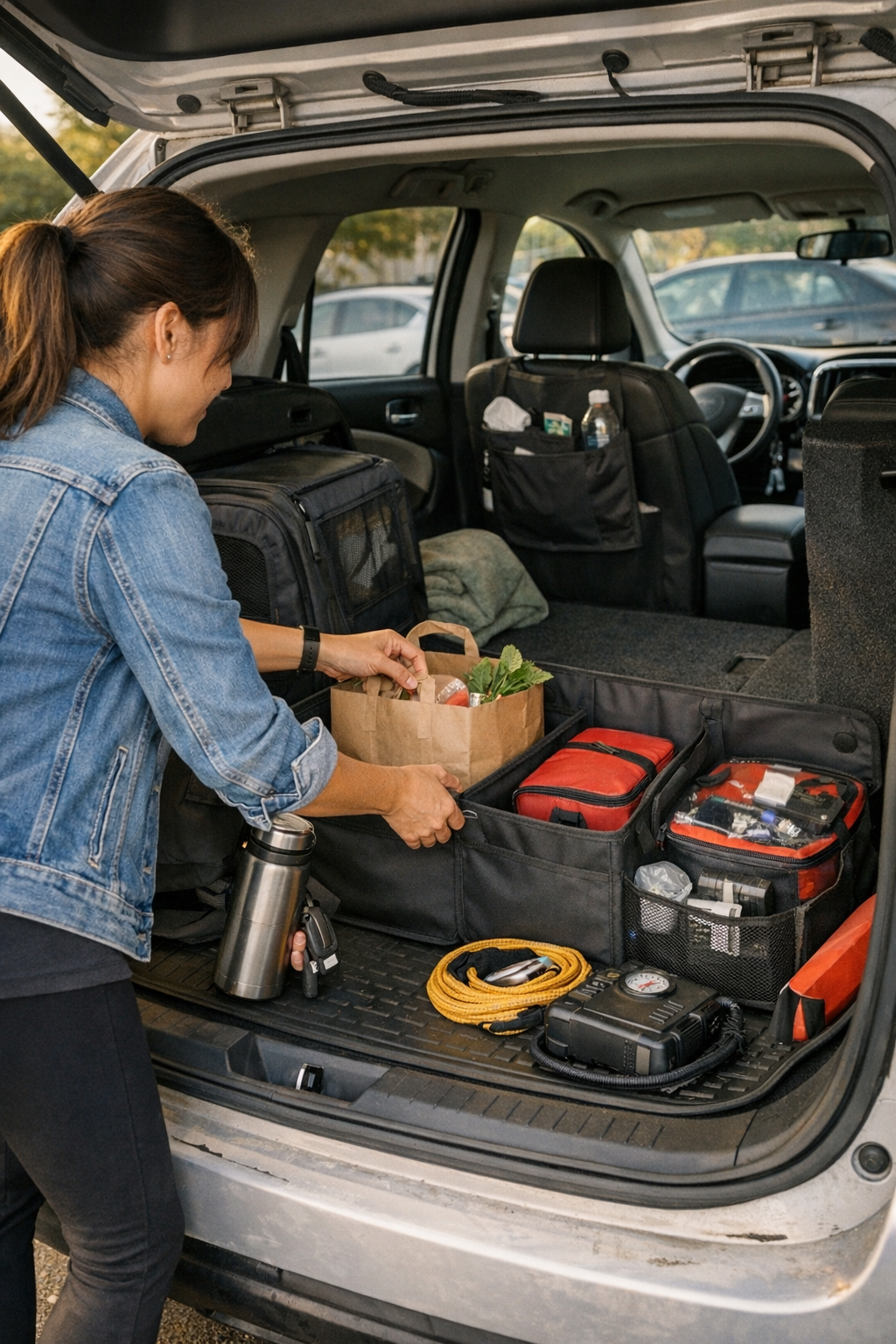
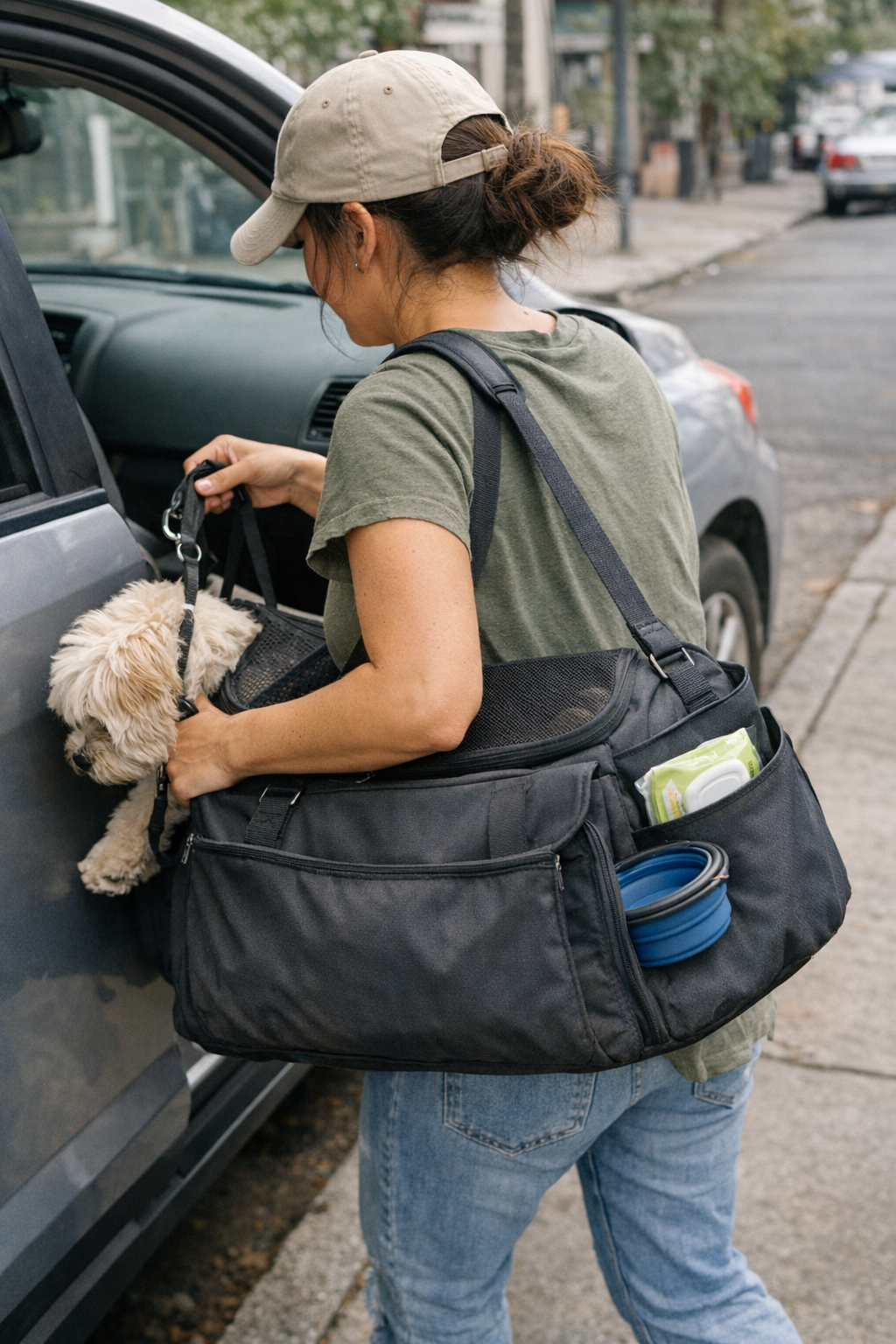
    The first sign your pet travel bag isn’t working comes before you reach your destination—a quick reach, an awkward twist, or a knee smacked by a stiff bag edge as you wrestle keys and leash at the curb. No matter how carefully you pack, the real test of a pet travel setup is what actually happens in those stop-and-go moments: seat to sidewalk, lobby to elevator, coffee stop to car re-entry. What looks neat on the seat often turns clumsy in your hands. A bag that seems organized in the quiet of your driveway can become a bottleneck once you start juggling pet, leash, and your own essentials while trying not to trip over an overloaded side pocket. Yes, structure matters—because repeated travel exposes flaws far faster than any tidy first impression.

    Why Bag Shape Isn’t Just a Style Choice

    Pet travelers rarely test their bags anywhere but home and car, which hides the real pressure points. The appeal of a narrow, compact bag is obvious—it hugs your side, lines up with the seatbelt, stacks vertically. But movement tells a different story. Muscle memory breaks down when you need to swing your bag clear of your pet’s carrier, avoid pinching the leash, or slide out of a tight parking space. A slim shape that sits pretty will, after two or three transitions, knock your knees, force your wrist into odd angles, and limit your ability to grab wipes or treats without shuffling everything around. One-handed lifts grow messier by the hour.

    The little hits compound. Each pause on the road makes you more aware of blocked pockets, squashed items, and the grind of elbow-against-bag every time you guide your pet in or out. The difference surfaces fastest during short, repeat stops—the opposite of Instagram’s smooth travel setups.

    The Hidden Cost of Looking Tidy: Repeated Micro Frustrations

    Organized does not mean accessible. Stop for a gas station break or a quick errand, and the “perfectly packed” bag reveals its buried flaws. The wipes you need after your dog’s shake are wedged under the comfort pad, requiring a half-emptying just to reach. Grab for a water bowl and get the treat bags first—again. The pet carrier leans as you fumble zippers in search of what should be handy. Meanwhile, your wrist blames you for designing a pocket lineup that stacks essentials behind tight seams rather than opening up at your side.

    None of this is a one-time hassle. Each shuffle, each blocked reach, means repacking and recalming—not just for the pet, but for you, and not just once, but at every pit stop and pause.

    The “Wide Turn” Fix—and Why It Changes Everything

    The game changes when your bag shape supports real movement—especially around doors, seats, and those fast curbs that demand quick handling. A bag or organizer with enough width is not about carrying “more stuff.” It’s about avoiding that swing-tight, pocket-block pattern that narrow bags seal in. The payoffs are immediate:

    • Body movement stays natural. Your arm swings out, not pinned by straps against your side. The bag arcs away from your knees and clears your stride by default, not with forced contortions.
    • Pockets and essentials open sideways, not in stacked layers. Instead of digging deep or rearranging every time, you reach laterally—wipes, bowls, toys each within sight and grab range, even during a quick stop.
    • Pet side stays calmer. During seat exits or sudden stops, the bag tracks away instead of slamming into your pet or leash hand, saving both of you that startle-and-reset cycle.

    This isn’t about organizing more neatly; it’s about breaking the reset loop, letting you recover from interruptions faster and restart movement without the same doomed repackings every few stops.

    Real Use: How Narrow Bags Keep Tripping You Up

    It’s a cycle most pet travelers will recognize: Park, unclip, try to squeeze your hand past a bottle and snack pouch. The handle’s jammed; your elbow scrapes a door pocket. You start to slide out, but the bag thumps your knee, again. On the sidewalk, you need wipes, but they’re buried, and the pocket you want is blocked behind the carrier. Pull out one thing, and everything else shifts, tangling leashes and pet gear. Comfort mats and toys are meant to smooth the trip—until they cover what you need, forcing more reshuffling.

    The bag still looks prepped. The travel routine collapses anyway. Packing perfectly at home fixes nothing about repeated sideline searches and blocked access once you’re actually using the setup for stops and starts.

    Choosing a Setup That Works After the First Trip

    The shift comes from switching to a travel bag or pack that lets you reach into a wide central compartment—not a pair of stacked, slim pouches that demand constant rearranging. Now, instead of a blind hunt or forced emptying, bowls, waste bags, and wipes land in your palm with no contortion. The bag swings out of knee range during seat exits, and after each pause, you restart moving instead of wasting time coaxing your pet and repacking lost gear. Real relief is not about a bag never getting messy, but about less friction every single stop after the first.

    The Compromise of a Clean Look

    Slim, tightly-packed travel bags promise tidiness at the expense of speed. If you must dig for a comfort mat meant to soothe your pet—but it’s blocking wipes or leashes—you lose both order and calm at crucial moments. It’s not a matter of packing more carefully; it’s about picking a layout that handles movement and sudden need, not just shelf appeal.

    What Happens When Pet and Owner Items Collide

    The overlap of “your” stuff and “their” stuff is rarely a one-time annoyance. You reach for pet cleanup and grab your own keys first, search for sanitizer only to tangle with a chew toy. Cross-packed pockets don’t just slow things down; they create repeat interruptions that compound every stop. The more compressed your packing, the more owner and pet gear crowd into the same bottleneck, and the more common these hiccups become—especially if you try to consolidate into one sleek, divided pouch.

    Does “Compact” Ever Work?

    Stacked dividers and compact, multi-pocket organizers make sense—right up until you try to use them while moving. If your bag forces you to stop, reshuffle, or double-check every time you need wipes, water, or a comforting toy, it’s working against you, not for you. The reality for anyone making repeated short stops: narrow, packed organizers create more stops-and-starts and more jostled pets, not fewer.

    It’s not about appearances—it’s about how your travel setup actually moves with you. Choose structure that supports wide, natural turns and single-move access to essentials. Your commute, weekday errand, or even road trip will run with fewer snags, quicker recoveries, and less pet stress. Neatness is easy. Handling, in the real world, is where a well-structured pet travel setup earns its keep—again and again, in every repeated use.

    Find practical, real-use-focused pet travel setups at PawGoTravel.
  • Transform Your Dog’s Morning Routine with Simple Placement Fixes

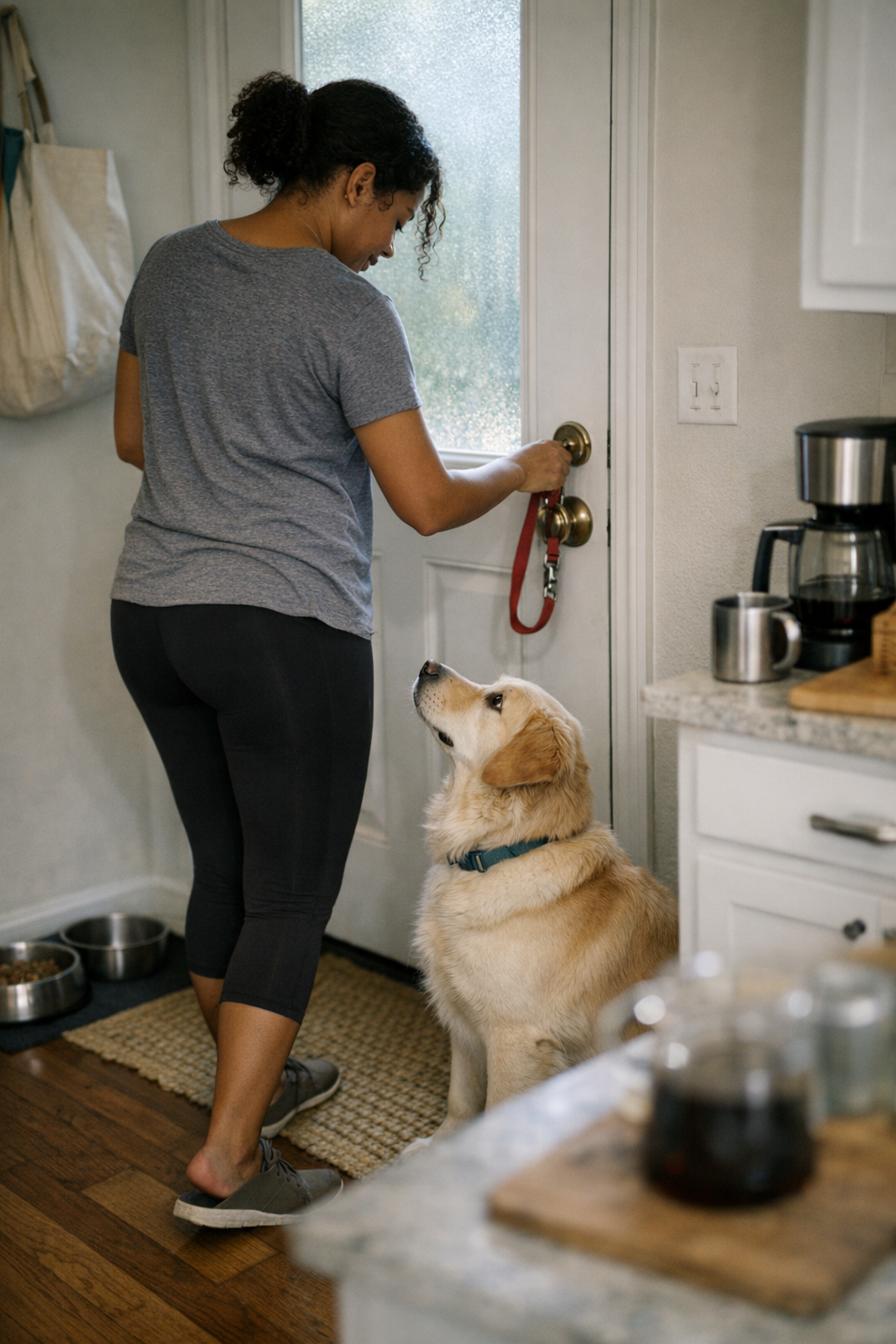
    Every dog owner knows the low-grade scramble: hands full, dog dancing by the door, and the leash is—missing or blocked by a basket of shoes. You’re already running late, yet again. Add an off-center water bowl or towels you have to cross the whole house to grab, and morning friction becomes routine, not exception. The difference between a routine that moves and one that drags isn’t chaos; it’s the same few setup mistakes showing up every single day.

    When the Routine Looks Tidy but Trips You Up

    You scan the area and think it’s organized enough. Leash somewhere by the door, bowls in a corner, toys out of walking space—or so you hope. It looks fine for a photo, but right as you’re trying to get out or clean up, something blocks the flow. You cross the living room for the third time, tripping over the chew toy near the door you meant to move. You’re patting down counters for wipes while your dog shakes mud across the entryway, because the container is tucked under the sink—out of eyeshot when you really need it. Visual neatness fades the moment real routine kicks in: every misplaced item turns the next dog task into a clumsy shuffle.

    The Small Pauses That Stack Up

    Individually, missteps feel harmless—a leash not at hand, a bowl placed three feet from where you actually feed the dog, wipes forgotten again. But when you’re backtracking five mornings a week to collect the same leash, or doubling back with a full mug and kibble scoop, that wasted motion is the real cost. Your dog’s circuit of anxious waiting at the door, your own silent grumbling, and the slow creep of clutter all feed each other. Routine quietly devolves into repeated micro-resets, never quite clean or calm. It’s not one mistake—it’s the same weak spot tripping you up in familiar ways, day after day.

    Spotting the Predictable Stalls

    The real warning sign? You already know where you’ll get stuck, every morning. If the leash is never on the right hook, the bowl always winds up blocked by a chair, or wipes migrate anywhere but the place your dog actually enters after a walk, you’re staring at built-in setup failure. These aren’t flukes—they’re spots where your current layout actively resists your daily rhythm. Like potholes you stop noticing, until another morning grinds to a halt for the same reason.

    Scene: Late Again, Same Leash Scramble

    Normal weekday, familiar scramble. The dog paces at the door, expecting you to move, but your hand comes up empty where the leash should hang. It’s looped over a dining chair two rooms away, from last night’s soggy walk. Your tone sharpens, the dog circles tighter, and now the delay turns up the tension for both of you. Five minutes later, you’re finally out, energy already drained—and it all started with a tiny, fixable placement blind spot.

    Access Over Appearance: Why Placement Beats Neatness

    Setup that looks “managed” often founders under real pressure. Bowls stashed just out of sight make sense until you’re caught mid-breakfast parade, detouring around chairs. A stylish leash hook isn’t much help if it’s in the wrong corner. Function fails before form—because repeated use, not first-glance tidiness, reveals where the friction lives.

    Movement reveals the cracks. The real test is whether everything you touch during the routine—bowl, leash, wipes—can be reached in stride. Are you forced to sidestep, double back, or stash items in spots that interrupt both you and your dog? The pause to hunt for a towel, the hesitation as your dog waits for a signal you can’t deliver yet, or the water bowl hidden behind your coat all signal a setup that absorbs, instead of easing, daily motion.

    Example: The Breakfast Path Change

    A minor shift—sliding the bowl directly along your kitchen entry—meant breakfast no longer involved acrobatic sidesteps. Now, food goes down on your way to the coffee, the dog settles on cue, and space stays clear for you to move. Not perfect, not pretty, but suddenly, mornings stopped grinding at the same spot. Small repositioning stripped out the repeated friction, lightening the start of every day.

    After the Walk: Reset or Repeat the Mess?

    Post-walk—the real test zone. You’re juggling a leash, keys, and a dog who just found every puddle. Where’s the towel? If you have to leave the entryway to track it down, wet paws get everywhere and cleanup snowballs. Wipes drifting out of reach, or the leash dumped on a random shelf, only guarantee a bigger mess and a slower reset for the next outing. When the gap widens between what looks “put away” and what you can grab with one hand, friction climbs quietly.

    Walk cycles fail if reset is a hassle. Every extra step between where you unclip the leash and where you wipe paws is a step you’ll be tempted to skip, setting up a bigger problem tomorrow. A towel bin at the door, wipes within easy reach, the leash always ending up on the same hook—all reduce the temptation to defer reset, turning chaos into habit you can repeat even when tired.

    Scene: The Never-Ready Towel

    It rains. The dog comes back dripping. The towel you need is nowhere near—the linen closet’s around the corner, the entry mat’s already soaked. So you let the dog in, and the job shifts from simple wipe to chasing muddy prints across two rooms. Reset gets pushed later, and soon, every entry brings new mess. Multiply by a week and no one wants the cleanup job, so the “routine” blurs into an ongoing, losing battle.

    When Looking Organized Makes Living Harder

    An area arranged for the camera does not always serve an actual daily routine. Bowls under low shelves look neat, but force a crouch every meal or spill into walkway space. Toys in stylish baskets overflow and block the path by lunchtime. Crates installed for symmetry end up blocking closets or making shoe access a daily obstacle course.

    The mismatch rarely shouts for attention—it’s the low-grade drag you ignore until a spill, a trip, or frustrated shoes-in-hand finally snaps you out of autopilot. Accepting small, daily delays or discomforts eventually crowds out time and energy. It’s rarely a crisis; usually, it’s the buildup of silent resistance every time you run the same clunky circuit.

    How Tiny Setup Shifts Restore Rhythm

    Some fixes are so low-tech and effective they disappear into routine: hook the leash on the doorknob, breakfast bowl in your flow, cleanup bin beside the return door. The change is instant—walks start on time, feeding blends into your own prep, wipes are always actually there when mud happens. There’s no app, no gizmo—just setting up to match the way you already move.

    The real payoff isn’t in how it looks but how it feels to use, over and over. The best setups ask nothing extra from you—no willpower, no memory games, no daily search party. They force friction out of the pattern. Suddenly, mornings are lighter, not flawless. You don’t win by chasing tidiness, but by clearing what always saps time or patience, one tweak at a time.

    Sign: Routine Holds, Even When You Don’t

    You know the setup works when stress spills over but the basics hold: leash in reach, bowl in place, towel at the door. Less doubling back. Fewer silent curses. The dog waits, but not in a confused circle. Routines tighten up just enough that even on a bad day, you notice any new friction immediately—because the absence of hassle finally stands out.

    Friction Always Returns—Here’s When to Rethink

    No matter how dialed-in your layout gets, daily use pushes things out of alignment. Bowls shift after a mop, leashes go rogue after a last-minute walk, the best entry spot gets blocked by new clutter. If you’re pausing, searching, or sidestepping for the same item more than twice in a week, it’s time for a tiny rethink—or you’ll just keep resetting a routine that never quite fits the day it’s supposed to serve.

    What looks neat at rest might undo itself the second real movement resumes. If the bowl lands back in the high-traffic lane, or towels migrate away from wet entry points, or the leash needs constant hunting, set up again, this time matching where your routine actually pulls you. When the setup serves you instead of slowing you, the whole day runs with less drag—and you’ll notice the difference at the door, the kitchen, and every return trip after a muddy walk.

    Explore practical daily-life dog setups at DogPile

  • How Thoughtful Storage Solutions Keep Your Closet Organized Daily

    The False Start of Tidy Storage — You know the sequence: Sunday’s overhaul leaves your closet looking like a catalog shoot—shirts in crisp stacks, baskets squared off, everything in its lane. But this isn’t your first round. By Wednesday, those neat rows are tilting, categories bleed together, and the bins meant to simplify things quietly morph into black holes. Socks, belts, a balled-up t-shirt—all thrown together in the same catch-all container. By Friday, the system frays. Now every quick reach or rushed search pulls you into a low-level guessing game: Where did that shirt go? Why are the gym shorts under a winter scarf? The longer you use it, the more daily friction creeps in, slowing you down and undoing all that Saturday work.

    Where Storage Setups Really Break: Daily Routines

    The true test of a closet, shelf, or entryway isn’t how sharp it looks right after sorting. It’s in those everyday drills: grabbing a sweater before work, rifling for a missing glove, sliding aside a pile for just one item at the back. Shared closets amplify the problem—two people, one small space, and a constant shuffle just to find what you need. Every tug, every over-ambitious pile, exposes the weaknesses that don’t show up in organizing videos. It’s never just about how things look—it’s about whether your system can take a hit and reset, or if it quietly falls apart under routine pressure.

    When Order Blurs: Blending Categories and Overflow

    Visual order vanishes at the first sign of hurry. Stacks start straight and strong but bend as soon as anyone grabs from the middle. That small disruption—snagging a t-shirt midweek—topples the tower, and next time, the gym shorts and undershirts get stashed in the same pile. Flat surfaces get colonized by whatever lands there next: a coat that didn’t get hung, last night’s laundry, the bag you swore you’d empty later. Each overflow blurs what belongs where, until there’s no real logic beyond “what fits right now.”

    Baskets and bins, if left unchecked, become a muddle. What starts as designated space for accessories blurs into a pile-up of mismatched socks, flyers, wallets, and whatever was easiest to stash out of sight. Without real separation inside the bin—or a habit of regular resets—what’s supposed to be convenient only sets you up for more work later.

    Deep Bins: The Quickest Path to Lost and Mixed-Up Items

    Deep storage doesn’t equal better storage. Deep bins seem practical—great for bulky items or seasonal swaps. But in daily use, they become the land of the lost. You toss things in “just for now,” but months later, good luck finding the scarf or backup towel you meant to keep handy. Worse, every new addition presses into the layer cake below, mixing unrelated things into forgotten territory. What began as a backup solution becomes yet another mess you’ll have to unpack and re-sort.

    This plays out all over the house: hallway cubbies that eat umbrellas and shoes until you find only mismatched pairs, or laundry areas where every clean wash ends up in the one overlarge basket, blending socks, towels, dish cloths into one heap that resists every reset.

    Reshuffle Fatigue: When Storage Asks Too Much

    When every retrieval feels like two steps forward, one step back, something’s off. The telltale signs: you’re restacking piles just to get what you need; you’re playing sliding tower to avoid a landslide; you’re fishing for lost socks at the bottom of a bin that was only ever meant for hats. If you waste minutes resetting what should be ready to go, your storage isn’t keeping up with real life. Over a week, a minor inefficiency multiplies—what should be a one-motion fix becomes a daily irritation you have to work around.

    Scene: The Shared Closet Crunch

    You and your partner reach for clothes in the morning. The front row looks tidy, but anything past that—half-zipped hoodies, off-season gear, the last-minute “where does this go?” items—sits half-buried in the back. The basket for belts is now a free-for-all: wallet, keys, a single glove. Every morning turns into a mini-reshuffle just to start your day. The original organization has turned into a puzzle box where the solution gets harder each round.

    Storage that Works: Anchoring Categories and Streamlining Access

    The leap from “looks organized” to “stays organized” comes from really dialing in how you separate, see, and retrieve what you need. Shallow bins with clear dividers stop the domino effect. Each type of item gets a defined slot—no rooting around, no upending a whole basket for one belt, no blind guessing. Categories stay visible and honest. You can use, return, and move on without breaking the setup; the shelf edge stays neat and nothing slips backward to be lost.

    The simple upgrade: Save deep bins for things you touch rarely—extra bedding, winter boots, those bulk-pack towels you never need in a rush. Reserve prime space for shallow, segmented containers, right where you need them. Label if you want, but the bigger win is making category lines so clear you don’t accidentally cross them during a hectic week.

    High-Traffic Trouble Spots: Entryways and Utility Zones

    Storage congestion isn’t only a closet problem. Entryways pull in their own circus: baskets for hats become the drop zone for whatever’s in your hands—mail, keys, reusable bags. By Friday, you’re digging through a mixed pile just to find the gloves you need for the morning commute. The fix: tighten the function. Use dividers or separate bins for each high-use item—one for mail, one for gloves, another for scarves or sunglasses. That focused separation means less spreading out, less “I’ll deal with it later,” and fewer last-minute delays while you hunt for something obviously out of place.

    Laundry rooms show the same tension. One giant bin might look efficient, but in practice, spills into other surfaces as soon as someone’s in a hurry. Smaller, labeled bins or trays for detergents and supplies mean you can restock or wipe up without constant rearranging. The end result: a daily reset in a couple of minutes—not a mini-project every weekend.

    Is Your Storage Setup Failing Your Routine? Key Warning Signs

    • Piles that sag, spill, or lean—never holding shape through the week
    • Bins that become a jumble—everything mixed, nothing clear
    • Overflow creeping onto the floor or spare surfaces
    • Needing more than one step to find your daily essentials
    • Locked in a weekly loop of sorting, shuffling, and starting over

    If these sound familiar, your storage isn’t keeping pace with real habits—it’s hiding extra work behind a surface-level reset, letting clutter regroup behind the scenes.

    Small Tweaks, Real Daily Difference

    Take fifteen minutes to map out your friction points: which surfaces collect clutter fastest, which shelves collapse by midweek, which bins you dread opening. Trade deep catch-alls for shallow, sectional storage in the high-traffic zones. Label only if it helps, but trust that real separation—physical dividers, distinct slots—matters more than a pretty tag. Sometimes just one divided bin transforms the daily grind—you grab what you need, things stay put, and the end-of-day tidy is almost automatic.

    The best storage doesn’t just look good on Sunday—it survives Monday’s rush and Thursday’s overflow with barely a reset. When you can access, use, and return each item in a single step, messes don’t pile up and “organizing” stops feeling like a never-ending redo.

    http://closetworks.myshopify.com

  • Shelf Liners Transform Entryway Cleanup Into Quick, Effortless Tasks

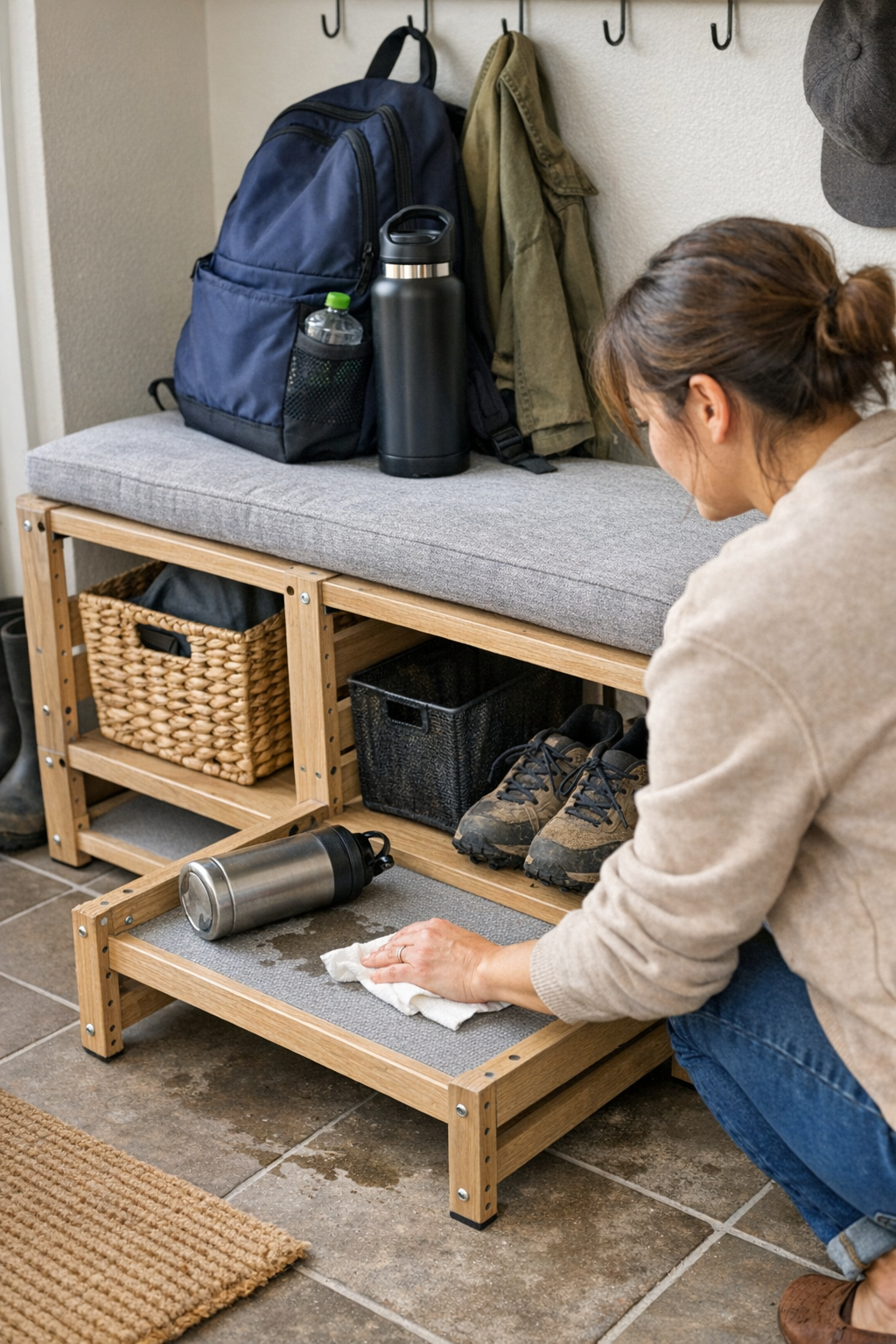
    No entryway setup stays manageable for long—especially when real life rushes through it. The baskets may sit straight and the bench may look clear after a weekend reset, but the order slips the moment someone crosses the threshold with rain-soaked shoes, a runaway water bottle, or an armful of gear. One muddy drop or missed spill is enough to shift your storage from “reset-ready” to “clogged and stained”—with dirt pressed into paint, seams swelling under leaks, and sticky patches you dread tackling. The illusion of control fades fast. If your entry zone isn’t built to withstand daily friction, every cleanup slows down, and each pass-through leaves the space less usable the next time.

    Mistakes That Don’t Show Up Until You’re Rushing Out the Door

    Most so-called smart storage plans seem fine at first—but they rarely keep up with real, repeated use. The difference becomes obvious only after routines collide day after day. A bench that once fit three pairs of shoes is now ringed by double that number—mud trailing off the soles, extra pairs crowding the path. Baskets underneath fill with umbrellas and backpacks, but one slow leak from a forgotten bottle stains the bottom and starts a chain of delayed resets. Soon, what was meant to speed your mornings just blocks the route out. Order that looked “set” begins to resist maintenance—reset times climb, and the urge to ignore messes grows stronger.

    Where Shelf Liners Change the Game

    The real test of an entryway isn’t how neat it looks right after a reset—it’s how quickly you can undo the mess when a spill or splash strikes. Shelf liners draw a hard line between daily mess and permanent damage, turning a messy drop zone into a manageable, wipe-and-go surface. When someone drops a dripping raincoat, or a yogurt tube leaks inside a bag, a liner means a fast cleanup—no basket-pulling, no scrubbing. The threat of water stains creeping under storage or dirt biting into painted wood simply disappears.

    Skip liners, and every reset multiplies in effort. Stains get worked into seams, sticky zones demand a full scrub, and “just a wipe” turns into a full job. You start letting cleanup slide. Over time, a small mess grows into a larger, more permanent obstacle—and even a quick reset feels out of reach.

    Real-Life Reset: A Scene from the Side Entry Zone

    The reality of any in-use entry is pressure at the busiest moments—bags dropped on the seat, shoes overflowing onto the floor, and a bottle tumbling until its cap pops free. At that critical moment, your storage either holds up or becomes a bottleneck.

    • With liners: You notice the spill, grab a towel, do one pass, done—no checking for water pooled under baskets or damage at the seams.
    • Without liners: Moisture seeps into corners, sticky patches turn into stubborn stains, and resets drag out as you dig out baskets, hoping the swelling hasn’t already started.

    The real friction isn’t the mess itself—it’s the added reset burden that compounds. Eventually, anyone in a hurry sidesteps the whole area, and the original flow of bags, shoes, and people is blocked at the threshold. The supposed “system” quietly shifts from help to hassle.

    How Liners Shorten Cleanup and Save the Setup

    The difference a liner makes is lived, not imagined—especially during the peak moments after storms or on heavy-use weeks. Each minute you save on cleanup is a minute the storage actually works under pressure. In direct use, swapping to removable, slightly textured liners cut one family’s muddy shelf reset from ten minutes down to two on a 32” shelf. That payoff matters—not just for neatness, but for reclaiming the entry as a through-zone, not a work zone, even with crowding and back-to-back arrivals.

    Instead of dreading the stubborn gray line at the shelf edge, you clean once and move on. Drips and pools no longer set the timer on long-term damage. The real win: you keep up daily, so the mess never builds high enough to reshape routines around it.

    Where Liners Help—And Where They Don’t

    Liners solve the mess—not the overflow. They defend against mud, salt, and routine leaks, essentially giving your entry shelf an armor against repeat abuse. If your threshold is hit daily with wet boots, open lunch boxes, or sandy gear, liners keep the reset simple and keep the underlying surface ready for another round without a full teardown.

    But liners don’t control accumulation or flow. They can’t make kids put boots on racks or stop bags from taking over the bench. System drift—where temporary drops become permanent piles—still happens if the structure doesn’t match your actual use. Liners just keep a small mess from turning into a job you start avoiding.

    Tips for a Smoother Threshold Flow

    • Pick removable liners: Quick to shake out or swap—even after a season of mud and grit.
    • Get texture with restraint: Enough to grip gear but not so much it holds grit beneath surface wipes.
    • Cover seams and corners: The first places water creeps and grit eats through paint—skip these and resets get longer, fast.

    The Practical Payoff: Reset That Matches Reality

    Shelf liners in transition spaces won’t impress guests—they’re there to defend the zone you actually use. The setups that last are always the ones that make resets short, storage accessible, and friction invisible. If you can clear soaked sand, salt, and spilled drinks in seconds—not minutes—the path stays open, routines keep moving, and the “system” stays a tool, not a time sink. The real advantage comes not in show, but in reclaiming the entryway as a true transition space—one you reset easily, so blockages and workarounds never become a permanent feature.

    Find practical entryway and threshold storage solutions at Betweenry.

  • Creating a Dedicated Power Corner to Boost Shared Workspace Efficiency

    Most desks can look clear, but still force awkward pauses and clumsy reaches—especially in shared setups. Whether you’re working from a compact team bench, a hot-desk, or a family study area, the discomfort isn’t always obvious at a glance. It shows up the moment you need a charger: adapter bricks slide just out of reach, cables cross your notebook, and finding power means fishing beneath the desk while someone is trying to type. What looks organized quickly breaks down as each person moves, swaps devices, and makes improvised changes. The friction keeps returning, no matter how clean the surface appears.

    Where Tidy Meets Trouble: The Subtle Ways Clutter Creeps In

    Start the week with a clean slate—laptops charged, cables tucked into a desktop tray, adapters in the corner. But watch how fast real use unravels that neatness. By noon, someone snakes a charger across the desk, another person nudges a cable under the monitor, and by the afternoon, the old patterns creep back:

    • Cables sag over the keyboard just as you open your notebook mid-call
    • Adapters drift towards the mouse, catching sleeves or shifting piles of paper
    • Outlets vanish behind monitor stands, so plugging in means blind hand acrobatics

    This is the “desk reset” nobody wants: order disappears with every user. Without a fixed, anchored power corner, friction accumulates unannounced—broken focus, tangled wires, and that all-too-familiar crawl under the desk for a socket. The cycle repeats: accidental unplugs, slow restarts, and more interruptions than you notice in the moment.

    Defining the Power Corner: What Changes, and Why It Matters

    A true “power corner” becomes the one spot where cables and chargers don’t invade your workspace. Set at the back edge—near wall power but away from arms, legs, and your workflow—it acts as a stable control point. Every laptop brick, phone charger, and adapter stays routed to this base, held inside a cable box or tray, not spilled across the surface. That one detail transforms the routine: no more dragging a chair around stray cords or realigning the mouse each time after charging a device.

    The shift is instantly clear in daily use:

    • Cables hold their line—they don’t wander into another person’s elbow zone
    • Nothing is coiled up around chair legs or pooling beneath your briefcase
    • Devices can be unplugged and replugged without a tactical shuffle of notebooks or reaching under the desk

    This isn’t about cosmetic tidiness—it’s about cutting out the hidden resets and keeping essential cables right where you can find and use them. After several handovers, you notice: fewer device mishaps, no missing adapters, and you gain back all those seconds normally lost to fiddling with wires.

    How Desk Setups Fail: Recognizing the Real-World Friction

    A clean-looking desk doesn’t guarantee smooth work. Under repeated use, flaws surface:

    • Chairs repositioned just slightly, pulling a cord across your writing arm
    • Bricks teetering at the desk edge, falling and breaking your train of thought
    • The outlet “hunt”—one person packs up, takes a charger, and throws off the next user’s routine

    Here’s where the real difference emerges: an anchored power corner trades a bit of clear space for reliability. Power and data lines follow the same route, time after time. No more pausing mid-task to untangle or reorient before plugging in. It’s a structure that survives the actual pace of work, not just the appearance of order.

    Testing the Difference: Clutter Drift vs. Anchored Calm

    Day one: the desk’s clean, but each new user has to trace cables, untangle a charger, or slide a device aside to find power. The trip-ups build: work slows, energy leaks away, even if nobody notices in the moment. People become cautious, trying not to trigger another unplugged laptop or snagged headset cable.

    Day two: after adding a weighted cable box and charger tray to one rear corner, the rhythm changes. Wires stay out of sight, adapters are where you expect, and legs aren’t navigating a mess of cords under the desk. Swaps between users don’t require a micro-reset; the desk is ready in seconds. These returns matter most where team turnover is high or devices change rapidly—co-working tables, rotating project benches, creative stations used by several people a day.

    Simpler Returns: How One Change Alters the Whole Routine

    Add a single cable tray and weighted box at the rear-left desk edge, and the routine shifts. No more cords looping through the mouse area, or charging lines threading under notebooks. Coming back from a meeting isn’t a rescue mission for cables or adapters—it’s direct: sit, open, resume. The behind-the-scenes structure absorbs the mess, so you don’t have to fix it each time.

    This is most obvious after a few full cycles: Instead of daily order breaking down, an anchored power spot keeps basics in place. The desk resets cleanly no matter how many hands or devices swap in. Projects can shift, people can come and go, but the essential cable zone stays predictable—supporting fast returns and steady attention on the real work instead of the logistics.

    Quick Desk Power & Cable FAQs

    How do you practically set up a “power corner” on a shared desk?

    Choose one rear desk corner, typically nearest a wall outlet. Fix a cable box, tray, or weighted organizer in that corner. Route every power brick, charger, and data line through this entry point—don’t let cables migrate across to other zones or dangle into leg space. If cables tend to shift, use clips or sleeves to anchor excess, and label only the primary long-stay lines so every reset sends devices back to the same point—no searching required.

    Why is cable control more urgent in shared workstations?

    Without clear boundaries, power cords and data lines intrude everywhere, forcing resets all day. As more people swap in, the mess multiplies—slowing every user, raising the odds of accidental unplugging, and guaranteeing that every new task starts with someone fixing the layout instead of actually working.

    What’s the most common cable mistake on busy desks?

    Allowing chargers and wires to sprawl unchecked, both on the surface and underneath. This leads to tangles that grab on notebooks, falling adapters, and endless seconds lost to sorting out what goes where. On a busy desk, clean cable management isn’t just aesthetic—it’s critical to keeping work smooth, reliable, and fast to reset.

    Seeing the Payoff: How Anchored Power Brings Calm to Shared Spaces

    Improved desk calm isn’t about surface looks—it’s about how you move from morning to mid-day without being tripped by the same cable twice. Less hesitation, less device drama, less time wasted on micro-resets. That small, lasting change—anchoring power at a single point—quietly prevents momentum loss that scattered setups make routine.

    If your work involves shared desks, frequent device switching, or simple co-working, make the “power corner” your new standard. You’ll feel the reset friction drop with every return—and find out how much smoother work runs when the invisible details finally start working with you.

    Explore the full WorkBasic collection

  • Why Daily Litter Scooping Transforms Shared Indoor Spaces Effortlessly

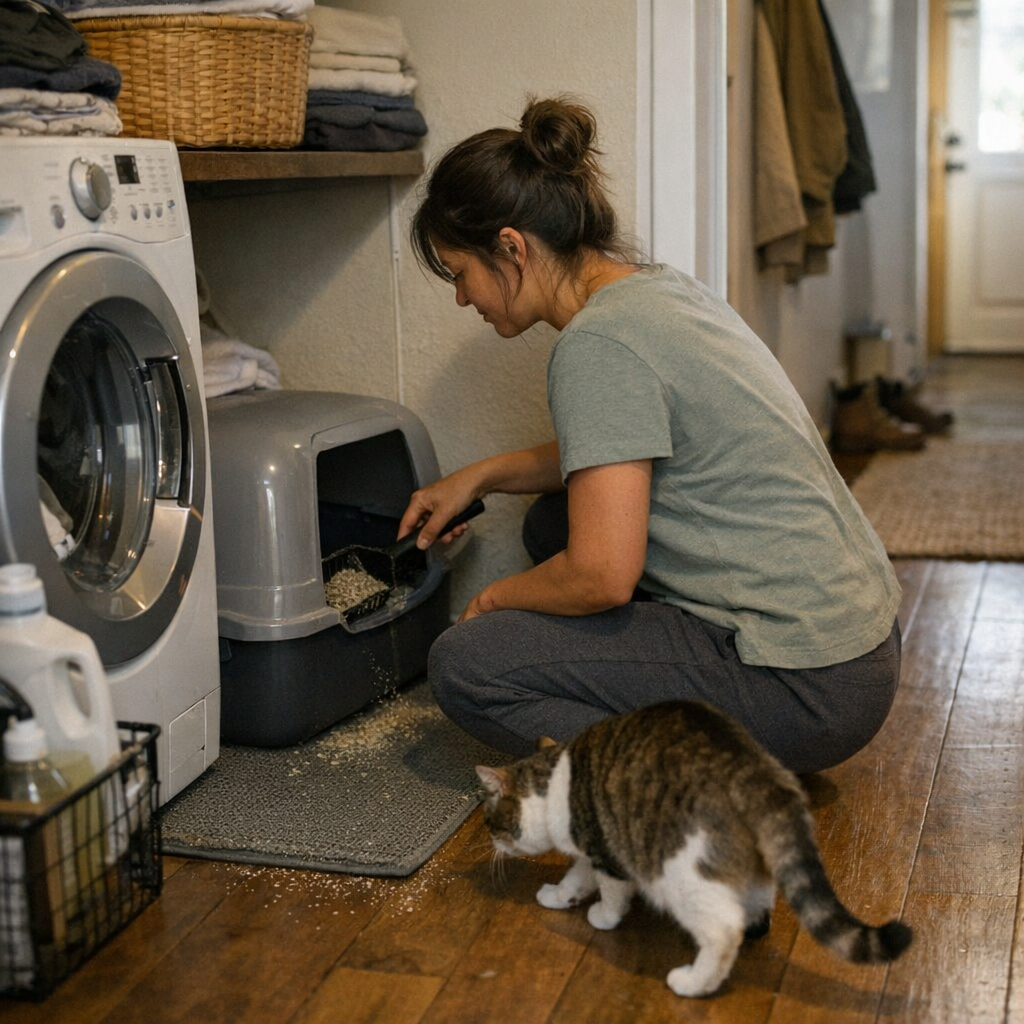
    You notice the problem before you admit it: a thin line of litter just past the mat, a dust patch that reappears after yesterday’s vacuum, an odor that lingers even though everything looks “fine.” With an indoor cat, especially when the litter setup lives in a hallway, laundry nook, or near the main flow of your home, surface-level tidiness fades fast. It doesn’t take a mess—just a skipped scoop or delayed wipe—for these interruptions to start making movement less comfortable and cleanup more of a chore. What looks organized in the morning rarely stays that way by the next water refill or laundry run. In the world of StillWhisker, the setups that work are the ones that stay cleaner with less catch-up—not just look settled for an hour.

    When “Tidy Enough” Stops Feeling Easy

    Reset the litter zone, sweep the floor, lay down a mat: it all looks under control right after cleaning. By tomorrow, though, daily routines put that setup to the test. A single missed reset is enough. Suddenly, there’s ammonia in the air, paw prints bypassing the mat, or fine dust sneaking onto your socks. You recognize it when you’re already carrying something—laundry, groceries, or the water bowl—and realize you’re stepping around a new trouble spot you thought you’d solved.

    It starts subtly, but the friction grows: day-old odors creep back, those stray grains of litter multiply, and what took effort to clean last time now feels like unfinished business. Pretty soon, you’re no longer just accepting minor annoyances—you’re preloading tomorrow with extra work you forgot you didn’t sign up for.

    Why Small Daily Scoops Change Everything

    A day without scooping isn’t neutral. It costs you later—extra odor sticks to fabrics, dust settles in ever-widening circles, and uncollected clumps attract one more round of footprints. The mess that “waits until later” simply takes more effort to erase, while the difference between kept-up and falling-behind shows up most in spots you don’t expect: the hallway edge, the foot of the laundry basket, the area around the refill bowl.

    The real shift isn’t dramatic—just relentlessly cumulative. Extra sweeping, sniff-testing, or surprise wipe-downs become regular. Even if the area looks tidy after each deep clean, let the daily habit slip and soon every other step gets slowed by one more thing to clean or reposition.

    Navigating Shared Spaces: When Litter Setups Meet Everyday Life

    If the litter box sits anywhere central—hallway, laundry, near the kitchen—the limits of your setup become painfully clear. Litter doesn’t just stick to paws; it migrates directly into your main traffic lanes. Instead of flowing through the space, you pause before setting down laundry, step around the box on autopilot, or delay cleanup, hoping the right moment comes before things pile up. Usually, it doesn’t.

    Miss daily scooping and the cost is obvious: the box takes over. Air shifts, grains spread, and the stretch from cat zone to human zone blurs. Worst case, you find yourself vacuuming when the plan was just a quick water refill. That’s routine interruption, not just pet mess—especially when those interruptions start rearranging your shared spaces instead of keeping them functional.

    The Slow-Creep Problem: What Fails to Show Until It’s Too Late

    Surface order is deceptive. Things can look “done” right after a reset, but a day skipped and grit shows up past the mat, odor lingers after a pass-by, and you’re suddenly wiping the same spot twice. It’s rarely a headline mess—just resistance, extra work built up in the background. Familiar? The best-looking boxes still send out warning signs: a shoe picking up grains, repeat wipes where none should be needed, or a routine that gets held up by a five-minute fix that was missed the day before.

    Invisible Boundaries: The Difference Between “Looks Fixed” and “Stays Fixed”

    Decluttering and wiping the area around the litter box gives the illusion of stability. But if your reset doesn’t last through one feeding or water run, it’s not holding up. Daily scooping adds an invisible barrier—one that keeps small issues from multiplying, even if it doesn’t make them vanish. It isn’t magic, but it’s the simplest line of defense between a controlled setup and a drifting one.

    Scoop right after refilling the water bowl or serving food. Instantly, both routines flow better. Litter stays in the zone, smells stay contained, and you move through your space with less stopping and shuffling. You feel it most not when things look best, but when you don’t have to pause and correct the same issue again tomorrow.

    Real-World Moments: How Routines Expose Weak Points

    • Heading for the feeding bowl in the morning? Litter lines the path, so what should take ten seconds becomes a stop for a dustpan.
    • Laundry comes out clean, but that stale edge in the air follows until you realize it’s from yesterday’s missed scoop.
    • Cleanup wipes sit near the laundry but never close enough when you’re actually at the litter box. By the time you grab them, dust and scatter have spread.
    • The mat corral most grains—but every few days, enough slip by that you’re still chasing tiny dunes across the floor later.

    Each of these friction points signals the same thing: it’s not about how organized an area looks, but how often your real-life routine gets stuck dealing with what slips through.

    What Daily Scooping Really Prevents—Beyond the Obvious

    Odor stopped at the source. Catch clumps before they linger, and you won’t be masking smells—they simply don’t get a chance to settle in. Regular removal keeps air clear not just for your cat, but for anyone using the shared space. This matters most where human routines overlap cat routines.

    Upkeep that never piles up. Small resets mean you’re not scheduling big deep cleans later. Surfaces—mat, floor, box edge—stay “usable,” so cleanup becomes a background task instead of a real interruption or a multi-step event that resets your day.

    Boundaries that actually hold. Addressing issues early prevents litter, odor, and dust from drifting beyond their zone. Shared rooms don’t reorganize themselves around the litter area—they just work, without those micro-detours or “I’ll clean it later” habits that never quite catch up.

    When the Setup Looks Right but Feels Slow

    It’s common: the area looks like it should work—fresh mat, clear floor, box in place—but it still manages to hold you up. That’s what daily resets are for. Skip one and it’s not that something dramatic fails; it’s the slow trickle of small interruptions after each feeding or water refill, a trail of paw-prints, or a second glance at a spot you “just did.” Visual order without flow is just another type of friction.

    The Markers of a System Falling Behind

    • Crisp dust lines meeting you at breakfast or after work—signals of a mat edge that’s no longer stopping the spread.
    • Scent tagging along just as you put laundry away, making clean clothes feel not quite clean.
    • Litter grains showing up in new, random corners—shifting movement through shared spaces from casual to cautious.
    • The simple run to refill water or toss in laundry suddenly becoming a detour for another sweep or a hunt for wipes.

    The “almost fine” setup is a trap: convenient for a day, irritating by the end of the week. Wait for visible friction and you’re already behind. Seamless upkeep comes from routine resets—ones that fit into your flow instead of turning into extra chores. The right setup doesn’t chase perfection; it just keeps “organized” from slipping into “frustrating.”

    Turning Daily Litter Upkeep into a Manageable Habit

    If your home isn’t wide open and your time isn’t unlimited, the best fixes are small ones that fit real routines:

    • Scoop as part of your water or feeding routine—if they’re connected, you’re less likely to put it off.
    • Keep wipes and a trash bin right where you reach for the box, not across the room or in a spare closet.
    • Sweep past the edge of the mat every time you reset. If you see grains, don’t wait—they’re advance warnings, not tomorrow’s problem.
    • Pay attention to spots where routines stall: if laundry, hallway, or feeding gets interrupted, that’s the area to streamline.

    The setups that live easiest are the ones that remove repeat pauses, not just add storage or coverage. If the litter zone, feeding area, or shared space keeps slowing you down, it’s time to reset—not for show, but for how the day actually moves.

    See more practical structures for smoother indoor cat setups

  • How a Return Spot Near Your Door Transforms Outdoor Organization

    Here’s how most outdoor storage setups really get tested: it’s not storms, not big projects, just the daily shuffle of gloves, tools, balls, and chores streaming out and back through the main door—on repeat, week after week. You grab a trowel before coffee, stash muddy gloves “just for now,” step past your kid’s bike helmet, and promise yourself you’ll put it all back after one more trip. By sunset, what started as clear turns crowded—the threshold jammed, paths shrinking, and a setup that once looked organized quietly devolving into a bottleneck you can’t ignore.

    How the Outdoor Door Becomes Clutter’s Landing Zone

    You’ve seen it before: stand in your side yard or at the back step and realize another pile showed up while you weren’t looking. Spare seed packets, faded garden gloves, a shovel caked with last week’s dirt—all gather at ground level, inches from the door. Not because you’re out of storage, but because the nearest bin or rack sits just far enough away that “later” keeps winning. Each rushed return breeds the next one, until temporary drop-offs settle in like they belong there.

    This isn’t just mess—it’s routine drag. With storage shoved to the fence or buried at the garage edge, the return path feels like a detour. You weigh every trip: is it worth the full trek, or should you just leave it for the next round? Without a spot right there, the flow breaks. Reset fatigue sets in fast, grinding down your good intentions into a collection of almost-finished cleanups.

    When the Return Zone is Out of Place

    Two yards might look equally neat from a distance: bins squared off behind the shed, cabinets lining the garage. But spend a day moving in and out, and one difference gets loud. Stores-at-a-distance setups ask for back-and-forth journeys every time you finish a job or retrieve a toy. In practice, that means armfuls get set down “for a second,” stray boots jam the walkway, a soccer cone multiplies into an end-of-day trip hazard. Yesterday’s clean stretch fills up by lunchtime, then clogs entirely by dinner.

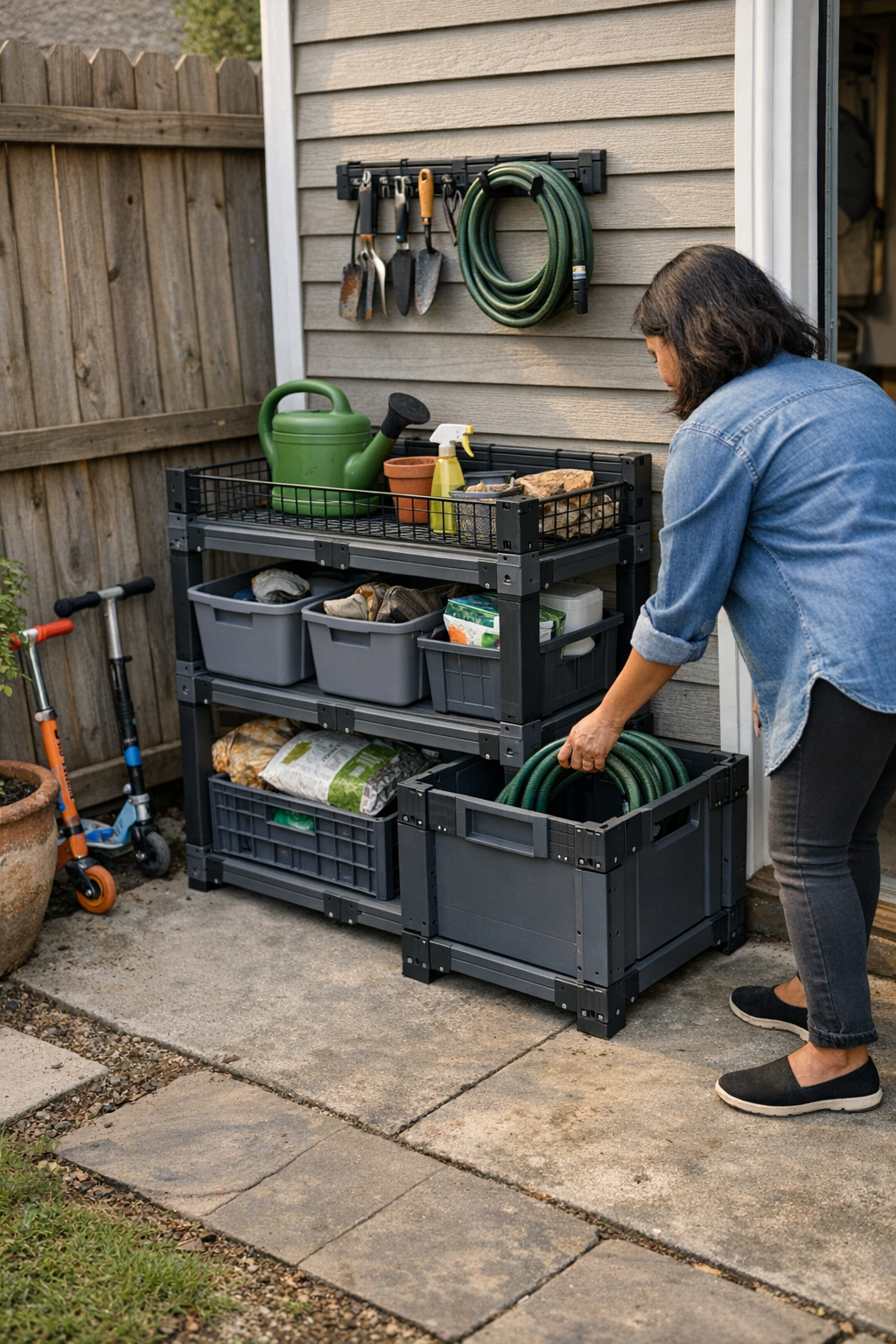
    Move a simple crate or open rack within arm’s reach of the door and the pattern snaps. Suddenly, it’s hand-off, toss, done. Garden gloves drop into the bin, wayward balls land without fuss. The loop tightens: every reset shorter, every pass-through smoother. What felt like a series of little chores fades into instinct—and the exit zone stays open without feeling like one more task to dread.

    The Hidden Cost of Distance: Chores Get Stickier, Movement Gets Blocked

    Picture a weekend morning: the pruning shears get left by the fence, skateboard helmets line up against the garage, and stray buckets pile up by the gate. Storage that made sense on paper—a big tub tucked “out of the way”—makes routine cleanup harder. Instead of a direct path inside, it’s detours around furniture, shuffling gear just to get a clear stretch. Midday, you’re threading through laundry baskets and tarp rolls that should have gone somewhere else. By evening, it’s a tangle—resetting means pausing, picking up after someone else, losing track of what’s out or put away.

    Flip it: add one rack, open tote, or bench right at the main crossing and watch reset friction drop. Suddenly, gear lands where you’re already walking. Tools, gloves, sports junk—all get returned in the right direction without a detour. The path to the house stays open; quick drop-offs replace long cleanup.

    One Small Shift = A Faster Reset, Less Crowding

    Here’s a real test: leave a crate just two steps from your main threshold instead of tucking it behind a utility cabinet. Instantly, pickups get faster; end-of-day sweep is a single motion, not a multi-stop runaround. Even in a cramped entry zone, swapping a closed box for an open rack means no lifting lids, no weird stacking—just toss and move on. Faster in, faster out, less stuff stuck in the way.

    These fixes don’t call for massive storage—just a handoff point that fits your route. Now, putting things away isn’t an ideal to aim for; it’s the default, even if everyone’s busy or distracted. The payoff comes in small wins: Saturday chaos doesn’t block the entry, weekday routines don’t grind to a halt. “Neat” stops being a one-day event and becomes the background, not the project.

    Skip the Shortcut Return—Pay the Daily Cost

    You know the look: piles pressed to the doorframe, pathways reduced to slaloms, little things sucking up more time than they should. Resetting the area becomes a background job you never quite finish. No clear handoff spot? The blur between “in use” and “put away” gets wider, and the daily drain gets heavier—one zigzag exit at a time.

    Floor vs. Overhead: Why Quick-Return Storage Wins Low

    No contest—open bins and low racks beat overhead shelves for outdoor handoff zones. When you’re moving fast, storage above eye level means friction—no one wants to lift a muddy tool or wet glove overhead. No surprise: gear that should be out of the way just piles up below, eating floor space, making resets clunkier, and hiding the “order” you thought you built in. Wall hooks, floor-level bins, and grab-and-go racks almost always work better where the return loop stays short.

    What Changes in Tight Setups—Side Yards, Garage Edges, Narrow Zones

    Space gets tight, movement matters more. Along a garage, squeezed behind a gate, or running the length of a thin side-yard strip, a well-placed return point is the difference between gliding through and getting stuck. Miss the drop zone by just a step, and every entry piles up: a rake blocks the hose, a bucket eats the last walkable strip, a corner becomes a slow spillover graveyard. It’s not more storage that fixes this—it’s moving the return spot to where the flow actually runs, so resets are part of the routine instead of their own event.

    Real Routine Change: Closer, Smarter Returns, Less Daily Grind

    Adding a return point close to your main outdoor door won’t double your storage, but it quietly chops away at the friction points that kill real-world routines. Garages and yard strips run longer without bursting with overflow. Full cleanups shrink to a few direct sweeps instead of an hour of backtracking. You get less shuffling, less resentment, less “it looks organized but still trips us up.” Smart, near-door handoff zones make the whole area feel functional again—so you use the space, not dodge around it.

    See more practical outdoor reset solutions at TidyYard.

  • Why Outdoor Storage Systems Fail Over Time and How to Fix Them

    Every outdoor storage setup looks clever for about a week—until daily routines start grinding it down. That first afternoon arranging your backyard, garage wall, or utility corner is almost effortless: new cabinets fit, the deck box swallows the mess, and for a brief span, all your tools and gear march into place as if the system was custom-built. Then the rain comes, or you rush out for garden work, and it only takes a few muddy drop-offs before things unravel. With real use, order starts to slip: one corner jams up with “for now” piles, the cabinet lid catches on your shoulder every time, and you’re suddenly shuffling boxes or carts just to reach what you need. The friction builds—and so does the sense of wasted effort.

    When “Organized” Doesn’t Mean Easy

    Clean lines and storage bins promise control. At first. You line up matching cabinets, stack everything inside: hoses, rakes, trimmers, gloves—no stray clutter in sight. But it doesn’t last. The deck box turns into a jumble after just a few returns. Heavy tools sink beneath lighter clutter. Quick drop-offs become layered stacks—each one making the next retrieval messier.

    It’s worse on the wall. You mount hooks, shelves, clever racks—clear floor, instant efficiency. But as you start using them, the faults show. One shovel never quite sits right, blocking the next hook; gloves pile up on what was meant to be a “spare” shelf. A dead corner quietly fills with overflow: bent handles, bags of seed, coils of wire. The illusion of order fades with each routine reset.

    Where Storage Friction Builds Up

    The pain points aren’t obvious until you’re deep into daily use. It’s that familiar bend-and-stuff as you wedge a wet hose into a narrow cabinet, balancing muddy gloves on the edge because the shelves are filled—or worse, knocking something loose every time you reach for a hand tool. Rolling carts seem like a flexible fix until you realize you’re always nudging one aside to open a door, move down the path, or avoid blocking the walkway altogether.

    Organization shouldn’t mean working around your storage. Yet, too many setups do: fixed shelves demand awkward angles when you try to put away muddy gear, or you find yourself juggling three boxes just to return a single item. By mid-season, the whole storage zone slows you down with every reset. What started off as “order” now requires constant maintenance to keep from grinding to a halt.

    Prioritizing Return Flow Over Initial Order

    Durable, low-friction storage isn’t built on category—it’s built on actual movement. The most practical change is almost invisible: organize for how things come back dirty, wet, or in a hurry, not just for how they fit neatly on day one.

    Think of a typical storage zone post-rainstorm. Hoses, pronged tools, muddy shoes—everything comes in messy and at once. The designated “all-purpose” cabinet soon becomes layered and damp, and every clean handoff means digging through a grimy stack. Cabinet doors swing into bottleneck spots by the fence or walkway, halting traffic just as you’re trying to put something away quickly. Alone, none of these moments feels huge, but as a pattern, they slow you down and push mess elsewhere.

    A Real-World Adjustment: Letting “Messy” Gear Avoid the Main Storage

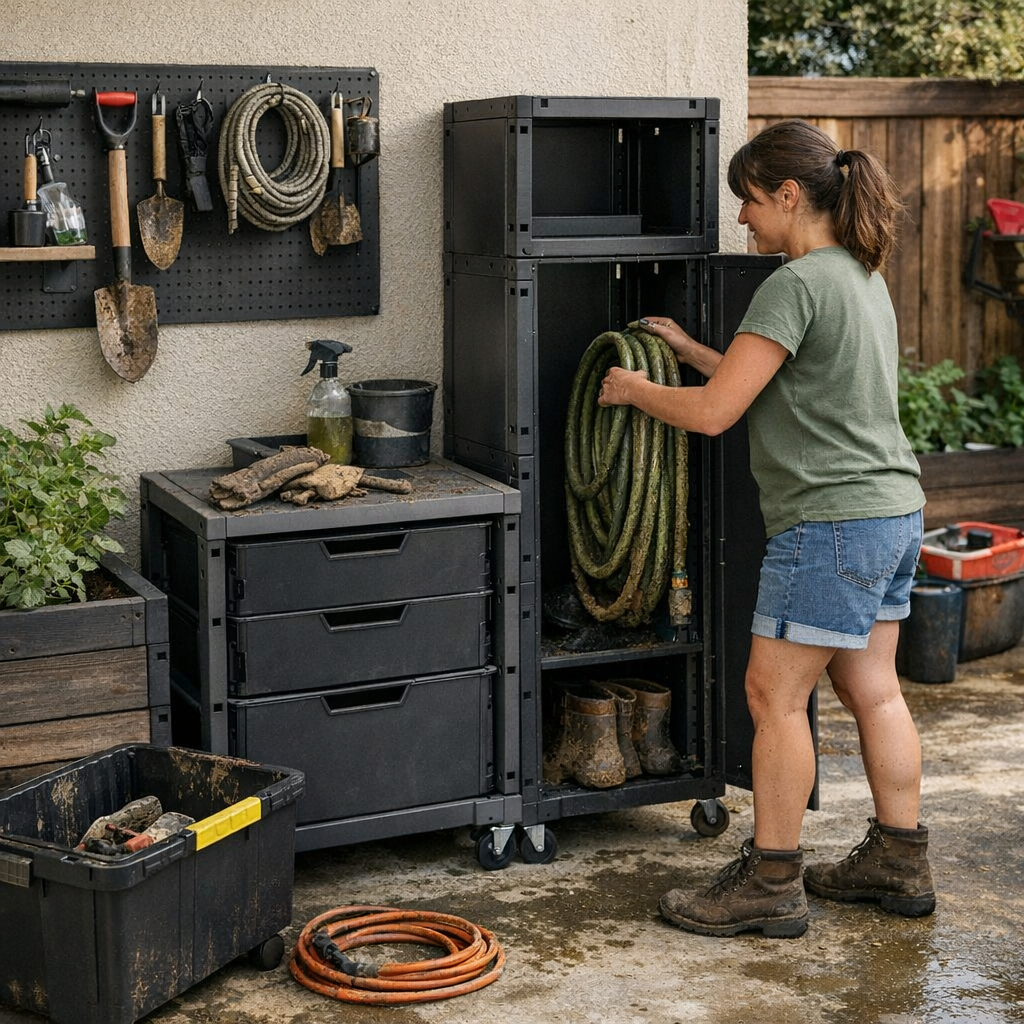
    Here’s a fix that actually sticks: split storage by likely mess, not just by item. Place a modular, weather-resistant cabinet right by the spigot—dedicating it solely to wet or dirty returns. Yank a shelf out and you’re left with a tall bay, perfectly sized to drop hoses, sodden trowels, or filthy gloves upright—no stacking, no digging. The dirty stuff goes direct, sparing the main area from gradual buildup and keeping cleaner tools cleaner.

    The impact is immediate. No more forced bending to squeeze gear where it doesn’t fit. No more blocking your own path to dump a muddy shovel. Instead, fast drop-offs go straight where they belong—so by the end of the week, you haven’t spent half your energy reshuffling the same tools. The whole setup is easier to reset, and far less cluttered, even after heavy use.

    Spot Trouble by Watching for Repeat Choke Points

    If you’re tiptoeing around loose gear, shuffling the same tools day after day, or dreading the reset after a busy weekend, those are your clues: storage isn’t keeping up with your routine. Watch for repeat offenders—the spot where piles start forming, the tool that’s always stuck out, the awkward reach you keep making each time you return something. These are signals the setup is working against you, not with you.

    Solutions can be direct, and you’ll feel the relief quickly:
    • Swap bulky cabinets for wall mounts where walkways are tight.
    • Remove shelves and design vertical slots for long or awkward-handled items.
    • Separate messy, wet gear from dry storage to stop grime spreading everywhere.

    Systems That Move With You, Not Against You

    The best outdoor storage setups anticipate your steps, not just your inventory. Think: slipping out in boots, trying to unhook a hose with one hand, or dropping shears on an easy shelf instead of hiding them under a stack. Modular units stay flexible—they adapt as you swap out gear through the season, or as one side of the system starts collecting too much overflow.

    But even the cleverest modular system fails if it ignores movement. A wall system is only as good as its depth—if tools stick out, you’re always dodging them. Floor cabinets save space until they clog a tight path. Rolling carts seem effortless, until you realize there’s no spot that doesn’t turn them into an obstacle after every use. The real test is after a dozen cycles of use, not after one photogenic reset.

    Make Outdoor Storage Work Harder Than You Do

    At the end of the day, storage that can’t handle muddy hands, surprise downpours, or hurried drop-offs is just aesthetic. What works week after week is a system that lets you move—no detours, no double-backs, no balancing acts. The real value is in setups that match how you actually use the space, not just how it looks after you clean it up.

    If you find yourself thinking, “Why do I have to keep fixing this?”—that’s your cue to rethink the flow, not just the footprint. A few small shifts in layout or zone rules can turn daily frustration into a space that works for you, not against you.

    Find modular systems and practical setups that adapt to your actual routines at StackNest.

  • How Small Car Setups Can Cause Daily Friction and Slow You Down

    Most cars look organized—right up until your daily routine exposes every weak spot. You get back in after errands and something’s already shifted: the charging cable has crept into your grip zone, the phone mount sits just barely off, the cargo area is clean but somehow slower to load. Setups that pass a quick visual check often fail in the flow of real driving—especially in small cars, where one awkwardly placed organizer or “invisible” charger can drag on you at every stop. On the street, neatness does nothing for a snagged sleeve, a blocked grab, or a phone that’s one reach too far away. It’s not about how the car looks at noon; it’s about how much friction you feel by the end of your third loop through the same routine.

    When Visual Order Meets Everyday Friction

    In tight cabins, the margin for error is uncomfortable. Start the commute: keys in one hand, phone in the other, and right away you’re swiping a charging cord off the seat track so your bag doesn’t catch. Each return to the car means nudging a cable, shifting an organizer, or resetting a vent mount that’s slid out of reach. Once or twice is nothing—but after six stops, this is the pattern that slows you down. Those tiny detours steal time and break up the flow every driver hopes for.

    The problem isn’t chaos—it’s micro-obstacles that pile up. You don’t cancel plans because of a stiff console tray. You do find yourself fumbling for the charger again on the tenth return, or reattaching a phone that always needs a second try to stay put. It’s the small, persistent interruptions that reveal whether your setup’s serving you, or tripping you up, especially when driving, parking, and loading repeat over and over.

    The Difference Between Looking Organized and Feeling Right

    Visual simplicity doesn’t guarantee smooth use. Example: push cords behind a center tray and drop in a low-profile organizer. Looks clean—until every charge means threading your hand through a narrow slot or sliding boxes to get to the cable. The result? More steps, more stray seconds, and—quickly—the urge to stop using what was meant to help. It’s not mess; it’s a different kind of blockage, easily overlooked until your actual driving rhythm brings it into focus.

    This is where setups promise more than they deliver. You see the mistake post-fact: Are you reaching what you need in one move, or resetting the same thing repeatedly? If the “solution” interrupts the habits you repeat most, it isn’t actually a fix—it’s just a new slow point, disguised by tidy lines.

    Bag Drag, Phone Mount Shifts, and the Reality of Quick Stops

    The frustrating details add up fast. You drop groceries or luggage on the passenger seat, and a rogue cord tangles in the bag handles. Or you swipe the steering wheel and brush against the phone mount—now it’s facing sideways, and you’re fixing it again instead of just driving. Even small things—like a cable clipped just an inch too far into the driver’s space—become daily annoyances nobody wants to admit they keep encountering.

    Try loading up at night in a crowded lot: fingers full with keys, elbow clutching coffee, and that organizer tray suddenly blocks your reach for the parking card. The cable tucked away “for neatness” is now a struggle to grab in the dark. The setup that looked sorted in daylight is actually breaking your flow in the moments you can’t afford extra steps.

    The Myth of “Set and Forget”

    Many products claim you’ll hide the mess and the problem is gone. Reality is less forgiving: hidden doesn’t mean unnoticeable, it just means you start tripping over a different flaw. Place an organizer in a prime access spot and lose quick reach for daily needs. Route a charger through the back and make plugging in a two-handed production. The neat surface disguises a persistent, subtle hassle—one that grows every time you repeat your routine.

    Real-World Tweaks That Change the Flow

    The strongest fixes are not about adding more—they’re about reducing interference where it hurts most. Anchor the charging cord just outside the entry path, even if it’s slightly more visible. Clip a mount at a reach-friendly spot, not just where it looks seamless. Real change is felt after a week of busy stops: You don’t hesitate before grabbing your phone, or lose seconds to untangle a line. Even if nothing seems dramatic on the surface, the absence of friction tells you the fix is working—because you stop noticing the problem at all.

    You’ll know it’s better when routine flows back into the car. No more pausing to reset, no silent annoyance when you rush out late. The difference isn’t more storage or cleaner lines. It’s fewer obstacles between entering, reaching, charging, and moving on—because the real cost of a bad setup is how quickly mild annoyance turns into daily drag.

    Order Should Match Movement—Not Just Appear Finished

    Most drivers know this story: the car that looks sorted at 8 a.m., but tries to undo itself by dinner. Cables crawl back into footwells, phone mounts slip slowly out of line, and organizers start drifting away from their ideal spots. You don’t see chaos—but you feel resistance: one extra step to reach the pass, an awkward lean across the console, a seat protector that shifts just enough to block a fast grab. Eventually, the clean setup becomes its own form of clutter—just quieter and slower to show.

    The test is simple: after your normal week—quick drop-offs, bag loads, night re-entries, charging on the go—ask what you had to shift or fix the most. If the answer is often, your setup isn’t letting routines flow. The fix is not bigger accessories or total minimalism; it’s honest placement of what you reach for, exactly where your regular moves need it, and a willingness to adjust when friction exposes itself.

    True order isn’t just about what you see from the curb. It’s how often you run into the same interruption—or avoid it—when real life puts your car to work. Efficient setups don’t hide every item, but cut the repeated drag out of every return, grab, and drive. If routine hiccups feel familiar, the right tweaks will drive the difference every day.

    For practical, repeat-use solutions that help your car feel easier to enter, reach, charge, load, and clean—visit DriveWellSupply.

  • Why Cleaning Electrical Contacts Prevents Flickering and Dim Lights Indoors

    Why does lighting that looked flawless on day one start failing you right when visibility matters most? You switch on the bathroom light and your reflection sits half in shadow. You reach the stair landing—suddenly, a step blurs into darkness. In rooms where movement and clarity matter—hallways, laundry corners, over-mirror setups, tight corridors—lights often flicker, lose focus at the edges, or force you into awkward pauses, even if the bulbs and fixtures are new. The trouble usually isn’t hardware—it’s the quiet breakdown at the electrical contacts: dust, oxidation, or grime building up, steadily eroding performance with every skipped cleaning. Miss this step, and you end up with lights that only look bright at a glance but leave you squinting or guessing where to move next.

    The Overlooked Culprit Behind Flickers and Dim Corners

    In the high-turnover zones—bathroom vanities, hallway sconces, stairway flush mounts—lighting performance slips long before contacts visually show dirt. At first, it’s low-key: a flicker you ignore, a stair landing that feels less certain, a mirror reflection that seems slightly grayer on one side. Over weeks and dozens of on-off cycles, cracks in reliability widen. That once-trustworthy laundry ceiling light starts hesitating to turn on, demanding a wiggle. The stair fixture dims one side of the tread, making you slow at the turn. In these moments, the frustration isn’t just the technical failure but the way it interrupts routines—blocking smooth movement and adding invisible friction to spaces designed for daily use.

    How Routine Neglect Leads to Daily Lighting Friction

    Neglecting to wipe contacts—either during a bulb swap or while reinstalling a fixture—lets dust, skin oils, and room moisture block electrical flow. The effect is cumulative, and in high-use zones, even one skipped cleaning can ripple out:

    • Stairways: Edges blur, shadow bands appear at turns. You find yourself scanning the floor instead of walking through on autopilot.
    • Bathrooms: One side of your face looks dim beneath the mirror. Shaving or makeup becomes a guessing game under a light that used to feel clean and direct.
    • Laundry Areas: A flush mount overhead starts flickering out mid-task, breaking your focus or leaving shirts half-shadowed.
    • Hallways and Corridors: Bright where you don’t need it, fading into dull strips where you want to walk confidently. A section near the entry seems to swallow your pace at night.

    These are not one-off annoyances. They’re the sort of irritations you ignore at first but keep bumping into—until you find yourself adjusting for bad lighting as part of your routine.

    The Slow Fade: Recognizing When Contact Neglect Is the Real Issue

    On install day, every flush or semi-flush ceiling light holds steady—clean, even, quick to respond. Fast forward eight weeks of real use: a semi-flush in the bathroom hums, the mirror zone feels yellowed at the edges, or a hallway ceiling light throws unpredictable shadow lines. The bulbs are fine, yet the room’s usefulness sinks. This shift isn’t about luminance specs or fixture style; it’s about the state of the contacts, ignored through quick bulb swaps and hurried remounting. The point when you tense up before stepping on a stair or lean in to double-check your reflection is when contact neglect stops being invisible. Shadowed sinks, delayed illumination, and distracted movement become part of your daily pattern before you even add “fix lighting” to the mental to-do list.

    Small Habits, Major Difference: Cleaning Contacts as Reliable Maintenance

    One minute with a dry cloth or a dab of alcohol on a cotton swab—especially in steam-heavy bathrooms, dusty laundry rooms, or high-cycle corridors—shifts the baseline. Suddenly, that stair fixture that once needed a bang just works. The laundry room light stays steady through the cycle. Over-mirror sconces shed shadow lines, making the face clear from both sides, not just the one closest to the bulb. The room doesn’t just look illuminated; it works better in motion, at routines’ pace. The real benefit shows up during the hundredth use, when you forget to think about the light completely—because it’s just on, every time you need it.

    The Price of Skipping a Step: When Small Friction Becomes Repeat Aggravation

    Simply swapping bulbs or upgrading fixtures without cleaning contacts is a cycle of disappointment. Electrical instability snaps back—lights hesitate, glare builds on mirrors, stair turns lose clarity, hallway paths dull at the edges. Each new attempt at a “quick fix” leaves friction in its wake: you move slower at stair landings, press the wall switch twice, or find yourself repeatedly squinting where you should see clearly. Trust in even a high-end fixture erodes quickly when the lighting never works the same way two days in a row. The thin but real line between a room that glows and a room you can actually use comes down to these tiny connections.

    Real-World Tips for Keeping Fixtures Dependable

    • When changing any bulb or adjusting a fixture, pause to clean the contacts using a dry cloth or a quick swipe of isopropyl alcohol. It’s seconds of prevention that keep reliability in place.
    • Zero in on bathrooms, laundry rooms, stairways, and hallways—these are the “friction zones” where moisture, dust, or daily cycling push contacts to the edge fastest.
    • If persistent flicker or dimness survives new hardware, focus on contact quality before jumping to bigger upgrades. Many failures are about physical connection, not high-tech fixes.

    Lighting You Can Count On Starts at the Smallest Connection

    The distance between reliable, trustworthy lighting and a room that interrupts your routine is often measured in a fingertip swipe at the contact. Most indoor-lighting headaches start—not with faulty fixtures—but with tiny layers of neglect. Each missed cleaning stacks up as shadowed stair turns, faded mirrors, and hallways that look bright yet still make you hesitate. It’s not about collecting the newest model or keeping the room spotless—just about making each reconnection count, stopping small failures before they become part of your routine. Dependable indoor lighting comes not from spectacle, but from the minor, nearly invisible maintenance that gives every switch real, repeatable certainty.

    LightHelper – Practical indoor lighting for dependable everyday use