Author: jaesoon_admin

  • Why Your Storage System Fails to Stop Clutter on Surfaces Every Day

    You add another shelf or bring home new bins, confident this is the moment the kitchen counter or bedroom dresser will finally stay clear. But by midweek, the same island of mail, stray receipts, and tomorrow’s gym clothes gathers again. It’s not a lack of storage—it’s the missing place for items you’re not finished with. And until those “in-between” things have a clear home, the daily reset stays just out of reach.

    When More Shelves Only Hide the Problem

    It’s easy to believe that another row of shelves, or a fresh stack of bins, brings order. At first, surfaces look emptier. Gloves and umbrellas have new homes. The bathroom shelf lines up with extra toothpaste. But real routines ignore these boundaries. Suddenly, today’s permission slip, a phone charger in regular rotation, returns to the counter. The book you’re halfway through refuses to disappear into storage. By Friday, “just for now” things sprawl again.

    The friction isn’t in what you’ve stored—it’s what you can’t quite put away yet. The open return, keys you’ll need once more before bed, or sunglasses waiting for the weekend outing—they leapfrog from table to shelf to dresser without a destination. Each day, a little stack builds. Resets become slower. Order blurs into rearrangement.

    The Missing Middle: Where Storage Systems Break Down

    Walk into two closets with identical shelving and bins. Both start with folded tees, labeled baskets, shoes in their cubes. One remains steady as routines pulse through it—the other, by Wednesday, has gym clothes draping the chair, a purse flopped against a bin, and documents “for later” perched on top. The difference? A real, recognizable place for the unfinished, not-yet-filed, not-done items that always exist in real life.

    In systems that skip this step, you end up reshuffling. The “waiting” stack goes from nightstand to chair. The new pair of jeans hovers on the closet ledge, not quite introduced to a permanent space. Each time you tidy, you move the same things over and over. The system isn’t broken by chaos—it’s undone by real, imperfect routines that need a buffer zone for the in-between.

    Looking Organized vs. Living Organized

    It’s simple to admire a storage nook after a deep clean—the lines stay neat, shelves show every object in its spot, baskets labeled and lids closed. But unless there’s a holding zone for messy middle stages, that clarity won’t last. As soon as the pace of life returns, bags for tomorrow’s errands, dry cleaning tags, or open envelopes land wherever there’s space. The hooks and bins work for what’s finished; the “in use” things spill and mix, making each reset feel frustratingly familiar.

    Everyday Evidence: How Unfinished Stuff Takes Over

    Think of a family entryway table. Monday looks clear after a good rearrange. But by Thursday, a formation grows: unsorted mail, a bus pass, house keys, tomorrow’s chess club snack. None have a permanent place, but none can disappear yet. The logic of “put it all away” is no match for the real-life churn of items you’re actively using.

    The bedroom dresser tells the same story. Fresh bins win the aesthetic war—until you need tomorrow’s workout gear or the book you dip into nightly. The top of the dresser fills with a lineup of “current” things, crowding the space. The organization below is untouched, but everything you actually touch each day hovers in this awkward middle ground and slowly erases the sense of order the moment life gets busy.

    Why Storage Without a Middle Ground Falls Short

    Adding another container, shelf, or drawer doesn’t fix this churn. When storage is only “for good” or “for gone,” but never “for now,” surfaces morph back into landing zones. It’s not that you need endless shelving—it’s that you need a waystation. As a result, piles return not from lack of storage, but from the absence of a flexible, designed limbo for what isn’t finished but can’t disappear.

    The Real Performance Test: Reset Speed, Not Looks

    An effective storage setup isn’t only about first impressions; it’s about the speed and clarity of the reset. If clearing the room at the end of the day means moving mail from kitchen counter to living room ottoman, or sliding today’s project from desk to nightstand, the system is only shifting the burden, not clearing it. Over time, these little migrations slow resets and slowly make the most “organized” rooms feel like they’re always one busy afternoon away from sliding backward.

    The Simple Fix: Introducing the “For Now” Basket

    One hallway transformed with a single handled basket slid under the entry table. Not a decorative bin meant to “hide” clutter, but a basket big enough for phone chargers, unread mail, ongoing paperwork—anything in motion. Each evening, instead of redistributing clutter, the day’s in-process items collect in one spot, visible but contained. By Sunday, a quick clearout empties the basket in minutes, restoring surfaces and keeping permanent storage intact.

    That’s the real unlock: create a visible, purposely labeled basket, tray, or bin at the friction point—not tucked away in a closet, but front and center, where “unfinished” things naturally cluster. This is for today’s reading, the jacket in rotation, the returns you’ll deal with tomorrow. Once a week (or more often if you like), scan and reset just this single spot. Suddenly, your surfaces stay open for living, and the reset stops feeling like an endless game of musical stacks.

    Does Your Storage Embrace the “In Use” Zone?

    Even with well-built organizers and fresh bins, lingering project folders, tools, or library books claim enough table space to break your system’s rhythm if you skip this middle-ground zone. Surface clutter almost always signals a system that organizes what’s “done” but leaves daily work-in-progress homeless.

    Build a habit and a small home for those daily drifters, and you’ll see the transformation: faster resets, clearer surfaces, less shuffling, and systems that actually keep up. The boost isn’t in showroom perfection—it’s in how your space recovers and flexes around your routines, no matter how many unfinished items move in and out every week.

    Visit ClosetWorks for practical storage systems built for daily living.

  • How Practical Car Organization Reduces Daily Driving Frustrations

    Every car starts to feel “good enough” after a quick tidy—cables tucked, loose trash hidden, keys dropped somewhere safe. But you pay for almost-organized setups the moment real life piles back in. Return from work with hands full, and instantly you hit reminders: a cable bunches around the shifter, last night’s snack wrapper skids under your heel, or your charger plug migrates just out of reach. What looked under control still slows you down, trip after trip. The problem isn’t what you see at first glance—it’s the repeated friction buried in your daily return, load, reach, and re-entry routines. DriveWellSupply’s world is built for this pressure: setups that don’t just look better but break the pattern of small hassles before they pile up.

    The Real Cost of “Almost Organized” Car Interiors

    A quick cleanup fools you into thinking the problem’s solved: cables hidden from view, clutter stashed in the glovebox, trash slid into a door pocket “for now.” But within a week, the same cable wraps around your phone mount, coins rattle free into seat gaps, wrappers migrate from cupholder to floor. Real inconvenience lands the fifth or twelfth time you have to tug a tangled cord or dig through a shuffle of everyday carry—right when you want to start the drive, not pause for another fix.

    The friction isn’t obvious on an easy day. But after a week’s worth of early departures and rushed errands, the same loose charger or forever-drifting receipt adds up. “Almost organized” interiors don’t just resist chaos; they quietly tax your routine every time you grab for what you need and find only another small obstacle.

    Where Setup Friction Hides: Daily Patterns Uncovered

    Car routines rarely collapse under a single big mess. Instead, they lose efficiency in hundred small interruptions you tolerate day after day. Spot where friction lurks in patterns like these:

    Clutter Slides into Hard-to-Reach Traps

    A bottle that rolls under the passenger seat, keys wedged against the console, receipts retreating deep into side pockets—these aren’t accident spots, they’re the results of storage that isn’t ready for real use. Every time you have to twist, lean, or fish for something mid-drive, the structure is quietly failing.

    Cable “Solutions” That Only Work When Parked

    Plenty of cable tidies look elegant until you’re in a hurry. Concealed charging routes route cords right back into trouble: snared under the handbrake, tangled when you grab your phone, or vanishing when a seat passenger catches the slack. Friction here isn’t obvious in photos, but by Thursday morning, you’re tracing the cord for the third time instead of just driving.

    Center Console: The Everyday Bottleneck

    What starts as “just keys, wallet, cable” in the bin becomes a mini-jumble by day three. Constant push-pull to extract a pen, buried charging head, or forgotten toll stub forces you to dig, untangle, and reorganize right when you need to go. The mess isn’t dramatic, but it’s always in the way.

    Protection or Convenience—But Not Both

    Floor mats bunch near the pedals after every few entries and need straightening while you’re loading. Trunk organizers corral grocery bags but create awkward angles for anything oversized. So-called solutions cover one weakness but expose another—especially once the car is in real, repeated use by different people or routines.

    Why First-Glance Order Breaks Down for Daily Drivers

    A “tidy” cabin on Monday is slower and clumsier by Friday—not because you let things go, but because the cleaned-up look hides recurring little failures. Hidden charging ports delay plugging in. Lid-closed bins lock up essentials when your hands are full. Quick-drop door pockets overflow and migrate loose items onto the floor. The real test isn’t appearance, it’s how the space responds to a week of rushed grab-and-go, fast charging, hands-full returns, and multiple users all hunting for the same core items.

    What Actually Works: Tweak Real Routines, Not Just Appearances

    No “system” makes your car seamless, but a few targeted changes kill the worst friction in daily use:

    Essentials Only, Always Within One-Hand Reach

    Phone, wallet, keys—if you have to fish, open, or dig, the setup eventually fails. Open trays beside the seat or ahead of the shifter beat any lidded container for speed—especially when both hands are loaded or you’re passing items to a passenger. Ignore photo perfection; design for repeated, real-world reach.

    Magnetic Charging, Fixed in Reach—No More Cord-Hunting

    A charging cable clipped or magnetized near your phone mount performs every time: easy grab, zero chase, forget about the floor. The less you fiddle with cables, the more consistently you actually arrive with battery left and mental energy intact. Slow cable friction is invisible—until a simple switch kills it for you, permanently.

    Visible Open Storage Wins for Everyday Use

    Hiding everything looks better only for photos. In practice, open trays and organizers keep what you actually use quickly accessible—keys, receipts, sanitizer, or parking pass—no lid to lift, no stuck compartment to unjam. This matters even more when the car’s shared: family, rideshares, or rotating drivers stop tossing things just anywhere if there’s an obvious home, immediately at hand.

    The Accumulating Cost of Small Messes—and Small Wins

    Every spot you clear, every cable you reset, every item you dig for is feedback: the car’s setup is still quietly working against how you actually move and load. Wherever your hands hover or your eyes land first should have a solution built in—trays that hold fast, storage that never migrates, cable spots that don’t tangle after a week. Aim for setups that interrupt the return of mess, not just hide it.

    Less Work, More Flow—Routines That Stay Manageable

    No one cares about “perfect” in a car that gets used every day; what you need is for the places you touch most to stay ready, the cables to stay connectable, and the storage to stay functional after real-world pressure. Every time you reach for the charger and it’s exactly where you want it, or toss paperwork into a tray instead of under the seat, that’s less friction collecting. What you set up now either compounds hassle—or keeps busy routines moving, trip after trip. The right DriveWellSupply tools are those you notice least each morning, because they make everything easier to start again.

    Find practical car-use tools and solutions for your daily drive at DriveWellSupply.

  • How a Tiny Shim Can Perfectly Level Your Wall and Ceiling Lights

    Most people won’t spot an off-level light fixture when they first walk into a room. But step up to the bathroom sink, climb the stairs after dusk, or fold laundry in a tight corner, and the flaw becomes clear: shadows stretch the wrong way, glare hits the mirror at just the spot you need clarity, or half the hallway drops into gloom while the other side is washed in excess light. The ceiling or wall might look finished at a glance, yet daily routines quickly expose a tilted fixture as more than a cosmetic miss. Each time you lean, reach, or turn, awkward light repeats itself—reminding you, in real use, that something is out of line.

    Why a Slightly Tilted Fixture Matters More Than You Think

    Just a few millimeters off level isn’t a small issue in practice. Lighting that looks decent on install day can turn tasks into annoyances: harsh shadow splits across your bathroom mirror, dark corners on a kitchen counter where you prep food or fold a towel, or angled glare cutting across the path you take every evening. Real routines make weaknesses obvious—especially when using wall sconces, vanity lights, or flush-mount ceiling fixtures designed to provide even light. One side of your reflection might be crystal clear while the other is trapped in uneven dimness. If you notice yourself unconsciously turning or shifting position in front of the mirror to “catch the light,” you’re already compensating for sloppy fixture alignment.

    When a Bright Room Still Feels Off: Hidden Friction in Everyday Light

    Lighting isn’t just about total brightness. Leveling is what steers light predictably, giving you usable clarity where you need it. An off-kilter light sends stray shadows along your main workspaces and blindsides you with glare. In narrow corridors or stairwells, a half-lit wall makes each step uneven and every turn less certain. Instead of a room flowing with clean, helpful light, you navigate around the fixture’s failings: working only at one end of the counter, avoiding a reflection, or slowing down to spot the next stair tread. The problem doesn’t fade into the background. It quietly shapes your behavior, baking clumsy routines into daily movement just to avoid the weakest spots.

    Small Tilt, Large Effect: Scenes Where It Shows Up Again and Again

    Staircase turns: Dark patches collect at the landing, just where you need confidence in your step. With the fixture skewed, the stair edge is murky, and glare from above distracts more than it helps.

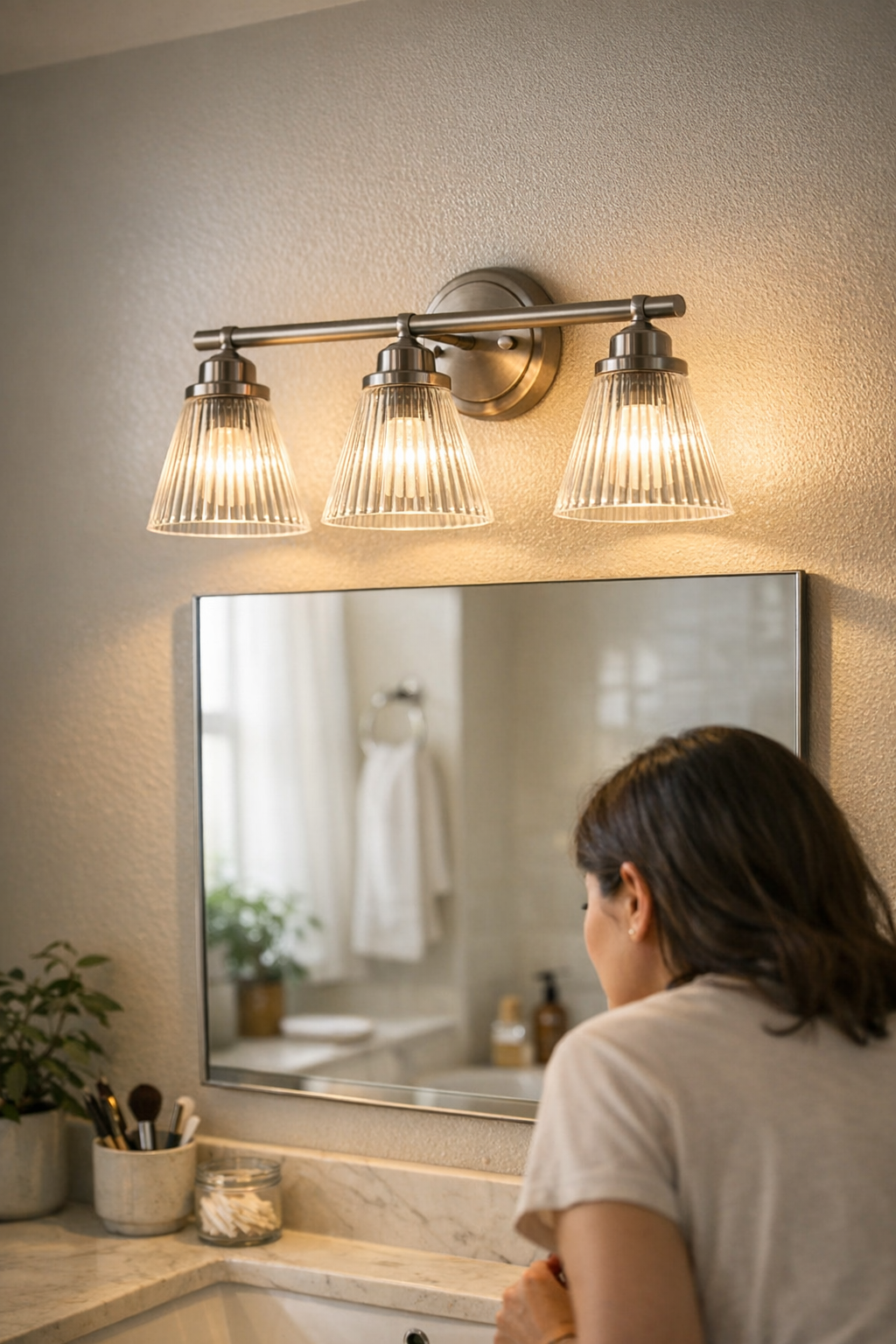
    Bathroom mirrors after dark: No matter how many times you adjust, half your face is reliably in shadow because the vanity light isn’t squared to the mirror. Applying makeup or shaving means shifting angle, not just standing still.

    Hallway crossings: Entering a corridor, one wall jumps out in bright relief while the opposite side hangs back, feeling vacant. The path lights unevenly, urging you toward the better-lit side despite the whole ceiling glowing overhead.

    These small failures mount up. The room itself hasn’t changed shape, but the way you use it narrows—guided by where the light isn’t reaching, by the shadows you work around, by the side you squint at nightly.

    The Simple Solution: Leveling with a Shim

    The fix is mechanical, not decorative: slip a flat washer or slim plastic shim behind a mounting screw—raising or lowering a single point—before tightening the fixture back up. This minor adjustment resets the fixture against real reference lines like the edge of your mirror, the run of cabinets, or the true ceiling plane. Forget “eyeing” the alignment on install; use a torpedo level or straight room feature as your guide, especially in narrow or angled spaces where what looks straight from the door turns wonky at a sink or stair landing.

    How a Tiny Adjustment Resets the Whole Space

    Once level, the shift in routine is practical and immediate. You stop tilting your chin for better light at the bathroom sink; both sides of your face appear evenly in the mirror, and shadows don’t pinwheel with every move. Hallways feel stable and evenly lit—no more dodging glare on entry or hesitating on a dim stair. Laundry and kitchen counters regain their full usable width, without reaching into dim corners or squinting past streaks of light. The real change isn’t just “brighter”—it’s smoother movement, clearer work surfaces, and the end of unnecessary workarounds for routine visibility.

    Is This Worth Tweaking Everywhere?

    You’ll notice the difference fastest in rooms where precise, consistent light matters every day: hallways you walk through before sunrise, stairways you climb at night, bathroom mirrors where detail counts, laundry rooms where you need every inch visible. Leveling turns a fixture from tolerated background to invisible supporter—removing the distractions created by even a tiny tilt. If you’ve ever shifted habits to dodge awkward light, there’s likely a fixture begging for a shim and a second look.

    Bringing the Room Back to Its Real Potential

    Leveling is less about chasing perfection and more about ending a pattern of small, stubborn friction wherever you rely on your lighting most. Getting this right removes ongoing annoyances from spaces you otherwise take for granted. The difference isn’t showy—it’s letting the room do its job, every single day, without forcing you to compensate for weak light or odd shadows.

    Find lighting that’s made for real use, visible clarity, and daily reliability at LightHelper.

  • Balancing Sanding Speed and Finish Quality for Consistent Results

    Sanding a dozen panels in a row is when reality hits: the faster you push, the uglier the surface gets—and every streak or swirl you leave behind just piles on more rework down the line. The temptation is obvious: crank the sander up, rip through the old finish, and get on to the next project. But after your third or fourth piece, it’s clear speed comes with a cost—stray marks, rising heat, variegated grain, and a tool that feels harder to steer each round. Every pass starts feeling like payback for chasing a shortcut that never quite pans out. Anyone with a deadline and a stack of real-world work knows this struggle. Electric sanders deliver muscle, but overlook the balance between speed and control, and you’re stuck fixing the byproducts rather than moving forward.

    Speed Feels Efficient—Until It Isn’t

    First panels off the stack, you want to believe fast is better. Working through a batch of cabinet faces or prepping table tops, high sander speed strips finish in seconds. Jobsite urgency makes it feel right. But after you pull off that first mask and brush away the dust, reality shows up: deep scratch trails run across the grain, tiny swirls catch in the light, and outside edges feel just a touch sharp. The work you “saved” time on now needs another round.

    The real headache with high-speed sanding is delayed. What looks like progress ends with you burning through extra sandpaper and dragging the tool back over problem spots. Shop dust starts escaping the vacuum, the pad gets hot, and you end up pressing harder, not smarter. If you’ve ever stopped to swap a new pad before finishing a single surface, you know the cycle: muscle through one flaw, introduce another, and the task keeps growing by inches.

    Batch Work Exposes Every Flaw

    Where speed truly falls apart: repetitive, high-detail work. Prepping a long run of shelves, rows of doors, or panels needing a consistent touch brings out every shortcut. That “just blast it flat” mentality works for rough stripping, but as soon as you need a presentable finish, every hasty pass leaves its record. A cabinet front burnished at high speed might look fine dry, but try laying down stain—uneven absorption and ghosted swirl marks refuse to hide.

    And when fatigue settles in, your hand slips with subtle but deadly pressure. The pad skips at a corner, abandons a dull smear, or carves a line that won’t fade. Drop to slower speed and finer grit, and the feeling improves—if uneven sanding hasn’t already sealed the mistake in too deep. Most of the time, it’s not a dramatic disaster—it’s the slow grind of fixing what quick passes left behind, deciding if this piece “makes the cut” or joins the redo pile when you’re already counting panels left to go.

    Small Warnings—Big Failures

    Most sanding trouble starts quietly. At first, it’s just a bit more tingle in your palm, or the sander sounding off-key as the pad hums across plywood. The dust that escapes your vacuum system is finer, thicker, and hangs longer in the air. You take longer breaks, shake your hand out, or start noticing that the tool’s harder to guide. Slip once, and you’ll chip an edge. Drag a finger across the grain, and you notice a faint ridge that won’t smooth. These signals—buzzing hands, micro-ridges, lost collection—mean you’re running too hot, too fast, or fighting the tool more than working with it.

    Dial, Don’t Muscle—How Speed Actually Feels

    That numbered dial on every sander isn’t there for show. Turn it up and the tool’s whole sound changes: the pitch climbs, the vibration gets sharp, and your arms tense just to steady the ride. At lower speeds, the pitch drops back and you hit a sweet spot—smooth pad contact, better dust pickup, and a finish that feels almost natural under your hand. After an hour, you remember what control is. Instead of wrestling the tool, you start steering it—edge to edge, with fewer corrections and a cleaner line at every panel seam.

    Even among tools with similar specs, this difference in feel is real. An orbital sander racing at full tilt (10,000 OPM) can wipe a pine board bare with force, but you’ll watch it leave micro-holograms everywhere. Ease off to 7,000 OPM and you trade a few seconds per pass for repeatable, level results that feel the same at 4 PM as they did before lunch—without the palm strain or extra clean-up.

    Cabinet Install Scene: Rush Costs More Than Time

    Walk onto a site with a stack of empty cabinets needing custom shelves. First instinct: run the finishing passes wide open, dust flying, machine howling—the first three shelves jump off the bench. But then you notice the edges are raw, scuffs are showing despite fresh sandpaper, and every shelf needs more work by hand. Next batch, you drop the sander a speed or two, focus on deliberate overlaps, and let the tool move—not push. Suddenly the edges blend, the dust clears easier, and a palm check reveals a surface ready for topcoat, not redo. The promise of speed? It only pays if quality survives. Most times, it’s just setting yourself up to sand the same spots twice.

    Tweaking Your Process—Where Results Actually Change

    Small speed shifts make the difference. For sections where finish matters—cabinet faces, trial fit panels, pre-stain prepping—bring the sander down to around 7,000 OPM. Go easy on the grip, let the tool float, and notice how pad changes last longer and your hands don’t buzz post-shift. Across ten panels, this pace actually speeds you up: fewer stalls, less heat, and rarely a missed swirl to patch. By the end, your hands and materials both thank you for not trying to muscle through every inch.

    Between finishing coats, especially before applying clear or paint, run a fine grit at a steady, mid-speed pace (7,000–8,000 OPM). The extra minute here pays double when the final topcoat hits glass-smooth, with hidden marks staying hidden—even in sunlight or under LEDs.

    Four Telltale Signs You’re Sanding Too Fast

    • The pad’s vibration sharpens and the machine howls against the work.
    • Fine dust regularly escapes past collection, hanging in the air.
    • The sander stutters on edges, or you’re left reworking corners and seams.
    • Subtle scratches reappear even after wiping clean.

    If you spot these, back down the speed, lighten your grip, and let the sander work at its pace—not yours. It’s almost always faster overall.

    The Work Doesn’t Lie: Consistency Outlasts Speed

    At Gumboll, our shop tools are built for the daily grind—projects where “good enough” isn’t, and panels need to match from first run to last touch. After dozens of runs, the lesson’s clear: using raw speed to “finish fast” means you revisit the same mistakes later. The time saved in initial passes drains away to rework, pad changes, or the quiet moment you realize a fine swirl is suddenly visible across half the job.

    It’s steady, controlled sanding—sometimes a click or two below full power—that keeps results consistent, tools running cool, hands ready for the next task, and shop deadlines from turning into long nights bent over the same project.

    See more practical tools and jobsite supplies at Gumboll.

  • How Smart Yard Storage Designs Keep Outdoor Spaces Clear and Functional

    Recognize the Pattern: When “Organized” Stops Working

    Everyone knows the cycle. You tear through a Saturday morning, hauling bins out of the side yard, lining them in a parade against the fence, hooks loaded with tools, deck boxes shut tight. By Sunday, the path from the gate to the garage looks almost surgical—clear, controlled, even a little smug. But by midweek, it slips. A muddy soccer ball blocks the gate. A handled shovel slides underfoot just as you’re carrying groceries in. Someone’s bike—half in, half out—turns your side yard into a maze. Suddenly, you’re tiptoeing over clutter to reach anything, burning minutes resetting before any real yardwork can even start.

    The wall you hit isn’t a lack of storage. It’s friction—the everyday gap between how you think the setup should work and how your family, your routines, and the weather actually use it, over and over.

    Where the Setup Starts Breaking Down

    It’s easy to blame “not enough storage” when the walkways get blocked or gear piles up, but real-life bottlenecks almost always come from setups that miss the way things move. The first few days after re-organizing are deceptively hopeful. By Thursday, the narrow path from garage to patio is rubbing elbows with a parked wheelbarrow, a rake slipping out of a loose rack, bins waiting for trash day, and a mess of shoes kicked off at the back door. Setup that looked clean on Saturday now pushes you to detour, step over, or just drop things anywhere they fit. Small frictions—an extra minute here, a clumsy shuffle there—are the early warning flags that your system is quietly falling apart.

    “Tidy” Storage That Still Blocks Your Routine

    Corner sheds, deck boxes, wall racks—these look sharp right after installation. Their surfaces are smooth, the floor is clear, and every tool has a slot. But in reality, that order rarely survives a real week. Here’s how it unravels:

    • The deck box is jammed shut with a bike collection crowding its lid—so skipping gloves becomes normal.
    • Wall racks mounted far from your natural path leave you or the kids dropping tools at the nearest patch of floor—they’ll get put back “later.”
    • Modular panels divide the wall, but the empty space beneath always attracts plastic bats, yard shoes, or whatever needs a temporary home. That “temporary” bubble never bursts.

    What looks like neat storage on paper or in photos quickly becomes a magnet for drop-offs and dead ends. The tools aren’t “out of place”—they’re simply escaping setups that interrupt the real routes you take.

    The Draining Cost of Repeated Reset

    Every touch builds up: sliding a mop just to reach the recycling bin, moving the compost bucket to get the extension cord, unstacking muddy boots that landed in the path. The friction adds hidden effort to every outside task. When your storage interrupts your access—even by half a meter—the reset job never ends. Friday’s “quick tidy” becomes a full afternoon scramble. And the more these micro-blockages layer up, the easier it is to say, “I’ll deal with it later,” while clutter gains permanent status in the zone meant to contain it.

    Narrow Zone, Real Trouble: Side Yard Bottleneck

    Picture that skinny gap from the back door to the trash bins—a classic side yard where every inch counts. You begin with a wall of hooks and a deck box. Four days later, here’s what creeps in:

    • A long-handled broom totters, nudging the kid’s scooter almost into the path.
    • Leftover hose, forgotten boots, and project scraps tighten the already-narrow route.
    • Wet weather? Shoes, bags, and tools land wherever there’s dry concrete. Nobody wants to play storage Tetris—so nothing really moves back.

    No single block is dramatic. But repeat the scramble, and suddenly the “organized” area becomes an obstacle course where every return or retrieval is a nuisance. Overflow starts to build its own gravity: the same corner collects soccer balls and gloves, week after week. Zones that looked efficient turn into daily bottlenecks.

    Return Flow: The Real Test of Organization

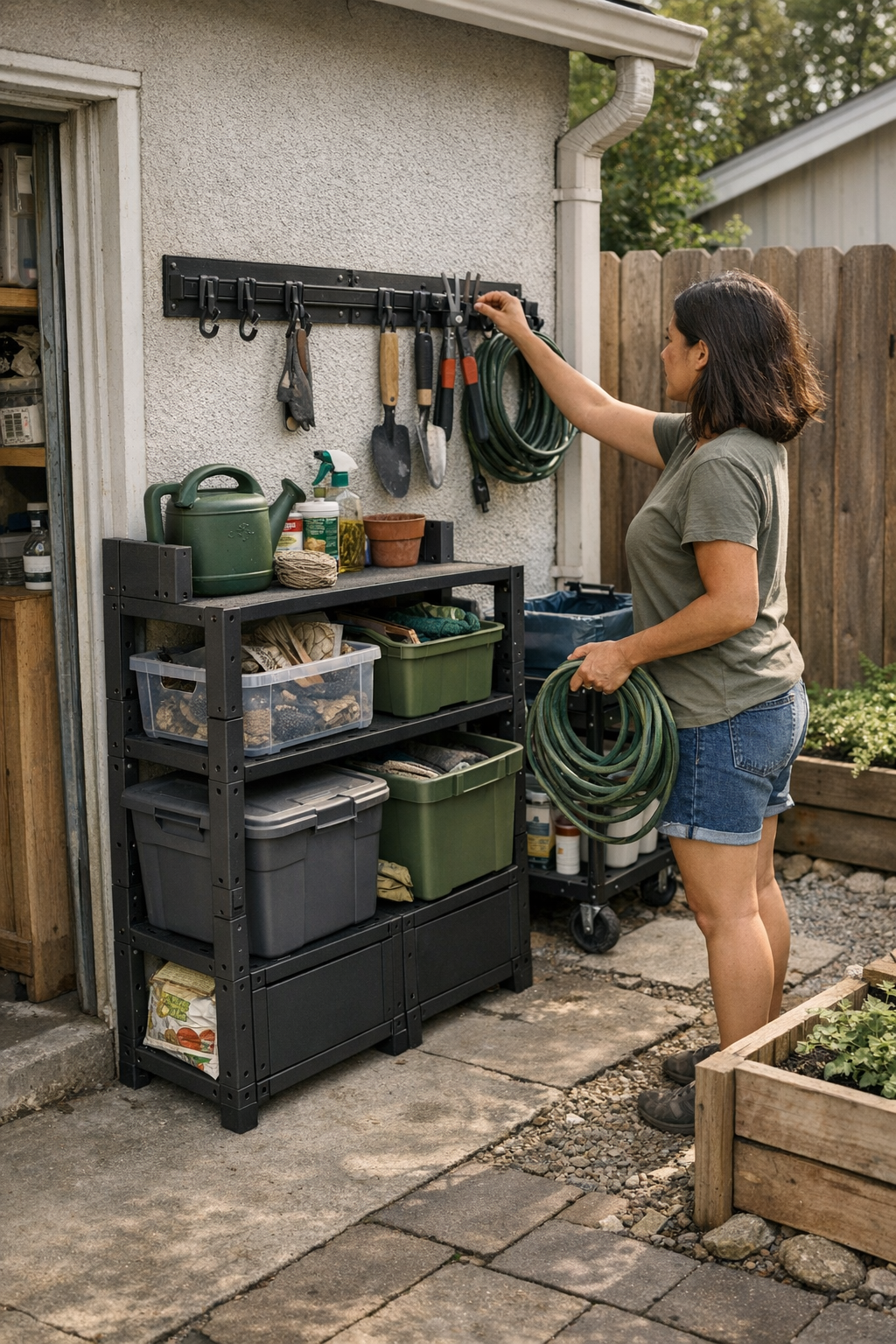
    The difference between setups that last and setups that fail is simple: how easily things return to their spots in real time. Instead of forcing everything by type, try shaping zones along the paths you actually walk and reach. Hang shears or a hose by the gate—not on a panel behind a locked bin. Overflow bins? Place them further from essential footpaths, so they absorb seasonal gear without swallowing daily tools.

    Leave the runway clear: Keep at least a stride’s width—about 90 cm—free of stuff in front of all key storage. This space isn’t extra; it’s vital. It means you’re never shifting bikes just to open a box or tripping over boots on the way to the compost. When the main routes stay open, clutter has nowhere to sneak in and resets shrink to seconds.

    Zones That Survive the Real Test: Repeated Use

    The sharpest setups carve out visible, functional boundaries. Wall racks shouldn’t just fill space—they should live directly on your everyday path, right where your hand naturally reaches mid-task. Movable bins or lidded baskets catch overflow but don’t live in the line of fire. If a routine task means stepping around or shifting anything, that’s a setup signal—a pause to rethink rather than accept another week of friction.

    When “clear path” and “storage” are unmistakable, even after a stormy weekend or a burst of backyard games, it’s obvious: resets are quicker, no one defaults to “just drop this here,” and storage performs instead of getting in the way.

    How to Spot Weak Points Before They Swallow Your Space

    Warning signs are easy to miss until they multiply:

    • Midweek, you’re always reshuffling—to make something fit, to reach a hidden rake—though you “should have enough room.”
    • That strip under the wall rack? It’s a magnet for buckets, shoes, or garden toys that never move back.
    • The same dead corner attracts clutter no matter how often you clear it.
    • Your main route gets pinched, forcing odd detours, especially in rain—now items are not only in the way, but sometimes outright dangerous.

    If you’re working to stay ahead of the mess instead of casually maintaining, it’s a sign: your setup doesn’t match your movement. Real organization isn’t static; it lowers maintenance, not just on day one, but every time you pass through.

    Real Tweaks, Lasting Impact

    What works aren’t wholesale overhauls, but small, targeted changes:

    • Mount racks only where you actually reach for items—not to fill an empty panel.
    • Guard floor space: footpaths aren’t storage. Zone them, protect them, clear them after each use cycle.
    • Give overflow purpose-built homes—flexible bins, movable baskets—so quick dumps don’t become permanent piles.

    The test? Return to your setup after three or four normal weeks. Where does the friction collect? What stalls a quick reset? Better to adjust zone layouts and access points while the pattern is still fresh—waiting turns an inconvenience into a fixture. The setups you want to keep are the ones that are hardest to derail, not just the ones that look best on a clean day.

    The setups that survive aren’t the bulkiest—they’re the ones that keep up with the real, repeated moves of people, tools, and everyday outdoor life. When storage works around your actual rhythm, yardwork stops being a series of resets and finally becomes routine.

    Find practical outdoor organization setups and real-use solutions at TidyYard.

  • Ending Cat Play Early Reduces Mess and Simplifies Daily Care

    Finishing play with your indoor cat shouldn’t mean starting another cleanup sprint—but it does, unless your setup actually fits the rhythm of daily life. As cat toys roll straight into water mat edges, bowls block the path to the litter scoop, and shared corners turn into an obstacle course of crunched toys and tracked litter, one thing starts to show: routines that “look fine” break down fast under repeat use. That gap between a tidy layout and a functional one often appears after the second—or seventh—reset of the day.

    When Play, Essentials, and Everyday Life Collide

    Few homes separate cat play, feeding, and cleanup. Instead, a single stretch of floor becomes a shifting stage: breakfast at the edge of a walkway, lunchtime refills beside half-buried toys, late-afternoon play scattering foam balls over both resting mats and human traffic lanes. Cat gear drifts from zone to zone—one moment, the handled toy basket is close, the next it’s just out of reach when a runaway mouse wedges behind the water bowl. Cleanup bins look neat on the shelf, but always feel one step too far when wet prints or crumbs redraw the floor plan mid-routine.

    Overlapping space isn’t just a quirk—it’s your daily grind. A setup can make sense after a deep clean, but by day two, you’re nudging aside a kickoff ball just to pick up the food bowl, breaking your stride to mop a sticky paw route past yesterday’s “clean” mat, or reaching your full stretch for wipes because toys keep migrating into the corner where you meant to sit down. It’s not an accident—when play, feeding, and cleaning collide, convenience quietly evaporates unless your layout adapts under pressure.

    How Play Timing Affects the Hidden Workload

    Letting play surge until your cat goes full-pounce means the aftermath waits for you—scattered toys under appliances, water arcs just past every mat edge, and a rinse of litter across tiles you already cleaned. The reality: peak-excitement play never stops at “just fun.” Instead, it leaves the next play start slow (as you hunt for lost toys), blocks access (“can’t reach that bowl without moving three things”), and makes you retrace steps for a wipe-up that’s always a bit too late.

    The post-play mess isn’t background noise. Water that escapes the mat slows every crossing with a hidden slick. Toys jammed under furniture make each play session a crawl-fest. If you miss a corner during a sweep—because a ball darted out of sight—the problem circles back the next time you refill the bowl, always interrupting a different piece of your day.

    Spotting the Pinch Points in Your Own Routine

    The real challenge isn’t the grand “reset,” but the quiet fray between. Mats get realigned, toys are briefly binned, bowls rinsed—yet, in less than a full day cycle, the same trouble returns: balls returning to the kitchen, splash marks migrating across hallway tiles, and toys sneaking up against the rim of the litter mat just as you plan to relax.

    Here’s where the grind becomes visible, especially when:

    • Feeding, play, and scratch pads crowd the same square foot of space.
    • Play runs until the “zoomie” surge makes retrieval nearly pointless.
    • Cleanup supplies look organized but force a detour for every small fix.

    The impact isn’t only visual clutter—it’s routine drag: every refill slowed by toy rescue missions, every intended quick wipe becoming a scrub, every “clean” rest area now hiding the day’s third wet paw print. Not enough to warrant a full reset, but always enough to add friction.

    Ending Play Early: The Hidden Key to Less Cleanup

    One of the simplest—but least obvious—ways to cut repeat work is ending play a few minutes before chaos peaks. Stop when your cat’s interest shifts from darting to watching, not when the room looks like a toy tornado landed. This isn’t about curbing energy; it’s about making the aftermath manageable.

    If play runs to max speed in a shared zone, expect:

    • Toys hiding where you’ll forget until the next lost-item search
    • Splash marks tracking just beyond where the mat can shield
    • Litter drifting further with every energetic dash
    • Rest mats in need of a second, unplanned reset

    Pushing “stop” while your cat is still shifting gears gives you a window: toys are easy to scoop up, mats haven’t moved off course, and cleanup takes two minutes—not fifteen. Miss that window, and the next simple reset becomes a scavenger hunt. It’s not about controlling play, but choosing a stopping point that prevents the room from tipping over into disorder you’ll feel for hours.

    Toy, Water, and Feeding Mat Logistics: The Small Details That Shape the Day

    It’s the detail work that either saves or sinks your routine. If you gather toys as play slows and actually store supplies within reach—not just visible, but grabbable—retracing steps vanishes from your list. A handled basket parked near—but never in—the splash zone keeps balls from escaping under the fridge each afternoon. Water bowls, when kept clear of high-traffic play lanes, mean fewer slip hazards and fewer surprise wipes. And mats that don’t double as a highway keep their dry “reset” status hours longer than a layout where every chase ends with a bowl skidding out of place.

    Even a setup that looks photo-ready won’t last if every round of play means moving supplies back to where you should have left them—or if each feeding ends up tangled with leftover play gear. Without a real wind-down step, you’ll be repeating the same retrieval run, not because of chaos, but because the structure itself has no buffer.

    Real-World Snapshots

    You see it in scenes that don’t make the highlight reel:

    • The ball rediscovered under the fridge, again, three days running
    • The water bowl that never seems to stay dry past the first post-lunch chase
    • The handled storage you use—when you remember it, right before every stray toy vanishes out of reach
    • The mat that looks untouched after reset, but always needs a tug and shake because the chase veered off route
    • The wet paw print marking a human hallway, trailing right past the litter corner, no matter how well you cleaned last round

    The drag compounds. Suddenly, every water refill is delayed by a toy in the way. The sweep you meant to do “in a minute” now needs a trip to the closet, because the wipes you set out have migrated after the last tidy-up.

    The Difference: Looks Clean vs. Feels Easier

    Plenty of setups hold their shape at first glance—but break under daily realities. You tidy everything at 8am, but by noon, toys, water arcs, and scattered litter have already shaved minutes off every task. Order by sight isn’t order in use; most routines break down where the cleanup repeats, storage drifts, or access slows every small job.

    What actually improves day-to-day flow isn’t just storage or bigger mats—it’s the timing: quitting play when action fades, grabbing toys before they become missing-in-action, and placing essential storage within reach throughout the day, not just after a reset. That’s the shift that makes spaces less prone to “find and fix” drama in the middle of other routines.

    What Consistent Wind-Down Looks Like

    The aim isn’t to cut off fun, but to notice when play shifts: chasing turns to watchful pausing, paws drop into slow-motion, or your cat glances toward water or food. That’s the prime time to reclaim toys and slide your setup—not just back to tidy, but onto a path with fewer trip-ups, fewer wipes, and less repeated searching.

    After a few days, you’ll feel it: play ends before the chaos, toys stay in reach, and the ripple effect—pausing, wiping, retrieving, resettling—quietly fades. It’s not decorative, and rarely “finished,” but it’s immediately less disrupting. One less repeat trip. One less puzzle to solve mid-chore.

    Why It Matters for Your Setup—Beyond the Tidy Surface

    Even with spacious layouts and “smart” bins, the real test comes after multiple rounds: toys still migrate into walkways, small splashes linger, and what seemed like the right setup starts breaking your stride. The actual advantage shows up when, after a week, the space maintains its shape not because you’re tidying more, but because play, care, and cleanup don’t force repeat detours through your day.

    If you’ve shifted everything, tried bigger mats, or reorganized bins, but still find repeat friction—try this: end play a bit earlier, reclaim toys before the last surge, and keep supplies right where you’ll use them, not where they look best for photos. In the lived-in StillWhisker world, the difference isn’t in storage volume or mat

  • How Structured Underbed Storage Bags Simplify Seasonal Bedding and Coat Organization

    Underbed storage promises a clean floor and closed closet doors, but in real bedrooms, its flaws show up fast. Push a soft storage bag under the bed and the chaos is only hidden—until the first time you need a blanket on a cold morning, or try to return a comforter in a rush. Suddenly, that tidy look collapses: categories mix, bags sag, and finding a single item means dragging out a limp sack packed with the wrong things. The difference between “looks organized” and “actually works” isn’t obvious at first—it’s the slow build-up of hassles with every reset.

    Where Hidden Storage Helps—and Where the Trouble Starts

    In cramped bedrooms, parking off-season layers and extra bedding under the bed isn’t optional; it’s survival. Soft underbed bags tempt with quick results: cram, zip, slide, done. For a week, maybe two, the floor stays clear. But friction builds fast. Once bags lose their crisp shape, edges slump, and categories leak together, the setup starts working against you. What was “winter coats only” is soon a dumping ground for hats, towels, and last-minute overflow. The bag jams against the bedframe. Retrieval becomes a knuckle-scraping, two-handed struggle—and the neat system breaks on the first rushed morning.

    The Real-world Test: Repeated Use, Not Just First Impressions

    First impressions are worthless in storage. It’s month three—short on time, long on mess—when the system is truly tested. Unsupported bags sag and lose their grip, so pulling one out means wrenching at misshapen corners that snag the carpet. Inside, any original “bedding only” zoning fades as the bag turns into a stew of last winter’s coats, summer blankets, and whatever else fit in the last reset. Need a single comforter? You’ll pull out half the contents, wreck the folds, and likely shove it all back even messier. The ease of day one is replaced by sluggish access and a muddled mental map of what lives where. Clutter piles just out of sight—until the next time you’re forced to dig for something specific and the whole zone falls apart again.

    • Bags deform and collapse, making them hard to drag or slide without scraping your hands.
    • Contents drift—your “one job” bag now leaks categories, and the old order dissolves.
    • Retrieval of a single item disrupts everything, forcing repeated reshuffling and slower resets with every use.

    Why Bag Structure and Category Rules Matter

    Category drift is the hidden saboteur of underbed storage. Overloaded or structureless bags flatten out and swallow boundaries. A container that started neat soon melts into a limp pile, grabbing at the floor, dragging in random items with each return. Heavier bedding crushes lighter jackets, and seasonal clothes come back wrinkled or even unwearable. The pain point isn’t just visual—it’s the creeping routine delay, the forced half-minute kneel to fix a mess that used to be stored “out of sight, out of mind.”

    Each retrieval isn’t a clean slide—it’s an awkward dig, an extra shuffle, or a full reset nobody has time for. Purpose and shape disappear, and with them, the speed and clarity that make the zone usable in the first place.

    A More Workable Pattern: Moderate-Sized, Defined Bags

    The shift happens with structure. Bags with built-in support, inserted trays, or crisp sides hold their edges and defend their zones. “Blanket only” actually means “blanket only.” A category stays obvious. Slide out, grab, return—without the scramble. Instead of dumping out three things to rescue one, you take just what you need in seconds and slide everything back into place without a hitch. The underbed setup graduates from hidden dumping ground to a reliable part of the routine—fast in, fast out, minimal collateral mess.

    Everyday Scenes: The Hidden Costs of Oversized Bags

    Supersized bags look like space-savers, but in small rooms, they’re a trap. Cram too many mixed items into one big, soft sack, and you’re punished every time you reach under the bed. Awkward lumps bulge against the bedframe and block the way out. Returning items means wrestling slack corners and heavy, sagging contents—often dragging the rest of the load with you. Instead of a streamlined storage zone, the whole underbed area feels slow, heavy, and unwelcoming. Routines break down as overflow blurs categories and nobody remembers which bag holds what, or even bothers sorting at all. What you gain in raw capacity, you lose in everyday usability and speed.

    Making the Underbed Zone Work: Practical Adjustments

    The easiest win is focus: assign each bag to a single purpose and stick to it. Comforters here—never coats. Segmentation matters more than the bag itself. Inserting a shallow tray or using a box under the bag creates boundaries and prevents corners from collapsing. With clear purpose and shape, items stay found, resets move quicker, and the daily drag fades. Slide out, grab, slide back; minimal reshuffling and less chance of the zone devolving into mystery storage. The difference isn’t the initial look, but how the setup still works after a month of school runs or late-night laundry returns.

    Two Small Tips from Repeated Use

    • Place a shallow tray or rigid box under every soft bag. This anchors edges, keeps categories distinct, and prevents bags from spreading or folding in on themselves with use.
    • Never mix jobs or overload a bag “just this once.” What starts as a shortcut ends up fueling runaway mess and lost time; keep lines sharp for less wrangling later.

    Signs of a Setup That’s Actually Working

    The test isn’t on a clean-up day—it’s in the friction-free weekday rush. When the system works, you forget it’s there: no bag corners poking out, no slow, awkward pulls, no guessing where the spare pillowcase went. Underbed zones that stay defined support routines instead of slowing them down. Even at the end of a long week, the same bag for the same job can be opened and closed without spilling its contents or shifting other categories off balance. The space doesn’t just appear tidy; it actually stays usable—even under pressure.

    In the end, real underbed storage isn’t about maximizing volume or hiding mess, but about setting—and keeping—boundaries. The reward for structure and discipline isn’t a pretty photo; it’s not wasting five minutes wrestling with last season’s jackets when all you need is a blanket. That’s the difference between hidden clutter and a storage solution that holds up not just on move-in day, but through every cycle of use.

    Visit Gridry for practical storage solutions.

  • Why Your Pet Travel Setup Slows You Down After Repeated Stops

    The real test of any pet travel setup isn’t how it looks leaving your driveway—it’s what happens when you stop, start, reach, and reset again and again. That perfectly zipped bag with wipes “in their place” feels smart until you’ve made three quick stops, handled muddy paws, and fumbled for the one thing you actually need. Suddenly, the bag that promised organization starts slowing you down. You’re prying at deep pockets while your dog wriggles to escape, searching for wipes layered somewhere beneath snacks and leashes. Each “prepared” section demands an extra step you don’t have time for, and what looked efficient now delays movement, interrupts cleanup, and piles on low-level stress. This is the gap PawGoTravel is built around: what holds up for a photo, and what holds up to real, repeated use.

    When “Neat” Stops Being Useful: The Hidden Costs of Layered Packing

    Most pet travel bags look neat on day one. Bowls, wipes, and leashes each have their tiny designated spot—a zipped compartment, a nested pouch, a spot under the main flap. That order feels good until routines stack up and fast access matters more than photo readiness. You rush off for a trail walk, wipe paws before re-entering the car, dig for a forgotten leash, or try to swap water bowls in a crowd; suddenly, every hidden pocket becomes an obstacle instead of a solution. The benefit of tidiness disappears when you’re racing through the same pack-and-unpack cycle at every stop.

    Organization that works when everything’s still goes sideways during real-life pet travel. A restless dog shifting next to you, a call from across the parking lot, or an unexpected mess—these moments turn tidy layers into a source of real friction. That instant when you need one urgent item, every extra zipper or stacked compartment steals back the time you thought you’d saved by packing “right.”

    A Familiar Scene: The Stop-and-Go Scramble

    Midway through a road trip, you slide into a crowded rest area. Your dog’s awake and energized, pulling you toward the exit as you try to grab a bowl. But the bowl’s jammed at the bottom, trapped under jackets and straps. Unpacking one thing shifts another: leash clips slide behind bag dividers, wipes disappear inside zippered pouches you never should have closed. Rummaging for even the most basic item turns a fast pit stop into a disjointed pause, made harder with a dog leaning across the seat, ready to jump.

    Frustration in the Dog Zone: Repeat Trouble Spots

    The friction isn’t obvious at first, but shows up with repetition. After the fourth stop, you catch yourself reaching through three layers for a leash or wipes—again. Every “protected” item means another pause, another shuffle, another break in flow. Neatness masks how often your hand lands on the wrong section, reminding you that eliminating surface mess isn’t the same as making your pet travel setup truly work under pressure.

    The dog-handling zone becomes a repeated logjam. As trips unfold, each hidden item makes transitions (in and out of the car, between leash and seat, cleanup and restart) slower. The cumulative drag of reshuffling isn’t dramatic, but it chips away at both patience and rhythm—it’s not just minor delay, it’s real friction that piles up across every outing.

    The Split Between Owner and Pet Gear

    Owner and pet gear inevitably collide. Water bowls end up under human snacks. Wipes migrate beside hand sanitizer. Your dog’s leash gets tangled with your spare hat. What looks compartmentalized spills over in motion, forcing you to reorganize after almost every stop. It’s not just about knowing where each thing is—it’s about how easily you can reach what matters when the dog’s squirming, bags are shifting, and you’re trying not to lose your spot in the flow of travel. Even a small fumble can turn a simple stop into a micro-chaos scenario that resets your whole kit.

    Visual Order vs. True Accessibility: Why Most Setups Break Down

    On paper, more sections seem like a solution. In practice, every extra pocket or zipped layer is one more point of failure when the pace speeds up. Repeated use exposes the gap: a setup that’s “ready” at the start actually blocks you when speed or one-handed handling is needed. After a couple of stops, you’re not using the compartments as planned—you’re bypassing them, leaving things half-zipped, or staging wipes and bowls in plain reach out of desperation.

    Friction peaks when the item you needed “just in case” has to be tugged out from under three other “organized” tools. Even a single zipper slows the snap decisions and free hand you need during live travel—especially as the dog tugs, waits, or tracks in another layer of mud to clean. Function drops and impatience rises, all because usability got traded for visual calm.

    Why the Problem Grows Over Time

    Initial excitement about compartmentalization fades fast as the day wears on. Small inefficiencies—hunting through pouches, flipping open sections, untangling clipped gear, squeezing wipes out of too-tight sleeves—multiply with use. Every slow search is an interruption; every repack turns a quick stop into a drawn-out reset. Your setup didn’t get messier, it just stopped keeping up with real timing. And dogs don’t wait while you fix your system.

    Shifting to Real-World Flow: Making Essentials Instantly Reachable

    The most useful setups shift from hiding every item to keeping vital gear at hand. What matters: fast wipes, one-grab bowls, leash clips exactly where your hand expects them—not wherever looks neat. In practical terms, this means:

    • Wipes in a mesh pocket: Grab, clean, done. No hunting, no unzipping. Resets for the next muddy paw in under five seconds.
    • Bowls in seat-side slots: Lift, fill, and move—without unstowing half the bag or forcing your dog to wait longer for water.
    • Leash clip on a soft loop: No more digging past covers or struggling at the car door. The leash is instantly where you reach, even with a restless passenger.

    One tweak—the decision to make wipes accessible on the bag’s outside—turns cleanup from a self-imposed obstacle course into a smooth step. The best layout is less about maximizing storage than about minimizing lost motion, especially during those quick, repeated transitions travel demands. Your setup answers real travel logic, not just best intentions.

    Open Access: Managing “Mess” Without More Layers

    There’s a difference between exposed and chaotic. Leaving high-use items in visible, reachable spots isn’t a mess—it’s practical. The urge to tuck everything away makes sense—until it breaks your flow. Prioritize access over hiding, especially for wipes, bowls, and leash connectors. The result: fewer full-bag reshuffles, less interruption, more reliable restart after each stop—even if your kit looks a bit more lived-in by the end of the trip.

    Recognizing the Repeated Trap: Looks Ready, Works Slow

    Most pet travelers repeat the same cycle: pack for neatness, discover in the middle of the trip that their “organization” is undermining them. The weak points never disappear—just shift around. A bowl still ends up under three layers. Wipes still end up somewhere inconvenient. If you find yourself reaching, digging, and compromising at every stop, the real cost isn’t a mess—it’s momentum lost, patience spent, and flow interrupted by your own setup.

    Real progress means being able to clean up, grab water, and handle your dog on the move with seconds, not minutes, wasted. The difference is tangible every time you loop from trail to car, seat to stop, over and over. When setup supports repeatable, fast moves, the whole trip gets lighter—your bag and your mood included.

    Small Wins that Add Up: From Friction to Flow

    The most effective pet travel setups don’t feel perfect—they simply erase the hassle that usually returns in motion. True comfort isn’t about impressive packing, it’s about not noticing your kit at all while juggling cleanup, leash handoffs, and routine surprises. Each minor fix—making one item truly accessible, separating what the dog needs from your snacks, simplifying resets—pays off with every trip, and every stop where you don’t have to think twice about what’s next.

    Find more thoughtfully designed, real-world pet travel gear at PawGoTravel.

  • Choosing Between Wire Shelf Baskets and Solid Bins for Closet Organization

    There are two closet moments that tell you everything: grabbing something in a rush, and putting it back later—half paying attention, half balancing groceries, coats, or bags. That’s when your storage setup reveals its true character. If every reach is smooth, if every return is obvious, you barely notice the shelves. But when your bins and baskets fight your habits—items tipping, piles collapsing, odd socks slipping out of sight—order unravels fast. The choice between wire shelf baskets and solid shelf bins doesn’t just shape visual neatness; it shapes whether your routine flows or silently grinds to a halt.

    When Routines Collide with Storage Reality

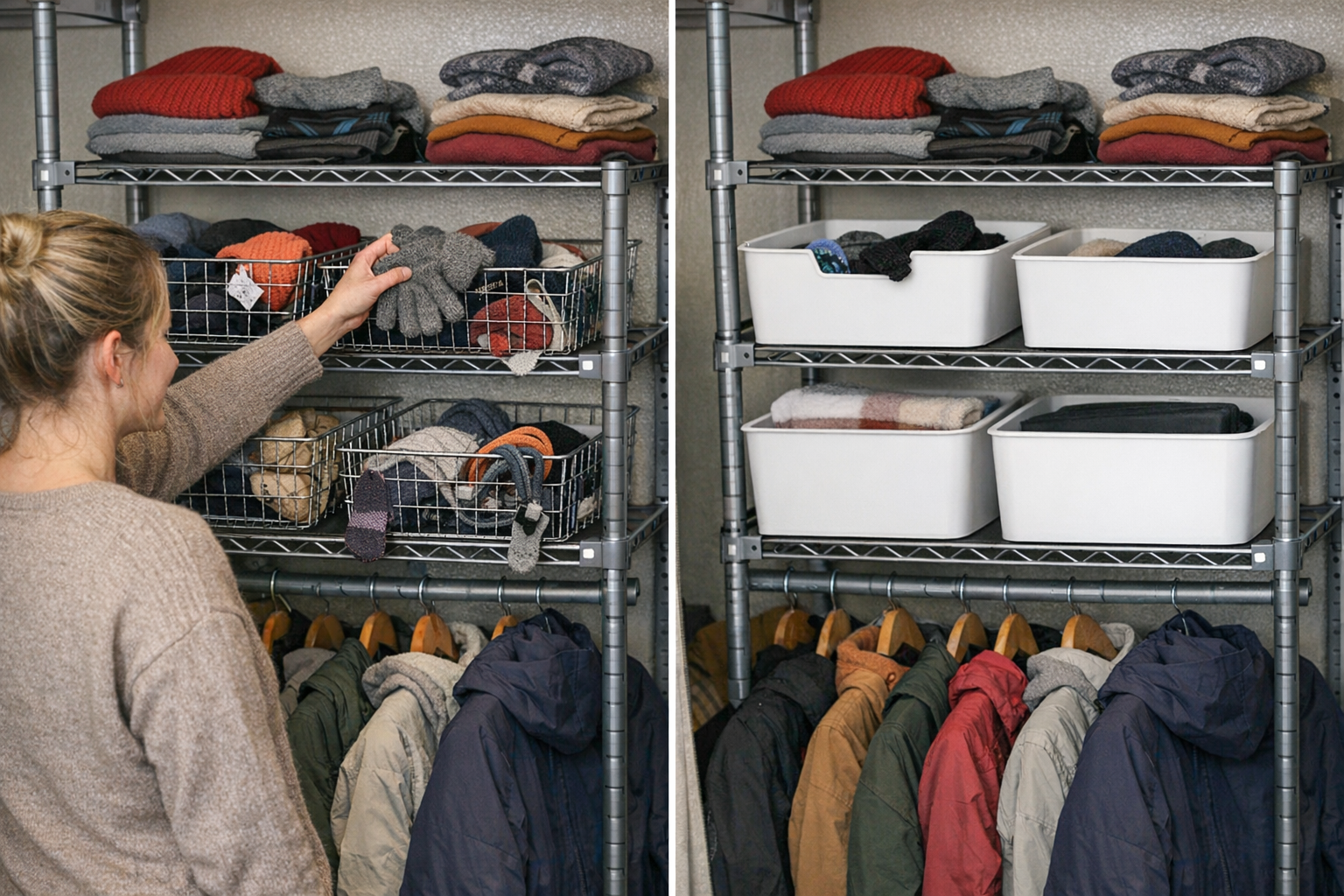
    Most bins and baskets look fine the first day. You sort, stack, and close the door on tidy lines. But daily life has other plans: you reach for gloves on a freezing morning, toss hat and scarf after school, dig for a missing charger in a rush. This is where small frustrations stack up. Wire baskets start to sag with socks poking through or belts slipping out the side. Solid bins stack high, and suddenly you’re lifting out two just to get to the third. The test isn’t how it looks after a reset—it’s whether you can maintain that order through unplanned grabs, returns, and family traffic.

    Wire baskets make everything visible and aired out—until smaller pieces refuse to stay put. Bagged snacks, kids’ mittens, or hairbands drift through the gaps or wedge in odd corners. It’s workable if you only store big, steady items—towels, extra linens, chunky sweaters—but the moment your setup faces real-life clutter, things start showing up in the wrong place. Resetting that shelf means a hunt: socks hiding behind frames, scarves tangled through the wires, category boundaries blurring every busy morning.

    Solid Bins: Tidiness That Can Cost You Time

    Solid bins promise containment. No gaps for clutter to escape, just a lineup of matching calm. Everything looks in control. But what’s hidden is also easy to forget. You label, maybe, but after a week you’re guessing: which bin has extra shopping bags? Where did those winter hats end up? Each retrieval becomes trial-and-error—lifting two bins, then a third, until you finally find the right roll of tape or the lost glove, while stacking and restacking the rest.

    As bins multiply, access slows down. In a jam-packed entryway closet, suddenly it’s not mess you see, but time slipping away. Getting out the door means moving bins just to get to the one you need. The surface stays neat—but the routine underneath quietly bogs down. If every small access requires a reshuffle, you’ll eventually start skipping resets. Soon, towels and gym gear start mixing, and yesterday’s order erodes from the inside.

    Scenes from a Closet: The Repetition Trap

    Picture a hallway closet built for everything: reusable bags, hats, baseball mitts, soccer socks. On a Monday, both bin and basket arrangements seem workable. By Friday, the story is different. Wire baskets reveal a trail of gloves, singles peeking through railings, one sock wedged behind where it’s fallen out. Solid bins, meanwhile, protect order—until you need the bottom bin and wind up pulling out most of the stack, arms full, items landing in new piles each time. Every restack jumbles categories, and by the end of the week, you’re rerouting the same stray items, never quite sure where they belong.

    That’s how “organizing” falls apart: not from one big mess, but from a dozen tiny misalignments between containers and daily routine. Suddenly you’re reshuffling—stacking, restacking, finding homes for things that drift—and the irritation quietly builds. The system stops serving you and starts needing service.

    A Smarter Mix: Using Both to Match Real Life

    The real answer isn’t a single solution—it’s recognizing what actually gets used, and how. Swap out deep, solid bins for shallow, open-top bins in your most-used spots: gloves, hats, scarves now live in easy-to-grab trays. Instead of digging, you see and snag. Wire baskets? Limit them to what behaves: spare towels, clean jerseys, or any item that won’t slip through or tangle. The point isn’t showroom perfection, but realistic speed. Your closet looks maintained because it’s easy to reset—not because you obsessively restack after every rush hour.

    Small Tip:

    Don’t just trust memory. Label bins, or use translucent options—a one-second glance cuts five steps of trial-and-error. No more pulling out bins only to find them empty or off-track. This tiny habit slows future chaos before it starts.

    Stacking Up: Shelf Space and Sustainable Order

    Solid bins stack sturdily—reclaiming vertical real estate on packed shelves. But as the column grows, so does the access cost. Digging through three bins for the bottom item means more disruption, and with overloaded bins, shifts get heavier and sloppier. Wire baskets can’t really stack: tiered, they shed small items or leave unstable gaps. Yet a wire basket at the top—holding light, rarely-used items—makes use of airspace without inviting daily wrestling matches.

    Ask yourself honestly: Will you actually restack three bins each time? If not, one layer of bins—even if it means sacrificing some vertical capacity—delivers speed and repeatable order. Convenience isn’t just saving space; it’s saving your routine from slowing down.

    Category Discipline: How You Assign Space Is Everything

    Don’t let any container—wire or solid—turn into a random catch-all. When every basket and bin has a single job, your closet answers back fast: hats are here, scarves there, sports gear gets its own home. The more you mix or overfill (half hats, half socks, emergency odds-and-ends), the messier the shelf resets get—and soon, the old cycle of lost time returns. Sharp categories, not just sharp-looking bins, are what actually save you minutes every week.

    Real-World Tip:

    If you’re shuffling extras between bins or watching categories migrate, it’s time to split them. Two purpose-specific bins will always be easier—and faster—than one overstuffed “miscellaneous” bin you keep avoiding.

    Beyond Looks: How Small Storage Swaps Reshape Everyday Flow

    No bin or basket redesigns your habits on its own. But matching container choice to your real categories—depth, visibility, how often you reach—quietly shifts a closet from staged “after” photo to a system that holds up week after week. The true test? Whether you can reset your closet in seconds after a chaotic morning, or whether every reset just adds to your resistance. A shallower bin at eye level here, a wire basket for gym towels there—these barely-noticed tweaks are what keep order alive in busy homes long after the first organizing spree fades.

    Looks might fool you, but function never does. The system that survives five busy Mondays is the one you’ll trust, use, and repeat. That’s how storage becomes background calm, not a source of daily tension.

    http://closetworks.myshopify.com

  • Why Practical Pet Care Routines Beat Perfect Setups Every Time

    Why Pet-Care Setups Fail Long Before They Look Messy

    Most daily pet setups don’t break down with a dramatic mess—they fail in quieter, repeated ways long before anything looks wrong. The water bowl you refill by habit is fine—until you’re stuck with an empty jug and one more unexpected trip because nothing is where you need it. The feeding station you called “organized” ends up slowing you down, again, when the scoop is tucked away or the towel for spills vanished somewhere else. If you find yourself making extra moves for basics, your system is quietly making life harder before it ever looks out of control. This is the zone where good routines go stale: not in disaster, but in small, missed details piling up, one friction at a time.

    Everyday pet care doesn’t crumble all at once—it drags out in moments when you’re wiping twice, doubling back, or moving clutter to reach the thing you came for. “Looks good enough” setups—easy resets, visible tools, direct access—beat any system demanding even one extra step too often. If you keep having to run for basics that should be right there, that’s the difference between a routine that survives daily use and one that quietly wears you down.

    The Real Test: Repeated, Real-World Use

    It doesn’t matter whether you’ve got a dog, a cat, or both—the actual test isn’t a tidy setup after you stage it, but how it holds up during the fourth refill-and-wipe, or late-night cleanup round. Take the wipes near the door: it sounds clever, until your muddy dog drags you inside on a leash and you’re left staring at an empty countertop because the wipes slipped behind something. Mud tracks in, not because you’re careless, but because the setup failed under pressure.

    Grooming tools are the same story. Leave the slicker brush “out of sight” for a cleaner counter, and suddenly you’re searching for it while the cat sheds on your shirt. Every step wasted or delayed turns one minute of care into five, looking for a basic that should have been within arm’s reach. Order is only real when it stands up to the chaos of repeated, unscheduled moments—not just how things look for a photo.

    Invisible Friction: Where Setups Go Wrong

    The gap between real-life pet care and “spotless” pet care is where most problems hide. Resetting an area to perfect after every use never lasts through back-to-back mornings, rushed nights, and interruptions. Towels migrate across the house. Bowls disappear just when you’re already carrying too much. Messes don’t wait for your routine—they show up before you’ve finished the last reset, and suddenly “just one more step” turns into repeated, silent stalling.

    During the evening scramble, the dog waits for that wipe-down, the cat circles again, and you’re chasing down a scoop or towel that isn’t where you remember. One tiny gap in the system—one item out of place—triggers a chain of skipped wipes, dishes piling up, and chores quietly postponed for “later.” The cost is hidden, but real: work stacks up faster than time to handle it.

    Scenes from Real Life: Small Breakdowns, Big Cumulative Cost

    • You reach for the food bowl, only to move aside yesterday’s mail or a stray shoe—again—before you can even get started.
    • It’s morning and you want to wipe down the water mat, but the only towel is missing or still damp from yesterday’s bath.
    • You have wipes in the cabinet, but getting them means risking a wiggly dog escaping, so you skip the wipe and dirt ends up on the carpet.
    • Toys and pet gear keep migrating across the living room, taking over your shared spaces and adding another mental reset you can’t ignore at the end of the day.
    • The grooming brush isn’t where you left it: now a “quick” touch-up takes minutes, and your next attempt gets delayed again by the missing item.

    These aren’t messes that blow up—they’re delays and detours that erode your energy until you’re always behind, spending more time shuffling and resetting than actually caring for your pet.

    Function Trumps Appearance: What Works Better

    The most reliable pet-care setup isn’t about matching baskets or hidden storage. It’s about speed and reliability—like a hand towel hooked right next to the bowl (not folded away), or a brush left by the back door so grooming happens the second you need it. Visible, ready-to-grab basics beat clever storage every time: less time spent rearranging, fewer skipped steps, less buildup from unfinished routines.

    If you can finish a reset in seconds, you’re less likely to skip it, and less likely to let problems pile up. The setups that look tidy but force you to hunt for an item, fetch supplies, or reorganize throughout the day will always break down at busy times. True function is about friction disappearing—appearance follows.

    How to Know Your Setup Works

    Ask yourself: Are the day-to-day basics (towel, scoop, brush, water jug) always in reach—even when your hands are full or the routine is interrupted? Is one item causing you to pause or double-back almost daily? Does the area seem tidy but still drag out your refill, wipe-down, or grooming routine? If the process flows without missing or delayed steps—even as life gets busier—that’s a setup built for actual use, not just “good enough for now.”

    Chronic mess is less about what you see, more about layered slowdowns. When every piece is ready for repeat action—no doubling back, no skipped resets—routine care stays simple, and daily friction drops. If you struggle to keep up, it’s usually not you: it’s a sign your setup still demands too much repeat work.

    Make Momentum Your Goal

    The strongest change in daily pet care is making momentum automatic. Put cleaning supplies and feeding basics where you can see and reach them—no more hiding the essentials in favor of clean lines or unused “storage ideas.” Skip any layout that creates extra trips or minor delays in your reset. If something keeps slowing you down, move it until it works: visible, grab-and-go tools shut down most friction before it starts.

    What really counts isn’t how your setup looks post-cleanup, but how invisible it feels as you go about your day—during the many resets, not just one. Streamlined towels, brushes always in reach, basics ready on the fly: that’s what turns care from a drag into a routine you barely notice. For more ideas that make daily pet care easier to manage, visit CalmPetSupply.