
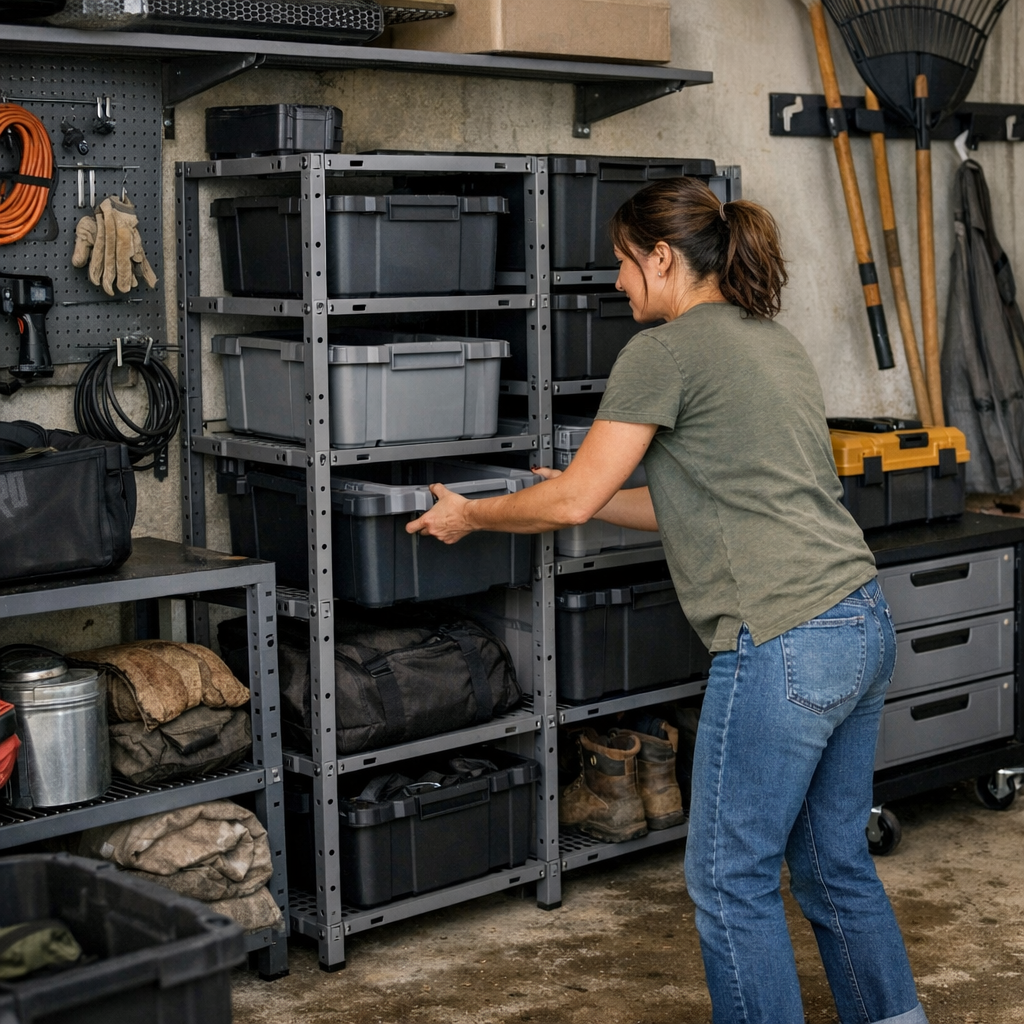
Organized storage almost always starts with optimism. In that first week after installing new racks or lining up rows of bins, everything snaps crisply into place. Every item has a clean home. Pathways are clear, workbenches are easy to reach. It feels like friction is finally over. But the real tests don’t come on setup day—they creep in slowly, as your daily rhythm starts putting pressure on those seams. Suddenly, the system that looked seamless begins to catch and snag on routine use. A once-perfect layout becomes the background noise of inconvenience.
The Neat Setup Mirage: When Order Hides New Headaches
On day one, modular storage is a fresh slate. You stand back, admiring the symmetry—bins perfectly flush with the wall, cabinets squared in each corner. But within a few quick cycles of real use, small annoyances start to bubble up. The cart that rolled straight to the workbench now has to detour around a stubborn pile left by the entryway. That “temporary” stack of garden tools in the corner? Suddenly it has squatters’ rights. Even with everything technically put away, one area closest to the door always fills up, swallowing bags and gloves with each day’s return.
This isn’t a matter of carelessness. It’s a side effect of treating appearance as function—confusing the visual order of bins and labels with the actual flow of your routines.
How Clutter Mutates in a Modular World
No plan survives contact with daily use. Rigid setups—no matter how modular they claim to be—install obstacles as soon as life deviates from their blueprint. A wall rack that “fills the space” translates to blocked corners you constantly shuffle around. Suddenly, to get a single tool, you’re reaching over carts or moving bins just to clear room for what’s next. Bins slide against each other so tightly nothing flexes. So the gear without a spot gets shoved wherever there’s a gap—often right in the path you need clear.
In practical terms, it looks like this: stepping over the same stack of totes every time you try to get to the back door. Positioning a mobile chest in the only spot it fits, then having to muscle it out of the way each time you need the rake behind it. Outdoors, hoses and hand tools pile up around the gate, since the storage system doesn’t open up enough for a direct return. The footprint is used, but not useful.
The Real Barometer: Can You Adjust Without the Domino Effect?
The promise of modular storage is adjustability. But if making a change means pulling apart half your wall, the “modular” claim rings hollow. If every tweak means emptying shelves, shifting bins, or disrupting the whole lineup, what should be simple turns into a time sink. True modular design should let you change a piece—add a shelf, widen a gap, relocate one rack—without taking everything offline. The space should flex without forcing a tedious reshuffle.
Real adjustment looks like this: you notice overflow forming near the entrance. Rather than dread a major teardown, you unclip two small panels, nudge one section a foot to the side, and open just enough room for carts to roll smoothly again. The rest of the system stays loaded. No pileup. No emptying bins. Minutes, not hours, to restore a clear path.
The Everyday Creep: When “Just for Now” Becomes a Daily Hassle
Consider a week in a busy garage. By Monday evening, everything’s tidy. By Thursday, that work zone by the wall has become a minor obstacle course. Each time you load out or return, unsorted gear builds in the same spot, steadily choking the main walkway. Getting a cart in or out becomes an awkward, multi-step shuffle. You don’t notice it happening in one big event—it creeps in through repeated, minor annoyances. The neat lines remain for show, but your mobility shrinks, and quick resets get sluggish. The system stops preventing mess and starts requiring extra effort to stay usable.
This is the dividing line: a layout that stores your stuff but interrupts your routine is still a friction point, no matter how clean it appears.
Fixing Bottlenecks Without Hitting the Reset Button
The beauty of modular storage—when done well—is that you can solve workflow headaches with targeted tweaks, not monumental resets. Faced with a clogged entry, you shouldn’t need to unload an entire wall. In practice, undoing two anchor panels and sliding a section outward by a single shelf-width can clear the way. Nothing gets dumped out or stacked elsewhere. The floor is suddenly usable, and movements become direct again.
The ability to make these small, strategic moves is where real flexibility lives. Access points reappear. Floor space isn’t doubled up as overflow. The system breathes with your routines instead of boxing them in.
When to Rethink Your Layout: Real-World Warning Signs
Keep an eye out for signals of a system grinding against daily life: narrow walkways that didn’t used to be crowded, tools that end up stranded in the same spot, repeated sideways shuffles to access a corner. If gear collects in familiar piles despite regular resets, or you’re forced to wriggle around the same cabinet edge every time you roll a cart, it’s not a passing phase—it’s a sign to adjust the pain point, not the whole system. Target the friction, reduce the busywork.
What Makes Modular Storage Truly Adjustable?
Not all modular systems are created equal. Durable construction matters—a lot. If shifting one section causes wobble or throws off the whole alignment, tiny fixes become new risks. The true test: can you detach, move, and re-anchor panels or racks without sagging, tilting, or needing to empty everything first? Sturdy panels and secure anchors let you flex the setup without sacrificing safety or ease of use. If a “modular” system can’t handle realignment on the fly, it’s just static storage in disguise.
Better Storage Habits: Tweaking, Not Just Tidying
The first setup is only a draft—never the final version. Expect edits. The minute you spot a pattern—overflow always in one corner, returns always blocking the walkway—move things around. Loosen up densely packed zones, even if it means the lines aren’t photo-perfect anymore. Modular is meant for evolving, not locking in. Don’t let bins cluster for weeks in a “temporary” zone that becomes permanent clutter. Embed quick, small resets after use instead of waiting until the pile demands an overhaul.
The result: less repeated shuffling, clearer walkways, and a system that keeps adapting to make your routines smoother instead of slower.
The Real Value: Storage That Changes with You
Modular storage isn’t about how sharp it looks in the first week. Its value shows up in the months that follow—in the ten-second fixes, the paths that stay clear, the corners that adjust to new habits or gear. If you can fix a bottleneck, open up a zone, or get a return flow moving again—without pulling apart the whole structure—that’s a setup pulling its weight. Functional order, not just visual order, makes the difference between a space that supports your routine and one that quietly interrupts it.