
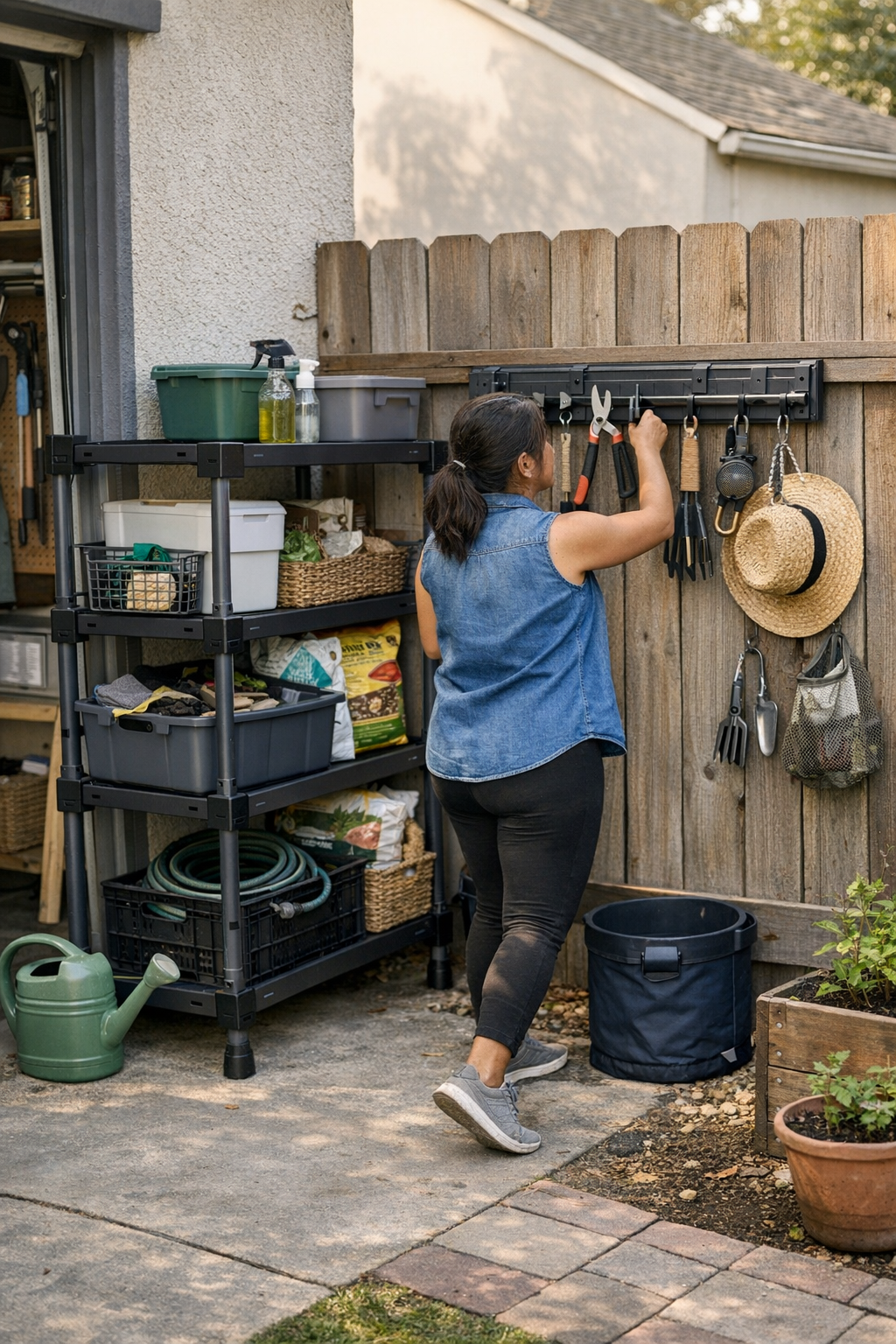
Most outdoor setups don’t collapse all at once—they slowly choke themselves, box by box, until even basics like walking through or putting things away become a problem. What started as a clear side yard or utility strip morphs into a gridlock of bins hugging every fence and scattered stacks narrowing every route. The pain isn’t usually a lack of bins or storage—it’s the constant push and pull against a layout that can’t handle daily, real-life mess. The real question: can your setup bounce back after a normal, messy day? Or is it designed for a routine nobody actually lives?
When Floor Bins Turn Into the Slowdown
Rows of bins seem like the obvious fix. Each scoop and soccer ball technically has a slot. For about two days, walkways stay open. Then someone slides a rake between bins because the lid’s awkward, a boot piles up sideways by the edge, gardening gloves get tossed on top. By Friday you’re sidestepping a jungle of bags, reaching over clutter, having to pull two bins forward just to get to the shovel you need. Every return turns into its own mini Tetris round.
What’s really happening? Floor bins soak up everything—including everything that doesn’t fit anywhere else. The more people dip in and out, the faster the domino effect—one person’s fast drop-off jams the next. Soon, bins are hidden by spillover gear and that “organized” row has become a buried obstacle. What should be a 30-second reset now means hauling, shuffling, and rediscovering what’s even under the top layer.
Dead Corners, Lost Wall Space, Lived-In Frustration
The problem isn’t just too many floor bins. Try adding a modern storage cabinet, and you’ll still end up with corners that gather overflow, tools balanced on fence rails, and “dead zones” that quietly stash every stray. Little by little, the gap between that back wall and the fence fills with stragglers: the ball pump nobody claims, a watering can balanced on top of a box, garden tools wedged in any open space. Wall hooks, if they’re not set for the things people grab daily, end up hosting random odds and ends—shoelaces, half-used seed packets, forgotten hats. The shed footprint technically fits the yard. But clearing a path through it feels like negotiating with debris that’s multiplied since last weekend.
It plays out like this: you go to return a bike, but the main shortcut is blocked by a canvas bag that’s toppled off a shelf, or someone’s left a bag of mulch smack in the walkway. The setup may look perfect on a cold morning, untouched. But by week’s end, most movement routes are a zigzag, each shortcut interrupted and every reset a slow negotiation with the heap you didn’t plan for.
Why Walkways Close In—and Resets Take Longer
The whole difference between “neat for a picture” and “usable every day” is in how return flow gets handled. If your setup doesn’t steer gear back to visible, reachable spots, overflow will always win. Maybe you buy more stackable bins or another stand-alone rack, but when multiple routines converge—kids, adults, guests—the congestion piles up right where people actually move: the edge of main paths, the tip of each corner.
Pretty soon, the most direct path is buried. Resetting means running detours, squeezing sideways, wondering if you even have time to put things away “properly.” Chaos doesn’t announce itself—instead, reset times just quietly double. The burning issue isn’t storage size, it’s the ripple of tiny interruptions: a rake leaning into a walkway, boots blocking a storage bin, each misplaced item slowing the whole area down.
The Five-Minute Trap: Real Use, Real Delay
It’s a scene that repeats everywhere: you’re coming in after work, clippers in hand, while someone else wheels a bike past. Hooks overhead look great, but three bags and a pair of rain boots have reclaimed the floor, muddling access to the storage door. Someone sidesteps the pile; a bag topples, spilling seeds or charcoal splinters. Now you’re hunting a dustpan, shifting a garden fork out of the way, just to sweep up and get back to where you started. Five minutes gone—nothing really resolved, and the “big cleanup” just got put off again. Each micro-delay stacks up, until the task of keeping order outweighs the payoff of using the space.
The Shift: Build for Fast Returns and Automatic Absorption
Real yard setups don’t penalize normal use—they anticipate it. One overlooked lever is the buffer: dedicate the first foot or two above ground along your main wall or fence purely for “fast return” items. Think open hooks for garden gear right at reach, shallow shelves for toss-and-grab gloves or toys, and a deliberate empty strip between storage and any walkway. The effect isn’t flashy, but it’s immediate: a clear return zone, visible and unavoidable, that subtly cues everyone to put things back where speed—not perfection—matters.
Just a one-foot gap between storage and the walking path acts like a buffer zone, absorbing the messy, last-second returns that would otherwise jam your main route. Kids, guests, whoever—no more guessing where that soccer ball or bag should land. In days, default chaos points disappear. You’re not battling piles or blocked doors every time you walk through. Resetting becomes the habit itself, not a separate chore to dread.
Modular Wall Systems: Built to Flex, Not Just Store
Adjustable wall systems don’t just increase storage—they shape how chaos flows (or doesn’t) in your yard. With hooks, bins, and shelves you can move seasonally, high-use gear floats above floor level. Overflow finds its way up the wall instead of sprawling across your feet. Modular doesn’t mean showroom neatness; it means setting up defaults, so even the rushed returns have somewhere obvious to go. Floor bins become backup, not bottleneck. Trips through the yard become smoother, quick returns stop disrupting the next person, and resets are done before you even realize you’ve started.
Test It: Leave a Buffer, Watch the Change
Does one stretch keep eating clutter? Try leaving a deliberate foot of clearance, even if your area is small. Just that much breathing room transforms movement. In a narrow side yard or busy garage edge, a visible, intentional gap makes routes simpler and resets automatic. No extra bins, no expensive upgrades—a practical yard tweak that keeps proving itself every day.
Stop Settling for “Filled”—Start Demanding “Works”
If your yard always feels full but never feels easy, the problem is flow, not just storage. Organization that flexes with the week—buffering random returns, revealing clear drop points, resisting the slow drip of blocked movement—outperforms any system that just soaks up more stuff. You know a setup works when you can walk out, put something back, and head in—without moving anything else or clearing a path first. Not because you tidied for a photo, but because you set up the space to reset itself, again and again, after real use. That’s organization that proves itself every time life gets messy—clear routes, visible homes for gear, and a layout that makes order feel almost automatic.
See more practical organization options at TidyYard.