
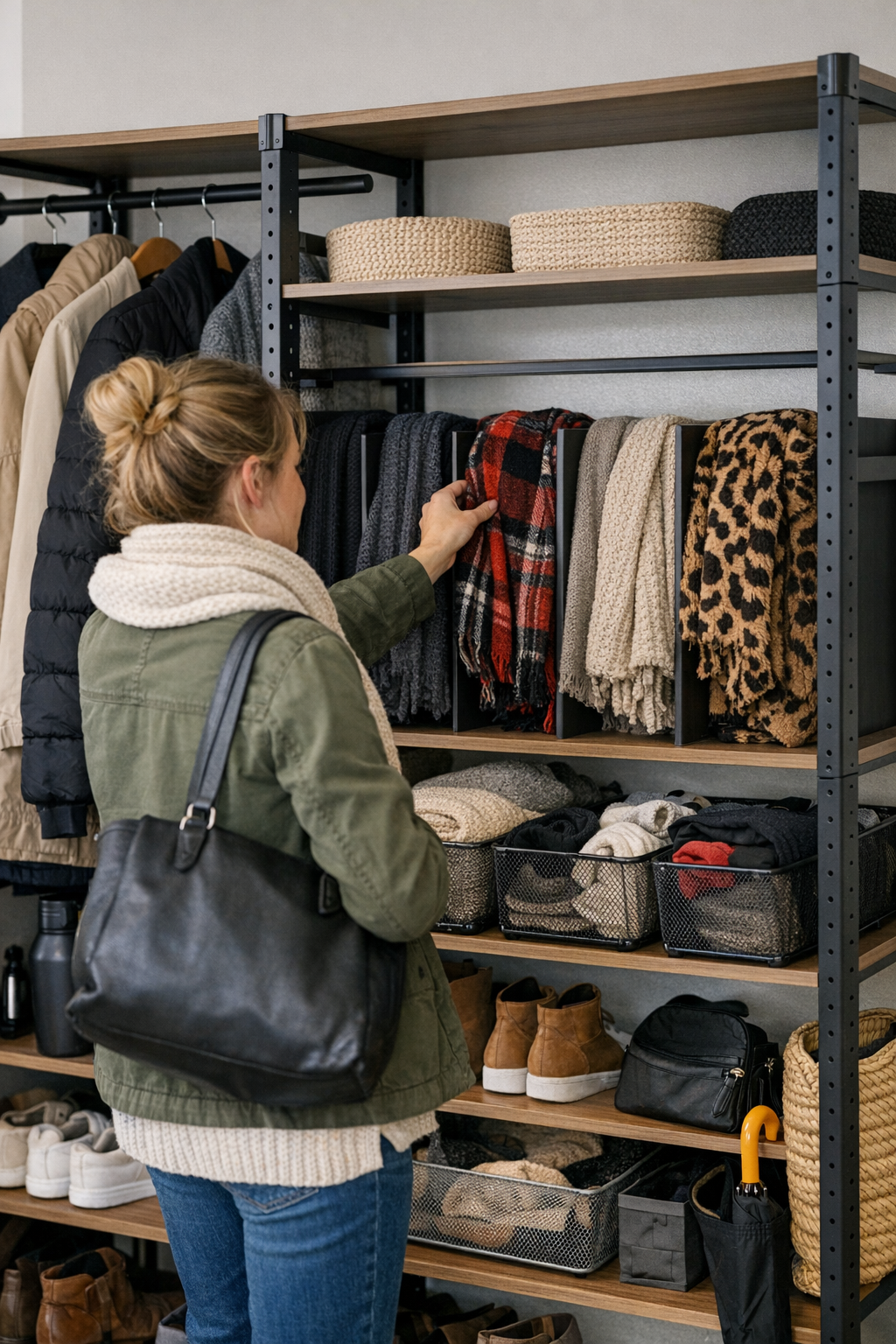
The truth about home storage hits fast—usually right after that first rush of satisfaction fades. Maybe you stack your new bins along the top closet shelf, shoes arranged in perfect pairs below, scarves neatly folded in matching baskets. For a moment, everything looks under control, ready for the ideal morning routine. But the second you’re late, digging for gloves while balancing a mug, the weak spots in the system are exposed. Suddenly you’re pushing aside a jumble of hats and scarves to get what you need, and yesterday’s order is already slipping.
Why Matching Storage Systems Fall Short
Coordinated storage feels like progress—and it is, for the first week. A row of identical baskets or bins brings a quick surge of calm. But as soon as those bins face the pressure of real life, neatness gives way to subtle chaos. It starts with a single shortcut: you toss spare keys in with socks “just this once” or wedge shoes into whatever space is left. The next morning, you’re shifting stacks to find sunglasses lost in the mix. Each small compromise chips away at the system, until the matching bins are stuffed, categories blur, and grabbing anything starts to slow you down.
Daily Friction: Where Style Masks Mess
Uniform storage promises simplicity. But the design disguises the mess as it builds beneath the lid. Socks spill under hats, scarves tangled under gloves. By midweek, bins sag; stacks slide sideways; one container gets suspiciously heavy and hard to sift. End result? Instead of being invited to tidy, you start avoiding the area—opening the closet with a sigh because access means another reshuffle.
Clarity Over Cosmetics: Defining Categories That Last
When categories lose their edges, friction invades every routine. True organization means you can reach for what you want without moving a pile or running a mental checklist. Storage that’s only about appearances sets traps: every time you retrieve a winter hat, you half-upend a pile, and each return is a guess where things should land. Resets take longer, and you notice clutter creeping into corners—a sneaker at the foot of the stairs, an umbrella perched on a shelf where it doesn’t belong.
Closet in Practice: The Cumulative Effect
Picture a narrow coat closet. Monday morning: you’re holding a coffee, grabbing your tote—except the tote is buried behind yesterday’s gym bag and a half-unpacked paper grocery sack. To get it, you shimmy a stack of scarves to one side, tip a basket, and—at last—rescue your bag. Returning home, you know “right bin, right spot” matters, but exhaustion takes over. The gym bag drops wherever, and a minor mess begins its weeklong sprawl.
This isn’t a matter of messiness—it’s about systems that require too much effort. Without firm boundaries between categories, bins get too full too soon, folded stacks unravel, and by Thursday, the closet’s order collapses. Left unchecked, the domino effect spreads: shoes edge into the hallway, lightweight bags stack on the floor, stray hats pile up where they shouldn’t. Each workaround is a drag on your time and mental bandwidth.
Practical Structure: The Real Secret of Durable Order
What reliably keeps a closet or shelf in shape? Not color coordination, but a system where separation is obvious and consistent. Storage works best when it reduces the need to think: this bin, always scarves—never mittens; these hooks, only for bags. Every item has a role and a slot, so resets are frictionless and don’t steal your time (or your patience) every morning or night.
Dividers and Small Tweaks with Outsized Impact
The answer isn’t always “buy more bins.” Sometimes, a single divider transforms daily experience. For example: slim an oversized basket into two smaller compartments, trading symmetry for utility. Suddenly gloves and scarves, once mixed, each have a clear home. No morning tug-of-war or nervous stacking. Or repurpose vertical space: add a shelf insert for small purses, or a simple rail for umbrellas—now each item is in view and easy to reach. Little changes like these keep piles from collapsing and make it obvious when something’s out of place, speeding up the reset, not making it harder.
Recognizing the Warning Signs
The signals are always there if you look: a stack that never stays straight, a bin growing heavier and less predictable each day, or new piles collecting on the edge of your hallway. If you’re moving three things to get one, or if “quickly putting it back” never seems feasible, your system’s failing silently. Don’t ignore slumping bins or containers that double as general catchalls—they’re signs your categories are blurred and that routine is on the verge of breakdown.
Pause and diagnose: Is every item in this space still in the right place? Which category has grown beyond its boundaries? Are you using all the vertical or side space you could, or letting it go to waste? Sometimes, the best fix is splitting up a bin or labeling a section so you see, at a glance, what goes where—instead of spending time rearranging, hoping “this time” it stays sorted.
Real Fixes for Real Life
If you’re constantly re-stacking or second-guessing a bin’s purpose, try letting your daily actions lead the reset. Notice where your hands go first when you’re in a rush. If you always fish for keys in the middle of a mixed tray, give keys a slot near the door — not buried with everything else. If folded stacks fall apart by midweek, swap one big basket for two shallower ones. Most important, structure your storage for speed: categories with a clear home make quick resets possible, even at your busiest.
What Lasting Storage Success Really Looks Like
Effective storage isn’t how polished a closet looks on Sunday night—it’s how easily you can keep it together by Friday afternoon. Accessible bins, clear categories, visible items, and divisions that hold up to repeated use—these shape a system that feels stable. When each thing naturally returns to its place, clutter doesn’t have a chance to sprawl. The win isn’t showroom perfection; it’s not tripping over shoes in the entry or wasting five minutes looking for a glove as you run out the door. Instead, you reclaim calm corners and make every reset quick, confident, and almost automatic.
Shop ClosetWorks for practical storage solutions to help your space work better—every day.