
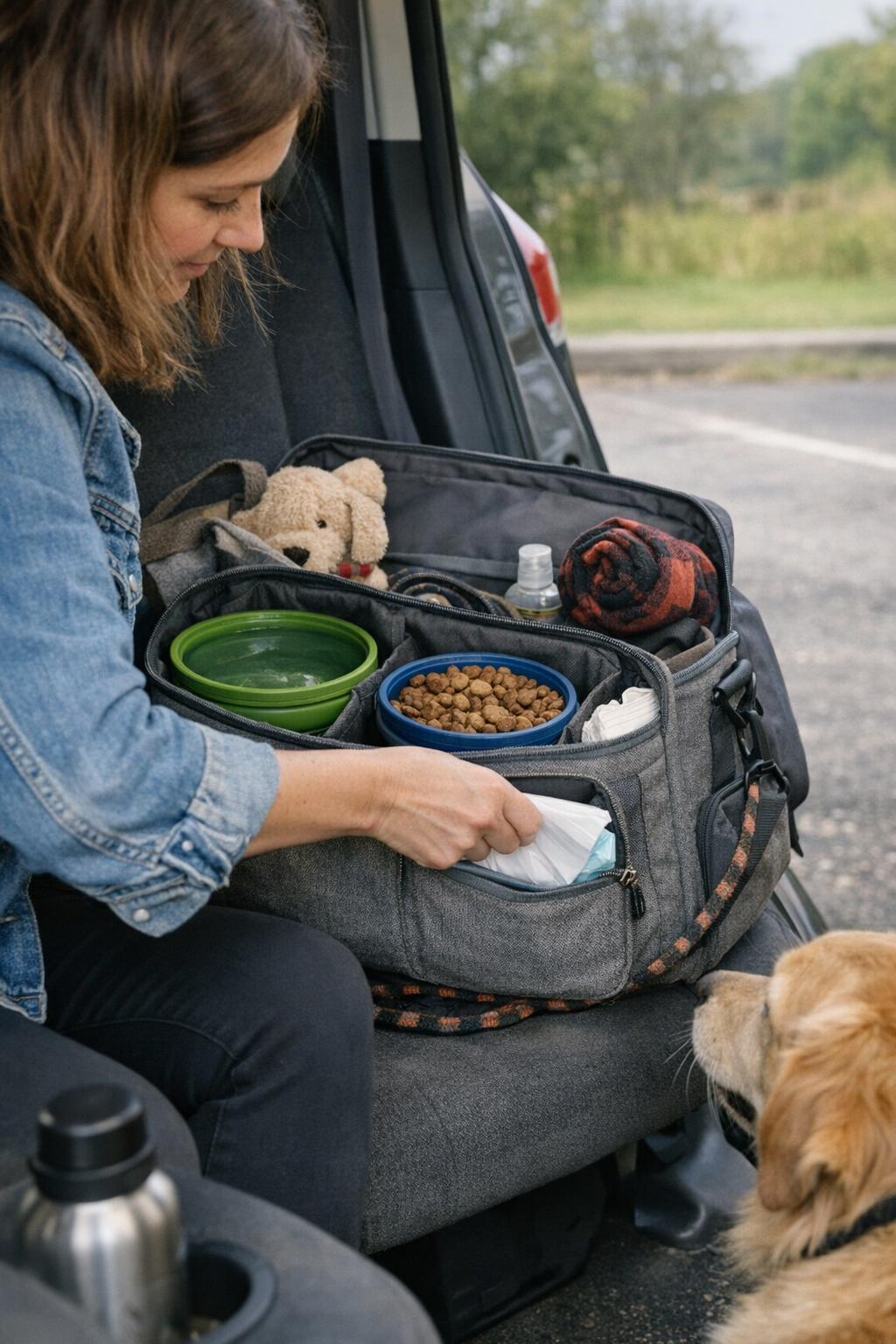
The travel bag that looks “sorted” in your living room can turn on you by the second or third rest stop. What started as neat compartments becomes an awkward scramble: wipes tangled under toys, a leash caught behind a snack pack, and cleanup supplies somehow always one move out of reach. The difference between feeling ready and actually moving smoothly—stop after stop—shows up fast, and nowhere is this friction more visible than when your bag’s structure meets the reality of repeated seat-side use. PawGoTravel designs for this moment, not just for the organized photo before the trip starts.
When The First Reach Sets the Tone
You hit your first stop. Before you even unclip your pet’s harness, you’re reaching—one hand on the leash, the other searching for a bowl or wipes. The system you set up at home already feels trickier: wrong pocket, mislayered items, something in the way every time. That split-second pause—where you’re nudging snacks aside to get at cleanup gear—sets the tone. With each return to the bag, the logic you planned gets harder to follow, and the contents start migrating after every stop.
This isn’t dramatic friction. It’s the quieter drag of having to reset, re-zip, and re-layer, even when nothing looks visibly wrong—until nothing stays where you placed it in the first place.
Organization That Breaks Down at Seat-Side
The “everything in its place” feeling disappears fast beside the car or curb. Out here, layered compartments usually force awkward shuffling: wipes jammed under stuffed toys, water bottles edged deep behind a comfort blanket, nothing grabbing cleanly one-handed. What looked accessible at home breaks down as soon as the bag must flex between comfort on arrival and quick access during a messy pause. Each repetition—trying to grab just one thing—leads to more jumbling and slower resets, while your pet gets restless or tries to bolt.
Why Surface Order Isn’t Enough
Most bags survive a single stop. Start adding more—short detours, urgent bathroom breaks, snack waterups—and the “organized” structure unravels. Bowls nudge wipes out of position. Zipped pockets block fast cleanup. Owner and pet items compete for the same spot, forcing three moves for one result. Every quick grab for a cleanup pouch ends with two items unstacked and pet hair stuck to a stray charger. The more you try to work around it, the more the setup drags against the flow you need.
Common Friction Points on the Road
Blocked Cleanup Access
Stacking comfort up front sounds smart—until you need wipes now and they’re under blankets and toys. Mid-mess, you’re digging with an impatient dog dancing at your feet, making a small spill into a full bag-reshuffle. The faster solution is blocked by well-intentioned layering.
Overlapping Owner and Pet Items
The all-in-one bag seems efficient. But after you stuff your wallet or keys into a side pouch, they pin down the single roll of cleanup bags or get tangled with treats. Each stop triggers a tiny gear shuffle, making even a short break drag out—momentum broken, your patience thinning, and your pet ramping up for a dash.
The Repeated Reshuffle Dilemma
By the third or fourth stop, even an “organized” bag becomes a puzzle. Side pockets pop open, interior items slide out of order, one-handed access stops working. Instead of a quick grab-and-go, you’re fighting with the zipper and pushing aside items just to close the bag— all while a thirsty dog circles or a cat meows for attention.
The Price of Poor Access: Handling, Comfort, and Patience
Poorly structured access means real handling cost. Every pause takes longer, your pet feels the tension, and quick cleanup turns into a juggling act. Your rhythm breaks; the pet’s mood shifts. By trip’s end, frustration builds—not just from wasted time, but from the steady interruption of what should be simple, easy pauses.
The wrong setup makes each stop heavier, messier, and less calm for both pet and owner—especially on multi-stop days when the price is cumulative.
Recognizing a Setup That Really Holds Up
The bag that wins is not the one that looks the best at home, but the one that delivers quick access, reliable separation, and one-handed operation—again and again. Cleanup essentials belong in a reachable side pocket, not buried with food or blankets. Pet and owner zones shouldn’t overlap. For example, a dedicated zip side pouch for wipes or bags, and a separate main compartment for bowls and comfort, turns the stop-and-go rhythm smoother immediately:
- Cleanup never requires shifting half the bag—just reach, grab, and go
- Water stays accessible, not wedged under playthings
- Resets are instant; organization survives more than one stop
This isn’t cosmetic—it’s the structure holding up under real conditions. The payoff is less scrambling and more time moving, so each stop is a simple, brief interruption—not a reset marathon.
Small Adjustments, Big Difference
Separating fast-grab travel items from comfort and overflow changes everything in repeated use. Every stop flows more naturally: you go straight from car to curb, hand to wipe, leash to cleanup, without the cross-traffic of mixed-up gear. Comfort stays put for later, and owner essentials stop jamming pet access. That’s not about being “extra organized”—it’s the difference between routine hassle and effortless travel movement, even across a messy, multi-stop day.
A bag that looks tidy counts for little if it doesn’t reset for real stops. What matters is how a setup works when you’re moving, reaching, cleaning—and restarting again and again, through every trip.
Explore solutions designed for smoother trips at PawGoTravel.