
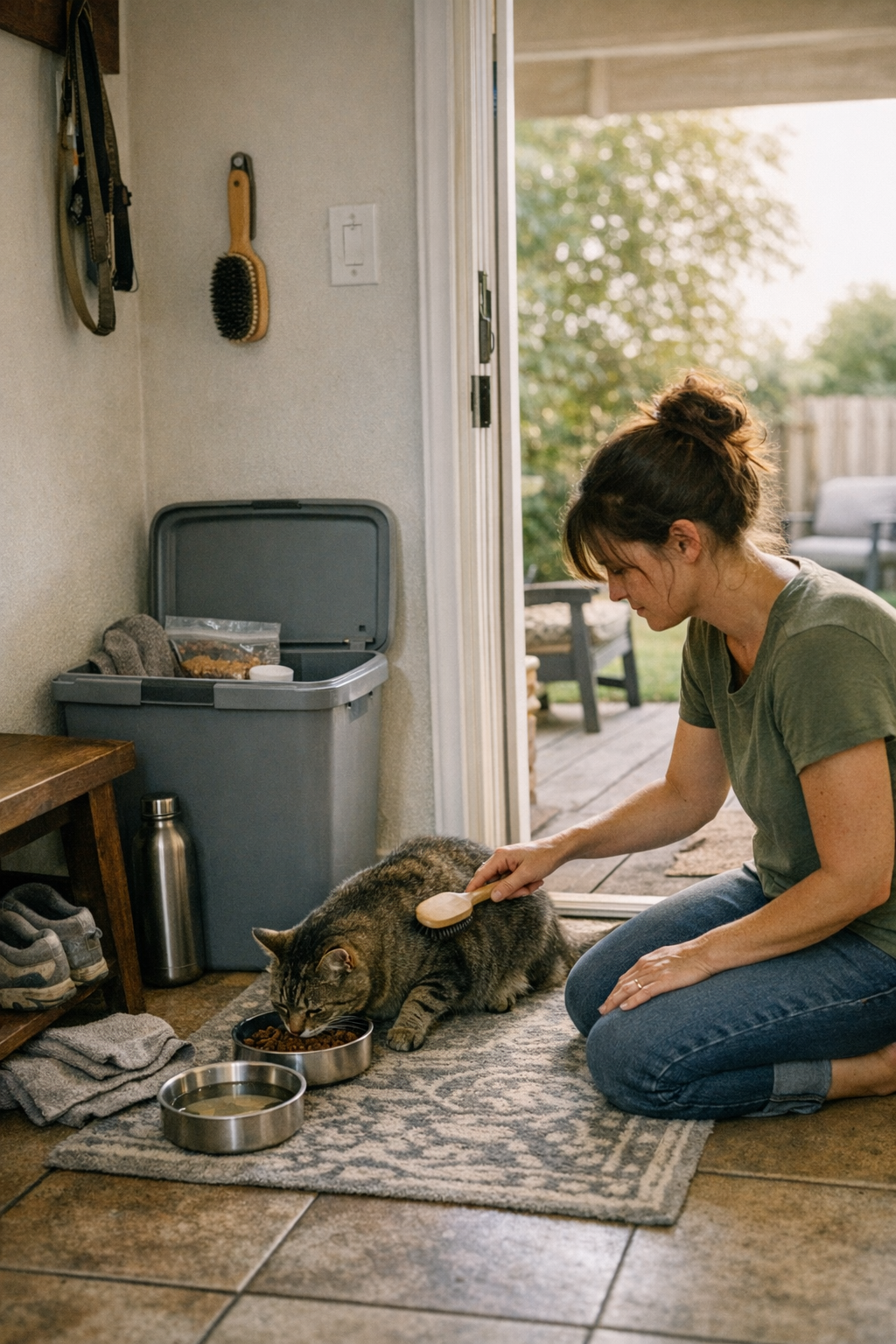
Most indoor cat care breakdowns aren’t about getting “nicer” containers or organizing shelves for appearances—they start the moment your routine stutters. If you’ve ever tried to feed your cat or do a quick wipe-down, only to fumble for a missing bowl or the wipes trapped behind a stack of deliveries, you know the gap: a calm-looking corner that falls apart under real pressure. What looks tidy quickly turns inconvenient when you’re forced to pause, hunt, or reshuffle—especially around entryways or wherever your cat’s daily needs collide with your own comings and goings. This is where CalmPetSupply’s practical daily-care world actually lives—in setups that either survive the repeat or quietly unravel with every missing piece.
Spotting Where Your Routine Stalls
Most people spot scattered toys or open bins first, but the real frustration is the routine snag: the moments your process stops cold. Quick examples:
- You reach for the food bowl—blocked by yesterday’s shoes or a tote bag left by the door.
- Refilling water means unlocking a cabinet, dodging a pile of flyers, or realizing the jug is still in the kitchen.
- Cleanup wipes are “put away,” but grabbing them means another trip or clearing out other items first.
- Grooming brushes end up on a random shelf again, never close by when the after-walk routine actually needs them.
It’s not a one-off. These stalls repeat on the busiest evenings—after work, after errands, or in a half-asleep blur before bed—stacking up until small steps feel heavier than they should.
When Tidy Isn’t Functional
You can stage the entry to look spotless on Sunday, but real life tests every shortcut. After a few days, the entry zone you “decluttered” becomes an obstacle course: the food bowl shoved beside boots, towels for muddy paws balled up under the bench, the brush missing yet again. Every small detour means one more trip—for a refill, a wipe, or a tool. An entryway that seemed “managed” now forces you to backtrack or improvise, and simple daily care stretches into a series of slow resets.
Picture it: keys in hand, your cat weaving around your ankle, and nothing where you need it. The food bowl is wedged behind delivery boxes, wipes buried in a drawer, brush nowhere in sight. Instead of one smooth handoff, you circle through the entry, raid the utility drawer, then double back to clean up paw prints. You lose not just time but any rhythm—turning a quick welcome into a slow, friction-packed routine.
Symptoms of a Weak Entry Setup
If you’re shuffling pet gear back and forth, chasing down tools, or clearing shared space every time you start a routine, your setup isn’t holding up to repeated real use—even if it looked functional day one. Watch for symptoms like:
- Opening a bin takes two hands because something else always ends up stacked on top.
- You have a “spot” for the brush, but never the same place twice—no muscle memory forms.
- The litter scoop migrates to other rooms after every quick cleanup and isn’t back when the next mess hits.
- The water bowl stays clean, but you’re always missing the jug or have to abandon the spot to fetch it.
What Causes the Gap?
Most pet stations are staged for their first use or showroom neatness—not the distracted, unpredictable rhythm of real living. The moment a setup requires too many extra steps, you’ll start to shortcut. Tools wander, messes multiply invisibly, and any small barrier—missing wipe pack, blocked access, a basic item in the wrong spot—turns a routine reset into another circuit around the house. The system that looked “easy” becomes the repeat slow spot.
Resetting Daily Care for Less Friction
The setups that actually work have one thing in common: you can do the next step right where you are. Place sealed food bins and easy-grab wipes at the door, add a hook or tray for essentials, and keep one backup water bottle with basics. Real improvement isn’t about making things “perfect”—it’s about saving steps in stress moments. Ask yourself:
- Do you need to leave your entry zone for food or water refills, or can you handle everything in one move?
- Can you grab cleanup supplies with one hand, without opening extra cabinets or containers?
- Does each tool have a real habit spot—one it returns to without thinking, after every use?
Any step that slows you down week after week—that’s the weak link exposed by repetition.
What Really Works for Everyday Use
Small, lived-in changes have outsized impact: a towel always stacked by the door, a food bin that actually opens with one hand, every tool landing in a visible spot. The goal isn’t rigid organization, but removing slow points—so care, cleanup, and feeding reset instantly, no detours. When your brush, wipes, and bowls fall to hand right at the threshold, clutter recedes and routines finish in the time they should, not a minute longer.
Conclusion: Less Steps, Less Stress
The real test of your pet-care setup isn’t how calm it looks, but how it absorbs a run of chaotic mornings or stacked-together late nights. If one small flaw—like a missing bowl or hidden wipes—breaks the chain, your system will double your effort when you’re least able to spare it. An entry that truly works keeps the right tool visible and the next action effortless, no matter how distracted you are. Everything else is just surface order.
For more daily-use ideas and real-world solutions, visit CalmPetSupply.