
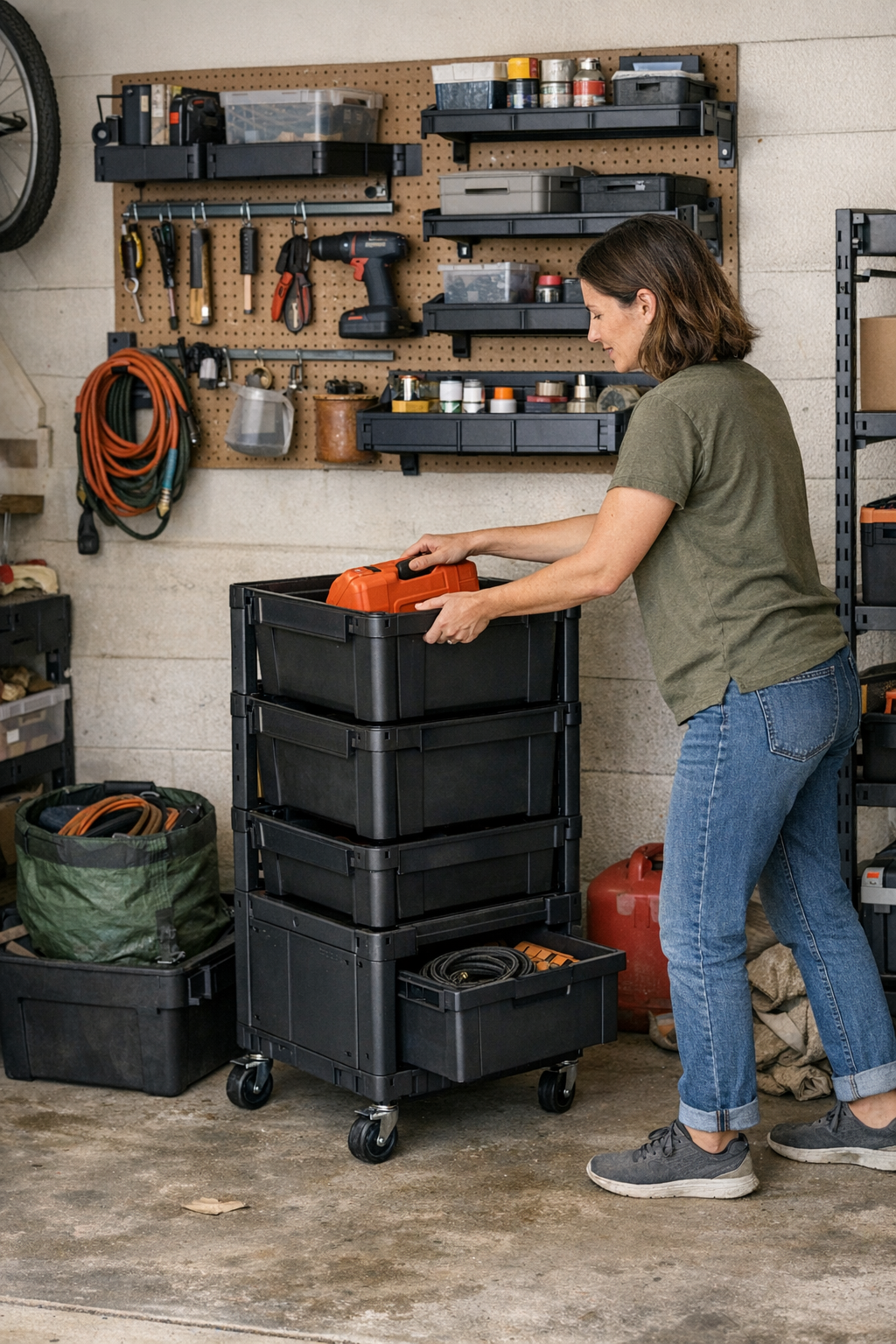
The promise of a perfect garage or workshop setup kicks in the instant you clear the last pile from the floor: rows of bins, a grid of hooks, every tool finally off the ground. For a day or two, everything looks under control. But as daily routines crank up—school bags dumped near the door, tools rushed back after a weekend project—the old friction returns. What felt “finished” starts grinding at the edges. It isn’t mess; it’s the awkwardness that creeps into the circulation and flow, the spots that never quite work no matter how clean they look.
Why Getting Things Up Isn’t the Same as Making Space Work
The pitch is simple: wall storage clears the floor and makes gear easy to grab. In practice, though, actual use exposes the cracks. Day by day, the lines between “organized” and “obstacle course” blur. Between the car roof and the high shelf, crouching to plug in a charger, or edging past a heavy cart parked beneath the bins, you start to feel it: storing more isn’t the same as moving better.
You notice it when grabbing a hand saw means ducking under a bike wheel. Or when unloading groceries means pivoting around the same garden tools that always block the path. The neat blueprint pinned up in your head doesn’t match the routine you actually walk.
Maxed-Out Walls, Shrinking Pathways
The more storage you stack along the walls, the more you chip away at how easily you can actually use the room. That meticulous lineup of bins transforms every wall into storage—unfortunately, it also blunts every shortcut. A hose left draped, a crate nudged in the corner, a backpack “parked just for today”—each one eats into the walkway. Soon, you’re twisting or side-stepping on autopilot just to fetch what you need, and every reset after a busy day feels slower and more frustrating.
“It Fits” Doesn’t Mean “It Works”
Most setups chase maximum density: racks, rails, shelves filled edge-to-edge. But then reality hits—reaching above your head to get the drill you use every morning, sliding a section of bins just to put something else away, or stopping to fish around behind one tower to find a missing wrench. There’s enough storage, but not enough slack. Each “efficient” fix winds up adding a new pinch-point or trip hazard, stalling the routine every time you try to return things to order.
How Real-World Use Reveals the Pain Points
It’s repeated, everyday movement that finds the flaws—and they’re almost never on the wall itself, but in the patterns the setup creates on the floor and in the corners. Watch what slows you down:
- Entry Paths Become Zigzags: Wall-to-wall bins or hooks mean every trip—carrying bags, hauling a project, getting a mower out—requires snaking through a tighter maze, sometimes shifting a cart or crunching past jutting storage every time you come and go.
- One Dead Corner Always Catches the Overflow: That “out of the way” floor zone becomes the permanent drop spot for anything you can’t quite fit—a cardboard box, odds and ends, leftover lumber. Resetting the area gets harder every time, until the pile becomes invisible clutter and the corners never clear.
- Awkward Reaches and Impossible Returns: Everyday gear winds up on high shelves or buried behind rarely-used stuff. Returning tools becomes a chore—too much reach, not enough room—so things get left out or misplaced.
- “Clean Floor” as a Mirage: What looks like an open path is really just a slalom between gear. One stray item blocks the way, and the space that felt organized feels boxed in, with every step rerouted or slowed.
When the Wall-First Approach Starts Working Against You
Over time, the system meant to restore order quietly starts to dictate your whole routine. Returning a heavy item means unstacking two things first. Beginning a project means five minutes of clearing, not creating. You hesitate to put things back because you know you’ll need to rearrange the setup later. The payoff in “neatness” drains away as each reset becomes another round of shuffling bins, sliding carts, or moving bags just to open a clear path.
Living Around the Setup Instead of in the Space
It’s a slow flip: instead of making storage fit your habits, the setup forces new workarounds—always moving that corner bin, always nudging the same cart aside, always leaving the ladder out “just for now.” Spaces that should flex between car drop-offs, projects, and daily comings-and-goings start feeling rigid. The wall’s filled, but the floor is never truly open, and “organized” means extra effort, not less.
Restoring Flow Without Junking the System
The fix isn’t tearing down what works—it’s untangling what’s stuck. Try this: pull just a third of the gear off the wall and move it to a mobile cart or tray. Now, the tools you grab daily are at arm’s reach, not buried or perched overhead. Entryways reappear. Instead of pulling a bike past the same lineup of bins, you have a clear line across the most-used routes. The space adjusts with you—rolling carts tuck away, corners are less jammed, and resets get faster because less has to be undone.
Specific Adjustments That Make a Difference
- Build in Breathing Room: Gaps between storage zones aren’t wasted—they’re space-saving in disguise. Leaving strips of blank wall lets you adjust, reach, and pivot as routines change, without having to empty the whole wall every time something shifts.
- Mobilize the High-Turnover Gear: Keep everyday tools and supplies in rolling carts or modular bins that can move with you. Reserve wall hooks for seasonal stuff, long-handled tools, or things you rarely touch. Anything you use weekly should be easy to pull and painless to return—ideally, without a step stool or another round of reshuffling.
- Monitor the “Reset Cost”: High-functioning setups make it quick to tidy up, not just pretty for a photo. If putting things away feels like a multi-step process, or you’re stacking gear back in waves, that’s a flashing signal to lighten the wall or spread out the load.
The Pathway Test: Spotting Real-World Gaps
The difference is clear in the patterns that persist: overflow pooling in the same trouble spot; the cart that always blocks a half-open walkway; the high bin you keep skipping; the stuffed wall that makes moving through the room slower, not smoother. Each missed return or too-tight corner is more than a quirk—it’s a readout of how the setup serves (or stumbles) in reality. No storage system is flawless, but the best ones let you reset without friction and move through the space without rerouting your day around your own gear.
For storage solutions that keep real spaces flexible, reset-friendly, and genuinely easier to use, explore StackNest.