
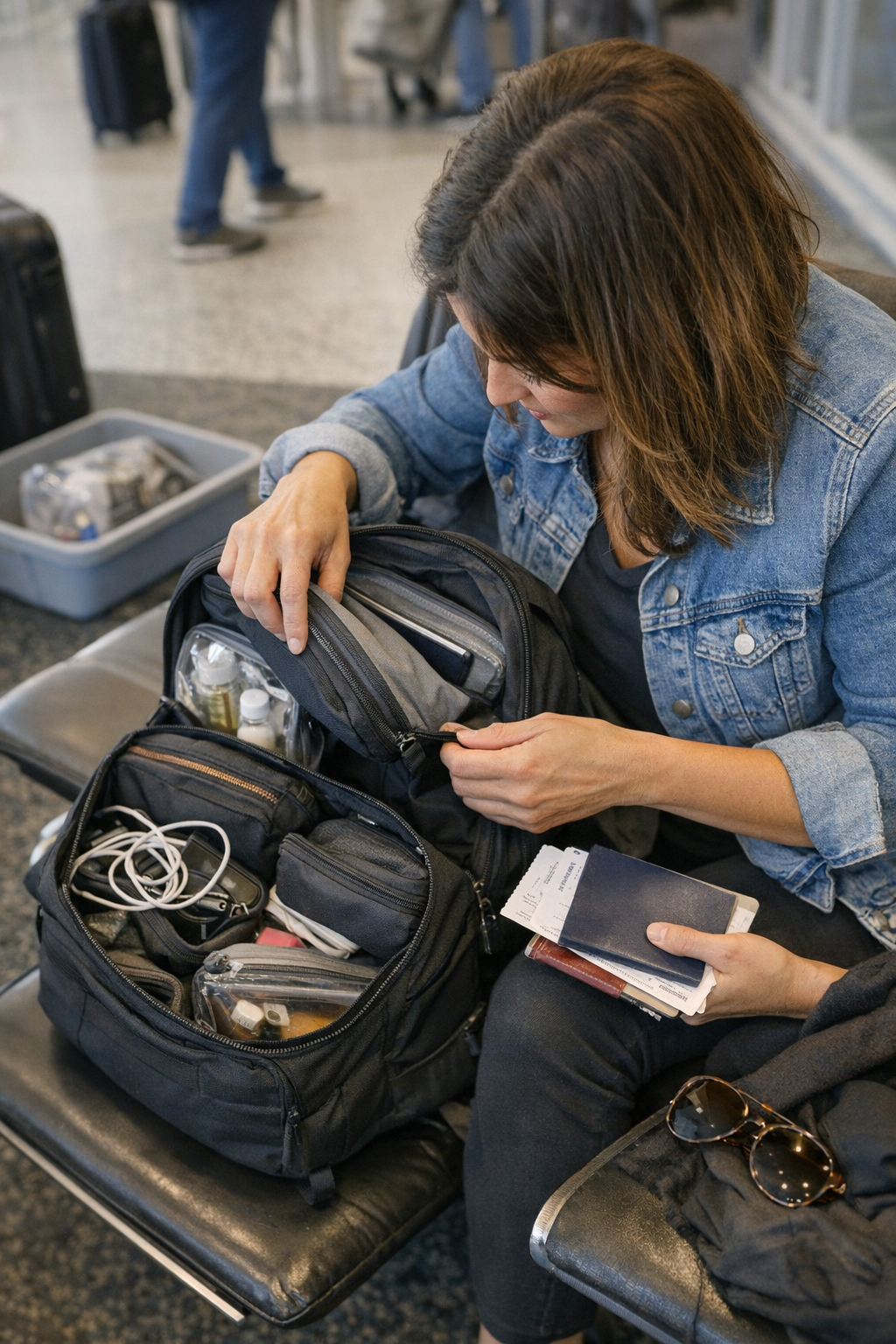
A “packed and ready” carry-on can feel like a minor victory—until the airport exposes every hidden flaw. At home, zipped pouches and a clean bag layout look controlled, even reassuring. But move that same setup into a boarding queue or security rush, and its tidy seams start snagging: a tangled search for your passport, fingers stuck fishing behind lookalike organizers, or a charger buried one layer too deep when the gate calls your group. That’s when the real cost of a “looks organized, moves slow” approach hits. What keeps things neat on your bedroom floor shows its limits fast in the churn of real travel. CarryOnSupply’s world is built around this friction—not just what fits, but how your setup really moves when every access moment counts.
Recognizing Where Carry-On Order Slips
Smooth zippers and lined-up pouches fool you in the calm of home. Once you’re in motion—pushing your bag through plastic bins or inching down a boarding ramp—those same organizers turn into an obstacle course. A bag that closes crisp may open into confusion if your essentials are layered or split across copycat pouches. What seemed effortless to pack becomes a quiet, repeated delay as you chase the right thing at the wrong time.
Small Delays, Big Impact
Picture security: unzip, shuffle, tug at a pouch identical to two others, and the document you need is stuck under an earbud case or cable knot. Or at the gate, you need your charger during the five-minute lull before boarding, but you fumble past identical organizers, flipping open each one under the eyes of your row-mates. Every interruption breaks your flow—not just seconds lost, but mental energy sapped each time you replay the same mini-mistake, from security bins to overhead-bin repack and into your seat.
Over-Organized? When Neat Packing Slows You Down
The big myth: matching pouches and a main-compartment stack spell efficiency. On paper, it looks orderly—a lineup worthy of an Instagram flat lay. But hours into real transit, that crispness collapses into sly chaos. Each matching pouch blends into the next. Zipper pulls knot together. The pen or boarding pass you need at a pinch slips backwards, forcing a full pouch shuffle at the worst moment. Your supposed “system” turns retrieval into a repetitive obstacle course, every essential needing an awkward, multi-step dance under real pressure.
Friction Hiding in Plain Sight
Identical organizers stop being “sorted” and start creating static. Retrieve one thing and two unrelated items fall out. The outer pocket you thought would mean easy access now jams with random overflow. Each stressed search—not just for documents, but headphones, snacks, or sanitizer—pulls apart your tidy stack and turns quick retrieval into repeated interruption. Real order is function, not just appearance: if grabbing a charger means disturbing three zones, your setup is holding you back.
Checkpoint Crunch: Where Structure Really Gets Tested
Airport flow is relentless—no one in line pauses because your tech pouch blocks your liquids bag. If your main compartment buries essentials beneath layers, every scan or repack is fraught. Overhead-bin juggling? If pulling a charger from under a stack risks spilling everything, you hesitate, then give up. Structure shapes every decision: visible, single-zipper access usually wins when speed matters, while hidden or “over-protected” systems expose you in real time.
These friction points aren’t theoretical—they hit hard:
- Retrieval blocked by pouch layering or deep inside pockets
- Document checks slowing as access paths shift mid-trip
- Mixed essentials forcing hand-over-hand repacking of multiple items for every small need
Real-World Consequences: Routine Interruptions Add Up
Imagine sliding sideways into a window seat as the line piles up behind you. You need your boarding pass, but it’s wedged behind layered organizers; you end up upending contents into your lap (or worse, someone else’s). Or, at the x-ray tray, you realize your “quick-access” liquids are blocked by your tech kit, causing a hold-up as frustrated travelers queue behind you. These aren’t epic failures—they’re a slow leak of time, calm, and personal space, repeated until your “organization” begins to cost more than it saves.
The result: the bag that looked efficient at home keeps snapping rhythm in real use. Instead of smooth progression, you’re stuck in a cycle—retrieve, repack, re-find, repeat. The price is constant awareness of the next access point, not freer movement.
Learning From Repeated Friction
The real insight rarely comes after one trip. It’s several rounds of double-handling, repeated digging, and repacking before the breakthrough: true function comes from clear, no-more-than-one-zipper-deep zones for each high-use item group. Tech with tech, documents isolated, comfort items in their own lane—each in its own dedicated, direct-access compartment. No more throwing toiletries in with cables, or documents in a pouch under a stack of gadgets.
What Actually Improved Flow?
After enough missed retrievals and tray scrambles, reorganizing for movement—not just neatness—flipped the script. Giving tech, documents, and comfort their own logical, no-compete spots trumped any obsession with matched sets. This meant living with a little visible jumble but winning speed and calm at every checkpoint. Travel rhythm returned: no more accidental spillovers, no more fumbled checks, no more starting over every time you dipped into your bag. The final structure didn’t look perfect, but it functioned right where pressure was highest.
Spotting When Your Setup Needs a Reset
Not sure if your carry-on is holding you back? Watch for these signals:
- Grabbing a single essential always means unlocking or shifting more than one zone
- Items stray or get lost after only a trip or two
- Fast access—documents, headphones, pen—always triggers a cascade of smaller removals and repacks
- Security, boarding, and seat entry feel harder than they should, even on simple legs
If you’ve felt any of this, your setup is quietly working against you. Fixing it isn’t about forcing more order or tighter packing. It’s about new travel logic: less overlap, clearer divisions, and structure built for movement—not just for a tidy reveal at home.
Balancing Order and Access: Structure That Moves With You
Packing “perfectly” isn’t the goal. Instead, structure should remove the most frequent friction: repeated unzips for one item, blocked quick-retrieve lanes, endless pouch reshuffling in the face of real airport pace. When function overtakes appearance—when you stop fearing a little visible mix for the benefit of direct access—your bag finally matches your movement. That’s the difference CarryOnSupply is built for: carry-on setups designed to move with your rhythm, not against it.
Ready to rethink what’s slowing you down? Find carry-on organizers, in-transit tools, and setups made for real repeated use at CarryOnSupply.