
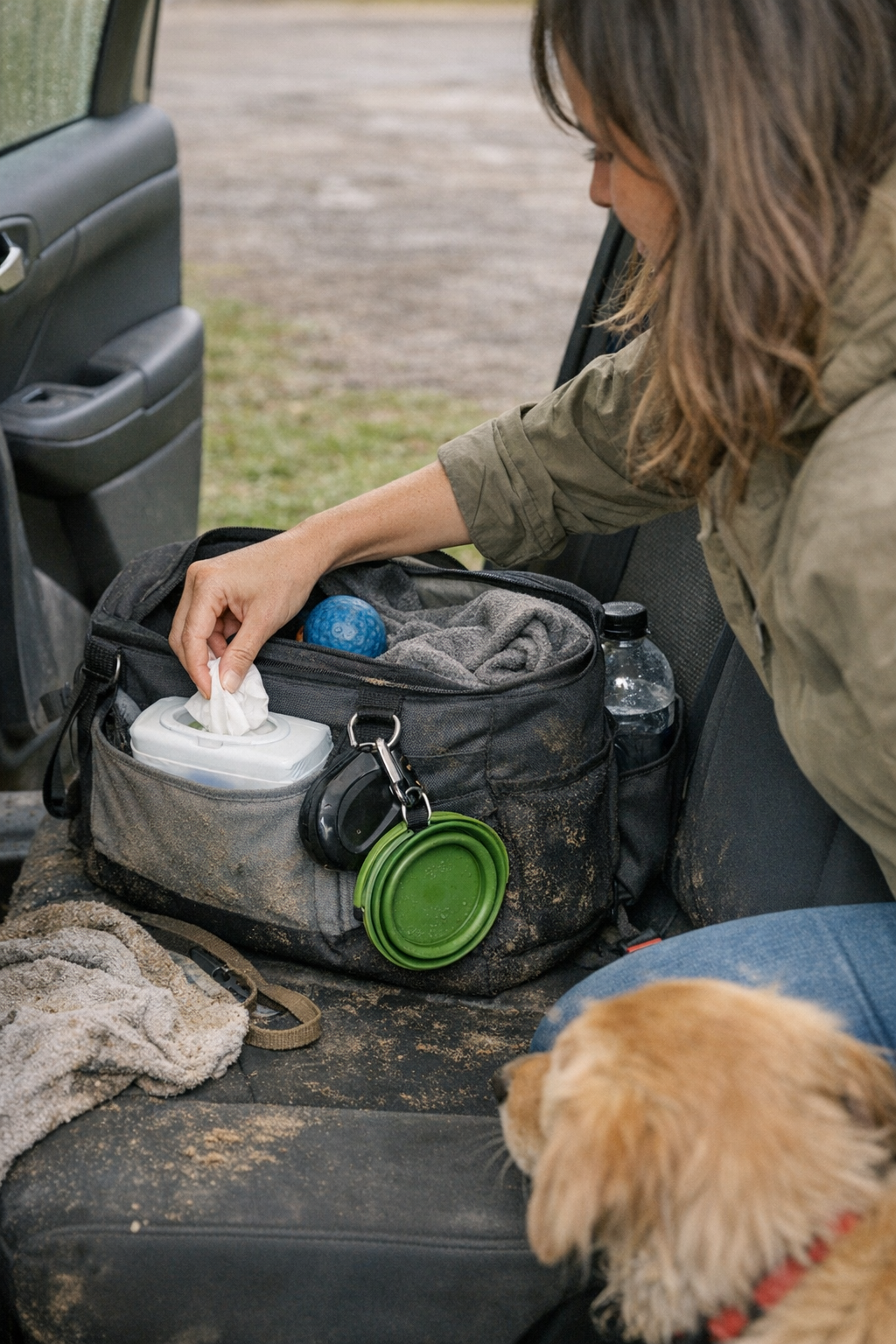
The pet-travel bag that seems “organized” at home usually breaks down by the first real stop. You’re balancing a leash, you reach for wipes, and immediately you’re stuck—blocked by comfort items, fishing under toys, losing seconds while your dog tugs forward and dirt spreads. This isn’t mess. It’s the grind of routine friction: easy access vanishes, simple tasks slow, and every stop uncovers a weak point in your setup—even when the bag looked ready on your kitchen table. “Preparation” isn’t a look. It’s how the bag holds up under real movement, restarts, and pet-side interruptions. PawGoTravel exists in precisely these moments—the cracks between curbside need and seat-side access, when an ordinary travel bag feels suddenly inadequate.
When ‘Neat’ Isn’t Enough: The Real Pressure Points of Travel Bags
An impressive-looking pet bag—clean compartments, neatly zipped—usually falters by your second or third stop. The bag that seemed streamlined at home turns awkward fast: finding wipes after a muddy walk means shaking out towels first; the quick water bowl is now blocked by a tangle of leash and toys. Every small reshuffle signals growing drag. From bag to curb and back to car, the “orderly” setup unravels; the visual neatness simply hides how poorly it handles searching, repacking, and repeat motion.
Stuck in the Grind: When Every Simple Stop Feels Harder
The frustration doesn’t stay subtle. Every errand, dog park visit, or rainy day makes the same pressure points flare up again:
- Wipes are technically packed—but trapped, so by the time you pull them free, your dog’s tracked mud to a wider area.
- The water bowl is deep under comfort gear, demanding a full-on dig just for a quick drink.
- By the third stop, order collapses: fast access becomes guesswork, and your bag feels heavier, more scrambled, less responsive.
This isn’t just inconvenience. Slow, repeated interruptions mean your grip, movement, and control degrade every time you leave the car or return. The bag drains energy precisely when travel should pick up pace.
The Cycle of Repacking: The Momentum Trap
You’ve lived the reset cycle—back in the car, stacking toys, shoving in treats, zipping up with a new hope that, this time, you’ll be set for the next pause. But if “reset” means shuffling the same friction points, progress collapses: wipes never stay up top, leashes knot with bowls, snacks slip out of reach. Every stop is a small battle to re-establish control. The bag asks for patience and handwork, rather than smoothing your return to movement.
Scene: The Delayed Cleanup Ambush
A typical park exit: you open the back seat, ready for paw cleanup. Instead, you’re sorting through a mixed heap—soft toys, unbuckled bowl, rolled blanket all blocking the wipes. Your dog fidgets, shakes off more debris, and the small slip multiplies—a messier seat, delayed restart, the illusion of “well-packed” gone. The bag didn’t fail for lack of storage; it failed because the essentials were never ready in the right place for repeated access.
The Solve: Outermost Access for What You Use Most
The travel reality: the most-used items need edge access, not layered display. Frequent travelers spot the flaw—bags set for neatness break at the point of action. Wipes buried behind snacks, leash clips under spare gear, bowls mid-stack: beautiful to start, all wrong at the moment of need. Moving wipes to a true side pocket, bowls at the zipper, leash clips on the outmost loop—these swaps refit your routine. Each stop becomes a single motion, not a rummaging session.
This isn’t about “less structure.” It’s about structure that stays useful after the third, fourth, and fifth stop. Looks matter less than low-friction reach. Once you place essentials up high and outside—wipes, travel bowls, quick-clip leash—your routine regains pace. Every pause and restart turns quick and predictable, instead of another order-busting interruption.
Packing Order > Packing Appearance
Easy test: If any high-frequency item requires you to move something else first, your bag is failing at real use. A “neat” layout that delays access builds invisible drag into every routine. The top-performing setups are sometimes visually cluttered but hyper-functional, with wipes ready, bowls loose at the edge, and the leash always clip-in-hand. Travel days with three, four, or six stops quickly expose this kind of utility—the best order is built for quick reach and quick reset, not kitchen-table symmetry.
Small Reset, Big Change: Keeping Access Repeatable
After each pause, push wipes back in their side pouch, put the leash clip back up top, and let backup comfort items settle deeper. Don’t rely on the morning’s careful setup—reset your access after every movement. Over time, every saved “grab” turns into less chaos and a lighter-feeling trip, no matter how many restarts pack your travel day.
Know the Signs: When Your Routine Outgrows Your Setup
Warning signals crop up quickly with real use:
- You keep yanking the wrong zipper before finding the right pocket.
- Cleanup consistently takes longer than the spill or mess that started it.
- Your quick-grab items start “sinking” behind comfort gear or supplies after each stop.
- Every pause shuffles your bag further out of sync, making movement stutter instead of flow.
More pockets won’t save a bag from this cycle—only smarter, repeat-focused item placement can. A truly “travel-ready” setup is the bag that resets to your real routine, not your home layout.
The Core Shift: From Looking Ready to Staying Ready
The break point is always the same: “looks prepared” fails once the trip goes live. Repeated friction, not first-glance mess, kills momentum. If every event—mud, curb, water break, cleanup—turns into a hunt for essentials, your setup is draining your energy, not saving it. Winning structure means high-frequency items always stay at the edge, positions reset after each use, and bag flow matches movement—not just storage capacity. Every seat-side reach, curbside clean, or quick unpack is judged in the moment—over and over, all day long.
The bag that works isn’t the prettiest at the start. It’s the one whose structure doesn’t collapse by stop four, whose essentials can always be grabbed with one hand, and that never turns a two-second task into a twelve-second scramble.
Find practical pet travel solutions built for real routines at PawGoTravel.