
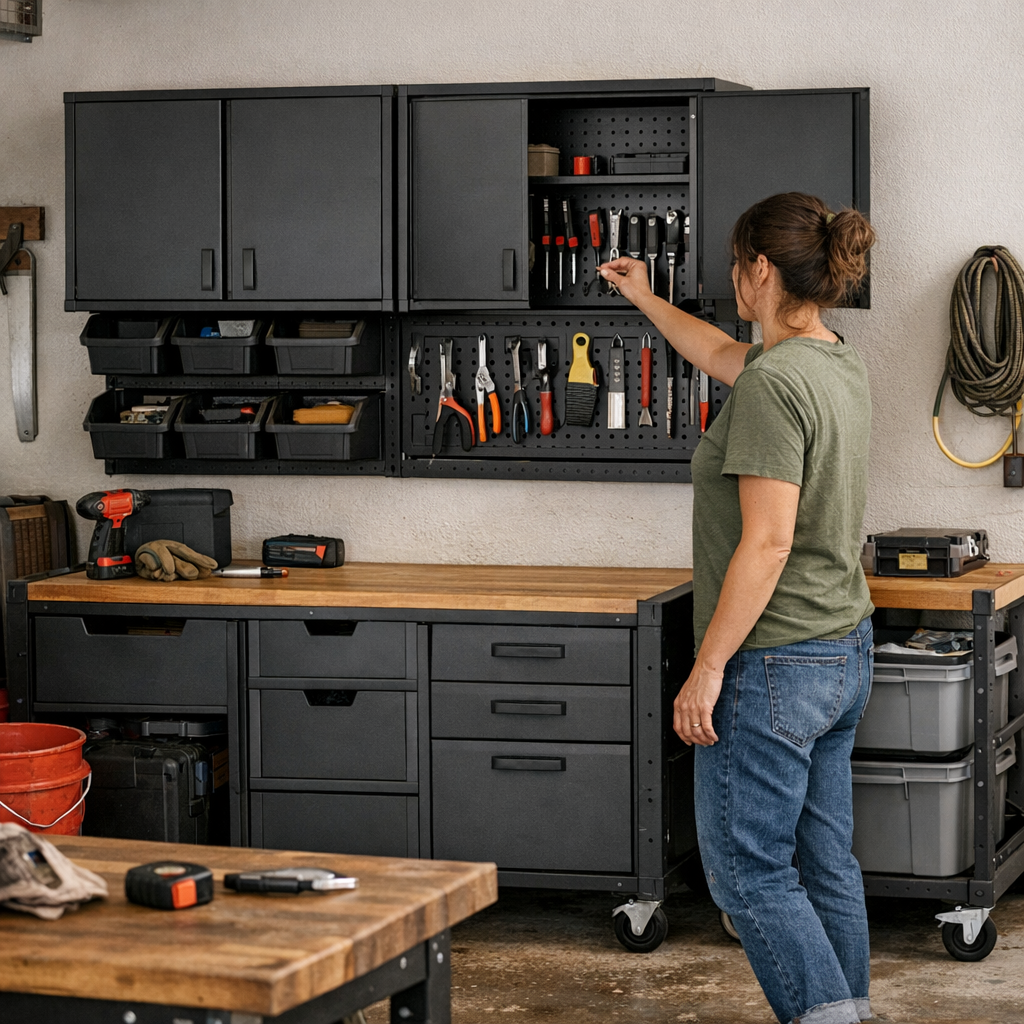
On day one, every tool has its place. By week three, you’re already sidestepping the promise. Rows of hooks, lined bins, crisp outlines—a modular garage or workshop wall always starts tight. But after even a handful of real afternoons—muddy rakes coming in, drill bits swapped on repeat, bike helmets stashed for “just a second”—the setup fights back. Bins overflow. Trays crawl across surfaces to make space for whatever’s new. “Clear access” turns into a low-stakes shell game, especially after a hectic project or a hurried reset leaves clutter in its wake. It all looked organized, but now it’s a holding pattern. You’re working around your wall, not with it.
How Fast “Organized” Becomes “In the Way”
The slip is almost invisible, until it’s not. The neat look fades the moment the system meets real habit. That open-display grid that sold order quickly becomes a scavenger hunt. You reach for one socket and have to double-check—was it this rail, or the next? What should be automatic now takes scanning across near-matches. Hands pause, hunting through duplicates or wrestling the overflow. “Easy access” quickly comes to mean “always shifting something else out of the way.”
These friction points rarely announce themselves. A rolling cart positioned a little too close so you have to nudge it away every time you need a tool, a tray you leave out once because putting it back takes too many maneuvers, or that dead zone behind a cabinet edge that’s always in the way but never quite usable—each small hitch stacks up. Resets drag out. Two minutes becomes ten. Before long, wall space gets used, but it’s not actually useful: tools wind up on benches, overflow piles in awkward corners, and moving through the area feels more blocked than before.
When “Everything Out” Means Everything’s in the Way
All-in-view isn’t always all-in-reach. Those modular layouts layer hooks and holders on every inch, hoping to bring order. But once the wall fills up, clarity fades. Cables snarl with hoses, handles blur, small tools disappear behind a line of clutter. You stop glancing—you have to pick your way through. It’s storage by display, but not by rhythm. Needing a tool means shuffling trays, pushing other things aside just to see what’s underneath. Easy access? More like constant reshuffling, especially when every inch is claimed but none is clear.
How Overflow and Shuffle Slow You Down
Picture this: you’re mid-repair, reach for your utility knife, and it’s vanished. Scan the wall—bins block bins, maybe it’s pinned behind a newly perched pliers set. What looked “sorted” is now just visually crowded, and everything you actually reach for is buried amongst items you haven’t touched this month. The mental tax grows. You delay putting things back simply to dodge the awkward moves. Tools land in stacks near your main bench—never a home, always a temporary fix. Every extra shuffle or move costs you time, breaks your flow, and frays the practical order you thought you bought.
Selective Visibility: Making Prime Space Actually Work
Don’t show it all, show what you use. After the honeymoon, what steadily improves workflow isn’t more hooks or fancier trays—it’s dialing back on what’s displayed. Real setups thrive when they reserve wall space for the tools that stay in hand project after project, while everything else goes behind panels or into shallow drawers. Keep current essentials out front; tuck backups, bits, and once-a-year gadgets behind doors. The difference isn’t visual flash—it’s every movement feels more direct, with no shuffling just to get started.
Live-in garages and workspaces make this obvious: project-specific items, neatly rotated, stay visible and accessible. Legacy gear—old hose adapters, an extra socket set, the sander you bring out twice a year—tuck away, freeing up the working surface. No more needing three moves to fetch one tool. No more bench-edge piles. No trays stacked atop trays. Each project starts faster, resets finish quicker, and the routine breathes again.
Covered Storage: The Quiet Fix for Everyday Slowdowns
In a small garage that ditched open bins for more covered drawers, the change showed up immediately. Only the active tools needed that week remained out. Everything else faded behind smooth panels. Cleanups stopped stretching. No battles to free up a hook. No running list of “where did that go again?” The reset phase shrank to minutes. Work patterns smoothed out—even when the project list grew, the physical drag didn’t. The wall became a launchpad, not a sorting station.
Know When Your Setup Is Working Against You
If you’re pausing just to get moving, your wall is overdue for a reset. Modular systems don’t fail loudly—they fail by inches. That tray you always have to move, the tools that land on the floor, the cart you shove aside every session—these signal a system that only looks organized. The space grinds against your actual routine, with open-access becoming open-obstruction.
Watch for these visible signals:
- Overflow piles grow on surfaces even though there’s “space” left on the wall
- You need two or more moves just to put away—or retrieve—a single go-to tool
- Cabinets and corners turn into choke points, not shortcuts
- Sections stay outwardly organized but attract new clutter after every session
Throwing more hardware at these friction points rarely solves them. The streamlined fix is always the same: remake your workflow for quicker resets. Hide what’s idle, simplify the route for your routine, and use covered storage to carve out repeatable, open paths. You’re aiming for a space that clears itself as much as you clear it.
Modular, Not Monolithic: Let the System Flex with You
Great setups flex with changing projects—and clutter patterns. Modular walls aren’t meant to be frozen in their first arrangement. Each season brings a new sort of overflow: early spring means gardening, late summer is bikes, winter’s all about fixing whatever broke in the cold. Your storage shouldn’t fight those routine shifts.
Instead of maxing out every square inch, rotate what’s forward. Out-of-season gear? Behind doors. Rarely used tools? Covered bins below. That frees the wall for whatever’s genuinely active. In workshops or garages facing tight layouts or awkward footprints, this is the only way to cut down wasted time—less moving, less reshuffling, no more stepping around dead zones or blocked corners. When the arrangement feels stale or clumsy, flex it. The real win is how easily the setup morphs around your routine—not how much it can technically hold.
Two Small Upgrades with Outsized Value
1. Build a simple “landing zone” at your main project area. Make a short shelf, a small drawer, or a shallow bin right where you work—a spot to stage items you’re in the middle of using. Reset by clearing this zone first. If things stack up here session after session, it’s your sign that something’s wrong with your flow.
2. Audit visibility—ruthlessly and regularly. Every month, glance at each hook, tray, and bin. Do you know exactly what’s there—and did you touch it this month? If not, cover or stow it elsewhere. The wall should only show what earns its spot. Clutter comes from over-exposure as much as from neglect.
The Payoff: A Wall That Fades Away, Not in Effect But in Fuss
The best modular setups eventually vanish from your mind. In garages and workspaces where the wall adapts, you stop thinking about storage because nothing interrupts your reach or slows your reset. Movement gets easier—you walk through, not around. Trays stay put. Benches clear fast. Dead corners lose their claim on clutter. The setup supports your routine without needing explanation. The real magic isn’t how packed or pretty the wall looks—it’s that you barely notice it at all, even after months of action.
See real storage solutions and modular setups that keep your workspace working at StackNest.