
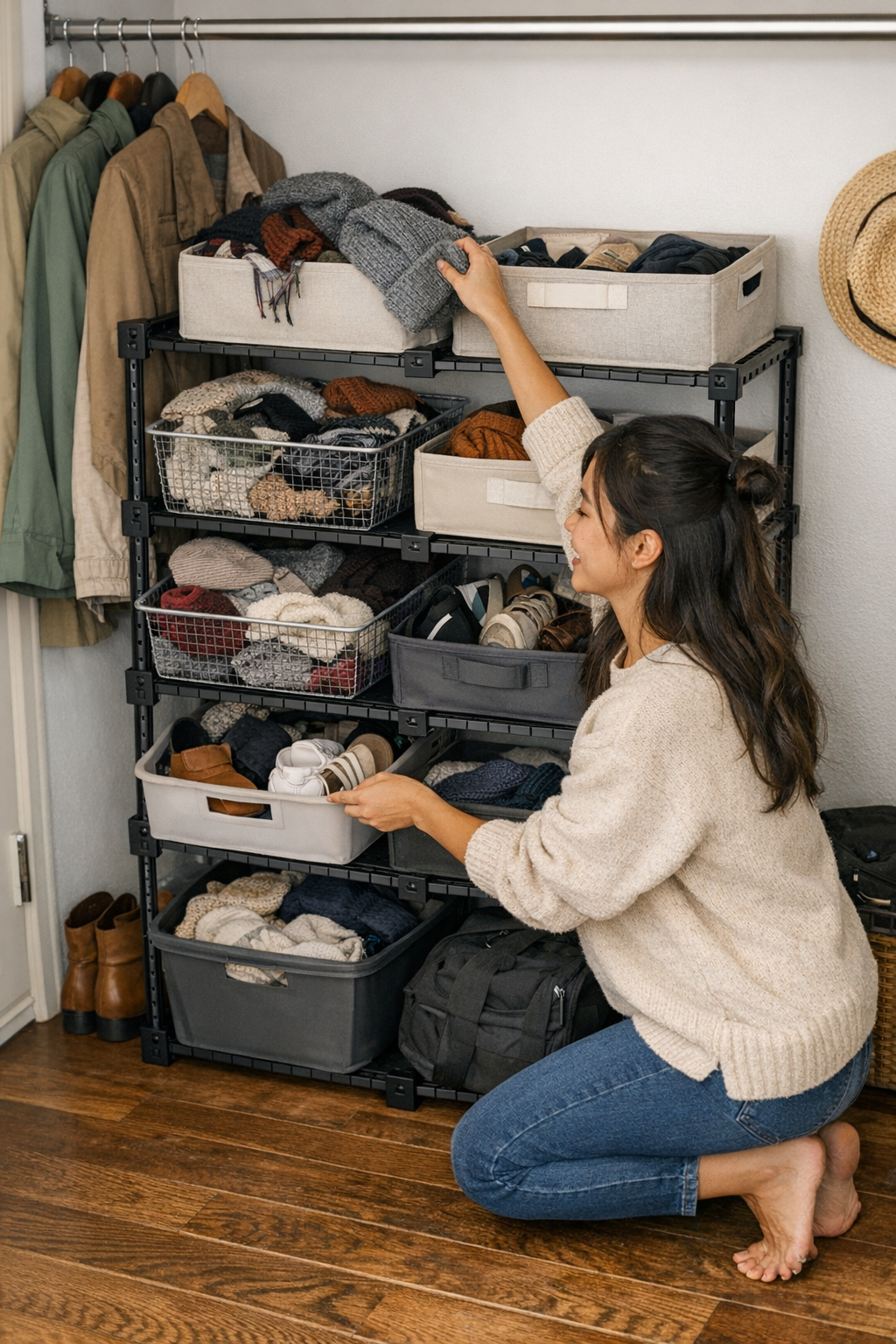
There’s a hidden snag in the classic fix for clutter: just adding more shelves and bins doesn’t guarantee real order. It often swaps visible mess for invisible hassle. On day one, more storage feels like relief—coats slide easily onto a fresh row, baskets line up, and everything has an official spot. But a few days in, friction creeps back. After a late night, you hesitate with the laundry basket, no longer sure which bin handles overflow socks. You reach behind a stack of scarves to pull out one hat. Folded shirts topple as you dig for a favorite tee. Instead of streamlining tidying, extra storage quietly multiplies tiny storage decisions and makes daily resets slower than before.
When More Storage Means More Sorting—and Less Flow
Expanding a closet or utility space can feel like you’ve upgraded your life. At first, every accessory has a dedicated bin, every shelf line is clean, and overflow is gone. But real routines are messy—gloves migrate from their bin, sweaters settle wherever there’s space, and snack boxes inch across pantry shelves. That “reset button” sensation fades as bins fill unpredictably and shelves crowd faster than you planned. The line between organized and chaotic blurs every time you rush to put something away or grab something in a hurry.
Small Choices, Big Slowdowns: The Trouble with Too Many Options
Every shelf and bin you add opens a new possibility—and a new place to lose things. The friction isn’t container count but constant micro-decisions: where does this go, will it fit, is this the right spot? Think about those matching baskets labeled “scarves,” “hats,” and “extras.” After the Monday morning scramble, those clear lines dissolve. By Friday, the “hats” basket holds loose mittens, the “scarves” pile is buried under headphones, and you’re rifling through all three to find what you need. The system that looked tight on setup day now feels vague, and you spend more time scanning, guessing, and reshuffling.
Most people spot the real trouble when it’s time for a quick tidy—before a guest arrives or just to reclaim counter space after a week. If you’re pausing at the closet door, basket in hand, trying to remember your own setup, that’s storage friction making itself known.
The Real Limit Isn’t Space—It’s Access
Vertical space is tempting. Stacking bins high or layering shelves feels efficient, but in practice, only what’s in easy reach gets daily use. Eye-level baskets fill up immediately. Anything above shoulder-height becomes “later storage”—the spot for off-season gear or things you half-forget you even own. The higher or deeper an item is tucked away, the less likely you’ll use or reset it fast. That’s when lost gloves surface months after winter, and neglected bins turn into vague catch-alls nobody wants to sort through.
Shallow vs. Deep: Why Some Containers Actually Slow You Down
Contrast a giant laundry basket—grab, toss, done—with three mini-bins for socks, lights, and darks. Suddenly each load needs sorting twice, and there’s a decision every single time. Multiple shallow bins mean multiplying your mental effort: does this go with t-shirts or in that odd “workout gear” basket? Over a week, routines stall. Instead of effortless resets, you’re left reshuffling categories and picking up little piles that never seem to stay put.
Where Storage Friction Hides in Everyday Life
Real storage struggles show up in all kinds of small, recognizable ways: Entryway shelves that can’t handle a mud-soaked pair of boots, home offices where paper stacks won’t stay separated, closet zones that start off clear but blur into one big jumble by midweek. You might catch yourself moving the same pile of grocery bags from shelf to shelf, or wrestling with an unstable stack of folded towels every time you need just one. These are not dramatic failures, just the subtle signs your system requires too much maintenance.
When Tidying Up Feels Like a Reset That Never Ends
If your quickest cleanups get slower and you find yourself in endless “mini-organizing” sessions—a few shirts restacked here, a pair of shoes consolidated there—the storage setup isn’t supporting real life. Instead of routines becoming second nature over time, they feel more like recurring chores. The system’s failing if you’re always a step behind, no matter how much storage you added.
Small Shifts, Real Gains: Making Your Storage Actually Work
Sometimes the biggest improvement is not more storage, but less—used better. In our hall closet, swapping five stacked bins for just three at chest level changed everything. Suddenly nothing was teetering above head height, nothing required crouching or reaching blind. Everything was a glance or a grab away. The usual after-work reset—bags, scarves, keys—went from a ten-minute battle to a quick, thoughtless sweep. The system became not only more usable, but visibly less prone to new clutter sneaking in overnight.
Tip: Instead of adding more containers, try removing whatever’s hardest to reach or least used. Watch if your daily resets speed up and your surfaces stay clearer longer. Real organization comes from effortless, repeatable motion—not just pretty labels or maximum capacity.
Test Your Setup: Is It Sturdy or Just Styled?
The most telling measure of storage success isn’t how put-together it looks right after cleaning. It’s how quickly you can return a stray item, find what you need without second-guessing, and keep categories from melting together. If you’re tripping over bins to access basics, or the shelf lines that once looked crisp are now caving under mixed piles, it’s a system that needs rethinking.
When every item has a clear, reachable zone and resets are so automatic you barely notice them, you’ve landed on a setup that matches your life. It stays ready for action, not just ready for photos. The real win isn’t walls lined with storage—it’s a closet, entryway, or shelf that stays organized because it fits the way you actually live, not just the way you wish you did.
Explore practical closet and utility storage solutions at ClosetWorks.