
In finish carpentry, there’s no buffer for mistakes. You’re midway through a flush trim or slicing an exact opening, and suddenly every slip matters—because you can’t hide crooked seams or frayed edges behind caulk forever. This is where tool choice doesn’t just matter—it decides whether the end of your shift is clean-up or touch-up. For every remodeler or pro trying to keep lines straight, the familiar heartbreak kicks in when the oscillating multitool starts wandering, even as you focus harder.
When Multitools Demand Too Much Rescue Work
You gear up for a delicate trim cut—a bit of quarter round, that last length of shoe molding against an out-of-square wall. The multitool seems like the fastest route. At first, you’re in control. But as you dig in, the blade jitters side-to-side, leaving ragged grain and a slight curve where you wanted dead straight. That wavy edge isn’t just cosmetic—a paint line won’t sit right, and you’ll be back with filler or a tiny sander, erasing the mistake in fifteen painful-minute stretches.
This is every finish worker’s recurring headache. The multitool offers a fast start but wobbles when the pressure’s on: uneven gaps, fuzzy corners, and endless correction after the cut. What you saved in setup you pay for in recovery.
Why Multitools Let You Down on Finish Cuts
Oscillating multitools are built for access, not absolute control. Their quick, side-to-side motion helps when you’re notching inside a cabinet or slicing through grout, but that agility transforms into flex and chatter when you push for long, clean lines. Thin blades heat up and bend—especially on dense material like oak, MDF, or plastic laminate. With each pass, vibration creeps up your wrist, and any hesitance or uneven pressure shows up as divots and chatter marks in your finish.
Fatigue builds up fast, too. You’re trying to hold a vibrating body steady, easing through the cut, but one distraction sends the blade drifting. Worse, the multitool’s sweet spot is fleeting: push too fast, and the blade scorches; too slow, and it melts plastic or fibers instead of slicing them.
When the Reciprocating Saw Takes Over
Reciprocating saws come into their own the moment the cut demands consistency. Their longer blade offers predictable tracking—you can guide it firmly against a shoe, anchor it to your working line, and keep the cut true. Instead of fighting the tool, you work with it: the blade rides the mark, the handle absorbs vibration, and each stroke follows your lead.
The payoff is visible on every finish pass. Run a reciprocating saw—with a 10–14 TPI blade, not a demolition monster—down the edge of hardwood trim or through laminate flooring, and the result is startling: pencil lines matched, minimal cleanup, surfaces ready for paint after a quick sand. No chasing missed spots, no hiding chattered edges.
Jobsite Example: The Laminate Floor Cutback
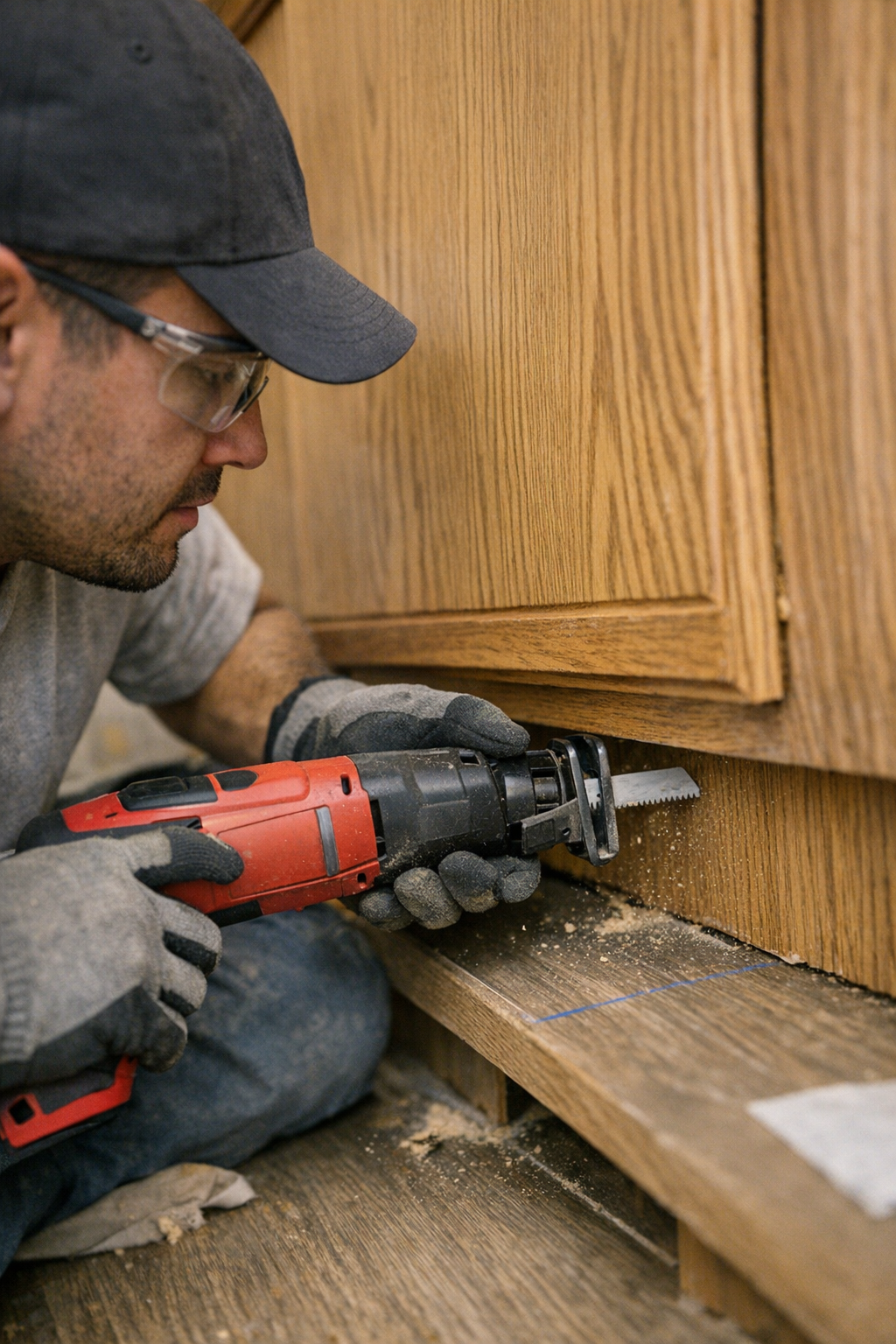
Picture a common job—trimming back laminate under a fixed kitchen cabinet. Space is tight. Grab the multitool, and you’ll probably get 70% through before the vibrations eat the teeth and leave a melted, messier line than you started with. What looked like a “quick” tool fix leaves you bailing out with a belt sander, trying to force that seam tight against baseboard that refuses to sit flush.
Now, go at the same floor with a reciprocating saw—short, new 10–14 TPI blade locked in, speed dialed down, shoe pressed flat. The blade slices clean, following the chalk. The edge is crisp, the blade runs cool, and the finish is ready almost immediately. The difference? The time you’d spend fixing mistakes is now yours again.
Sharpening Your Blade and Your Approach
Finish work isn’t just about choosing tools—it’s about the setup. Reciprocating saws let you fine-tune by blade length, tooth count, and, crucially, speed control. Under six inches and higher TPI is the magic formula for detail—not brute force. A good blade makes control natural; a sloppy or worn blade puts every flaw on display. Stop and swap before the blade burns out. Multitools, meanwhile, punish dullness with every pass, often turning one slip into five new flaws.
Pro tip: When the line must be perfect, install a fresh, fine-tooth blade and slow down the stroke. Two steady, overlapping passes beat one hurried attempt that spirals into patch-work every time.
Multitools: Great for Corners—Not for Finish Runs
Resist the habit of forcing multitools into the wrong role. They’re unmatched when you’re boxed in—nibbling a notch inside a shelf, trimming inside a case, ducking behind a sink. That’s their lane. But on a long cut where appearance matters most, what feels nimble up front rarely looks sharp at the finish. Reciprocating saws aren’t just a workaround—they’re the answer for straight, ready-to-finish lines, with less sanding, less patching, less cursing the last tool you grabbed.
Choose the tool for the outcome, not just for convenience. The minutes saved avoiding a blade swap or setup can add up to hours of unforgiving fix-up work later. Good finish work is a habit—don’t let impatience turn your details rough.
Catching Problems Before They Snowball
You know trouble is coming the second it starts: vibration rattling through your grip, a cut line that looks frayed instead of clean, the motor bogging down and teeth smoking. Don’t push past those signals—otherwise, you’re signing up for a cycle of patch, sand, and never-quite-right. Watch your technique as much as the tool: if the line’s going wonky or the work goes from precise to strenuous, hit pause. Change the blade or change the saw before the problem multiplies.
Want tools and blades that don’t leave you stranded in the middle of the job? Visit Gumboll.