
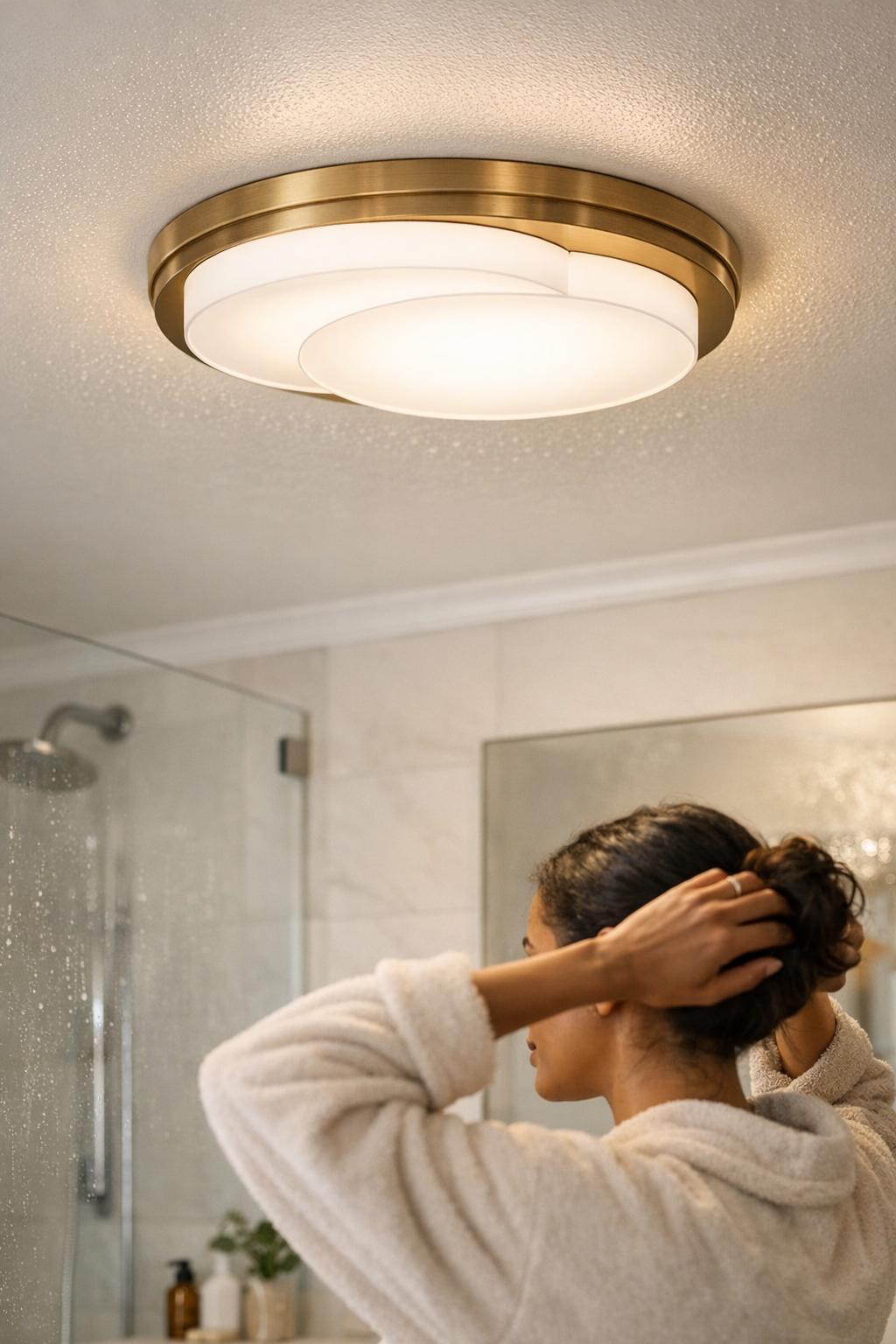
Every bathroom fixture faces a quiet, daily stress test from steam. A light that looks solid straight out of the box—flush to the ceiling, bright and polished—can start giving itself away within weeks. Steam collects after showers, builds up in small corners, and seeps into mounting points that seemed sealed. Suddenly, a lens is slow to clear, a faint moisture outline lingers on the trim, and screw heads take on early flecks of rust. Day after day, these marks accumulate: not dramatic failure, but an unmistakable signal that ordinary fixtures lose ground fast in actual bathroom conditions.
How Daily Steam Creeps In
Most standard fixtures aren’t designed for persistent, humid cycles. The consequence isn’t immediate—it’s the haze that develops behind the lens after days of repeated showers and poor venting. Edges that started out glossy now tint yellow where moisture migrates. Wherever water pools, a streak appears and refuses to wipe away fully. By the time you realize the mounting won’t dry out or the lens keeps holding a fog line, the invasion is set. These signals don’t just show up on cleaning day—they settle in, week after week, until the fixture feels permanently tired.
Visible Clues: Small Issues, Big Frustration
The friction is clearest during basic routines. Flip the switch for bright, clear output—there’s a pause, a shadow, a dull haze. You squint to shave or re-angle for makeup, noticing that one edge of the sink stays dim and the other shifts yellow. Cleaning turns into a midweek chore, scrubbing stains that always return. Corrosion creeps along screw heads. Every “quick wipe” barely undoes what steam does all over again by morning. It’s not just visual clutter; it’s daily lost time and effort that shouldn’t be part of your routine.
The Real Risk Isn’t Just Looks
Steam quietly attacks the core function. Unsealed seams and exposed cable runs give moisture a direct entry—not just dulling appearance, but causing flicker, uneven spread, and breakdowns when reliability matters most. A shadow appears above the tub where light once reached. Around the mirror, a shadow stains a side you need clear. The fixture risks failing at rush hour, forcing awkward resets or repairs when you have no bandwidth to deal with it. Even minor patchiness in output leaves the room less functional, and the setup less trustworthy, every single day.
Bathroom Rated Fixtures vs. Standard Looks
Flush-mount “bathroom” and standard ceiling lights seem similar on first install: both look finished and neat. But use separates them quickly. Two identical bathrooms—one with an everyday fixture, the other with a true bathroom-rated model—illustrate the divide. The differences don’t yell, but they don’t go away.
- Standard fixture: After a month, fog forms behind the lens. Condensation rides the glass and never quite dries, so each week’s output softens—not from design, but from a slow invasion of moisture and film. You polish and the result barely lasts a few days.
- Bathroom rated fixture: Output stays clear, even as steam fills the air. Gasket seals block damp from sneaking inside. Hardware doesn’t corrode; you wipe dust, not residue. The mounting feels as tight as day one, and the light acts as expected—never lagging, never patchy—no matter how many showers pass.
Where the Details Matter Most
It’s the invisible armor—extra gaskets, hidden seals, tight cable ports—that keeps a bathroom’s routine from turning into a constant battle with steam. With these details, cleaning means less friction: less shadow at the periphery, less random yellowing, fewer panic scrubs before guests arrive. The room delivers the coverage and clarity you count on, so your morning doesn’t stall over details that shouldn’t break down.
The Repeated Friction of a Poor Setup
Picture the rush to get out the door: condensation clouds the mirror, and the light over the sink only throws brightness one way. Wiping the glass clears your reflection for a second, but the actual light stays uneven—half the counter in shadow, the other in dim yellow. That’s not a cleaning issue—it’s the buildup of months with the wrong fixture. You only realize the problem in the moments you need reliability: mid-shave, makeup half-applied, or when the fixture flares out under routine use.
Shared, low-vent bathrooms double the effect. Fixtures chosen for looks or “good enough for now” stories lose the fight to steam faster. The price is paid not just in appearance, but in small, repeated interruptions—swapping bulbs, hand-wiping rust, hoping the mounting won’t loosen after every deep clean. The surface may look intact, but every morning starts with a new hassle you didn’t notice the first week.
Small Fixes with Real Payoff
Switching to bathroom-rated lighting is less about technical specs and more about eliminating the routine frictions that stack up day to day. Gaskets that actually seal, cable entries that block moisture, and brackets designed to resist corrosion mean cleaning returns to being occasional, not desperate.
- No more drywall stains or ceiling rings. Good seals keep steam out of the mounting, so marks don’t return.
- Consistent brightness. No more edge gloom or slow light-up—coverage remains even, eliminating the telltale shadows that signal stubborn condensation.
- Stable cable paths. Covered cable entries prevent hidden stains and out-of-sight corrosion, so the support stays solid even behind the trim.
You won’t see instant change, but you’ll notice what’s gone—the need to fight glare, chase shadow patches, or clean the same streaks repeatedly.
What to Check Before You Replace—or Buy
The label and build matter as much as style. Check for real IP (Ingress Protection) ratings, or clear “damp/wet location” listings—not vague claims, but explicit specs on the product tag or manual. A fixture that skips these isn’t made to stand up to bathroom conditions, especially directly over a shower or beside a mirror constantly fogged by steam.
Key warning or deciding signs:
- Gasket seals tight against lens and trim, not just decorative bands
- Mounting screws and brackets coated or made rust-resistant
- Cable entries with visible moisture blockage—nothing left exposed behind the housing
Miss these, and you’re left with a setup that demands constant “fixing,” never truly resolved.
Why the Right Details Outlast Quick Installs
Bathroom-rated fixtures aren’t about overbuilding for code—they’re about defending the daily routine against the slow creep of dim corners, stains, and breakdowns. Seals, cable supports, and real water resistance mean a busy bathroom keeps functioning without distraction. You don’t have to second-guess the mounting after a humid week or race to clean before light output dips again.
No installation is immune to every flaw, but when you choose setups that solve for steam and repeated friction, the room keeps working for you, not against you. The difference isn’t just in appearance, but in how often you’re interrupted—or finally left alone—by your lighting.
For practical indoor lighting, bathroom fixtures, seals, cable supports, and more, visit LightSupport.