
You don’t notice your closet’s setup when you’re calmly picking out clothes on a Sunday afternoon. You notice it when you’re running five minutes late, rooting for that one black T-shirt, juggling falling stacks, and promising yourself you’ll reorganize—but never quite getting there. The choice between wire shelving and solid shelving isn’t a matter of taste; it’s the difference between quick retrieval and everyday friction. What you install shapes whether your closet stays functional—or becomes another headache waiting behind a closed door.
Why “Organized” Shelves Fall Apart in Real Life
At first glance, almost any shelf can feel like an upgrade. They’re level, lined up, and empty—impossibly tidy. But after the first round of midweek chaos, stacks that started straight wilt and lopsided piles begin invading neighboring territory. Small things disappear regardless of how perfectly you folded them on day one.
True organization reveals itself under pressure. You open the closet, see neatness, but half the time you’re reaching behind two sweaters to yank out a shirt or sliding a bin forward only to realize the bin is now a disorganized mix of socks, random cords, and last winter’s gloves.
Wire Shelves: Clean Air, Chaotic Details
Wire shelving feels light and fresh from the start—great for keeping airflow moving, perfect for towels or guest linens that quickly dry out between uses. You get instant visibility; you can scan the shelf and see what’s stashed two levels down. The minute you add smaller or slippery items, though, the rules change.
Socks escape through gaps, underwear droops between the grids, and folded shirts find new escape routes to the floor. That clean, graphic line you installed turns into a daily game of “find the missing tee.” And every pull threatens to collapse a pile or send something airborne to the shelf below.
Wire Shelves: Where the Friction Builds
- Small items don’t stay put. Socks, washcloths, scarves—anything not perfectly stacked risks slipping, drooping, or vanishing out of sight.
- Dust and lint ride the open grid, falling onto whatever’s underneath—turning the lower shelves into accidental catch-alls for debris and dust bunnies.
- Slippery or round items rarely last a week on top of the wires before needing a complete reset.
Adding bins and baskets sounds like a fix, but over time they become “everything bins.” That original plan for separating types—just socks here, only tank tops there—deteriorates as things get tossed in a hurry until you’re pawing through the chaos for what you need. Visibility is lost, and the shelf becomes a dreaded stop in your daily routine.
Solid Shelves: Steady Stacks, Hidden Clutter
A solid shelf makes everyday stacks doable. Sweaters, tees, and jeans line up, and you can shuffle, slide, and restock without a single item escaping. Slide out the middle shirt and the rest remain standing—a small detail that saves the morning rush from unraveling a week’s worth of effort. But the surface that keeps the front orderly can turn the back into a graveyard of out-of-rotation clothes.
With less airflow, damp towels or overstuffed clothing become a breeding ground for musty smells. Deep shelves invite you to build higher, but the temptation to stack eight towels deep means only the front two get used—and the thing you need always seems to be in the unreachable back row. That quick grab often jostles the whole pile, and what once looked organized from the front devolves into a shifting mound by week’s end.
The Flip Side of Solid Storage
- The backs of shelves become blind spots—unused, forgotten, and hard to reach without upheaval.
- Poor ventilation means damp or rarely used items take on a stale scent that spreads to everything else.
- Extra-deep shelves ask for trouble; you dig for one piece and end up dragging half the stack forward or letting the whole column tip sideways.
The real story plays out in moments: fishing for a fitted sheet and disturbing a careful stack, or reaching blindly only to realize you haven’t used anything from the back in months. Every “quick fix” becomes another invitation for clutter to hide behind something else.
How Shelves Change the Morning Rush
Imagine the Monday morning sequence: multiple hands in the closet, towels in demand, shirts needed, everyone in a hurry. Wire shelves let air flow, but clothes and washcloths slip right through the cracks. A stack that looked neat at 7 a.m. is a jumble by the afternoon. Cleaning up is a cycle of picking up what’s slipped between, then refolding what’s sagged off the side.
With solid shelves, at least everything stays where you left it—unless you let the stacks get too high. Then, the deserving winner is whoever gets there first; the unlucky one is left piecing together whatever’s toppled to the back. The longer the shelf, the more likely folded stacks start merging or leaning, making resets slower and taking up precious minutes on mornings when time is tight.
Trying a Hybrid: Mixing Shelves to Match Real Life
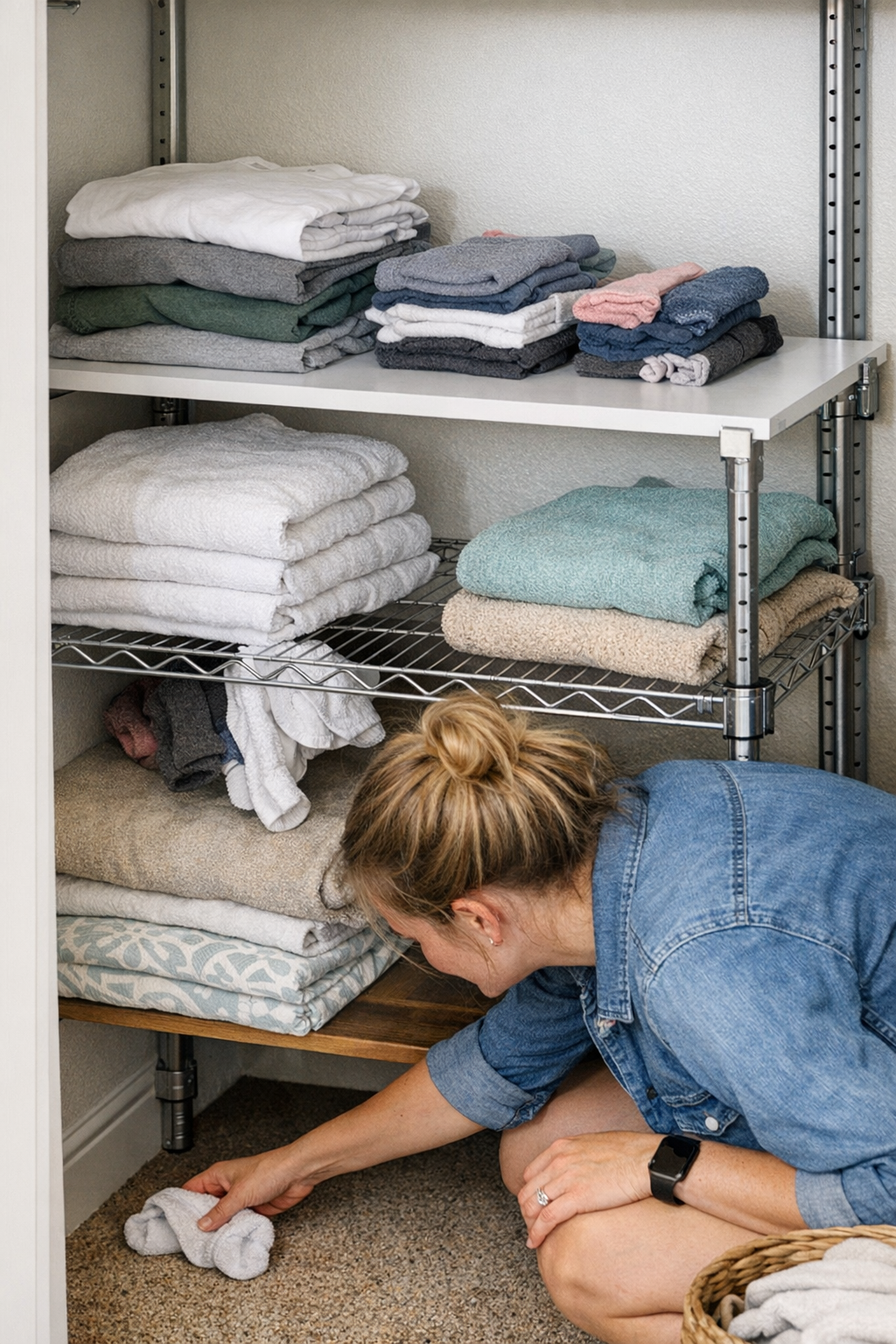
Living with both types side by side clarifies the trade-offs fast. Swapping just the top wire shelf for a solid one made the difference between lost shirts on the floor and predictable, steady stacks. Mornings stopped involving a scavenger hunt under the closet. But solid shelves alone didn’t solve everything; summer humidity and stagnant air snuck in until a small gap was left at the back—barely enough to keep clothes aired out, but just enough.
Using solid shelves for stack-heavy areas—T-shirts, sweaters, or bins with clear contents—kept everyday basics where they belonged. Below, wire shelves in linen and towel zones let things breathe and dried quickly after laundry day. The closet still needed resets eventually (no shelving system is perfect), but instead of unraveling every few days, the space held together for weeks before needing a true overhaul.
What To Notice Before Installing Shelves
Before making your choice, watch how your current setup slows you down. Are you chasing socks that drop out of sight? Are certain stacks constantly leaning, collapsing, or spreading out? Do you move three things to reach one—and, after a week, are your bins still sorted or muddled?
- If you want faster mornings and less reshuffling: Solid shelves usually make daily handling easier—just watch for clutter drift to the back.
- If humidity’s an issue or you wash linens weekly: Keep some wire shelving for airflow, but be ready for the occasional drop-through and the need to dust the open grid below.
- If your setup keeps failing: Split your shelving—solids for clothing, wire for linens—or try simple dividers to hold stacks upright and avoid bin sprawl.
You’re not searching for showroom perfection. You’re aiming for a closet that’s predictable, quick, and forgiving when life gets hectic. When your routine speeds up and the closet doesn’t fall apart, that’s how you know the system actually fits daily use.
Find more storage solutions designed for real daily life at ClosetWorks.