
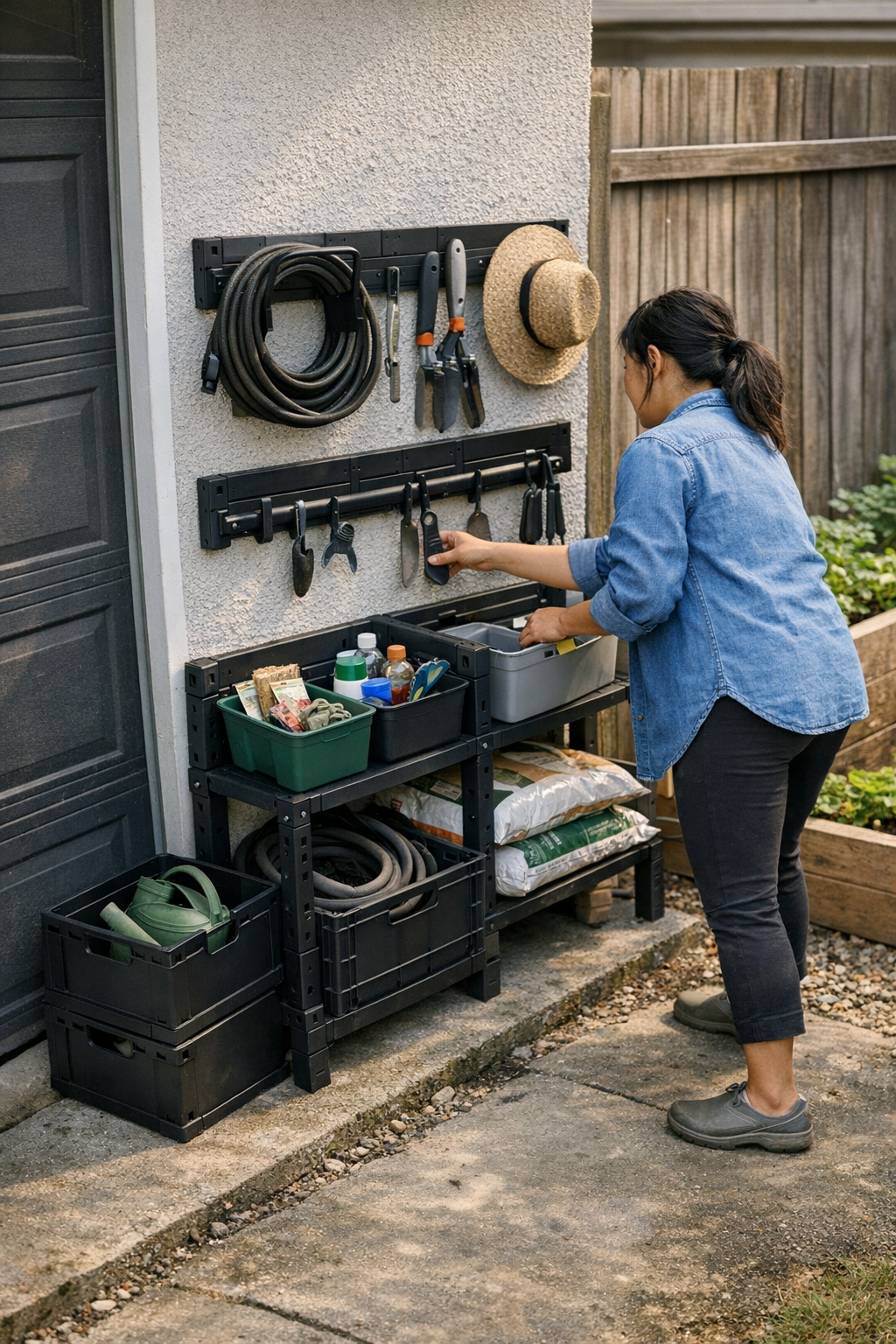
Most backyard disasters don’t happen in the garden beds—they pile up at the return zone. That crucial stretch near the door, the fence, or the side yard is supposed to make routines easier. But after a full day, nothing reminds you of a weak setup faster than tripping over a bin’s spillover or doing a shuffle around a pile of gear abandoned “for now.” In places meant for smooth pass-through, organization failures aren’t just messy—they snarl up movement, block doors, and quietly dump all the reset work onto whoever snaps first. It’s rarely the fault of the tools themselves. The real breakdown: most outdoor return zones aren’t built for how tired, distracted, everyday users really come and go.
When Setup Meets Real Foot Traffic
Side yards, back steps, even narrow garage thresholds—they aren’t just storage traps. They’re daily routes. That wall rail might look efficient on a weekend morning, but by Wednesday afternoon, it’s a gauntlet: a bag of outgrown shoes squats under the hose, someone’s shovel blocks the path, and the “freestanding” bin has grown a fringe of overflow. What starts as easy order quickly melts once three or four rushed returns pile up. The real test isn’t the setup on day one. It’s what happens after a week of dirty shoes, rainy days, and back-to-back drop-offs. Most setups can’t keep pace: suddenly the route narrows, corners fill with backup, and the quickest return leaves the most to fix later.
Clutter is a Delay, Not a Decoration
Visual clutter isn’t the villain—blocked movement is. Tools propped “just for a minute,” mud-caked boots wedged into the only open spot, carts angled for easy reach but snagging the path—these aren’t just untidy. Each one is a micro-jam, forcing awkward pivots and shoulder brushes as you move through. By Thursday, crossing the yard isn’t a walk, it’s a sequence of sidesteps and toe-taps to clear a line to the door. When a return zone lingers at half-workable, every trip through shifts more clutter onto whoever gets fed up first. Reset burden always lands hardest on whoever can’t tune it out.
How Order Cracks Under Real Use
Every outdoor setup starts with optimism: hooks lined up along the fence, modular bins carefully squared at the edge, maybe a new wall rack promising clutter-free days. For the first 48 hours, it all feels under control. Then the real routine resumes.
- Wall racks crammed with extra tools or set at the wrong height become a hassle. Drop off a trowel with an armful of groceries and suddenly you’re rebalancing a rake or knocking something down.
- Bins become the “drop zone.” Wet gloves, sandy shoes, and secateurs all mashed together. Soon the bin bursts its banks, gear drifts onto walkways, and the whole zone slows to a crawl.
These return spots don’t fail at storage—they fail at continuous use. Kids in a rush wedge things anywhere. Guests guess where stuff goes. So the logic of the setup buckles, and the “organized” zone starts camouflaging hidden clutter, blocked routes, and repeated reshuffling as everyone negotiates for space that should already be clear.
The Anatomy of a Midweek Breakdown
Picture this: a narrow side yard, Tuesday evening. The wall rail is at capacity. A bulky hose reel that won’t fit gets propped in the only dry patch, chewing up what’s left of the walkway. By midweek, unused rain boots dangle wherever someone found a hook. A garden fork ends up wedged behind the recycling bin. By Friday, the only passable strip is what someone cleared just enough with a foot tap. This isn’t an exception. It’s how zone friction builds up, week after week.
Every “this can wait” return builds pressure. The moment there’s no easy place to drop something, responsibility shifts. Eventually, the return zone becomes a trap for the most organized (or least tolerant) person—who either does a frustrated overhaul or steps around the problem, letting the cycle drag out longer. The real success of a setup isn’t how it looks after a deep clean; it’s how well it survives messy, imperfect use.
Tweaking the Flow: Small Shifts, Big Payoff
The reset comes from changing the logic, not just the labels. After months of watching a deep bin turn into a black hole for everything, switching to two separate wall rails—a lower rail for fast-drop items, a higher one for bulky gear—changed the traffic pattern completely.
The Dual-Rail Advantage
With rails hugging the wall and nothing crossing into the door’s swing, walkways stayed open. No more blind spots for overflow to hide. If too much gear crept in, it instantly blocked the path—forcing a quick fix instead of letting the pile fester. Instead of pretending every return was equal, the setup let quick-use tools nest at hip height and heavier stuff go higher. Floor space stopped being a dead zone for neglected bins. Reset was lighter, returns were faster, and crowding became obvious before chaos could take root.
This change felt immediate: the temptation to “just drop” something into the bin evaporated. The low rail was always within reach. Daily-use boots and gloves stopped blending into a pile. Overspill didn’t vanish behind a lid—it forced a visible shuffle, so repacking stayed a shared, regular task rather than a hidden crisis.
Placement: The Real Make-or-Break Detail
The best system on paper will fail if it sits outside actual flow. Build the main drop spot right in the main line of travel: by the door everyone uses, at a height anyone can reach one-handed, and never tucked behind another obstacle. When a return zone gets placed out of sight or above a kid’s reach, spillover just finds the next easiest spot—usually exactly where it causes the next jam.
Fast and Slow Storage Need Their Own Paths
Don’t let recurring returns and long-term stash zones overlap. Split quick-drop storage—wall rails, grab hooks, open baskets—from slow-storage options like sealed bins for winter gear or backup tools. One bulky item in the wrong place doubles everyone’s work. When fast and slow use zones blur, resets become overdue, foot traffic gets pinched, and the cycle of reshuffling starts again.
Reset Speed: The Real Quality Test
The best outdoor return zones aren’t showroom-pretty. They work when movement is constant, returns are rushed, and nobody resets perfectly. What matters: zero hidden overflow, no blocked lines, and a reset that never needs a heroic effort no matter how off-script the week goes. If a zone resists hidden buildup, keeps the walkway clear, and lets you drop and move without thinking, it actually earns its spot.
These returns add up quietly. The ease—or pain—of a reset gets measured not in how a zone looks at its best, but by its speed on your most tired day. When the drop zone matches where people actually move and the return flow lines up with real use, organization stops being a battle and starts to feel like a relief.
Browse more practical, real-use-focused solutions at TidyYard.