
You don’t discover the true difference between adjustable and fixed closet shelves until you’ve lived with them through busy mornings, rushed evenings, and endless laundry loads. On paper, it’s a simple choice: flexibility versus stability. But in real closets, where habits and clutter collide, the stakes rise fast. That shelf you set on day one? It decides whether your routines feel smooth—or you spend every week battling fresh friction.
That First Week: Everything Fits—Until It Doesn’t
The early days fool you. Install new shelves, line up the bins, arrange the shoes—everything looks sharp and orderly. For a short stretch, you’re convinced you’ve defeated closet chaos: every shirt in its slot, every basket labeled, even the awkward purse tucked neatly away.
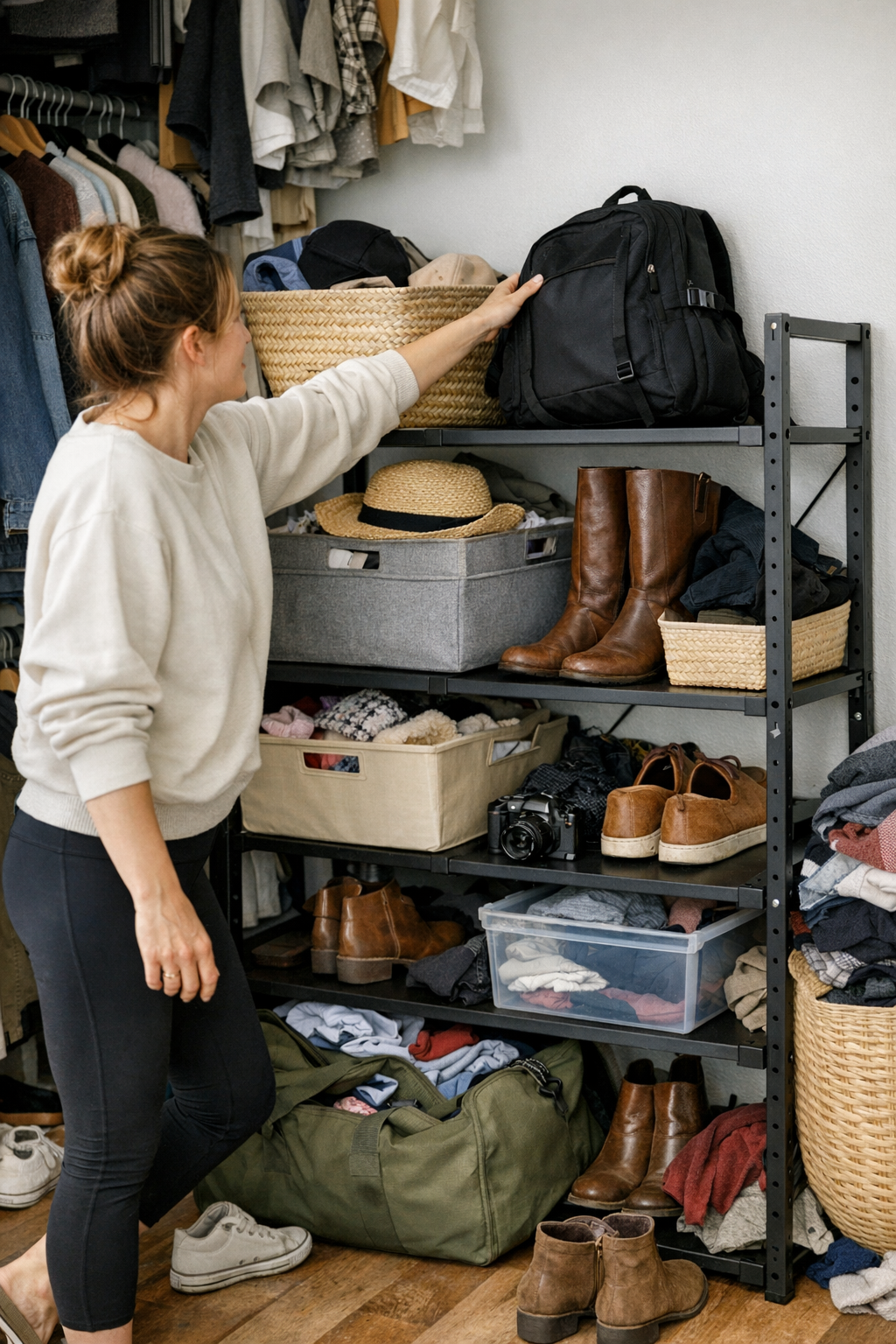
But then reality peels back that tidy surface. A new winter coat lands in the mix, or someone swaps sneakers for boots. Suddenly, the shelf holding hats now hosts a half-unzipped duffel. Baskets fill and start to spill—first a scarf peeking out, then gloves tumbling to the floor. Within a week, you’re already stacking, squeezing, and bending the rules of your own setup. Friction creeps back—one grab at a time.
Adjustable Shelves: Flexible but Not Automatic
On paper, adjustable shelves promise to solve these moving targets. Need to fit that pair of knee-high boots? Move a shelf. A big new storage bin? Lower another just a notch. When used, the flexibility is real—if you choose to pause, empty a section, and physically reset the shelf height.
The hard truth: busy routines rarely leave space for this reset. Instead, most of us squeeze that new item in, tilting boxes or burying smaller things behind whatever fits. The shelf might be adjustable, but our habits turn it into a fixed surface until the next rare overhaul. Suddenly, you’re reaching behind a row of mismatched shoes to grab one pair, or restacking sweaters because a storage bin doesn’t quite slide in like it used to. Flexibility fades when every adjustment requires a mini project.
One Measurable Reset: Real-World Payoff
Yet when you invest five minutes to adjust that shelf—raising it just enough to let coats hang freely, or lowering to fit a box without crushing the container—the effect is outsized. Boots finally stand up. The bin slides out smoothly instead of snagging. It’s not a dramatic visual transformation. What changes is the daily current: no more nudging baskets around or pulling sweaters from the middle of a listing pile. Less time rescuing toppled stacks. More likelihood you actually put things away, rather than letting them sprawl on the floor out of frustration.
Fixed Shelves: Relentless Stability, Real-World Limits
Fixed shelves, on the other hand, never budge. Their strength is literal—no wobbling under heavy bins, no risk of a sagging surface midway through the season. They’re ideal for massive detergent bottles, stacks of towels, or out-of-season gear housed in weighty bins. Order feels bulletproof.
But only as long as nothing changes. Sneak in a taller item and you’re out of luck: the new bin gets jammed sideways, or a stack of T-shirts climbs higher than the shelf allows and eventually flops, spreading across the shelf below. That crisp visual order starts to break down as you rearrange, combine bins, and create layered piles just for things to fit.
Beyond Closets: When Fixed Means Friction
The struggle isn’t limited to bedroom closets. Entryway shelves, fixed at backpack height, soon clash with boots or helmet collections. Items overflow onto doormats. Bathroom shelves, perfect for towels, get crowded with stray products and half-used toiletries. You end up with dead vertical space above low-slung baskets, and nowhere to go when you bring home something new. The “organized” look becomes a mirage—a thin shield over a growing undercurrent of shuffling and stalling.
Looking Organized vs. Living Organized
Photos can’t tell you what daily use reveals. After a deep clean, any system appears neat. But the reality test comes week after week: Are you shifting stacks to get a single t-shirt? Digging behind a basket to find your hat? Or finding yesterday’s organizing effort undone because piles don’t hold their shape?
Adjustable shelves only deliver if you commit to resizing as life shifts. Leave them alone too long and the entire system hardens; sudddenly, you’re back to awkward workarounds. Fixed shelves, for all their ruggedness, eventually force you to double-stack bins or resign yourself to perma-clutter as the categories blur and pile up in unused corners. Every day, you pay in extra movement—an invisible tax on speed and clarity.
Daily Storage: Which Friction Can You Live With?
Every routine is a different test case. Ask yourself:
- Does your closet’s inventory rotate with the seasons, or do you mostly keep the same things in the same place?
- Are you a regular shopper, bringing in new bag sizes and odd-shaped items?
- Do you have the energy (and patience) to occasionally take five minutes, empty a section, and lift or lower a shelf?
- Are you storing real bulk—cases of soda, stacks of books, paint cans—that demand unwavering strength?
Too much constant tweaking is unsustainable. But so is enduring a setup that forces you to constantly reshuffle, restack, or leave items homeless. Clutter builds slowly, bin categories bleed together, and the closet that once felt generous now feels cramped—not because you own more, but because storage can’t keep up with your life.
Stronger Setups, Smoother Days
Build in margin for the unexpected. The best storage systems start with accurate sizing—measure your tallest boots, largest bags, and bulkiest baskets before fixing shelf heights. Assign everyday items to the “easy zone”—at chest level, for quickest access. Relegate off-season or once-a-month pieces higher or lower, out of daily circulation.
If you rely on fixed shelves, add vertical dividers between stacks and bins. It stops categories from bleeding into one another and helps keep piles upright longer. For adjustable shelves, a reset once or twice a year—triggered when you first notice grabs getting messy—can buy months of smoother living.
Pay attention to your routine’s pinch points. If you’re regularly digging, lifting, or unstacking to reach the same few things, don’t ignore the signal. Even a small shelf adjustment can streamline access and keep clutter from seeping beyond the closet and into everyday living spaces.
The Shelf Choice That Actually Pays Off
There’s no single best answer. If your storage rarely changes, fixed shelves have an appeal you never have to think about. But if your routine involves frequent swaps, seasonal items, or gear with growing needs, adjustable shelves become a low-effort way to keep pace—so long as you use their flexibility before frustration takes root.
The payoff isn’t a magazine-perfect closet. It’s opening the door every day and finding what you need in one try, not five. A few minutes spent adjusting today can mean weeks of order—and far fewer reasons to dread the next closet shuffle.
See more practical storage ideas at ClosetWorks.