
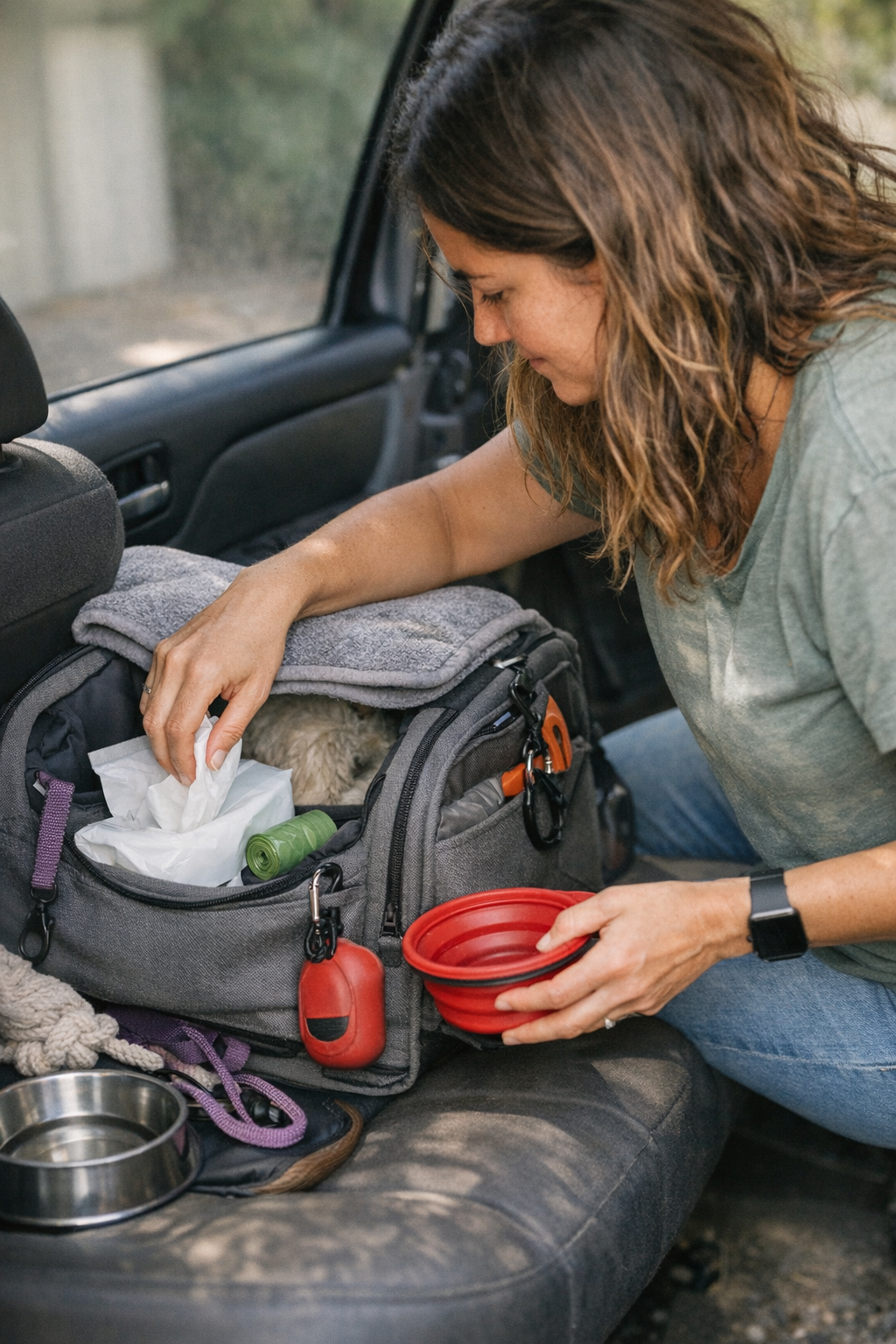
There’s a difference between a pet-travel setup that looks sorted and one that actually works on the fourth stop of a busy day. What starts as a perfectly packed bag—wipes on top, leash in its place, bowl ready—can unravel within a few short outings. By the second errand, the wipe pouch you used earlier has drifted out of reach. The water bowl you dried hours ago is wedged under bulky gear, still damp and hard to grab. One rushed car-side cleanup turns into digging through layers you thought were organized—while your dog watches, restless, and your own patience thins.
How Pet Travel Setups Break Down—Even When They Look Ready
The stress points in pet travel setups are rarely visible at first glance. On the first walk, order holds. By the third or fourth, repeated grabs push quick-access items below pads or beneath less-used gear. Wipes end up buried, the leash tangles with the bowl, and a once-ready kit starts turning routine pauses into hidden stalls. If you’ve ever torn apart a neat setup hunting for a single item you know you packed, you’ve felt this gap—what looks prepared on the outside can become friction stacked up inside.
It’s a quiet failure: the structure built for one-time ease can’t cope with layered use. Instead of a sudden mess, you get gradual slowdowns—each new search stealing seconds, each reshuffle making the next one inevitable. True readiness shows up after the real world has tested the system and found its weak points.
Small Friction Points, Big Daily Slowdowns
Digging through bag sections for the cleanup pouch. Unpacking half your carrier just to reach the leash under a comfort blanket. These moves don’t ruin a trip, but they stack up. Every extra search interrupts your routine, especially at seat-side as you exit the car: wipes tucked under a pad, leashes knotted with bowls, or a treat pouch blocked by bedding. It’s at these transitions—moments built for speed and calm—that awkwardly overlapping gear forces you into one-sided balancing acts and blunted momentum, while your pet senses the delay and restlessness builds.
Why Organization Isn’t Enough—The Ready vs. Usable Gap
Packing for visual order isn’t the same as packing for repeated, quick use. Waste bags out in the open at the start. Treats in your line of sight. But once the day gets going, the setup’s tidy appearance can’t guarantee fast grabs. A bowl zipped under everything means either upend the setup or make your pet wait. A leash stowed for neatness under a comfort pad triggers a full unpack the moment movement restarts. Each misplaced item costs you not just time, but smoother handling—especially if you face repeated stops with no break between them.
Fast-access items need to stay visible and unblocked. Once those lines blur, the distinction between “packed” and “truly ready” emerges fast. The gap shows itself in split seconds lost, in the repeated reach that takes five times as long on trip number three as it did on trip one.
The Reality of Overlapping Pet and Owner Needs
Shared bag space creates its own snags. Your key fob winds up jammed among waste bags. Hand sanitizer rides under the same flap as treats. Owner and pet gear compete for the best pockets, so every return to the car starts another quiet scramble. The end result? Misplaced items and minor reset times that slow everyone—owner distracted, pet fidgeting—instead of the smooth, return-to-motion flow you planned for when first organizing.
Recognizing When Your Setup Is Underperforming
If you keep pausing at the same awkward point—baited by wipes buried under a pad, or forced to untangle the leash from a mashed comfort blanket—this is more than bad luck. Repeated stalls mark a structure flaw made obvious by real use, not by how the kit looks. These snags eat up energy, make transitions clumsy, and chip away at the good intentions behind careful packing. Each friction point repeated through the day means less patience and a rhythm that never quite recovers.
Real-World Example: The “Quick Trip” That Isn’t
Take a standard Saturday: three errands, two walks, car rides bracketed by seat-side stops. The first trip runs fine. But by lunch, after a couple of stops, wipes once close by slip beneath a comfort mat. The next muddy-paws cleanup turns into an awkward juggle: one hand on the bowl slipped between other gear, the console crammed, your dog wriggling for the exit. A process built for “grab and go” now staggers—simply because fast-use items couldn’t hold their turf after the first round of real movement.
The Reset: Restoring Access, Not Just Appearance
Resetting is more than putting things back “where they belong”—it’s making sure what you need is instantly grabbable in actual movement. This means that at least once a day, outer pockets or open clips get wipes and leashes, not just less-used gear. Comfort mats and bedding move to a spot that doesn’t block high-turnover items. For repeated quick stops, even a zipped pouch needs positioning that won’t shift under heavier kit after three in-and-out cycles. Adding one more clip or switching the wipes to a direct-access flap saves time on every reach, especially when the pace picks up.
It’s a small adjustment—a clip repositioned, wipes migrated to a side panel—that clears the runway for the next transition. Cleanup doesn’t turn into a hunt. The leash doesn’t vanish. Resetting for real use means less sorting mid-routine, more time moving instead of fumbling car-side while your pet gets antsy.
Preventing the Return of Clutter and Delay
The difference-maker? Mini resets—quick, less-than-a-minute realignments between stops—are what stop your setup from degenerating, even if it starts out organized. Not a full overhaul. Just bringing wipes and leashes back to the front. Untangling overlapping items, or pulling owner supplies clear of pet fast-grab needs. The repeat offenders—repeated awkward reaches, one-handed digs, bowls buried again—signal it’s time for a reset before everything jams up by early afternoon.
If you notice reach friction creeping in, don’t wait for a total mess. Each reset closes the gap between how things look and how they’ll work at the next exit or cleanup rush. Overlook these signals, and the best carrier or organizer devolves into constant minor correction.
From Clumsy to Fluid: What Real Improvement Looks Like
Apply even two or three of these changes, and the pattern shifts fast. Less cross-compartment shuffling, fewer repeated holdups, a transition speed that fits real-life chaos—walks, errands, pit stops—without your setup failing quietly halfway through. It’s not about perfect looks; it’s about a bag, carrier, or kit that stays responsive after repeated motions, loads, and returns. High-visibility placement and quick resets make friction points fade, so you’re not stuck fighting the same interruptions trip after trip.
True pet travel isn’t curated for photos; it’s built for the loop: move, reset, move again. Each small structure fix goes further than fresh packing or decorative organization. And that’s the world PawGoTravel equips for: setups that don’t just promise preparedness—they survive the real, repeated pace of travel with your pet.