
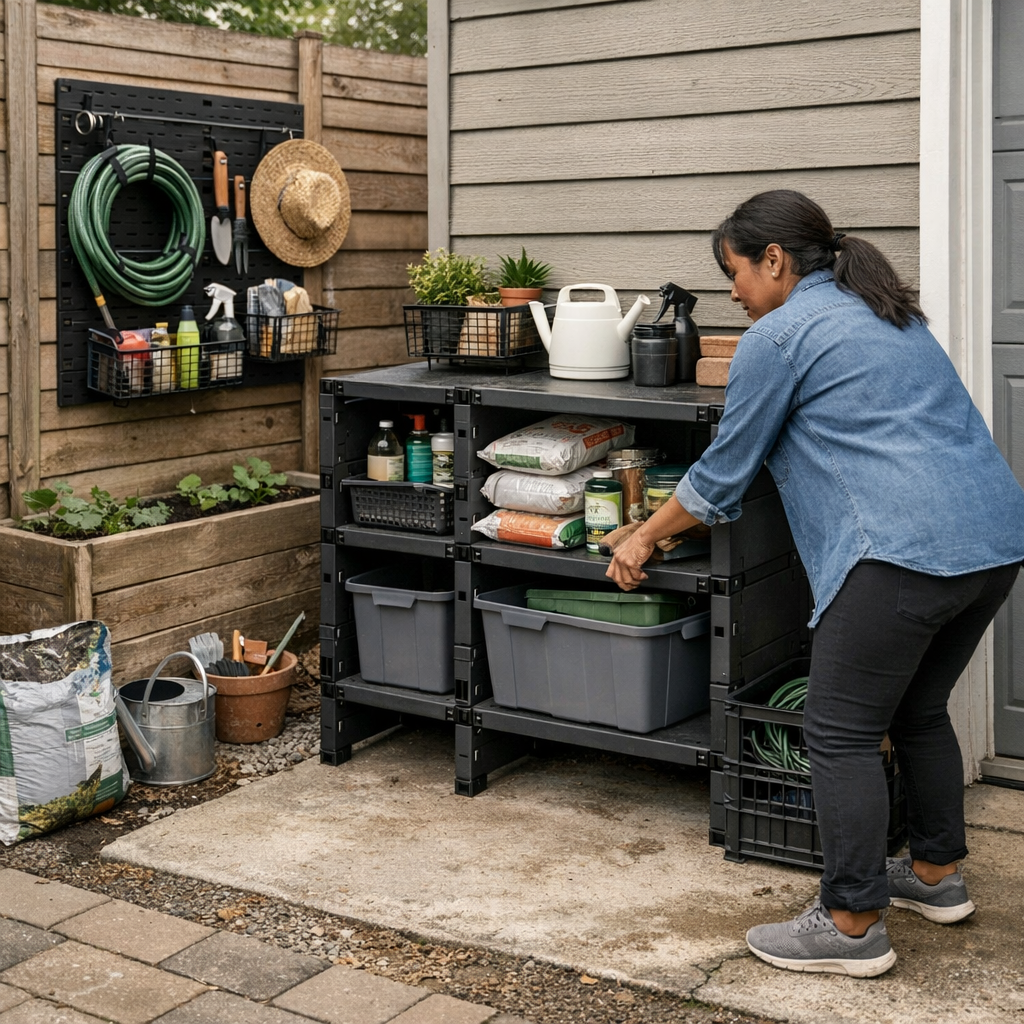
Right after you set up new backyard storage, it can feel like you’ve solved the chaos for good. Side-yard walkways are clear, rakes perch on hooks, and patio cushions finally have a home. But it only takes a couple of weekends—a forgotten garden glove near the compost bin, a pile of soccer balls wedged against the fence, the trash bin blocked by a hastily dropped bucket—for the slow creep back to clutter to begin. The storage looked efficient on install day; a few cycles of real life show what the setup can’t quite handle.
When Storage Solutions Start to Block Your Routine
The first big shift isn’t lack of space. It’s everyday movement getting more awkward. A tool bin encroaches on your path to the gate. Floor space, which seemed ample, tightens up as hoses or outdoor toys migrate from their original spots. Suddenly, returning one thing—like finding a place for the pruning shears—means shifting buckets, lifting bins, or sidestepping piles you meant to sort out “later.” Storage starts demanding constant rearrangement just to keep the walkways usable.
The friction builds quietly. No one plans for that “temporary” overflow zone behind the garage or for the cluster of items waiting by the back door. Corners you imagined would stay empty become the default parking zone for whatever doesn’t fit or is too much trouble to return “properly.”
Wall Systems: Everything Exposed, Nothing Hidden
Wall-mounted setups promise one big advantage: clutter can’t hide. Rakes and hoses either hang up or immediately betray themselves as out of place. The best wall systems are obvious in their demands—if someone leans a shovel instead of mounting it, the blocked path or lopsided tool rack nags until it’s fixed. In a narrow side yard or garage threshold, this visibility tightens the reset loop, pushing faster corrections and making the difference between an accidental obstacle and a clear walkthrough.
The tradeoff: when you’re tired, dropped items stand out even more. Wall storage leaves no room for “just for now.” A forgotten pair of gloves or a stray soccer ball turns instantly into visual static, a reminder that the system only works if you cooperate every single time. There’s no door to mask drift—mess is either fixed or on display, never quietly swept aside.
Closed Storage Units: The Trap of Hidden Piles
Sheds and big outdoor bins sell the dream of a clean slate—tuck it out of sight, shut the lid, and the job is done. Over weeks, their practical flaw becomes clear: returning items gets slower and less appealing every time. Putting a hose back means dealing with whatever got tossed in front last. Restacking, reaching, bending—and the next time you’re in a rush, it’s easier to leave things sitting just outside, telling yourself you’ll put them back properly next time.
Classic scene: you open the bin to drop in garden tools and discover folding chairs (delivered by a helpful neighbor) wedged in sideways, a broken watering can wedged behind, and last week’s pool toys blocking any hope of a clean return. Over time, the system that hid clutter just migrates it—first inside, then spilling out again in a line of overflow that clutters the fence or walks the storage unit’s footprint out into your movement path.
Every square foot matters in compact zones. Space blocked by a box or shed is space you walk around. As the contents get jumbled, the “out of sight” solution just means outsized inconvenience the next time you try to use the area for anything else—retrieving, returning, even just passing by turns into a little project each time.
Mixed-Use Zones: Where Setups Fall Apart
Most real outdoor spaces play double—or triple—duty. The patch behind the garage handles gardening, sports, pets, extra chairs, and whatever needs cover this week. This is where storage plans get stress-tested. Toys blend with tools. The hose coils on soccer balls. An old bike blocks the compost fork. Wall systems make these mistakes obvious and annoying, while closed units let them pile up out of mind—until the spillover reemerges in new trouble spots along your fence line.
You’ll know your setup’s unraveling if every reset seems to spill “temporarily” into some awkward clearance zone you never intended to use. Those piles aren’t clutter—they’re visible proof your system hasn’t met the reality of mixed use or the demands of quick, unplanned returns.
Modular and Mobile: The Treadmill of Adjustments
Mobile bins and modular cubes offer flexibility up front. But in practice, they introduce a maintenance tax. A rolling unit hits a paving stone and gets left askew. Stacked cubes “just for this week” block each other after one hurried swap. Every clever reconfiguration adds friction. Movement through the area slows, resets get sticky, and modular “solutions” become another set of puzzles to solve every time your routine changes.
It’s easy to spot a modular zone that’s lost its balance: bins half-moved, cubes half-stacked, the whole setup answering last week’s problem while quietly creating this week’s fresh obstacle. The question to ask isn’t “how many arrangements are possible?” It’s “how many resets does it take to keep this path truly clear?”
Setup Strain: Real-World Warning Signs
- The walk from the back door is now a zig-zag through shoes, buckets, or stray bags.
- Every attempt to put away a tool means moving two other things first.
- Overflow forms in the quietest corner—like the fence next to the compost—because nothing else feels easy to access.
- Seasonal gear lingers in awkward limbo, never returning to deep storage or finding a real spot outside.
- You catch yourself dreading the simple act of picking up or returning a single item.
Even the most orderly wall grid sags under too many non-matching items. Closed storage units start as hideaways and end as blockades if what goes in never cycles out. Friction isn’t a fluke—it’s the day-to-day sign your setup needs a new map.
Real Fixes: Match Storage to Movement
The real test isn’t how your setup looked on day one—it’s what stays easy months later. If you’re endlessly nudging, reshuffling, or working around awkward bulk after simple routine tasks, the system is failing the space. Wall racks pay off when fast access and instant return matter; they’re best for narrow strips, laundry cut-throughs, or garage edges where every pass counts. Closed bins and sheds handle off-season or backup gear, but they make everyday returns slower. Modular setups have their place—but only when you’re willing to keep up with their demands, or risk swapping one type of clutter for another.
Test Your System: Walk Back Just Once
If you’re unsure what’s not working, do a simple walk-through after a real outdoor task. Return each item to its assigned spot. If you have to move something else, detour, or settle for a halfway “temporary” resting place, you’ve caught the exact spot where your organization and real habits don’t line up. Usually, that spot keeps pulling clutter back in no matter how tidy things look after a big reset.
Improvement almost always starts with granting honest space for the one tool or supply that defies all routines, or carving a lane that stays permanently open, no matter what shifts elsewhere.
Storage That Survives Real Life Outdoors
The difference isn’t decorative—it’s practical. Outdoor storage that keeps up with the messes, short-cuts, and adaptations of daily use feels different in motion: fewer pauses, less bumping, faster corrections, and almost no reason to step over a pile that wasn’t there the day before. If your side yard or patio edge keeps falling back into slow-motion disorder, it’s not a personal failure. Usually, it’s a sign the storage doesn’t match the movement—and there are solutions that can change that pattern for good.
Find backyard storage solutions at http://www.tidyyard.myshopify.com