
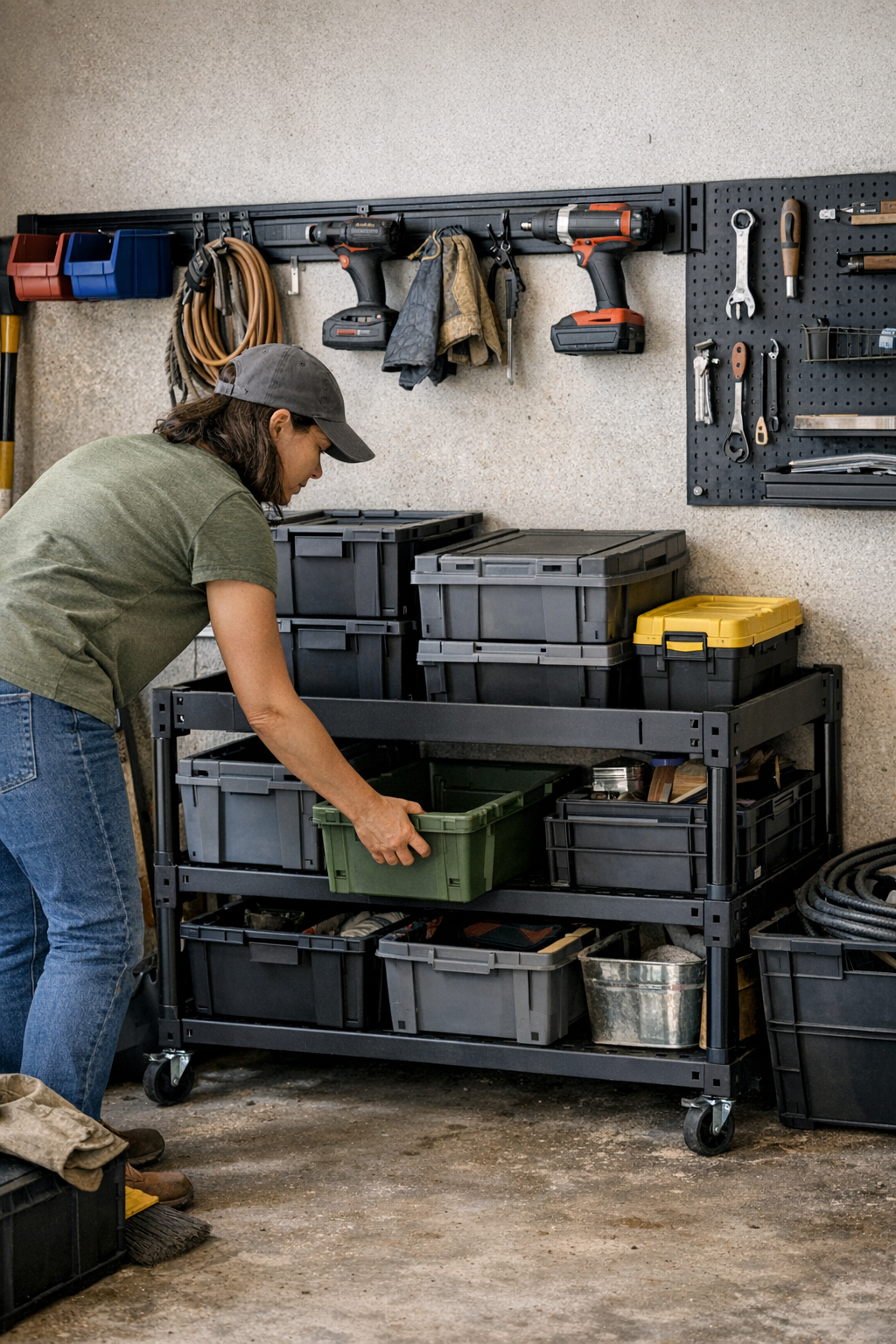
The first hours with a new storage setup in the garage or workshop always feel optimistic. Shelves stand empty, bins line up, tools hang in shining rows—all the surfaces open, every aisle clear. The real verdict comes later: nine days in, after half a dozen projects and normal traffic, the system’s shine starts to fade. The problem isn’t with the organizers themselves. It’s with the invisible lines—the boundaries that either hold or quietly give way each time you put something back “just for now.” What looks like control on day one quickly becomes friction on day ten, and that’s where the real difference between setups is exposed.
What Looks Organized Isn’t Always Useful
The relief of getting clutter off the floor is real. Hanging tools on a new rail or sealing paint cans behind a cabinet door feels genuinely satisfying. The buzz lasts—right up until you need a wrench in a hurry, or you come back from the yard with two muddy bins. That’s when the cracks start to show. The cart you rolled to the corner yesterday is blocking today’s walking path. The wall-mounted hooks free up bench space, but now you find yourself reaching awkwardly around a sharply angled cabinet—again—to get to the back wall. Order exists, but movement gets awkward.
- Pushing a mobile cart six inches over, just to squeeze past with your hands full
- Stubbing a toe on a shelf that’s slowly migrated into the traffic zone
- Noticing “organized” wall space that still means detouring or ducking every time you need something fast
It’s these workarounds—the little detours and shuffles—that reveal the real cost of a setup that fits the space, but not the way you actually use it. Surface neatness hides silent inefficiency beneath.
Thin Boundaries, Sprawling Problems
As days go by, functional boundaries start to slip. What’s supposed to be a single row of bins on a rack quietly multiplies: one extra box, a stray bag propped against a shelf. Hooks that felt spacious begin to sag with that “just one more” shovel or hose. No outright mess appears—just incremental sprawl:
- That clear rail now takes a jacket or backpack, leaving actual tools crammed
- Buckets for compost or soil get stacked in the “open” corner, and soon there’s no easy turnaround
- Reaching for a drill bag means moving two others first
Worse, these small compromises don’t reset themselves. Each “temporary” overflow becomes routine. Resetting isn’t just dropping something on a hook—it’s a mental negotiation: Where does it fit now? Do I move this first or just wedge it in? The tight setup is slowly diluted by stuff sneaking past its original edges and spreading out.
Overflow’s Slow Creep: How Zones Blur
Every garage has that “flex” area—a shelf by the door, a patch of floor under a workbench—that begins as a buffer, then becomes the home for everything without a permanent spot. Left unchecked, this overflow zone creeps outward. A floor rack that’s efficient on paper turns into a small obstacle course. You find yourself doing a shuffle-step to clear the lane or balancing a box on top of a cart’s wheels just to park your bike.
The real loss isn’t neatness; it’s clarity. You start asking, “Is there any actual floor left to use?” Routines drag. You can’t return tools fast; instead, you stack or pile. The edge between your zones—where garden gloves end and cleaning supplies start—blurs, and the urge to reshuffle “for now” becomes a predictable, weekly disruption.
How Little Disruptions Break the Flow
It only takes a few routine returns to erode even the best-designed system. Say you’re putting a saw back. The ideal spot is right on the rail—but there’s a paint tray in the way, so you nudge the tray, then need to move the shelf to line things up again. Before long, every retrieval or return means extra steps:
- Sidestepping a loose bin that wasn’t there last week
- Sliding shelves back into alignment instead of just using them
- Pausing, every reset, to wonder where overflow landed this time
No disaster—just a mounting, invisible tax on your routine. The setup isn’t failing; it’s just never truly resetting. A space that looks organized now slows down actual work, demanding decisions for what should be automatic.
Drawing the Line—Why a Firm End Matters
Resisting sprawl takes more than discipline—it needs clear, uncompromising boundaries. A hard stop—whether it’s a cap at the end of a rail, fluorescent tape at a shelf edge, or a bin purpose-marked for overflow—transforms the routine. There’s no room for negotiation: if the wall can’t take another item, the next thing must go to overflow. Period.
It’s a minor adjustment with major payoff. Resetting becomes mindless again. You aren’t sidestepping stray objects or tracking what you need to deal with later. Instead, walking paths stay open, walls stay functional, and returns become fast enough that you stop dreading cleanup. Over weeks, those skipped detours and delays restore the predictability you set out for in the first place.
Three Simple Moves to Anchor Your Setup
Upgrading from “neat enough” to actually usable doesn’t require a complete overhaul. The right small habits make all the difference:
- Cap every rail or shelf—visibly. Use a bracket, tape, or even paint to mark where storage ends. Once that edge is reached, stop. No leeway, no “just this once.” This single line keeps shelves from drifting and rails from crowding.
- Designate one overflow bin and stick to it. If anything doesn’t fit, it goes there—never on the floor, never soft-stashed somewhere else. It’s a trade-in: overflow gets dealt with regularly, and the rest of the zone stays clear.
- Lock rolling units after every use. Don’t let carts or shelves “wander” down a wall or into a lane. Each inch they travel erodes your movement space and resets nothing.
These aren’t hard limits—they’re structural anchors. They force the setup to perform under normal, imperfect routines rather than ideal ones. Instead of adjusting to the mess, the mess adapts to your lines.
If It Works After a Month, It Works
A setup that passes the real test isn’t the one that impresses on day one, but the one that stands up to a few months of life: kids grabbing skates, muddy boots piling up, bikes moved and moved again. Strong, visible boundaries—not just flexible bins—let your zone absorb use without collapsing into another cycle of reshuffling. The goal isn’t military order. It’s predictable, fast resets and movement paths that don’t get blocked or confusing. Practical organization is about setup that works with your habits, even when you cut corners—because your system doesn’t.
Find modular storage, wall systems, mobile organizers, and more at StackNest.