
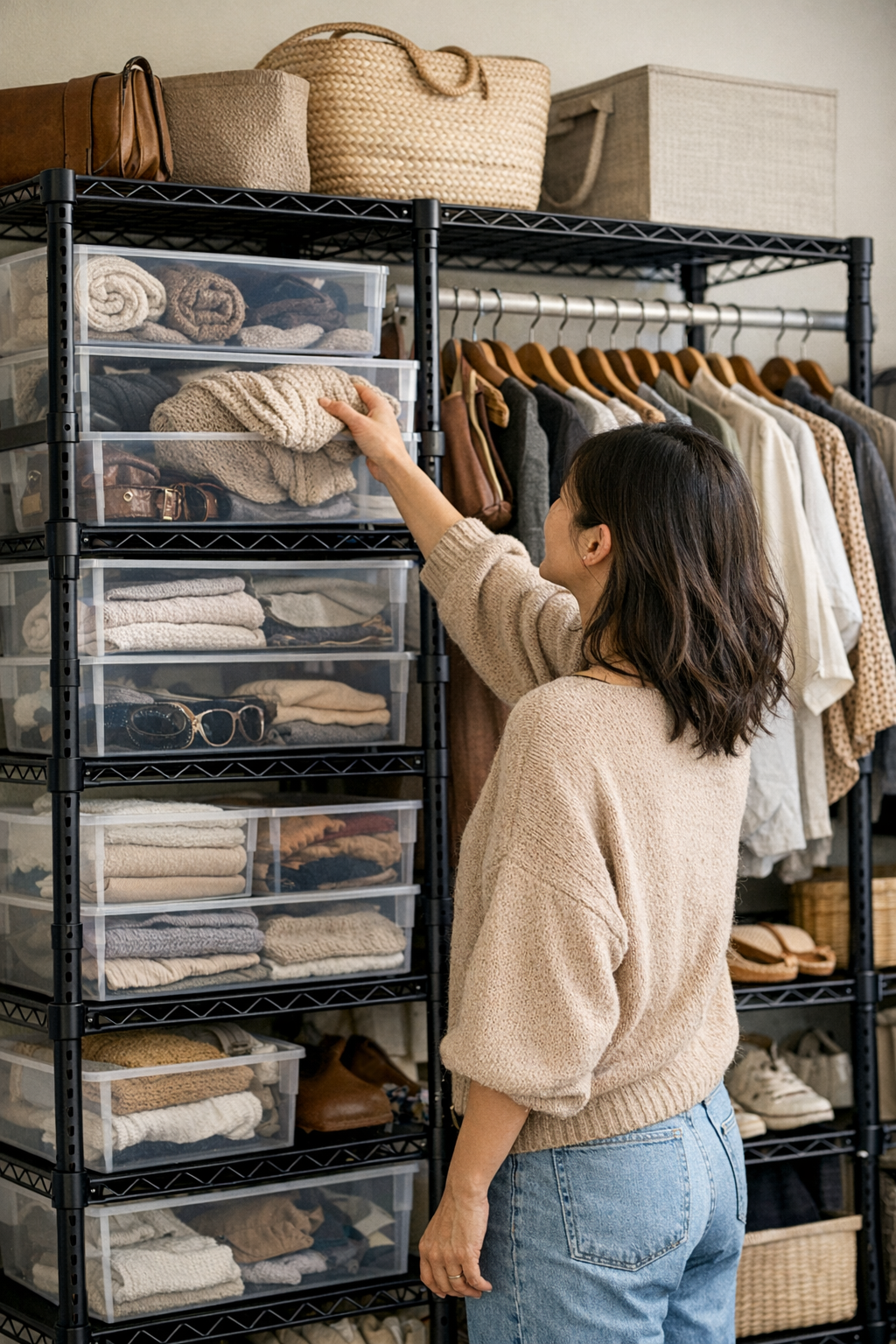
Every closet looks organized when you stack up matching bins or line up containers with those tidy little labels. But the difference between a system that just looks finished and one that actually keeps up with life? It comes down to what you can—and can’t—see when you open the door. If you need to move containers just to find the right hat, or dig through a stack to fish out today’s scarf, you’re bumping into the hidden cost of a closed-off system. Organization that hides your stuff behind opaque plastic or endless labels might promise neatness, but in daily use, it quietly adds a dozen small delays and a steady drip of frustration—especially when multiple people share the same shelves.
When “Organized” Storage Feels Cumbersome
The illusion starts strong: those bins with crisp labels seem to promise both order and efficiency. But fast-forward to rush hour on a Tuesday morning. You’re already juggling a bag and coffee, and you need that one pair of gloves. Do you remember which bin they’re in—“Winter”, “Accessories”, or “Miscellaneous”? Can you even see it if it’s buried in the back? The process is rarely smooth: lift, check, close, repeat. Suddenly the whole stack wobbles, and all that careful arranging unravels for one missing item.
In real life, opaque storage doesn’t just hide your things—it hides creeping chaos. Categories blur. The “scarves” bin collects sunglasses, the “hats” bin swallows socks and extra shoelaces. By the end of the week, your simple reset turns into a guessing game and a full-scale reshuffle. The closet may look calm, but under the lid, it’s falling apart—one forgotten accessory at a time.
Why Visibility Wins: Fewer Steps, Fewer Surprises
Switching to visible storage—open shelves, clear bins, drawers with see-through fronts—immediately removes unnecessary steps. Instant access changes the rhythm of your day: look, grab, go. Need the blue scarf? You spot it without lifting a finger. Want those sneakers at the bottom? No more guessing which bin to check first, no more digging through layers.
The power of visibility goes beyond speed. When shirts or sweats are stacked visibly (not hidden in boxes), you spot when piles tilt, bulge, or threaten to collapse. You can nudge things back into place before the mess gets out of hand. But with covered bins, you miss the warning signs. By the time you finally open the lid, overflow has merged with the next stack, and your once-neat system has quietly dissolved.
Real-Life Clutter Traps Hiding in Plain Sight
Most closets and entryways fall into the same daily traps:
- Reaching behind one box to grab a beanie topples two other containers—suddenly, clutter overtakes “order.”
- Family members toss things into the nearest bin just to be done, especially when the label doesn’t match their idea of where something belongs.
- Folded shirts behind closed doors slump out of stacks and get wrinkled as everyone hunts through piles they can’t actually see.
- The entryway shelf starts to collect stray bags and shoes because the “right bin” looks full—or no one remembers what’s inside anyway.
The core problem isn’t carelessness. It’s the ramp-up of tiny frictions. If every retrieval or put-back is a five-step process, things inevitably pile up. The more friction, the faster order collapses—until you’re stuck rearranging the same shelves week after week, just to keep up.
Where Labels Work—and Where They Slow You Down
Labels are useful in the right context but are no match for direct visibility. They help in pantries with big, stable categories—flour, snacks, pasta—or in rooms kids use, where “remind me where this belongs” is half the battle. Labels also help anchor fast-changing contents and keep drift in check when everyone’s grabbing from the same shelf.
But the minute you start opening boxes just to remind yourself what you put inside, the label’s become a hurdle. That extra moment—lifting a lid, shuffling bins—repeats every time you need something. When the same two steps slow you down daily, the system is working against you, not for you.
Finding the Sweet Spot: Selective Labels and Clear Storage
For busy shared spaces or closets with rapidly shifting categories, pairing compact, practical labels with see-through storage works best. Clear bins plus subtle, specific labels let you check categories at a glance—and confirm contents with one quick look, not a guessing game. Kids and adults find what they need without asking, and midweek tweaks (like shifting a stack or refolding a pile) become quick tune-ups instead of dramatic interventions.
Storage That Keeps Up—Not Just Catches Up
The only storage “solution” that’s worth the name is one you never have to overhaul. Daily life tests every system: can you find what you’re looking for in five seconds, not five minutes? Can you reset a lopsided shelf with one hand? Or does every search or cleanup turn into a minor ordeal?
Visible storage tools—open racks, transparent drawers, even low-profile shelf dividers—let you manage small messes before they snowball. You catch the stray mitten or the laundry flood on Tuesday, not Sunday. Out-of-place items are obvious before they take over. Instead of putting off resets until the weekend, you keep pace with life as you go.
Tiny Habits that Prevent Closet Meltdown
Spend ten seconds glancing at your most-used shelves as part of another chore—while hanging up a coat, stowing groceries, or switching shoes. If you see a stack leaning or a group of bins creeping out of line, fix it on the spot. This habit prevents clutter from gaining ground and means your “reset” is more nudge than overhaul, even in busy homes.
Stop Measuring Storage by the Showroom
A closet might look perfect for photos, but if you reach for something twice and still can’t find it, it’s not really working. Function beats first impressions every time.
Prioritizing visibility means you deal with less decision fatigue: you don’t waste time debating which bin, or tinkering with stacks. Shelves actually perform—categories stay separate, vertical space gets used, and daily put-back routines stop feeling like chores. Forget trying to impress guests who open the closet door. The goal is a storage setup that stands up to real daily use, quietly making life simpler and cutting down on those “Why is this always such a mess?” moments week after week.
See more practical closet solutions at ClosetWorks.