
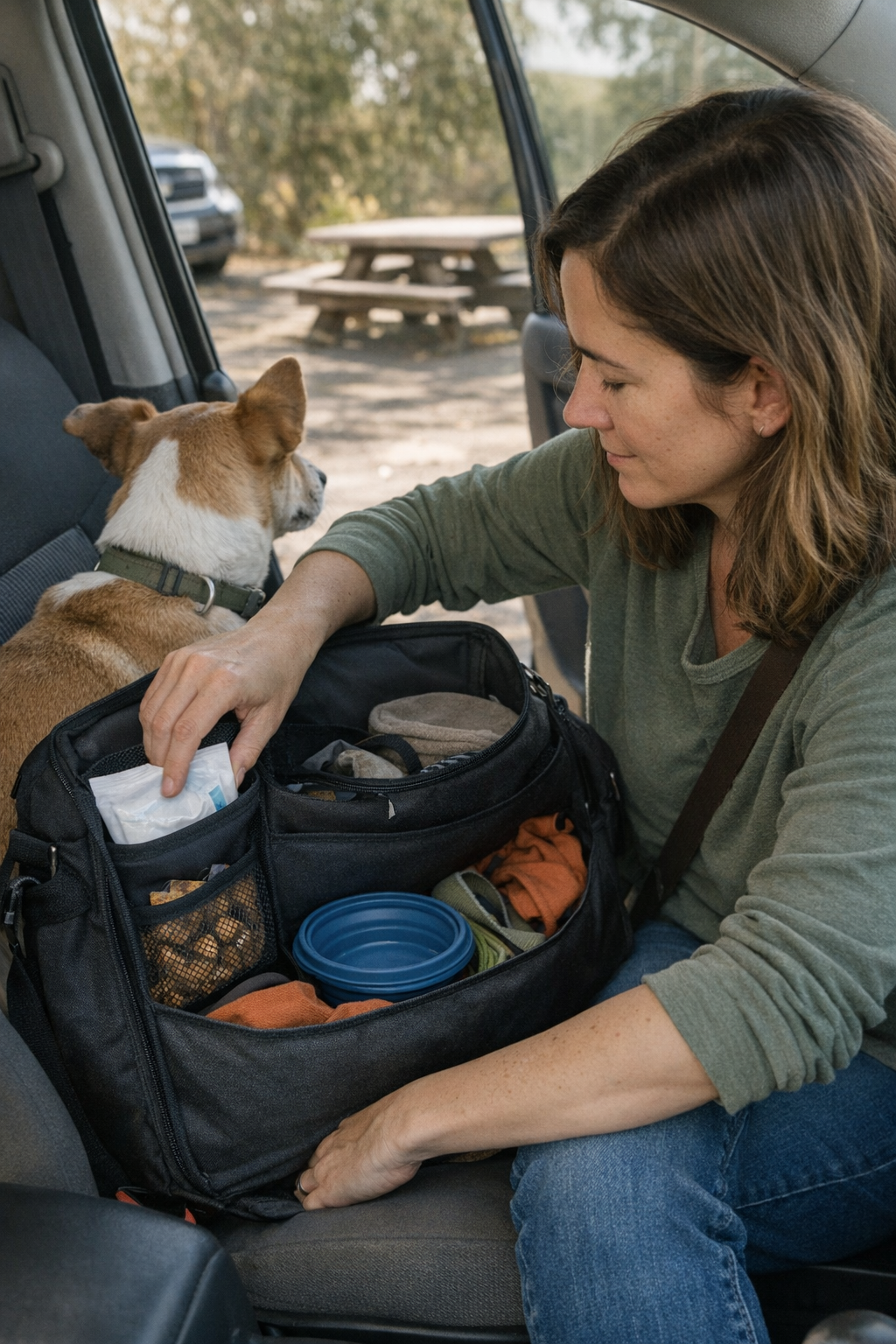
The first time you pull up with a pet travel bag that looks “ready,” it’s nearly always the illusion that breaks first. Sure, the zippers close, pouches line up, wipes and treats sit where you packed them. But the moment your dog gets antsy at the curb and you reach for wipes, you can’t get past a tangled leash, a jammed-in bowl, or an owner item that’s migrated on top. That’s when the gap between looking organized and actually functioning hits hard—especially when you’re trying not to lose your grip on the leash or your pet’s patience. Real weakness in a pet travel setup reveals itself not at home, but after a few repeated stops. Visual order might hold for the first load-up, but friction multiplies with every curbside reach, one-handed grab, or seat-side scramble.
Where “Organized” Fails: Spotting the Hidden Friction
On a surface level, an organized bag calms the nerves—like everything’s under control. But trips rarely happen in a vacuum. The bowl that looked so accessible ends up wedged behind wipes the second your pet shifts gear in the carrier. Treats that sat on top at the start have slid under a leash by the second stop, still visible, now blocked by other items. The structure that seemed so intentional at home morphs into a loose tangle by lunchtime, with essentials orbiting just out of easy reach every time you try to grab something fast.
This friction doesn’t shout; it accumulates. A few stretches down the highway and you forget. But at the next rest area, when muddy paws need wipes and you find them buried, the failure is instant. Owner and pet gear mingling in the same pocket turns simple retrieval into an awkward sort: water bottle shifting over waste bags, bulkier supplies settling sideways. The more you move, the less the bag says “organized”—and the more it says, “wait your turn.” Any pocket that loses shape or collapses under its own weight ensures that one quick access becomes a messy sequence you repeat after every stop.
The Slow Unravel: How Weak Points Multiply on the Road
First stop, quick leash snap—your pet’s energy spikes, but your supplies don’t cooperate. The water bowl you planned to grab is blocked by owner snacks or tangled with a waste bag. Wipes, crucial since the first puddle, live somewhere at the bottom now. Each snag—pausing to dig, reshuffling, a second spent searching—doesn’t reset to zero with each stop; it piles on, straining both your rhythm and the dog’s patience. By stop three, your “organized” system has become an obstacle course. Car lineups, pet shifting on the seat, and that slow thought: “This is working against me.”
One tidy compartment can lose all value when it becomes one more thing in the way. Every return to the car rearranges your setup for you—wipes slide, treats drift, bowls wedge up behind something less urgent. The so-called “structure” you trusted creates new jams if compartments overlap or lose their shape in motion. Organizers with stacked sections often hide, not help, after a few cycles of movement and handling. The bag looks contained, but quick access erodes trip by trip.
Why “Quick Access” Isn’t Just a Feature—It’s the Heart of Travel Flow
Most breakdowns aren’t dramatic; they’re routine. You plan for a 5-minute stop but end up wrestling with a collapsed pouch to fish out wipes, buying yourself only seconds while your dog strains for an exit. The bag that looked photo-ready on the kitchen counter now demands both hands and a distraction-resisting stretch to get even a simple item.
The irritation is cumulative and practical. When a comfort toy or blanket works its way beneath cleanup supplies, it helps your pet settle but means your next reset is no faster—likely slower. “Handy” pouches sag under larger gear, turning cleanup into a disrupted task right when you need calm. Once the path to essentials gets blocked—by even an inch or two—travel shifts from routine to a stop-and-go test of patience.
Real Change Comes from Physical Separation—Not Just More Pockets
The real fix isn’t dumping in extra pockets or pouches. It’s designating a rigid or semi-rigid side compartment purely for wipes and treats—true fast-grab items. Small? Yes. But when that side pocket doesn’t collapse mid-trip, the improvement is obvious by stop number four: you reach once, with one hand, no strategic shuffling. The essentials don’t rotate or mix with bulkier gear. No more tipping the whole bag forward to chase loose contents—the result is not tidier, but faster and less stressful every single time you restart with an impatient traveler in tow.
What looks minor during packing becomes critical in repeated use. That side compartment holds its shape when the rest of the setup sags. You no longer unload water bottles or switch hands just to deliver one treat at the right moment. Structurally separating fast-access items from everything else doesn’t just solve one problem—it stops the entire cycle of reluctant, two-handed retrievals that have defined “organized” travel bags for too long.
Every Return Exposes the Weak Points—Here’s How to Spot Them
Want to know where your setup will fail? Try retrieving each travel essential with one hand—just as you would while steadying a restless dog. If that test forces you to pause, dig, or reopen sections, you’ve identified the friction that will nag at every curbside and every cranky return. The trouble isn’t in what you packed or how tidy it looks, but where access gets choked. Especially in bags where your phone or water bottle shares space with pet items, even a well-packed kit creates speed bumps by the third stop, multiplying slowdowns exactly when mobility matters.
Many setups hide their weakness behind a “contained” look—repeating the same blockages every trip. Less mess doesn’t equal fewer interruptions. Each new puzzle—of shifting, blocked, or hidden items—adds a step and burns time when it should be buyback.
Smoother Trips Start with Repeated-Use Structure, Not Just Initial Order
The travel setups that survive the long trip don’t hide mess; they remove friction. Real improvement shows up when you can grab high-demand items predictably, single-handed, even after days of back-and-forth. Friction isn’t just theoretical: it turns neat beginnings into restless delays, adding stress for you and your pet with each unplanned stop.
A structure built around repeat, one-handed access is what changes travel—not more dividers or pouches. Clean travel isn’t about keeping it picture-perfect after the first hour. It’s about always reaching exactly what you need when the routine falls apart, the seat’s a mess, and you’re halfway through a trip that already outlasted your patience. That’s the difference a lived-through setup provides. Anything less is just a pretty delay.
For pet travel gear and setups tested for real movement, visit PawGoTravel.