
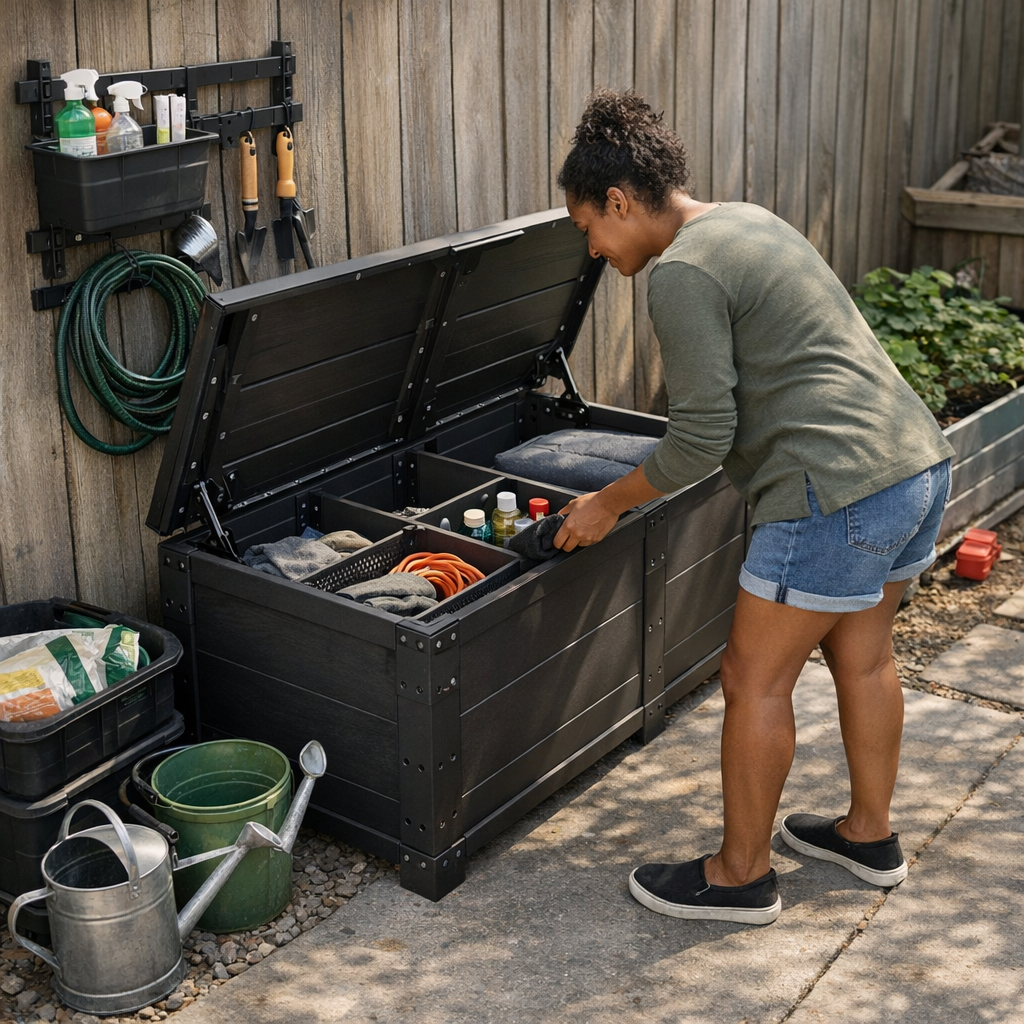
A lift-top storage bench looks like a shortcut to order—just drop clutter under the lid, close it, and the mess disappears. But that clean surface is a trap if the inside turns into a mixed pile the moment real life resumes. The first time you stash blankets, board games, or chargers, the room feels under control. But within days, finding a single missing remote or tomorrow’s shoes means digging through a jumbled tangle, lid banging open and shut as you hunt. What seemed like instant calm quickly reveals a slower, hidden chaos—the bench gives the appearance of organization while quietly reshuffling the mess into a new, less visible problem. In a high-traffic living room, narrow entryway, or any spot that sees repeat use, poorly organized storage benches start costing extra time almost immediately.
Where the Easy Win Turns into Hidden Work
A storage bench promises fast resets—much faster than open shelves that constantly attract surface clutter. But when the interior is one undivided zone, “tidy” becomes “concealed,” not organized. By week’s end, shoes are jammed against bundled cords, game boxes vanish beneath sweaters, and the next retrieval triggers a miniature excavation. From the outside, it looks neat; from the inside, it’s a single undifferentiated drift. Every time you need something, you’re slowed down. Every time someone else adds or pulls out an item, categories blur further, making return flow and next-use even clumsier.
This isn’t a minor inconvenience: if pulling out a charger or a bedtime book takes shifting half the contents, the bench has traded surface clutter for chronic retrieval work. What looked like a solution turns into a shift in where—and how often—you wrestle with disorder. The friction doesn’t go away; it just gets buried one layer deeper.
Living with Unstructured Storage: Recognizing the Real-Life Patterns
Unstructured storage breaks down by habit, not accident. The signs are measurable and familiar:
- Opening the bench lid twice to fetch the same thing, because it’s slipped beneath heavier or bulkier items—especially in mixed-use areas.
- Shifting through blankets or bags just to reach the small-but-essential daily objects, like remotes or headphones, now wedged somewhere underneath.
- Watching one “overflow” corner collect everything light or loose, since each opening and closing shifts items unpredictably, pooling category run-off in random pockets.
This cycle shows up fastest in spaces that carry mixed categories—entryways where backpacks, shoes, and keys pile up; living rooms serving both entertainment and storage; kids’ rooms where toys and clothes rotate daily. The real cost is a chronic, shifting reset: just as things settle, a single chaotic search unravels the “tidy” system.
Fast Tidy-Ups vs. Long-Term Friction
For quick company cleanups, a bench is unbeatable—everything out of sight in seconds. But those “fast resets” keep pushing clutter deeper. The next routine retrieval—a favorite book, phone charger, or that one missing shoe—now drags out, blocked by layers of mixed stuff the bench collected in a rush. In a shared home, this becomes a loop: the more people use the bench, the more its core flaw compounds. Saturday night looks spotless; by Sunday morning, it’s an awkward, time-wasting search, driving everyone back to old surface piles or open shelving just to escape the buried mess.
Why Open Interiors Create Category Drift
This is category drift in action: every undivided bin is one step away from chaos. Lighter objects slide to the edge, small things gather in unplanned corners, and “set down” zones quietly collapse. Instead of solving the friction of clutter, the bench just shifts it behind a hinged disguise. You still spend just as much time moving stuff around—the only difference is that now you’re working blind, and the mess is more frustrating to undo. The bench stops you from seeing clutter, but not from living with it.
Breaking Up the Compartment: How Dividers Make the Difference
The fix isn’t complex, but it is structural: internal divisions. Add adjustable dividers, small baskets, or soft bins set to actual use patterns—not just to look tidy, but to enforce concrete boundaries.
- Blankets and throws drop into one deep section—no more tangling with tech gear as people dig and drop throughout the week.
- Remotes, paperback books, or chargers go into a shallow, easy-access spot rather than vanishing under bulkier items.
- Shoes and fast-grab gear each get their defined corridor; instead of fishing, you lift and go without disturbing the rest.
This setup transforms the bench from “anything goes” into a tool for routine. Reset is still one action, but retrieval is sharper, and items land back where they belong, not wherever there’s space. The difference isn’t always visible outside—but fewer lost items, faster daily flow, and no more bottomless pile syndrome make it quietly decisive over time.
Choosing the Right Bench for Real Routines
Bench shopping by size alone is a mistake. Go too deep (past 12 inches) and you build a graveyard for small things—lost until the next dump-out. Instead, match the internal structure to your main use: a bit less volume with better compartments is nearly always more practical than a giant undivided trough. Configuration costs more to ignore than capacity ever will.
How Setup Impacts Movement and Flow
Footprint and location shape daily use far more than catalog photos show. A bulky bench in a narrow hall fixes paper clutter by creating a new path problem—it blocks fast movement, creates bottlenecks, and exposes the flaw of a single shared bin. With internal dividers, two people can grab shoes or gear side by side. Without them, it’s one slow turn at a time, and the area turns into a choke point that everyone avoids.
Practical Tips: Optimize for Reset, Not Just for Looks
- Integrate dividers or baskets right away, even if you start with a simple open bin. Establish the boundary before drift sets in.
- Audit monthly, because no setup stays sorted by accident. Pull everything out, reset category edges, and clear mix-ups before they harden into habit.
- Reserve a front-facing segment for grab-and-go stuff—whatever comes in and out daily should be quickest to reach, not buried even for five minutes.
Does Your Storage Bench Really Work for You?
An under-lid bench can keep mixed-use zones functional, clear, and calm—but only if the interior is built for how you actually live. Without internal boundaries, it’s one step above a closet floor: clutter traded for harder retrieval, not less work. Compartmentalizing doesn’t just tidy what you see; it prevents daily resets from multiplying into hidden messes. Every lid lift is less of a gamble, and routines flow instead of stall.
Explore more practical storage solutions and setup ideas at Gridry.