
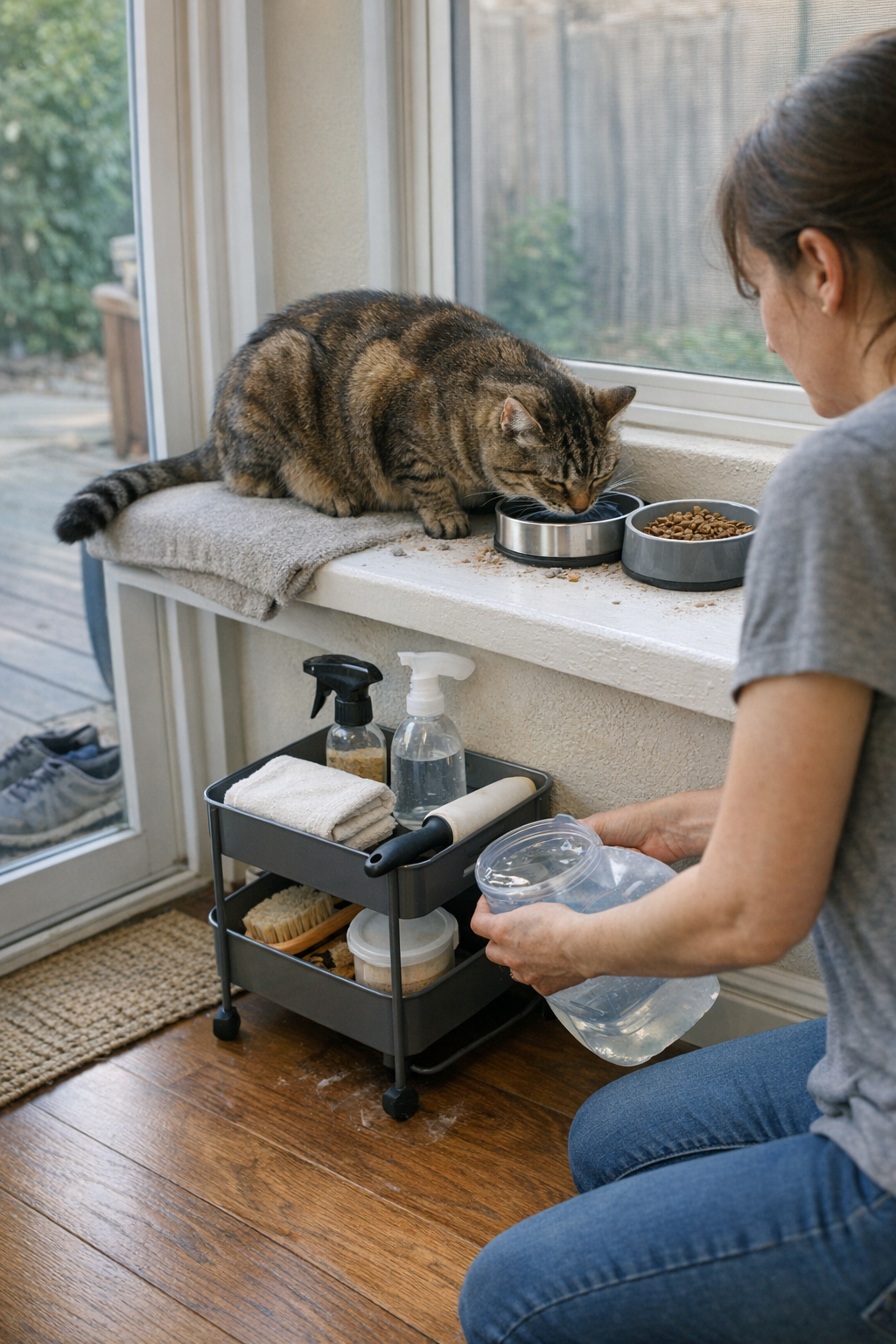
Every cat perch or small dog area starts out looking manageable: bowls lined up, a wipe-down just done, a fresh mat in place. But within days, the cracks show. The water bowl slides just out of reach. Fur collects under the sill trim. The brush you counted on yesterday is missing or buried under a pile of toys. What looked tidy on Sunday is cluttered by Tuesday—not from big messes, but because the routine breaks down at the exact moments daily care is supposed to be frictionless.
The Shift from Tidy Setup to Repeat Effort
The illusion of low-effort fades fast in real use. Morning routines expose the gaps: you reach for the water bowl and find it wedged behind the leg of the perch, almost empty. To top it up, you move a couple of toys that weren’t where you left them. There’s a wipe for crumbs, but it’s in another room. Every step turns a two-minute reset into a series of micro-dilemmas: search, reach, shift, repeat. These aren’t crises, but they’re why yesterday’s setup keeps getting harder instead of easier.
Even when cleaning supplies exist, they’re usually just out of place, or buried behind other items. You spot a line of fur along the ledge—but the soft cloth slid behind the organizer, or the brush is tangled with a cord you didn’t notice before. Each extra movement, each delayed wipe or search for a missing tool, nudges the routine from a smooth pass into another low-grade hassle.
When Small Obstacles Become Everyday Friction
The difference between a corner that looks orderly and one that actually works is sharpest on busy days. You check in quickly: your cat jumps to the sunny sill, and at a glance, you see dry water rings and tufts of fur have built up again. You reach for wipes—then have to clear a treat bag blocking access because last night’s play session ended with an armload stashed in the wrong spot. Instead of a quick reset, you’re stuck realigning bowls, sweeping under the mat, poking around for the misplaced brush—always a few steps behind as micro-obstacles compound.
Over time, these missed resets accumulate. Feeding basics, grooming tools, or wipes aren’t gone, just scattered, low, or hard to grab. Even after a thorough evening tidy, it takes only one tired morning for clutter to creep back. One bowl out of place or one missing cloth later, and “handled” pet care quietly becomes routine drag.
Real World Scenes: Hidden Disruptions in the Pet Care Flow
Repeated use tests any setup. After a late dinner, you spot crumbs on the ledge, the mat slid sideways, and a bottle knocked off its hook. A quick sweep can’t start until you clear space—supplies crowd together, and what was once “organized” is just another obstacle course. Or mid-call, your dog’s water needs a refill, but the closest clean towel is on the other side of the room. The perch might still look good from a distance, yet every interaction is slower, every fix interrupted or deferred.
Attempting to solve one problem often creates another. A thicker mat soaks up stray fur, but now it blocks the walking path, forcing you to step over or around during busy moments. Adding a bigger organizer keeps supplies at hand, but now grabbing one item means shifting two others. None of these slips look like visible clutter, but they chip away at any promise of ease.
What Actually Makes a Pet Perch Work Day After Day?
Actual improvement comes from setups that survive repeated care, not just initial tidying. After one too many laps to fetch the lint roll or a replacement water bottle, moving a small caddy under the perch changed the pattern: cloth, brush, and backup bottle stayed within arm’s reach, saving steps and stalling less. The routine didn’t shrink, but the wasted motion did.
Still, every extra item is another spot for loss or delay. Put too much on a shelf and the system slows. A setup that worked at week one—just enough supplies, clear hooks, one mat—now needs a tweak when new toys, spilled food, or shifting pet habits reveal blind spots. Functional setups are less about one big fix and more about small, repeated reviews.
The Quiet Difference: Tidy Versus Functional
Order isn’t just how a corner looks after you tidy—it’s in how few steps you need to stay ahead of mess. If it takes an extra search or a second trip every time, clutter isn’t really solved. In the right CalmPetSupply setup, friction points get closed off where they start: one cloth always waiting where fur appears, bowls that snap back when bumped, supplies in reach before you notice they’re low. A space that handles resets easily stays ready without you having to overhaul it every time.
For everyday pet care, focusing on repeated ease—not just appearance—keeps both you and your pet calmer. Less hidden work, more automatic resets. The difference isn’t flashy, but once you live it, the old friction is hard to ignore.
Find practical feeding, grooming, and cleanup basics ready for repeat use at CalmPetSupply.