
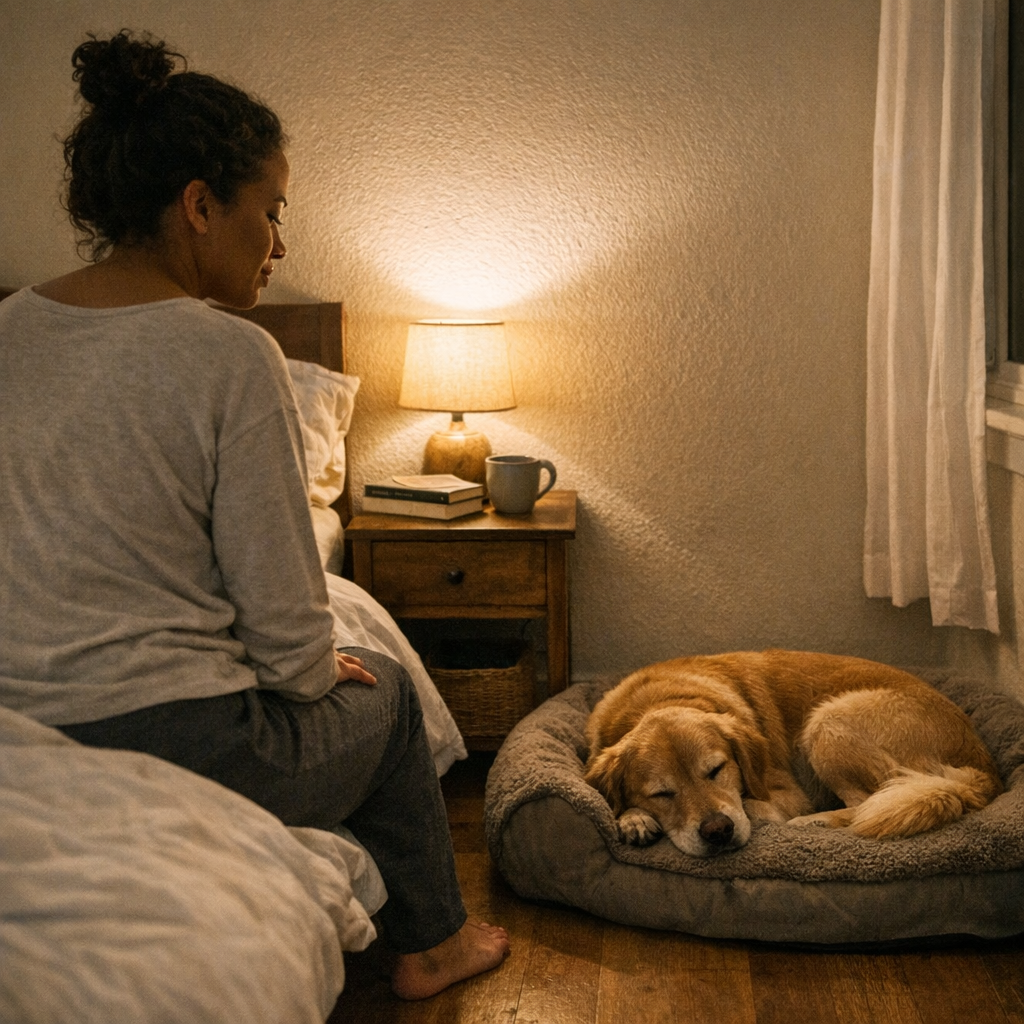
Most bedtime stalls with dogs don’t start with barking or chaos—they show up as a pattern: your dog hovers uncertainly at the door, circles the bedding, or pauses instead of settling. You tidy the space, arrange every blanket, and call it “ready,” yet your dog still hesitates, every single night. It’s tempting to pin this on skipped walks or stubborn routines, but in real dog-life, small setup mistakes—like the wrong light at the wrong time—quietly drag out the entire bedtime process in ways that keep you stuck repeating the same fix over and over.
Why Lighting Disrupts the Routine You Thought You Got Right
A too-bright lamp or mismatched lighting scrambles your evening signals. The space may look organized—with the bed in its corner, toys in a basket, and bowls out of the walkway—but if light falls the wrong way, your dog’s body language shifts: head tilts at the doorway, slow-motion circling, restless sitting that turns into more pacing. What seems cozy for humans can signal the opposite for dogs—especially if the lamp is aimed right at the rest area or jumps between moods night after night. The physical signs are subtle: one extra loop, another return to the hallway, a blank stare at the bed instead of that heavy “all done” exhale. Over weeks, it doesn’t just waste time; it trains you both to expect a dragged-out wind-down, even as you redo the setup, trying to spot what’s off.
Hesitation Patterns: Where the Real Friction Hides
You only catch on after the pattern repeats: setup looks right, but the dog’s hesitation repeats. Instead of a calm walk to bed, you get alert circling and reluctant half-steps, followed by you guiding them (again) or waiting through their slow decision. If you listen, you realize your voice grows less patient, your bedtime routine gets extra steps, and in the morning, everything feels just a bit less rested—including you. Little bedtime failures multiply: more leash tangles at the stand, more stalling around the food bowl, and a routine that keeps showing its cracks wherever a detail gets missed.
Looks Tidy, Acts Messy: Clean Corners Hide Setup Weakness
Neatness means little if your setup fights your routine. Owners line up beds in “quiet” spots, keep floors clean, or use plush blankets—but let a bright lamp pour straight over the rest area and watch hesitation return. Too much direct light, an undimmed bulb, or inconsistent lamp placement quietly resets your dog’s cues every night. The result: bedding gets circled but not claimed, the dog pops up again after almost lying down, and what looked like a “fixed” setup becomes a nightly hassle that steals extra minutes and patience.
Actual Adjustment: When One Change Resets the Routine
Here’s a real example: moving a lamp behind a side table and lowering the brightness so light bounced softly off the wall instead of hitting the dog bed directly. Immediate difference. Instead of five minutes of pacing and tail-thumping, there’s a single circle, one deep sigh, and actual settling. The rest of the setup—bed, cleanliness, corner—stayed the same. What changed was the signal: indirect, steady, non-confrontational light. No more repeated verbal correction or drawn-out waiting. Bedtime began to run on autopilot, matched to how the rest of the room was actually used, not just how it looked.
Bedtime Friction Doesn’t Stay Put—It Spreads
Ignore these small nighttime frictions, and they show up everywhere: restlessness before meals, stalling at crate time, resistance at the door when it’s walk time. If every evening ends in hallway lingering, nose-poking, or uncertain movements, check what cues—like lighting, clutter, and pathway flow—might be working against you. The problem isn’t just late-night energy; it’s repeated mixed signals that slow down every other step of the evening and turn tidy spaces into bottlenecks during the busiest moments.
Accumulated Hassle: When Small Interruptions Stack Up
Missed signals in one part of the night bleed into the next. Five minutes lost to bedtime hesitation becomes ten more minutes correcting the setup the next day, or unfolding blankets that never stay in place. You fetch wipes late, shuffle beds out of the walkway, or restock bowls around toys that keep escaping the basket. The appearance of order doesn’t matter if your evenings still get eaten up by repeat interruptions, last-second adjustments, or that same old sigh when the “fixed” area doesn’t really reduce the friction.
Fixes That Actually Change the Flow
Indirect, Even Lighting—Not a Spotlight on the Bed
Indirect, consistent light is one of the simplest fixes with the biggest impact. Don’t aim the bulb right at your dog’s bed—move the lamp behind a piece of furniture or angle it so the glow bounces gently across the wall. A dimmer or low-watt bulb helps you control the vibe without plunging the space into darkness or unpredictability. The goal: stable, background lighting your dog can ignore. That shift alone removes a major trigger for restless, alert body language every night.
Let Lighting Support—Not Distract from—Real Routine
Lighting only helps if the rest of the bedtime pattern lines up. Pair a predictable, soft light with quieter movement (pick up toys without fanfare, lower your voice, keep door swings minimal), and even high-energy dogs adapt. When the environment stops lobbing mixed messages, settling down becomes a habit, not a nightly project. You spend less time pleading and more time resetting for tomorrow—bedsline up, blankets tuck quickly, nothing gets shuffled more than once.
Match the Setup to How Real Nights Unfold
It’s not just about the bedroom—lighting that’s too bright or patchy spills into hallways and crossing points. If your dog’s routine slows at several steps—returning from a walk, pausing outside the crate, investigating the water bowl—check if the lighting pattern throws obstacles where calm should start. Well-placed, indirect light sets up every transition: from muddy paws at the back door to the quick check of the food bowl to that final crossover into the bed area—each stalling point shrinks when the cue is consistent and the setup matches actual nightly movement.
Everyday Signals: How to See if Your Setup’s Working
Working Scene:
Lamp dims, toys are gathered, dog enters the bed zone, makes one loop, lands on the blanket, sighs. Nothing dramatic. No stalling or waiting for a missing “signal.” Bed reset is quick—blanket flattens, bed slides, nothing needs shuffling, your dog falls in without delay.
Still Failing Scene:
You flick on a lamp for something else, and light floods the bed. Dog veers toward sleep, hesitates, doubles back to the hallway, resumes circling. You tidy, adjust, lose minutes, and in the morning both of you move slower. The room looks fine, but the flow at bedtime still collapses on the same weak spot.
Setup is Moving, Not Static
Dog spots keep unraveling in places owners don’t check: water bowls crowding pathways, toy baskets migrating out of reach, lighting acting as a “stay alert” signal, not a sleep cue. Stability only sticks when you adjust after actual use—a week or two in, move the lamp, shift the bed, check if one part of the setup keeps re-introducing friction, even if the rest of the area looks neat. The routines that last are the ones reset by function, not just appearance.
Why It Goes Beyond Appearances
A smooth bedtime isn’t just a cleaner room or fewer scattered toys—it’s a routine that runs itself, needing less intervention each night. Fixing details like the angle of your lamp doesn’t eliminate every rough patch, but it does erase the kind of repeated problems that would otherwise train you and your dog into frustration. A better setup shows up in the speed and ease of the return to rest—not in decorative order but in nightly routines that stop eating up your patience.
The most effective improvements show up not in the way a space looks, but in what you no longer have to keep fixing. The DogPile world is built for setups that stop the slow buildup of routine drag and make every return-to-rest a little smoother.