
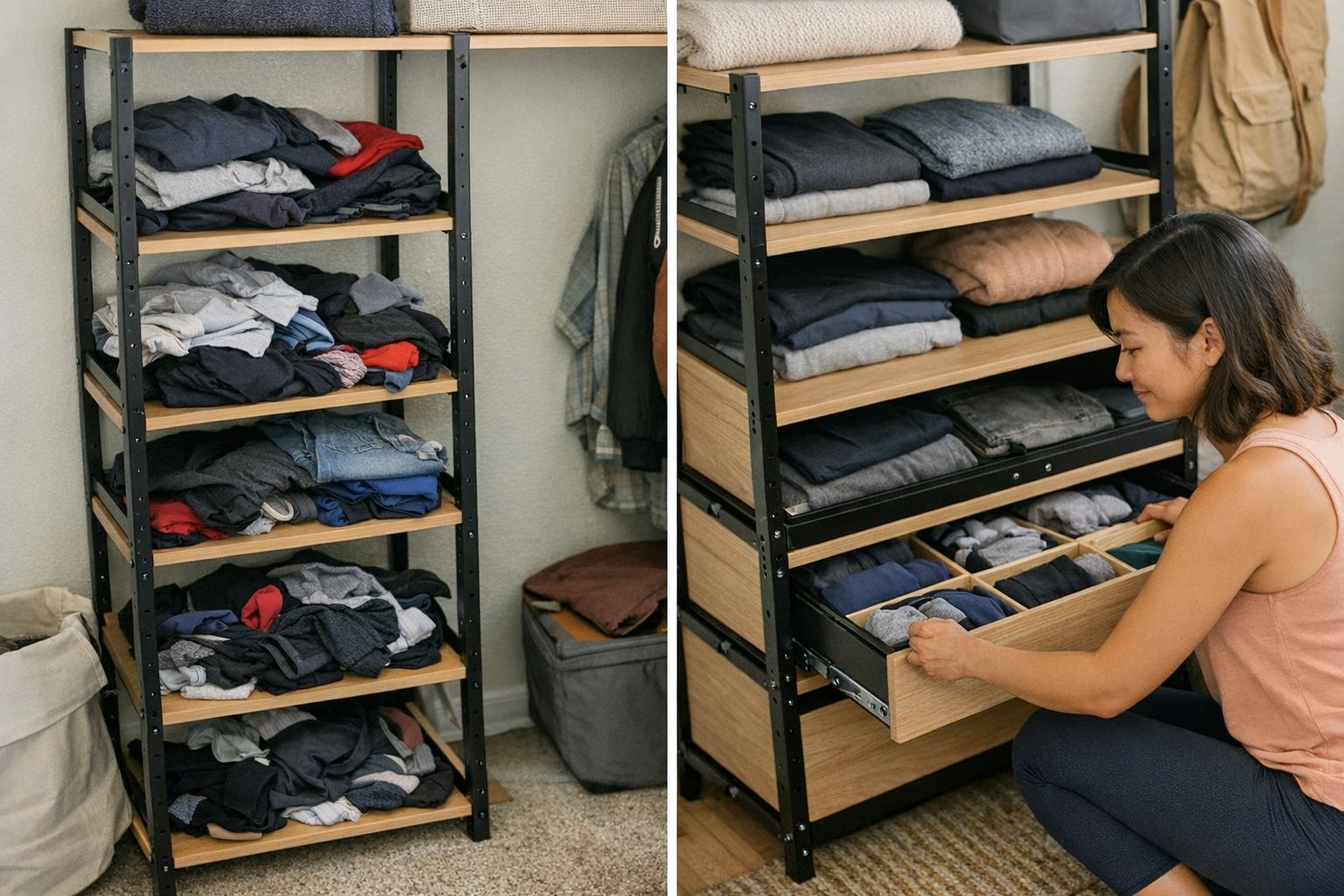
The myth of the perfectly organized closet doesn’t survive the workweek. Fresh from a weekend revamp, your shelves sit immaculate: every shirt folded, socks sorted, nothing out of place. But this stage is fragile. By Thursday morning, when you’re hurriedly searching for running socks at the back or tugging a half-hidden t-shirt from under a messy stack, the “after” photo is already gone. The real test isn’t how neat a closet looks once—it’s how well it survives the daily scramble.
The Allure and Limits of Fixed Shelves
Fixed shelves promise visibility and order—on day one. Stand back and admire the crisp rows of sweaters and straight lines of jeans. For a moment, every piece is right where you want it. But as soon as you break the seal—grabbing a shirt from the bottom of a stack, or digging for the only clean tank top—things unravel. Stacks buckle, socks drift into the wrong piles, and that once-pristine view distorts with every small tug.
This shift is quick and relentless. A single rushed morning is all it takes for piles to lean and mix. The deep end of the shelf silently becomes a “lost and found” for shirts you forgot existed. Meanwhile, anything up front gets crowded by the latest laundry, pushing lesser-used pieces further out of reach. The more you interact with the shelf, the blurrier the lines between categories become—until you’re edge-balancing new jeans on top of half-collapsed old stacks, thinking “I’ll fix it later.”
The Everyday Shuffle: Hidden Time Sinks in Shelf Storage
Think of those seconds that slip away as you rummage each morning—moving two stacks to reach the item in the back, nudging a pile sideways to rescue a missing belt, or re-folding toppled shirts after one quick grab. It’s rarely just one thing: getting to what you want means touching three others. By midweek, it’s routine to spend extra moments restoring the order you lost in the rush. The shelf that proudly showed everything now demands small repairs every day just to keep up appearances.
In deep or crowded closets, the frustration magnifies. The space at the back becomes a black hole for “out of rotation” items—long-sleeve tees, mismatched socks, or seasonal scarves. What started as clear sections shifts toward chaos: piles bleeding into each other, overflow creeping to the front, and visual clarity fading with every disrupted stack.
The Pull-Out Drawer: Where Order Survives the Week
Pull-out drawers don’t look much different at first glance—but daily use reveals their edge. True improvement emerges after a few weeks of real living, not just the first-day setup. With a medium-depth drawer, every item is equally reachable in seconds—no pyramids to dismantle or stacks to rebuild. You pull, you see, you grab—even if what you need is tucked at the back or under a pile.
The effect is almost stealthy. Suddenly, there’s no more pausing to “fix the shelf” before closing the door. Categories last: socks don’t slip into underwear, t-shirts don’t barricade themselves behind hoodies. With overflow contained by the sides of the drawer, there’s no chance for the piles to spill out or domino sideways—meaning the space inside is fully used without inviting clutter to spread.
Simple dividers or small bins take it further—giving a consistent home to accessories or small items that usually roam free and muddy the setup: a single bin for bike gloves, another for sports socks, nothing wandering out of bounds by Friday afternoon.
Mixed Storage in Real Life: Drawer vs. Shelf After a Week
Spend a week living with both and the split is obvious. A pull-out drawer faces the same daily jostling and comes out with categories still intact—the section for gym clothes is still gym clothes, and the “work shirts” zone hasn’t drifted into pajama territory. Shelves, meanwhile, show every disruption: toppled stacks, sneaky accessory creep, and piles that have merged under pressure.
Laundry days make the difference glaring. Drawers handle the influx by letting you drop items quickly into place—no elaborate restacking, no repairing the system you depend on. In contrast, fixed shelves retreat into a cycle of repeated straightening, adjusting for each new pile, and carving out space at the back to hide the overflow. Over time, it signals: the shelf is working against you, the drawer is quietly working for you.
When Fixed Shelves Still Win
Drawers aren’t perfect solutions. Certain items—chunky sweaters, irregular shoes, or oversize bins—resist the confined shape of a drawer and benefit from shelf freedom. Fixed shelves shine when you need quick access to tall, unwieldy things or storage for baskets that shift with the season.
But it comes at a cost: the less often you touch a shelf, the neater it stays. Open-access stability is ideal for gear that moves infrequently, or as display for statement pieces, but daily-use items rarely benefit for long.
Making Drawers Work for Your Routine
The difference isn’t just about the shell—it’s what you do with the inside. Low-profile dividers and small bins transform drawers into mini-systems, preserving category lines even for tiny items. A drawer with set “homes” for each type—yoga shorts, belts, a pouch for gym headphones—means easy sorting and no mess at week’s end. It’s not about over-complicating; it’s about letting the design do the tidying for you, not the other way around.
Choose for How You Really Live—Not Just How You Want to Look Organized
In the end, the contrast between shelves and drawers is revealed by repetition. The frustrations—reshuffling, losing track, constant resets—become background noise with shelves, while drawers quietly cut down the minor but chronic inconveniences. Stable storage buys you time and mental clarity each morning. A system that needs constant “fixing” wears you down in invisible ways. The best setups aren’t ideal—they’re just reliably easier for your actual routine to keep up with, no matter how hectic the week becomes.
See closet systems and practical storage options at ClosetWorks.