
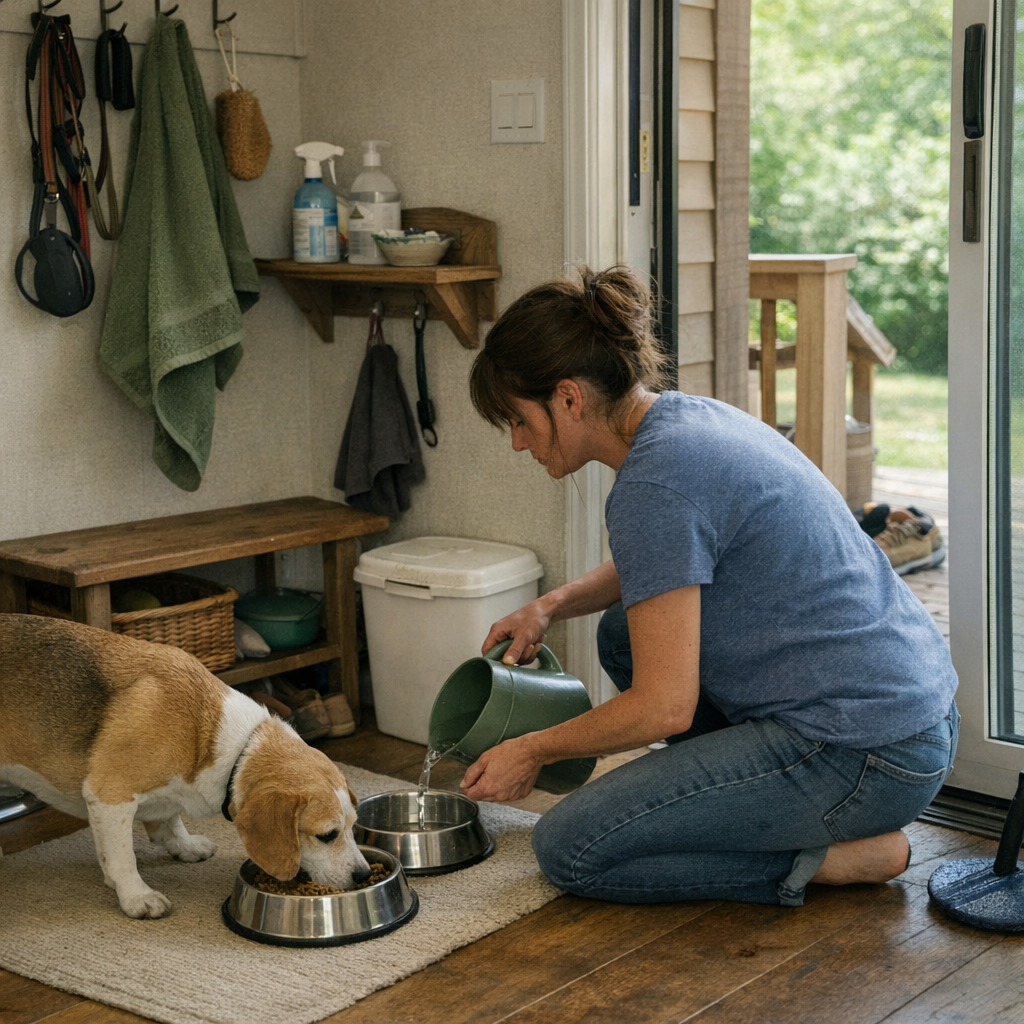
When “Tidy” Isn’t Enough: The Routine Friction in Everyday Pet Care
The pet care setup might look orderly—bowls neatly aligned, supplies corralled in a basket, leashes on their hooks—but all it takes is a water spill pooling beside the bowl, a brush just blocking your path, or a towel that’s always in the next room. This is where “tidy” backfires: what appears organized on the surface keeps slowing you down, one small interruption at a time. You find yourself wiping up drips after you’ve already sat down, moving bins just to reach the water bowl, and stepping over today’s “temporarily placed” brush or towel. When every feeding, refill, or after-walk cleanup triggers a new awkward reach or extra shuffle, the frustration is more than cosmetic. These repeated snags accumulate, turning pet care from a smooth routine into a string of delays. At CalmPetSupply, this gap between what looks controlled and what actually feels manageable is where the real difference—and relief—shows up.
Spotting the Weak Points in Daily Flow
A typical morning: you try to refill the water bowl but have to nudge a food bin aside first. You reach for the brush, but it’s knotted together with a leash on the entry table. Just as you’re ready to walk out, the towel for muddy paws is missing—last used, now tossed aside. These are not big problems, but repeating them every day turns seconds into stress. When a setup means extra moves or little searches, the friction is subtle but constant. If care for one pet is tight, the routine with two or three starts falling apart, especially on rushed mornings.
How an Adequate Space Makes All the Difference
Squeezing pet items into corners or baskets under tables looks neat after a single cleanup—but real use exposes the flaws. After a few meals or quick grooms, you’re back on your knees mopping splashed water near the door, or hunting for the towel that slid behind a shoe rack. The shared space clogs up, and grabbing one thing means untangling two others. The area never descends into chaos, but it also never works on autopilot. Each day brings another round of hunting, resetting, and re-stowing what was “just put away.” Organization that doesn’t stand up to repeat cycles starts turning minor chores into sticky habits.
Scenes from a Day: Real Interruptions in Pet Care
Walk in with your dog and realize the cleaning towel is buried in last night’s laundry pile. You search for a backup, and now both towels—fresh and used—are draped across the entry instead of handy. Feeding time with the cat? The food bin stands in the way of the water bowl again. Later, you go to sweep up fur but there’s a container of treats wedged on top of the brush. Each task leaves something else in the wrong place, until a “tidy” corner has become an obstacle course of supplies waiting to be put back. This isn’t mess—it’s routine out of sync, costing you a few slow steps, every single time.
Functional Improvements: Small Shifts, Big Difference
The biggest changes don’t show up as decor; they show up where old routines break. Scoop bowls away from foot traffic, and a spilled water slick is no longer a daily wipe-down. Mount that brush on a hook beside the leash—no more sorting every time you go out. Hang a fresh towel right by the door you use, rather than folded on a chair across the room, and muddy paws get handled on the spot. These aren’t upgrades for looks, but for shaving off those seconds where routines stall or tools go missing. The less visible the fix, the more practical it becomes.
Recognizing When a Setup Needs to Change
If you’re constantly shifting items or cleaning the same spot every day, your care area is undersized or misaligned for real life. Having a towel in plain sight doesn’t help if you can’t reach it while wrangling a damp, restless pet. Supplies aren’t truly “in place” if using them forces another round of sort-and-reset. When both feeding and cleanup require extra steps or repeated backtracking, you’re wasting movement that adds up—not in theory, but through constant, low-level inconvenience that never quite goes away.
The Practical Difference Between Tidy and Useful
An area freshly cleaned might appear calm, but the true test arrives after three care rounds: do you have to bend, pause, or shuffle items that should be out of the way? Real organization holds up to repetition—no blocked corners, nothing hiding behind a lid or stashed just out of reach, nothing that makes you double back for a forgotten supply. The true win is finishing a routine without circling back to tidy up again. If your setup lets you end a walk or feeding and move straight on, the care fades into the background. If not, you’re caught in a cycle of micro-fixes and slowdowns.
Refining the Setup, One Adjustment at a Time
Every home has its own care bottlenecks. To fix them, focus where you always pause, reshuffle, or delay: move feeding bowls out of corners that make spills stick around, hang brushes or leads at the spot you naturally grab them, keep towels within reach of the entry for quicker paw cleanups. Don’t aim for a stylized “after” photo—look for tweaks that speed up the tasks you actually repeat. The less often you need to fix, reset, or search, the more reliable every routine becomes. That’s how pet care shifts from tolerated friction to something you barely notice—until, for once, the day actually runs smooth.
For setups that focus on everyday routines, starter-level fixes, and making daily care less of a repeated hassle, visit CalmPetSupply.