
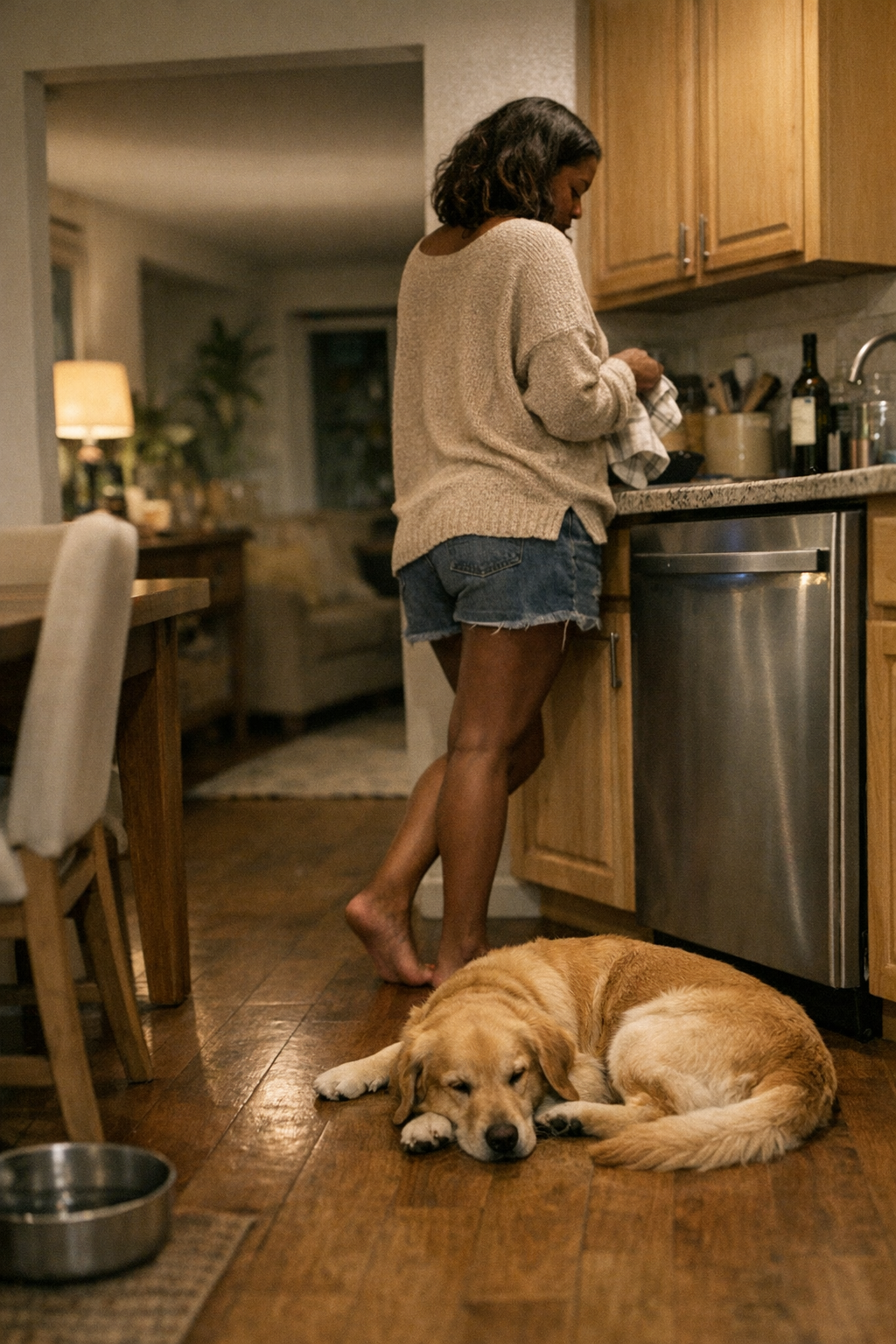
Dinnertime ends, dishes clatter into the sink, and the dishwasher hum starts up—or doesn’t. If your dog lingers around the kitchen door, paces the hallway, or resists settling after a meal, it’s not always about the light, the floor, or the temperature. Often, it’s the lack of background signal—a routine cue missing—that unravels the evening flow. The dishwasher’s cycle isn’t just background noise. For many dogs, it’s the unmistakable signal that the action is over and it’s finally time to rest. When that cue disappears, so does the household’s ability to downshift smoothly.
The Hidden Routine in Kitchen Noise
Evenings with a dog have a choreography of their own, and the kitchen is the main stage right after dinner. Cleanup might look finished—counters wiped, food bowls stacked, water refilled—but one missed cue still jams up the reset. The dishwasher’s cycle, quiet or not, usually acts as an “all clear” for your dog: time to move out of traffic, drop out of alert mode, and claim their spot for the night. When the rhythm changes—even by just skipping that consistent appliance hum—unpredictability creeps in. One night’s deviation rarely registers, but four or five skipped cycles in a row and you’ll see a slower wind-down, more dog traffic underfoot, and rest that seems just out of reach.
This isn’t about noise level, it’s about pattern. A dishwasher that runs at the same point every night cements a subtle flow: the last plate racks, the door clicks, and the dog knows nothing more is about to happen. Delay or miss that cue and you get a steady trickle of evening friction—visible not just in “bad” behavior, but in restless setups: the bed moved askew, ears angled towards the kitchen, and routines that linger past when they should have faded.
Why a Silent Kitchen Slows Down Everyone’s Evening
The missed signal doesn’t just cost your dog rest—it costs you convenience. With no “shutdown” sound, the kitchen feels technically clean but never quite done. The stacking effect shows up in small but persistent interruptions: you dodge your dog between fridge and counter, navigate around a tail parked half-in the hallway, or repeat a leash-grab only to redirect the dog again and again.
Restlessness sneaks in quietly. You notice your dog taking shorter naps, casting glances at the kitchen, or standing alert just off the tile—waiting for a nonverbal handoff that doesn’t arrive. It becomes clearer over several nights when bedtime creeps later, and you’re rerouted around an unsettled dog, burning minutes and patience long after cleanup should be finished.
Example: The Unrun Cycle and the Waiting Dog
Picture a night when the sink is empty, the trash bin is emptied, but the dishwasher stays off because the load is “almost full.” The kitchen looks reset, but your dog’s still posted on cold tile, poised between the hallway and the door, tail low, muscles wound. Call them to their bed—they drift over, settle with a half-hearted sigh, but a minute later, they’re back in the threshold, as if pressing pause, waiting for a signal that never comes. After several nights of this, the routine’s edge starts losing its grip. You’re giving extra reassurances and the wind-down feels more like another round of interruptions.
Routine Friction: When Small Gaps Add Up
This is not a quirky one-off. It’s a repeated-use headache: a micro-gap that chips away at both dog calm and evening convenience. You’ll notice:
- Your dog patrolling under the table, refusing to stretch out where they usually flop once the dishwasher kicks in.
- “Hovering mode”—blocking your kitchen lane, nose forward, hoping for another signal, slowing your last chores.
- Pausing at the kitchen entrance, head cocked, instead of retreating fully into the rest area.
- Needing to prompt your dog out of “ready” mode multiple times before true relaxation finally starts.
A silent kitchen pulls everyone into a holding pattern. Everything looks wrapped up, but it doesn’t feel off-duty—small misfires that keep you from actually clearing the floor and resetting for the next day.
Anchoring Calm: Using Background Cues to Reset the Evening
This is friction you can fix by tightening a signal you already control. It isn’t about rearranging the whole setup or buying add-ons—it’s about restoring predictable cues, night after night. Routine sound—whether dishwashers, fans, or background hum—anchors your dog’s shift from “wait and watch” to “done for the day.”
What Happens When the Routine Holds Steady
Lock in a reliable kitchen hum and the nightly grind gets easier—almost automatically. Place the bed so the background sound reaches but doesn’t clog up your crossing point: you’ll see your dog settle faster, curl up rather than patrol, and release that first deep sigh right on cue. Your movement becomes simpler too—no more double-backs to clear a “dog doorstop,” no rerouted paths or lost time telling your dog to go rest.
Small Changes with Outsized Impact
Nailing down a few anchor points does more than smooth the routine. It prevents a messy snowball of micro-frustrations—those repeated interruptions you barely notice until they pile up. Shuffling the cycle time by half an hour, skipping a dishwasher run because the load’s small, or moving the bed too far from the sound all create ripples that stretch your wind-down, drag out the “reset,” and confuse dog and human alike over whose move comes next.
Real-world tweaks might mean:
- Running the dishwasher every night at the same time—even if the load’s not perfect, because it’s the routine, not the soap, that matters.
- Adjusting the bed so sound reaches without blocking kitchen passage, trading a softer landing for a traffic-free zone.
- Quick-checking before lights out: did the grounding cue kick in, or are you coasting into another silent holding pattern?
Crossing the Gap: How Setup Tweaks Shift the Flow
On nights when everything is in place—surfaces wiped, water swapped, bowls out of the way—you may still find your dog stubbornly alert, head angled toward the quiet kitchen. Reach for the leash, and instead of bounding up, they blink, hesitate, waiting for the old sound signal. Each missed cue adds an extra round of waiting, slow response, and a wind-down that drags long past when it should end. A simple background hum running on time clips the hesitation. Suddenly, the dog moves off the main path, curling up without reminders, evening chores finish the first time, and the sense of “done” finally sticks.
When a Setup Looks Right But Feels Wrong
A kitchen can check every visual box—bowls lined up, corners cleared, bedding plumped—but if the signal flow is wrong, the routine’s still broken. Each night without a clear cue, the gap between “looks good” and “works easily” grows wider. You reach for the leash and find it half-tangled behind a dustpan, or run into toy spillover because storage is just a half-step out of the flow. Cleanup wipes might be on hand but not within reach when muddy paws hit the floor. That difference between tidy optics and real-life flow always exposes itself at the pressure points of evening—just when you want calm, but keep hitting reset friction instead.
Building Reliability into Everyday Dog-Life Setups
You don’t have to aim for perfect. Ironing out every snag isn’t the goal. Instead, draw a tighter connection between background cues and real-time function. Whether it’s a dishwasher cycle, a fan’s steady white noise, or even a water bowl refill at the same point in the post-walk loop, the improvement comes not in appearance but in repeatable use. Dogs watch for these signals, and people feel the benefit as routines get less scrambled.
The difference is direct: fewer “wait, where’s the leash?” lags, less extra kitchen traffic, and a bedtime reset that finally lands the first time, not the fourth. If the cue’s there, calm arrives almost on cue. If it’s missing, the micro-friction returns. Reliable setups don’t just look right from across the room—they hold up where the routine always used to catch.
Find more practical daily dog-life setup solutions at DogPile.