
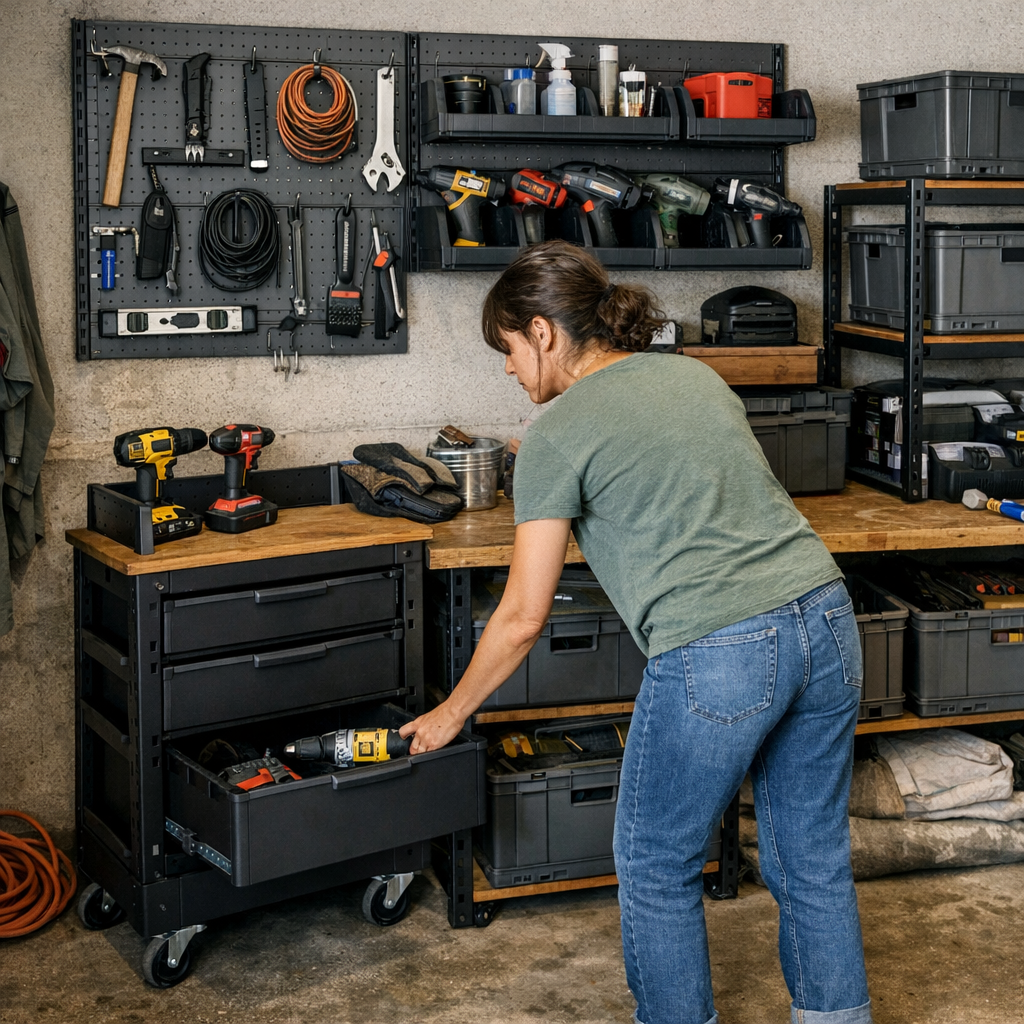
The first day a storage setup is finished, your garage or workshop looks like a catalog shoot: all tools in clear view, no tripping hazards, every bin and shelf lined up in tight formation. But fast-forward a couple of weeks—after a string of real jobs, spontaneous projects, and rushed cleanups—and the cracks start to show. What seemed like flawless organization is now a familiar pattern of everyday friction: the mobile cart needs dragging out of the way for the third time this week, a ladder blocks your only straight path to the tool wall, and the overflow zone—invisible at first—has quietly formed behind and beneath the bench. It’s the difference between a setup that simply stores things and one that actually works with the way you move.
Every small snag compounds. What felt “sorted” at install becomes a series of slowdowns: you stretch over one more stacked bin to reach the drill, your shoulders register the weight of returning a saw overhead, and more often than not you abandon perfect resets in favor of a fast pile-up just inside the door. The presentation may look right, but the routine tells another story.
Does Your Setup Still Work When You’re in Motion?
So much of storage design is built for appearance—neat lines, nothing on the floor, a sense of control. But day-to-day use attacks those ideals. Does your system still allow for quick grabs, easy returns, and clear movement? Or is it quietly slowing you down, one awkward reach or blocked walkway at a time?
- The wobbly rack you instinctively leave for last, because pulling heavier boxes feels like baiting disaster.
- The overloaded hooks where the hammer and pliers migrate to the outside edge, leaving crowded tangle and sagging hardware behind.
- The low shelving unit that forces you to sidestep—again—just to wheel a cart through, turning a clear path into an obstacle course.
Over time, corners that once seemed tidy fill with what’s hard to fit elsewhere. One area becomes the default drop zone for overflow. The rhythm gets choppy: grab, detour, reset, repeat. Instead of the setup supporting your work, you’re working around the limits of your storage—reshuffling each time just to begin.
Wall Storage: Looks Open, Functions Crowded
Pegboards, rail systems, and wall panels promise total visibility and open floor space. On paper, it’s the magic fix. But after a few busy afternoons, reality sets in. Are you actually using that upper row of hooks, or are the heaviest tools always on the edge, easy to knock down but hard to hang up?
The light-duty stuff—the screwdrivers, the tape rolls—stay accessible. But repeatedly heaving a power tool overhead, or wedging toolboxes onto out-of-reach pegs, skips usability for the sake of display. The clean look fades fast. Hooks wiggle loose, dust settles onto shelves you barely touch, and the items you use most are packed onto the lowest, closest ledges—never quite making it back to their assigned heights. The floor beneath starts to collect “in transition” piles that choke off movement and chip away at usable workspace.
Scene Check: The Wall Panel Over the Bench
Imagine working in a single-car garage that once felt roomy. Over the bench, a big wall-mounted panel holds everything at arm’s reach—at first. By week four, you’re standing on tiptoes to return the sander, and every time you want a wrench, it means an awkward lean around a bin that’s permanently wedged under the panel. The surface of your workbench, meant for projects, is now half-filled with stray tools awaiting a slot. The “efficient zone” is less a showcase and more a stack-up zone, slowing every turnaround.
What started as friction-free access gradually becomes a bottleneck: Just getting in and out of the work area involves detours, second thoughts, and half-finished resets you keep promising to fix “when there’s time.”
Floor Units: Stability That Crowds the Path
Free-standing shelving, sturdy modular racks, and rolling carts feel reassuring at the start. Heavy gear finds a spot, and the floor holds what the walls can’t. You can load up with confidence—but that solidity comes with compromise. Are you making the most of your space, or are floor units shrinking your open area with every new addition?
An extra-deep shelf might swallow seasonal storage or car-care kits, but if it juts out just far enough to make passage tight, you start swinging wide. Rolling carts, so handy in theory, develop a habit of camping in the main path when not in active use—requiring a nudge, each and every visit, just to get anywhere. After a while, you stop pushing them back altogether, turning mobile convenience into stationary hassle. Corners go dead. The route between door and bench becomes a zigzag and the idea of a “quick reset” fades as just another deferred chore.
Movement Blocked: The Slow Drift Toward Clutter
Every shop or garage hides its own roadblocks. A too-wide cabinet that demands a sideways squeeze on every pass. A watery path between the lawn gear zone and storage wall—constantly choked by what can’t quite fit elsewhere. Those corners where bins, boxes, and crates accumulate, “temporarily,” but never quite move. These drags are subtle, but over weeks, they change your approach: more shuffles, less walking straight in, and mounting resistance to even starting small tasks. You spend more time working around obstacles than working on projects.
How to Spot When the System Is Failing
Storage problems rarely announce themselves. The real signs are in your routine: hesitation at the entrance, slow returns, and overflow corners that gather the misfit and the half-used. If you keep shuffling the same cart out of the way, or habitually avoid one overloaded shelf, your setup is costing you—one unnecessary step at a time.
This isn’t just “wasted effort.” Every workaround chips at efficiency and safety. The pile on the bench gets a little higher, the walkway a little tighter, and the mental friction grows. Before you know it, the functional space you started with has shrunk dramatically—without a single new item added.
Lasting Fixes for Everyday Reset
The right changes aren’t dramatic; they’re targeted and specific. Move the gear you use most—especially the heavy, awkward stuff—to stable, waist-level zones where access is smooth and returns are no struggle. Let infrequently used items ride on higher shelves or less central racks. This one shift restores the natural rhythm: grab, use, return—no detours or lifts that make you reconsider putting things away.
You notice the change fast. The floor stays clearer, problem spots no longer mushroom before you catch them, and resets become quick habits instead of one more weekend project to dread.
Final Test: Walk Your Routine Before You Call It Done
Don’t let the setup’s clean look be the last word. Walk through your actual sequence—hauling out the air compressor, parking the mower, reaching for frequently swapped hand tools. If at any point you need to shift, duck, or sidestep extra furniture, your system still needs work. Rethink before habits (and clutter) lock in.
Build for Continued Movement—Not Just Day-One Order
Real satisfaction doesn’t come from a showroom moment of perfection, or even a rock-solid weight rating. It comes from a setup that stands up to daily movement: clear pathways, easy access, and no hesitation about where something should go. Watch for the subtle blockages and redesign before friction becomes routine. The setups that last are the ones that recover quickly from real, messy use—not just look “done” for a photo.
See storage solutions designed for real movement and repeated reset at StackNest.