
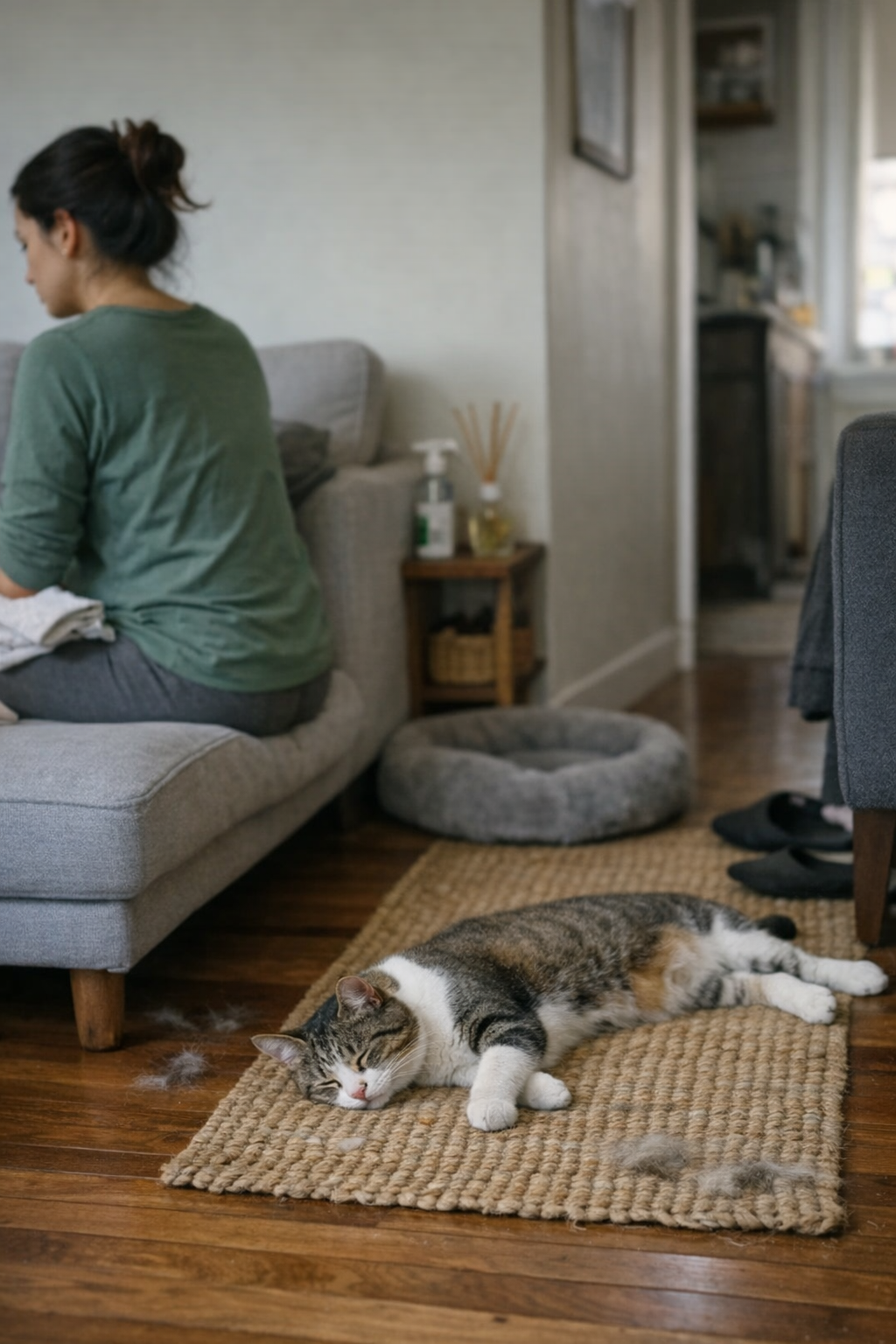
The “perfect” cat rest corner is supposed to solve mess—bed tucked in, fur contained, traffic out of the way. But after a few routines, it unravels: your cat starts skipping the corner altogether. Instead, you’re finding rolled-up fur on hallway rugs, scrunched laundry baskets suddenly in use, sofa edges moonlighting as nap zones. That tidy cat bed? Ignored. And cleanup multiplies—now you’re vacuuming places that went untouched for months, while the “easy-clean” spot sits pristine and empty. The reality: it only takes one overlooked detail for a so-called low-maintenance setup to become a daily headache.
When the “Perfect” Cat Bed Goes Empty (and Cleanup Spreads)
The main culprit is scent. Not heavy odors, but everyday layers: detergent, lingering wipes, plug-in fresheners, or last week’s citrus cleaner. Indoor cats track these changes fast—what seems like a harmless scented candle or a “fresh” laundry drop can quietly push them out. If you’ve ever wondered why your cat suddenly abandons their spot after a change-up in cleaning products, this is usually it. The shift is rarely dramatic at first: a missed nap or two, a longer stretch on an unexpected rug. But after a week of strong scents nearby, the rest corner is abandoned, and the fur starts showing up in harder-to-reach spaces.
How does this actually look? Maybe the first sign is subtle—your cat spends less time in the corner, more on the hallway mat. Leave a room-scent plug-in nearby or fold heavily scented laundry in their spot: the pattern’s set. By the end of the week, cleaning now means chasing fur into new zones, not a quick shake of the mat. The original setup, neat but scent-soaked, quietly fails.
How Scent Turns “Low-Maintenance” Into More Work
Indoor cat routines slip fast when scent creeps in. The corner you picked for easy resets now collects dust, not fur. Instead of shaking out a bed, you’re digging lint rollers out of drawers because fur keeps spreading to the sofa, hallway, and shared-use blankets. What was meant to keep mess contained is now forcing you into extra wipe-downs and surprise vacuums in every room but the intended one.
This isn’t a one-time annoyance—it builds. Day one: you catch a few shedding hairs on the old-loved spot. By the third strong cleaner cycle or laundry day, the cat is gone, and the mess map rewrites itself. The “solved” rest area turns into another corner to keep resetting, even though it barely gets used. The routine is the same, but now cleanup is scattered and off schedule.
Visible Friction: When a Room Looks Set but Adds Maintenance
The warning sign is clear: the main rest spot stays clean, but fur spreads to new places—a line of cat hair on the hallway runner, a smudge on the chair cushion, a fresh patch on the comforter. Resetting the rest bed stops working—now you’re forced into follow-up vacuums and late-night lint rolls in spots the cat never visited before. If you find yourself retracing steps and cleaning “cat-free” rooms, the original setup isn’t working. Each round of off-schedule cleanup is time and energy wasted on a patchwork of newly adopted nap zones.
Scent Interrupts Home Routines—Quietly, Then All at Once
The real tension shows itself during morning routines and evening resets—the moments when you expect cleaning to be predictable. You reach for a toy under the couch and spot an unexpected clump of shed hair; meanwhile, the rest bed stays spotless and unused. A scented room spray or folded laundry in the wrong spot is enough to break the routine. Refixing the bed never helps if fragrance still clings nearby. The supposed “easy-care” rest area just becomes something you keep cleaning out of habit, not function.
Cleaners, air fresheners, and “fresh” laundry might smell harmless to us, but for indoor cats, even a passing intensity shifts their sense of home turf. Beds and mats that once anchored their routine become “don’t touch” zones, pushing mess and nap cycles right into your daily path. The setup still appears clean, but all the work now happens in the wrong place.
When Cleanliness Makes Life Harder, Not Smoother
What starts as a neat solution often ends up creating more friction over time. That “contained” bed, meant for a weekly shake-out, sits idle. Vacuums and lint rollers invade the rest of the house. Little has visually changed, but you’ve lost the fast, predictable reset—cleanup now means doubling back to unexpected rooms, late at night or before work. Strong scents force this shuffle, and every attempt to “make things cleaner” by using fresheners or strong detergents just entrenches the chaos.
Actual Fixes: Smarter Scent Boundaries, Not Impossible Perfection
You don’t need a sterile, scentless home—just new rules about where fragrance belongs. The real solution is straightforward: move strong scent sources—detergents, diffusers, cleaning sprays—at least one meter (about two arm’s lengths) from the cat’s main rest area. Fold bedding somewhere else. Pull scented plug-ins from the zone for a few days after cleaning. Skip the “fragrance boost” for any fabric that goes into the bed or mat. This small adjustment resets the cat’s pattern far more reliably than endless bed rearrangements or high-maintenance deep cleans.
Once scent stops crowding the rest area, most cats return quickly—some overnight, some after a few low-scent days. Cleanup shrinks back to one spot. Mats and blankets start picking up fur again (instead of just collecting dust), and reset time drops. Maintenance becomes routine, not guesswork.
Small Tweaks That Change the Daily Flow
Switch to unscented or lightly-scented detergents for cat bedding. Rinse blankets and mats thoroughly, and let them air-dry away from strong-smelling rooms before putting them back. Keep cleaners, especially citrus or floral scents, away from the rest zone entirely. These swaps require little effort, but keep fur and mess where you expect—making every reset faster, without turning your home into a scentless box.
You don’t have to erase all smell—most cats ignore faint, well-ventilated scents. It’s the high-intensity “change” that breaks their attachment. Each unnecessary fragrance increases the risk of cleanup getting out of hand, whether that means a detour to vacuum a guest bed or an extra wipe-down before every meal. Remove softeners and scented dryer sheets from the routine, especially during unexpected washes, to stop the cycle before it restarts.
Spotting the Scent Shift Before Cleanup Scatters
Here’s how you know scent is quietly undermining your setup:
- Your cat abruptly avoids a rest spot after a change in cleaning or laundry products.
- Fur shows up where it never used to—edge of the sofa, second bedroom, family-room throw.
- Every cleaning session, you find mess in one more “off-limits” room or shared zone.
If this happens, trace back to the last wash load or air freshener used near their spot. Removing or moving scent sources usually resets the routine faster than any physical rearrangement.
Functional, Not Just Tidy: Making Cat Rest Setups Work for You
True indoor-cat setups aren’t about perfect displays—they’re about function you can repeat, even on your busiest days. If a bed or mat stops being used, the weak point is rarely clutter; it’s usually an invisible (but fixable) change in scent logic. In a small apartment or shared family space, that detail is the difference between cleanup you barely notice and a frustrating spiral where cat supplies scatter across every zone.
Instead of endlessly resetting or “refreshing” the rest area, shift your focus: move scented items aside with every clean, fold, or refill. Small changes add up—over dozens of daily cycles, this keeps rest corners in use, cleanup predictable, and the line between cat and shared space clear. That’s the real edge: not a visually perfect setup, but one that absorbs mess, keeps the schedule predictable, and doesn’t make you chase fur across every room.
Discover more practical setups and daily problem-solvers at StillWhisker.