
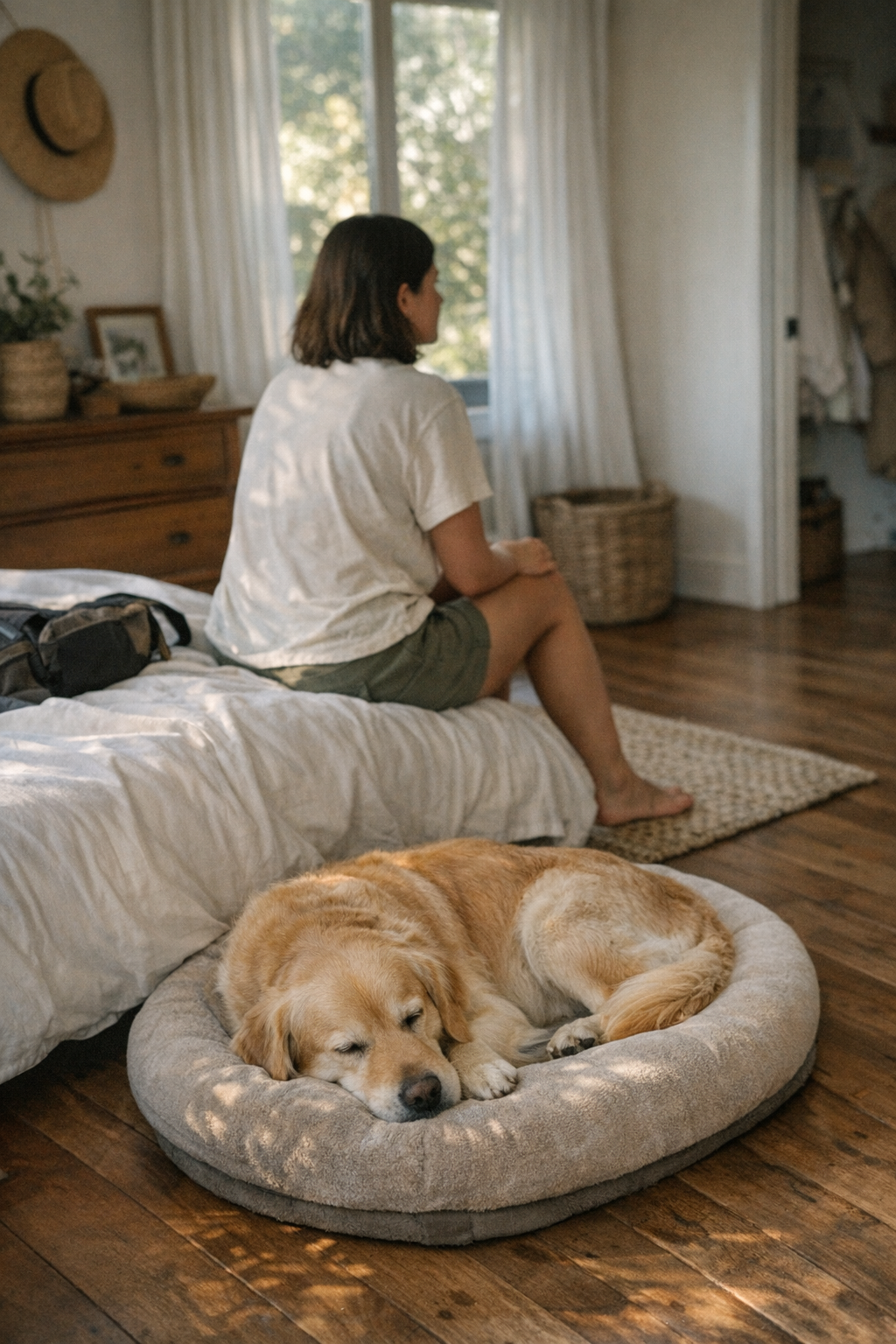
Midday “rest” shouldn’t mean ten minutes of circling, three false starts, and a dog’s sigh every time you step into the hallway. If your dog keeps scanning from bed to corridor after lunch—never quite relaxing—it’s not just harmless fidgeting. It’s a visible weak point in the daily routine: a supposed downtime that collapses under the weight of hallway crossings, vacuum bursts, and scattered gear. Instead of recharging, both you and your dog end up half-alert, with the routine feeling patchier every day.
When Quiet Time Isn’t Really Quiet
Picture this: lunch is over, you expect your dog to curl up and actually rest, but within minutes he’s circling the bed again, raising his head at every distant footstep, or bolting upright when someone swings past with a basket of laundry. A nap keeps slipping out of reach. What looks like harmless shifting often signals that the so-called “quiet period” is porous—built on shaky ground where every small disruption stacks against genuine rest. Your own to-do list stretches, but the dog’s ears track the movement around him, and your focus splits further every time he restarts his routine.
The cost isn’t dramatic; it’s cumulative. With each reset—another flop, a lifted head, another shuffle between rest spots—real rest becomes less likely. Instead of walking away refreshed, you both slog through the afternoon stuck in a broken rhythm, chores fragmenting, energy draining faster as each interruption chips away at recovery.
Unseen Friction: The Little Things That Break Rest
Midday disruption rarely announces itself with a bang. Instead, it’s a pattern of split attention: doors swinging open, laundry runs through resting zones, or a quick vacuum session “just for a minute” that snaps your dog to high alert. Even room setups that look clean—a soft bed, a water bowl tucked just out of the walkway—won’t fix the underlying slow leak if daily movement slices through the nap window. The problem isn’t visible mess; it’s broken flow. With three or four interruptions in an hour, a rest period meant to smooth out the day gets shredded into fragments—and neither side fully resets.
The Pattern Repeats: What Regular Midday Disturbance Actually Feels Like
If you watch closely, the routine breakdown isn’t subtle. A dog shuffles back and forth between two beds, picks a spot, then moves again five minutes later as footsteps approach. Over a week, you start dodging around your own dog to do laundry, pausing work to check why he’s restless, or tiptoeing through rooms to avoid another sigh-filled shift. Eventually, the workaround becomes the default: instead of real rest, both dogs and owners resign themselves to a midday hustle that never truly smooths out. The routine’s weakest link just keeps resurfacing—no matter how well-placed the bed or how tidy the corner looks right after cleanup.
Recognizing the Subtle Signals: How Routine Failure Shows Up
Midday restlessness signals show in small, repeated behaviors like:
- Circling the bed after eating, never quite committing
- Switching between two or three close rest spots instead of landing in one
- Jolting up at hallway sounds, vacuum clicks, or kitchen drawers slamming
- Ears tracking each new footstep, even during “quiet” hours
- Short attempts at napping that break quickly, or a constant cycle of starting over
These patterns point past comfort gear or tiredness. They reveal the structure itself isn’t reliable—a routine forced to adapt to every new interruption, where downtime is always one noise away from ending.
The Real Fix: Building a Trustworthy “Quiet Window”
Lasting change doesn’t come from buying a plusher bed. It comes from reducing cross-traffic, delaying noisy chores, and carving out a 30- to 60-minute block where the home’s movement pattern shifts. A real “quiet window” means:
- Tightening down hallway and doorway crossings for one protected stretch
- Pushing off vacuum, laundry, and clattering cleanup until the window closes
- Directing phone calls and deliveries away from the resting zone
- Re-locating the dog’s bed outside major traffic lines—even if it looks less picture-perfect
“Quiet” doesn’t require a soundproofed house. What works is a reliable pause in the background churn—enough for a dog to stop bracing for the next disturbance and settle fully into sleep.
Routine Change: What a Real Reset Looks Like
One concrete shift—a 45-minute block where nobody crossed the hallway, and the vacuum stayed silent—turned a month of restless circling into solid afternoon naps. Instead of constant head lifts and scanning the door, the dog sprawled comfortably, slept deeper, and didn’t jump at every passing shadow. Not only did the dog decompress, but owner chores clustered more predictably. Most telling was how the “weak link”—those recurring, exasperated sighs or mid-nap retreats—just stopped dominating the post-lunch routine. Both human and dog returned to the afternoon noticeably steadier.
Why the Bed Alone Isn’t Enough
Comfort gear can’t fix a broken flow. A bed wedged into a cute nook still flunks the test if the main thoroughfare to the kitchen fires up with every family movement. It’s an easy trap: the space looks ship-shape until real daily use exposes how often rest gets broken. If the only way to secure downtime is to “beat” the next slam of the door, no bed or toy pile will patch the gap. Ease of movement—both for dog and owner—is usually the first thing sacrificed when the setup picks looks over actual flow.
Routine Distraction Loop: Specific Sticking Points
- Vacuuming “just quickly” after lunch—dog never hits deep sleep, turns what should be a 30-minute nap into scattered 12-minute bursts.
- A bed that doubles as a shortcut: dog shuffles aside half a dozen times before finally giving up, turning a rest period into a traffic jam.
- Toys and beds stacked neatly in corners that block cleaning or create awkward step-arounds, so the setup looks organized but grates in walkthroughs.
- Trying to multitask chores and rest—“he’ll settle while I clean”—ends in both tasks getting chopped up, dragging out the day’s reset.
Resetting the Flow: Small Shifts, Noticeable Payoff
Even an imperfect “quiet window” can reset the pattern. A dog stretched out, fully at ease for a single protected hour, leads to less chopping up of tasks, fewer dog-owner workarounds, and a routine that doesn’t demand constant micro-adjustments or workaround cleaning paths. Across the week, the difference shows up in:
- Longer, deeper naps that actually hold
- Less tension between normal pet needs and practical owner tasks
- Cleanup and resets happening in reliable blocks, not scattered throughout the day
- A routine resilient enough that even busier days don’t topple it with a handful of interruptions
The payoff is concrete: chores that don’t require tiptoeing, a midday block that holds together, and fewer spilled-over tasks—on both sides of the routine.
Making It Work for Your Space
No layout is flawless, and “quiet windows” are rarely perfect. Some homes need a closed door, a temporary gate, or a chore schedule that avoids certain hallways right after lunch. For others, it’s as simple as pausing broom duty and rerouting footsteps for 45 minutes. The goal is never stillness at all costs but a stretch where dog and owner both stop bracing for the next nudge, shuffle, or rapid traffic line through the rest zone.
If the same problem keeps bubbling up—circling, repeated sighs, or tasks that get interrupted the same way every day—it’s the setup’s structure, not just a missing comfort piece. Where and when quiet is protected pays off more than any new gear tossed into the mix.
The Real Difference: A Routine That Holds
A reliable afternoon reset isn’t about layering on more gear or forcing a perfectly furnished nook. It’s about clearing the repeated interruptions that make rest so much work, day after day. A protected block in the home flow—the hallway that goes quiet, the pause on chores, the deliberate setup outside heavy walkways—builds a midday routine you can actually trust. The result isn’t just a better nap, it’s a stronger reset point for both owner and dog that holds up to real use all week.
For routines ready to stop running into the same wall, find practical setups built for repeatable, low-friction downtime at DogPile.