
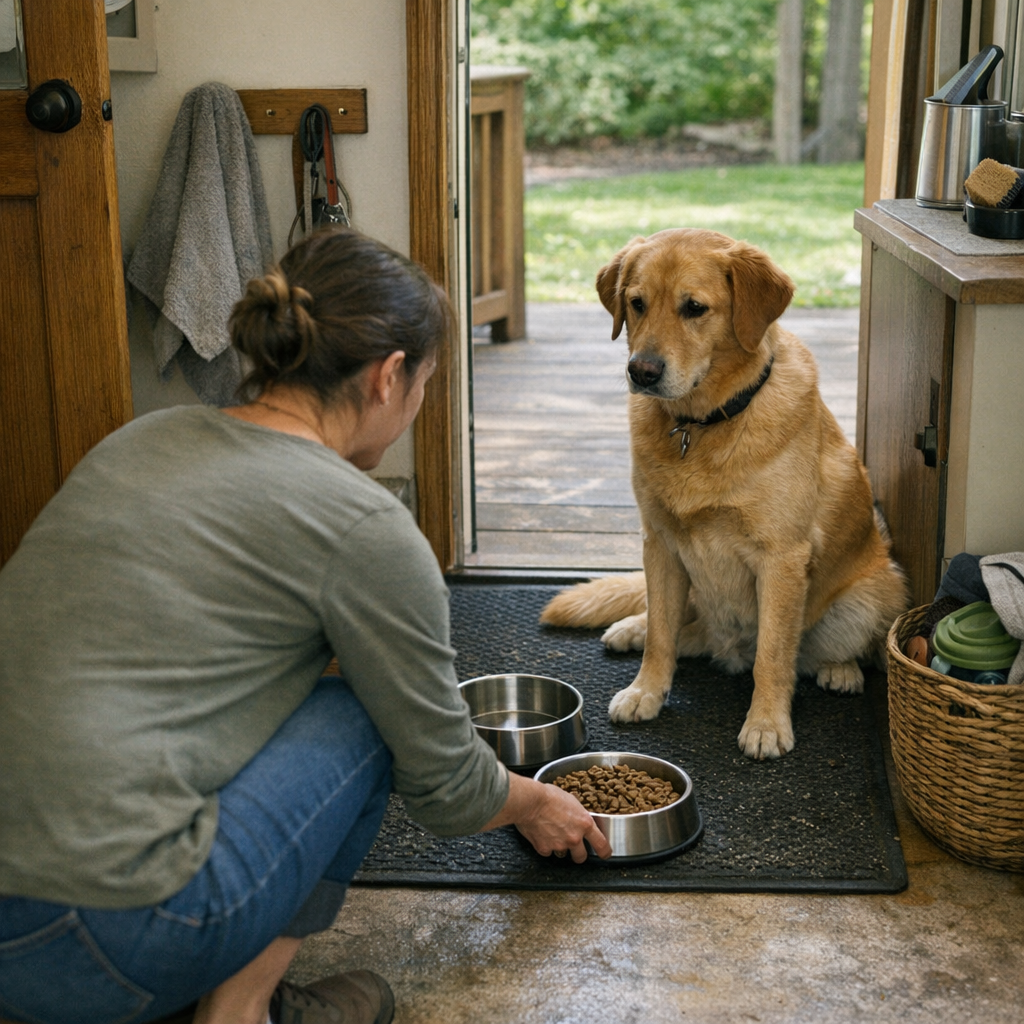
Where Small Interruptions Hide in Daily Dog Care
Daily dog care routines look dependable on the surface—a bowl is rinsed, a towel is hung, the feeding corner appears under control. But minor snags start showing up fast. The moment you need to grab a towel for wet paws and realize it’s across the room, the normal flow is already disrupted. One missed wipe or awkward reach interrupts a routine that was supposed to be quick. These tiny, repeated delays accumulate: stray kibble underfoot, water spots you notice hours later, towels never where you expect them. Even when the space looks organized, basic actions like feeding or cleaning up begin stretching out, reshuffling your mornings and slowing down busy evenings. Over just a few days, what seemed like a smooth system starts revealing gaps.
Practical Scenes: How Routines Get Interrupted
Start of the weekday: you reach for the food bowl, measure kibble, but your dog bumps you—spilling some on the floor. Now you’re down on your hands and knees, sweeping up while your dog circles, waiting. After a walk, muddy paws land on the mat because the towel is not at hand; you end up cleaning both dog and entryway. The issue isn’t that you lack supplies—they’re nearby, but never right where you need them. One item blocks another, or grabbing a wipe means shifting a heavy bag first. Each extra move makes the routine just a bit slower. Over the week, dried water spots collect near the bowl, and stray food appears in corners you didn’t expect.
Multiply those disruptions: water refills delayed because the bottle is tucked behind other containers, or the quickest brush buried under a pile. The tools are present, but practical access never feels simple, especially when your attention is split or you’re running late. The routine that worked on day one now costs extra steps with every repetition.
When Order Looks Right, But Doesn’t Work
A pet corner can be organized and still break down in actual use. Hooks, bins, wipes, and brushes all line up until time pressure exposes the cracks. A newly installed hook makes a towel easier to see—but also blocks the drawer you open for treats. The food bin looks tidy in its spot, but to scoop kibble, you have to move another container out of the way. Real interruptions surface not when you’re setting up, but the instant you need to move fast—like returning from a night walk and realizing the water bowl is empty, or when one missing item turns the whole routine into a slow shuffle.
Each time you move two things to reach one, or find clutter returning to high-traffic spots, it’s a sign the system looks organized but doesn’t keep pace with everyday demands. That gap grows as routine resets—feeding, water, after-walk cleanup—keep exposing the same weak points.
The Cumulative Cost of Delays
By Friday, the cost of small inefficiencies is concrete: late-night cleaning, half-used wipes crowding bins, clutter sneaking back into entry spaces. It’s rarely one big mess but a pattern of repeated slowdowns—each delay adding just enough drag to wear on the routine. Even when you think supplies are close enough, just being “almost” ready means water bowls get filled after mealtime, feeding becomes a two-step process, and late cleanup interrupts your evening.
A bowl placed behind the treat bin, or a towel hook installed just out of reach from the door means more travel at the busiest moments. Each split-second choice—leave a water spot, skip a quick wipe, pile items out of the way “for now”—shows up as visible mess later. What began as a tidy system becomes a pattern of minor workarounds that slow you down daily.
Observations from Adjusted Spaces
The fixes that matter are rarely about adding more shelves or bins—they’re about micro-adjustments. Lowering a towel hook to door level, keeping wipes container in arm’s reach, or making rinsing the bowl a single-action step lets you stay ahead of interruptions. Suddenly, you’re not stuck searching for a wipe while muddy paws keep moving, or reaching up while juggling the leash, food scoop, and an eager dog.
As these changes settle in, the difference is obvious: fewer surprise messes, bins not overflowing, cleanup tools reset exactly where you’ll need them next. The improvement isn’t a dramatic overhaul—it’s a drop in friction you feel most when hands are full or patience is thinning at the end of a long day.
The Difference Between Tidy and Truly Smooth Care
A setup that hides visual clutter might still interrupt care actions. When items are neatly organized but not in grab range—when feeding tools are always a stretch farther or cleaning wipes end up blocked by stacked gear—the result is a tidy space that frustrates in practice. True smoothness means actions feel as direct and natural at the end of the week as at the start. Look for where access breaks down: that’s where routines falter first.
As you shift placement—moving key items closer, clearing entry points, adjusting shelf heights—you notice feeding, cleanup, and resets revert to simple, repeatable motions. Decrease the tension and routines hold up under busy, real-life pressure, not just a photo-ready moment after organizing.
Less Friction, More Consistency
Every small tweak—relocating a towel, repositioning the water bottle, clearing out one corner where clutter gathers—cuts down on routine drag. Assess not just how tidy your setup appears, but how usable it is mid-rush, leash in one hand, treat pouch in the other. The less you have to reshuffle, the more time and attention stays with your pet, not with your storage system. It doesn’t have to be picture-perfect; it needs to be consistently manageable, even on your busiest days.