
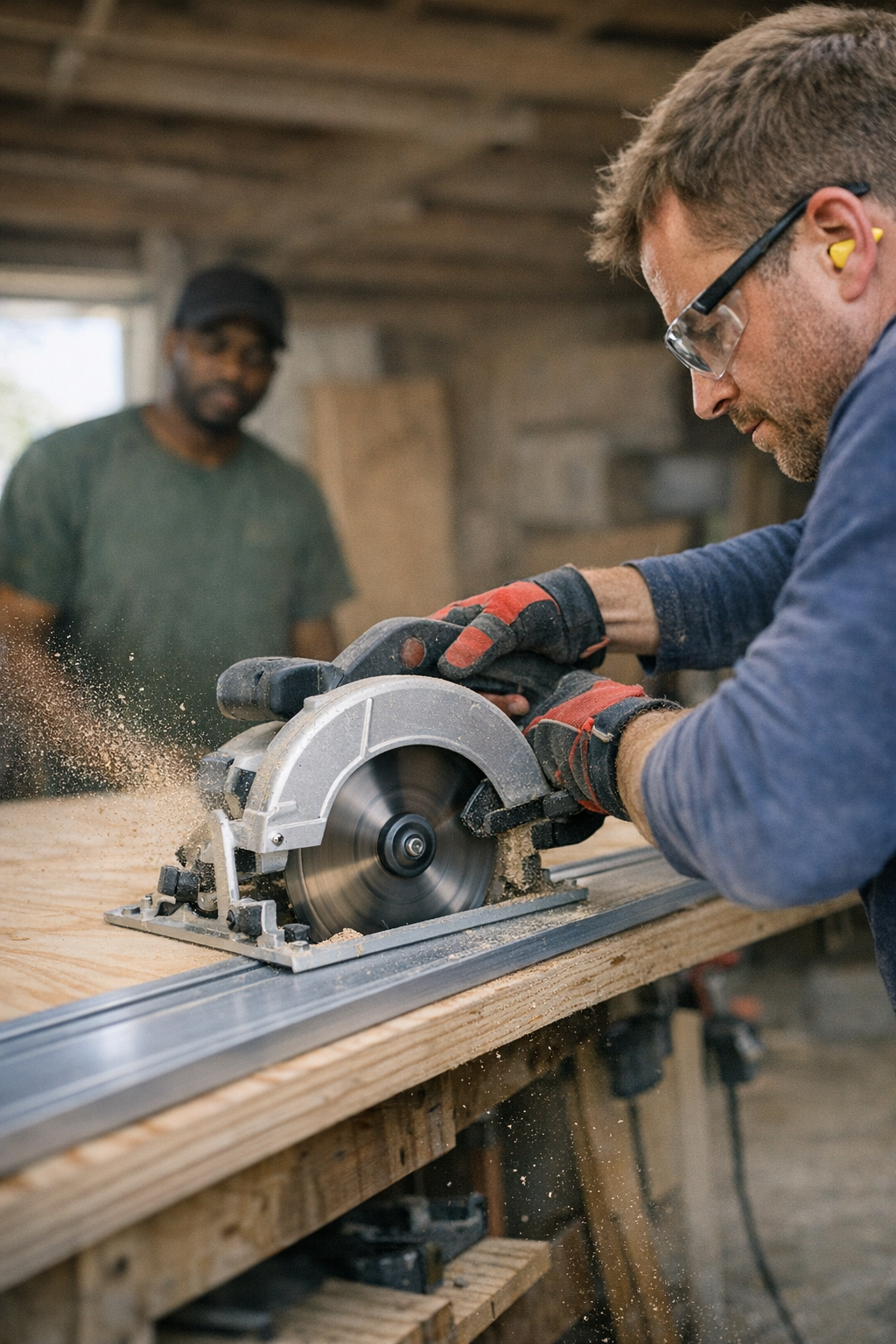
The real cost of crooked cuts isn’t just wasted material—it’s that slow build of frustration and lost time as simple projects mushroom into edge repairs and touch-up tasks. In the thick of shop work, you rarely spot the root cause right away. A wobbling saw blade doesn’t announce itself with sparks or shrieks—it chips away at your results, quietly turning precision layouts into post-cut headaches that pile up faster than sawdust on the shop floor. Whether you’re fitting finish panels for a client, banging out repeatable cabinet pieces, or ripping plywood on a makeshift table in the garage, you expect your saw to track straight. But plenty of blades stamped “precision” start to drift under the pressure of dense material or the wear of a long day.
The Hidden Tells: Spotting Blade Wobble Early
The earliest signs of blade wobble are easy to overlook. Maybe it’s a faintly uneven whine, a puff of dust from the side, or an edge that looks clean until you go to join panels. What starts as a hairline wave in your cut builds momentum: fence-guided rips ripple, panel joints reveal daylight, and that tight, easy assembly you counted on starts demanding filler and sanding you never budgeted for.
Why does it happen? It’s usually not about blunt teeth. Blade plate warping, an out-of-round arbor hole, or simply uneven mounting pressure can all set up the shake. You’ll feel it creep in most clearly during:
- Batches of sheet goods—cutting more than one panel at a time, or dialing in matching parts for cabinetry.
- Ripping tight-grained or thick hardwoods—where resistance exposes any hint of blade flex.
If you let a fluttery cut slide (“it’s just some plywood, right?”), the misalignment quietly compounds. By the time you catch it, half your work is already in the fix-it bin.
When Specs Lie: Why Not All “Precision” Blades Cut the Same
Put two fresh blades side by side and they look nearly identical—same tooth count, same carbide shine, even the same weight in your hand. But under real pressure, differences emerge fast. Slice through a clean pine 1×4 and nearly any blade behaves. Start feeding it Baltic birch or a dense sheet of MDF, though, and the rigid blade keeps humming true while the flexible one starts to wander.
The stiffer blade glides a clean, steady line—almost like the saw’s on rails. The weaker plate starts vibrating, chatters out chips, and tracks away from your fence. Soon, you’re babysitting the wood, adjusting position between every run, and picking out splinters where the exit tearout shows up. What seemed like a small difference in “feel” becomes a domino of lost time, wasted panels, and strained joints halfway through assembly.
Shop Reality: The Moment Precision Slips
Picture a Saturday morning: you’re cutting finish faces for a built-in. Rail stops are set, layout is dialed, cuts are flying. By midday, you’re dry-fitting—and the joints should snap tight, but instead they show a wobbling seam or an odd tactile bump where the panels meet. You question your skills, the saw, even the plywood. Only after swapping in a blade with extra lateral stiffness does your edge-to-edge fit snap back into place, gaps close, and those unplanned sanding rounds vanish. That little change in the saw’s feedback—the early hint of wobble—was the first warning you missed. Ignore it, and you’re locked into tedious rework before you even realize what happened.
Blade Plate Thickness: The Hidden Difference-Maker
The spec that rarely gets spotlighted? Body thickness. Most pro blades run a plate around 1.7 mm thick. Upgrade that to 2.2 mm and you feel it—not just in stability, but in the confidence to feed denser stock or run longer rips without steering corrections halfway through. Real-world tests? Measurable kerf wander from plate flex drops to almost nothing—less than half a millimeter over a full meter’s cut.
In the shop, that translates into edges you can trust: crisper kerfs, minimal chatter, less side-dusting, and almost no need to rethink your assembly sequence. Thicker blades do ask a bit more from your saw’s motor, but the uptick in control saves you from double-cutting, patching, or—worse—remaking panels because the first ones refused to line up.
A Fast Way to Detect Wobble (Before Your Day Unravels)
Cut after cut, it’s easy to rationalize flaws—until your stack of parts won’t fit. Whenever you change blades, or sense a subtle shift in cut quality, do this simple check: Spin the blade by hand. Watch closely—
- Are tooth tips weaving, side-to-side?
- Any soft “click” or rolling catch in the sound as it spins?
A true blade will hold a single, unwavering path. If you notice drift, don’t gamble with reassembly—remount or swap it. Dullness won’t always wobble a blade, but increased friction and heat from a blunt edge exaggerate any imbalance, and that’s when problems scale up fast on the job.
Real-World Blade Performance: More Than Just “Sharp”
Anyone can sell you a “sharp” blade, but that won’t keep your workflow smooth. Out in the grit and noise of actual builds, it’s the blade’s ability to lock into its own path, resist deflection under load, and keep every cut on course that determines whether your cut list stays ahead of schedule—or falls apart at assembly. Blades with proven stiffness reward you twice: less waste now, and less fatigue later, because you’re not fighting the tool for control or spending hours sanding out mistake edges.
Don’t lose stretch after stretch of work to barely-visible wobbles or tiny kerf shifts. A stiffer, slightly thicker blade isn’t a cure-all, but it’s often the line between productive momentum and watching a project stall because your parts no longer fit. The best shop habits don’t just chase “sharp”—they pay attention to what the blade’s telling you, before small problems multiply into a full afternoon lost to fixes. Check your blades. Trust your instincts. And don’t underestimate how much less effort and frustration you’ll face with even a small upgrade in blade quality—especially when the pressure’s on and deadlines don’t wait.
Find reliable blades and saw accessories built for real shop demands at Gumboll.