
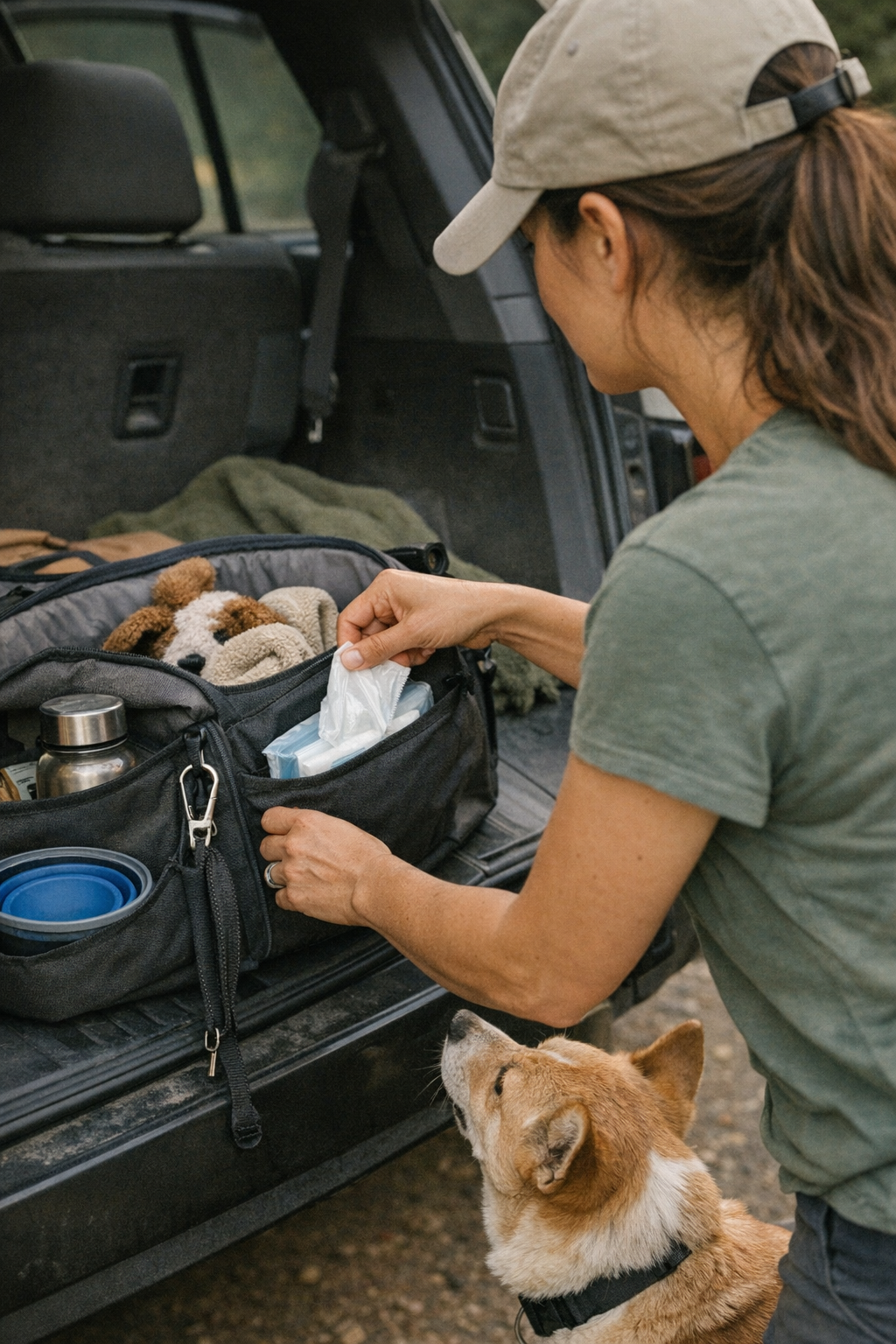
The real test of any pet travel setup starts when the trip stops being new—right around the third or fourth repeated stop, when the same moves keep coming back and the “just-in-case” bag starts fighting back. What looks organized on your kitchen floor—zippered pockets, sorted treats, stashed toys—gains weight and friction in real use. Suddenly, the wipes are hidden under a nest of squeaky toys. The leash tangles with yesterday’s bowl. Pulling out snacks scatters items meant to be separate. On every repeat, the system that was “ready” drags you into new mini-delays: reaching the wrong compartment, pulling out too much, wasting time on cleanup instead of moving. Even the best-seeming setup starts working against you, not with you, once routines become muscle memory and you want speed, not order for its own sake. PawGoTravel doesn’t just sell carriers—it designs around these fault lines.
What Happens After the Setup’s First Impression Fades
The gap between “neat” and “actually easy” shows up as soon as your travel pattern repeats. Maybe you’re aiming for a post-park rinse or a quick snack at your usual roadside pull-off. Now the routine is leash, bowl, wipes, treat, seatbelt—same objects, same order, again and again. If your gear buries the quick-grab items beneath comfort add-ons, you end up digging or moving stacks. Wipes end up wedged behind toys. A bowl shifts out of reach, making quick stops into scavenger hunts. The bag is never empty—just always out of order, and every reach feels slower. Speed drops, energy drains, and the prepared look hides the slow-burn drag of managing the same five items three different ways.
How Setup Friction Creeps In—One Stop at a Time
A travel bag feels like a solution only until real repetition exposes every weak point. The first stop—fine. By the second or third, the leash is a tangle magnet; bowls move somewhere less sensible; cleanup wipes take a back seat to treats or blankets. A comfort item meant to reassure ends up blocking the main zipper. These aren’t emergencies—they’re compounded minor failures, each one stacking into a frustrating cycle. The “organized” bag quickly becomes the main cause of slowdowns, not a shortcut for the routine.
Familiar Routines, Familiar Frustrations
Breakdown is most obvious where you know the drill. At the park exit or trailhead, your pet’s moving at full speed—and you’re pausing to unjam a zipper or grope for those mystery-location wipes. A leash caught behind fabric, a wipe bag crushed beneath stray snacks, a comfort toy now blocking the only direct pocket: each stutter isn’t catastrophic, but the pattern is stubborn. Four stops later, the whole setup “looks packed” but throws up interference every time you go to move. It’s a manageable mess, but the repetition makes it unavoidable: no single flaw, just a cumulative sense that you’re starting over on every grab.
The Return of One Persistent Weak Point
Some trouble spots keep resurfacing. Water bowls, which start out in easy reach, migrate under toys. Cleanup gear always present, never perfectly handy. Small tools or supplies wander out of their “zone.” Stops don’t vanish—they build up physical and mental drag, every step a little heavier, every reset a little more crowded, like invisible clutter multiplying inside the bag.
Dividing Access: The Small Change That Lifts the Routine
Eventually, the difference between an “ordered” bag and a “usable” bag is impossible to miss. The real upgrade? Outfitting quick-access items—wipes, bowls, leash—into dedicated side or exterior pockets only you touch during movement. Deep-storage comforts stay sealed inside. This single adjustment halves the time (and effort) to grab what you actually need at a curb or seat edge. The essentials live where you need them, not wherever they landed after last use. Instead of the whole kit getting scrambled, your go-to supplies are insulated from the churn. Each return to the car or the sidewalk gets faster—less fumbling, less shuffling, fewer mistakes during the ordinary stops that make up actual travel.
Seat-Side and Street-Side: Handling in Motion
Clean separation of quick-access and storage zones transforms transitions. Mid-movement—dog half-in, half-out, leash in one hand—there’s no digging or risk of dumping blankets just to reach wipes. Outside, at fast reward moments, you aren’t lost in comfort gear just to locate the bowl. This split isn’t theory: with every repeated stop, the gain in speed, calm, and control builds. You start noticing fewer dropped items, shorter pauses, and a more reliable return to movement, across every phase of a routine trip.
Managing Overlap: When Owner and Pet Items Collide
Owner essentials always find their way into pet space. Phone chargers, sunglasses, and grocery receipts sneak into the very pocket meant for wipes or leashes. The more comfortable you get with the routine, the higher the odds of accidental crossover: wires by the snacks, wallet under a pet blanket, keys trapped with comfort toys. Every forced overlap—cleanup pouch fighting for space with headphones—turns a simple reach into another reset. Reliable structure means every zone (pet, owner, comfort) has a reason, and every movement stays predictable. You stop thinking, and just act—because the setup forces less chaos, not just less clutter.
Real-World Shortcuts That Stick
Where Should You Really Keep Wipes?
Wipes belong in a dedicated, outside-facing pocket, always separate from snacks and toys. Done right, grabbing a wipe should take two seconds, even with a leash in hand and the car door open. If you’re using two hands or opening the main bag, friction is already winning.
How Do You Keep Leashes Tangle-Free?
Clip your leash to an exterior ring or hang it from a visible loop outside the bag. This single shift slashes tangles—and ends the routine of fishing the leash out of a mess of blankets or chasing stray treats around the seat.
Why Does the Bag Feel Heavier After Several Stops?
It’s not new gear—it’s handling drag. Bowls wander into the main pouch, comfort layers ooze into quick-grab spaces, and every “one-time” overlap sticks unless you intervene. Honor the original structure at every reset. The lightest-feeling setups don’t just look clean for a photo—they resist slide and tangle through every interruption, no matter how many stops you make.
The Payoff: A Setup That Stays Light in Use, Not Just in Looks
After enough real-world trips, you stop believing in one-and-done packing. A workable pet travel setup isn’t “organized” in a static way—it stays ready by keeping friction zones cut off and repeated motions free. Quick-grab layers for action, comfort gear sealed for later, owner items kept from migrating—every reach, pause, and restart runs smoother because the bag is built for movement, not just storage. The difference isn’t theory; it’s time, energy, and comfort returned to you and your pet with every repeated outing.
Keep your next trip working for you, not against you, with setups designed for real repeated use. Explore more pet travel solutions at PawGoTravel.