
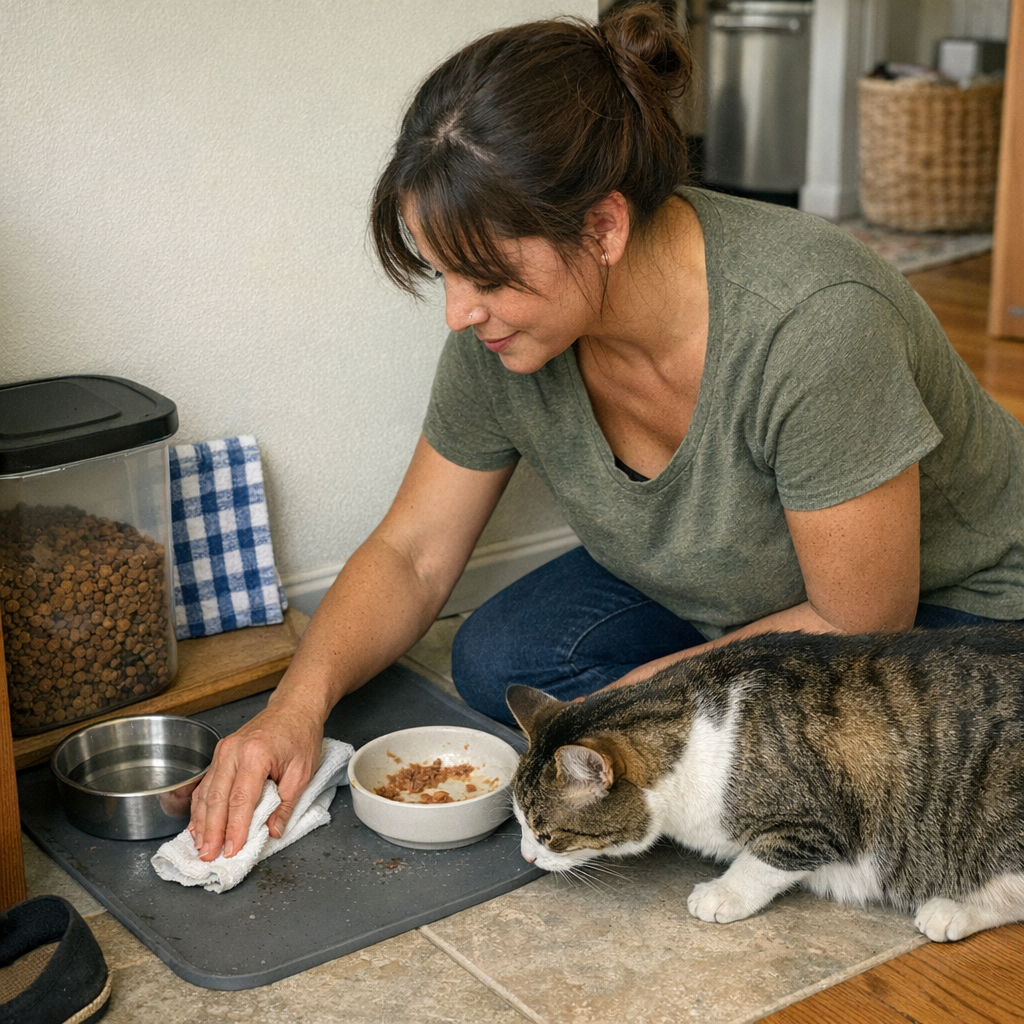
Every indoor cat owner recognizes this: you walk past the feeding zone after breakfast, spot what looks like a harmless splash or crumb, and think, “It can wait.” But by dinnertime, that innocent bit has baked itself onto the mat edge, fused with dust and stray fur, and somehow managed to creep beneath the bowl where it’s become a hassle to reach. What started as one tiny speck quietly escalates—now, instead of a two-second wipe, you’re prying sticky residue off the floor and dragging out the full cleaning kit just to feel like the area’s really clean again.
Why Spills Left for Later Always Grow Into a Bigger Problem
The first day a spill happens, it’s barely noticeable. But delay cleanup, and invisible layers form: food dries in streaks along the mat’s edge, wipes become less effective, and bowl rims develop a sticky ring that refuses to budge without a real scrub. Visually, the area might “pass,” but functionally it gets worse—harder to reset, harder to keep up as the week goes on. Now the routine slows: you hold the mat at an awkward angle, dig at patches that would have vanished with a single swipe if caught early, and re-enter a loop of nagging cleanup you never budgeted for.
It rarely starts with a flood. Usually, an edge soaks up just enough to attract wet food, and repeated meals make the residue build quietly. Soon your hand sticks to the mat, or you get the first whiff of yesterday’s meal, and you realize there’s buildup hiding underneath—sometimes forcing you to move the entire setup for a proper clean. In a shared or open kitchen, this mess doesn’t just linger; it spreads—crumbs and drips end up where you walk or eat, and what was a cat corner is now a series of tiny interruptions all over the house.
The Slow Creep: Mess Spreading Beyond the Feeding Zone
Think through an ordinary week: you lay the mat out straight after cleaning, only to watch the cat flick her paw, sending gravy just off the edge. Slowly, crumbs ride just beyond the mat, clinging to shoe soles or catching in the grout between tiles. In high-traffic areas, the transition is obvious; mats curl from moisture, fur bonds to sticky spots, and suddenly you’re wiping along baseboards or finding litter or food underfoot in places that have nothing to do with feeding time.
None of it is dramatic—just a series of small set-backs. A quick reset becomes a drawn-out hunt for hidden mess. The day’s friction isn’t just annoyance; it’s a real drag on the routine, especially when the same pattern comes back after each meal.
The Real Reset Burden: What Delayed Cleaning Actually Means
There’s a quiet frustration in thinking the feeding area “should be fine” while your effort keeps going up. Delayed cleanup brings:
- Extra effort in every single reset—dried-on food and stubborn oils stick to bowl and mat, demanding longer scrubbing and more tools.
- A space that appears clean but always resists—under-bowl grime or edge stains that surface when least expected.
- Tracking—litter, dust, and crumbs migrate past the feeding zone, so cleanup grows from a point problem to a hallway-and-floor sweep.
Have two cats? The cycle just speeds up. One untidy eater is enough to turn “manageable” into an ongoing maintenance cycle. Food and water residue accumulate fast, oil and kibble bits clog textured mats, and the tiniest sticky patch acts like a magnet for dust and cat litter from neighboring zones. Ignore it once, and you’ll clean up double later.
Comfort vs. Cleanup: When Each Gain Delivers a Tradeoff
It’s tempting to go for a thicker mat, heavier bowl, or a perfectly placed setup that looks “solved.” But most comfort upgrades only hide the next problem: mats trap spills under bowls, so messes sneak up for big, annoying cleans. The space looks organized, yet by the time you lift the mat, there’s a whole sticky film. Add a cozy nook for the cat, and suddenly you block quick tool access—now you’re squeezing wipes along the edge, and the disaster always gathers where it’s most awkward.
Even the best-looking setup can create more work if the day-to-day flow gets slowed. What calms the feeding station today may just shift mess and movement into tomorrow’s routine. The tradeoff is clear: easier on the cat, heavier on your schedule.
The Repeated Scene: When “Looking Tidy” Isn’t Smooth Living
- Reset pileups: You wipe down after breakfast, but by dinner, the mess is set—making a simple job feel like a chore you have to drag yourself through.
- Hidden mess boomerangs: Out-of-sight spills under bowls or at mat edges quietly return as odor or stickiness right when you’re least ready—often just before guests stop by or while you’re prepping your own food.
- Shared spaces get hit: Feeding corner “containment” only works until the cat knocks a chunk off the mat, shifting crumbs and drips directly into the busiest walkways. Suddenly, every pass through the kitchen is a test for sticky socks or mystery crunch underfoot.
When Supplies Are Close—But Not Close Enough
It’s easy to think your setup’s covered: towels in a drawer, spray bottles below the sink, and extra mats in another room. But it’s not storage that matters—it’s reach. If you can’t grab a wipe without shifting two chairs or opening the wrong drawer, you’ll always delay. “Ready, but not reachable” turns fast cleanup into a missed moment, and that’s exactly when messes multiply. Most setups look ideal after a deep clean, but by mid-week, the friction shows: you fall behind, small jobs become bigger, and the layout seems to create more hurdles every time you use it.
Make Cleanup Automatic: The Simpler the Routine, the Easier the Home Feels
The breaking point comes quietly: another sticky patch, another minute lost hunting the right towel. The simple fix isn’t adding more gadgets—it’s moving the routine closer. Leave a reuse-ready cloth tucked next to the food bin or looped right over the mat’s edge, where your hand already moves after a meal. Now, wiping happens in real time, not hours later.
Every time you pass the feeding zone, a direct swipe can clear spills while they’re easy. Press the rim, slide under the mat, and avoid those “set-in” surprises. Instead of a weekly chore buildup, cleanup takes seconds, and the area actually stays fresh—no lurking mess, no sniff test needed just to be sure.
Real-World Improvement Over Time
- Mats stay flat—no curling, no damp buildup distorting the zone.
- Refills are pleasant—no ring of sticky grime to tackle at the bowl edge each time you pour.
- The floor beneath the feeding setup stops bearing the cost of every missed wipe.
- Odor and random fur patches no longer drift into the rest of your living space.
No overhauls needed—one minor adjustment in where you keep cleanup tools makes all the difference. It’s about timing: routine wipes at the source, not deep cleans long after the fact.
A Setup You Can Trust: Living With the Feeding Zone, Not Around It
When your feeding zone matches the real pace of home life, everything clicks into place. The right structure is the one you don’t have to mentally track or shuffle around; upkeep fits into normal movement. Guests don’t see spill streaks, you don’t stall out each reset, and routines lose that drag that quietly makes feeding a dreaded task.
The daily difference is real: a feeding setup that stays dry, flat, and clean—days after the last full reset—lets you spend less time on catch-up and more on things that actually matter. Quick cleaning where it counts keeps both your space and your week working better—no surprises, no scrubbing cycles, no lived-in mess sneaking back when you look away.
Visit StillWhisker for practical indoor-cat-life setups and supplies.