
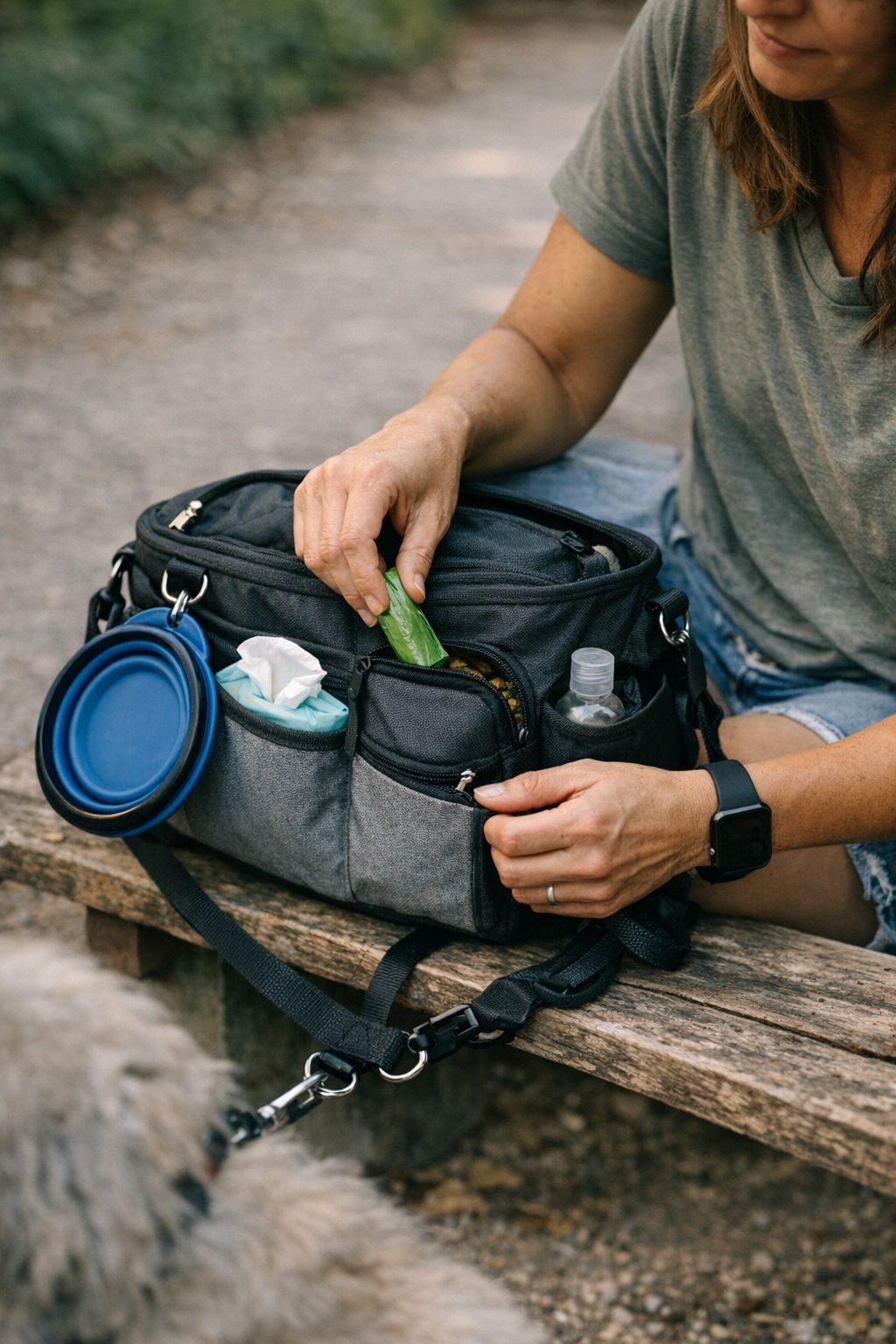
The difference between looking organized and traveling smoothly with your pet is rarely obvious until the trip begins. At home, setting up a pet carrier or travel bag feels under control—bowls neatly stacked, wipes zipped away, leash and treats in clear view. But the first actual stop exposes what those “ready” setups hide: reaching for a cleanup bag blocks the leash path, a treat pouch vanishes under the wipes, or the side pocket is now backwards against your seat. Each pause or reroute reveals friction built into the system: what seemed perfectly placed loses its logic once you’re moving, stopping, and handling leash tension alongside a restless dog. That’s where the PawGoTravel world starts—where real pet travel isn’t just about tidy layouts, but repeatable access, quick recovery, and gear that keeps up with real, repeated stops.
What Looks Prepared Isn’t Always Ready for Repeated Use
It’s a common trap: you pack up for a short walk or drive, feeling sorted, only to end up rummaging frantically at the second curb. Those pauses—at the car door, crossing the street, waiting for the elevator—are when the hidden flaws show. A waste bag that was visible in the living room now sits buried beneath snacks. A tissue pack slides over your wipes every time you shift the carrier. The patterns repeat not because you forgot where things go, but because “logical” at home collapses under live travel demands. The need to reach, reset, and juggle around shifting layers keeps breaking your flow far more than any forgotten item.
The split between stationary order and moving friction comes fast. By the third stop, “organized” feels tangled. Frustration isn’t about memory or planning—it’s about whether you can dig out core items on the fly, with one hand, while keeping your pet from darting away. The micro-failures build: sliding wipes, a bowl that drops out, a cleanup bag just out of reach. The hassle isn’t just a one-off; each pause means new reshuffling, and the cost of repeated corrections only piles up. A setup that seemed solid turns into a subtle drag, making each outing a slow grind instead of a steady routine.
How Small Organizational Gaps Become Daily Friction
Most breakdowns aren’t dramatic. It’s the quiet blockages—item overlap, stacked pockets, or “clever” double-duty sections. At home, layering your treat pouch or stacking wipes over your leash clip feels efficient. Once you’re in motion, that stacking becomes a time sink. A treat bag slips under a shifting bowl, leash handles wedge behind snacks, and cleanup pouches require two-handed digging. Suddenly, pausing at the curb or seat-side means untangling rather than reaching. Each minor slow-down gets replayed at the next stop if structure hasn’t kept roles separated.
This isn’t about forgetting—it’s about predictable trip interruptions. Every restart after a short pause brings a new reshuffle: wipes hiding the leash path, a comfort blanket blocking the main zipper, items trading places after the bag tilts at a crosswalk. Reach delays and repeated fixing become part of the routine. The result? Time wasted, a tenser dog, and growing reluctance to make quick stops—even when you need to.
The Hidden Cost of “Orderly” Packing
What looks perfect in a lineup—leash clipped, bowls nested, waste pouches set aside—collapses in live use. A pet’s pull twists the carrier; one bowl knocks another item loose; wipes end up jammed somewhere new. By the second or third stop, you’re no longer just accessing, you’re re-packing. Instead of single-move simplicity, travel becomes a cycle: hunt, rearrange, hope nothing else shifted. Each minor tangle costs seconds, but the frustration lasts much longer. “Order” for photos rarely survives the seat-side or city-street scramble.
Scenes from a Typical Outing: Where the Setup Breaks Down
1. The Curbside Hunt
You pause at a crosswalk. The leash tugs, the travel bag slips low, and wipes or bags are layered under another pouch. You try for a cleanup bag, but end up with tissues or sliding bowls. Your dog’s patience wears thin while you fumble. Even a one-minute delay feels endless when you’re fighting your gear, not just the sidewalk.
2. The Seat-Side Shuffle
Back at the car, you reach for a quick wipe or a snack hand-off. The side pocket you trusted for wipes has shifted under the seatbelt; treats block your main access zip. Every try to grab something means bending, retucking, or rearranging with a hand already half-full. You start skipping quick resets just to avoid the hassle—leaving comfort and cleanup behind next time.
3. The Blocked Restart
Restarting after any pause, you’re counting on easy access, but an overlapping pouch jams the leash clip. A comfort item now obstructs the zipper. These aren’t design flaws in theory—they’re repeated-use failures that show up block by block. Every stop means another round of the same interrupted movement, a minor-but-persistent grind you can’t just organize away once at home.
What Actually Fixes the Real-Use Flow?
Better pet travel isn’t about re-packing more carefully; it’s about redesigning for motion. The fixes are physical, not theoretical: an outer edge pocket for wipes that you can hit in a hurry, a bowl attached to the side not mixed with interior gear, pouches set apart from one another, not pressed into one shared compartment. Real improvement isn’t layering smarter—it’s separating completely so access points never block each other. Motion-proof bags let:
- Wipes rest at the edge, never under a bowl.
- Each cleanup bag has its own quick zip, never jammed together.
- Bowls ride away from leash paths—always hanging, never drifting below.
When compartment roles stay separate, friction disappears: one-hand reach at the seat, instant access at the curb, zero need to reshuffle. The “mini-hunt” becomes a non-issue and even surprise stops lose their drag. Instead of shuffling, you’re moving.
How to Spot a Pet-Travel Bag Built for Repeated Use
Real-use bags signal their worth by compartmentalization, not just looks. Test gear by simulating fast stops—can you access core items without moving others? Does the bag keep wipes, treats, and cleanup separate and accessible? Overlapping or stack-heavy designs always slow down a travel routine that pauses frequently. Run a personal trial: pack as usual, then do three mock stop-and-go drills. If it gets harder—if you’re reaching deeper as you go—structure, not style, is the weak point. Only bags built for physical separation, fast reach, and repeat recovery hold up outside the living room.
Packing logic doesn’t always match live motion. The right structure—side pouches, top zips, external hooks—wins not by looking neatly packed, but by surviving real stops, starts, and re-entries with the dog pulling, gear shifting, and cleanup always one hand away.
The Practical Take: Less Mess, Fewer Interruptions, and a Smoother Restart
Pet-travel gear should crush the small snags, not just tidy up your look. Every problem solved by instant access saves a fumbled curb, a tense pet, or an unnecessary delay. A structural fix—end-pocket for wipes, hook-hung bowl, slot that physically separates items—translates into fewer restarts, less time fixing, and more reliable movement. Noticing where your routine still drags—what you have to dig for, what requires untangling—signals exactly where better structure matters. You don’t have to tolerate gear that slips from “organized” to “awkward” just because it looked good at first. Move toward setups that work with, not against, your real travel flow—because repeating the same annoyance shouldn’t be the price of “prepared.”
Find travel bags and organizers designed for real-use access—not just first-glance order—at PawGoTravel.