
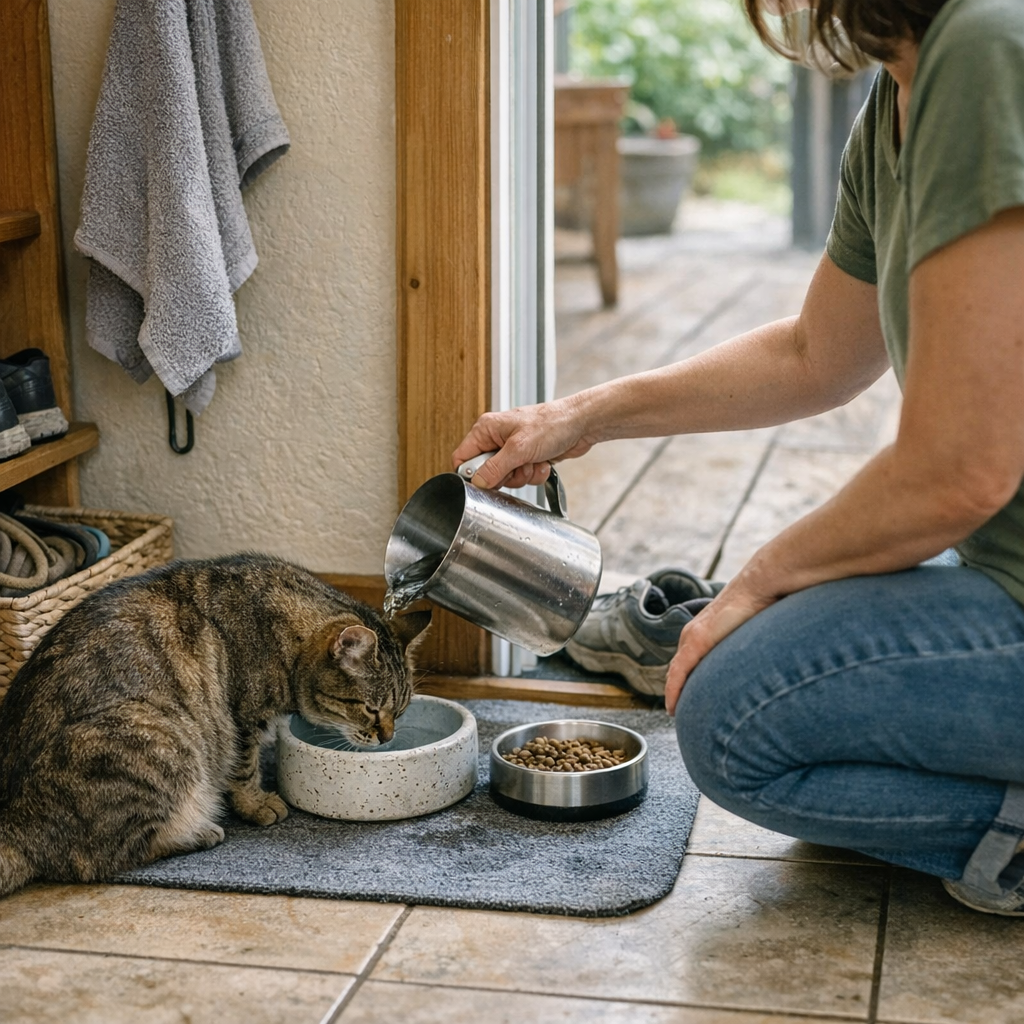
The Real Challenges of Daily Pet Care in a Busy House
Feeding a cat or dog in a quiet home usually means reaching for the bowl, topping off water, and wiping stray fur—done in minutes, without delay. But in a house where people and packages constantly come and go, that smooth routine breaks down fast. It starts as a minor inconvenience: you go to refill the water, and there’s a delivery box blocking the mat. The food bowl shifts closer to the walkway after someone nudges it with a shoe. Suddenly, that “quick cleanup” isn’t quick at all—now you’re moving bags, relocating bowls, and fishing the cleaning wipe out from under someone’s backpack. A setup that used to work now drags against daily life, revealing why the CalmPetSupply world focuses on repeat-ready basics and easy-to-reach gear.
How Small Disruptions Build Up
Pet routines only stay smooth when the core supplies remain in place and ready to grab. With repeated foot traffic, it’s never just one thing out of order: bowls slip out of their spots, water pools just outside the intended area, fur collects along paths no one meant to create. Sometimes you kneel to refill only to find yesterday’s shopping bag or jacket lying right over the towel you need. Wipes and brushes? Always within arm’s reach—or they should be. In a busy house, they’re just as likely to be shoved aside or hidden under another “temporary” item you forgot about until you actually needed it.
These aren’t dramatic messes; they’re steady, low-grade interruptions. You realize you’re wiping surfaces late, or shuffling three things aside just to reset the bowls. The mat meant to anchor everything creeps toward open space—pushed by shoes or boxes—eventually creating a hazard and multiplying the work. Every improvised “fix” (tucking a mat away, stacking wipes on the shelf) trades one delay for another, masking the real pinch point instead of solving it.
Everyday Routine Interruptions: How Mess Creeps In
It shows up around lunchtime: deliveries drop on the porch, someone swoops through the main room, the pet’s bowls inch dangerously close to the high-traffic lane, and a new cluster of fur appears under a chair. No matter how often you sweep or wipe, stray tufts anchor themselves in the corners you just cleared. When you finally reach for the cleaning towel, you’re lifting a tote bag off it. If that towel isn’t right where you finished last time, the mess stays longer—or gets spread further when another person misses it completely.
What looks like a tidy feeding area on the surface might still mean walking back and forth to fetch supplies that drifted out of place. The difference creeps in: you aren’t just cleaning after meals anymore, you’re interrupting whatever you’re doing—again and again—to re-tidy what seemed handled hours ago. The “organized” setup masks repeated friction because core items keep wandering out of optimal reach, turning care into scattered resets instead of one smooth routine.
Repeated Reset Friction: Where the Routine Breaks Down
Over days, the same small complications stack up: bowl realignment after each meal, double-checks for fur before sitting, hunting for that one stray wipe or the misplaced brush. It’s not chaos, but it’s not effortless either. Instead, you’re caught in a cycle of constant mini-corrections—each tidy-up temporarily fixes the space, never the repeat cause. What once passed as “good enough” starts to feel like extra work that only multiplies the more the day fills with movement.
The contrast is clear: a space that merely looks clean can still demand backtracking or add hesitations to every feeding and cleanup moment. If you need to shift a pile just to reach the grooming brush, or step around a mat that’s migrated near the hallway, the setup hasn’t really solved the underlying drag. Supplies that technically stay available can still jam up the routine if they’re never in the right place when you reach, stretching out tasks that should be over fast.
Practical Fixes That Shift the Pattern
The turning point comes from identifying and correcting the patterns that repeatedly slow you down. Moving the feeding station slightly off the main walkway—still visible, now spared from stray feet—reduces bowl drift and means fewer urgent resets. Elevating a towel hook or storing grooming brushes just outside the highest-traffic zone transforms wipe-downs from “whenever you remember” to a quick side-step that doesn’t stall out your whole routine. It’s not about eliminating every spill or fur patch, but about removing the most persistent hurdles so you don’t waste energy doubling back.
Within days, these small shifts pay off—routine messes shrink, feeding and cleanup happen on time, and care actually fits the day instead of interrupting it. In busy homes, the difference between a setup that looks good and a setup that truly works is visible in the number of times you have to reshuffle, reach, or repeat the same fixes. That’s the practical logic at the core of CalmPetSupply’s everyday solutions: routines should bend to daily life, not slow it down.
See what fits your daily setup at CalmPetSupply.